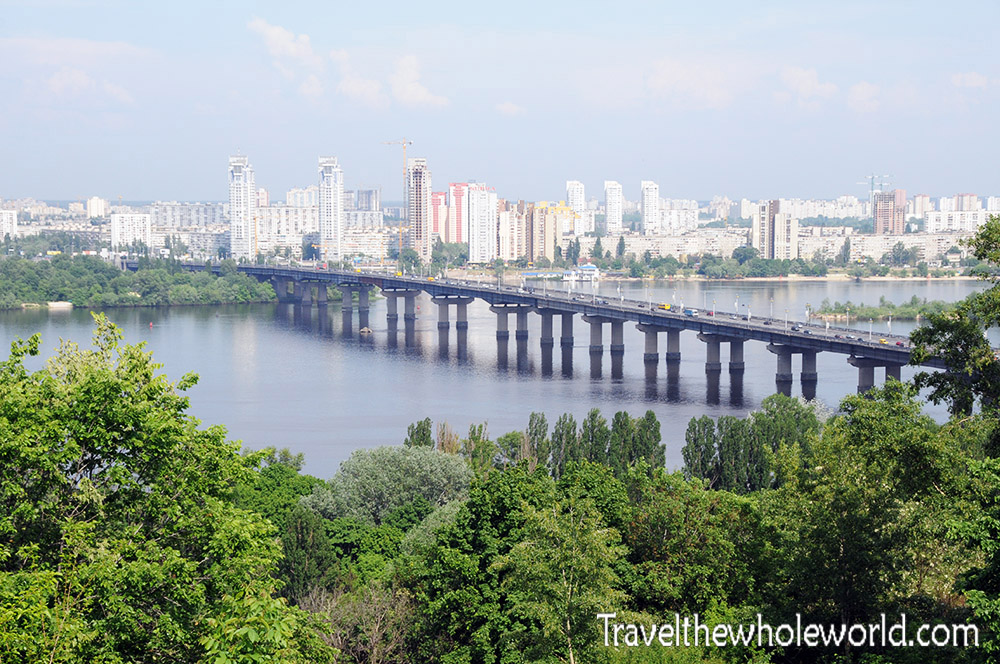
Kyiv, the capital of Ukraine, is a sprawling city of nearly three million people divided by the Dnipro River. It was much larger than I had imagined before arriving, and despite spending several days exploring, I only saw a small part of it.
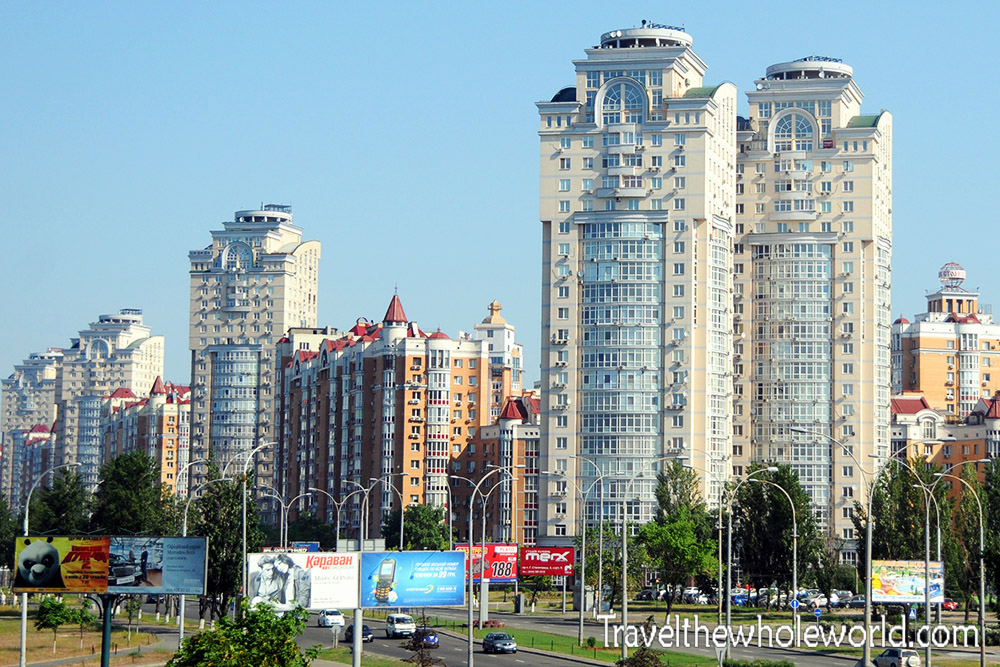
Most of my time was spent around the historic center on the western side of the river, where many of Kyiv’s best-known monuments, churches and museums are located. Beyond the center, enormous residential districts stretch across both sides of the Dnipro and make it obvious just how large the city really is.
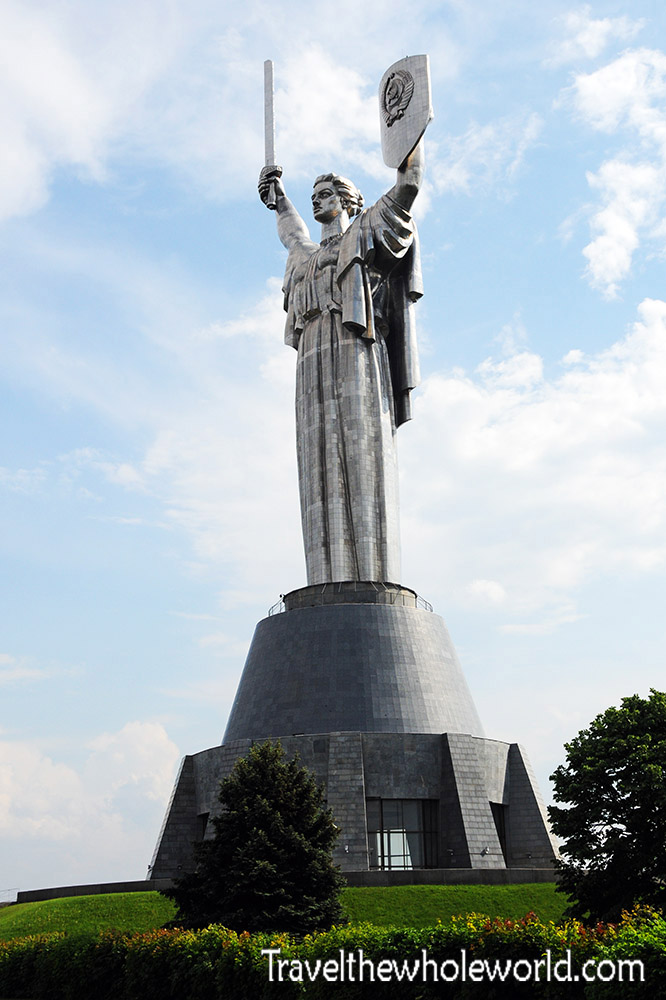
I came to Kyiv without knowing too much about the city, but I had seen photographs of this enormous statue long before my visit. At the time it was commonly known as the Motherland Monument, or Mother Motherland. Today it is also referred to as Mother Ukraine.
The stainless-steel figure itself stands 62 meters (203 feet) tall and rises above the National Museum of the History of Ukraine in the Second World War. When I visited, the shield still displayed the Soviet hammer and sickle. That emblem was removed in 2023 and replaced with Ukraine’s trident coat of arms.
I had also heard that the sword was deliberately shortened so the monument wouldn’t rise above the bell tower of the nearby Kyiv-Pechersk Lavra. It’s a popular story, but not one I can verify confidently enough to present as fact.
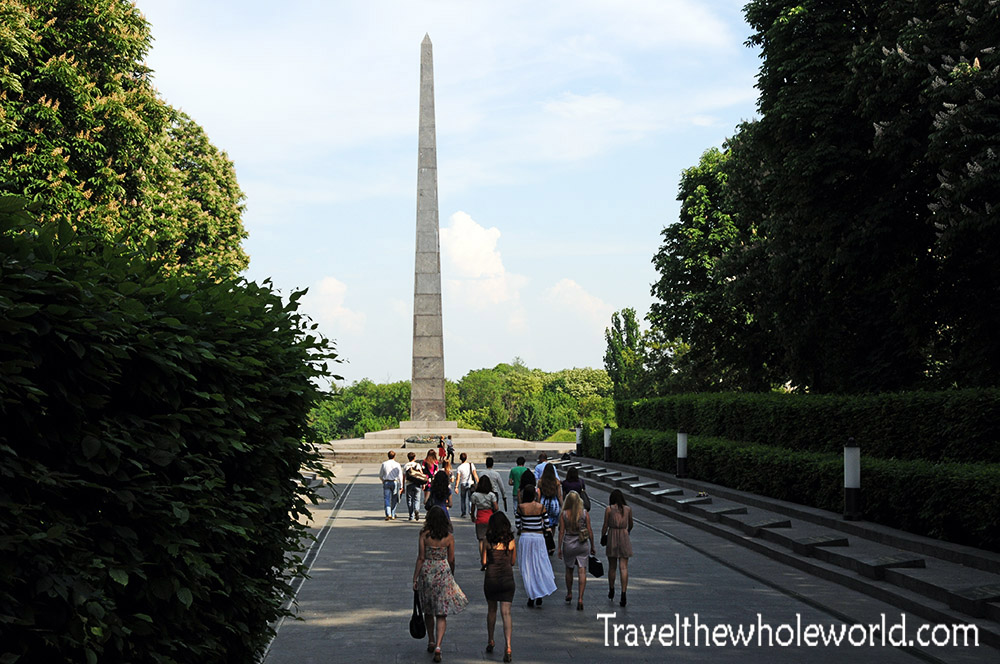
Nearby is the Park of Eternal Glory, a large memorial complex honoring soldiers killed during World War II. The park includes the Tomb of the Unknown Soldier and an eternal flame. When I visited in spring, the surrounding park was packed with people enjoying the weather, with food and ice cream stands scattered around the grounds.
The Soviet legacy of monuments like these has become increasingly complicated in independent Ukraine. Whatever political meaning has surrounded them over the decades, the enormous human cost of the war remains impossible to ignore.
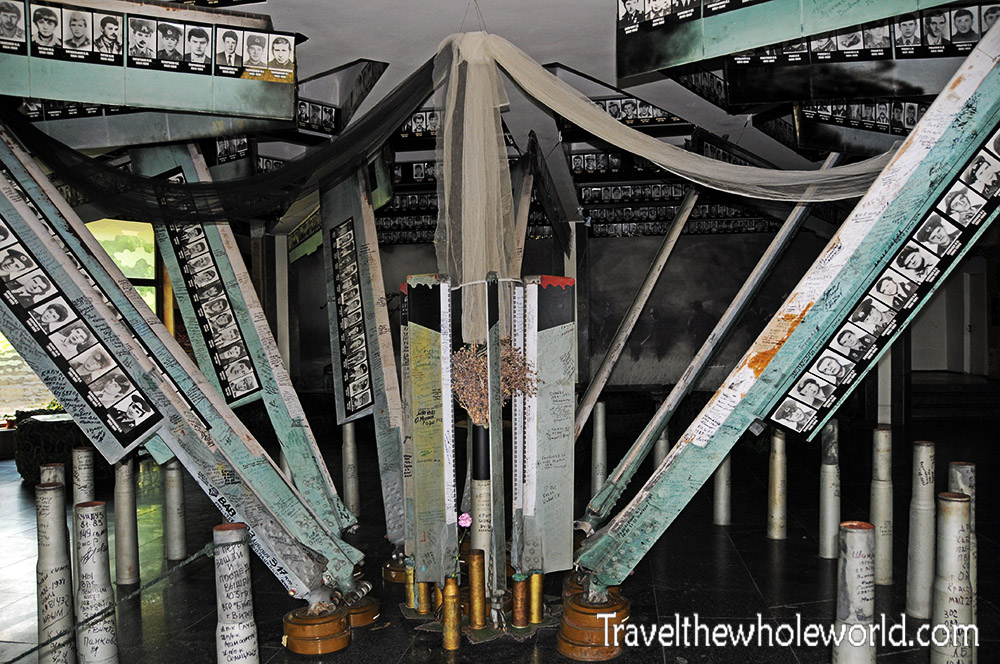
One thing I missed was visiting the indoor military history museum. I arrived on a Sunday about twenty minutes after it had closed, and it was also closed the following day. I was at least able to look inside before the entrance was locked.
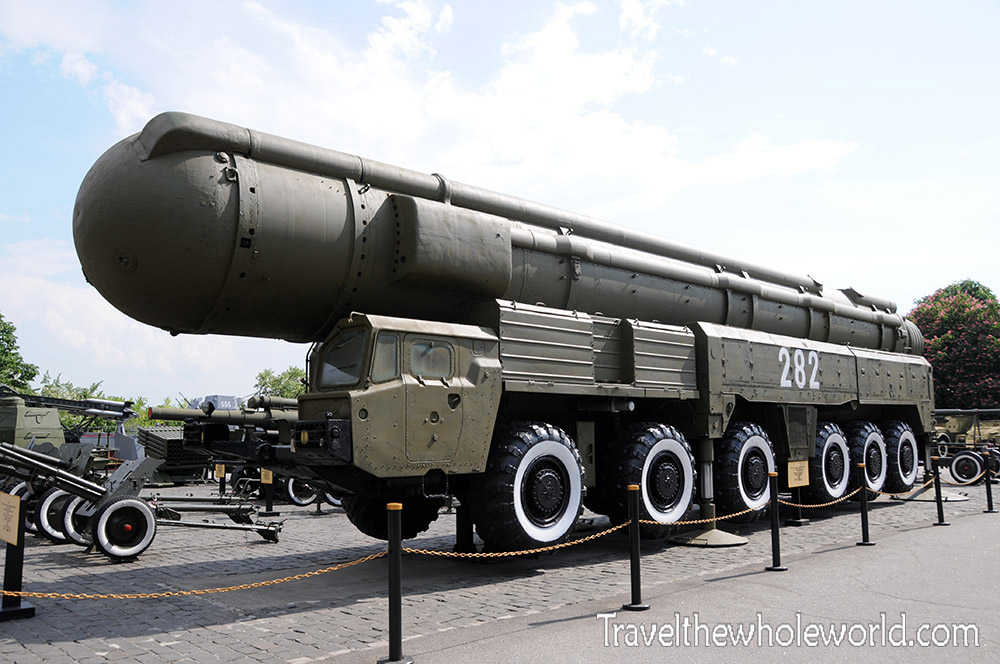
Fortunately, there was also an extensive outdoor collection of military equipment.
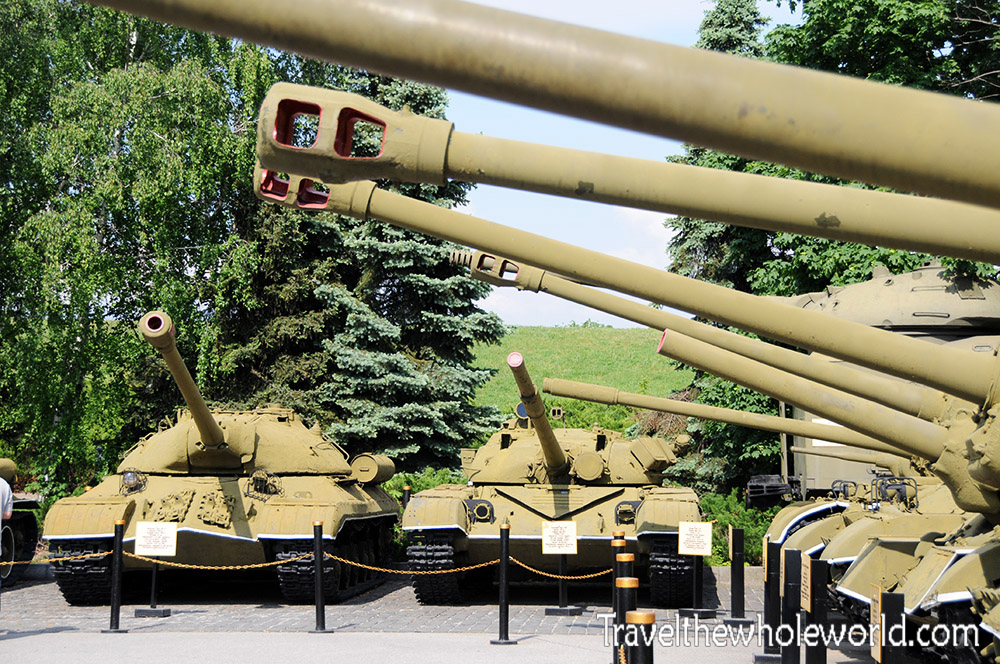
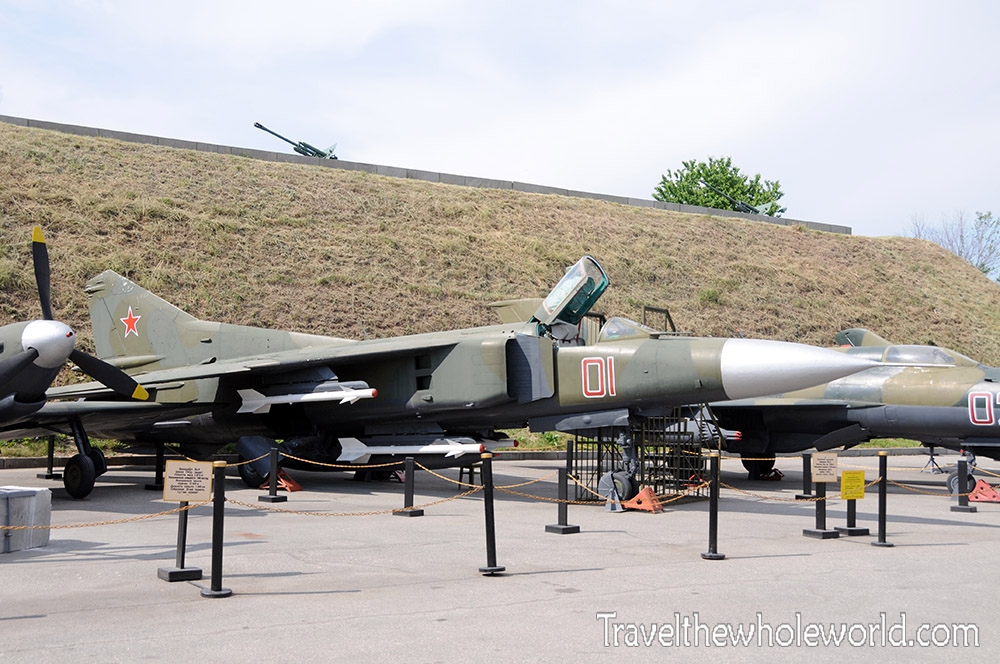
The outdoor displays included tanks, armored vehicles, artillery and several aircraft. It was an impressive collection even without getting inside the main museum.
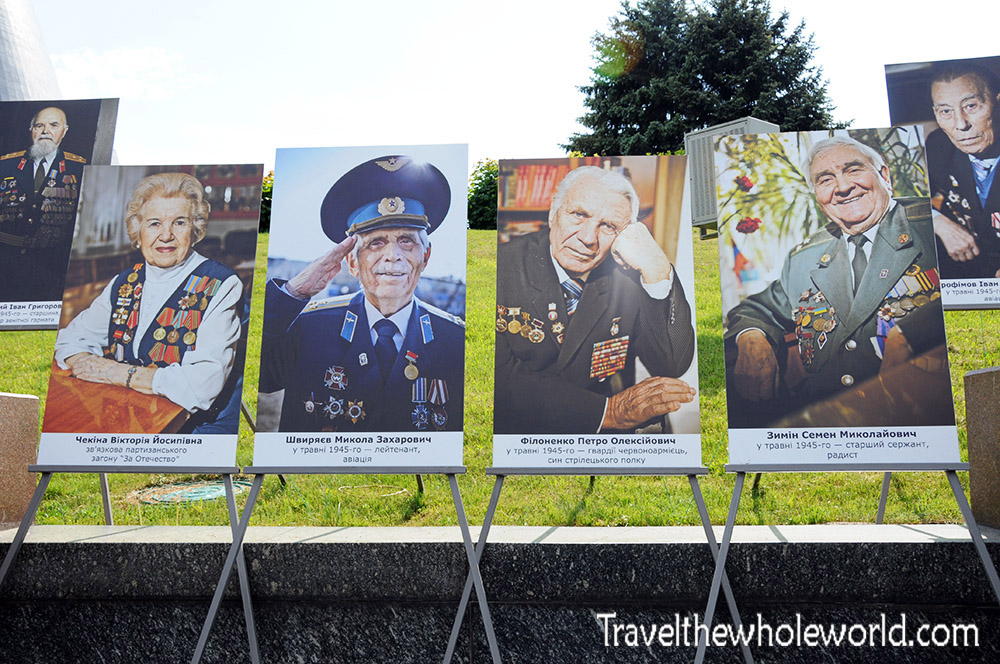
Close to the Motherland Monument were these portraits of Soviet military figures from World War II. There weren’t any English translations available, so beyond the names and dates I wasn’t sure exactly who each person was. The displays also looked temporary, so they may simply have been there during the weekend I visited.
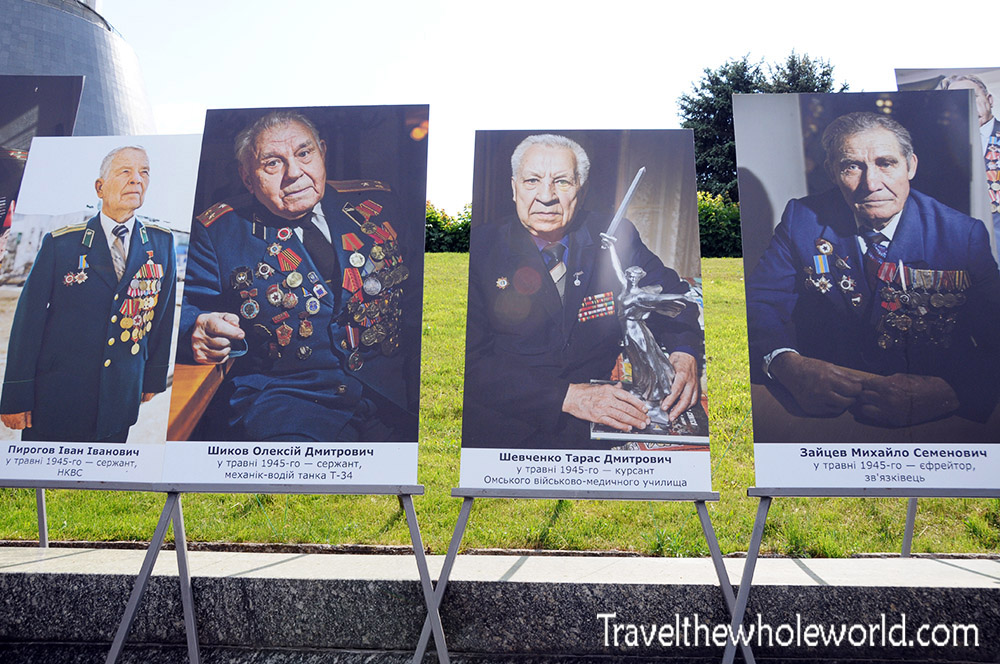
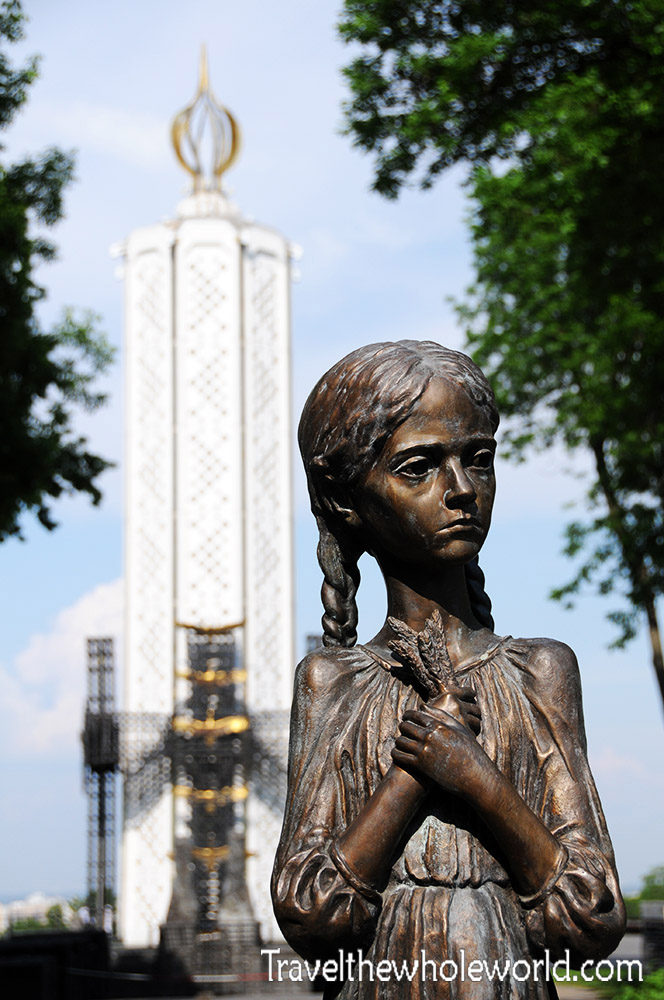
After leaving the Park of Eternal Glory, I came across one of the most important memorials I visited anywhere in Ukraine. It commemorates the Holodomor, the catastrophic famine that devastated Soviet Ukraine in 1932–33.
I have to admit that before visiting Ukraine, I had never even heard of the Holodomor. Millions of people died during the famine as Stalin’s government imposed forced collectivization, grain requisitions and other brutal policies across Soviet Ukraine. The exact death toll remains debated, but modern demographic research generally places the number of deaths in Ukraine at roughly four million.
The question of intent has also been the subject of extensive historical debate. Ukraine officially recognizes the Holodomor as genocide, as do numerous other countries and institutions. Whatever terminology is used, this wasn’t simply a natural disaster: Soviet government policies played a central role in creating and intensifying the catastrophe.
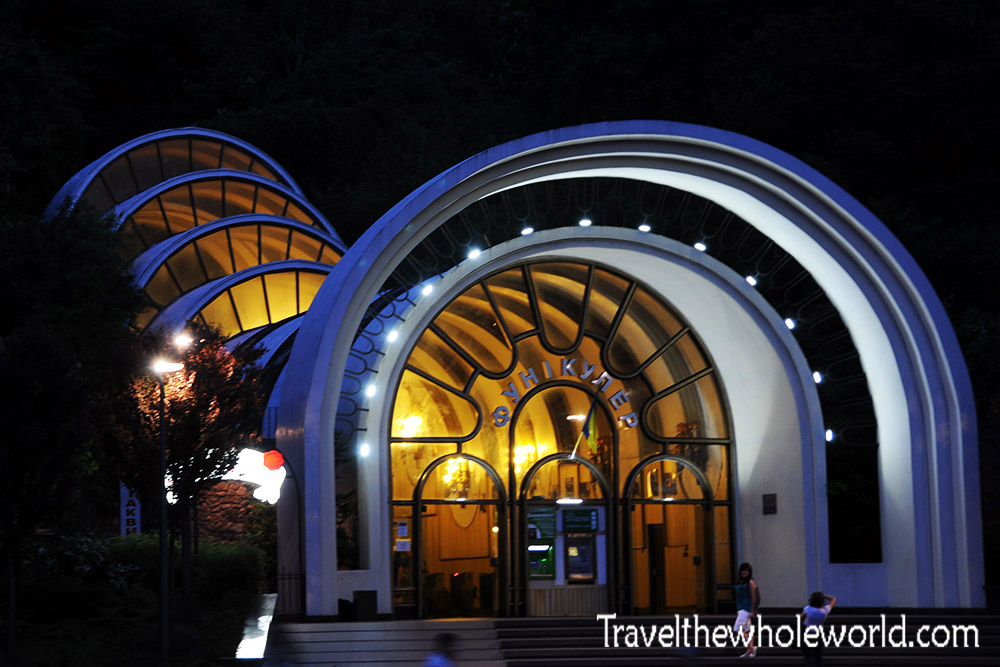
From the Holodomor memorial I headed toward central Kyiv and Independence Square. Kyiv is enormous, so I occasionally used the metro to cover longer distances. The station above caught my attention because it was far more elaborate than I expected from a subway station.
I still walked nearly everywhere I could, even when that meant spending hours crossing the city on foot.
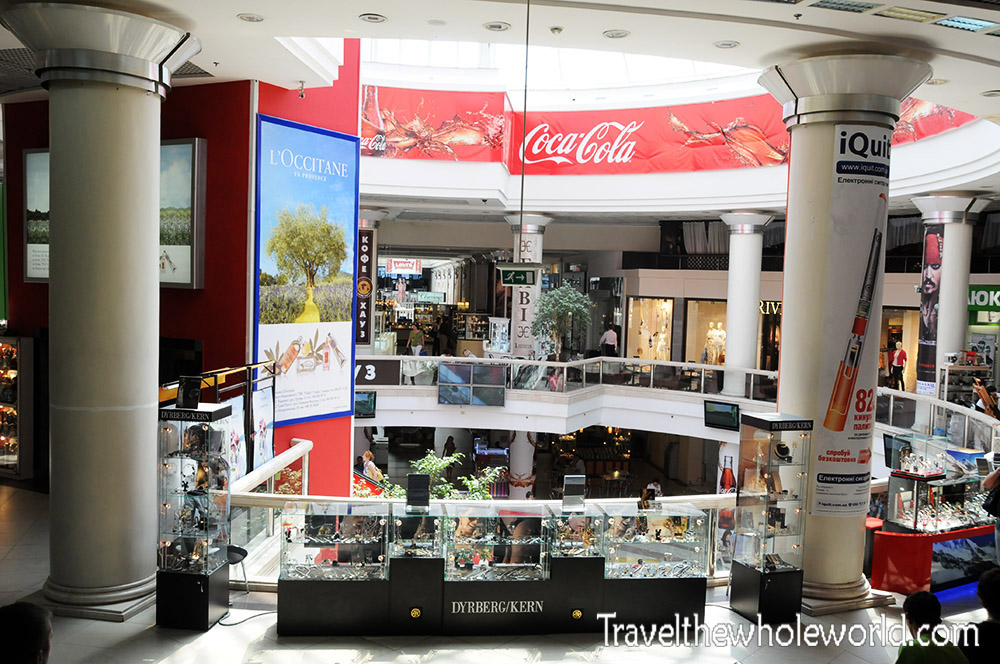
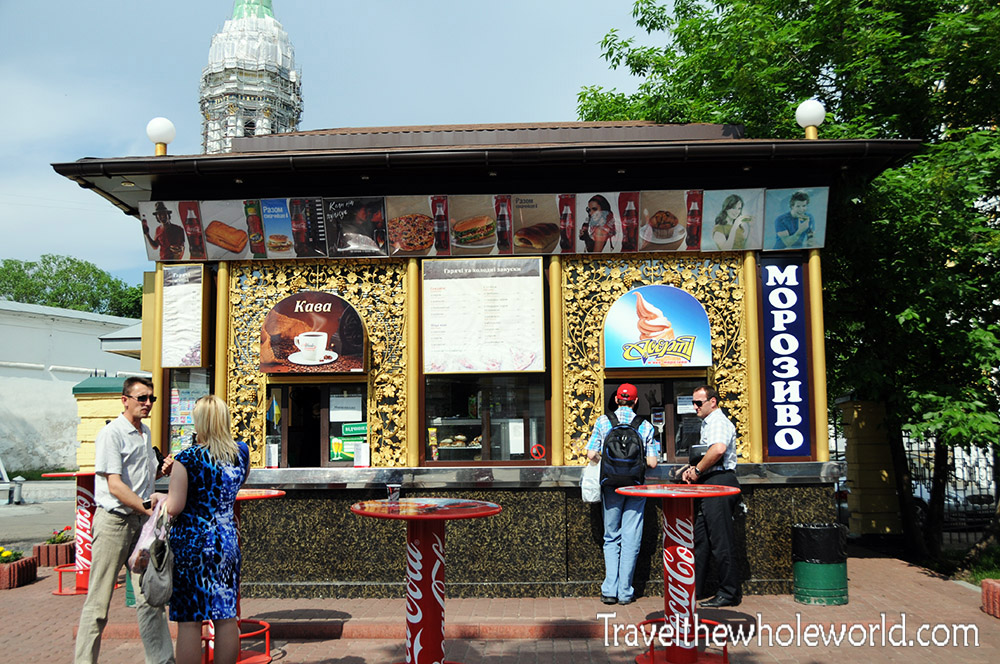
Walking around Kyiv was easy because I was never far from small stores, cafés or somewhere to stop for a drink or snack. This underground shopping area was near the center, while the coffee shop below was in a random neighborhood I passed through during one of my long walks.
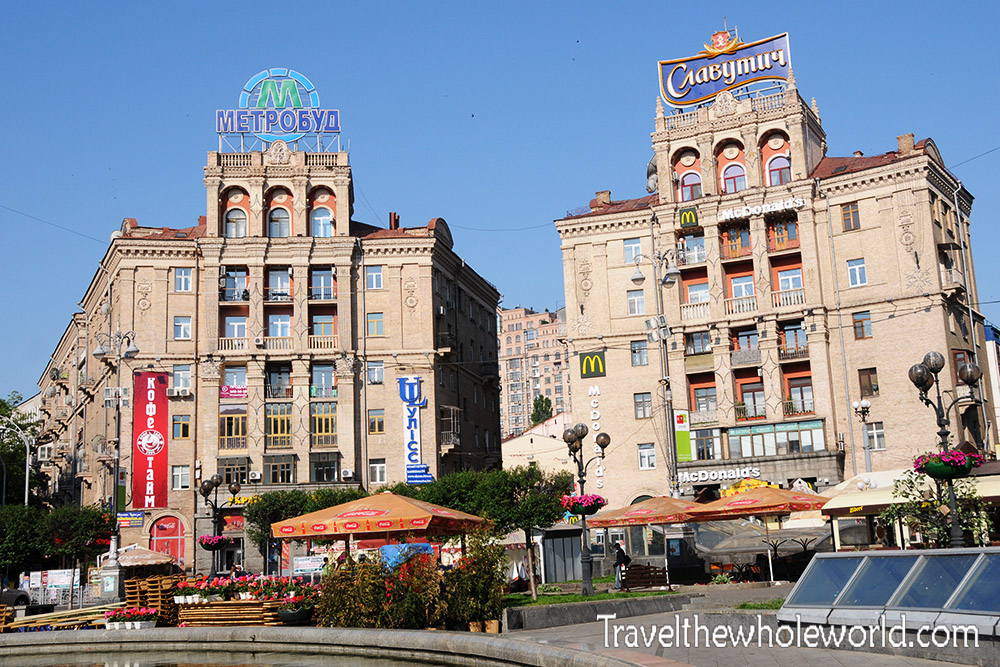
Eventually I reached Independence Square, or Maidan Nezalezhnosti. My hostel was nearby, and the square was also the meeting point for my trip to Chernobyl, so I ended up walking through here almost every day.
Maidan is much more than an attractive public square. It has repeatedly been at the center of modern Ukrainian political life, most famously during the Orange Revolution in 2004 and the Euromaidan protests and Revolution of Dignity in 2013–14.
During my visit, though, my experience was considerably less dramatic. The square was full of vendors and people hanging around enjoying the city. One morning I watched two men dressed as cartoon animals posing for photographs with children. A teenager walked past and yanked hard on one costume’s tail. The smiling animal head immediately came off, revealing a furious man underneath who handed the head to his companion and went after the suddenly much less confident teenager.
It was one of those completely random scenes that made Maidan a great place for people-watching.
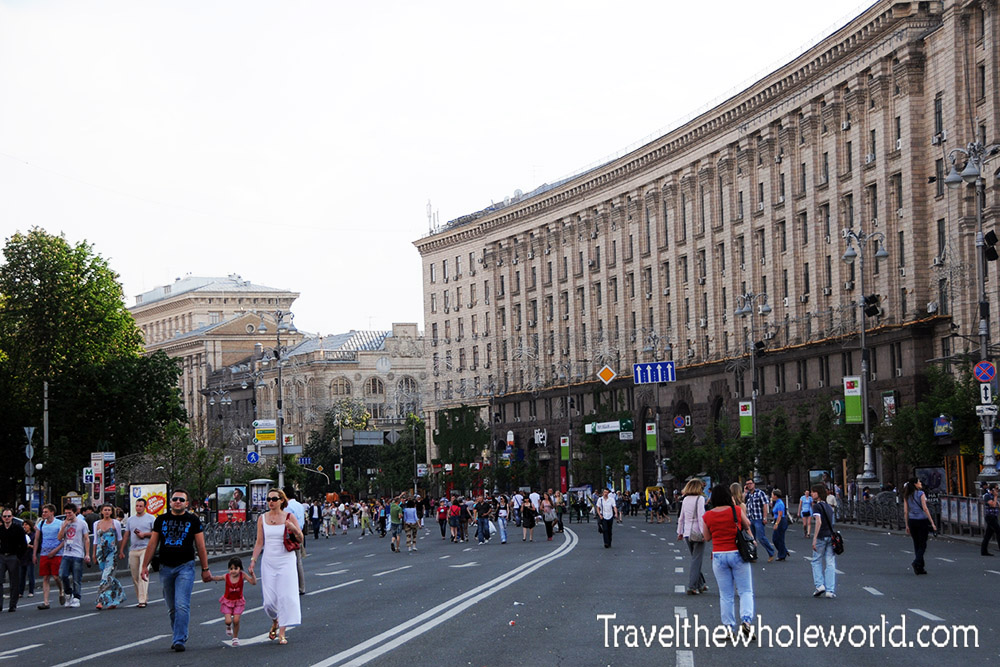
Khreshchatyk, Kyiv’s main central avenue, runs directly through the Maidan area. It was lively during the day, but I enjoyed it even more at night. On one Saturday evening I was elsewhere in the city when my taxi driver pointed toward fireworks in the distance and explained that another festival was taking place around the center.
I was disappointed to miss it, but even on Sunday night I found live music, street performers and plenty of people out enjoying the city.
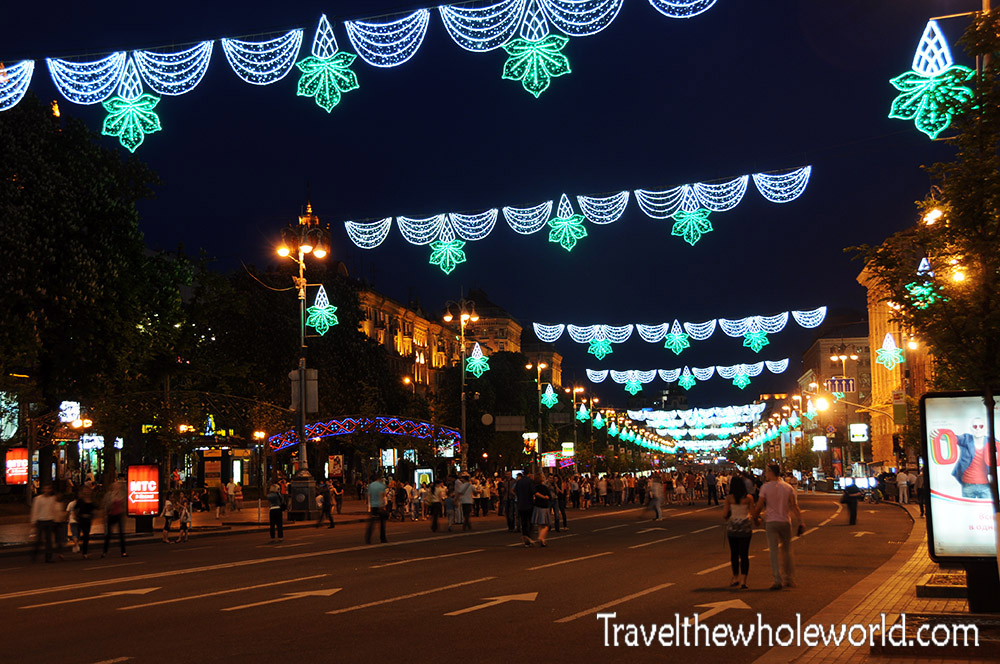
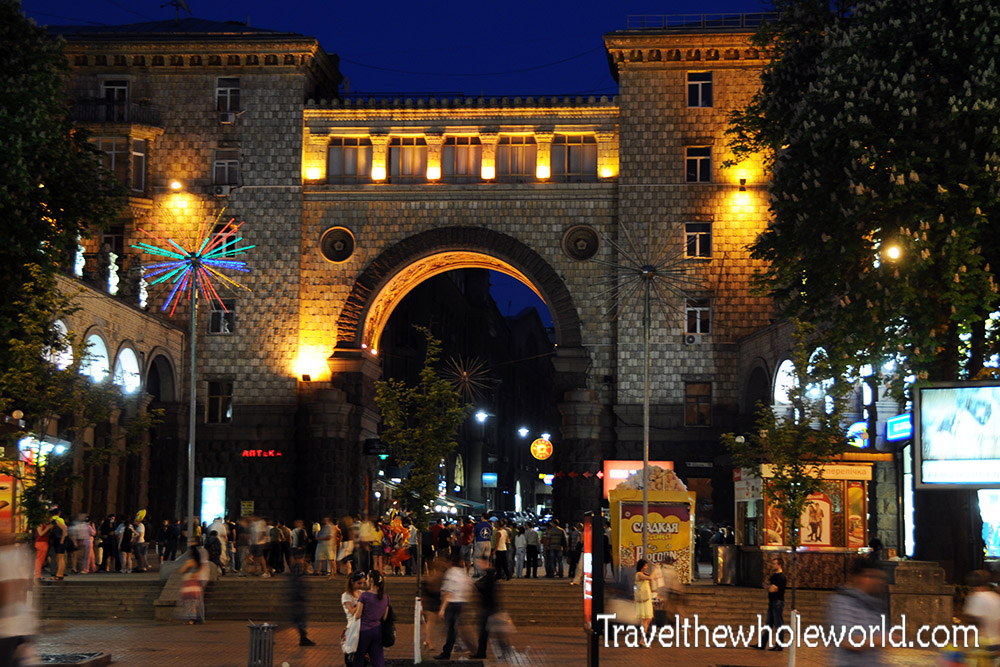
In some cities the busiest commercial area lasts only a few blocks before everything suddenly becomes quiet. That wasn’t my experience in central Kyiv. I walked all the way through the district and there always seemed to be another busy block ahead.
I was traveling alone and on a budget, so I skipped most of the nicer restaurants I passed. That’s something I’d do differently on another visit.
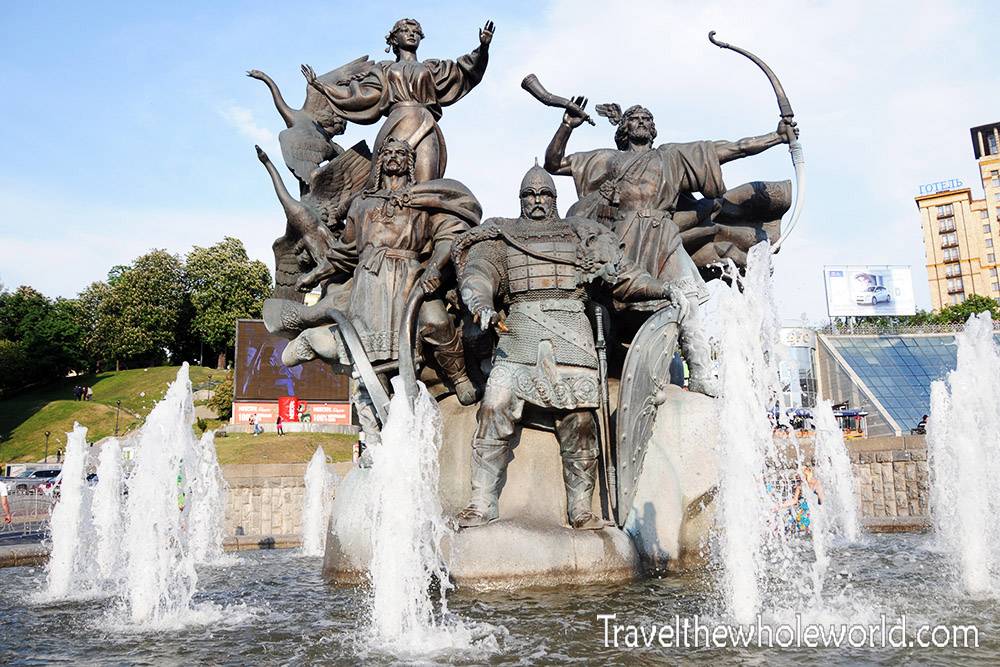
Another monument in the center depicts the legendary founders of Kyiv: the brothers Kyi, Shchek and Khoryv and their sister Lybid. Their story appears in the Primary Chronicle, compiled in the early twelfth century, which describes them as the founders of the city.
Whether they were historical individuals or legendary figures is impossible to establish, but they became enduring symbols of Kyiv. Centuries after the city’s traditional founding, Kyiv emerged as the political center of Kyivan Rus, one of medieval Eastern Europe’s most powerful states.
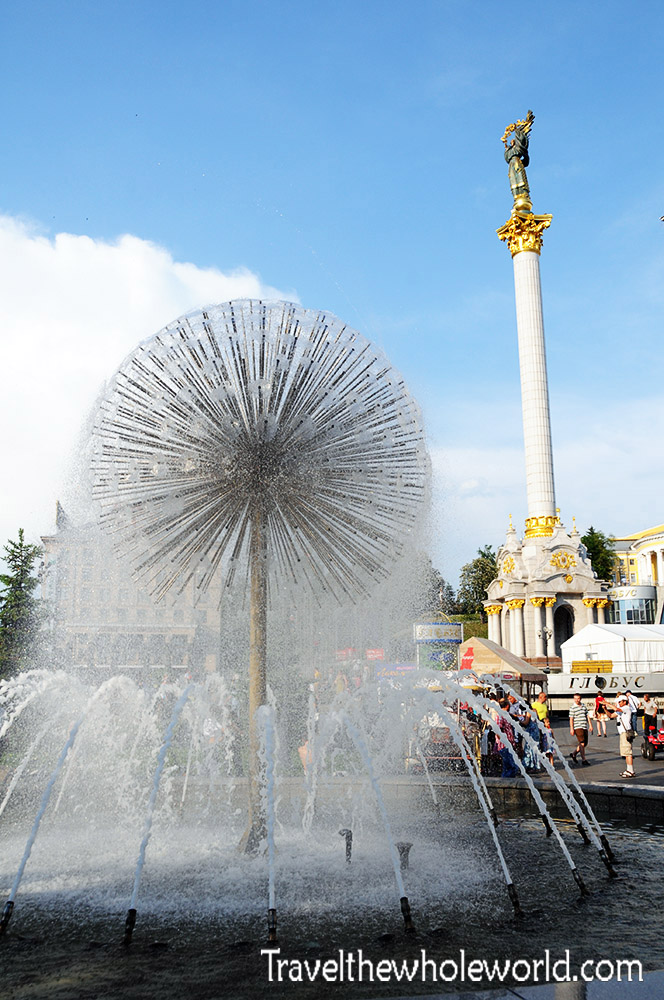
The tall column in Independence Square is topped by Berehynia, a female figure that became a symbol of independent Ukraine. The Independence Monument was erected in 2001 to commemorate ten years of Ukrainian independence.
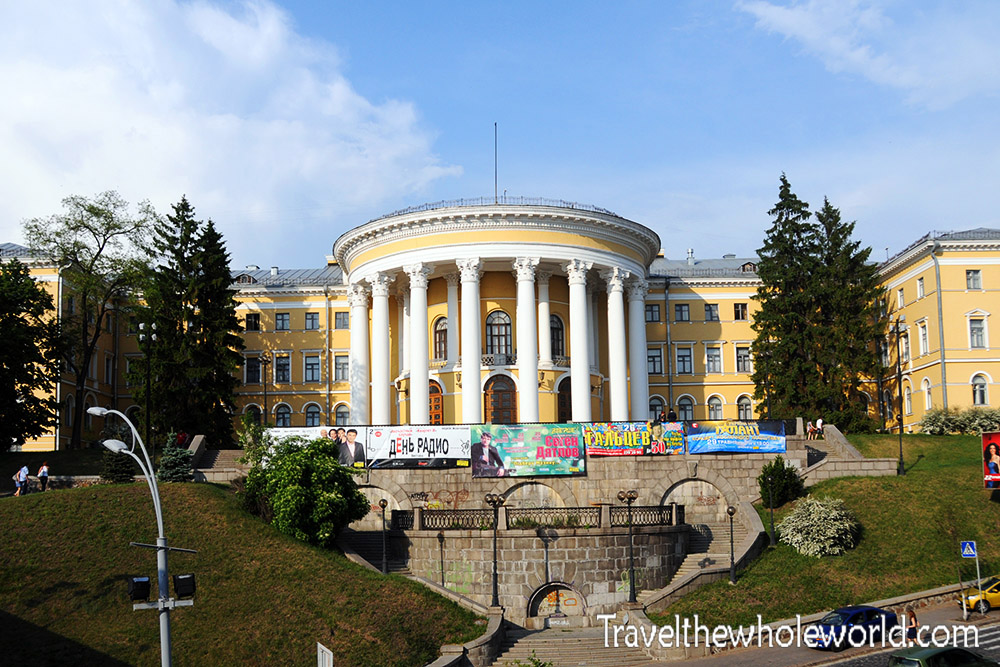
While exploring the surrounding streets, another building caught my attention. I tried unsuccessfully for years to figure out what it was until someone finally told me it was a concert hall. Thanks, Alina!
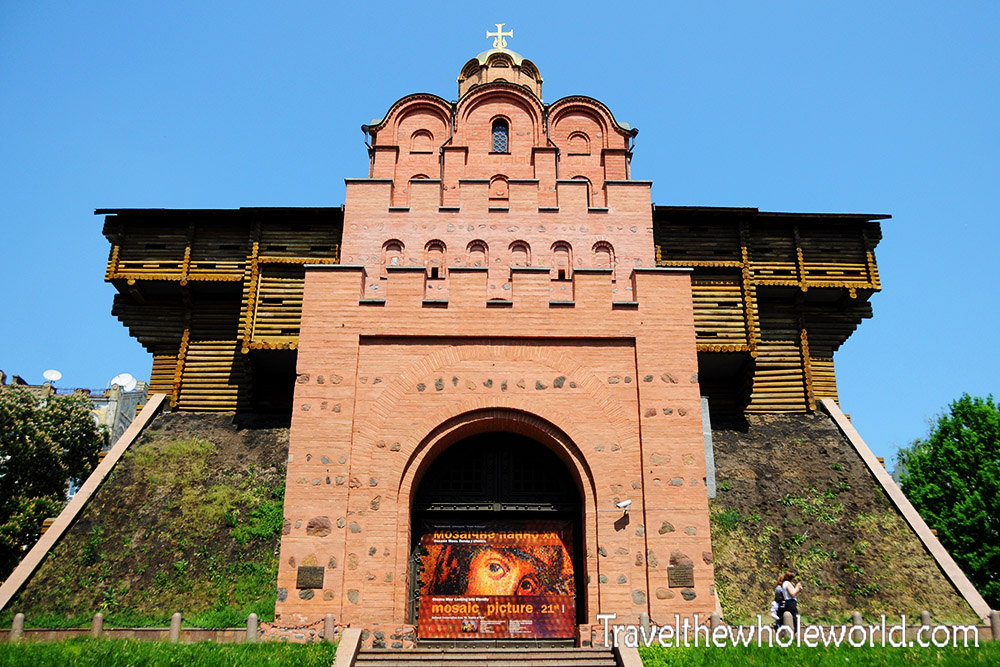
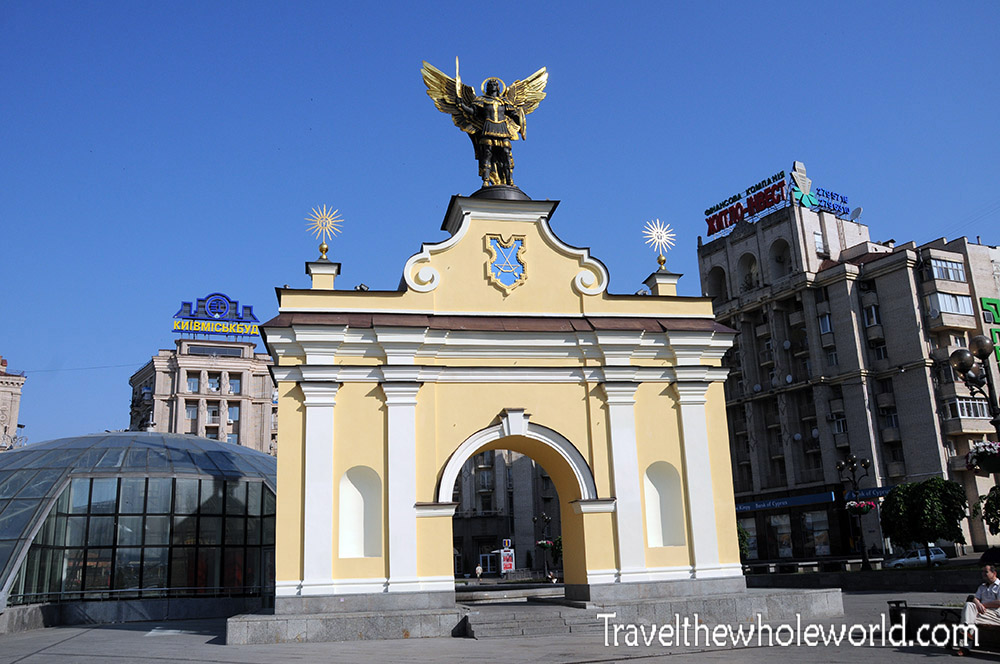
Kyiv has an incredible amount of medieval history. One of its best-known landmarks is the Golden Gate, which served as a principal gateway through the fortifications of medieval Kyiv during the reign of Yaroslav the Wise in the eleventh century.
The surviving ancient ruins are now enclosed within the reconstruction seen above. That protective structure was completed in 1982 during celebrations of Kyiv’s 1,500th anniversary. Although the modern exterior isn’t itself a thousand years old, archaeological remains of the medieval gateway survive within it.
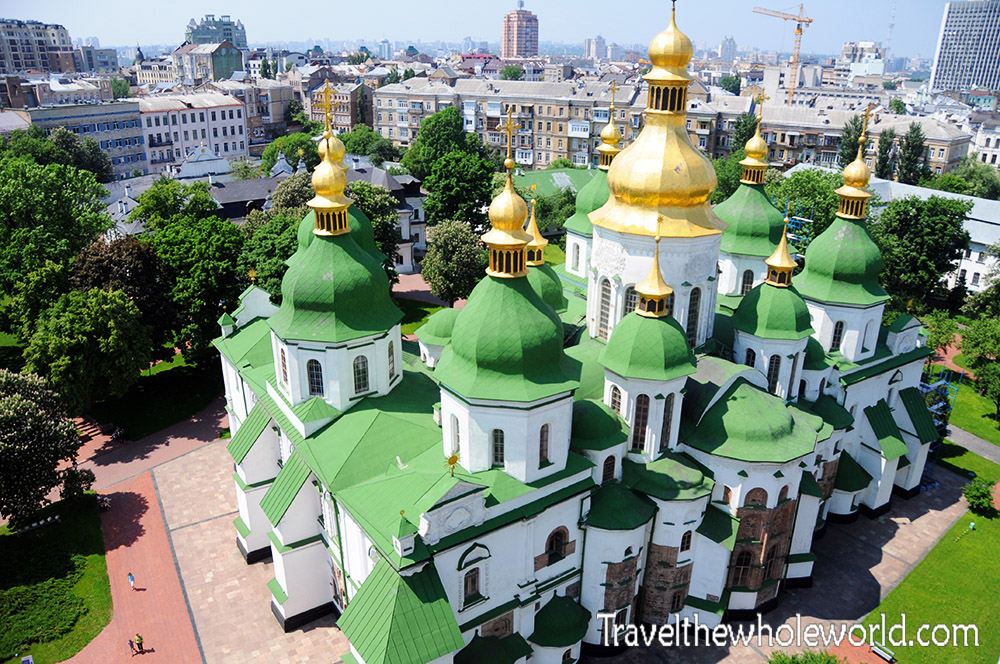
My favorite cathedral in Kyiv was Saint Sophia. Its origins date to the eleventh century and the era of Kyivan Rus, although historians have debated the exact year construction began. The cathedral became one of the most important religious and cultural centers of medieval Kyiv and contains mosaics and frescoes dating back centuries.
Saint Sophia is now part of a UNESCO World Heritage Site together with the Kyiv-Pechersk Lavra. Visitors could also climb the cathedral’s bell tower, which gave me some of the best views I had over central Kyiv.
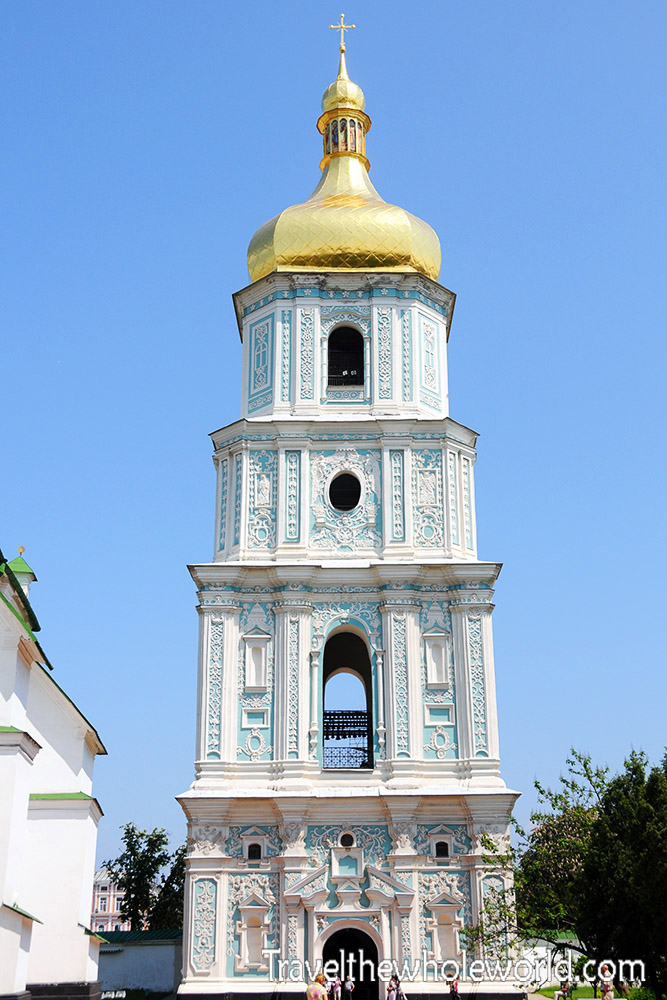
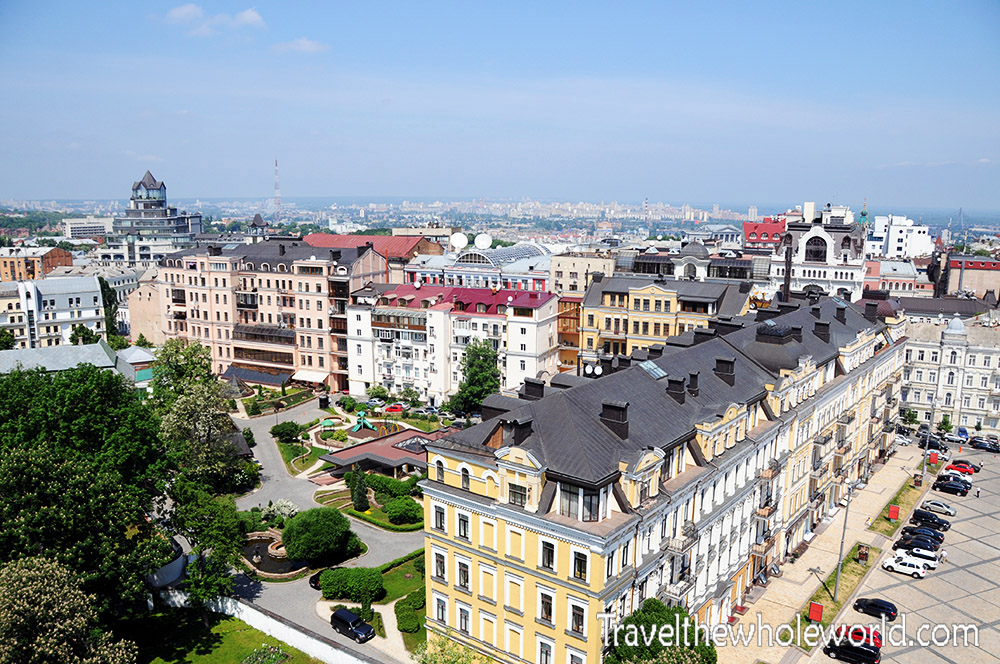
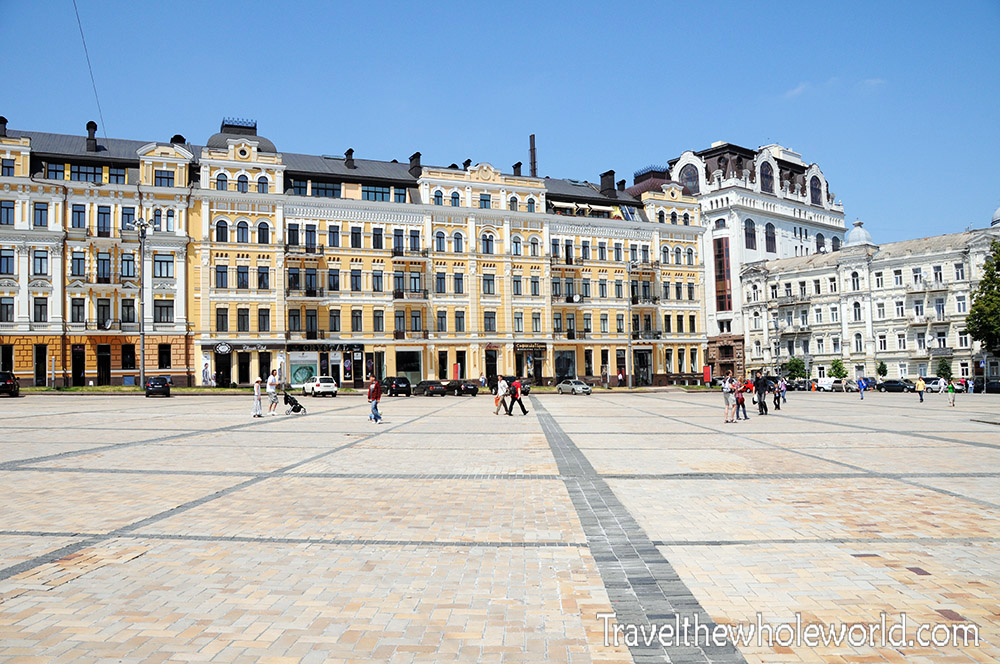
Kyiv has so many churches, monasteries, monuments and historic squares that I could never cover all of them on a single visit. From Saint Sophia’s bell tower I could look down toward the monument to Bohdan Khmelnytsky, the seventeenth-century Cossack hetman whose legacy remains an important and complicated part of Ukrainian history.
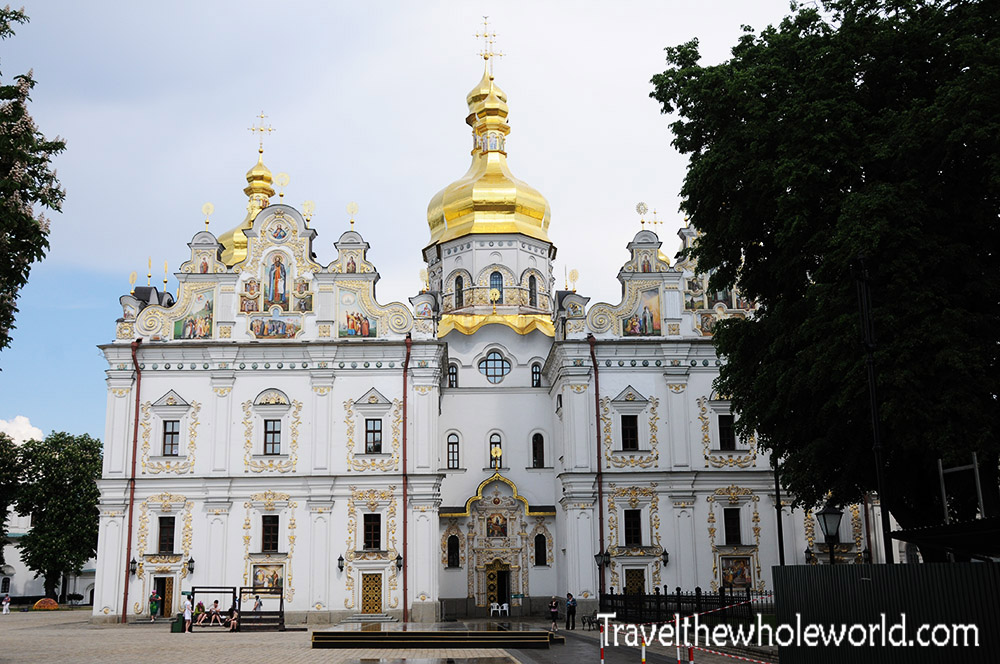
Another of Kyiv’s most famous religious sites is the Kyiv-Pechersk Lavra, often called the Monastery of the Caves. The monastery was founded in the eleventh century and grew into one of the most important centers of Eastern Orthodox Christianity in the region.
The photograph above shows the Dormition Cathedral, one of the principal buildings within the enormous monastery complex.
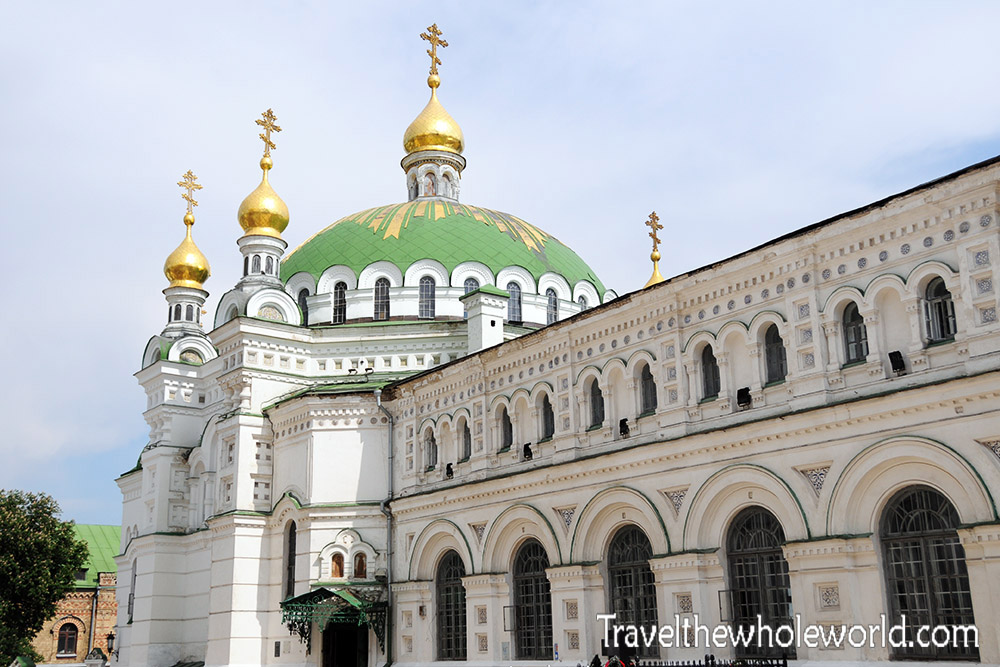
What interested me most about the Lavra was underground. Beneath the monastery are networks of narrow passages containing chapels and the burial places of generations of monks and saints. I didn’t have enough time to properly explore the caves on this trip, making them one of the biggest things I’d want to see if I returned.
I had come across old stories claiming that the caves extended for extraordinary distances beneath the region. Those accounts are legends rather than reliable descriptions of the actual complex, but the real cave system is fascinating enough without exaggeration.
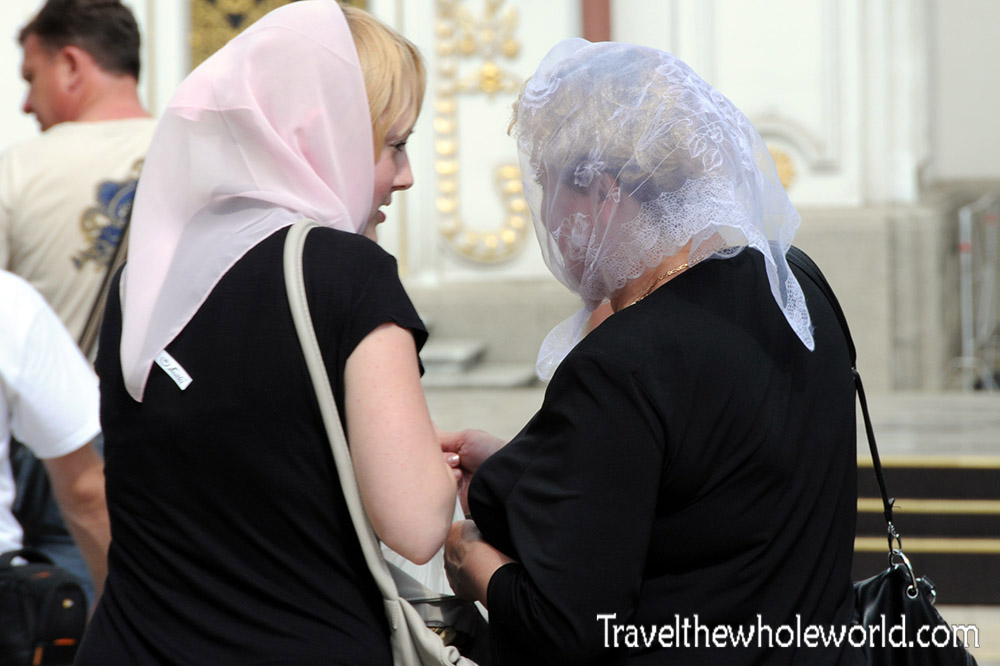
Since I didn’t explore the caves, most of my visit was spent wandering through the monastery grounds. I frequently saw women covering their hair before entering churches, a tradition I had encountered at Orthodox churches elsewhere as well.
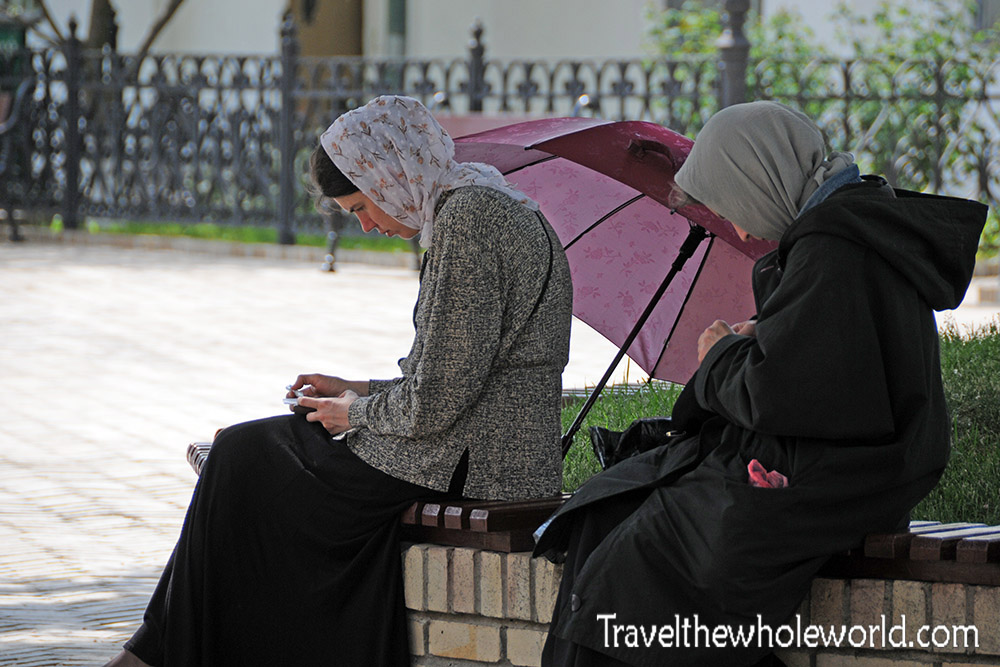
At one point I saw these two women looking down at something in their hands and initially thought they were texting during a church service. When I walked past, I realized they were actually knitting.
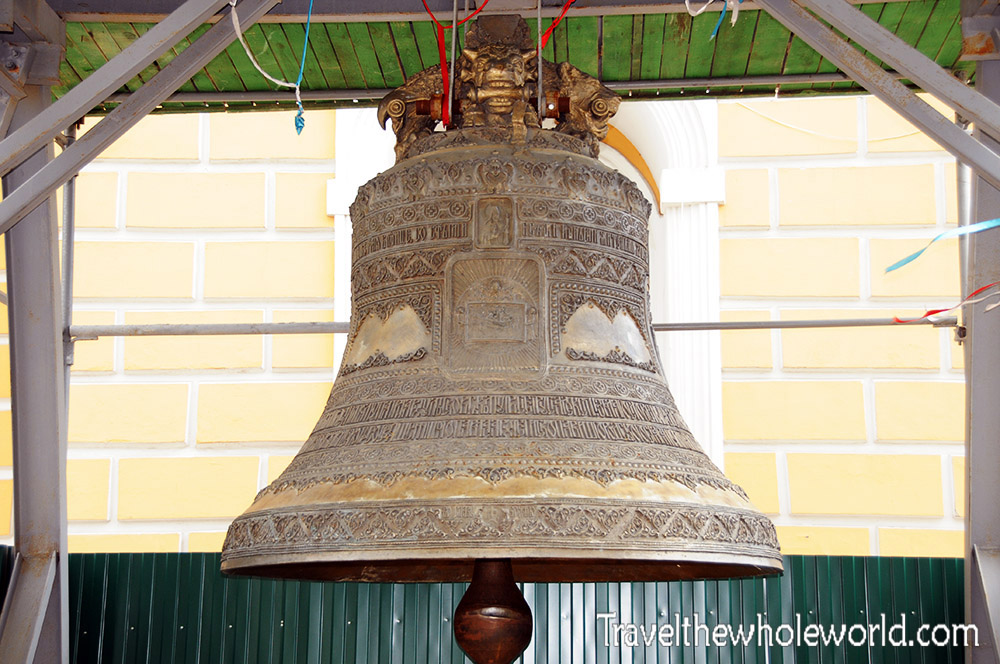
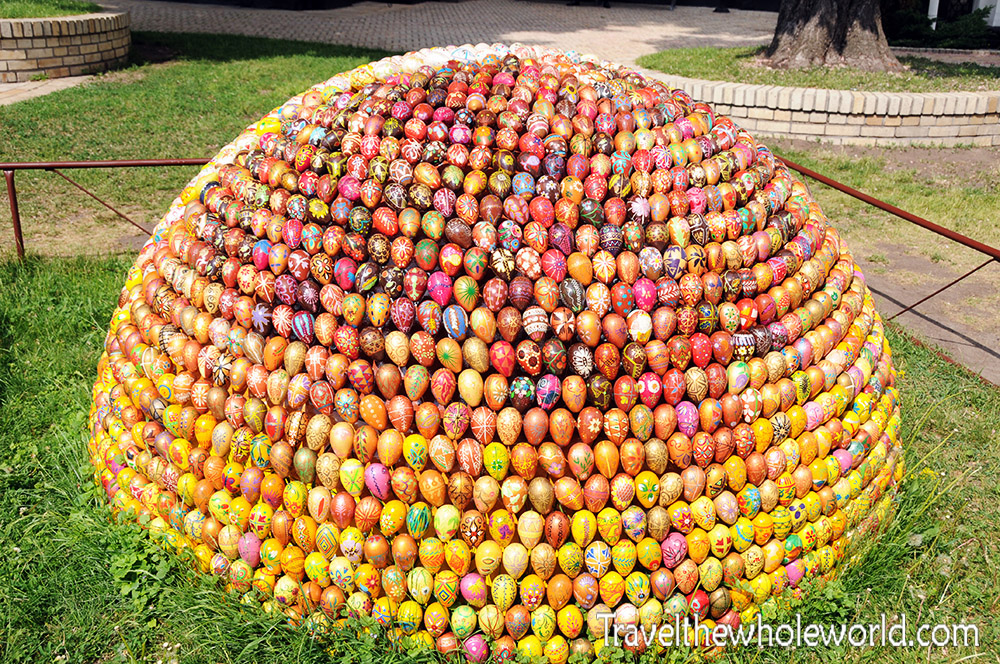
I didn’t have a guide with me, so I wasn’t able to determine the history of the bell displayed above and don’t want to guess at its age or origin. I also came across this display of decorated Easter eggs. I visited nearly a month after Easter, so I wasn’t sure whether they were a permanent exhibit or something left over from the holiday.
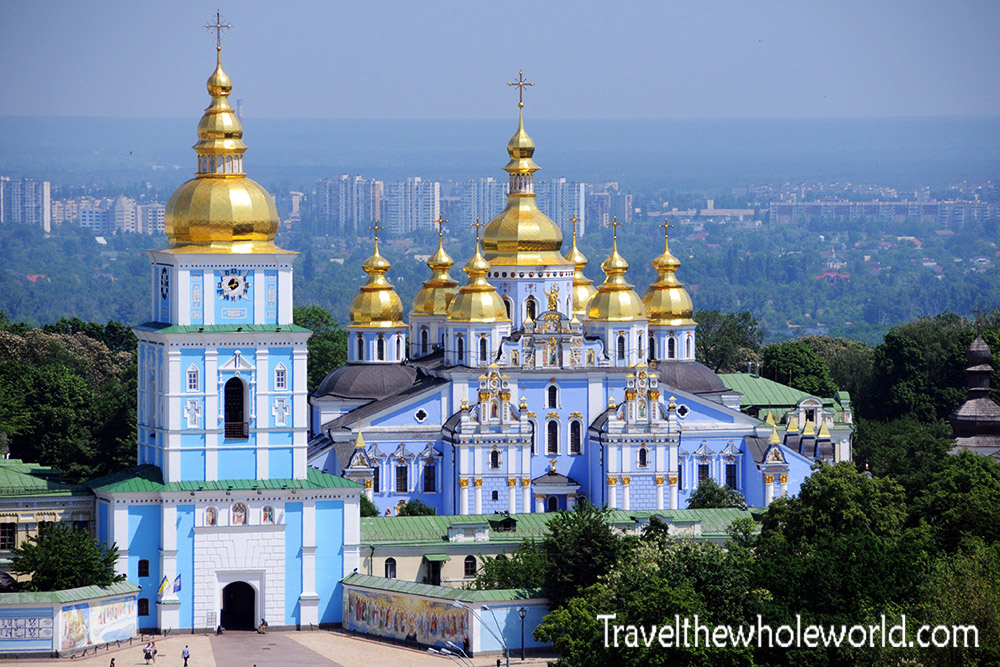
Next on my list was St. Michael’s Golden-Domed Monastery. A monastery was originally established here in the early twelfth century, although its architecture changed substantially over the centuries.
Soviet authorities demolished much of the historic complex in the 1930s as part of plans to redevelop the area. After Ukraine regained independence, the monastery was reconstructed during the 1990s, restoring one of Kyiv’s most recognizable landmarks to the skyline.
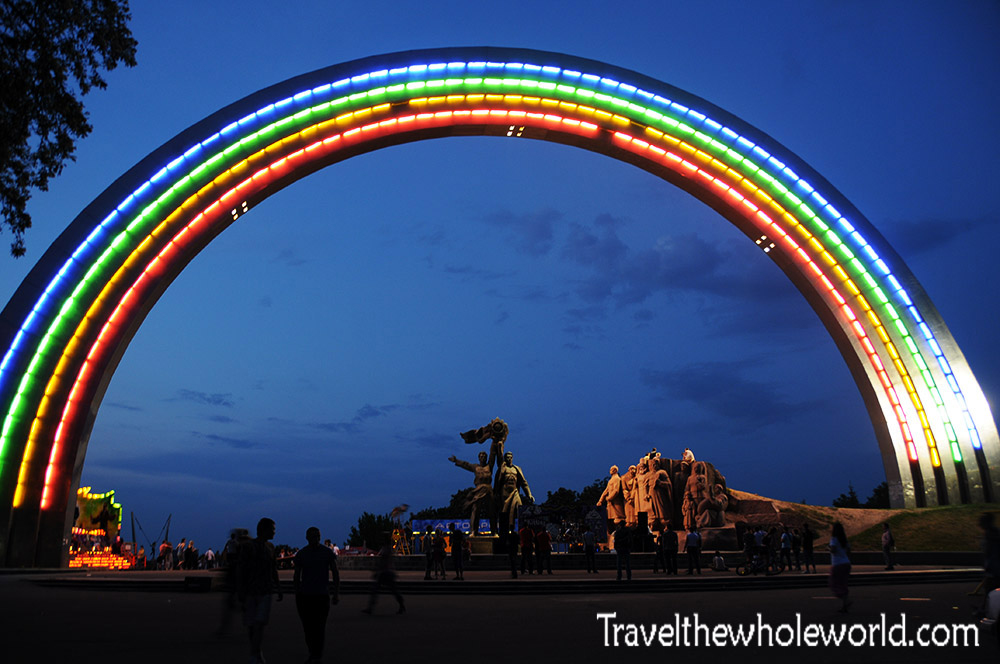
I’ll finish with one of the more random discoveries from my visit. While walking around Kyiv, I spotted what looked like a giant rainbow in the distance and decided to hike over to see what it was. When I arrived, I found a free outdoor concert and a sizable crowd, although most people were already leaving by the time I took this photograph.
The giant titanium arch was erected in 1982 during the Soviet period and became known as the People’s Friendship Arch, commemorating the relationship between Ukraine and Russia within the Soviet historical narrative. When I visited, Ukraine was already debating what to do with monuments like this as part of its decommunization efforts.
The monument’s story continued after my trip. A Soviet-era sculpture beneath the arch depicting Ukrainian and Russian workers was removed in 2022 following Russia’s full-scale invasion of Ukraine. The arch itself remained, but its old symbolism had taken on a very different meaning from the one intended when it was built.