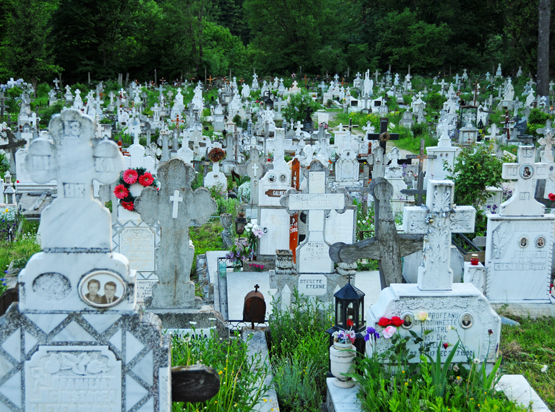
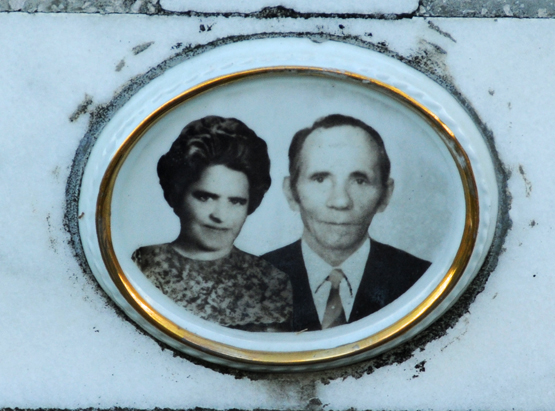
Before reaching Bran, I came across this cemetery while traveling through Romania. The photographs and portraits incorporated into some of the gravestones caught my attention because they give the memorials a much more personal feeling than a simple name and date. Cemeteries like this are also a reminder of how much local history can be found in places you pass without ever planning to stop.
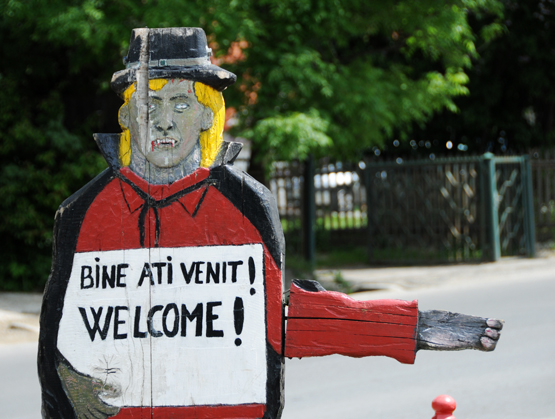

Eventually I made it to Bran, which was by far the most touristy place I visited in Romania. Bran Castle is one of the country’s most famous landmarks, and the entire town around it embraces the Dracula connection. Above is a vampire-themed welcome near the castle, while the photo on the right shows the souvenir area packed with visitors.
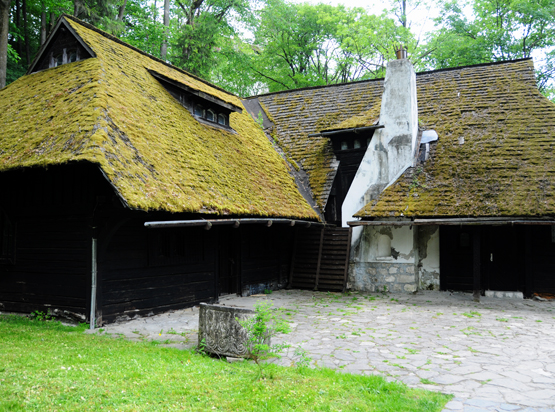
Around the base of the castle are souvenir stands, traditional-style buildings, and displays that lean heavily into the medieval and vampire themes. Even before entering Bran Castle, it’s obvious how important tourism has become to the town.
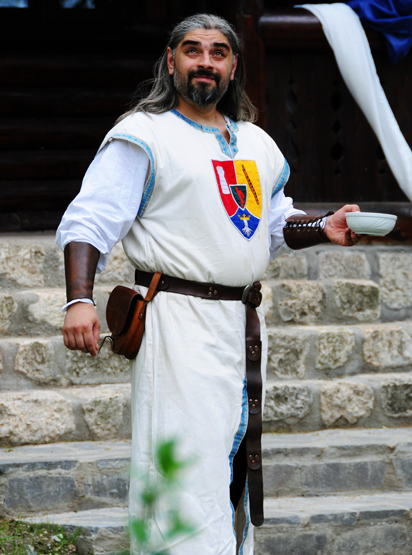
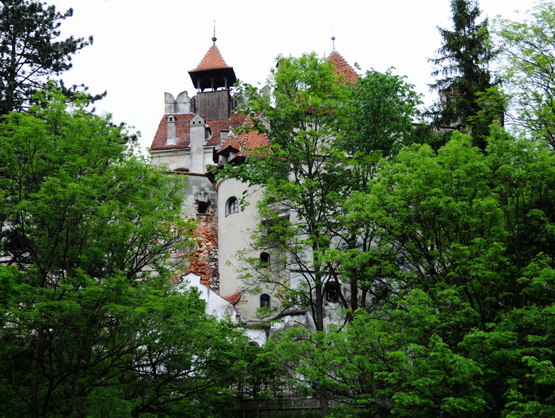
Above is a man dressed in medieval clothing near the castle along with one of my first views of Bran Castle itself. The fortress sits dramatically above the surrounding town, with steep roofs, towers, and white walls that certainly look the part of a place associated with Dracula. The man on the left appears to be studying the sky, although whether he was checking for rain or waiting to see how much daylight remained before the vampires came out is anyone’s guess.
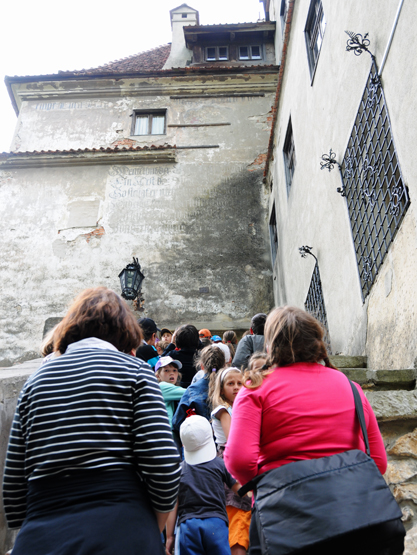
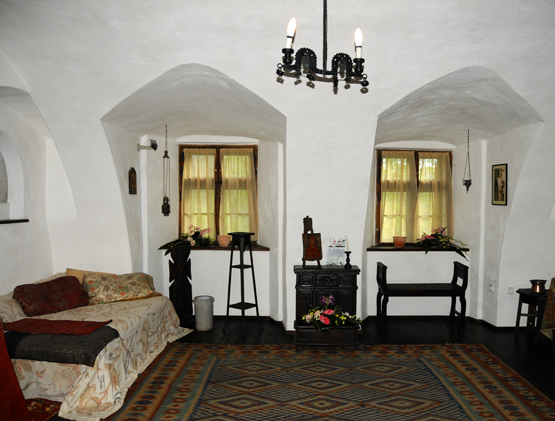
I got a little unlucky when I arrived because a huge school group was entering the castle directly in front of me. The line moved slowly, but once I got inside I deliberately took my time and let them move ahead. That worked out well because after a while I had much quieter sections of the castle almost to myself. The photo on the left shows the crowd near the main entrance, while the room on the right is one of the restored interiors.
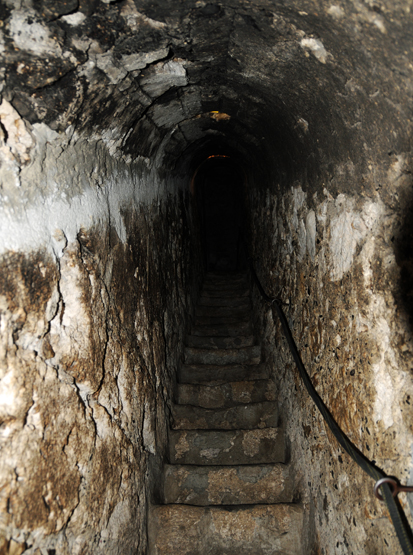
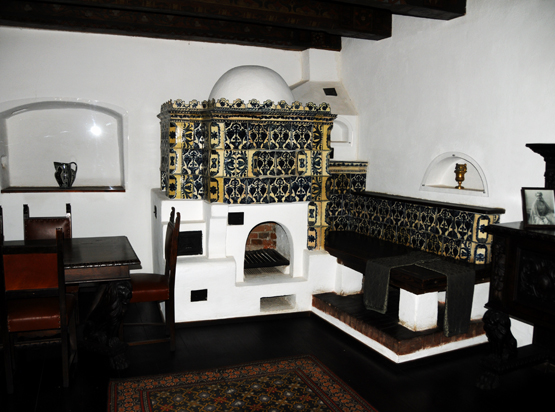
Inside, Bran Castle is a maze of narrow staircases, small rooms, wooden floors, and passages connecting different levels of the fortress. Some rooms have been furnished to show how the castle looked during later periods of its history, while others focus on the building itself and the people who lived here. The compact interior felt much more intimate than I expected from how imposing the castle looks from outside.
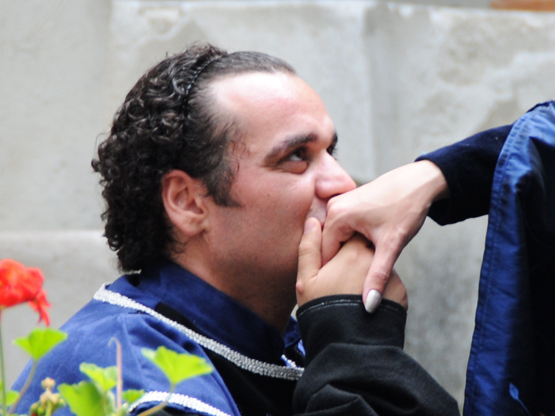
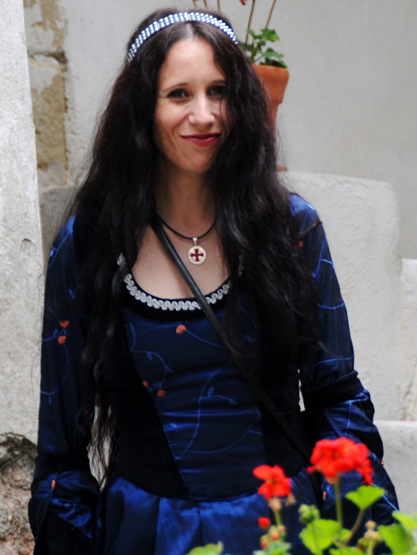
I never figured out the story behind these two visitors. They appeared to be regular tourists rather than people working for the castle, but both were dressed in medieval-style clothing and the woman was carrying a camera. Maybe they were doing some kind of themed photo shoot, celebrating a unique honeymoon, or were simply very committed Dracula and medieval enthusiasts. Whatever the reason, they definitely fit the setting.
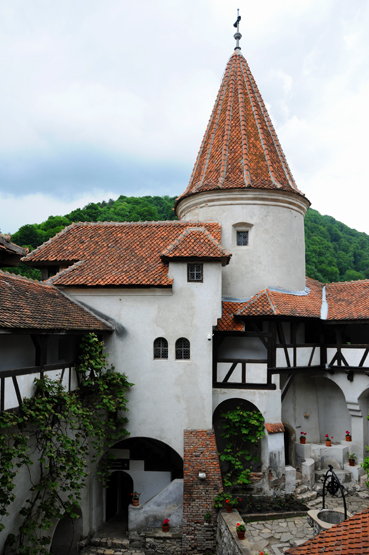
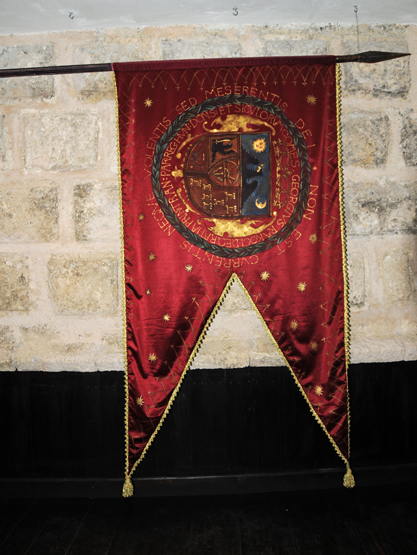
The central courtyard is one of the most distinctive parts of Bran Castle. Looking upward from inside gives you a completely different view of the fortress, with balconies, timber details, stone walls, and towers all crowded into a surprisingly small space.
Bran Castle’s association with Dracula is much stronger in popular culture than in documented history. Vlad III, better known as Vlad the Impaler, may have had only a limited connection to the castle, while Bram Stoker never visited Romania. Still, the legend is now inseparable from Bran, and that atmosphere is part of what makes the visit fun. Even without Dracula, the castle itself is interesting enough to justify the trip.
Bran ended up being one of the more memorable stops from my time in Romania. It was far more touristy than most of the country I had seen, but the castle, medieval atmosphere, mountain setting, and strange mix of history and vampire mythology made it completely different from anywhere else on the trip.
Explore More of Romania
Bran Castle • Bucharest • Dracula’s Castle • Piatra Craiului