Cuyahoga Valley National Park sits between Cleveland and Akron in northeastern Ohio, protecting the landscape surrounding the Cuyahoga River along with historic sections of the Ohio & Erie Canal. Unlike many national parks in the American West, Cuyahoga Valley is surrounded by developed communities, making it an unusual combination of natural scenery, recreational trails, and preserved industrial history.
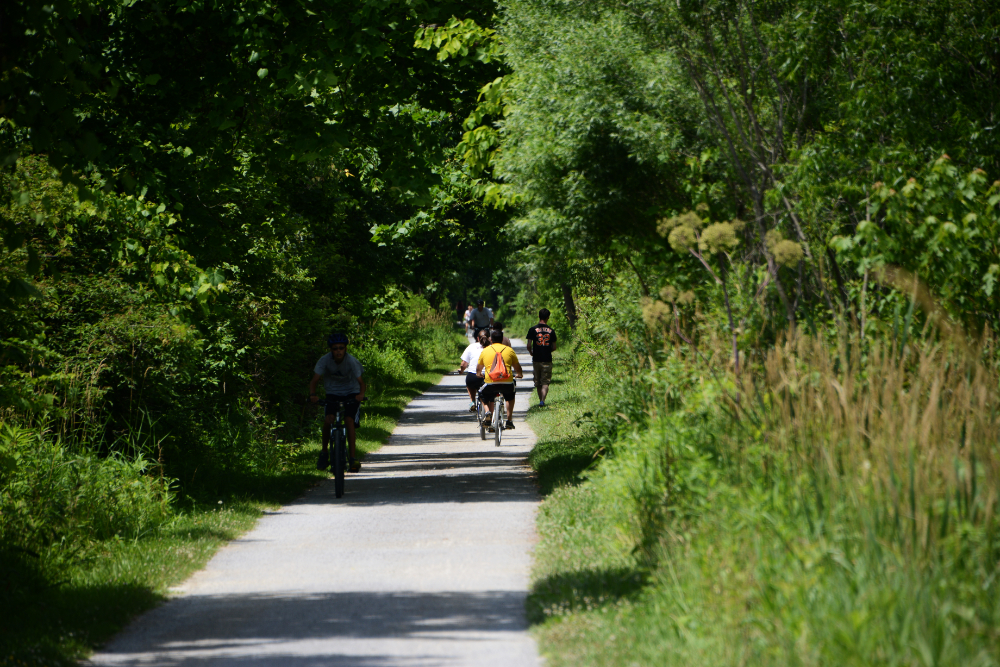
One of the most popular ways to explore the park is the Ohio & Erie Canal Towpath Trail. The trail follows the historic canal route that helped connect Ohio’s interior with Lake Erie and the wider transportation network during the 19th century. There were plenty of cyclists using it when I visited, along with hikers like myself and the occasional jogger.
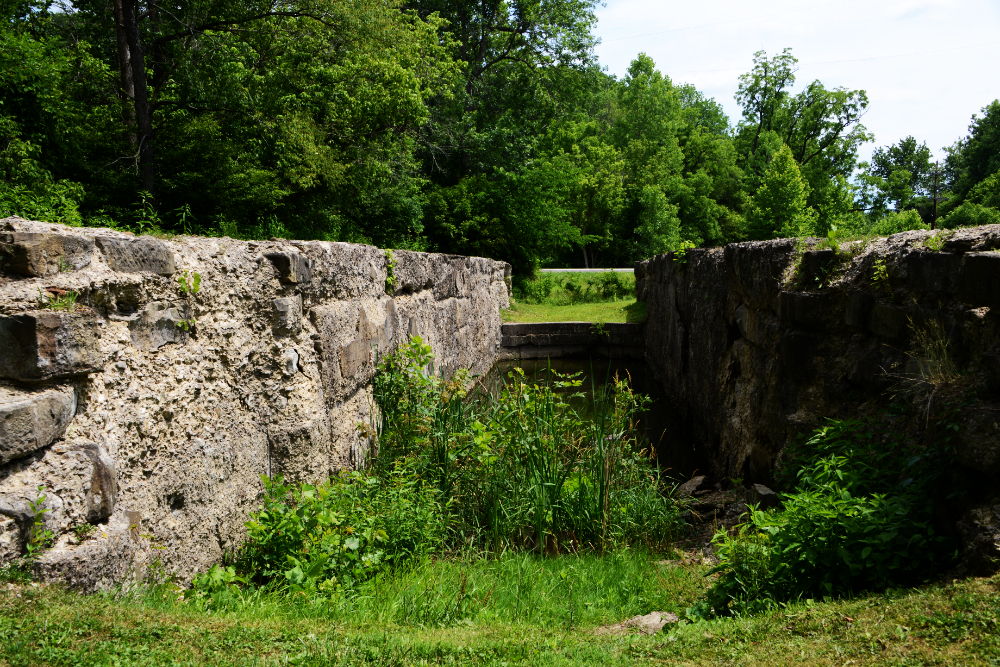
Along the trail are remnants of the old canal system, including locks that once allowed boats to overcome changes in elevation. Before railroads became dominant, canals were essential transportation corridors, moving goods and passengers between growing communities. Today, the surviving structures provide an interesting reminder of how important this region was to Ohio’s early economic development.
Hiking Beyond the Towpath Trail
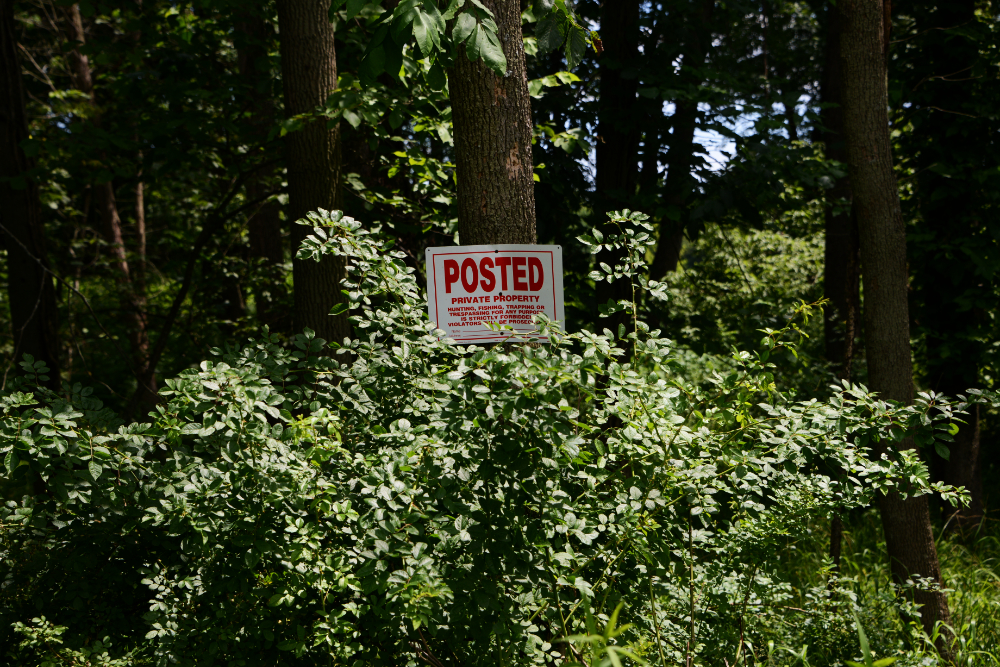
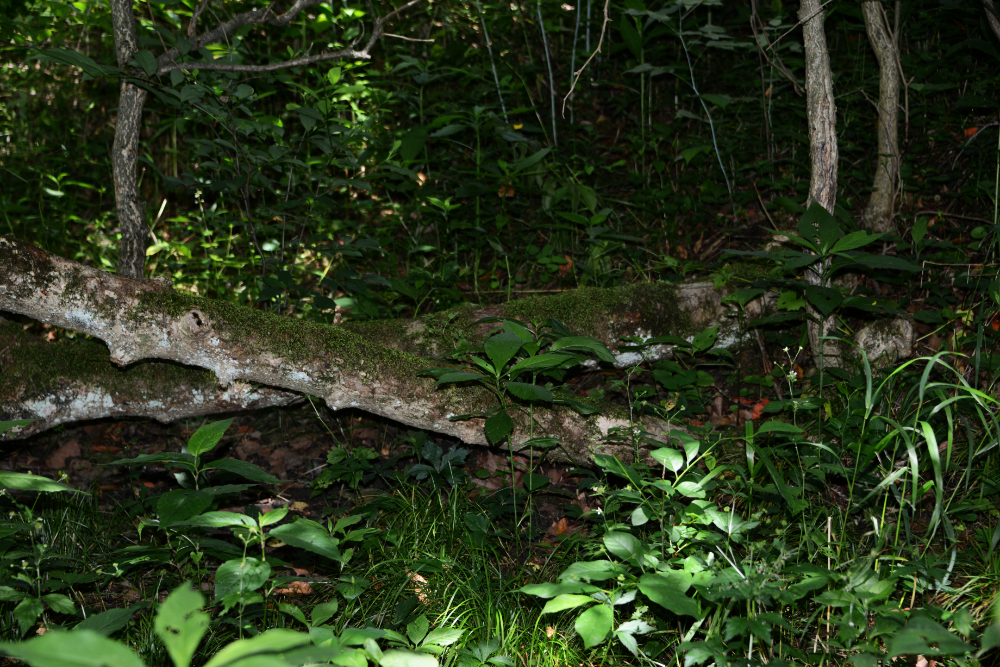
When I first stepped into Cuyahoga Valley and began exploring, I was a little disappointed. Here I was in a national park, walking along the Towpath Trail while passing fences and no-trespassing signs. Aside from the historic canal, I initially struggled to see what made the area worthy of national park status.
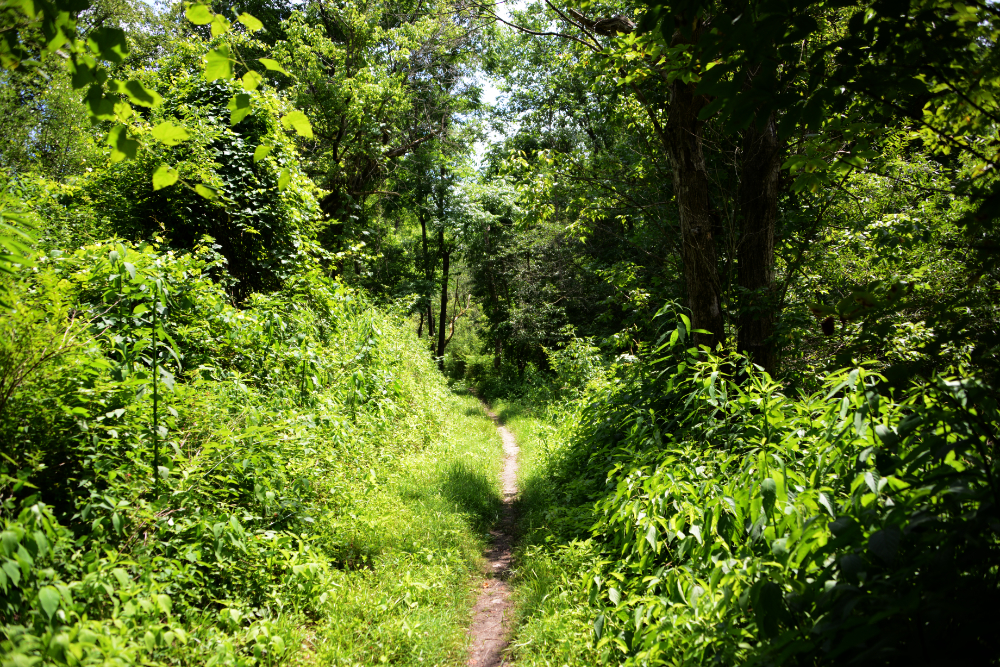
My opinion changed fairly quickly once I left the Towpath and started exploring some of the smaller hiking trails. The developed surroundings gave way to wooded footpaths, thick vegetation, ponds, and streams. Suddenly, the landscape felt much farther removed from the surrounding cities.
The contrast was surprising. One moment I was walking through an area that felt like a suburban recreational corridor, and before long I was surrounded by forest with relatively little evidence of nearby development.
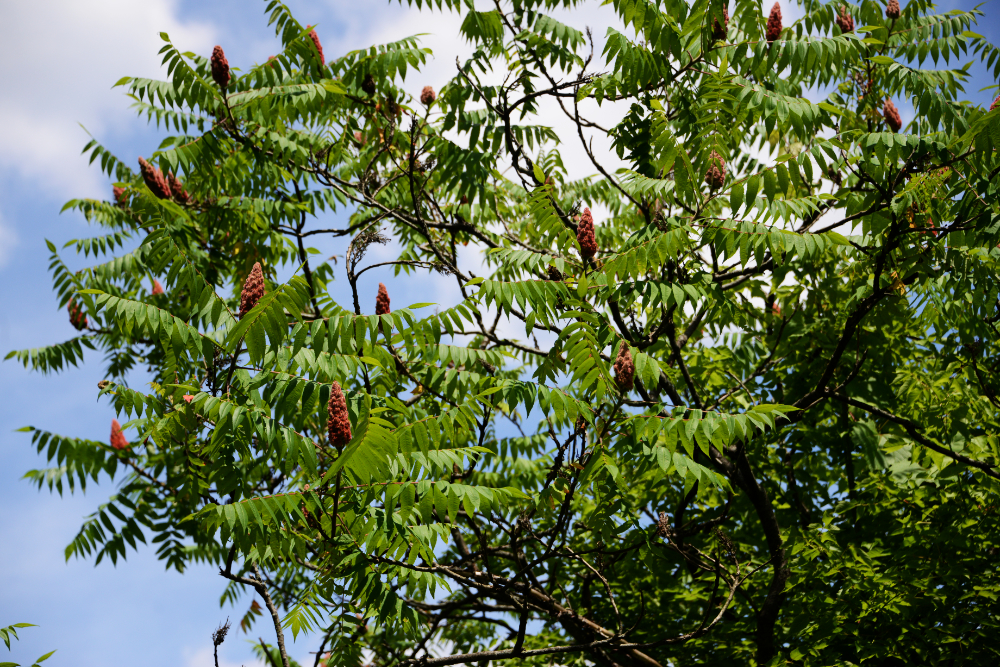
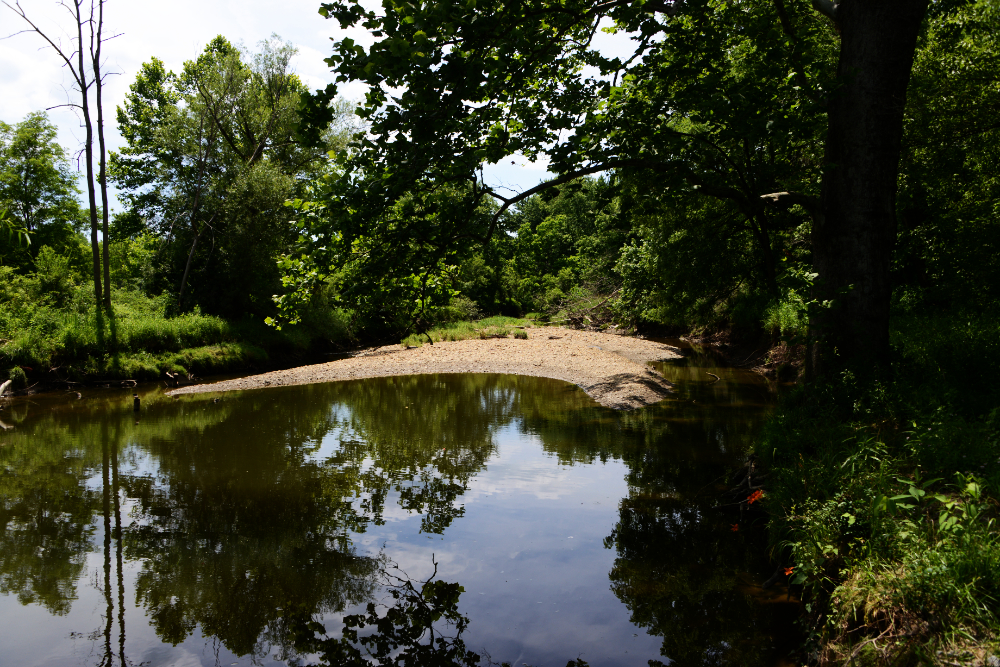
Once I got farther into the woods, this was much more like what I had expected to find. The trails passed through dense forest and around wetlands and ponds, and there was a surprising amount of wildlife considering how close the park is to major urban areas.
The combination of forests, waterways, and wetlands provides habitat for a wide variety of animals. Although the park lacks the vast wilderness of some western national parks, its protected landscape offers an important natural refuge in one of Ohio’s most heavily populated regions.
Wildlife in Cuyahoga Valley National Park
I’m not sure whether I was simply lucky, but I came across quite a few animals during what wasn’t even a particularly long hike. I wasn’t able to photograph most of them, although I managed to catch a rabbit as it fled down the trail.
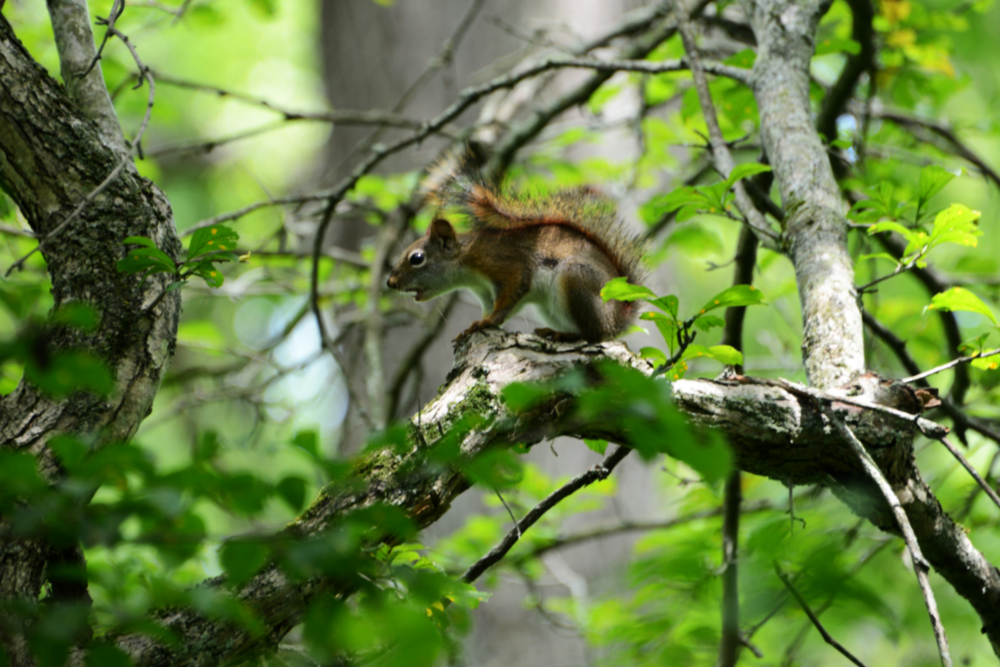
The squirrel was much less concerned about my presence. It was making a surprisingly loud barking sound and didn’t seem bothered that I was standing only about a dozen feet away. With so many people hiking and cycling through the park, some of the wildlife seemed fairly accustomed to having humans nearby.
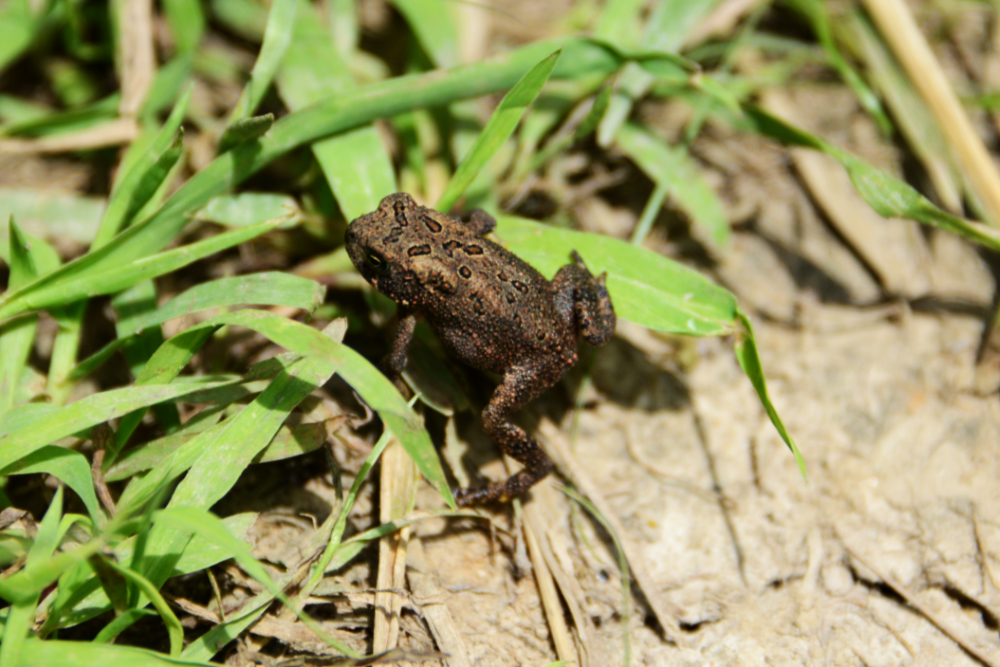
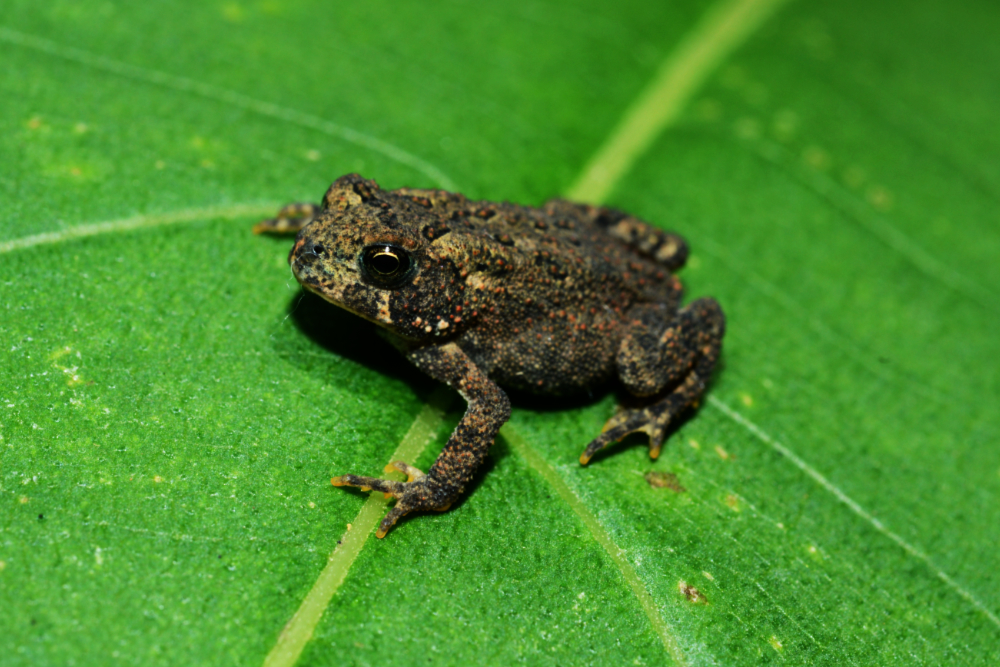
I also came across a small toad sitting along the trail. Fortunately, I happened to have my macro lens with me, so after taking a normal photograph, I switched lenses to get a much closer look.
Since the macro lens was already attached to my camera, I started paying more attention to the smaller wildlife around me. There were plenty of insects and other tiny subjects that I might otherwise have walked right past.
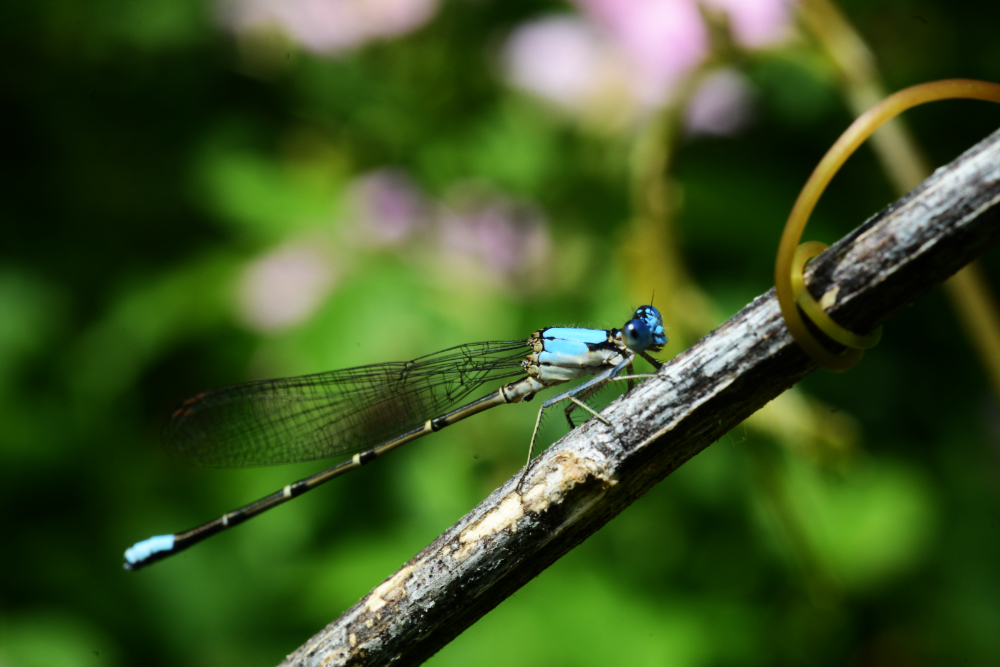

That resulted in these two photographs: a dragonfly and another insect I encountered along the way. Between the larger animals, insects, ponds, and thick forest, the park ended up having considerably more wildlife than I expected when I first stepped onto the Towpath Trail.
Rock Formations and Forest Streams
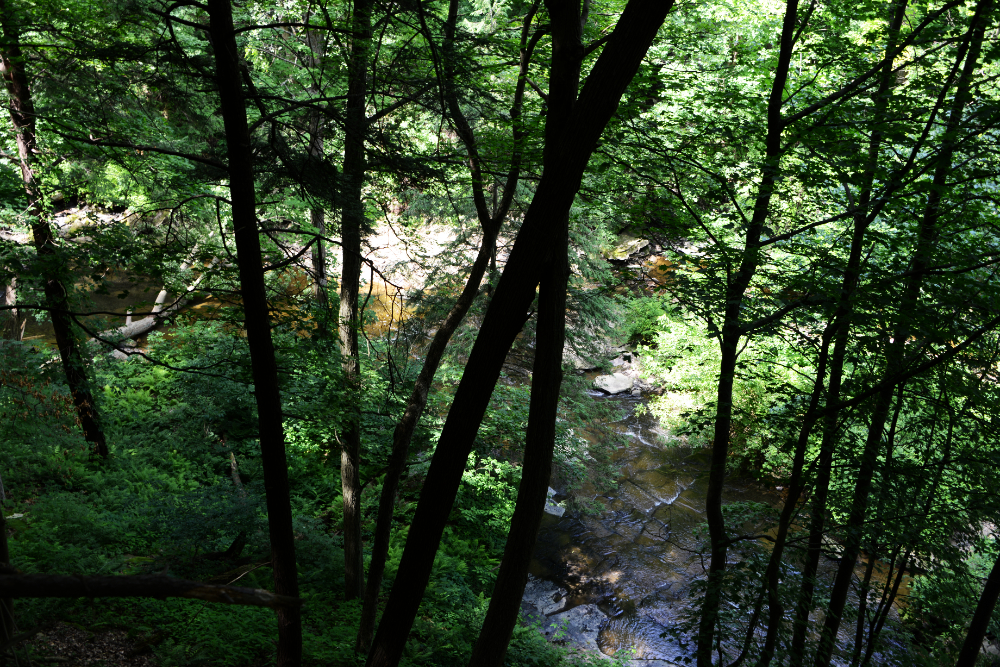
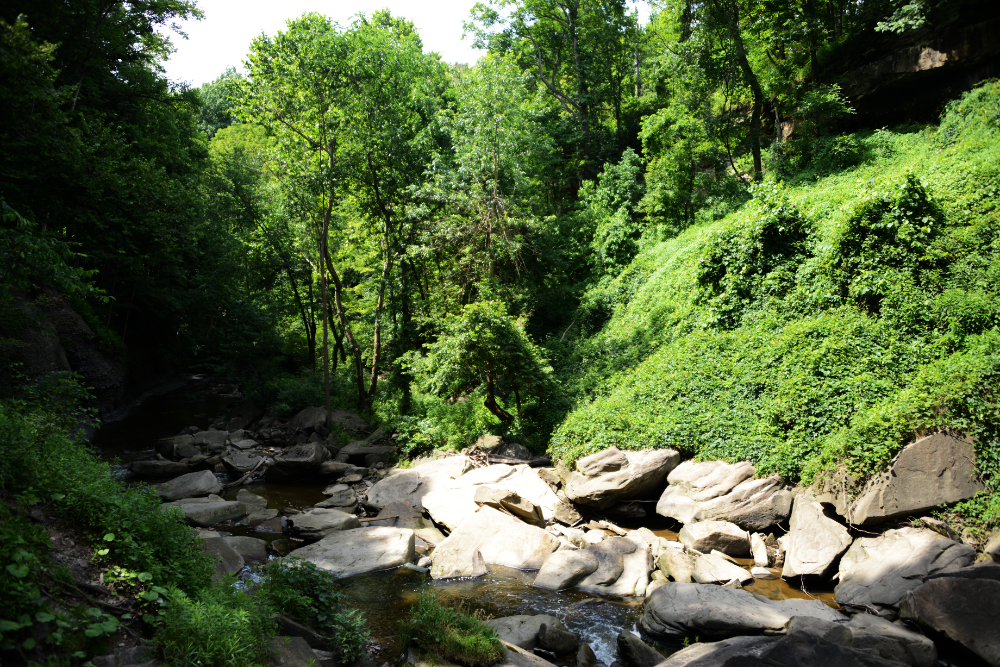
Continuing through the park brought me past exposed rock formations and small creeks cutting through the forest. The terrain was more interesting than I had initially expected, with rocky outcrops and wooded valleys breaking up the landscape.
Cuyahoga Valley doesn’t have the enormous mountains or dramatic wilderness found in many western national parks. Nevertheless, once I got away from the developed areas, I began appreciating it for what it was: a surprisingly green and wild landscape squeezed between some of Ohio’s largest cities.
Brandywine Falls
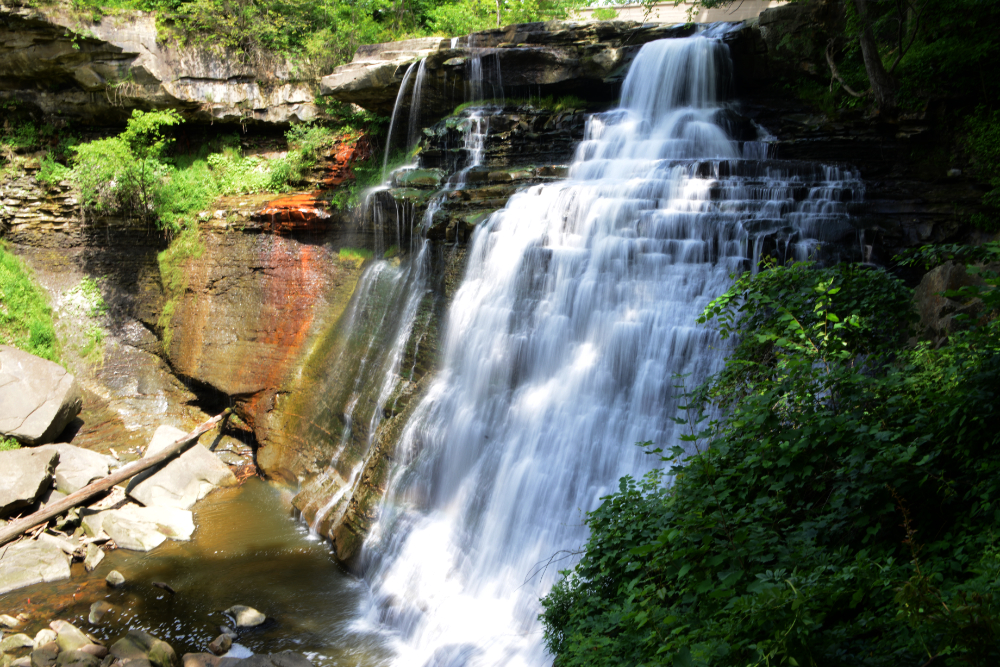
The last place I visited in Cuyahoga Valley National Park was Brandywine Falls, and it was easily the most scenic part of the park I saw. The waterfall is accessible by a relatively short walk from a nearby parking area, although it can also be incorporated into longer hikes through the surrounding trails.
Near the falls, a boardwalk follows the rocky gorge and provides views of the exposed layers of stone. The waterfall drops approximately 65 feet (20 meters) over a series of rock ledges into the gorge below, making it one of the park’s most recognizable natural landmarks.
Brandywine Falls can look dramatically different depending on the season. During particularly cold winters, portions of the waterfall can freeze, while periods of heavy rainfall can transform it into a much more powerful cascade.
By the time I reached the falls, my first impression of Cuyahoga Valley had completely changed. What initially seemed like an unusually developed national park had turned into a day of wooded trails, wildlife encounters, streams, historic sites, and one of Ohio’s most impressive waterfalls.
Cuyahoga Valley may not offer the remote wilderness of America’s western national parks, but it has a character of its own. I’m glad I ventured beyond the Towpath Trail, because the forests, wildlife, and Brandywine Falls ultimately made the visit far more rewarding than I’d expected.
Explore More of Ohio
Cincinnati • Cleveland • Columbus • Cuyahoga National Park
