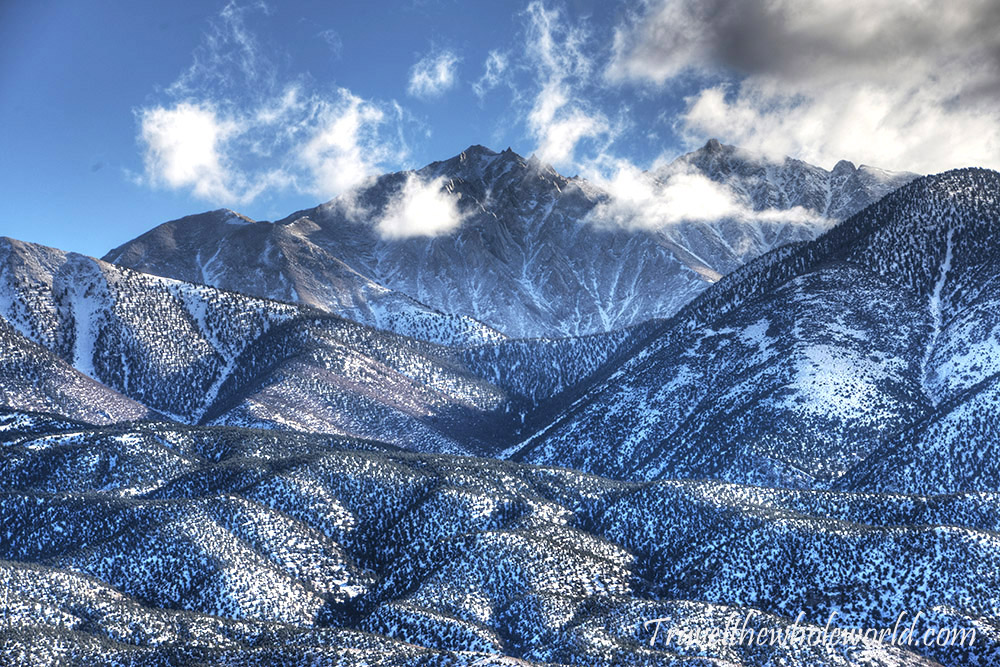
Boundary Peak is the highest point in Nevada, rising to 13,146 feet (4,006 meters). Strangely, there’s some debate over whether it should really be considered Nevada’s highest mountain. Some people argue for Wheeler Peak because it sits completely within Nevada, while Boundary Peak is close to the California border and connected by a ridge to the slightly taller Montgomery Peak in California.
I find the whole argument pretty strange. Being entirely within a state or country has never been a requirement for being its highest point. Nobody says Mt. Everest isn’t Nepal’s highest mountain because it sits on the border with Tibet. The same logic would create problems for famous mountains around the world, including Mont Blanc and K2. Boundary Peak is sometimes even dismissed as little more than a bump on the way to Montgomery Peak. Before arriving, I seriously thought Boundary Peak might be the little bump beneath the cloud on the far left of my photo above. Luckily, Boundary Peak is actually the large mountain directly in the center, with Montgomery Peak barely visible to the right. I don’t know how anyone could look at it and say that’s not a mountain!
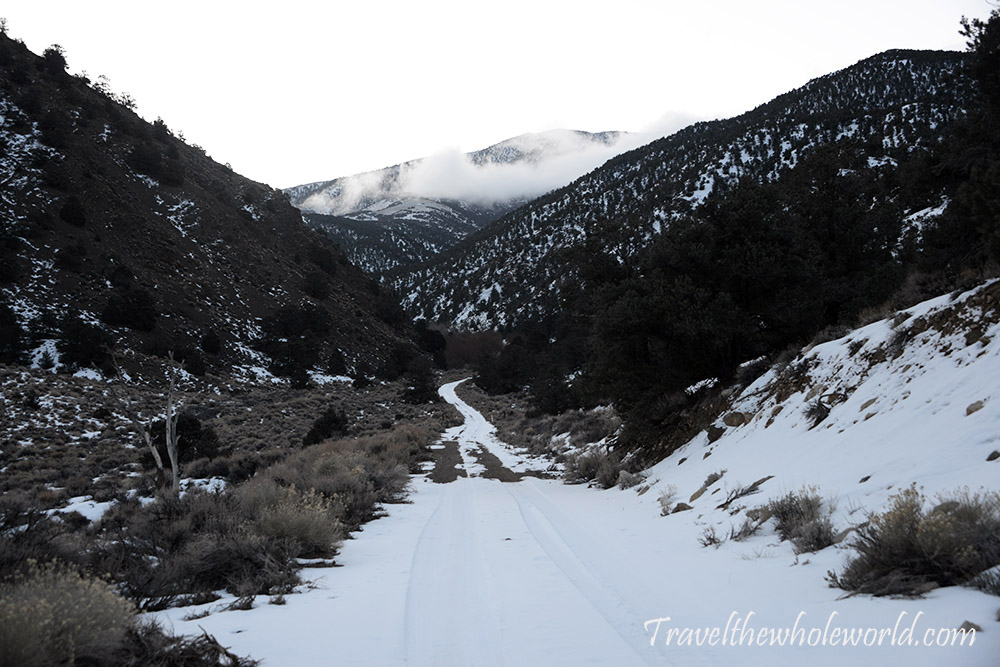
Despite all that rambling about Boundary Peak, I should probably mention that I didn’t summit it. In fact, I didn’t even make it to the trail! The normal hike begins around 9,600 feet (2,925 meters), but winter conditions stopped my rental car at only about 7,000 feet (2,100 meters). The locals in the towns outside the mountains didn’t even realize how much snow had accumulated at higher elevations. The photo above was taken around 7,000 feet and was as far as my rental car could go. :contentReference[oaicite:0]{index=0}
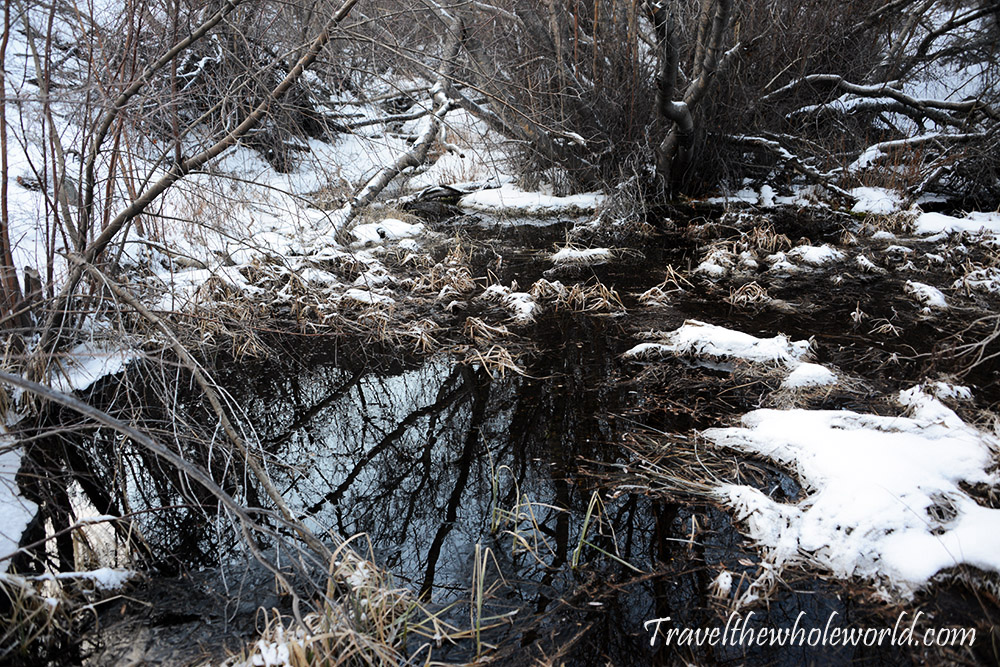
Ideally I would have started hiking around 8 AM from the normal trailhead, but at 7:30 that morning I was still about 3,000 feet (900 meters) below it. I had three choices: give up and go home, walk several miles along the winding road to the trailhead, or make my own direct route up the mountain. Naturally, I chose option three and headed off trail. One of the first things I came across was this little pond, which somehow wasn’t frozen despite the winter conditions. :contentReference[oaicite:1]{index=1}
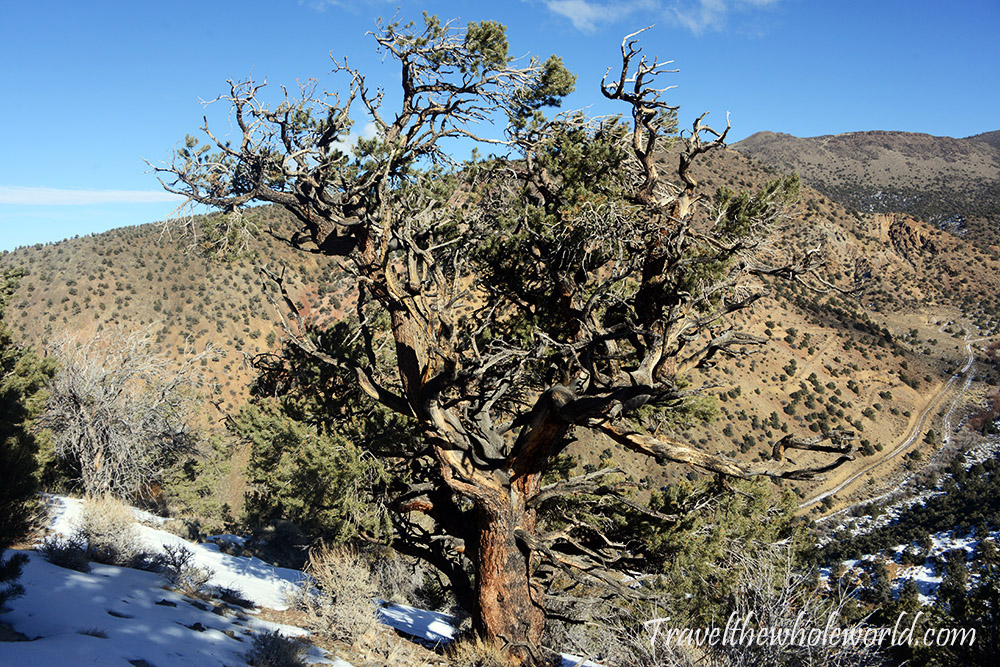
I had a topographical map with me, and it looked like the hardest part would be the initial climb to gain a ridge. From there I could make a much more direct approach toward Boundary Peak. I’d still have to climb the additional 3,000 feet, but cutting across the mountain instead of following the road would save me several miles. The initial climb was steep enough that, believe it or not, I was already using my ice axe at only 7,000 feet. Once I gained the ridge I took the photo above. You can see the road behind the tree winding toward the normal trailhead and why taking the ridge seemed like the smarter route.
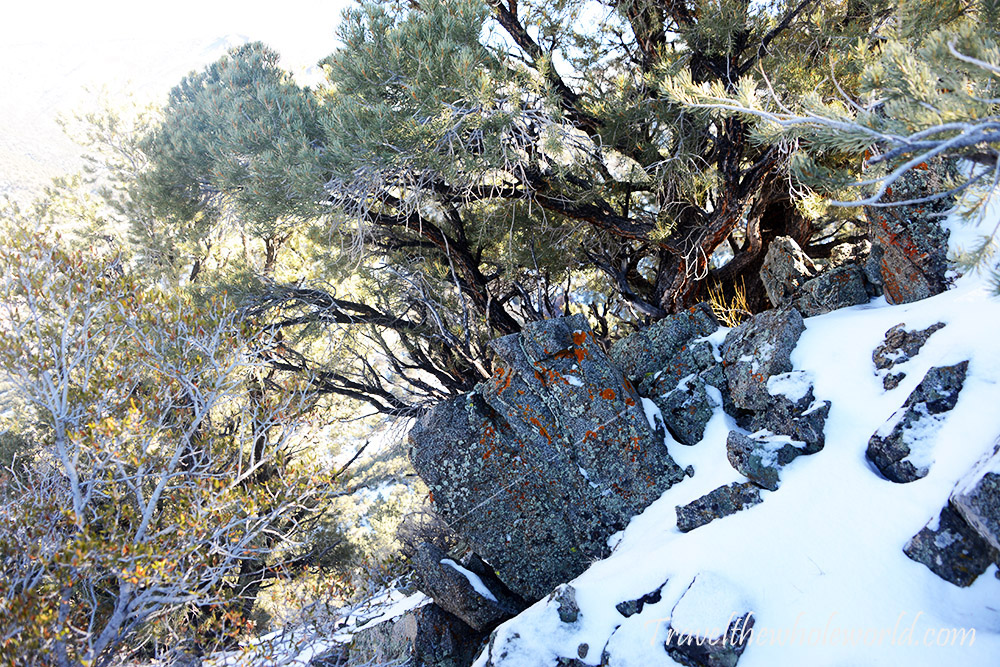
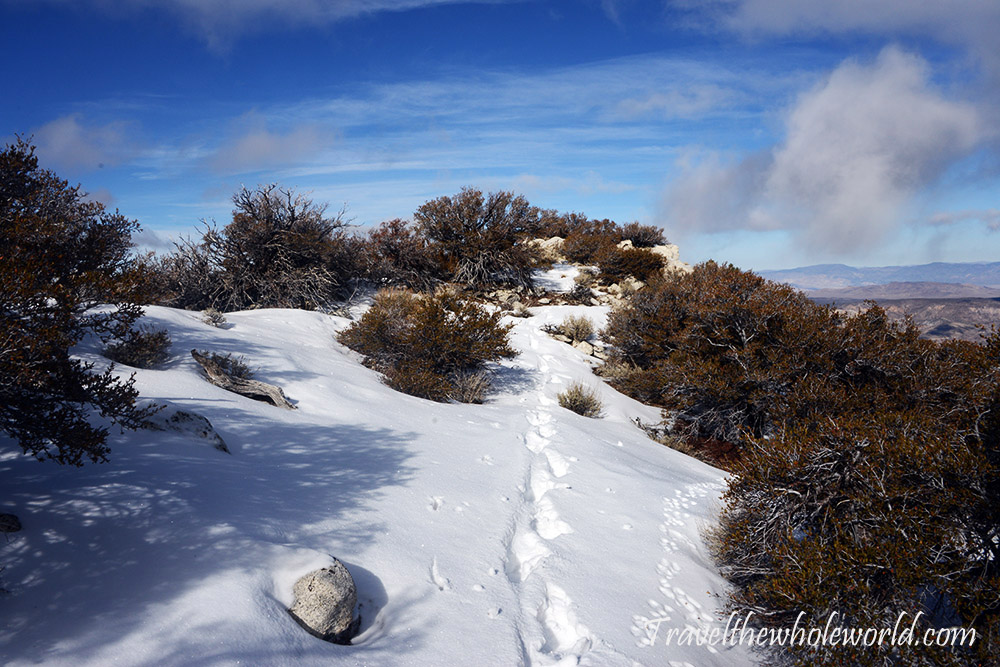
After climbing the steep gully to the ridge, things became surprisingly easy. I came across this colorful rock above, while the photo below looks back along the ridge I had followed. I knew that traveling alone and off trail in the mountains during winter wasn’t exactly the safest decision, especially since I had no idea what conditions I might encounter farther up. So far, though, the shortcut was working perfectly. The terrain wasn’t difficult and staying on the ridge made it almost impossible to get lost.
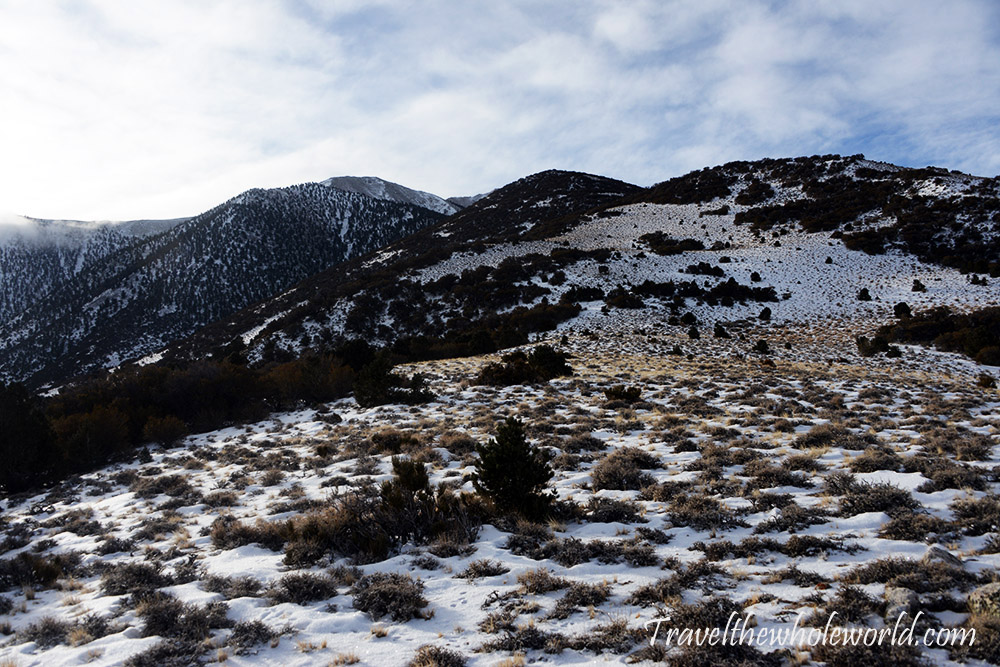
There was plenty of snow, but it was so light and powdery that it provided almost no resistance. I barely had to break trail and figured this must be that famous western powder I always hear about! The photo below shows the next ridge I needed to gain, which would put me above 9,500 feet. Although I still wasn’t on the official trail, reaching that elevation would essentially put me at the same height as the normal starting point while leaving me considerably closer to the summit.
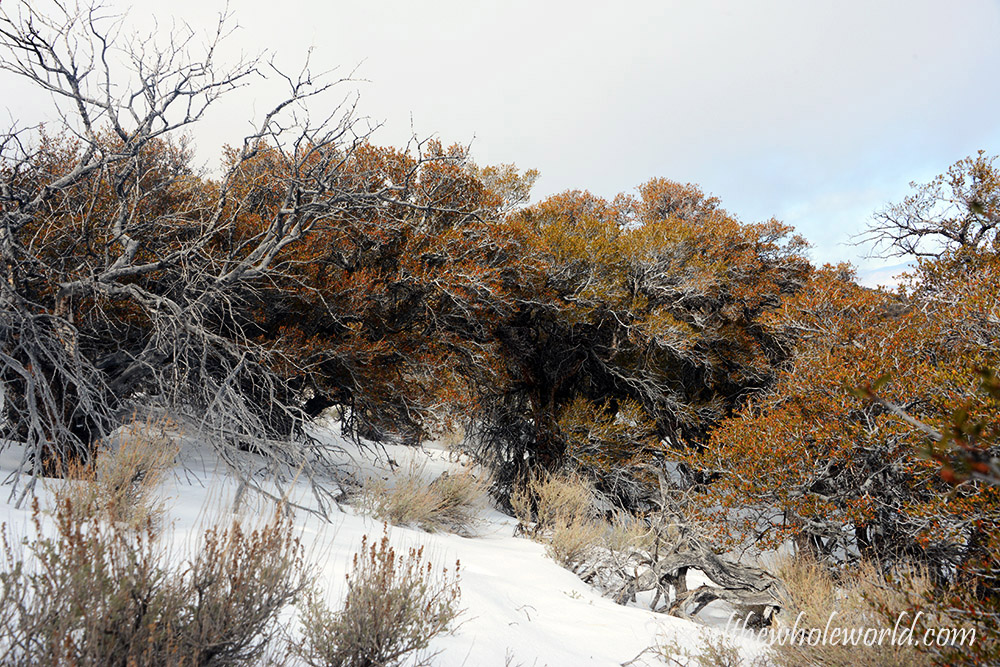
I wish I had taken more photos to document this climb, but until I return these will have to do. The real catalyst for turning around ended up being these evil trees. I had assumed that as I climbed higher the vegetation would gradually disappear, but around 10,000 feet I instead encountered what felt like a wall of trees. Most of the time I could duck underneath them or find a way around, but occasionally I had no choice but to climb directly through the branches.
My progress slowed dramatically, and after enough crawling, climbing, and cursing, I looked down and noticed a large tear in my pocket. Even worse, my GoPro was gone! I’d already lost one GoPro while swimming with manatees in Florida on practically the first day I used it, and I wasn’t about to lose another one. My confidence in reaching the summit had only been moderate to begin with because I had effectively added thousands of feet of climbing to an already challenging winter ascent.

It’s always disappointing to turn around on a mountain, and at first I was even more disappointed because I assumed my GoPro was gone forever. I figured it had been ripped from my pocket somewhere in the thickest trees, but only about 15 minutes after turning around I spotted it lying in the snow. It wasn’t even 11 AM yet, so for a moment I considered turning around again and continuing upward.
Then I looked toward the mountain. From where I stood I could see nothing but more thick trees ahead, and worse weather was beginning to move in. I still had plenty of daylight and had made it surprisingly close to the middle section of the normal route, but I decided I’d pushed my improvised winter climb far enough. Boundary Peak would have to wait for another day. I still want to climb it in winter, but next time I’ll make sure I rent a four-wheel-drive vehicle and actually make it to the trailhead!
Explore More of Nevada
Boundary Peak • Carson City • Lake Tahoe • Las Vegas • Nevada Deserts • Reno