Historic Homes and Southern Architecture in Savannah
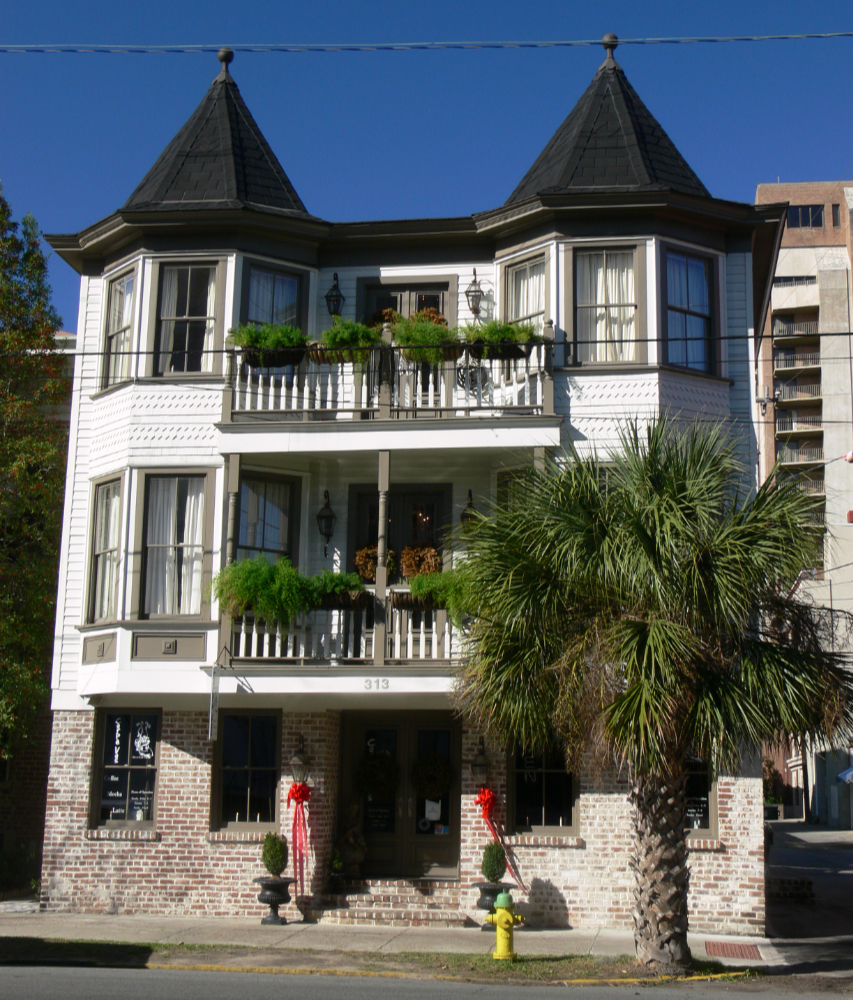
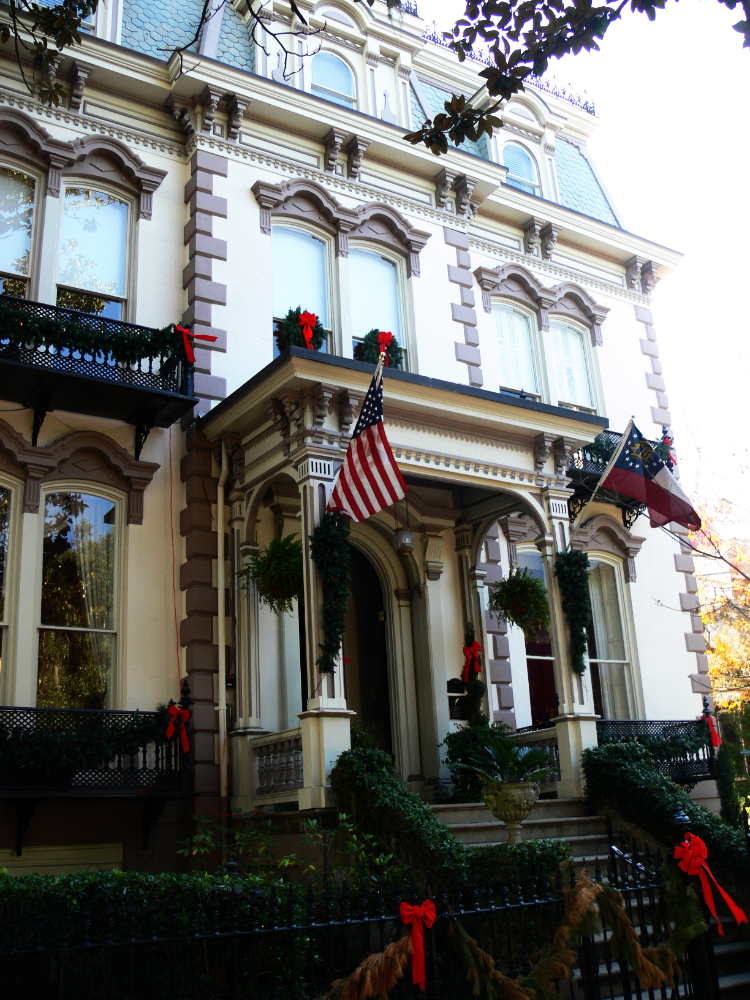
What stands out most about Georgia to me are its Southern traditions, subtropical climate, and distinctive architecture. Savannah is an especially good place to experience all three. Founded in 1733, the city has preserved an extraordinary collection of historic homes, churches, public squares, and commercial buildings that reflect its long history as an important Southern port.
The two houses pictured above are good examples of Savannah’s residential architecture. The first has a large palm tree in front, while the second proudly displays both the American and Georgia flags from its porch. Compared with homes I’ve photographed in places like West Virginia and Pennsylvania, the architectural differences are immediately noticeable. Savannah’s porches, decorative details, and subtropical vegetation give its neighborhoods a distinctly Southern character.
Savannah College of Art and Design and the Cotton Exchange
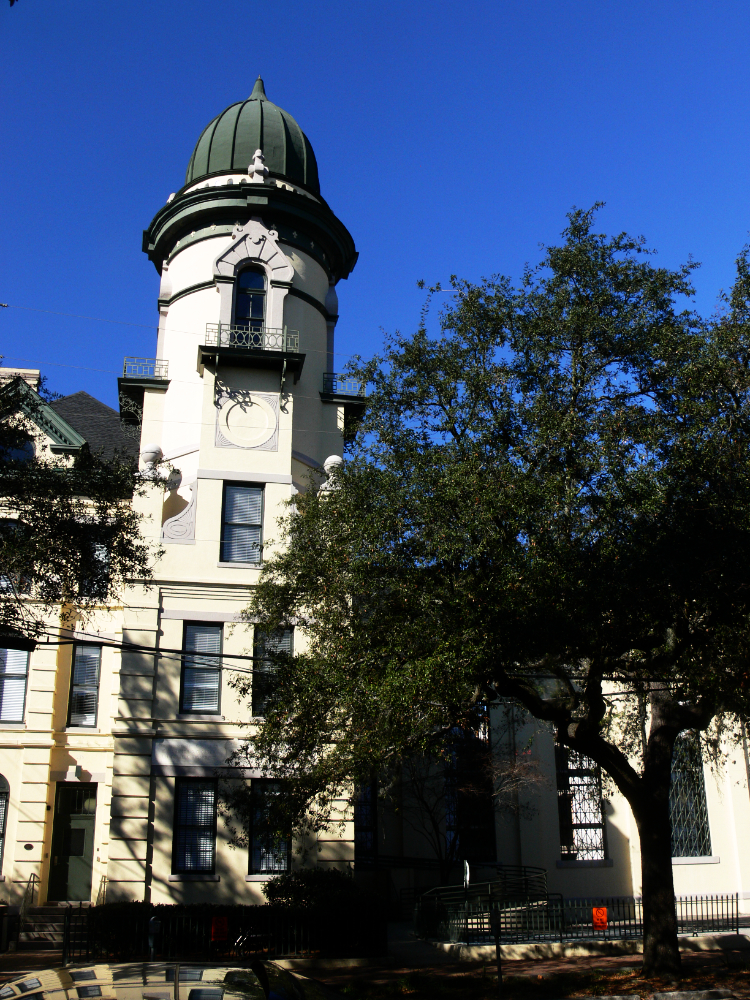
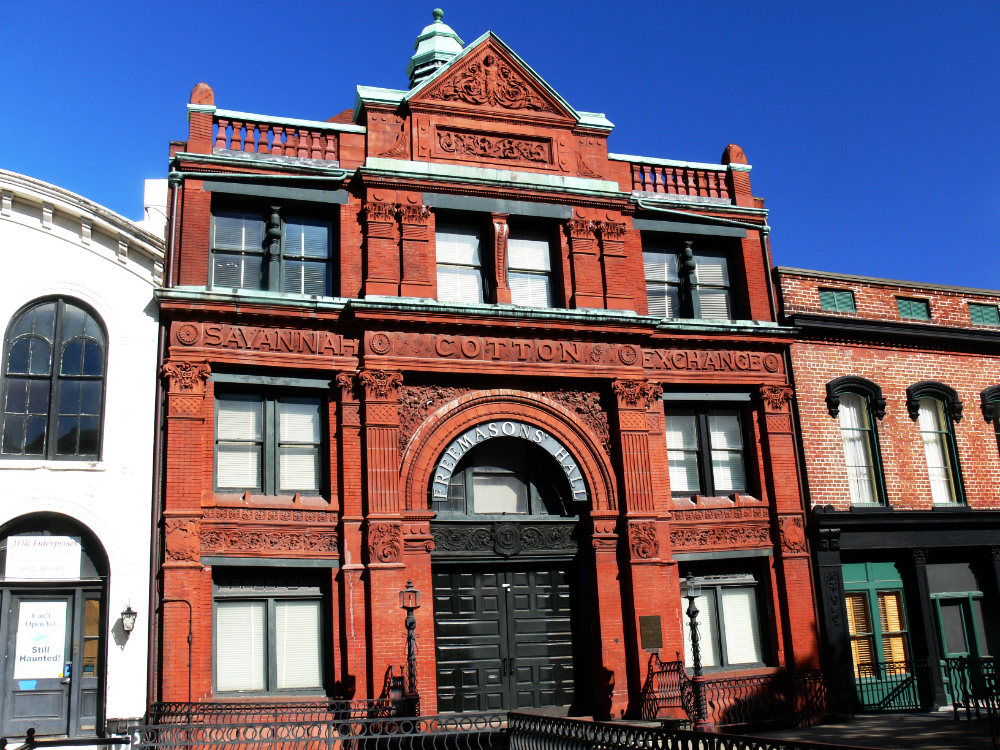
Savannah is also known for its arts community, particularly the Savannah College of Art and Design, commonly called SCAD. Founded in 1978, the university occupies numerous historic buildings throughout the city, giving many older structures new uses while preserving their architectural character. I’ve even known a couple of people from my high school who moved to Savannah to earn their degrees.
The second photograph shows the historic Savannah Cotton Exchange, a reminder of the city’s importance in the nineteenth-century cotton trade. Completed in 1887, the building stands near the waterfront, where cotton was once shipped through one of the South’s busiest ports. Savannah’s prosperity during this period was closely connected to plantation agriculture and enslaved labor, an important part of the history behind its surviving commercial architecture.
Cathedral Basilica of St. John the Baptist
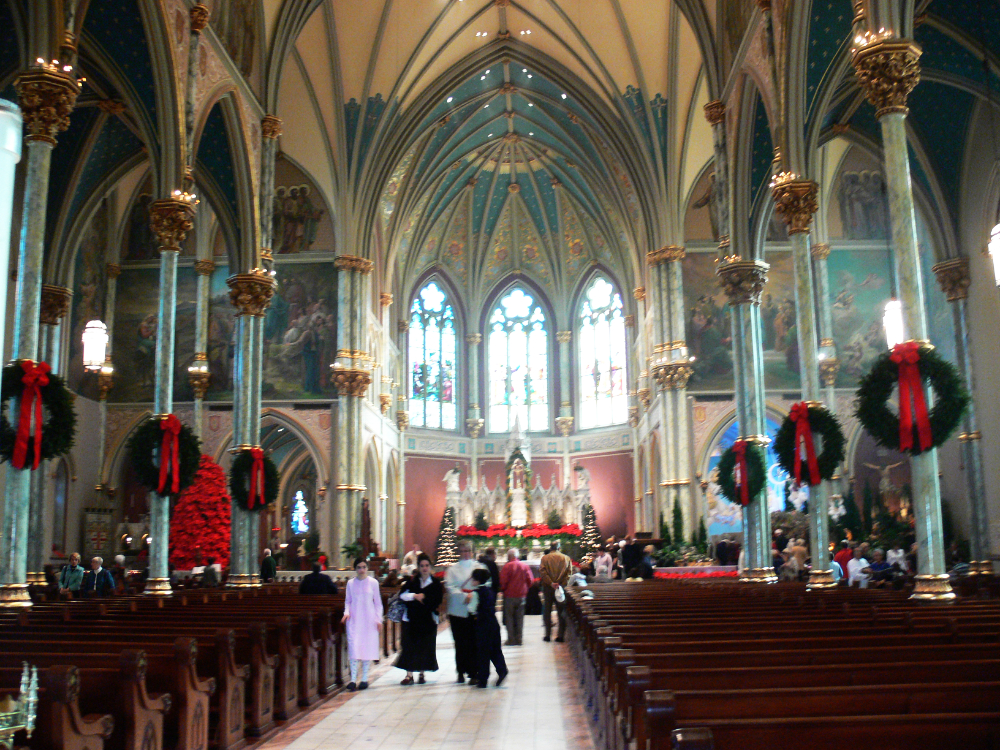
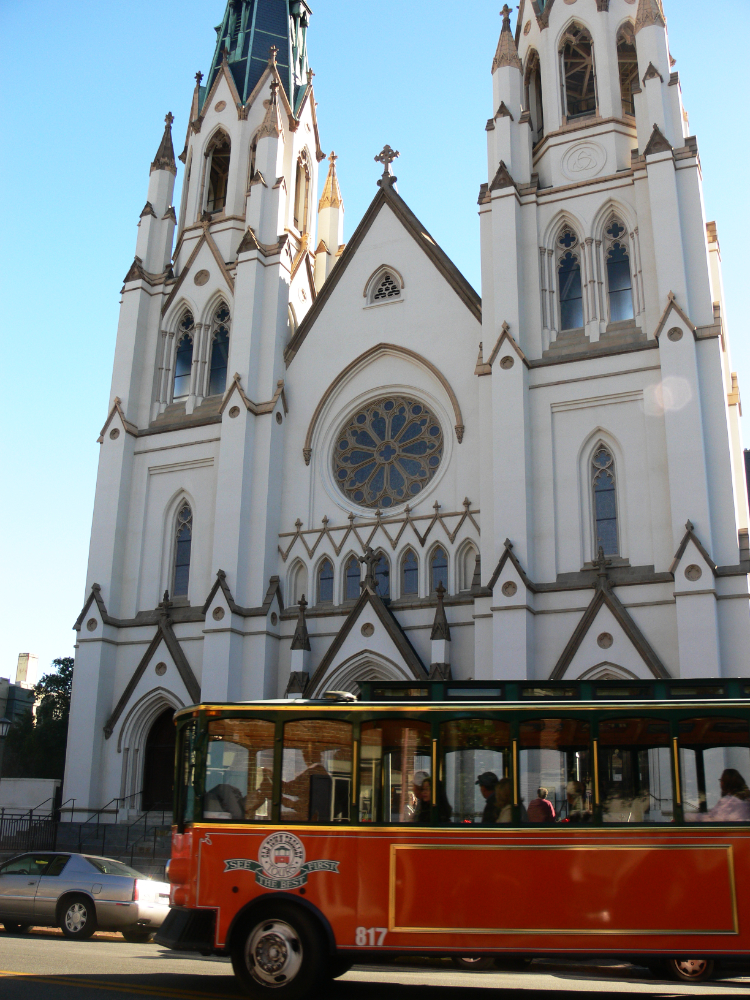
One of the most beautiful churches I’ve ever visited is the Cathedral Basilica of St. John the Baptist in Savannah. Its twin spires, Gothic Revival architecture, stained-glass windows, and elaborate interior make it one of the city’s most impressive landmarks. The present cathedral was dedicated in 1876, although a major fire in 1898 required substantial rebuilding and restoration.
I took the interior photograph just after attending Mass on New Year’s Day. The cathedral’s soaring columns, vaulted ceiling, and detailed religious artwork were particularly impressive in person. The exterior photograph shows the church from the street, with one of Savannah’s sightseeing trolleys passing nearby.
Historic Streets and Stairways Near the Savannah River
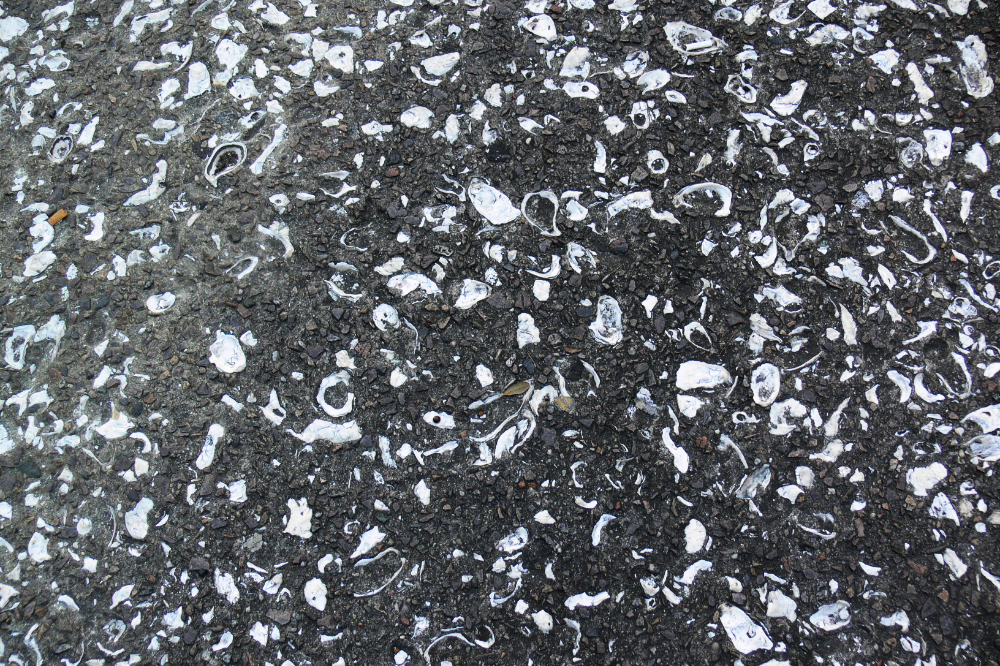
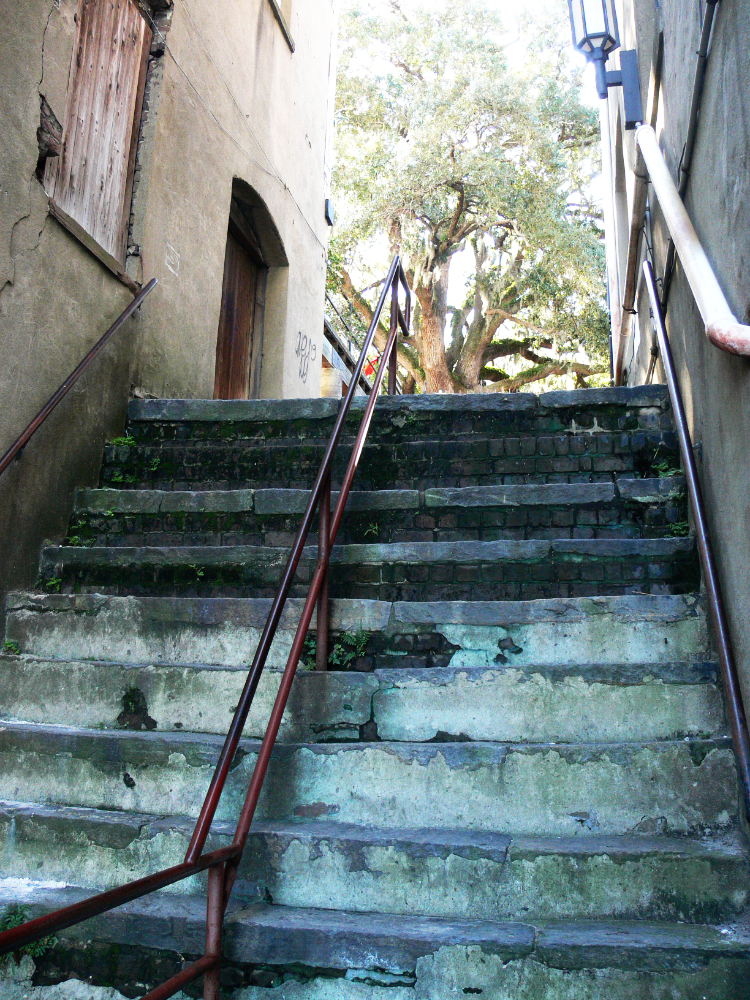
As you approach Savannah’s riverfront, the city’s unusual layout becomes more apparent. Much of the historic district sits on a bluff above the Savannah River, while River Street runs along the waterfront below. Old stairways, narrow passages, and sloping streets connect the two levels, creating an interesting network of pedestrian routes through the historic buildings.
The first photograph shows an unusual shell-covered surface I encountered near the riverfront. The second shows one of the steep stairways descending toward River Street. These historic passages add character to the area, although the steps can be difficult for older visitors or anyone with limited mobility. Elevators and other accessible routes are available at some locations along the waterfront.
River Street and Savannah’s Nightlife
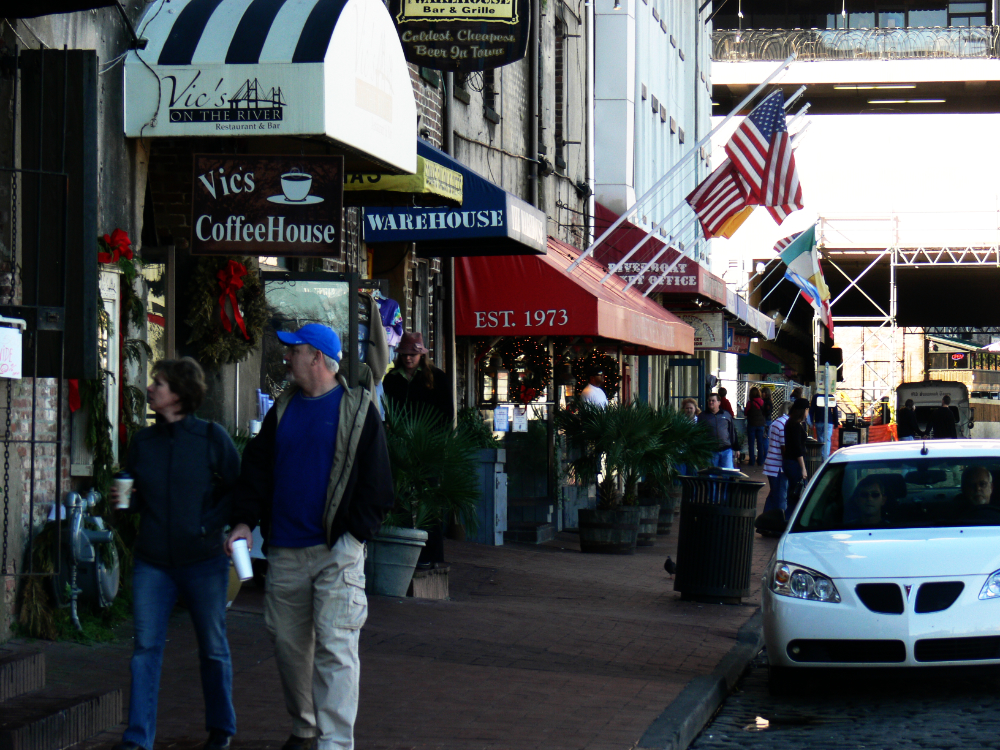
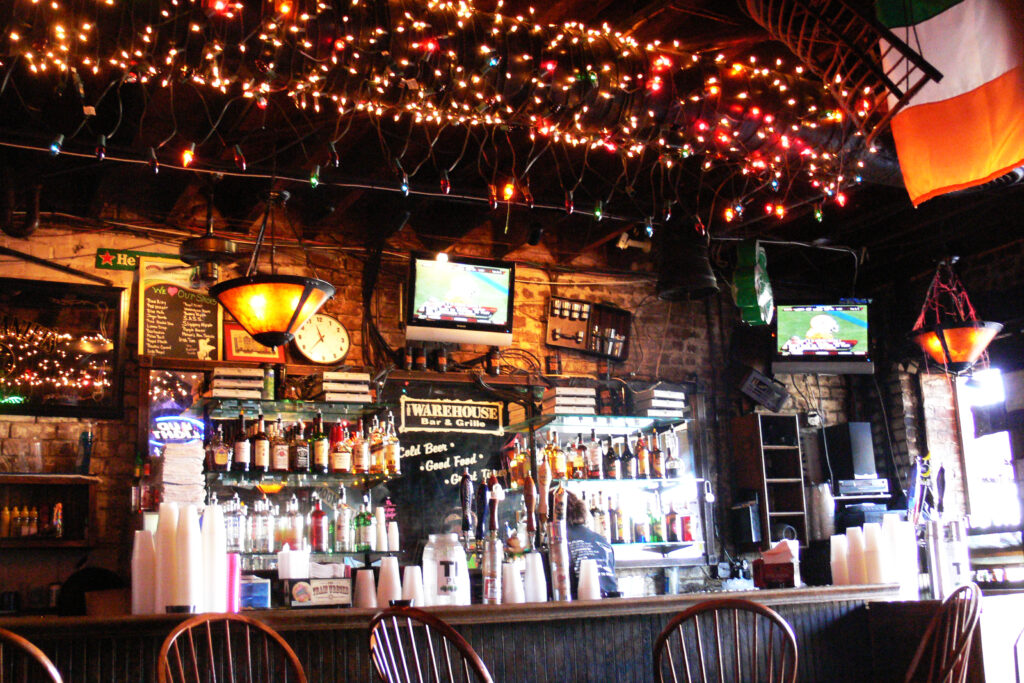
River Street is one of Savannah’s most popular destinations, lined with historic warehouses that have been converted into restaurants, shops, galleries, and bars. Its cobblestone streets and waterfront setting make it an attractive place to walk during the day, while the concentration of bars and restaurants creates a lively nightlife scene.
I took the second photograph on New Year’s morning. The bar was practically empty when I arrived, but only a few hours earlier it had been packed with people celebrating the holiday. Savannah is also famous for its enormous St. Patrick’s Day celebrations, when crowds gather throughout the historic district and along the riverfront.
The waterfront’s commercial buildings reflect Savannah’s history as a major port. Many former warehouses have been preserved and repurposed, allowing visitors to enjoy the historic setting while exploring modern restaurants and businesses.
The Georgia Queen and Hutchinson Island
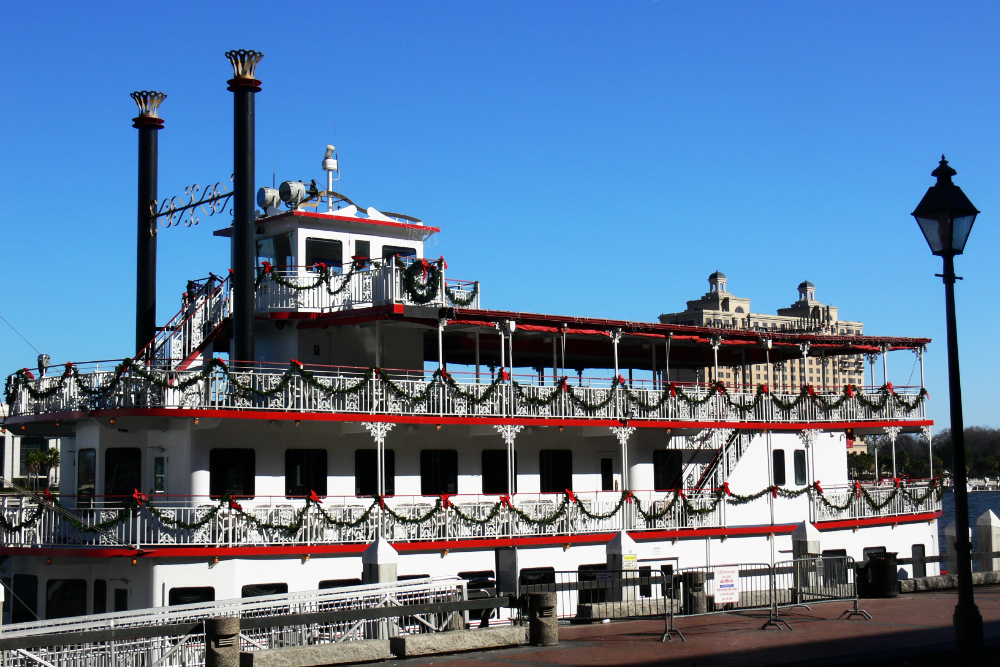
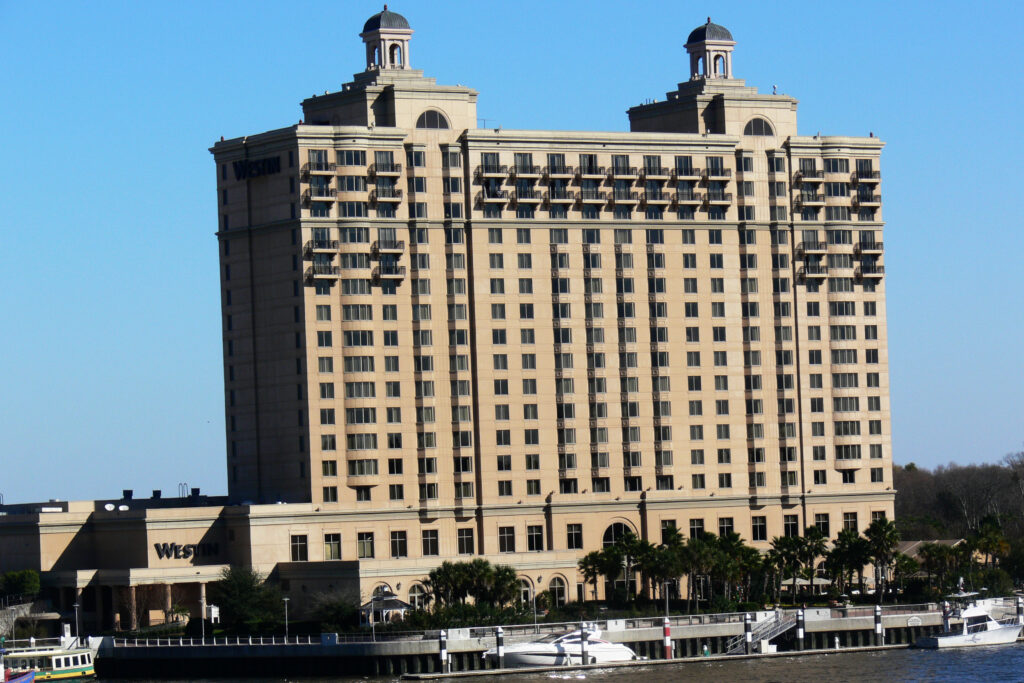
These final photographs were also taken from River Street. The first shows the Georgia Queen, a traditional-style paddlewheel riverboat that offers sightseeing and dining cruises along the Savannah River. Riverboats have become a recognizable feature of Savannah’s waterfront, recalling an earlier era of river transportation and commerce.
Across the river is Hutchinson Island, home to the Savannah Convention Center and a large waterfront hotel. The island offers a different perspective on the historic district, with views back toward River Street and Savannah’s skyline.
Savannah remains one of my favorite cities in the American South. Its historic houses, distinctive streets, impressive cathedral, and lively waterfront make it a particularly interesting place to explore. The city’s architecture and atmosphere set it apart from many other places I’ve visited throughout the United States.
Explore More of Georgia
Brasstown Bald • Atlanta • Cumberland Island • Savannah