Belgium was one of those countries I didn’t really know what to expect from before visiting. I had always imagined it as something like a smaller version of France with a strong Dutch influence, but once I arrived I was surprised by how much character the country had on its own.
The architecture, history, and food all stood out immediately. Belgium is famous for beer, chocolate, waffles, and fries, but there is much more to the country than that. For such a small place, it has an impressive number of historic cities and regional differences packed into a relatively short distance.
So far I’ve visited Brussels and Bruges, and both felt completely different from one another. I’d still like to return to see places like Antwerp and Ghent, explore more of Wallonia in the south, and visit some of Belgium’s important World War I and World War II sites.
Explore Brussels
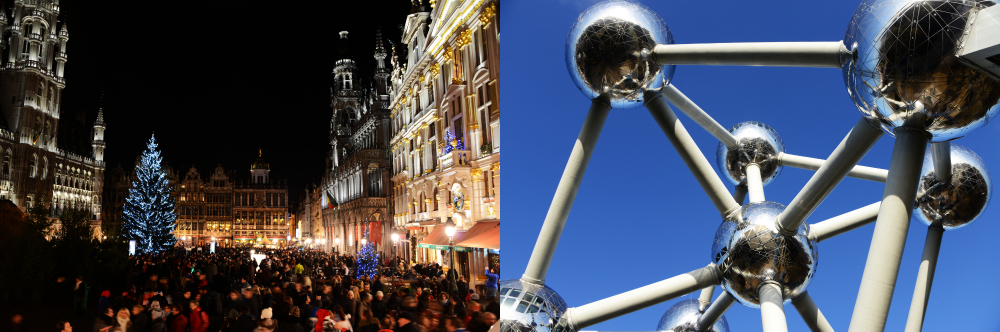
Brussels is the capital of Belgium and one of Europe’s most important political centers, serving as the principal seat of several major European Union institutions. Its historic center presents a very different side of the city, with elaborate architecture, churches, palaces, museums, shopping arcades, and landmarks such as Grand Place and the Atomium.
The city is also an excellent place to experience some of Belgium’s best-known food traditions. Chocolate shops, waffles, cafes, restaurants, and beer are woven throughout the center, while Brussels’ multilingual and international character gives the capital an atmosphere distinct from other Belgian cities.
Explore Bruges
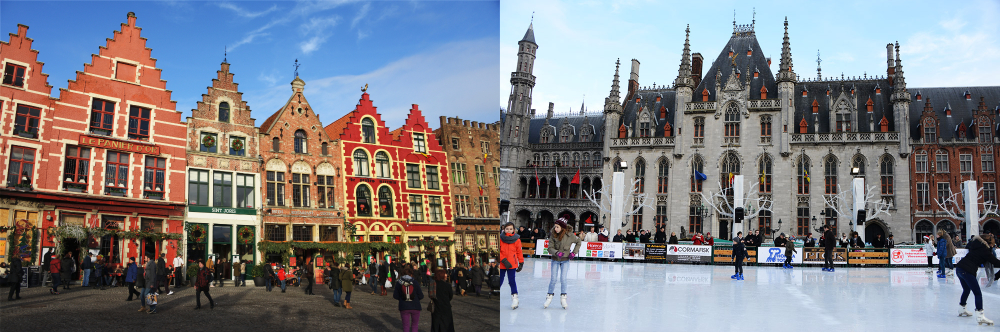
Bruges is one of Belgium’s best-known historic cities, with a remarkably preserved center of medieval streets, canals, stone bridges, churches, and centuries-old buildings. Its historic center is recognized as a UNESCO World Heritage Site and reflects the wealth and importance Bruges achieved as a major European trading center during the Middle Ages.
At its heart is the Markt, dominated by the medieval Belfry and surrounded by some of the city’s most recognizable architecture. Beyond the main square, canals wind through quieter streets and historic neighborhoods, making Bruges a city particularly well suited to exploring on foot.
