Antarctica had been one of those places that barely seemed real to me before I finally went there. It’s the coldest, driest, and windiest continent on Earth, almost completely covered in ice, with no permanent native human population and very little life once you travel far from the coast.
Yet during the austral summer, the edges of the continent become surprisingly alive. Penguins gather in enormous colonies, seals rest along the shoreline and on floating ice, whales move through the surrounding ocean, and seabirds seem to be everywhere.
I visited during my early years of traveling, long before photography became as important to me as it is today. Some of these photos definitely show their age.
The experience doesn’t.
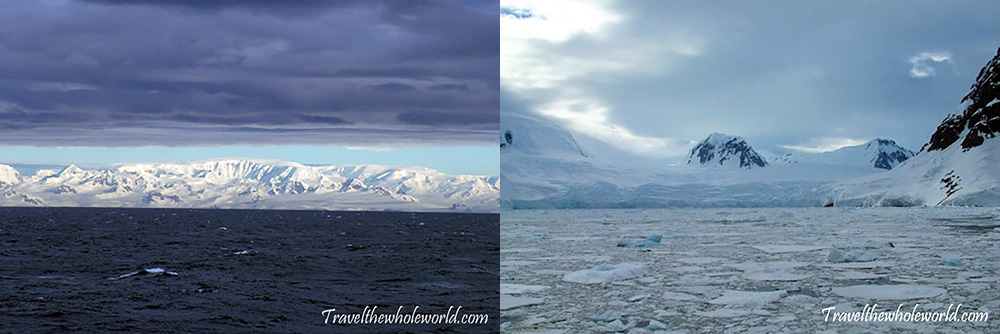
This was my first glimpse of Antarctica. After crossing the ocean, seeing those dark mountains and enormous walls of ice appear ahead of us was one of those moments that immediately made the journey feel different from anywhere else I had traveled.
Just reaching Antarctica from South America meant crossing the Drake Passage. On our return we also sailed around Cape Horn, where the ocean gave us a pretty good demonstration of its reputation.
We encountered waves that were reportedly around 40 feet high. The rocking became so violent that I actually wondered whether getting out of bed was a good idea.
Naturally, I tried it anyway.
Later I stayed strapped into my bed as the ship rolled back and forth. One moment I would get this strange sensation of almost becoming weightless, and the next it felt like something was forcing my face down into the mattress.
Sailing around Cape Horn was an experience by itself.
Landscapes of Antarctica
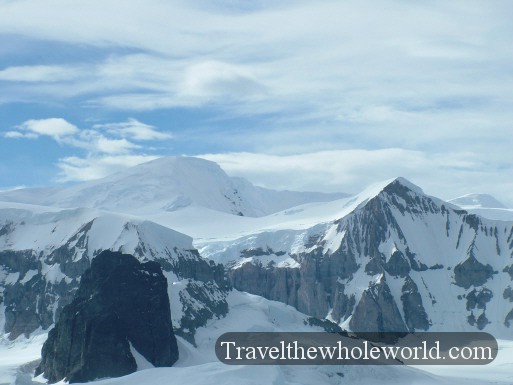
The scenery was the real reason Antarctica impressed me so much. Huge black mountains rise almost directly out of the ocean, glaciers descend between them, and icebergs drift through channels that sometimes seem completely untouched by people.
You can travel for hours with virtually nothing around you except mountains, ocean, snow, and ice.
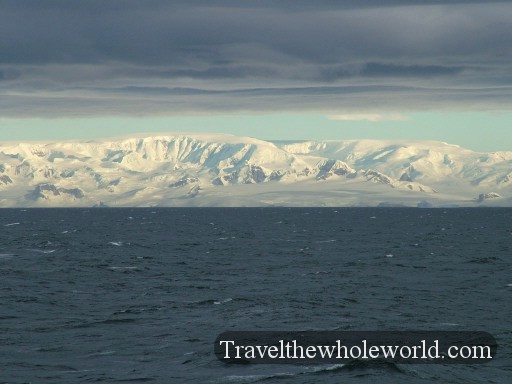
The Antarctic Peninsula is considerably milder than the interior of the continent, especially during summer. That relative warmth is one reason so much wildlife concentrates along the coast.
“Warm” is obviously relative down here.
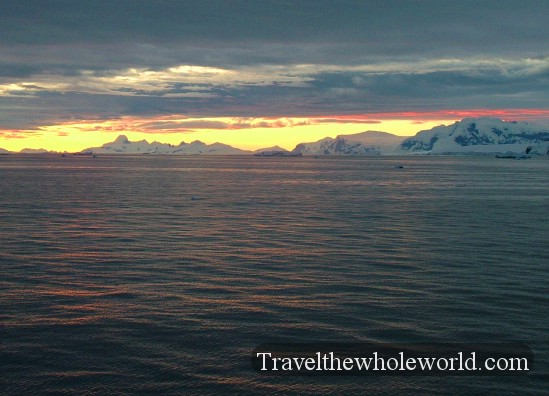
Summer also meant extremely long days. Sunset didn’t necessarily bring immediate darkness. Instead, the light seemed to hang around forever, slowly fading across the mountains and ice.
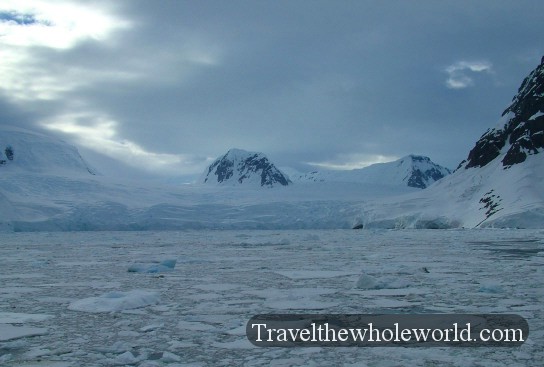
One of the more dramatic moments happened while I was ashore. A bay that had been largely clear of ice suddenly changed when an enormous piece broke away and crashed into the water.
The collapse created a huge wave. As the water rose against the surrounding ice, parts of it took on an almost neon-blue appearance. The broken ice then spread rapidly across the bay until an area that had been open water not long before was covered in floating sheets.
For a while there was concern that our ship could become trapped.
Fortunately, we got out without a problem.
Actually Setting Foot on Antarctica
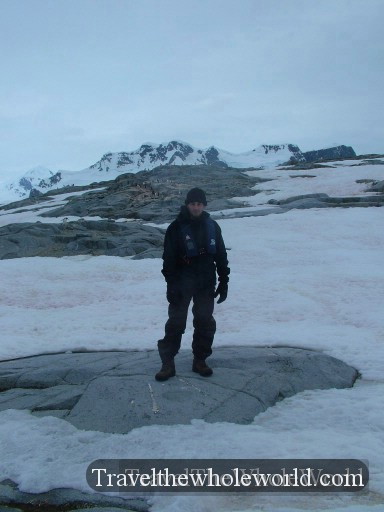
Getting off the ship and actually walking around Antarctica was completely different from seeing it from the water. I could finally explore some of those mountains and coastlines we had been sailing past, usually with penguins somewhere nearby.
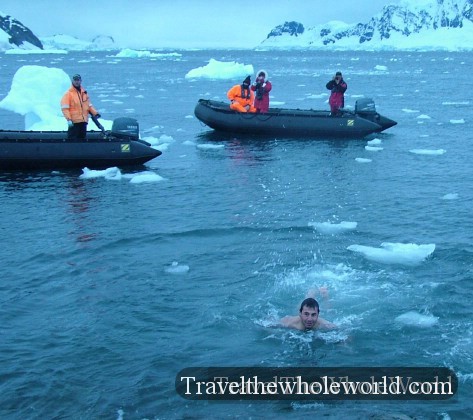
On another day, I decided it would be a good idea to go swimming.
I did a cannonball into the ocean and stayed in for about a minute. The initial shock was so intense that somehow the water didn’t feel as terrible as I expected once I was actually in it.
Getting out was stranger. I suddenly felt very warm, while my skin had a numb, tingling sensation that almost felt like tiny electric shocks.
Once was enough.
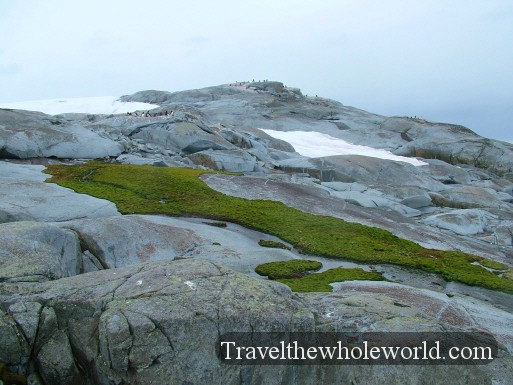
Something I hadn’t expected to find was green vegetation. Parts of the Antarctic Peninsula and surrounding islands support mosses and other extremely hardy plant life during the warmer months.
After seeing so much white, gray, and black, even a small patch of green stood out.
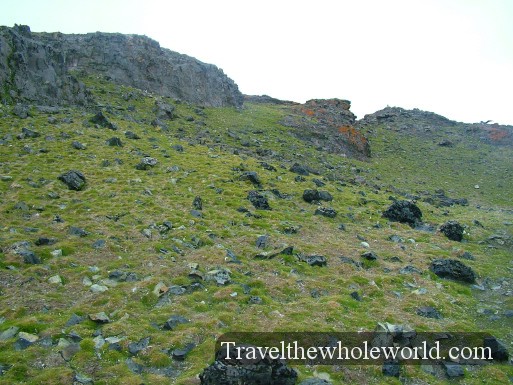
The South Shetland Islands were especially different from the frozen landscapes I had pictured before arriving. There were rocky beaches, patches of vegetation, huge bird colonies, and considerably more exposed ground.
Penguins and Antarctic Birds

Of course, you can’t talk about Antarctica without penguins. During the austral summer they gather around the Antarctic Peninsula and surrounding islands in enormous numbers.
Seeing them in the wild was completely different from seeing penguins in a zoo or aquarium. Here they were part of an entire landscape built around them, moving between colonies, rocky beaches, snow, and the ocean.
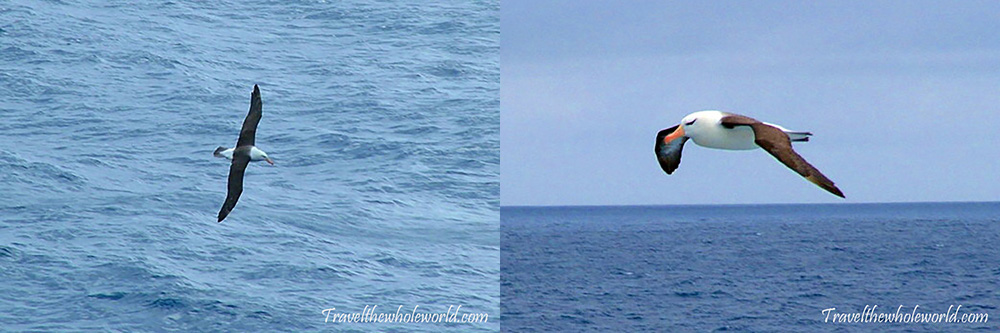
Penguins get most of the attention, but some of the flying birds were just as impressive. Black-browed albatrosses have enormous wingspans and seemed perfectly built for the constant winds of the Southern Ocean.
Watching one glide without seeming to make any effort made it obvious why albatrosses can cover such enormous distances at sea.
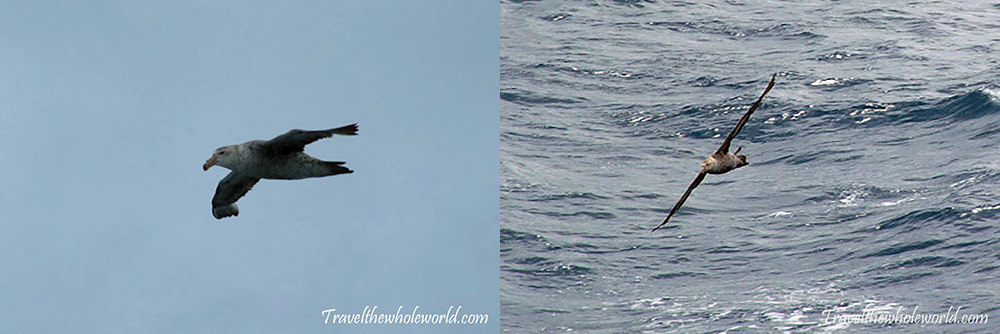
Giant petrels were another impressive sight. They’re powerful seabirds and considerably less innocent than they might appear while gliding overhead. They scavenge, hunt, and will attack other birds when given the opportunity.
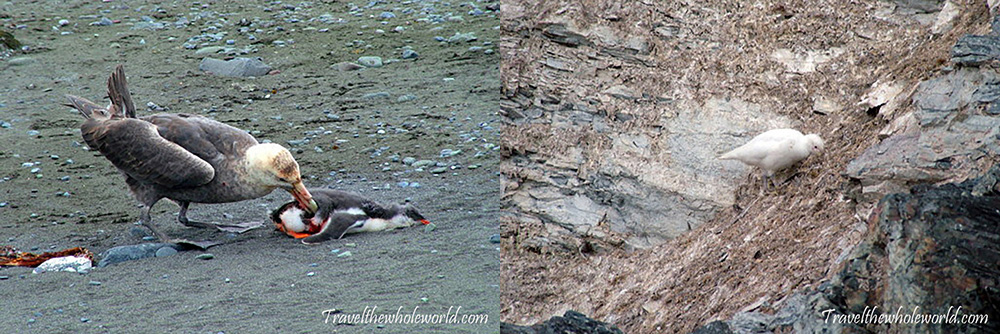
I didn’t witness this petrel make the kill, but I came across it feeding on a young penguin. Other penguins repeatedly gathered around and chased the petrel away, only for it to return again.
Antarctica looks peaceful from a distance.
For the animals living here, it definitely isn’t.
Seals of Antarctica
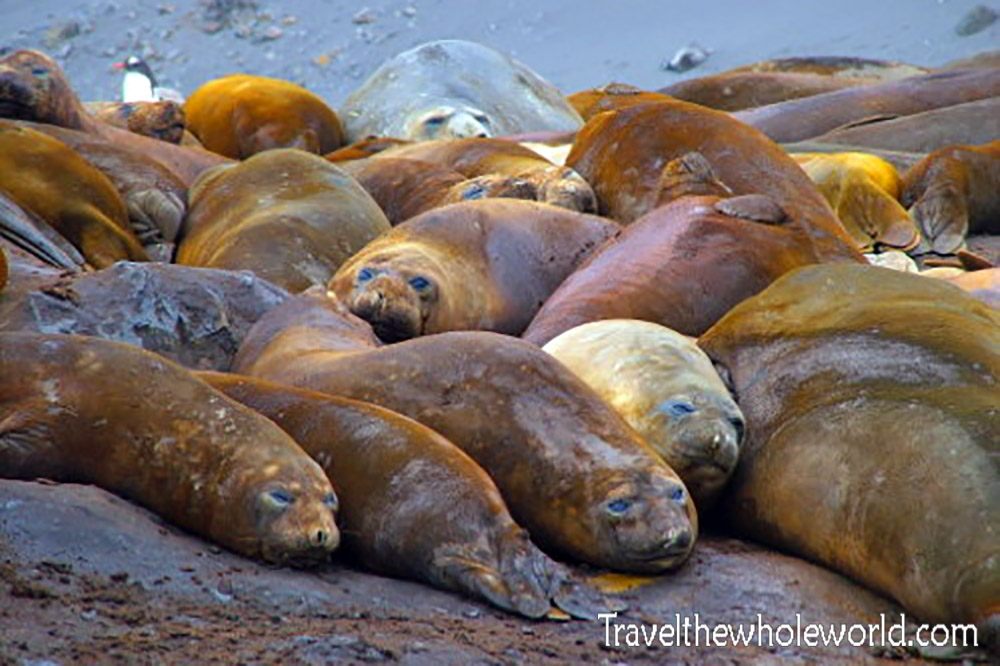
I was able to see several species of seals during the trip, including elephant, leopard, Weddell, crabeater, and fur seals.
Elephant seals weren’t exactly the most graceful introduction.
Without exaggerating, these things seemed to let out enormous burps every few minutes while blowing snot on each other. Fat, dirty, noisy, and sprawled across the beach, they were basically giant pigs that happened to live in the sea.
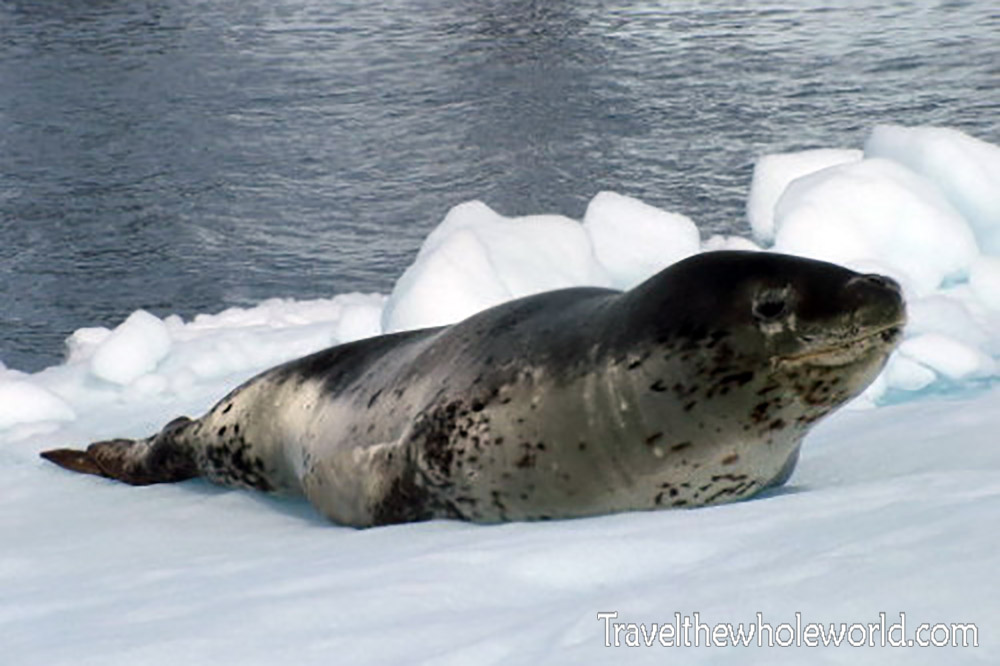
Leopard seals were completely different. I came across several resting on smaller pieces of floating ice, which allowed us to get reasonably close.
They’re one of Antarctica’s major predators, powerful enough to hunt penguins and other seals. Seeing one lying motionless on the ice makes it easy to forget what it’s capable of once it enters the water.
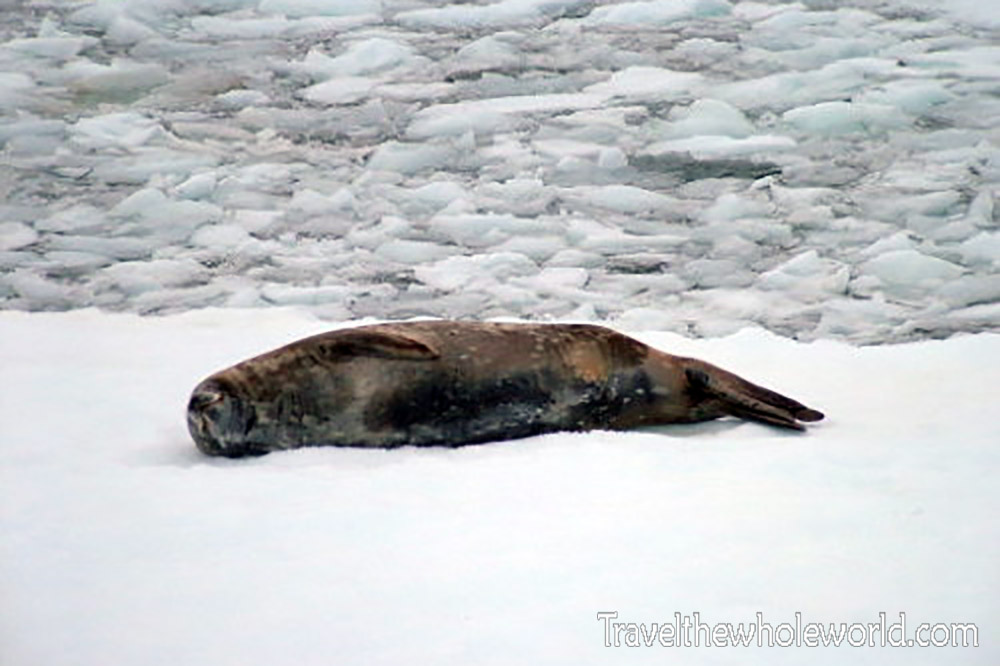
In comparison, this Weddell seal looked like it was having a pretty relaxing day. Weddell seals are remarkable divers, capable of disappearing hundreds of meters beneath the Antarctic ice.
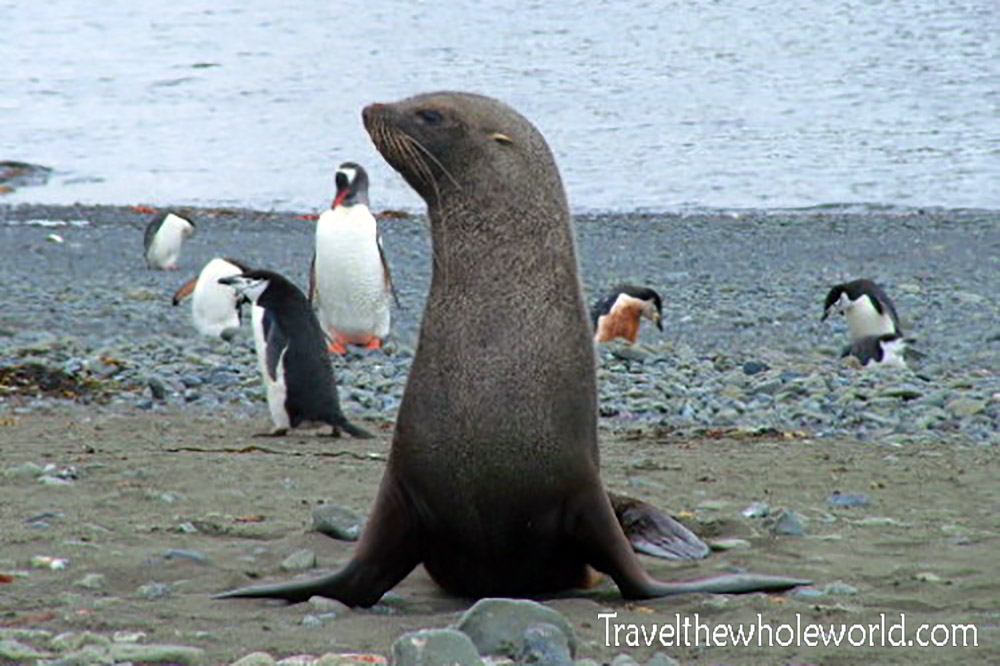
My favorites were the fur seals. Most of the seals I encountered seemed perfectly content to lie around doing absolutely nothing, while the fur seals were much more active.
This one clearly noticed me and kept swinging his head from side to side as though he couldn’t decide what to do about my presence.
Luckily, he decided doing nothing was the best option.
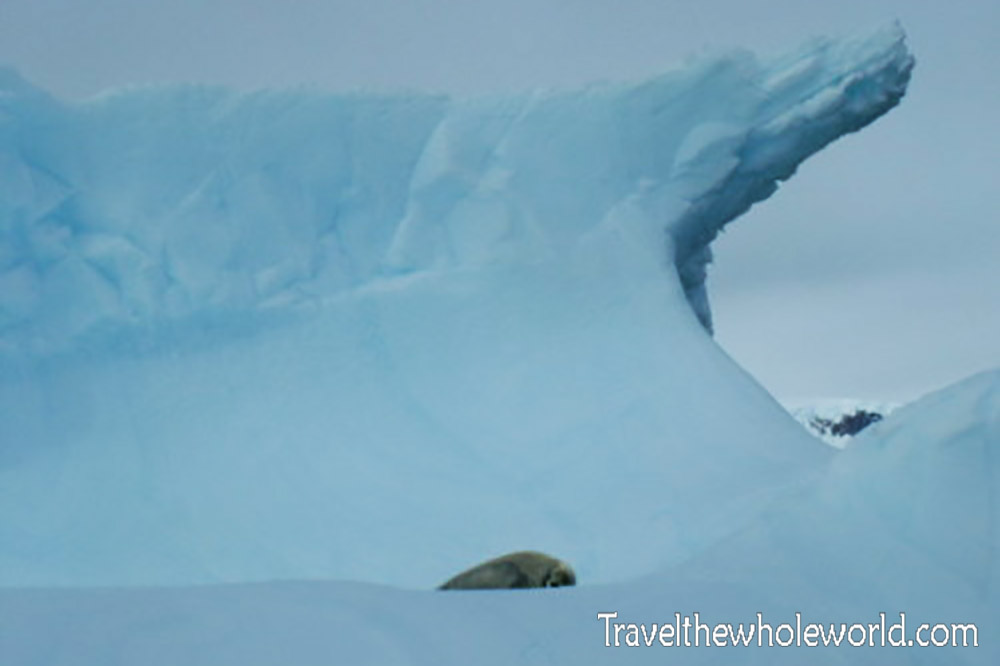
I really wish I had owned a better camera when I took this trip, because scenes like this deserved one. A crabeater seal had chosen a spot to sleep with one of the most spectacular backgrounds imaginable.
Even with an ancient camera, I still love this one.
Whales in Antarctica
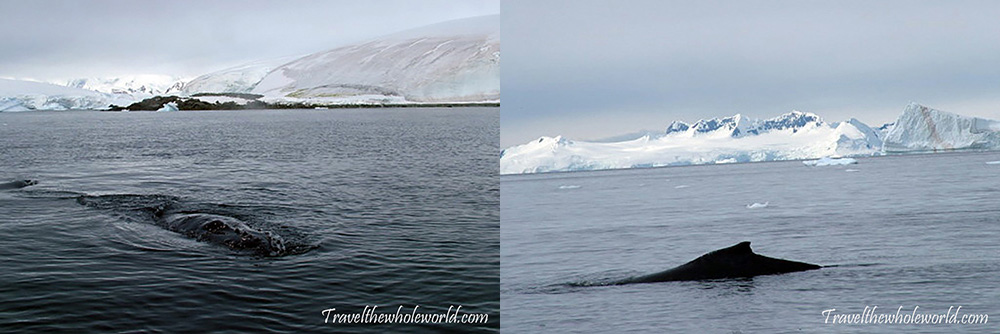
The whale photographs are probably the weakest photographs from my trip, but the encounters themselves were far better than the pictures suggest.
I saw humpbacks on an almost daily basis. Photographing them with the camera I had at the time was another matter entirely.
My favorite encounter happened while we were traveling in a small Zodiac. A humpback surfaced surprisingly close to us and actually came over to investigate.
We were in a tiny boat beside an animal large enough to make us feel completely insignificant.
Instead of immediately disappearing, it stayed around for a while.
The photograph isn’t great.
The memory is.
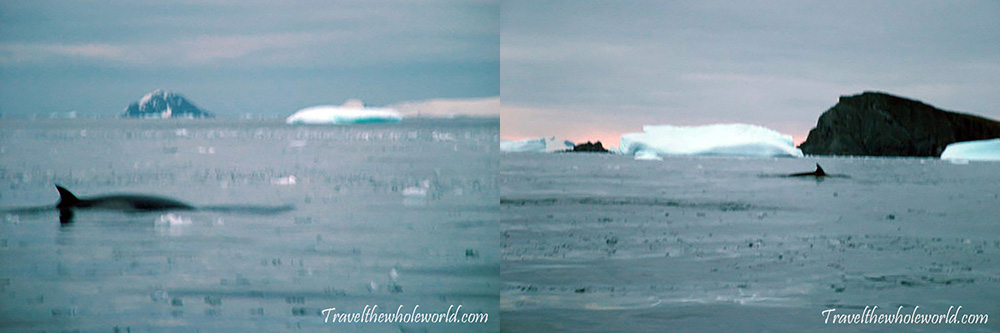
Minke whales were even harder for me to photograph. The humpbacks often surfaced and remained in the general area, while minkes seemed to appear for a breath and disappear almost immediately, only to surface again somewhere completely different.
This isn’t going to win me any wildlife photography awards, but it shows what whale watching often actually looked like through my camera back then.
The White Continent
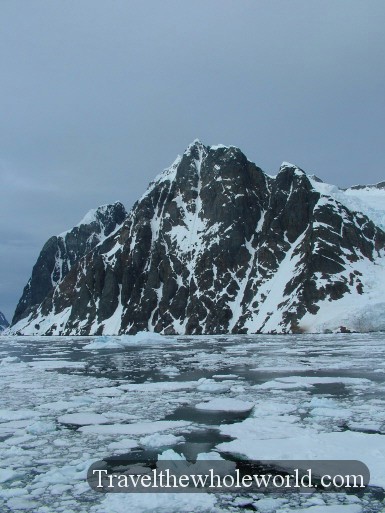
Antarctica was one of my earliest major adventures, and looking back at these photographs now makes that obvious. If I returned today, I’d come home with completely different images.
But I’m glad I didn’t wait until I owned a better camera.
The terrible photographs still captured something from a trip to a place that, even after traveling much more of the world, remains unlike anywhere else I’ve been.
Mountains rising directly from the ocean. Penguins covering beaches. Seals sleeping on drifting ice. Whales appearing beside a tiny Zodiac. A bay filling with ice in front of me. Forty-foot waves tossing our ship around Cape Horn.
And for one very cold minute, me swimming in the Southern Ocean.
Antarctica didn’t need good photography to be unforgettable.