At 20,310 feet (6,190 meters), Denali is the highest mountain in North America and one of the most challenging of the Seven Summits. Located in Alaska, Denali combines extreme cold, powerful winds, heavy snowfall, glacier travel, and weeks of hauling everything you need to survive up the mountain.
Unlike many of the world’s major mountains, there are no porters carrying your equipment from camp to camp. We carried our own gear and food in enormous backpacks while pulling even more behind us in sleds. Between climbing partners, that meant moving hundreds of pounds of equipment up the mountain.
Denali was unlike any mountain I had climbed before. The altitude was only part of the challenge. We crossed glaciers filled with hidden crevasses, hauled heavy loads day after day, built walls of snow and ice around our tents, climbed fixed ropes onto the West Buttress, and then waited while some of the most violent weather I had ever experienced decided whether we could move higher.
My climb followed the West Buttress Route, beginning on the Kahiltna Glacier and gradually moving through a series of camps toward the summit. I’ve divided the expedition into four parts below. Each section leads to the full story from that part of the climb.
Explore the Low Camps →
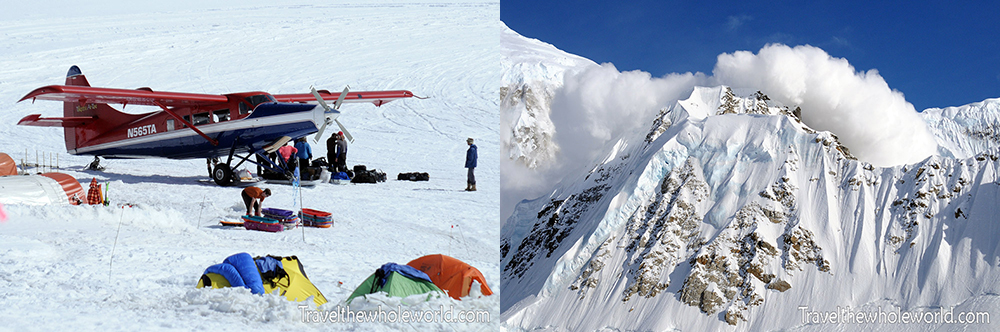
The lower mountain was the warmest part of the expedition, but that certainly didn’t make it easy. We traveled across the Kahiltna Glacier through deep snow while carrying some of our heaviest loads of the entire climb.
The slopes here were generally gentle, but there was a lot of distance to cover. Heavy backpacks combined with loaded sleds made even relatively easy terrain exhausting. This was also my introduction to traveling over a glacier where hidden crevasses were always somewhere beneath the snow.
Explore Advanced Base Camp →
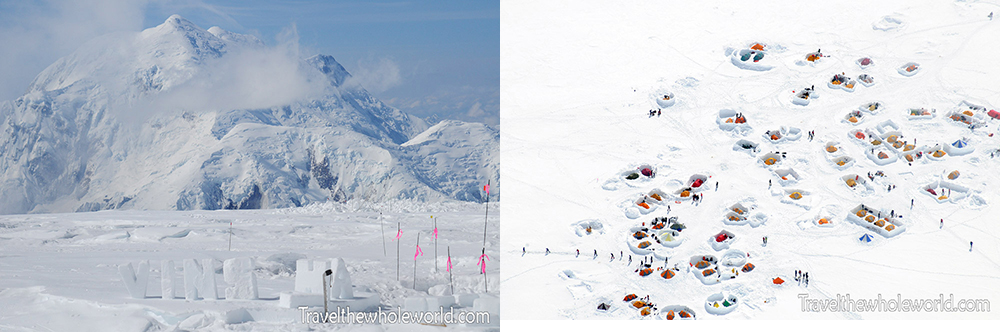
As we climbed toward Advanced Base Camp at 14,000 feet, the distances between camps became shorter but the terrain became much steeper. We were still hauling heavy backpacks and sleds while climbing sections with names like Ski Hill and Motorcycle Hill.
Advanced Base Camp became our home on the mountain. We would spend more time here than anywhere else on Denali, acclimatizing, carrying loads higher, watching the weather, and waiting for an opportunity to move toward High Camp.
It was also where the expedition became a waiting game. On Denali, being strong enough to climb higher doesn’t mean the mountain is going to let you.
Explore High Camp →
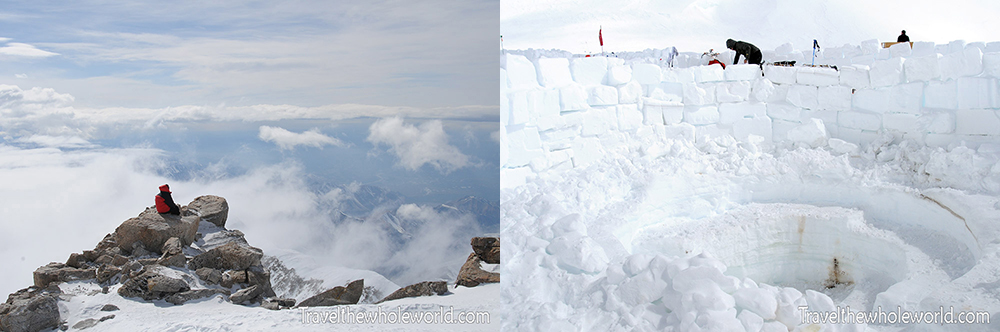
Spectacular views and intense weather made the upper mountain both beautiful and brutal. Reaching High Camp was also the most technical part of our climb before summit day.
Immediately above Advanced Base Camp we climbed steep snow and ice using fixed ropes before reaching the ridge of the West Buttress itself. From there, the route became increasingly exposed as we moved higher above the surrounding glaciers.
High Camp sits at roughly 17,200 feet. By this point there was very little separating us from the summit except altitude, exhaustion, dangerous terrain, and whatever weather Denali decided to throw at us.
Explore the Summit →
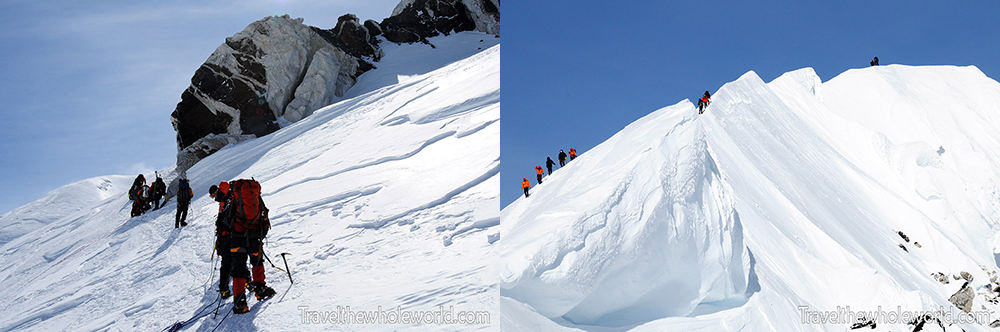
After weeks on the mountain, everything came down to one final day.
Reaching Denali’s summit from High Camp meant climbing through some of the coldest and most exposed terrain of the expedition. The route crosses Denali Pass before continuing higher toward the summit ridge, where the mountain finally narrows beneath your feet.
By then we had already experienced weeks of hard work, spectacular scenery, boredom, exhaustion, anxiety, and some truly terrible weather. All that remained was the reason we had come in the first place.
At 20,310 feet, the highest point in North America was finally above us.