At 22,841 feet (6,962 meters), Aconcagua is the highest mountain in both the Western and Southern Hemispheres and the highest mountain in the world outside Asia. Rising from the Andes of western Argentina near the Chilean border, it is a massive, arid mountain notorious for its extreme altitude, severe weather, and powerful winds.
Aconcagua has several routes to the summit, ranging from non-technical ascents to extremely difficult technical climbs such as the South Face. I climbed the Normal Route, which doesn’t normally require technical ice climbing or roped travel, but that certainly doesn’t make it easy. Reaching the summit meant spending weeks in the Andes, gradually acclimatizing as I moved from the valleys below the mountain to camps above 20,000 feet.
This was my journey from Mendoza to the highest point in South America. I’ve divided the expedition into three parts below, following the route from the initial approach through base camp and finally to the summit.
Hike from Mendoza to Camp Confluencia →
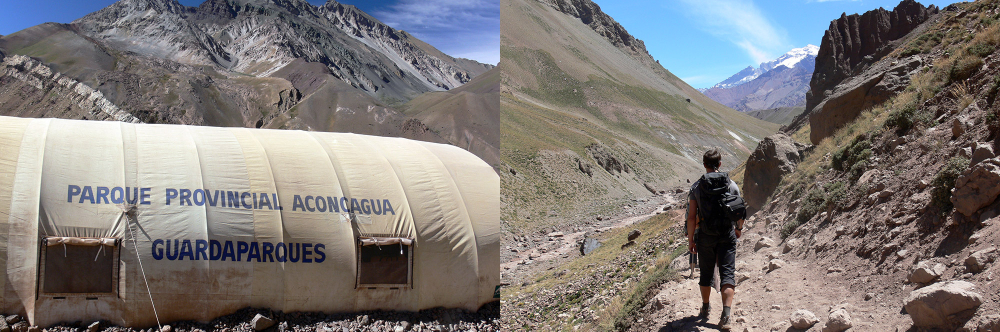
The approach to Aconcagua begins from Mendoza before heading west into the Andes and entering Aconcagua Provincial Park. From the Horcones trailhead, the route follows the Horcones Valley toward Camp Confluencia through a stark landscape of colorful mountains, broad valleys, and increasingly dramatic views of Aconcagua.
Confluencia is the first major camp on the Normal Route and an important part of the acclimatization process. Although still far below the summit, the trek into camp provides the first real sense of Aconcagua’s enormous scale and the increasingly high-altitude environment ahead.
Hike from Confluencia to Base Camp →
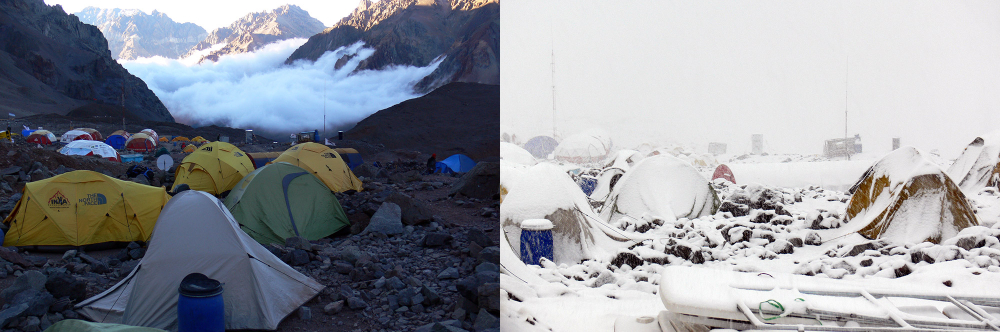
Beyond Confluencia, the Normal Route continues deeper into the Andes toward Plaza de Mulas, Aconcagua’s enormous base camp at roughly 14,000 feet (4,300 meters). The long approach crosses an increasingly barren high-altitude landscape as the mountain rises above the Horcones Valley.
Plaza de Mulas marks the transition between the approach and the higher stages of the climb. From here, climbers acclimatize, organize equipment, and prepare to move through a succession of increasingly exposed camps toward the upper mountain.
Climb from Base Camp to the Summit →
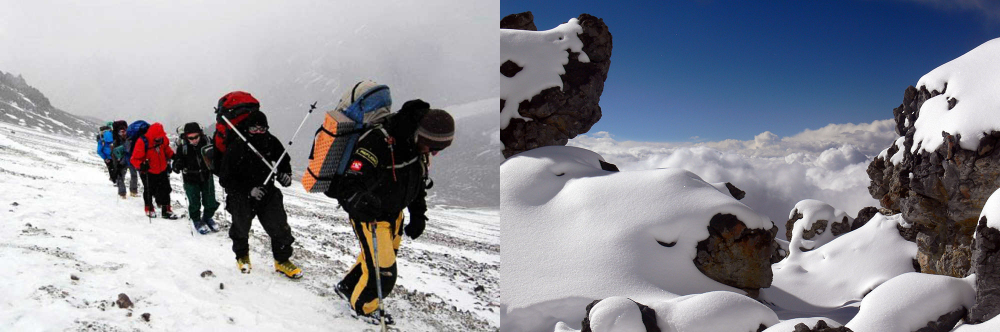
Above Plaza de Mulas, the Normal Route climbs through a series of high camps toward Aconcagua’s 22,841-foot summit. The terrain is generally non-technical, but the combination of extreme altitude, freezing temperatures, powerful winds, and sustained physical effort makes the upper mountain considerably more serious than the approach below.
The final summit climb reaches the highest point in South America after passing through Aconcagua’s barren upper slopes and the demanding final section beneath the summit ridge. At nearly 7,000 meters, altitude and weather can turn an otherwise straightforward route into a major mountaineering challenge.
Read My Aconcagua Climbing Guide →
Interested in climbing Aconcagua yourself? I’ve put together what I learned from preparing for and climbing the mountain, including my training program, gear list, what to expect at the different camps, and practical lessons that may help when preparing for an Aconcagua expedition.
