Bruges was one of those cities I had heard described as one of the most beautiful medieval towns in Europe, so I arrived with pretty high expectations. Fortunately, it mostly lived up to them. The historic center is filled with old stone buildings, narrow streets, canals, churches, and small bridges that make it obvious this city was designed centuries before anyone imagined modern traffic.
I didn’t organize my visit particularly well and never took a formal tour, which in hindsight probably would have been useful. Instead, I wandered around on my own, climbed the Belfry, explored the canals, ate waffles, practiced night photography, and eventually walked across town to see an ice sculpture festival that I wasn’t even convinced could exist in above-freezing weather.
The Grote Markt
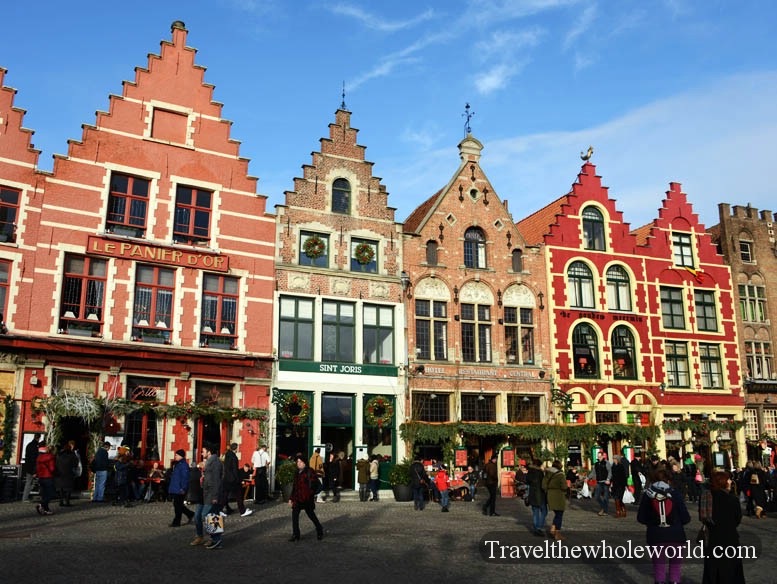
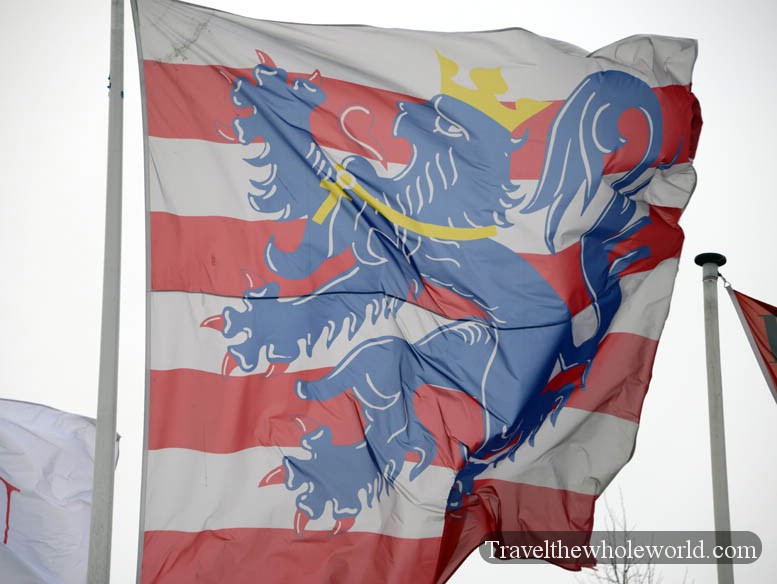
At the heart of Bruges is the Grote Markt, or Grand Market, which is easily the liveliest part of the historic center. Many of the city’s most recognizable buildings surround the square, along with restaurants, shops, and crowds of visitors.
The colorful buildings around the square immediately give Bruges that classic medieval-European appearance everyone comes here expecting.
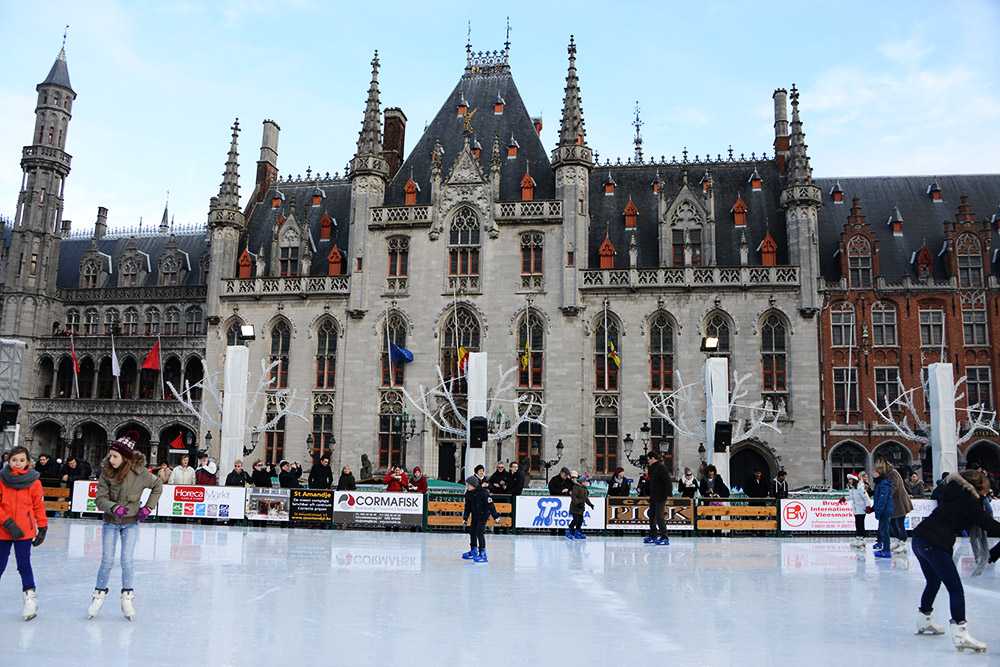
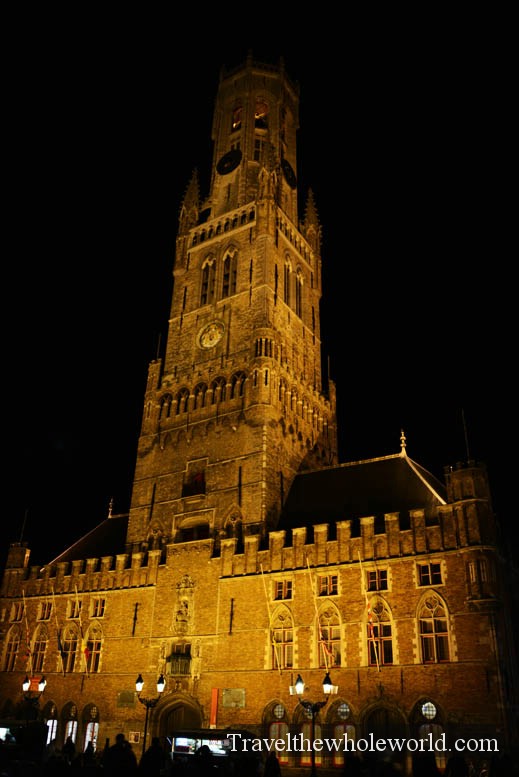
One side of the square is dominated by the Provinciaal Hof, while the most famous landmark is probably the Belfry of Bruges. The tower has existed in different forms since the 13th century and was repeatedly damaged, rebuilt, expanded, and altered over the centuries.
More important to me was the fact that they let you climb it.
Climbing the Belfry
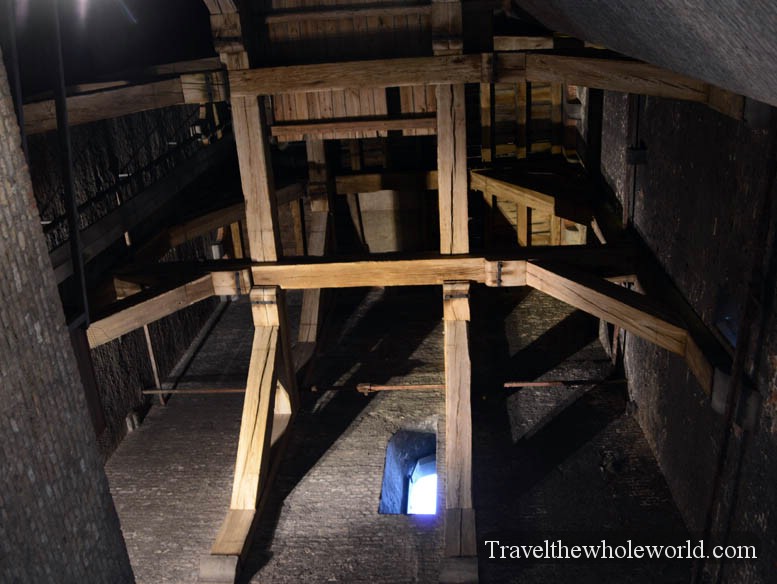
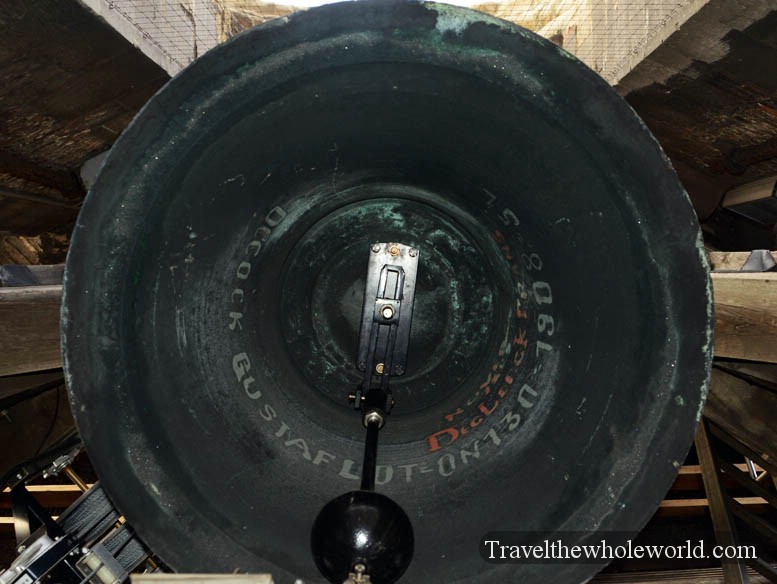
The Belfry has 366 steps leading toward the top, with a few intermediate floors where you can stop along the way. At first the climb isn’t too bad. The staircases are relatively wide and there is even room for a normal railing.
That doesn’t last very long.
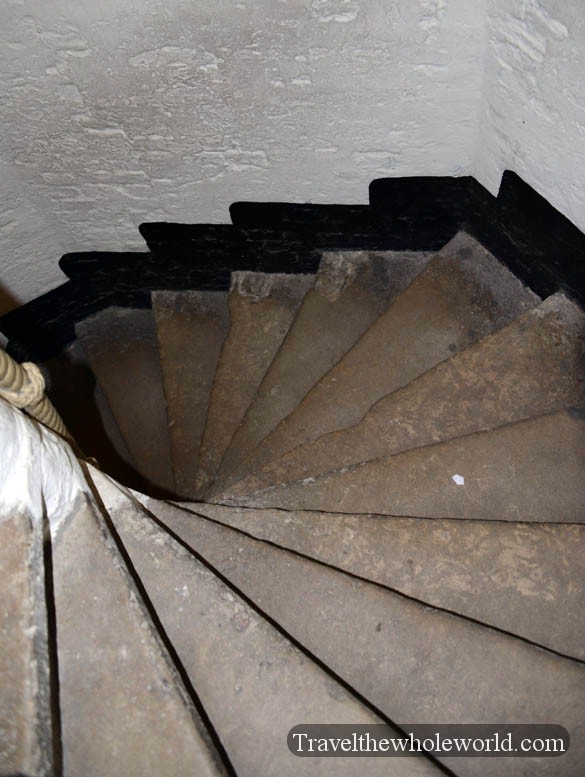
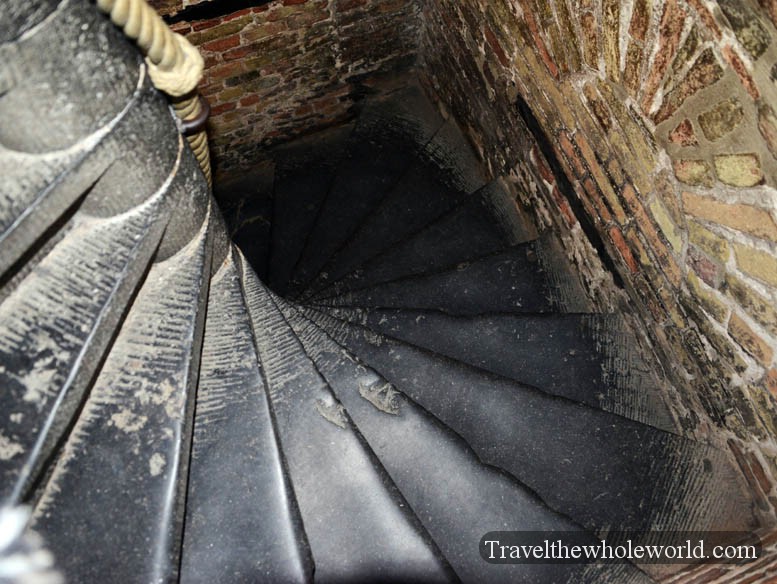
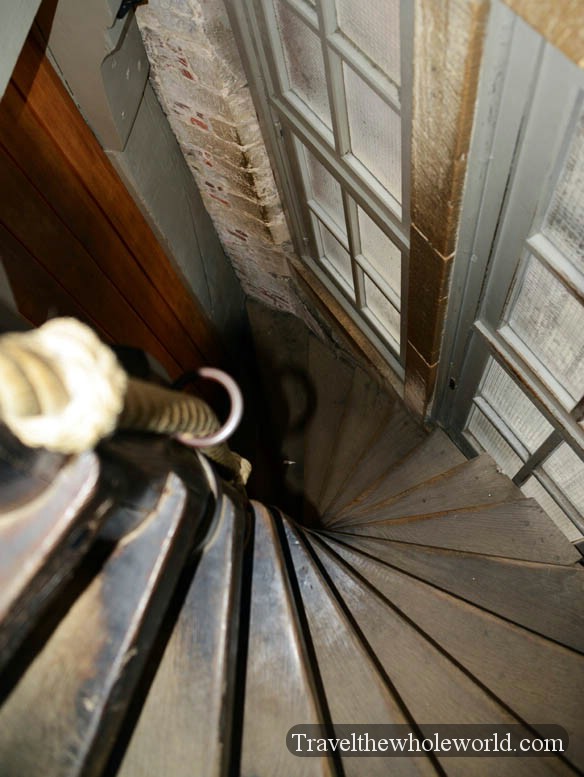
The higher you climb, the narrower everything becomes. The railing eventually turns into a rope, and the final staircases are so tight that passing someone coming the other direction becomes its own little challenge.
That was probably the hardest part of the climb. It’s not the 366 steps themselves, but trying to squeeze around another person on a medieval staircase that clearly wasn’t designed with modern tourist traffic in mind.
The View From the Top
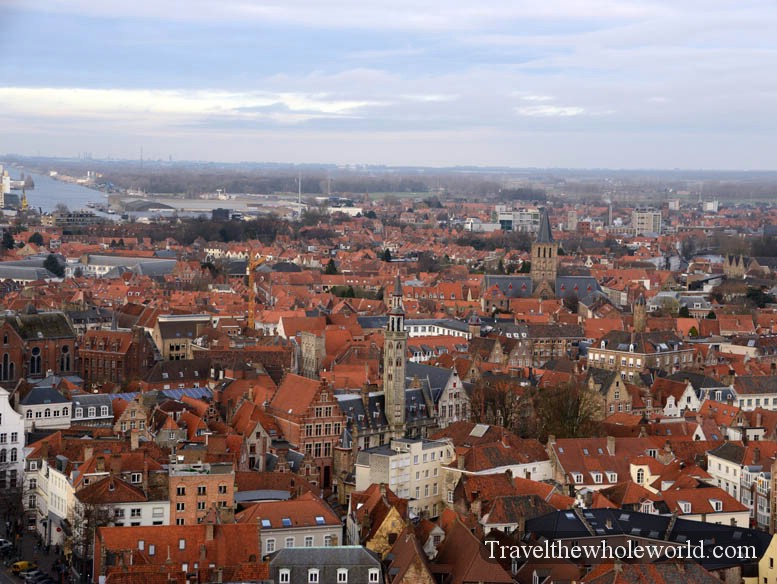
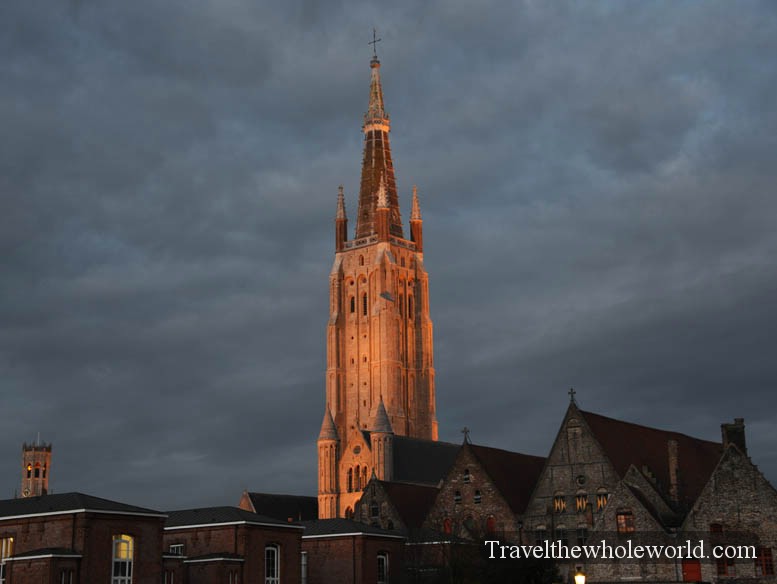
The view at the top made the climb worth it. From the Belfry I could look across nearly the entire historic city, with church towers, rooftops, canals, and the surrounding countryside stretching into the distance.
The weather was pretty gloomy during my visit, so the view wasn’t as dramatic as it probably could have been. Photography was also a little annoying because protective wire covered the openings at the top.
Still, if you’re already in Bruges, climbing the Belfry is worth doing.
The Canals of Bruges
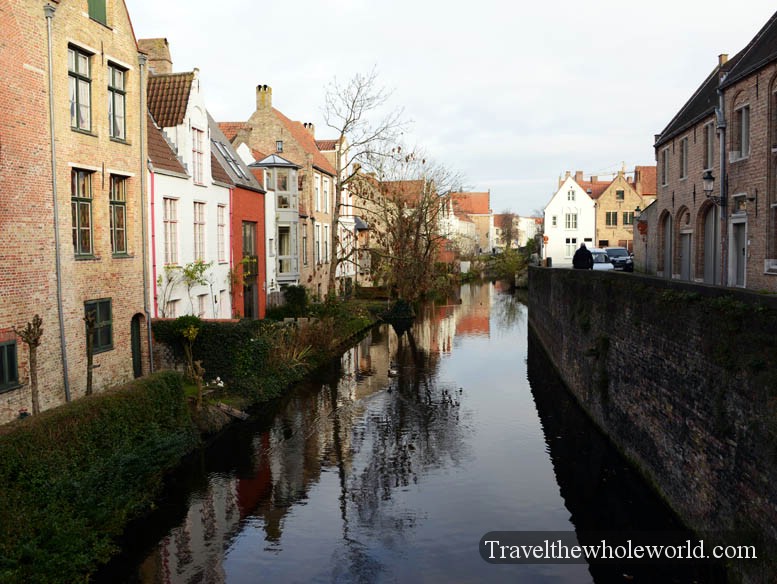
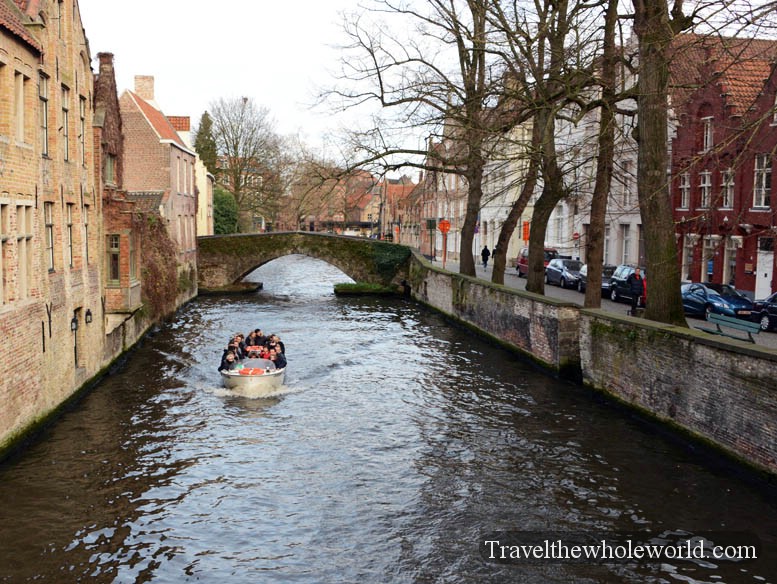
Bruges is famous for its canals, and they are definitely one of the reasons the city is so attractive.
I have heard Bruges compared with Venice plenty of times. I’ll admit Bruges is beautiful, but no, it’s not Venice. The cities aren’t really comparable beyond the fact that both have old buildings and canals running through them.
Bruges doesn’t need the comparison anyway.
Unfortunately, because I hadn’t planned my visit particularly well, I never ended up taking a canal tour. Looking back, that is probably something I should have done.
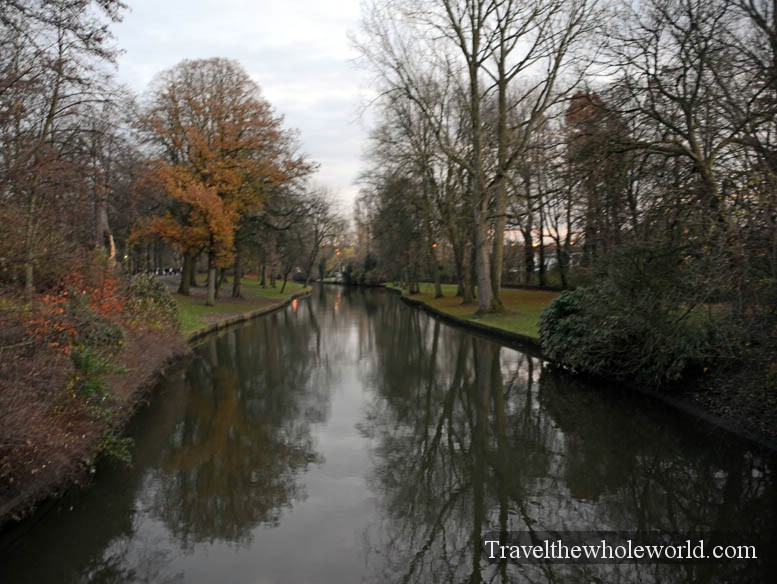
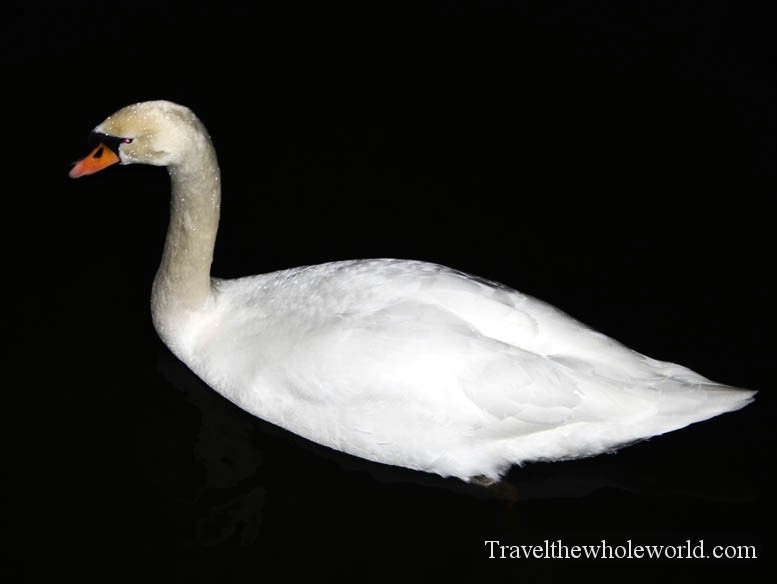
Bruges at Night
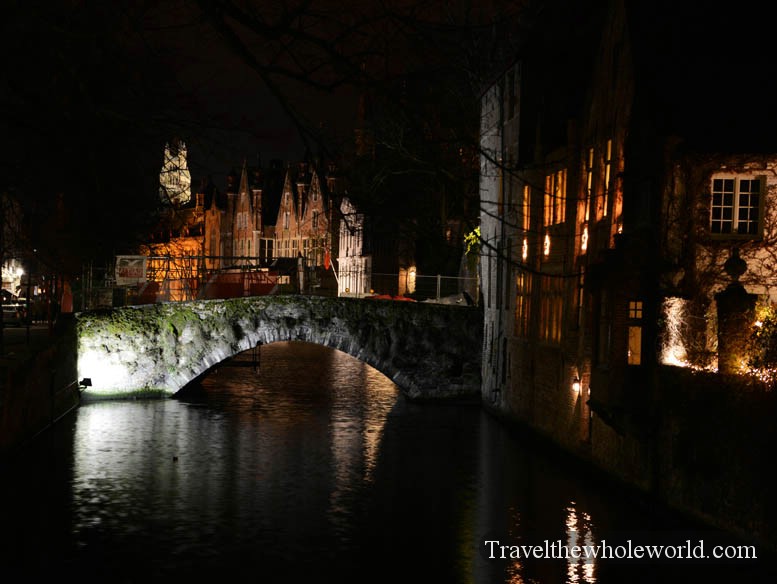
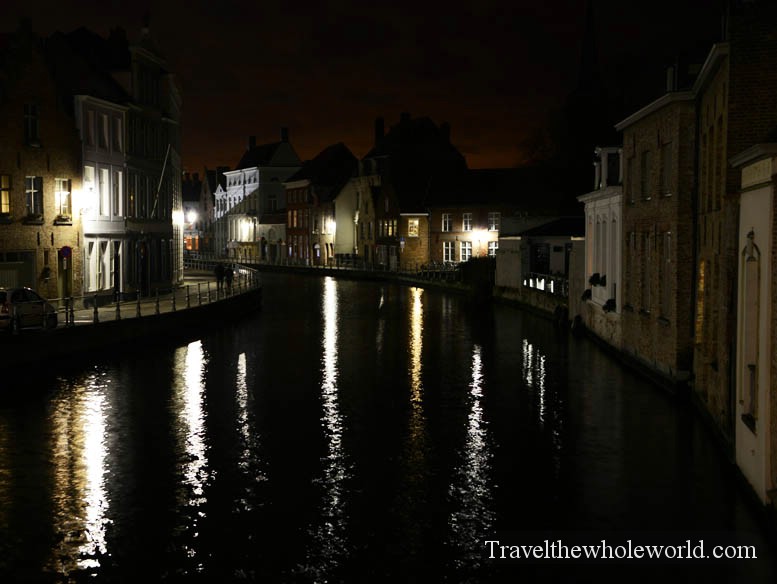
The canals aren’t dramatically illuminated at night, but there is enough light around the old city to make walking around after dark worthwhile.
I also had another reason for staying out with my camera. The following month I was heading to the Arctic and wanted more practice taking night photographs before that trip.
Bruges turned out to be a pretty good place to practice.
Eating in Bruges
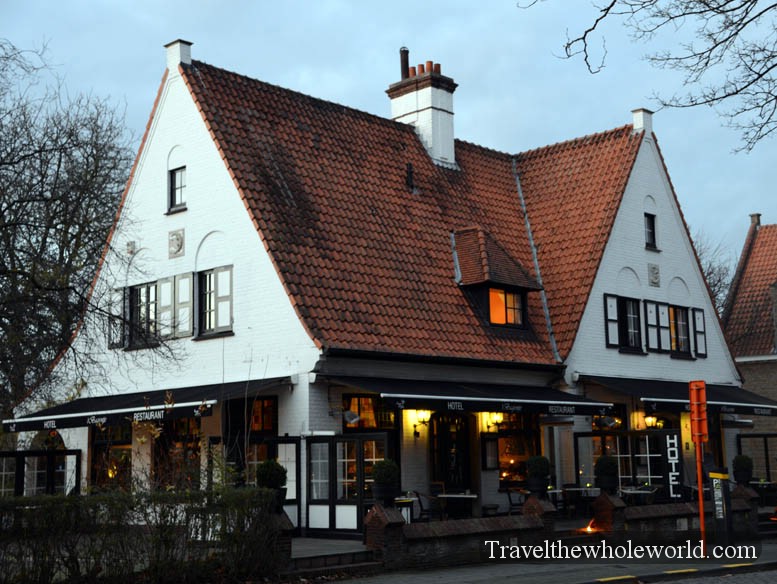
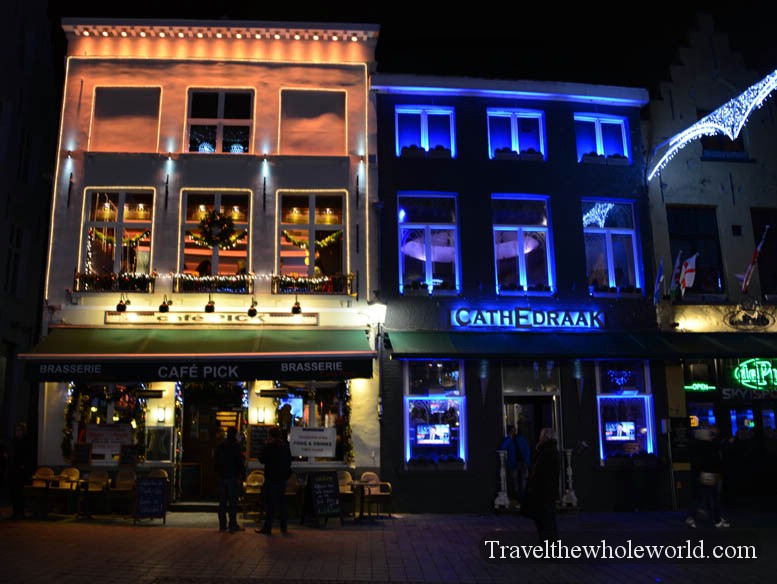
The historic center is full of restaurants, cafes, pubs, and food stands. Being one of Belgium’s most famous tourist cities, some of them were predictably expensive.
I remember seeing several restaurants advertising lunches around €30, which at the time worked out to more than $40. That seemed like a lot of money just to eat lunch while surrounded by tourists.
Finally Getting a Belgian Waffle
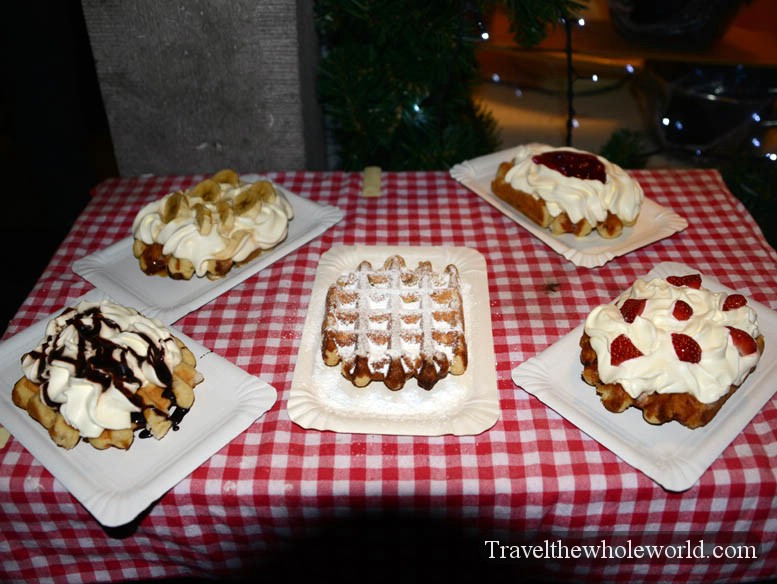
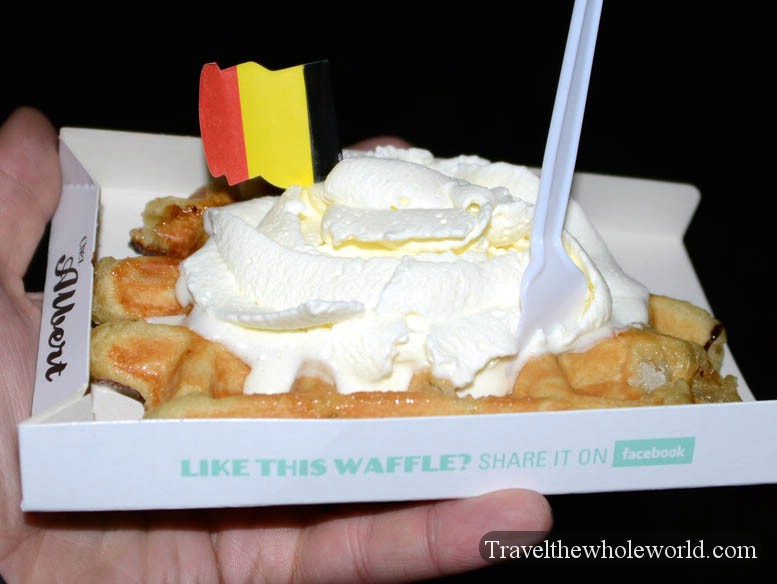
In Brussels, I had managed to wake up too late to get a Belgian waffle for breakfast.
Then I arrived in Bruges and somehow did exactly the same thing again.
Fortunately, Belgium doesn’t restrict waffles to breakfast. They were being sold practically everywhere and at all hours, so I eventually bought one from a small stand later in the day.
It even came with a tiny Belgian flag, just in case there was any confusion about what country I was in.
Tourism, Shopping and Chocolate
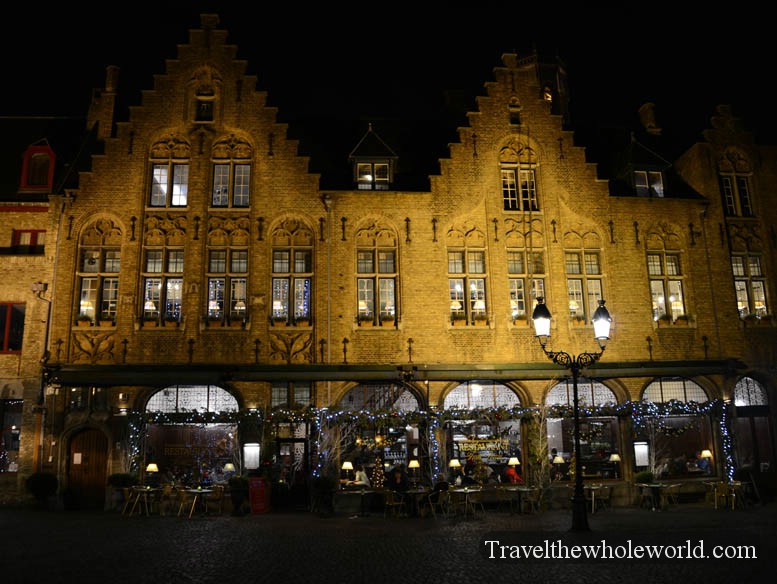
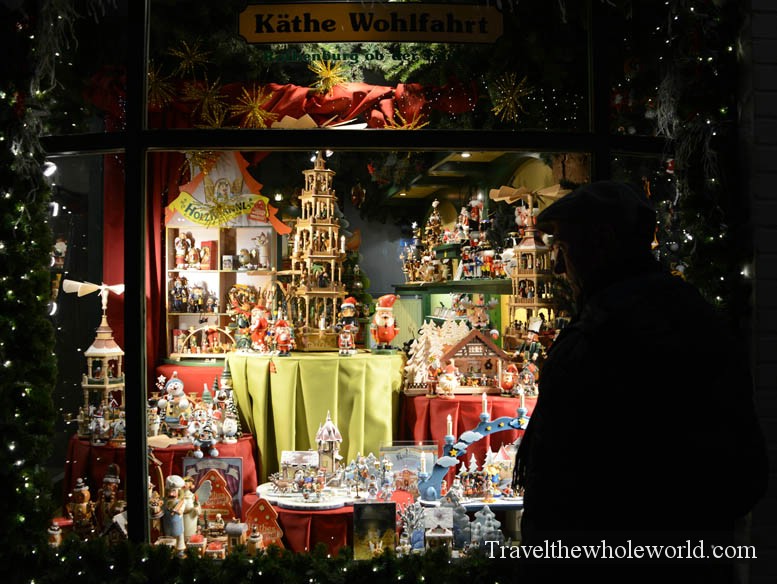
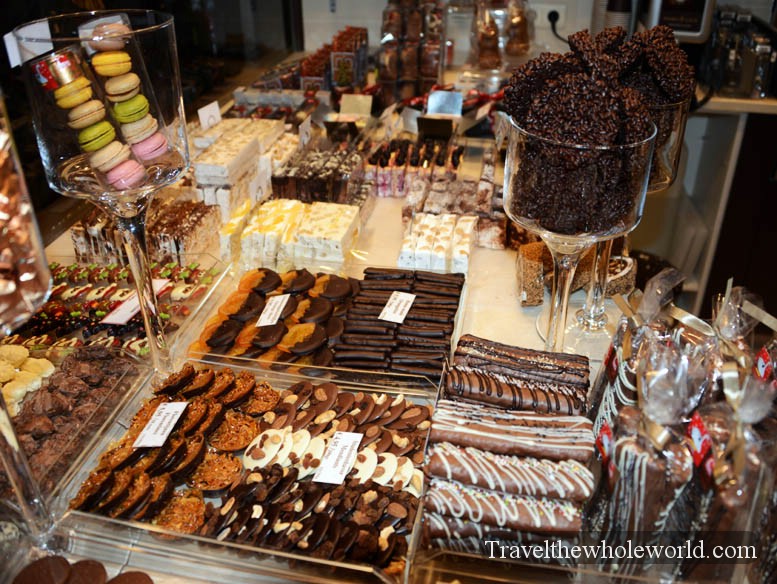
There is definitely no shortage of shopping in Bruges. The historic center has an enormous number of stores catering to visitors, selling everything from souvenirs and Christmas decorations to chocolate and other Belgian specialties.
Tourism has become such a large part of the city that I’ve read complaints from residents comparing life in central Bruges to living in Disneyland.
I could understand the comparison. The city is genuinely beautiful and historic, but parts of the center are clearly designed around the enormous number of tourists coming through every year.
The Ice Sculpture Festival
Before visiting, I had heard that Bruges hosted an ice sculpture festival from November through January.
There was only one problem: it was above freezing outside.
I wasn’t completely convinced this festival actually existed, but eventually decided to take a leap of faith and walk across the city to the location where it was supposed to be held.
In my head, I had pictured a bunch of artists standing outside with chainsaws, carving random blocks of ice while tourists watched.
I was very wrong.
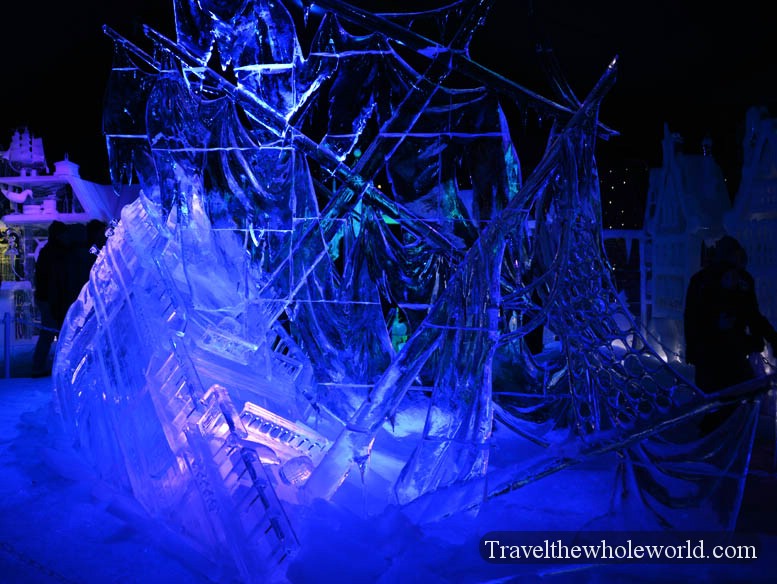
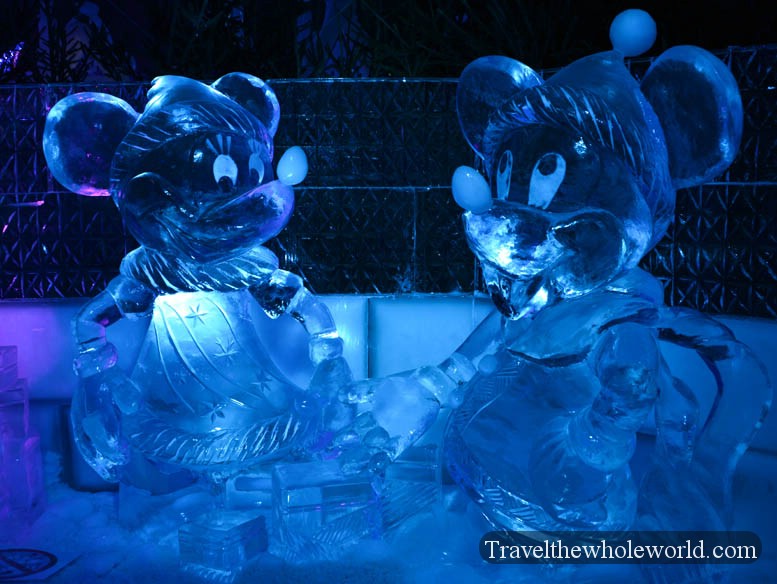
The entire festival was inside a refrigerated building kept around -6°C (21°F). Even more unexpectedly, the theme that year was Disney, with enormous sculptures of famous characters and scenes carved entirely from ice.
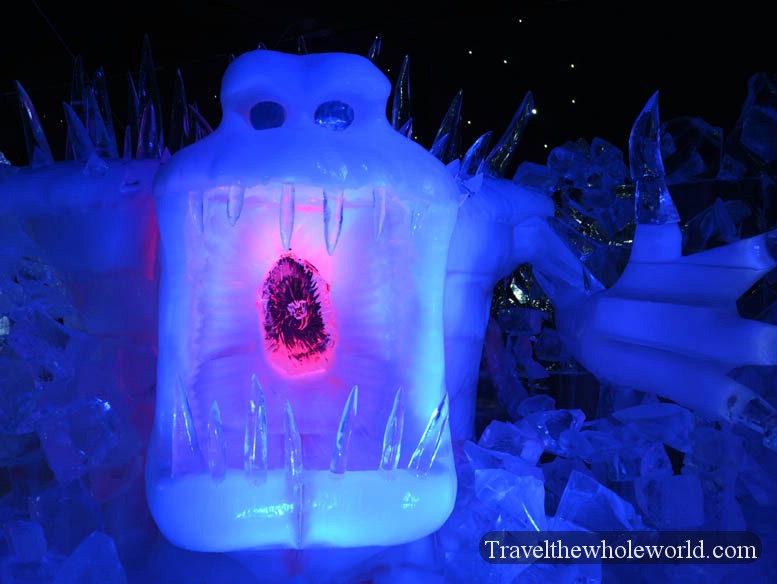
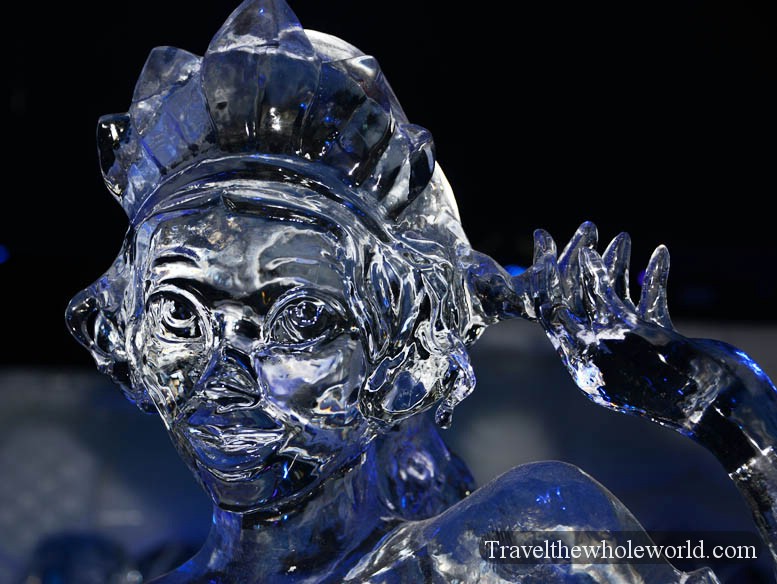
The giant ship was probably the most impressive creation because of all the small, delicate details. I also found Mickey and Minnie, along with several characters I couldn’t identify.
A lot of the sculptures appeared blue, red, or other colors because of the lighting around them. Whenever I used my camera flash and overpowered those lights, you could see that the sculptures themselves were actually made from clear ice.
My Time in Bruges
Bruges ended up being exactly the kind of city that is best explored without rushing. The Grote Markt and Belfry are the obvious landmarks, but a lot of the appeal comes from wandering through smaller streets, crossing stone bridges, following canals, and seeing what you stumble across.
I probably should have planned my visit better. I missed the canal tour, didn’t take a proper historical tour, and managed to oversleep for a Belgian waffle in two different Belgian cities.
But I still climbed 366 increasingly ridiculous stairs to the top of the Belfry, practiced night photography along the canals, ate the waffle eventually, and walked across Bruges to investigate an ice festival that I wasn’t entirely convinced existed.
For an unorganized visit, I think I did pretty well.
Explore More of Belgium
Bruges • Brussels