Paro was my introduction to Bhutan and one of the places I was most looking forward to visiting. The town sits in a broad valley surrounded by forested mountains, with traditional Bhutanese buildings scattered between fields and small villages. Compared with many places I had traveled in Asia, Paro felt remarkably quiet. Even though it is home to Bhutan’s international airport and receives most of the country’s foreign visitors, it never really felt busy.
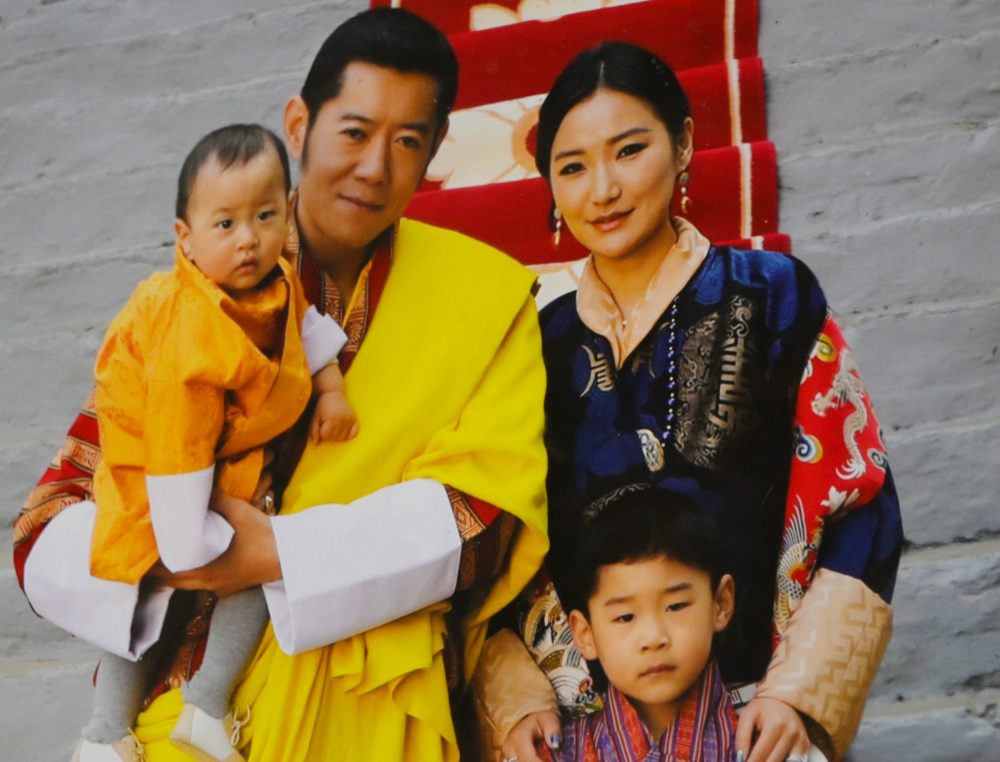
Bhutan is unusual in many ways, including the enormous respect shown toward its monarchy. Photographs of the king and royal family can be seen throughout the country, including around Paro. At the same time, Buddhism remains deeply woven into everyday Bhutanese life, and some of the country’s most important religious sites are found in the Paro Valley.
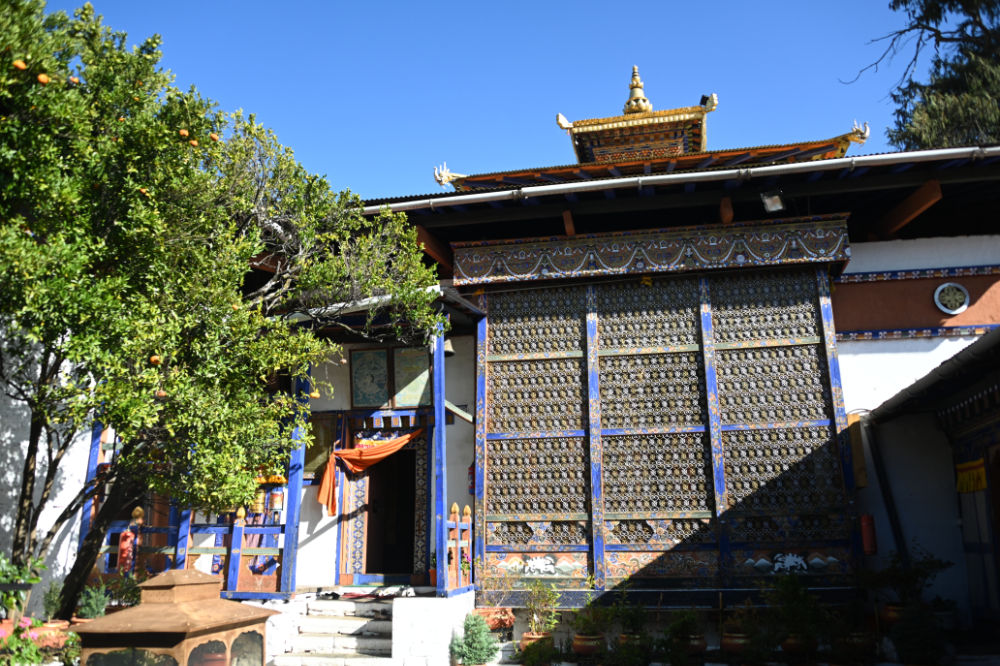
One of these sites is Kyichu Lhakhang, one of the oldest Buddhist temples in Bhutan. The temple dates back to the 7th century, long before Bhutan existed in its modern form. The complex isn’t enormous, but its age and importance make it one of the most significant temples in the Paro Valley.
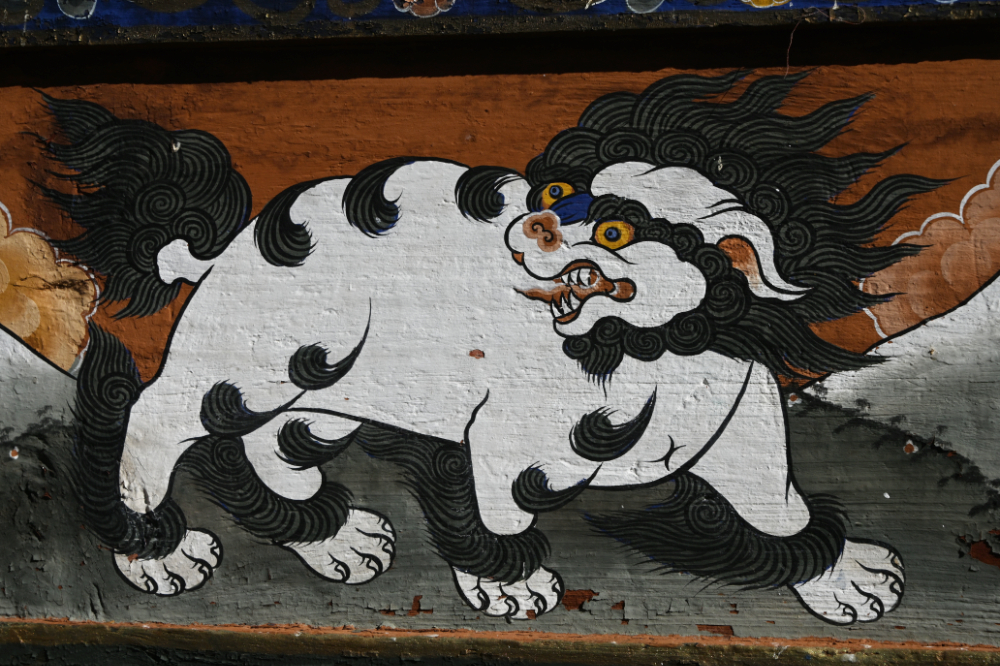
Like many of the temples I would visit in Bhutan, there were small details everywhere. Painted walls, carved decorations and religious symbols covered parts of the complex. Bhutan’s relative isolation also helped preserve an architectural style that made the country immediately feel different from anywhere else I had traveled.
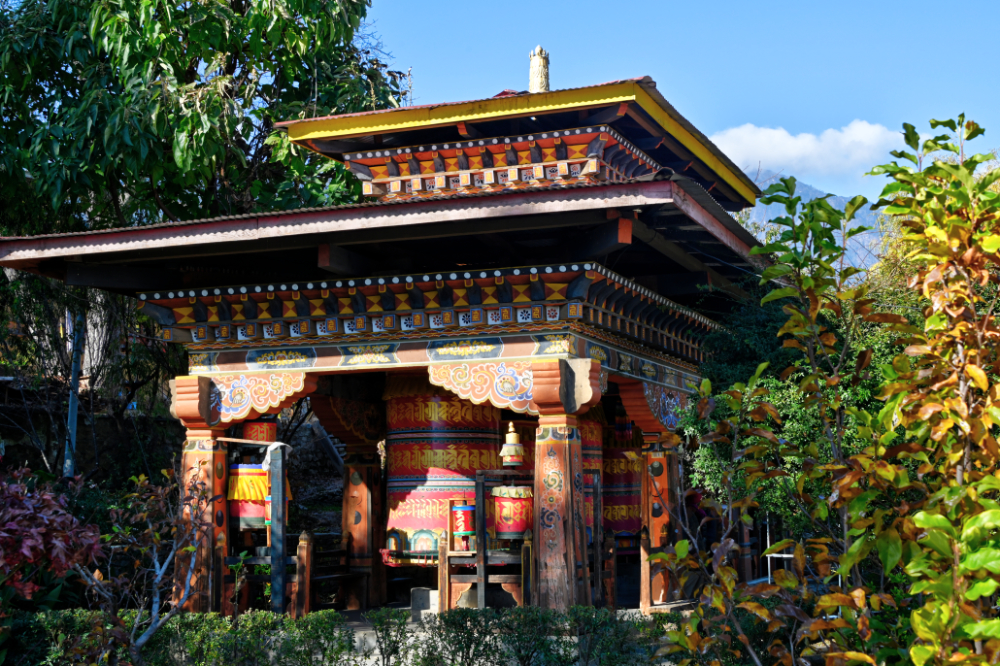
The temple was also remarkably peaceful. Despite being an important religious site, there wasn’t the overwhelming crowd I would have expected at a comparable attraction elsewhere in Asia. That quiet atmosphere became one of the things I enjoyed most about traveling through Bhutan.
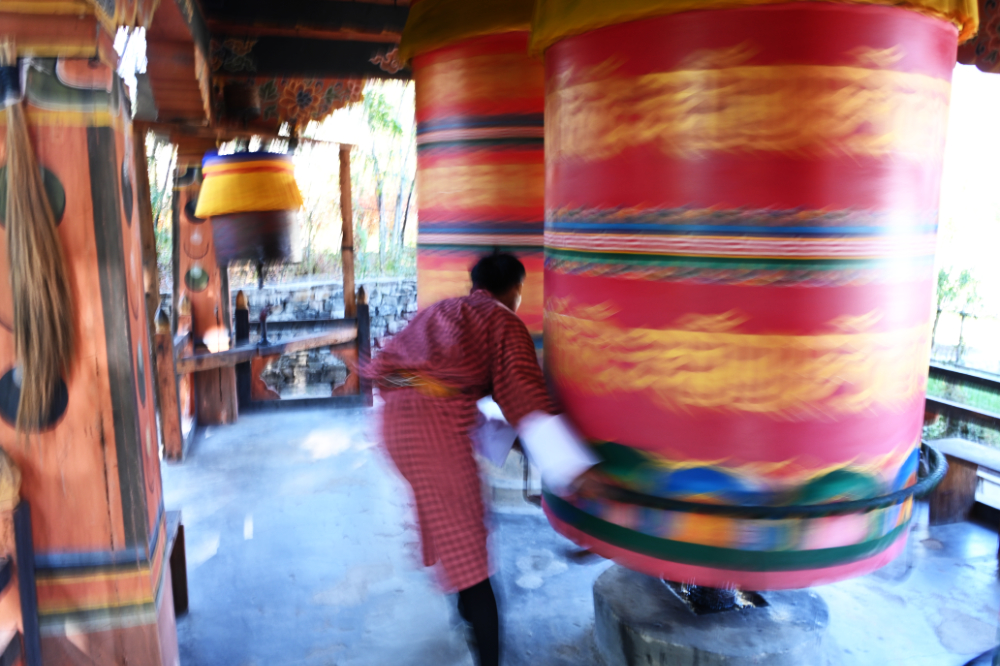
Prayer wheels like this one are found throughout Bhutan. Spinning them is a common Buddhist devotional practice, and I would see them repeatedly at temples, monasteries and along roads during the rest of my travels through the country.
The main reason I wanted to visit Paro, however, was to see Paro Taktsang, better known as the Tiger’s Nest. It is easily Bhutan’s most recognizable landmark and one of the country’s most sacred Buddhist sites. The monastery is built directly into a cliff roughly 900 meters above the Paro Valley, and from a distance it almost looks as if the buildings were somehow glued to the side of the mountain.
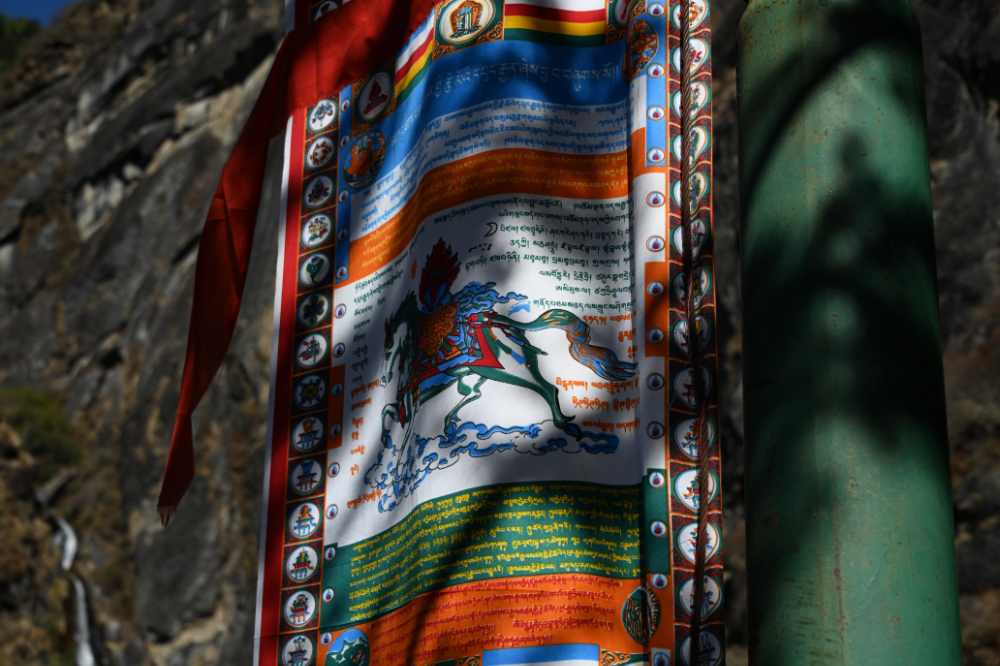
According to Bhutanese tradition, Guru Rinpoche, who helped bring Buddhism to Bhutan, flew to this location on the back of a tigress in the 8th century. He meditated in a cave here, and the site eventually became sacred. The monastery seen today was constructed centuries later around the caves associated with him. For Bhutanese Buddhists, Tiger’s Nest is therefore much more than a spectacular building. It is an important pilgrimage destination connected to the development of Buddhism in Bhutan.
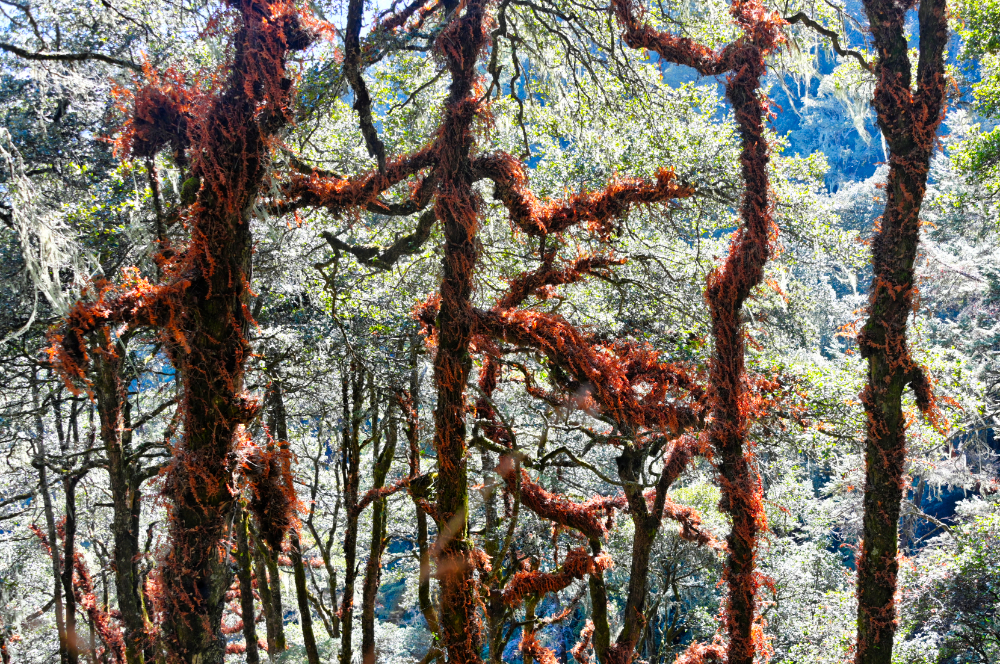
There is no road leading all the way to the monastery, so reaching it requires hiking up the mountain. The trail begins below the cliffs and steadily climbs through a forest of pine trees. Much of the first part of the hike is shaded, and for a while there is little indication that one of Bhutan’s most famous landmarks is somewhere high above you.
The hike is often described as difficult because of the elevation and the amount of climbing involved, although I personally found it pretty easy. I was already accustomed to hiking in the mountains, and there was nothing technically difficult about the trail. It was mostly a steady uphill walk. For someone who isn’t used to hiking or being at higher elevations, though, I could see how the climb would feel considerably harder.
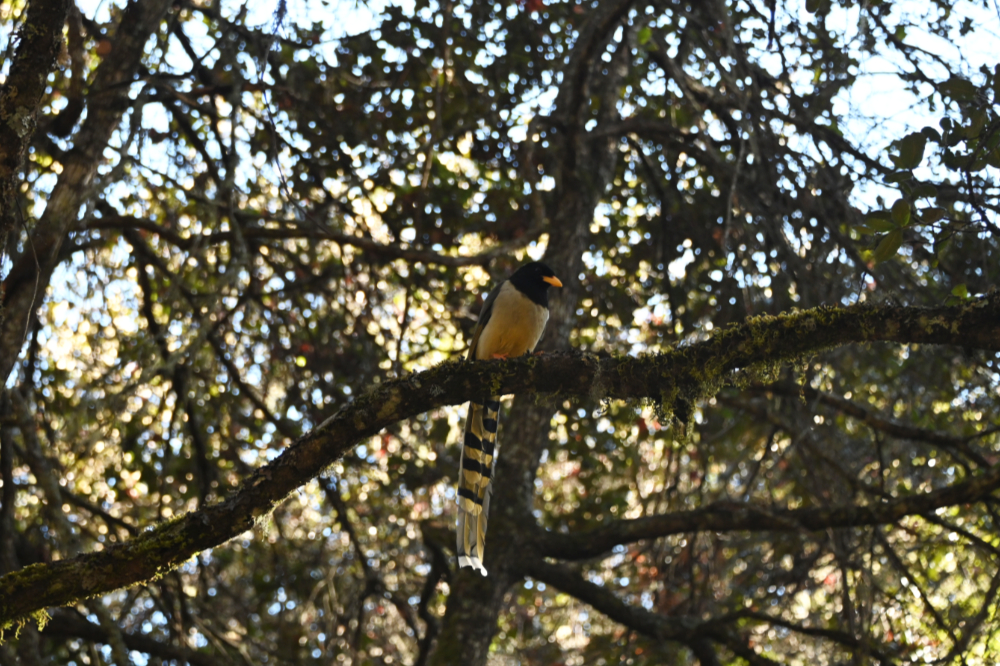
Because I wasn’t struggling with the climb, I had plenty of time to pay attention to what was around me. Birds moved through the forest, including magpies that seemed surprisingly comfortable around people. There were also religious objects scattered throughout the forest, a reminder that this wasn’t simply a hiking trail but a pilgrimage route.
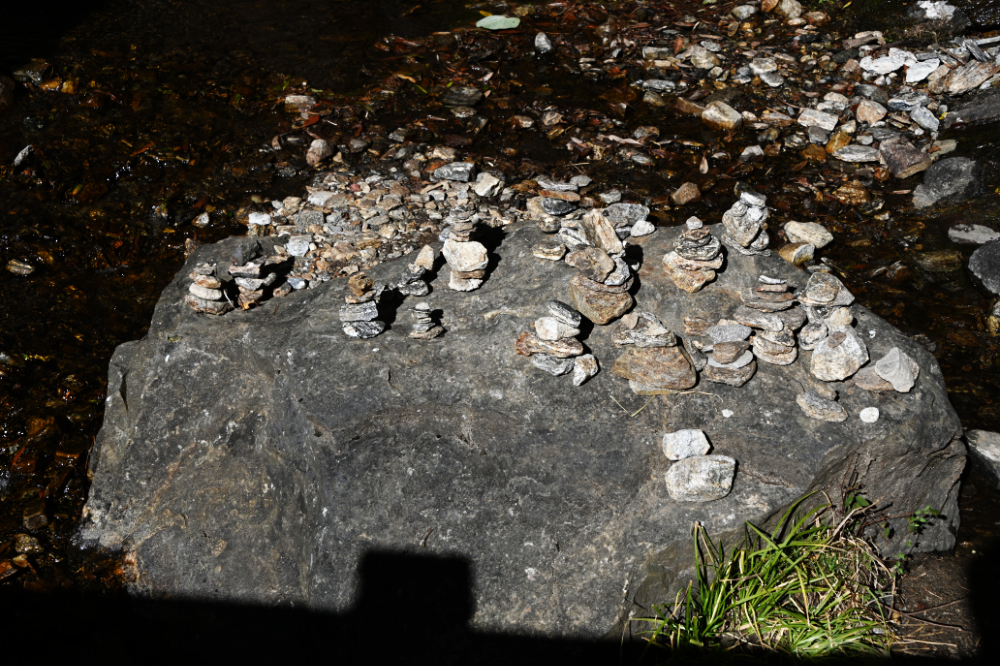
Among the more interesting things I noticed were small tsa-tsas, Buddhist votive objects traditionally made from clay. Some had been carefully placed in cracks in the rocks, while others were gathered together in larger groups. I had seen plenty of Buddhist monuments before, but these smaller objects were easy to miss unless I stopped and looked around.
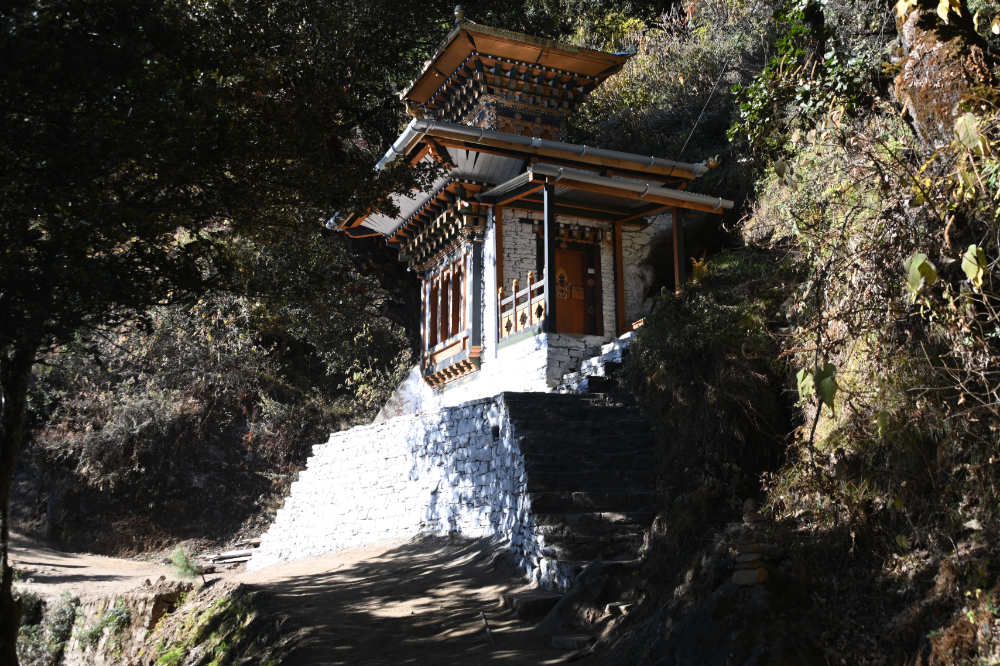
The trail continued climbing through the trees. Although Tiger’s Nest attracts travelers from around the world, the hike itself still felt like being out in the mountains rather than walking through a developed tourist attraction. There were no roads or modern buildings following me up the mountain, just the trail winding higher through the forest.
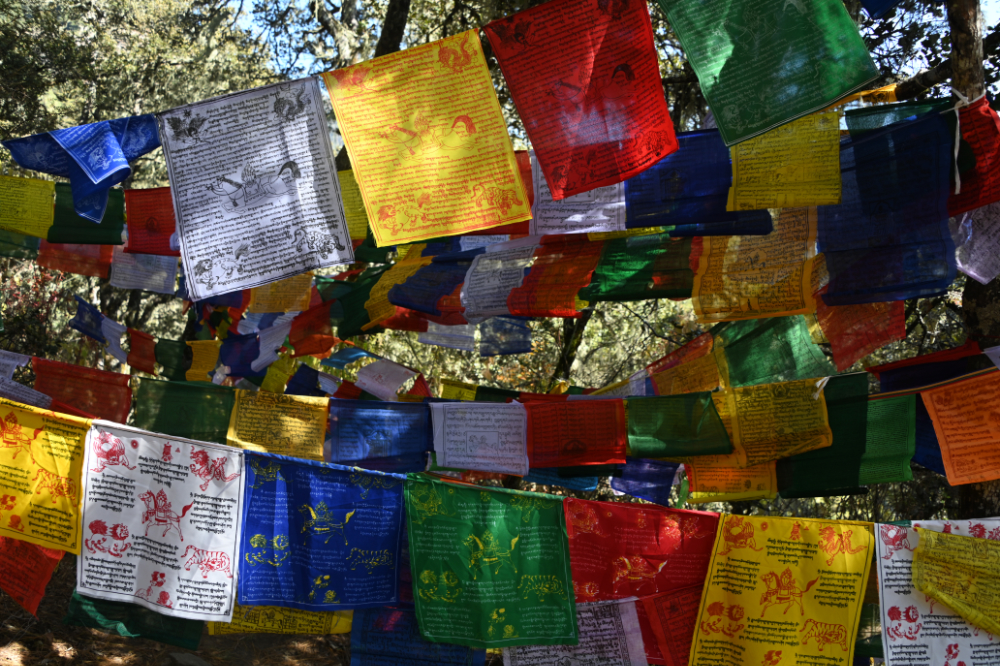
Prayer flags became increasingly common as I climbed. Some were stretched between individual trees, while others covered entire sections of the forest. Seeing them deep in the mountains made the hike feel less like simply walking to a tourist destination and more like approaching a place that had been sacred for centuries.
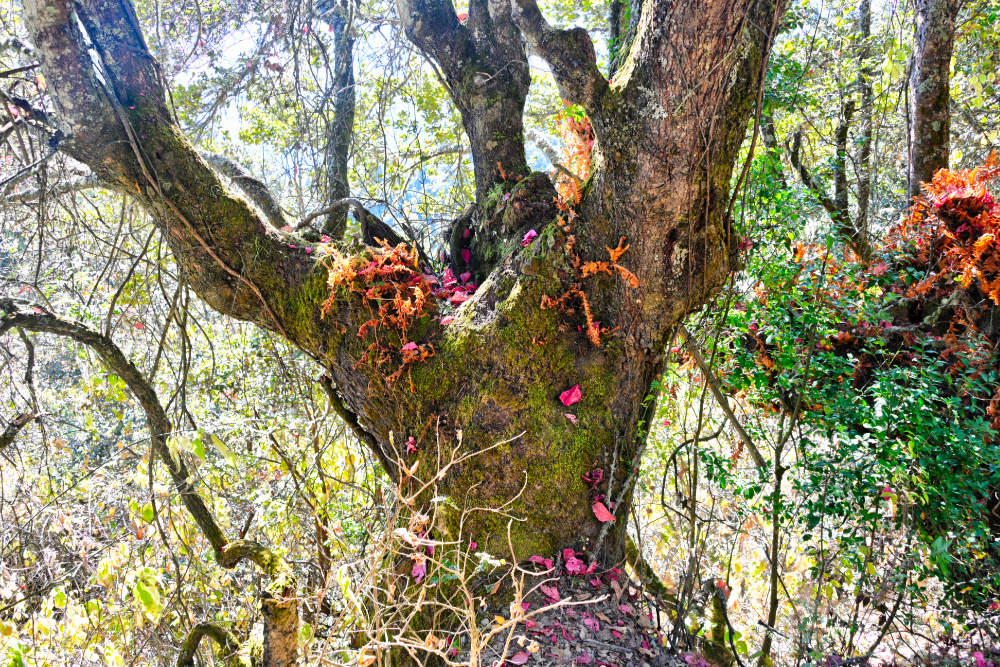
The forest itself was one of the things I enjoyed about the hike. Tiger’s Nest is what everyone comes to see, but walking through the mountains made reaching it much more interesting than simply driving to a viewpoint. Every so often the trees opened enough to reveal the surrounding slopes and remind me how high I had already climbed above the valley.
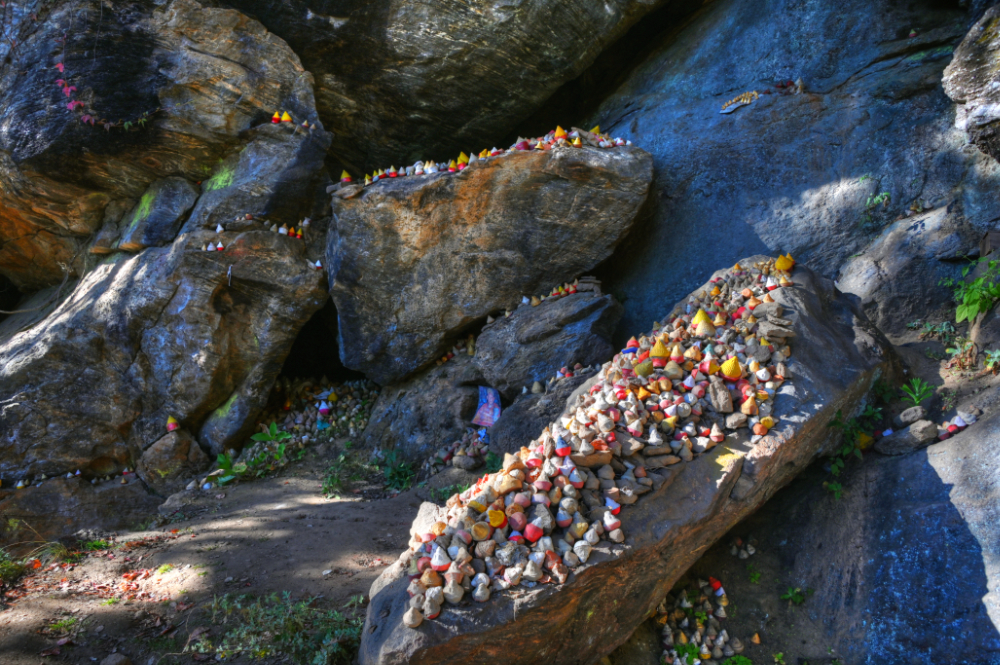
More tsa-tsas appeared as I continued upward. Along with the prayer flags, they made it impossible to forget the religious importance of the mountain. Long before international travelers began hiking here to photograph Tiger’s Nest, Bhutanese pilgrims were making the same journey for an entirely different reason.
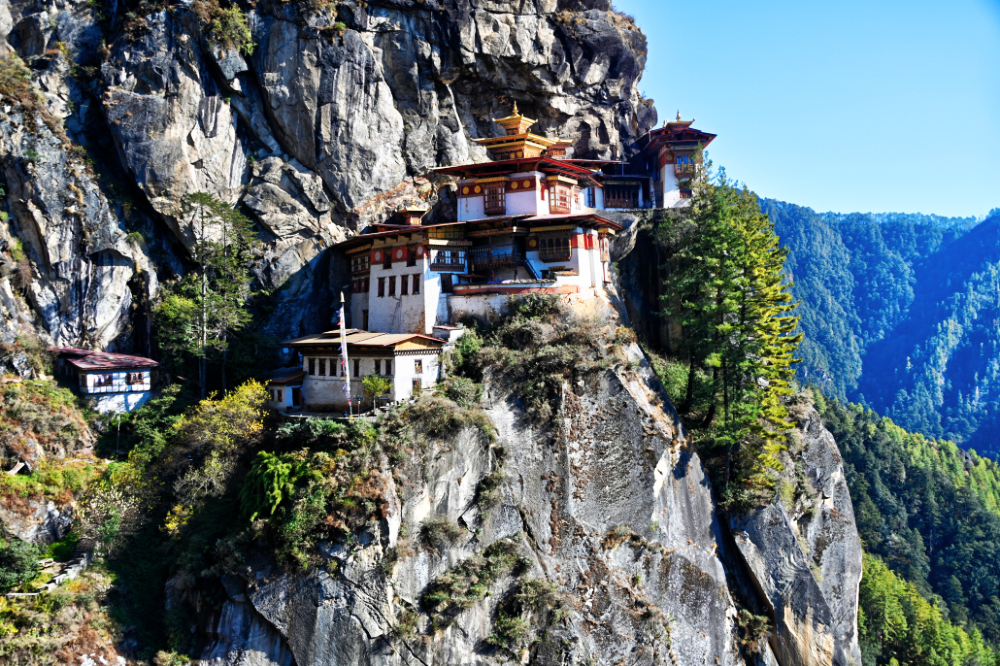
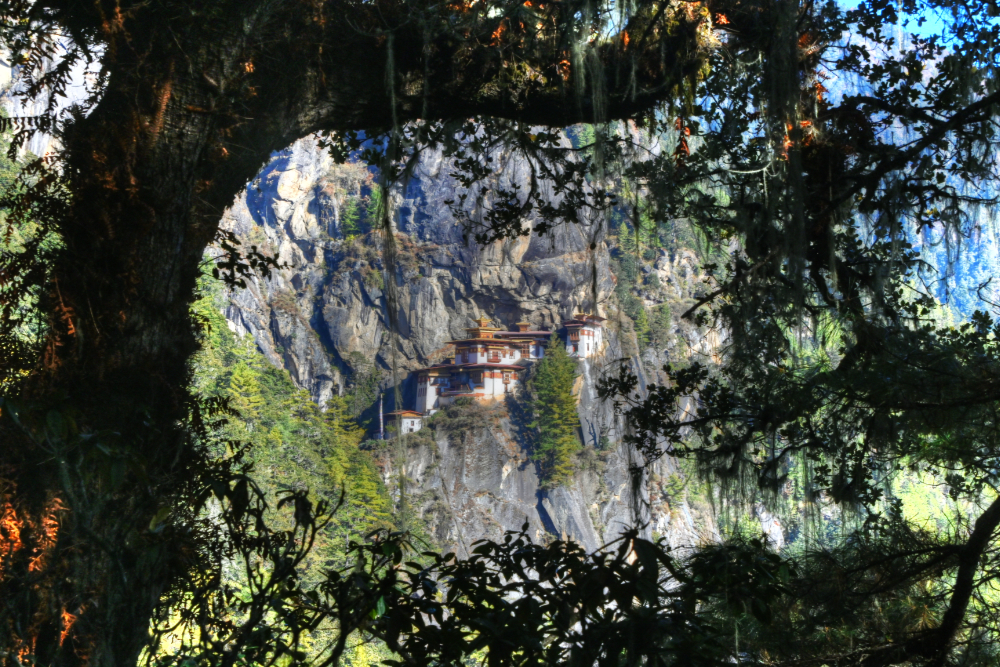
Eventually the forest opened enough to provide a clear view of Tiger’s Nest. This is the view that makes the monastery so famous. Several white buildings with red and gold roofs cling to an almost vertical wall of dark rock, with hundreds of meters of empty space below them. Even after seeing photographs of Tiger’s Nest before coming to Bhutan, its location was difficult to appreciate until I actually stood across the gorge from it.
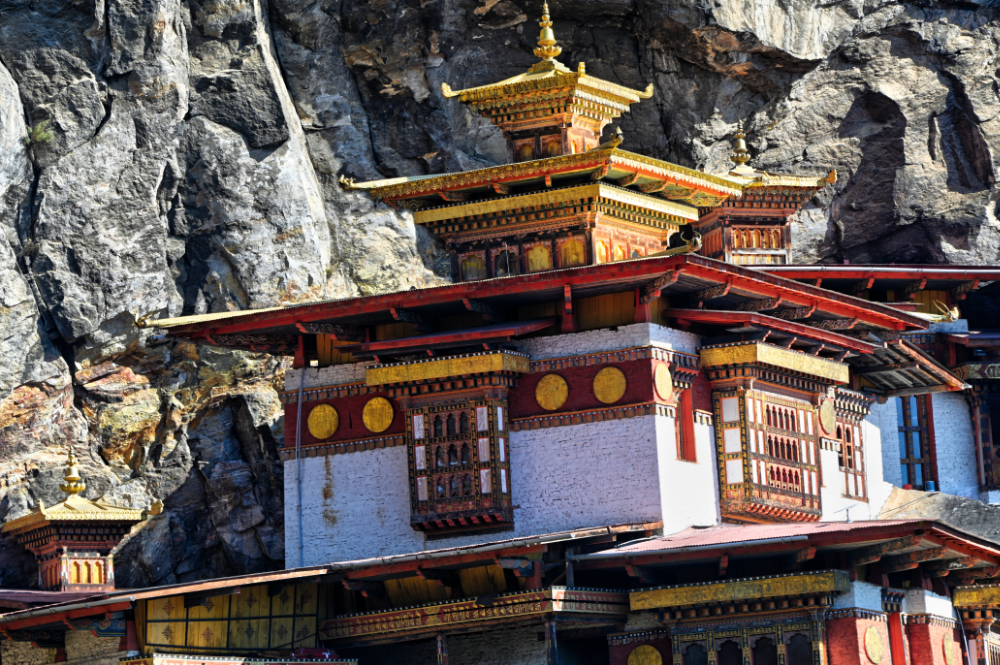
Getting that first view doesn’t mean the hike is finished. The trail continues toward the monastery and eventually descends a long series of steps into the gorge separating the viewpoint from the cliff. As I moved closer, I could finally make out the individual structures. What had looked like a single building from a distance was actually a collection of temples and other buildings constructed at different levels against the rock.
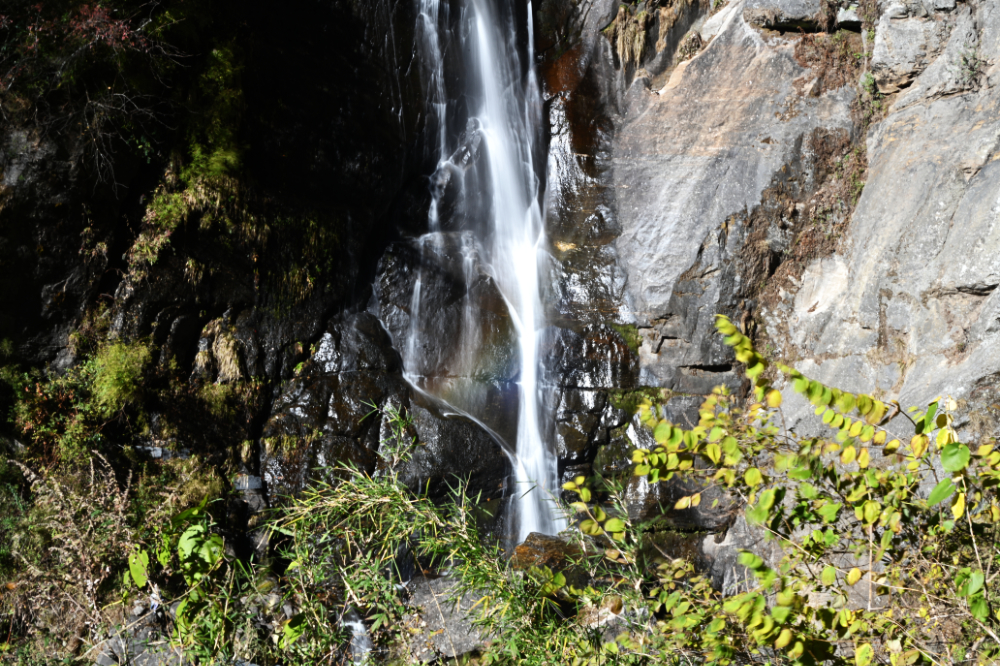
Near the bottom of the gorge, a waterfall drops down the cliff beside the monastery. The trail descends toward it before crossing the ravine and climbing again toward Tiger’s Nest. It was probably my favorite section of the hike. After spending much of the walk approaching the monastery through the forest, I was suddenly surrounded by cliffs with Tiger’s Nest directly ahead.
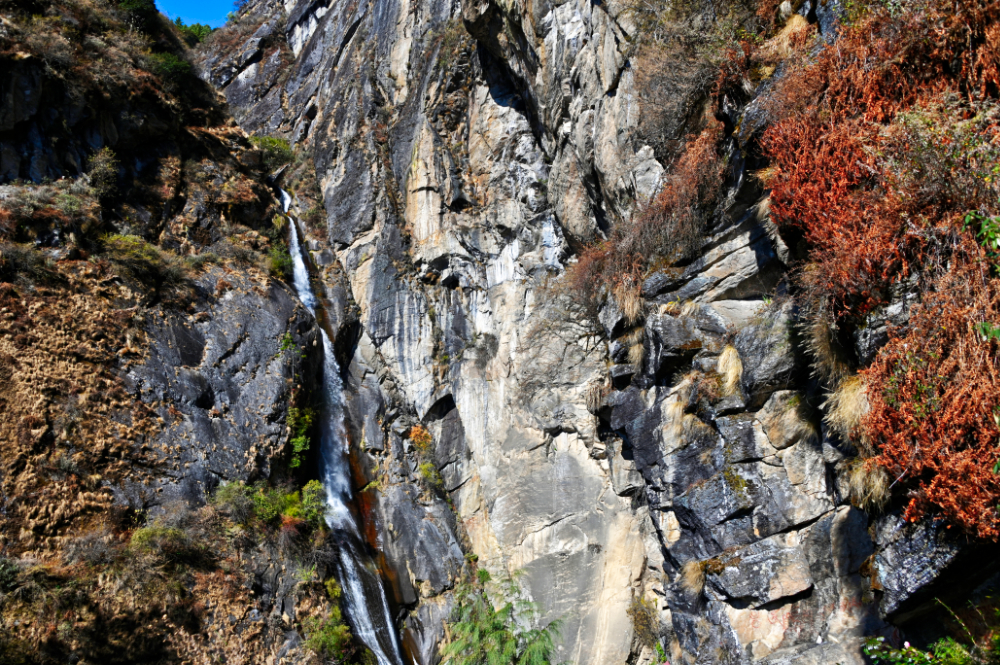
From the gorge, there is one final climb before reaching the monastery itself. Up close, Tiger’s Nest feels very different from the distant postcard view. Instead of looking at a tiny monastery clinging impossibly to a cliff, I was suddenly walking through the same complex I had been watching grow larger throughout the hike.
Tiger’s Nest is understandably the major destination for almost everyone who travels to Paro. Its location alone would make it worth visiting, but the religious history surrounding the monastery gives the site far more significance than its appearance. I also liked that reaching it required spending several hours in the mountains rather than simply driving to a viewpoint. The forest, prayer flags, tsa-tsas, birds, cliffs and waterfall made the hike part of the experience rather than just a way of getting there.
For me, the climb wasn’t particularly difficult, but it was easily one of the most memorable hikes I did in Bhutan. There aren’t many places where the destination becomes more impressive the closer you get to it, but Tiger’s Nest was one of them.