Litchfield National Park was my chance to get out of Darwin and explore some of the wilderness of Australia’s Northern Territory. The park is known for its waterfalls, swimming holes, wildlife, and enormous termite mounds, and the drive south also gave me a better look at just how sparsely populated this part of Australia really is.
After spending time around Darwin’s crocodile-filled coastline, I was especially looking forward to finding somewhere I could actually get in the water.
Into Litchfield National Park
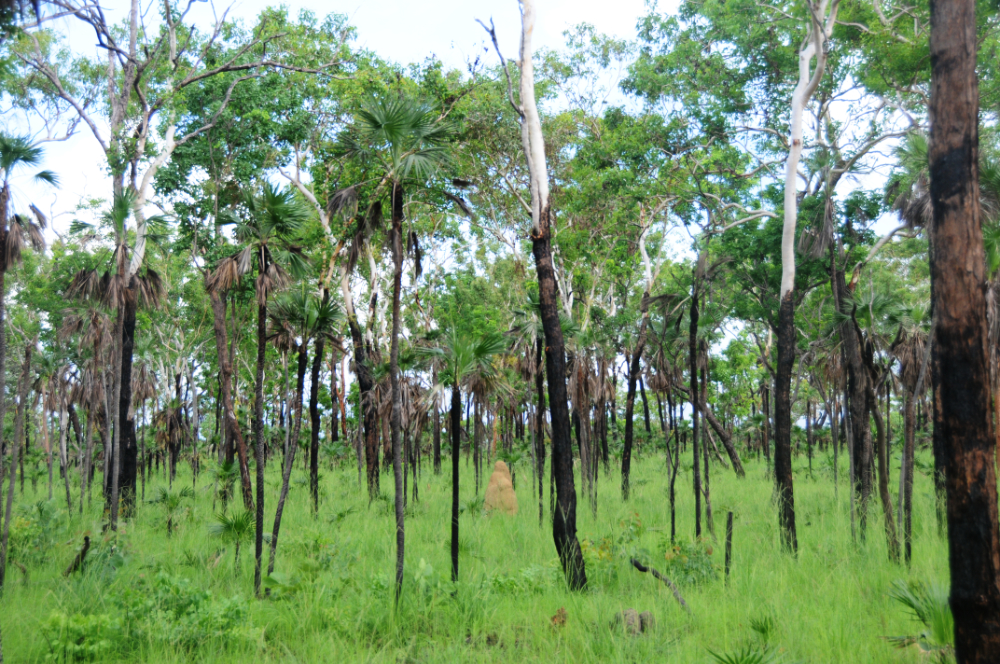
The landscape around Litchfield looked similar to what I had been seeing since leaving Darwin. Much of the park consisted of grassy plains and open woodland, with palms, scattered trees, and the occasional termite mound rising out of the landscape.
Coming from wetter tropical environments, I was surprised by how open the forest was. Rather than the dense jungle I normally associated with the tropics, northern Australia’s long dry season creates a very different landscape.
Giant Termite Mounds
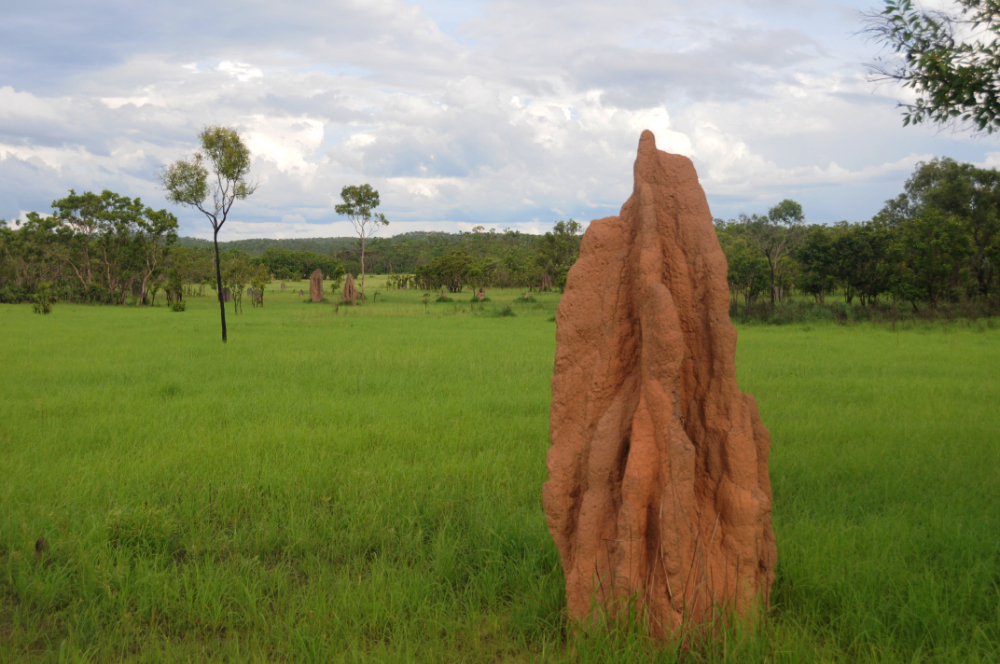
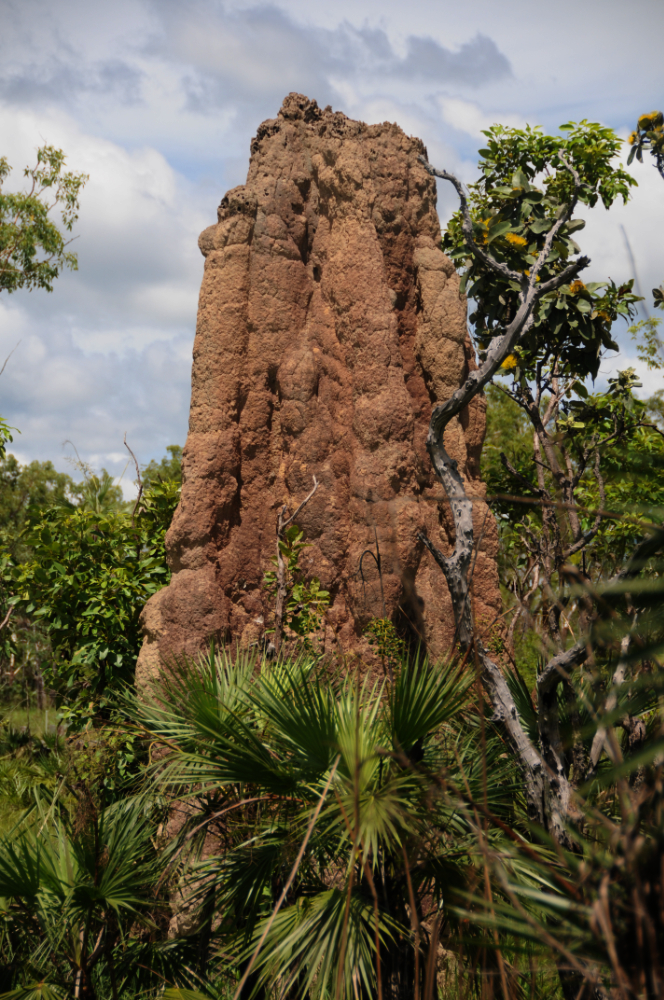
I’d seen gigantic termite mounds while traveling around Africa, but I had never encountered anything comparable elsewhere until coming to northern Australia. Some of the mounds here were several meters tall and rivaled the largest I’d ever seen.
Litchfield is especially famous for its magnetic termite mounds. The termites construct these unusually thin structures along a remarkably consistent north-south orientation, helping regulate the temperature inside the mound.
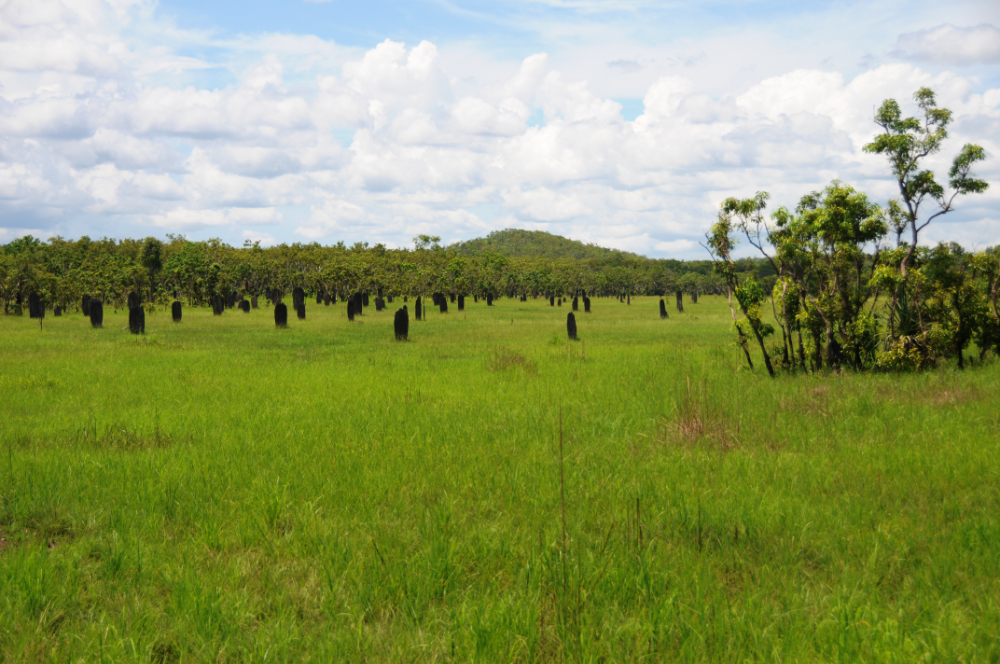
One field contained dozens of them. From a distance, all those narrow slabs rising vertically from the grass almost looked like an enormous cemetery.
Wildlife in Litchfield
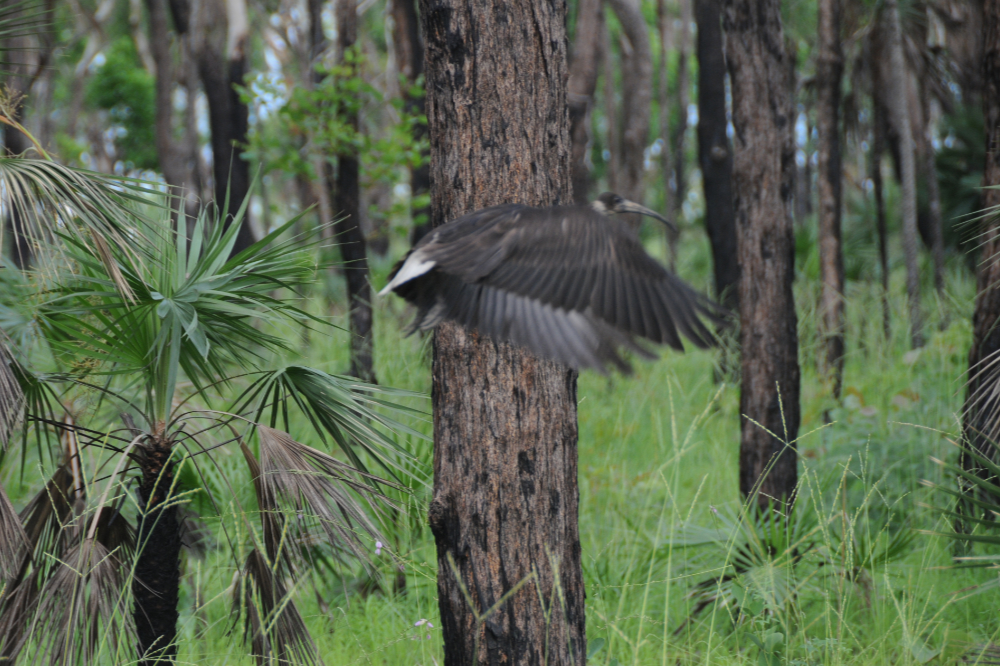
I came across this straw-necked ibis while exploring Litchfield. The species is found across much of Australia and also occurs in parts of New Guinea and Indonesia.
Thanks to Steve for helping me identify it!
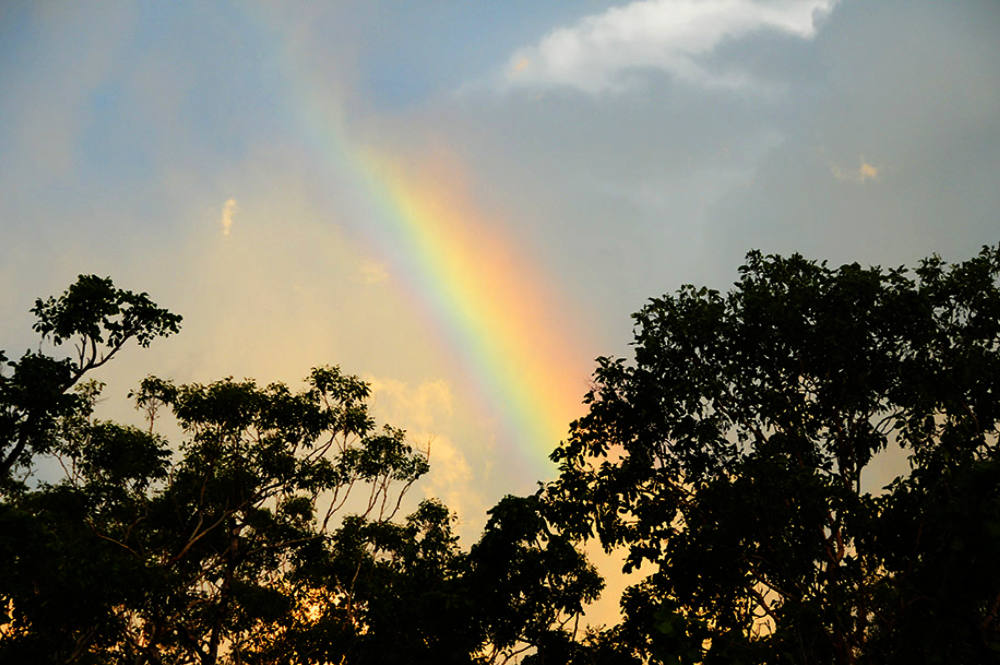
As the sun began to set, a rainbow appeared over the landscape. It never formed a complete arch, but the colors were incredibly strong and added another memorable moment to my time in the park.
Waterfalls and Swimming Holes
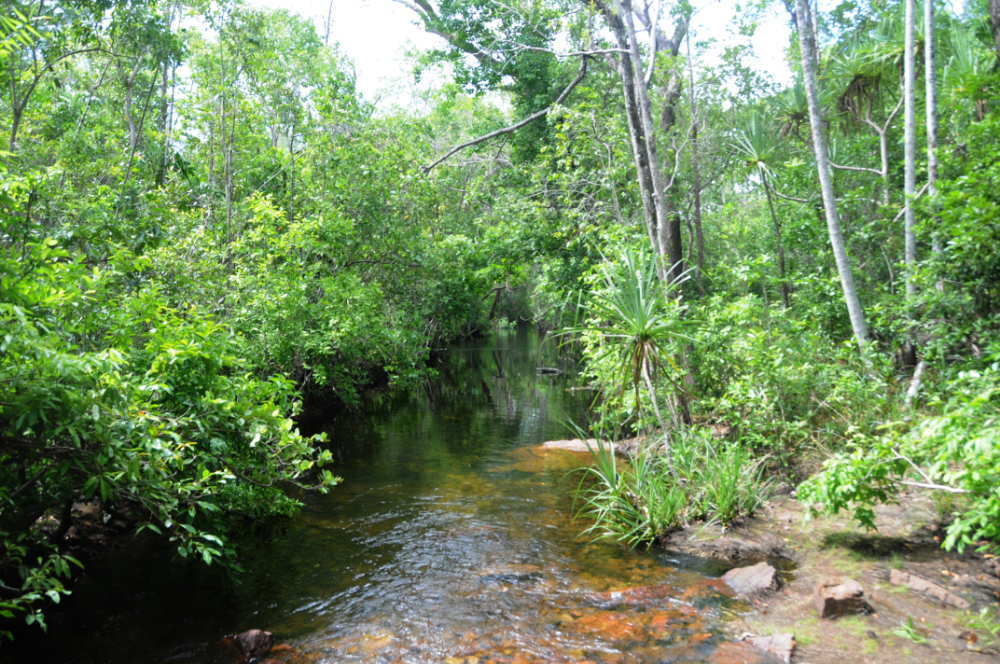
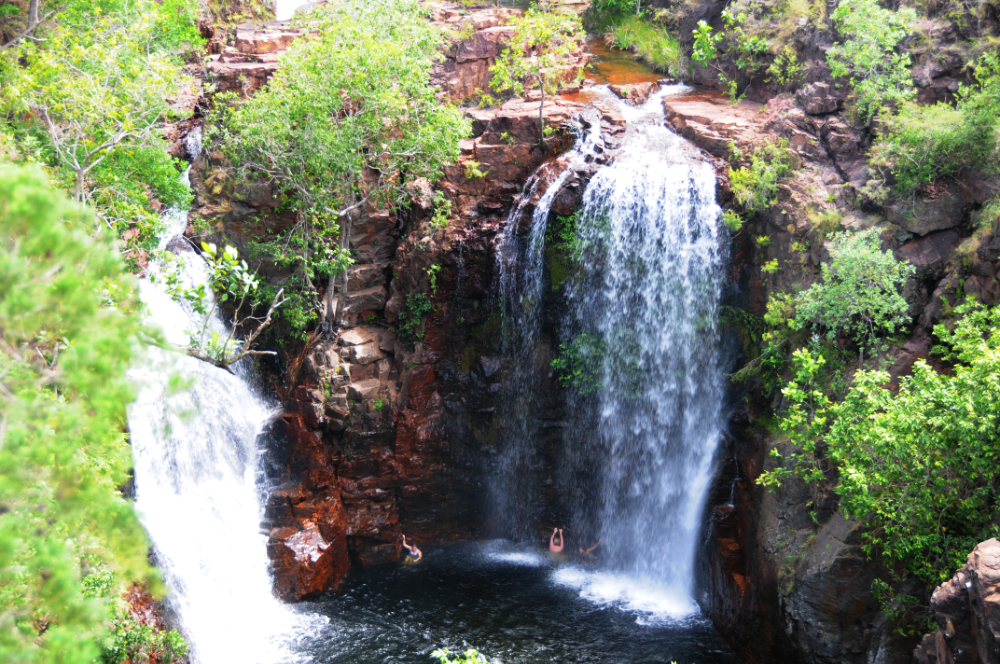
After seeing all the crocodile warnings around Darwin, Litchfield’s freshwater swimming holes were exactly what I had been looking for.
That didn’t mean you could completely forget about crocodiles. During the wet season, crocodiles can move into areas that are normally considered safer, so swimming areas need to be checked and managed before visitors are allowed into the water.
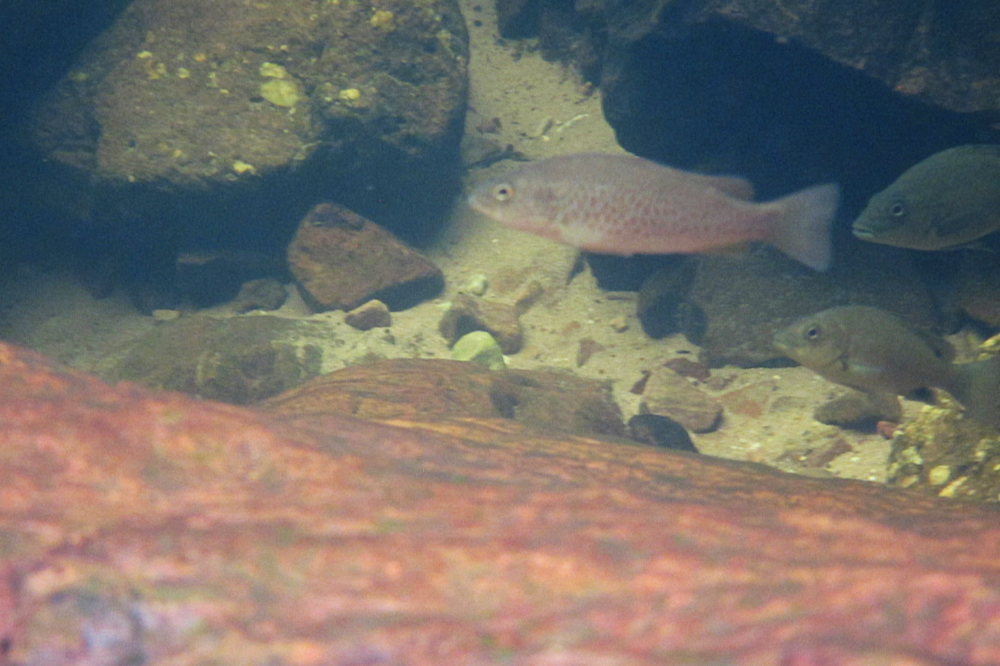
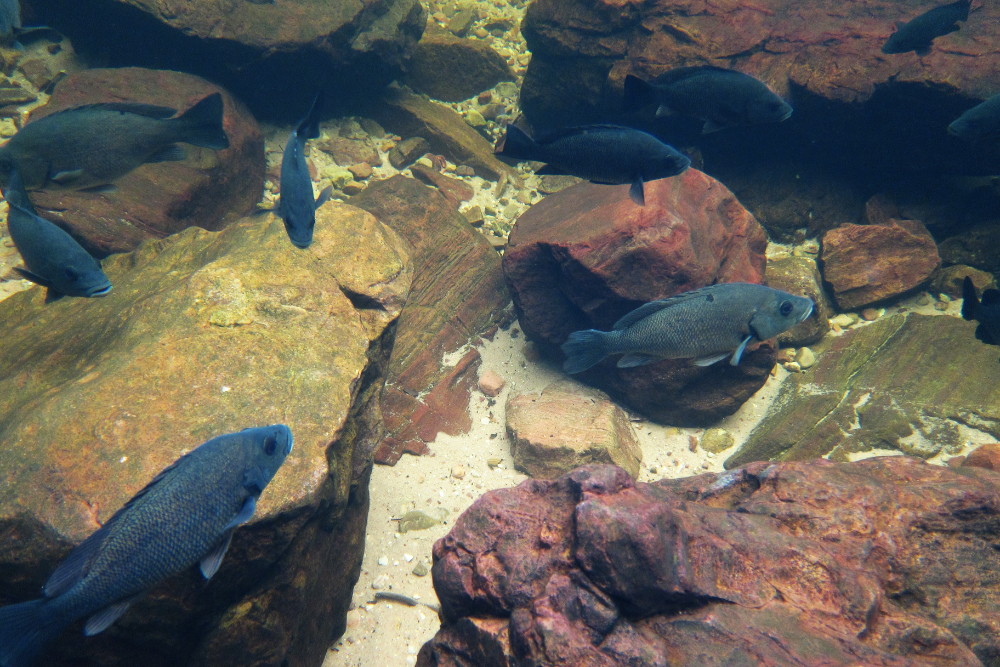
The pool I visited had crystal-clear water and plenty of surprisingly large fish. They seemed completely accustomed to people and weren’t particularly interested in swimming away.
Driving Through the Northern Territory
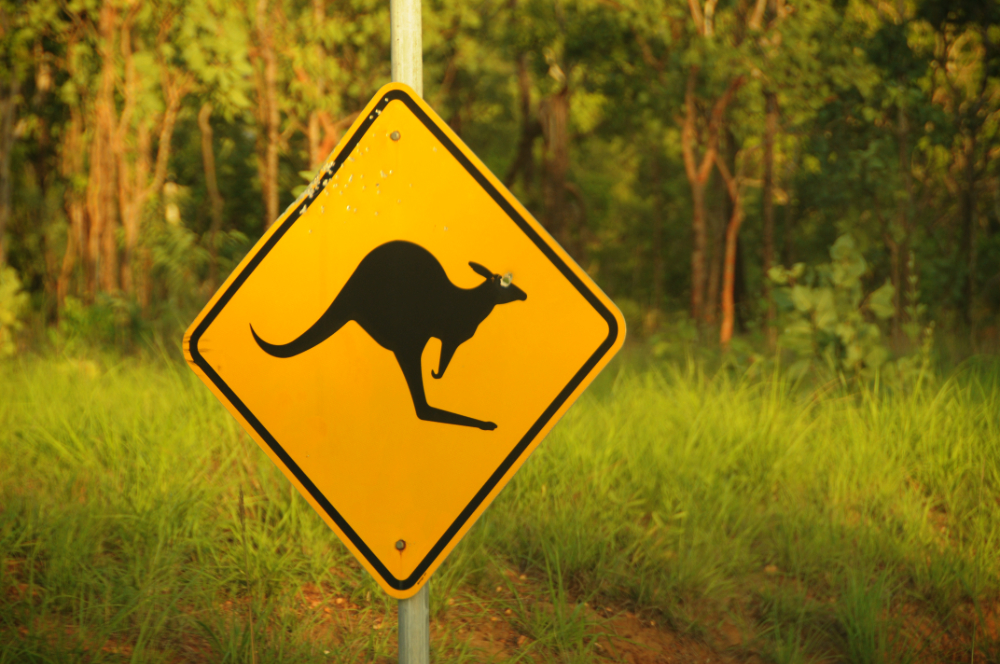
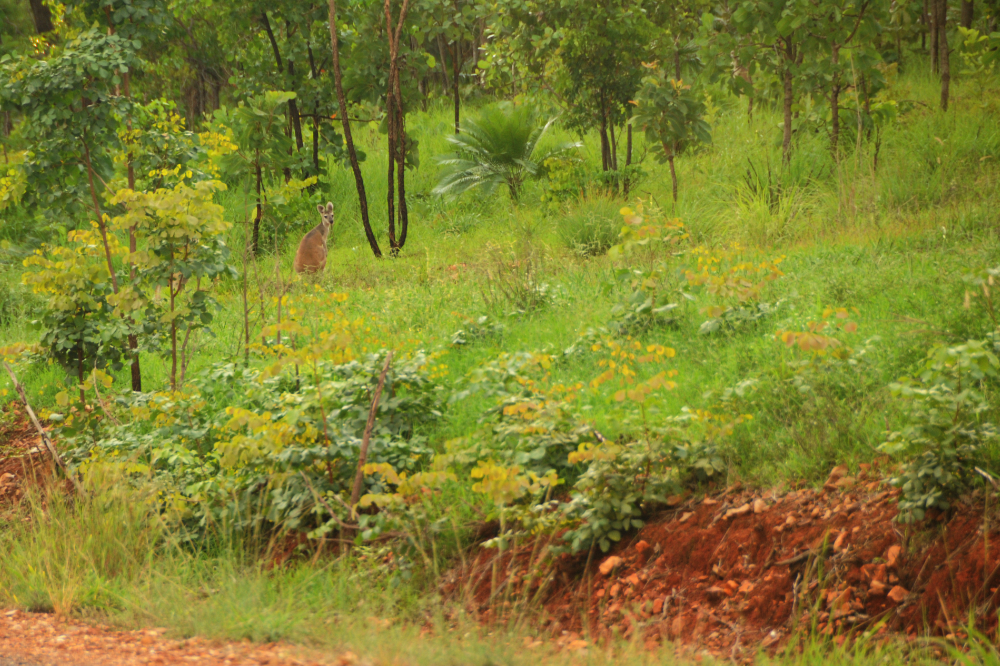
When I rented a car to explore south of Darwin, the rental office warned me not to drive at night. Apparently there could be so many wallabies crossing the roads after dark that driving became dangerous.
Then the conversation got stranger.
I was also warned about large animals on the road—and supposedly a lion.
Obviously lions aren’t native to Australia, so I asked where exactly this lion was supposed to have come from. The man told me there had been numerous sightings and then casually shrugged and suggested that it had probably escaped from a circus.
Renting a car in Australia and hitting a lion would certainly have made for an interesting insurance claim.
I never found the mysterious Northern Territory lion, but I did see plenty of wallabies.
The Railway Through the Outback
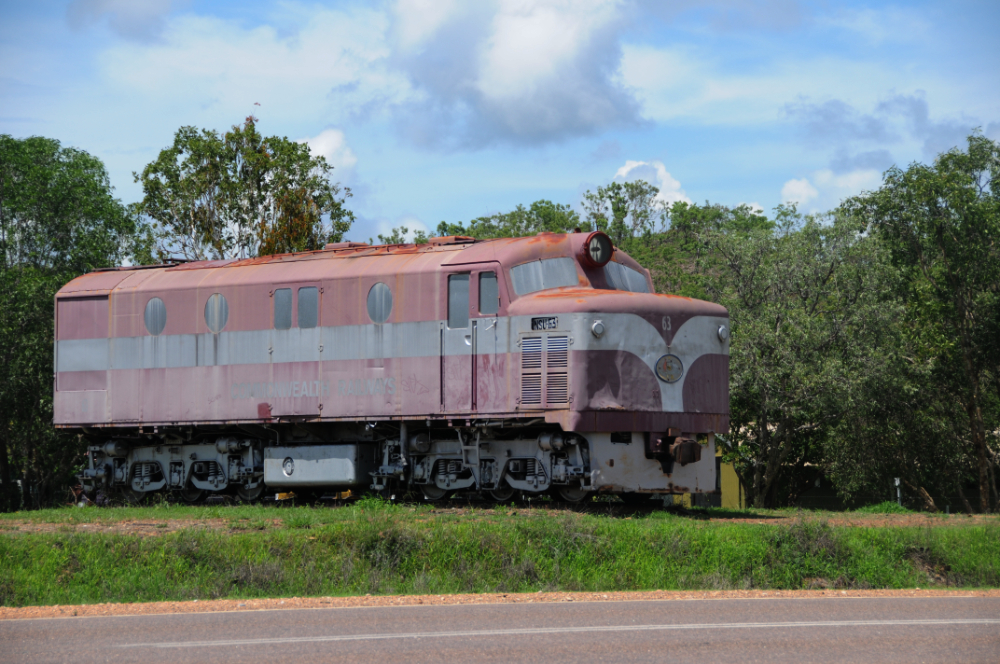
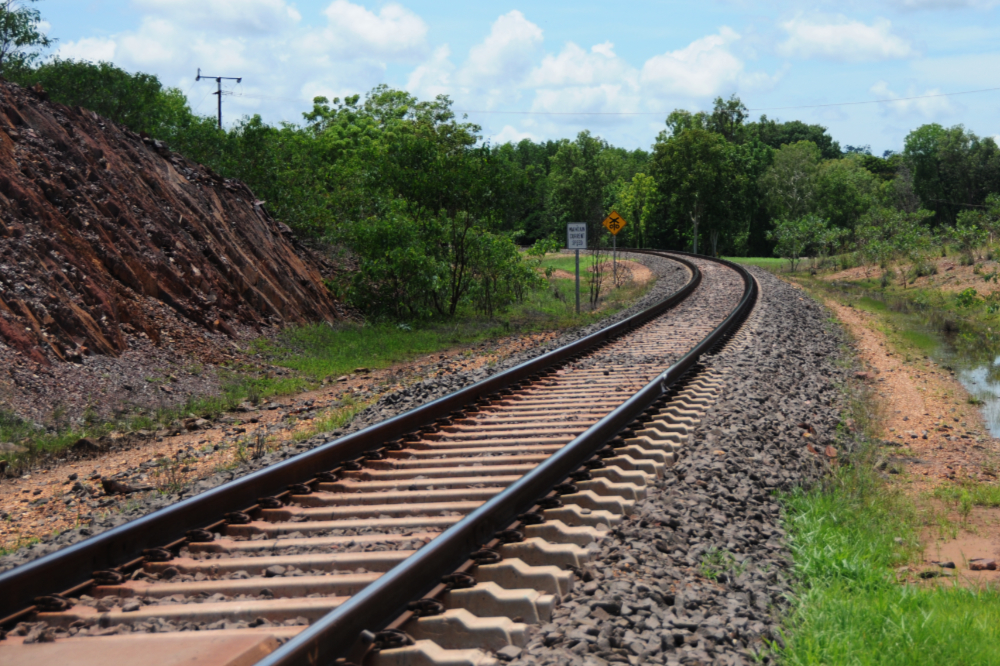
Farther south of Darwin, I crossed the railway connecting Darwin with Adelaide on Australia’s southern coast.
The modern north-south route crosses an enormous section of the continent and carries both freight and passenger trains through the Australian interior. Seeing the tracks disappearing across the landscape gave me another sense of just how enormous and empty this part of the country really was.
Adelaide River War Cemetery
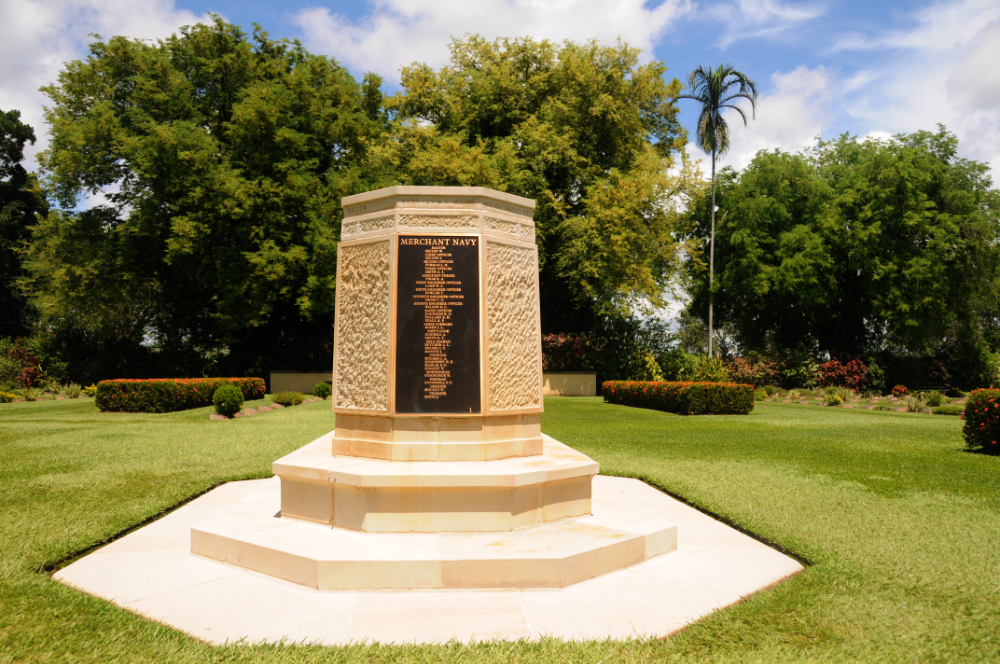
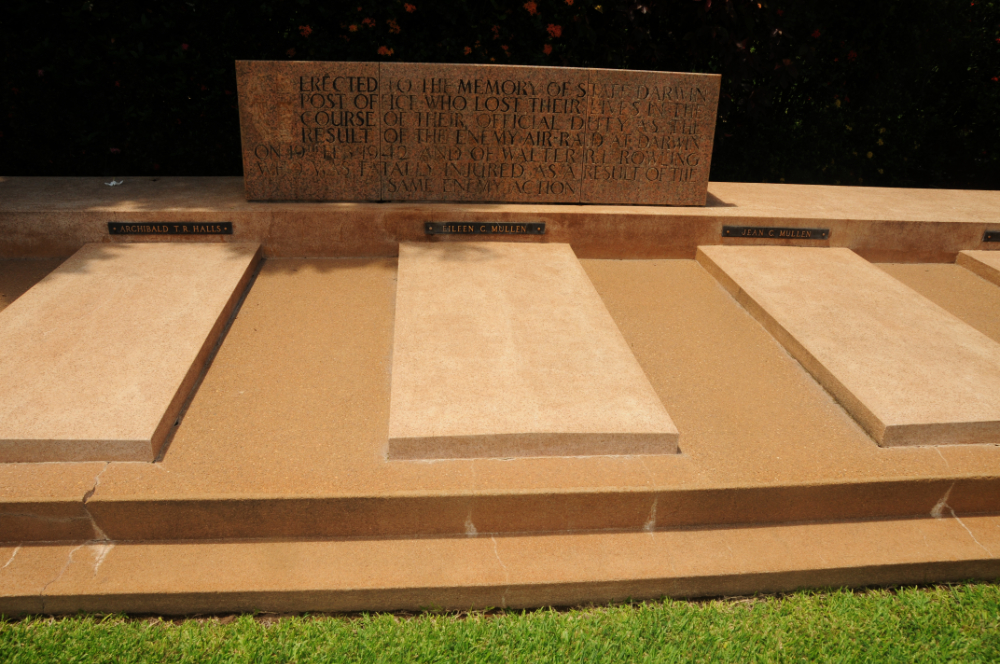
Continuing south brought me to Adelaide River, where I came across a large World War II cemetery.
Some of the people buried here were victims of the bombing of Darwin. At first I wondered why they had been buried more than 100 kilometers away from the city, but Adelaide River itself became an important military center during the war.
As I drove through the surrounding area, I also noticed old airfields and strips beside the highway that dated back to World War II. It helped put Darwin’s wartime history into perspective—the military presence extended far beyond the city itself.
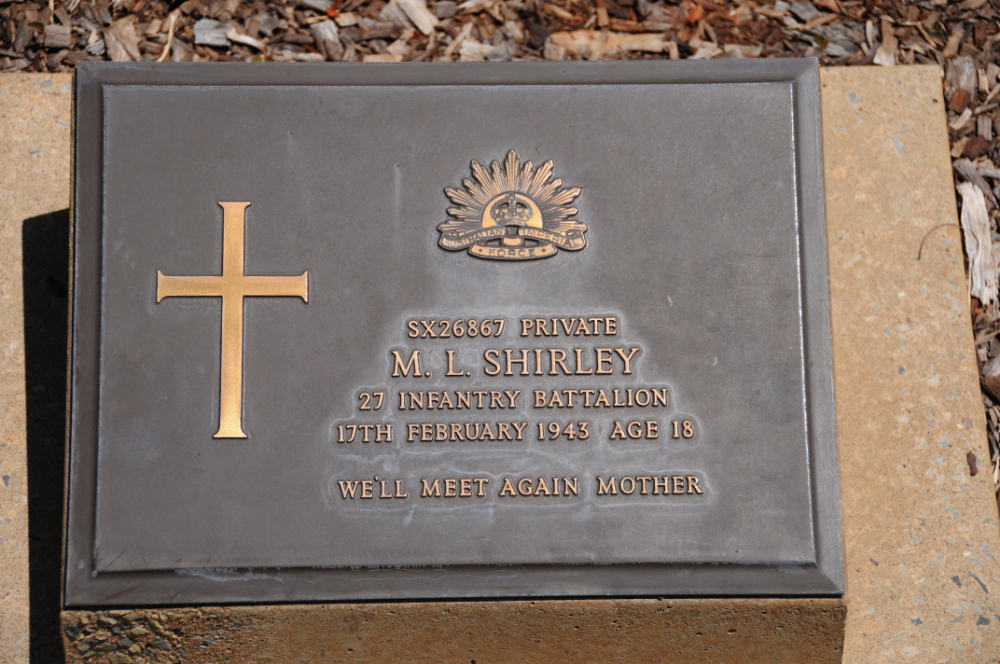
I photographed the graves of two young men killed during the war. I wasn’t sure whether they had died during the attacks around Darwin or while serving elsewhere, but seeing their ages made the history feel considerably more personal than simply reading about the bombings.
Batchelor
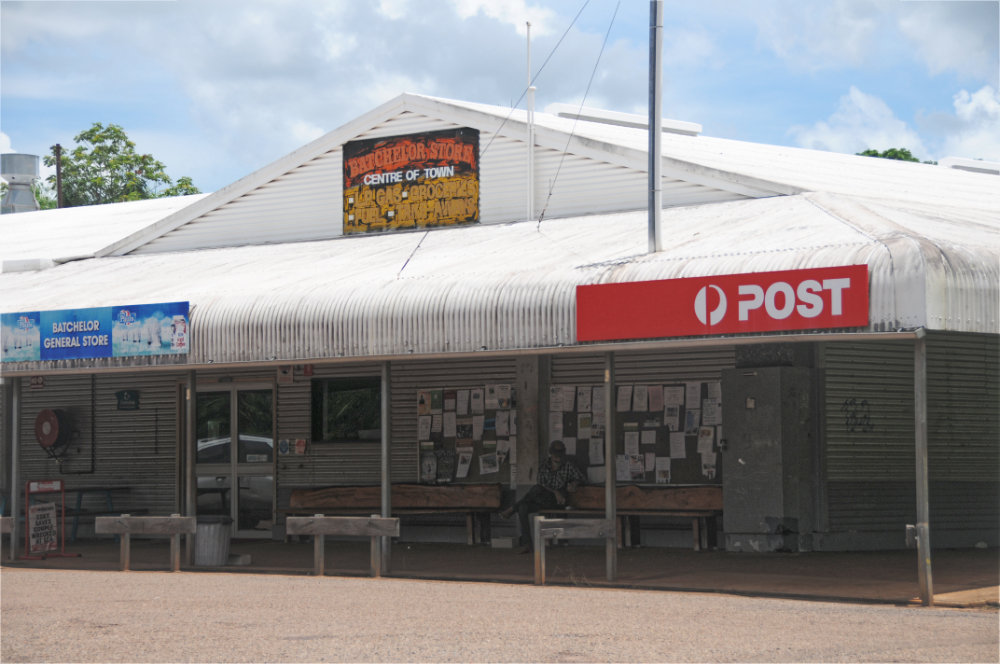
I also passed through the small town of Batchelor, one of the gateways to Litchfield National Park. With fewer than a thousand residents, a general store, a few places to eat, and a handful of accommodations, it felt incredibly remote.
Something about Batchelor reminded me of tiny towns in the western United States.
I came across one place advertised as a “resort,” although from the outside it looked more like a small motel and restaurant. It wasn’t exactly what most Americans or Europeans picture when they hear the word resort, but out here I suppose everything is relative.
Despite it being barely past lunchtime, there were already several people settled comfortably at the bar.
My Time in Litchfield
Litchfield gave me the side of the Northern Territory I had hoped to see outside Darwin. The landscape was open and wild, enormous termite mounds rose out of the grass, wallabies appeared along the roads, and waterfalls created clear pools where I could finally get into the water.
But some of my favorite memories came from simply driving around the region: hearing about an escaped circus lion that may or may not have existed, crossing the railway through the Australian interior, finding World War II airfields and graves around Adelaide River, and passing through tiny towns that felt incredibly isolated from the rest of the country.
Darwin had introduced me to Australia’s Top End, but getting out on the road was where I really began to appreciate just how different the Northern Territory was from anywhere else I’d traveled in Australia.