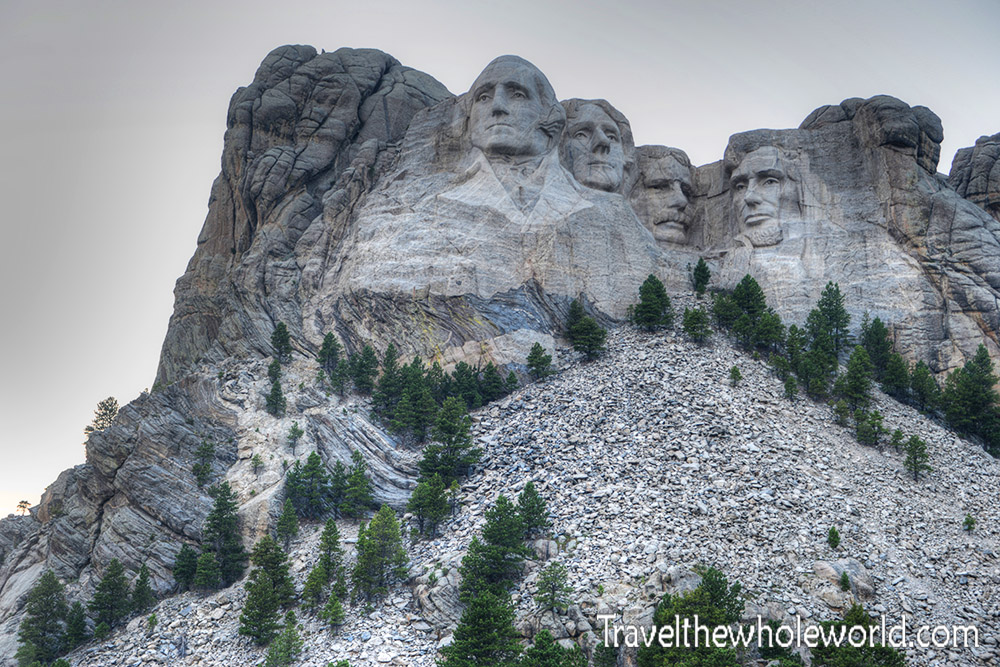
I had already been to all 50 states by the time I finally made it to Mount Rushmore. Despite traveling all over the country, it remained one of the few major American landmarks I had never seen. Its location in the Black Hills makes it a little out of the way, and none of my friends ever seemed particularly interested in making the trip with me. When I finally visited on my own, I was glad I had made the effort.
Mount Rushmore depicts four American presidents: George Washington, Thomas Jefferson, Theodore Roosevelt and Abraham Lincoln. Interestingly, the original idea wasn’t simply an act of patriotism. South Dakota historian Doane Robinson proposed carving monumental figures into the Black Hills during the 1920s partly as a way to attract tourists to the state. His early concept featured figures from the American West, but sculptor Gutzon Borglum eventually developed the idea around four presidents he believed represented important periods in American history.
Construction began in 1927 and continued until 1941. Borglum originally envisioned the presidents extending much farther down the mountain rather than ending with their faces and partial torsos, but the ambitious design was never completed. Borglum died in March 1941, and his son Lincoln briefly continued the work before construction ended later that year as funding ran out.
The monument also has a more complicated history because it was carved into the Black Hills, which are sacred to the Lakota and other Indigenous peoples. The United States guaranteed the Black Hills to the Sioux under the 1868 Treaty of Fort Laramie, but took control of the region after gold was discovered there in the 1870s. That history makes Mount Rushmore both a celebrated American landmark and a controversial monument depending on whose perspective you’re considering.
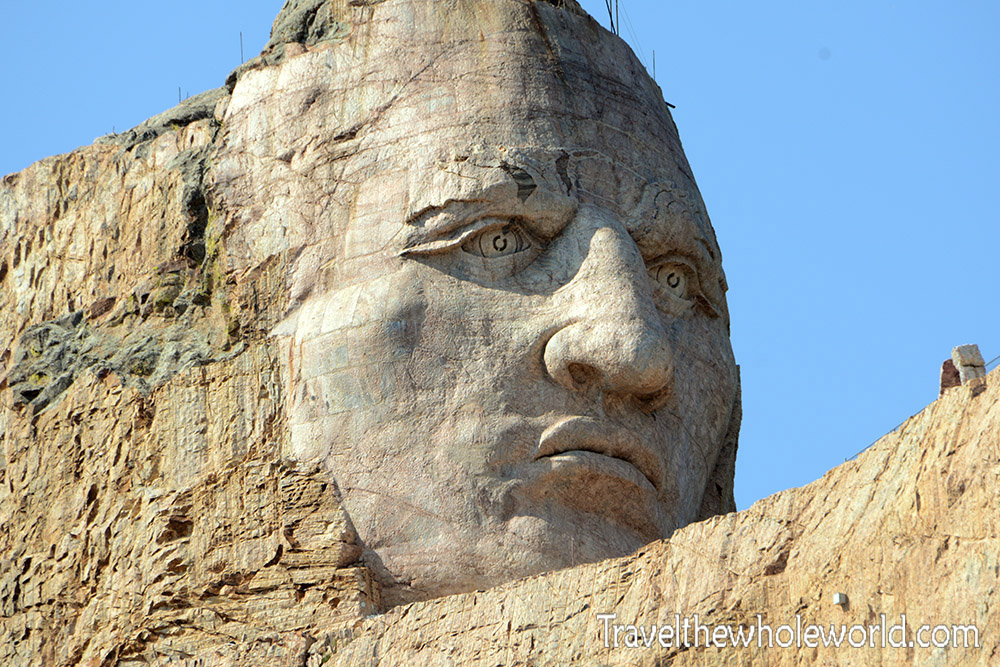
Not far from Mount Rushmore is another enormous mountain carving, although this one remains a work in progress. The Crazy Horse Memorial depicts the Oglala Lakota leader Crazy Horse riding a horse and pointing into the distance. Work began in 1948 under sculptor Korczak Ziolkowski after Lakota elder Henry Standing Bear invited him to create a monument honoring Native Americans.
The scale is difficult to appreciate from photographs. The completed sculpture is planned to measure roughly 563 feet (172 meters) high and 641 feet (195 meters) long, making Mount Rushmore look small by comparison. Crazy Horse’s face alone is about 87 feet (27 meters) high.
I should have taken a photograph showing the entire mountain, but instead I zoomed in on the completed face. Even at that distance, the size was impressive.
The memorial is also controversial. Some Lakota people support the idea of a monumental tribute to Crazy Horse and Indigenous history, while others object to carving a sacred mountain in his image, particularly because Crazy Horse himself was known for avoiding photographs and resisting attempts to turn him into a public symbol. The project therefore raises complicated questions about commemoration, culture and the history of the Black Hills.
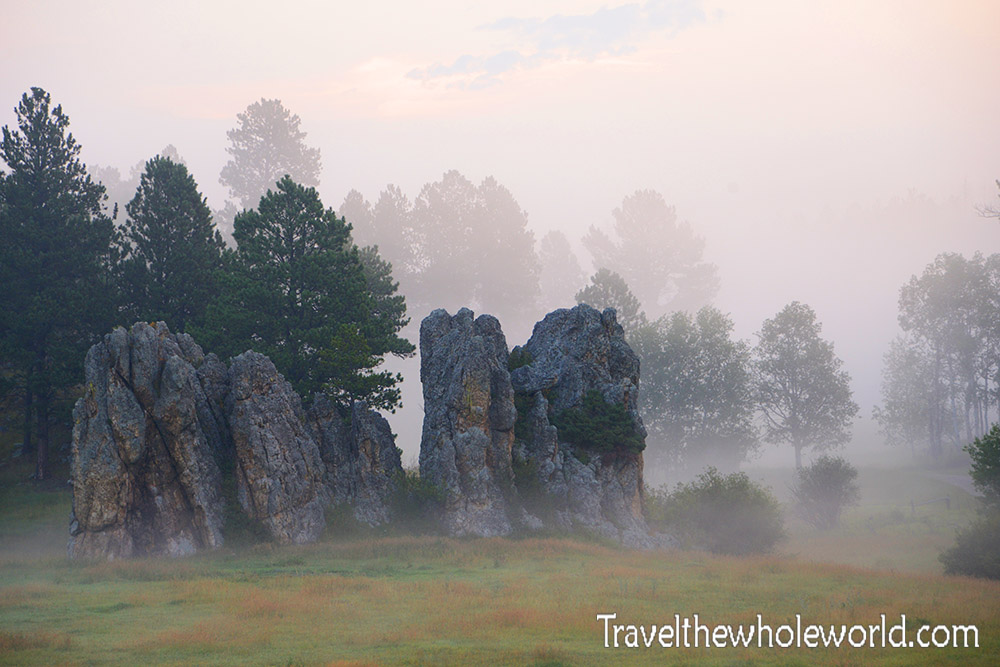
Mount Rushmore and Crazy Horse get most of the attention, but there is much more to see throughout the Black Hills. This was one of those trips where I wish I had taken more photographs and spent more time exploring.
I missed several places I would have liked to visit, including Wind Cave National Park, along with more hiking trails and opportunities for wildlife viewing. I did manage to capture this photograph of the morning fog rolling through the hills.
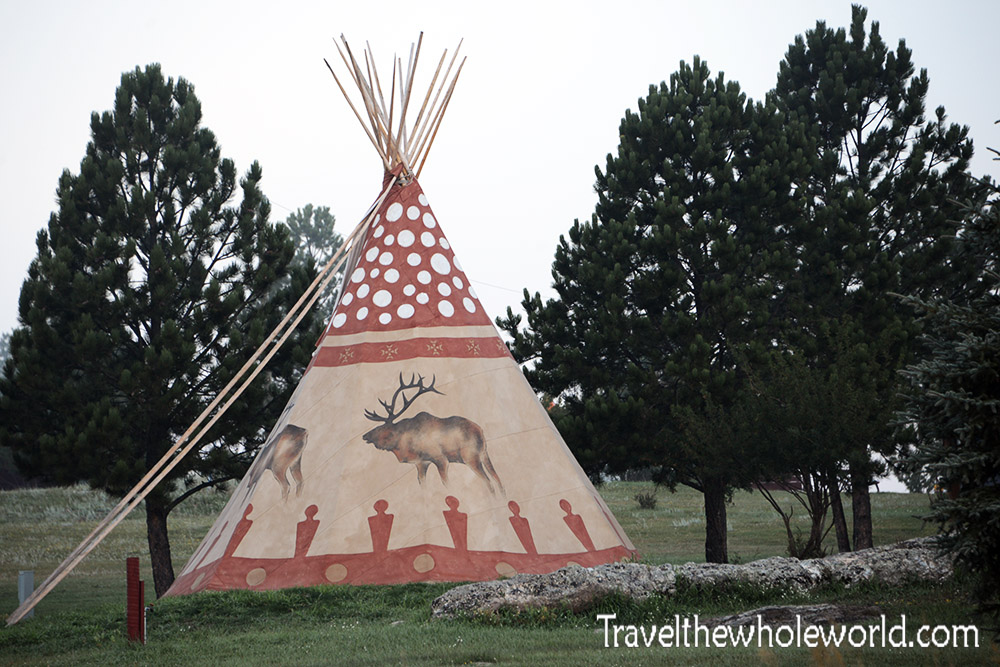
I didn’t camp on this trip, but there are plenty of campgrounds and other unusual places to stay throughout the region. I even came across opportunities to stay in a tipi, which could make for an interesting experience on a future visit.
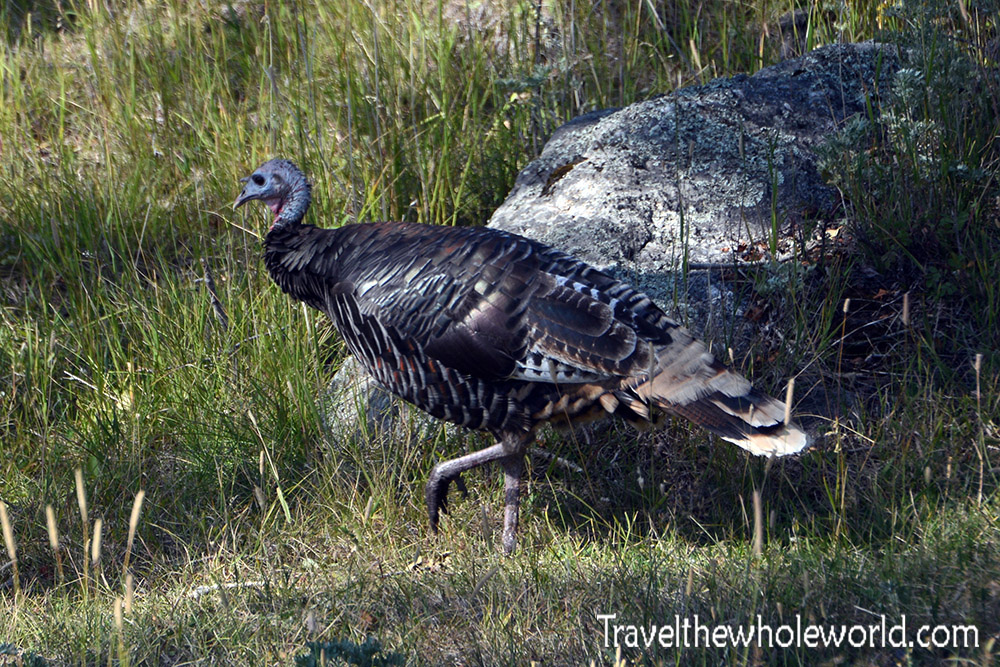
Even though I didn’t do any serious hiking on this part of the trip, I still managed to spot some wildlife. The turkey above was traveling with a group of at least half a dozen.
The animal I really didn’t expect to see was a mountain goat. This one appeared directly below Mount Rushmore while I was waiting for the sun to set.
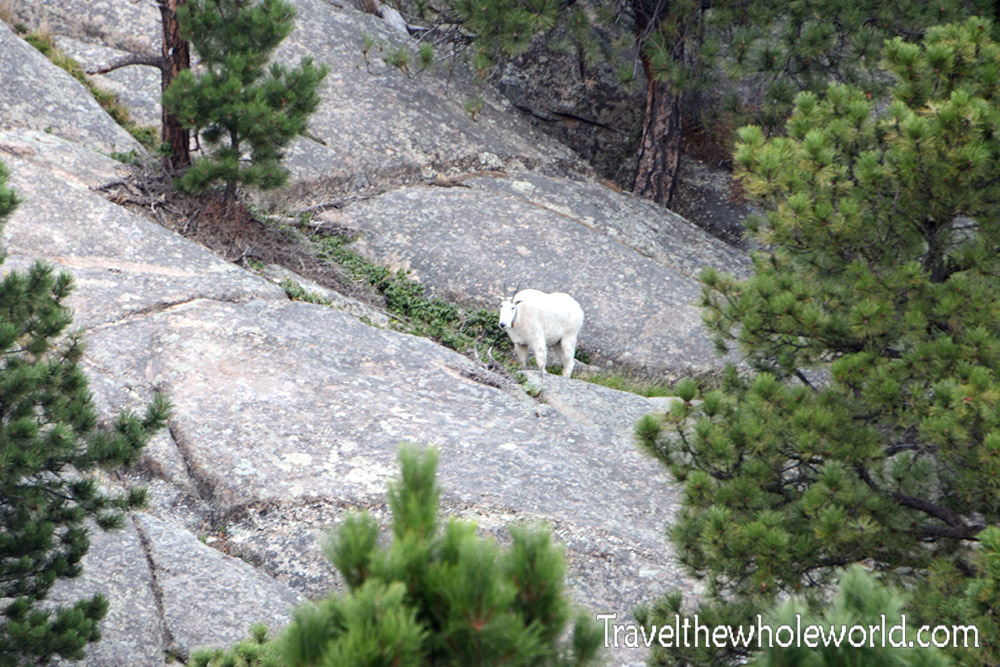
Mountain goats aren’t actually native to the Black Hills. They were introduced to the region during the 1920s, and a population eventually established itself in the surrounding mountains. Seeing one wandering beneath Mount Rushmore was an unexpected way to end my visit.
Explore More of South Dakota
Black Elk Peak • Mt. Rushmore • Rapid City • Sica Hollow • Sioux Falls