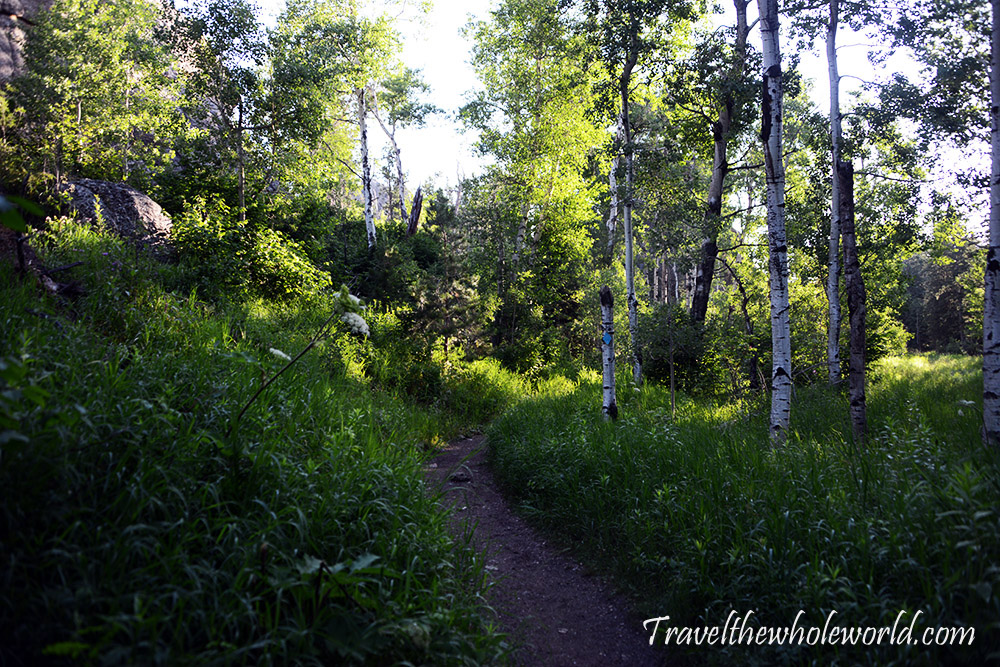
Black Elk Peak! In my quest to reach the highest point in all 50 states, this wasn’t one of the more difficult summits, but it was definitely one of the more interesting hikes. The trail begins in the forests of the Black Hills, which in places almost reminded me of my home state of Virginia.
One of the most popular routes begins near Sylvan Lake in Custer State Park. From there, it’s roughly seven miles round trip to the summit and back.
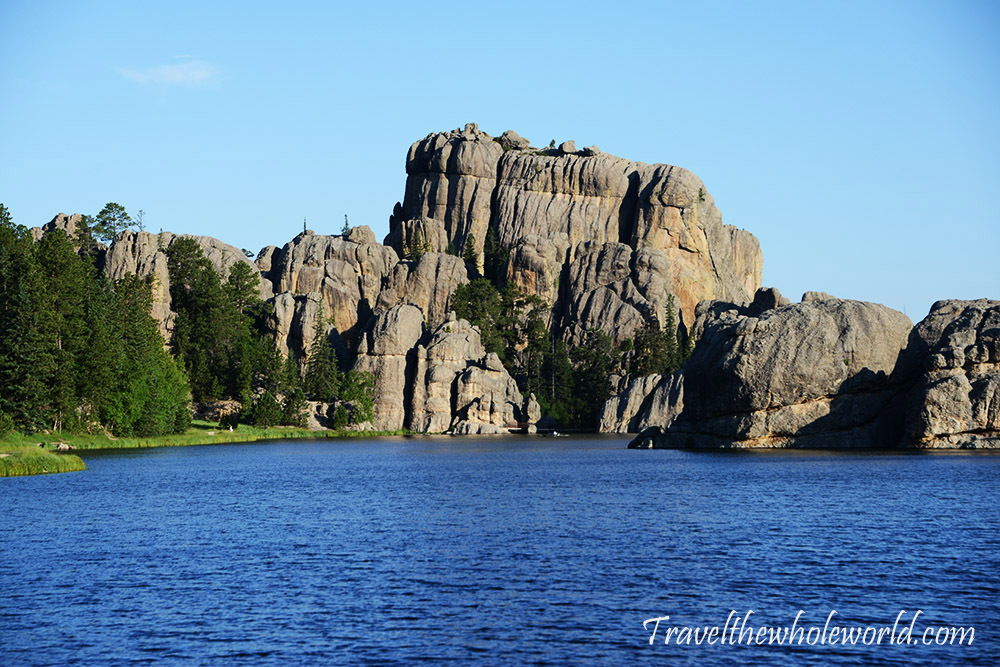
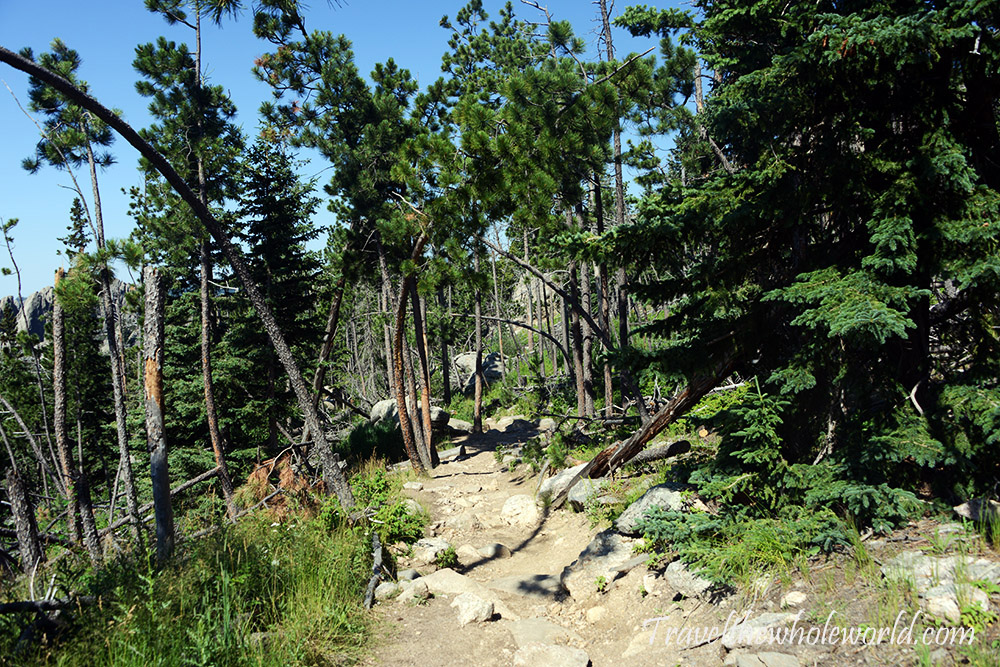
It doesn’t take long for the scenery to change as the trail climbs deeper into the Black Hills. Ponderosa pine dominates much of the higher terrain, giving the landscape a completely different appearance from the lower sections of the hike.
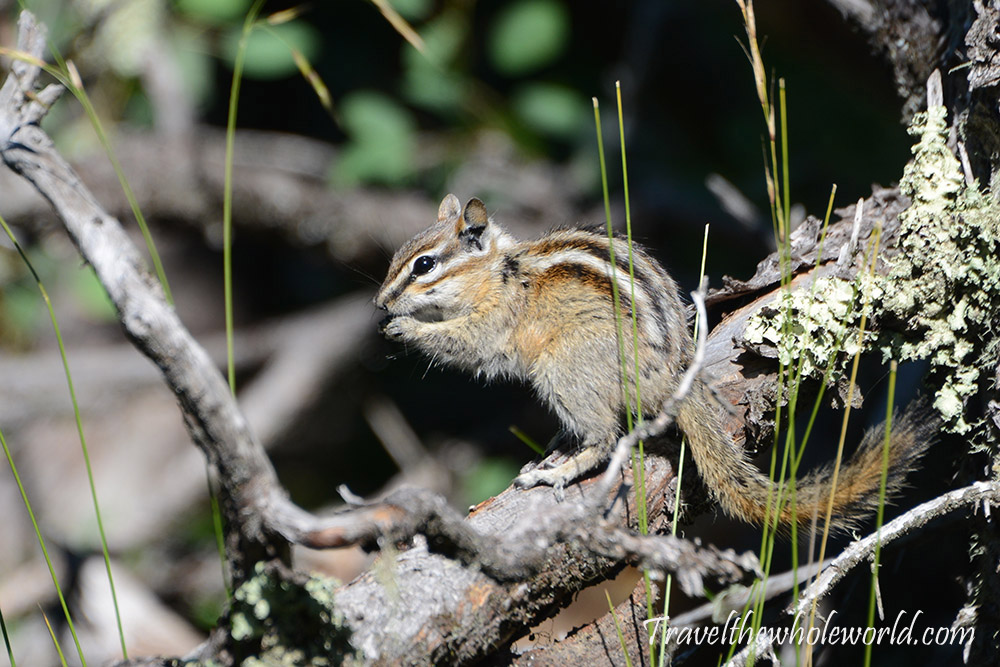
There is plenty of wildlife in the Black Hills, including mountain lions and black bears, although you’re unlikely to encounter either on a busy hiking trail. This chipmunk was the only friend I ran into, other than the occasional bird!
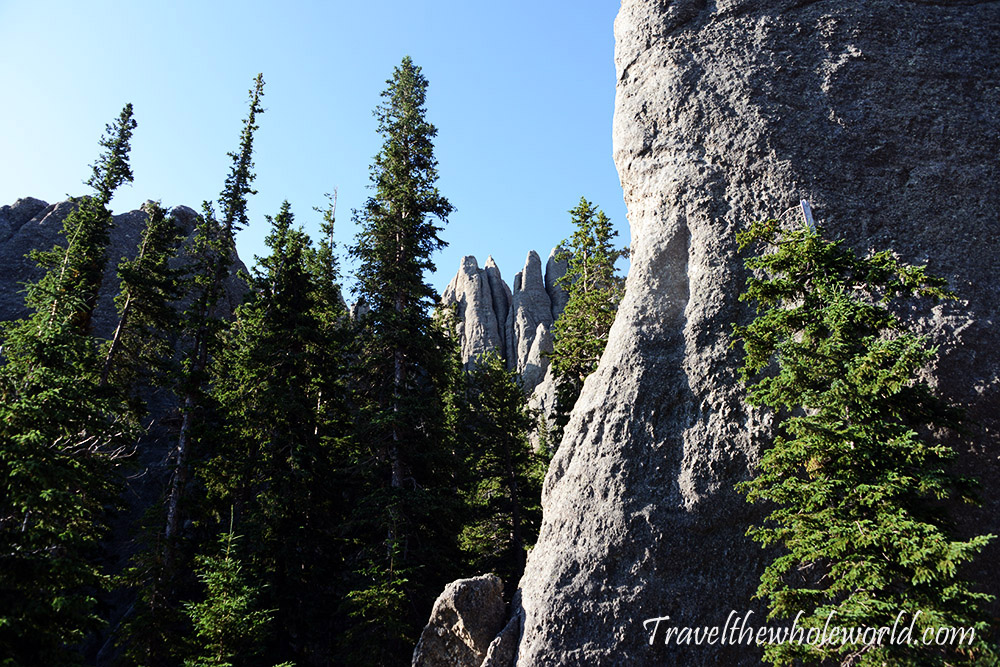
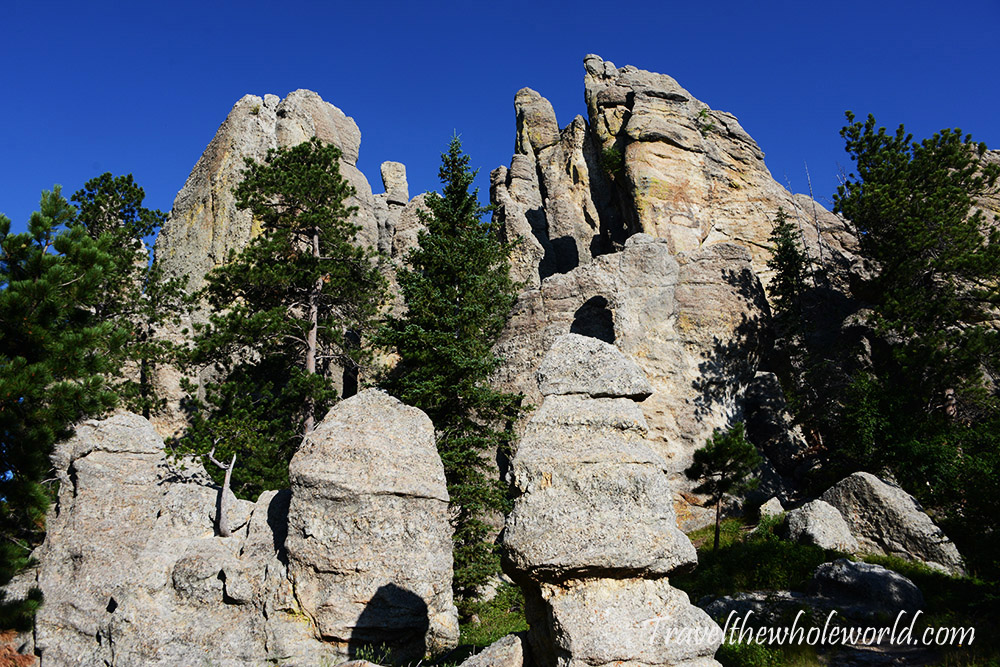
What really makes this hike unique is the incredible granite landscape of the Black Hills. Jagged rock formations and spires rise above the surrounding forest, creating scenery unlike anything I had encountered on most of the other state high points.
Some of the most dramatic formations are the Cathedral Spires. Their sharp granite pinnacles make this part of the Black Hills especially beautiful, and the area is also popular with technical rock climbers. Numerous climbing routes ascend the surrounding formations, ranging from relatively short climbs to multi-pitch routes.
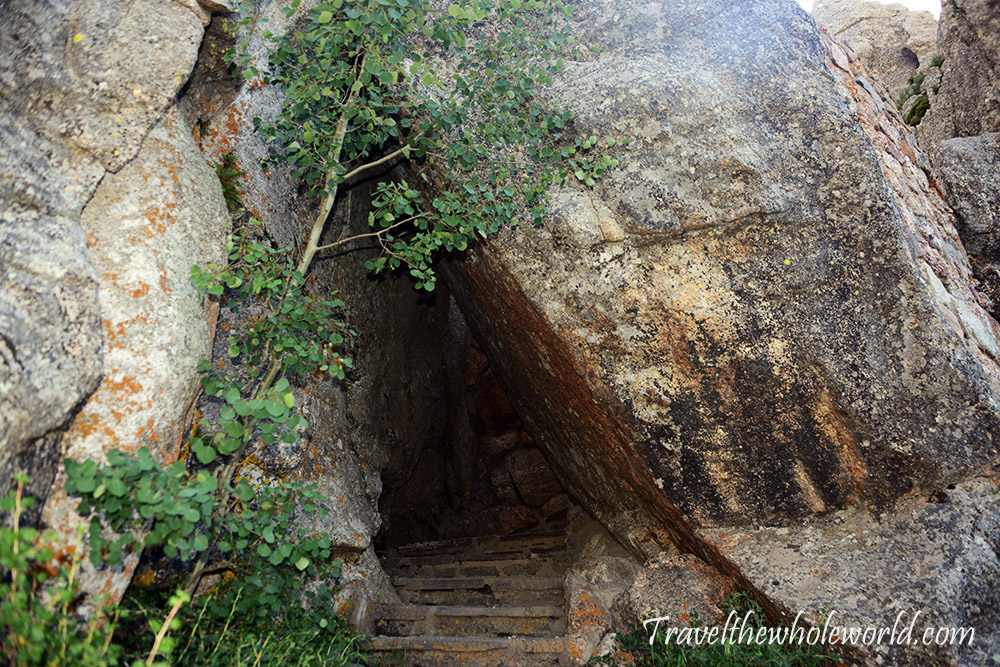
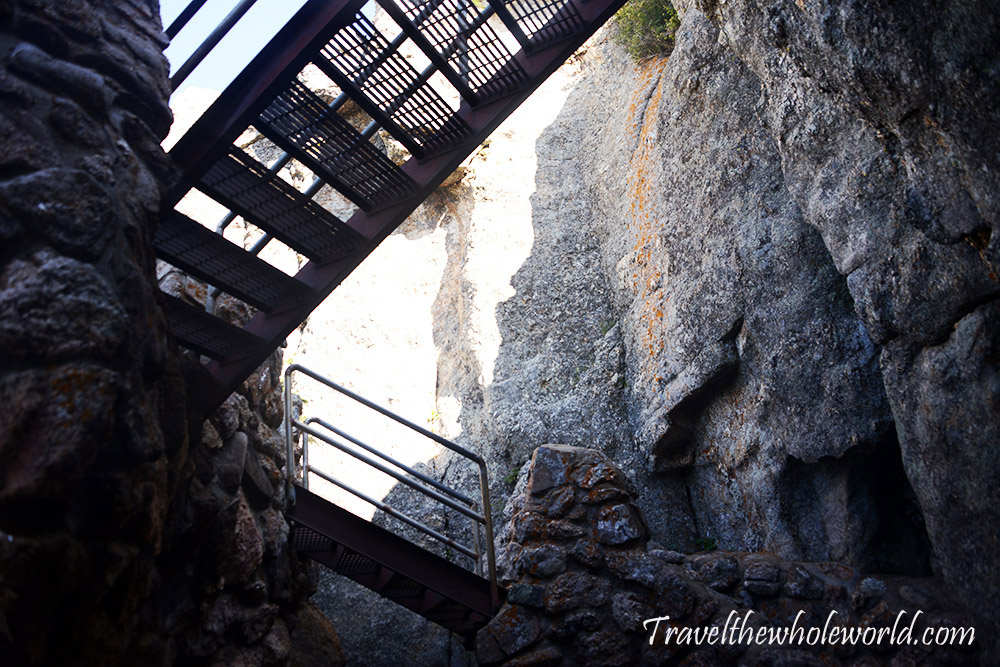
The trail continues through the forest and granite formations until reaching the final approach to Black Elk Peak. Near the summit, the route passes through this narrow rock passage before climbing a series of stairs toward the fire tower.
The hike from Sylvan Lake gains roughly 1,500 feet (460 meters) of elevation. Compared with many of the mountains I’ve climbed, this was an easy day, and I took my time enjoying the scenery. I even wore flip-flops all the way to the summit.
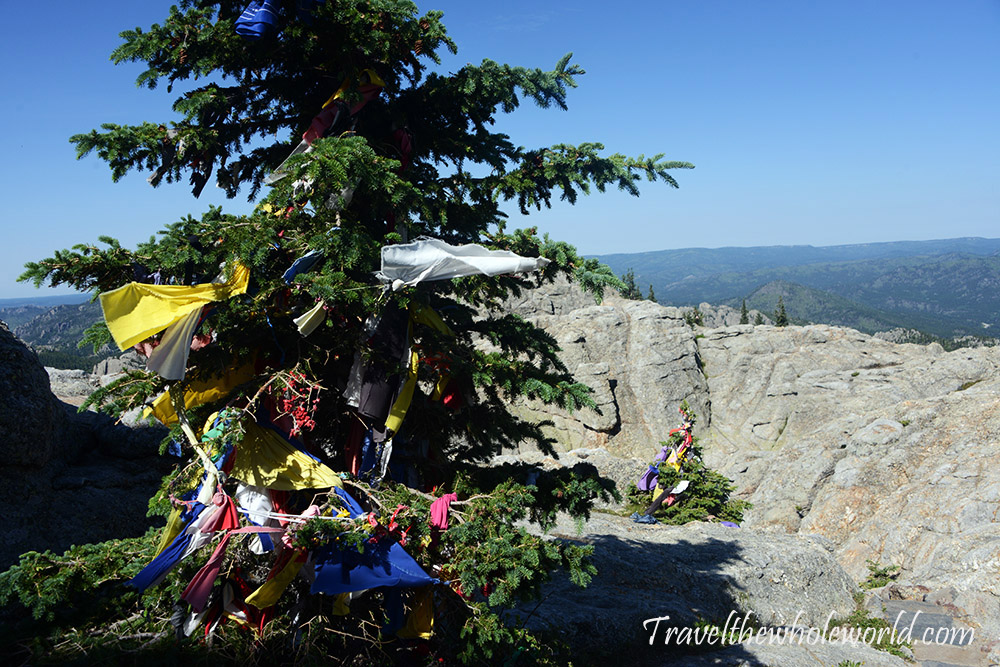
I was surprised to find colorful prayer flags tied near the top. Black Elk Peak is sacred to the Lakota and other Indigenous peoples of the region, and the flags were a reminder that this mountain has significance far beyond simply being the highest point in South Dakota.
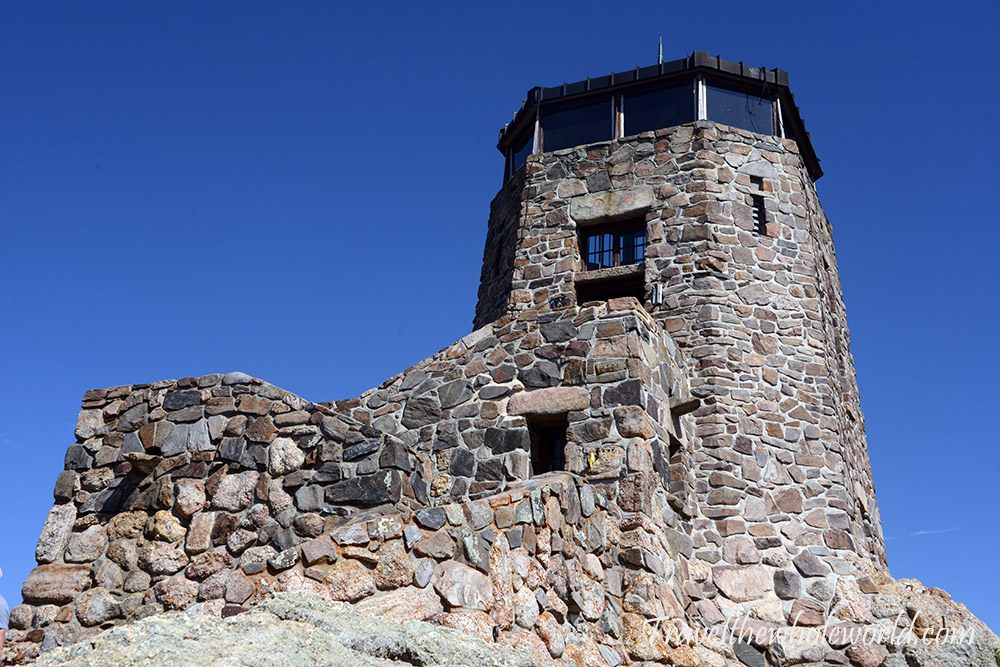
At the summit stands the Black Elk Peak Fire Tower, constructed by the Civilian Conservation Corps during the 1930s. The stone structure was built as a fire lookout and remains one of the most distinctive summit structures I’ve encountered on any of the 50 state high points.
The mountain itself was long known as Harney Peak, but it was officially renamed Black Elk Peak in 2016 in honor of Black Elk, the influential Oglala Lakota holy man. At 7,244 feet (2,208 meters), it is the highest point in South Dakota and the highest summit in the United States east of the Rocky Mountains.
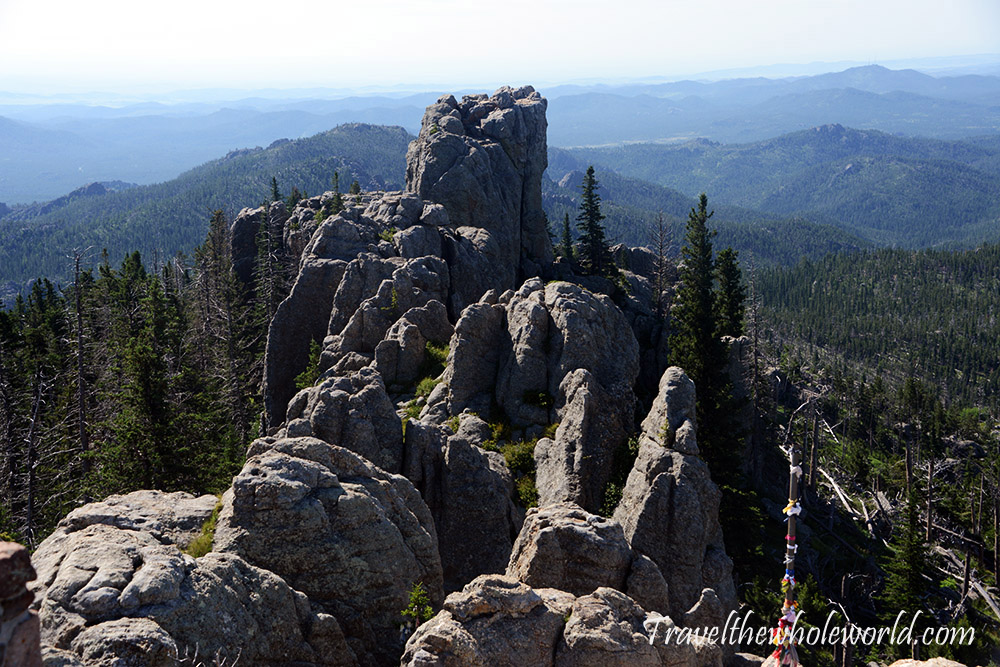
The granite around the summit was one of my favorite parts of the hike. Of the 50 state high points, none requires technical Class 5 rock climbing by its standard route, and Black Elk Peak is no exception. Still, the rugged summit ridge and surrounding granite formations make the top feel much more mountainous than its relatively modest elevation might suggest.
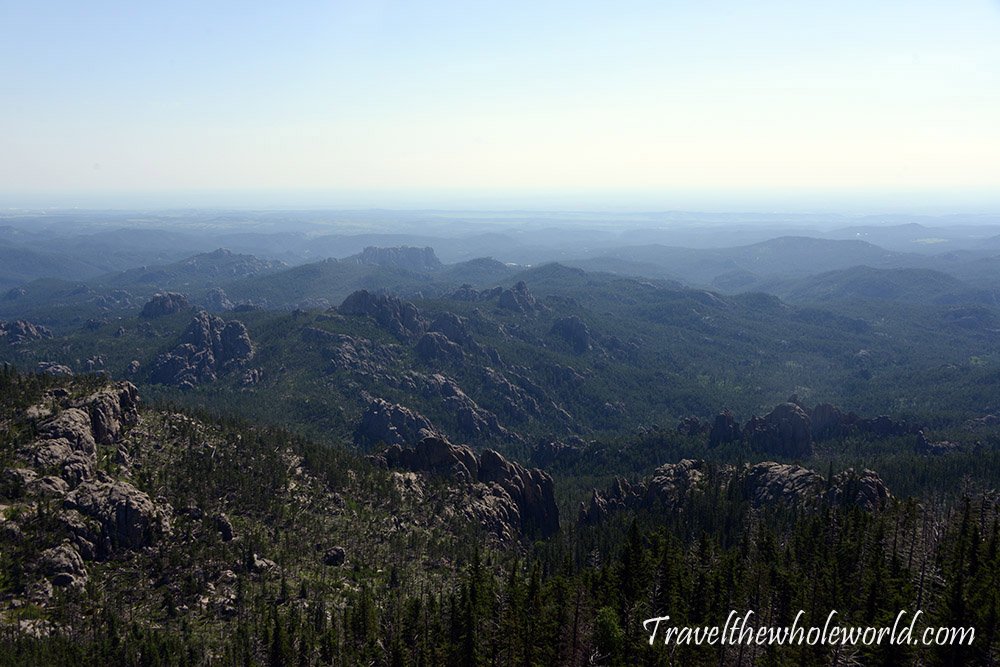
From the summit, the view stretches across the forests and granite formations of the Black Hills. Black Elk Peak might not be one of the hardest state high points, but between Sylvan Lake, the Cathedral Spires, the fire tower and the unusual granite landscape, it ended up being one of the more memorable ones.
Explore More of South Dakota
Black Elk Peak • Mt. Rushmore • Rapid City • Sica Hollow • Sioux Falls