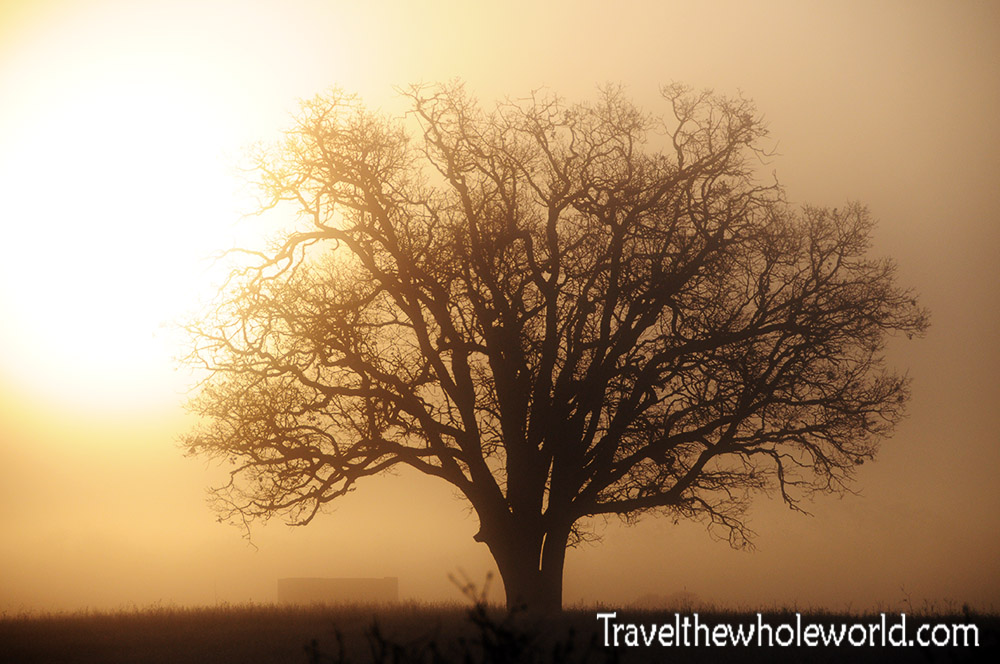
Crater Lake is a fairly remote national park located in Oregon’s Cascade Range. Any decent-sized town is a good distance away, so be prepared for a bit of a road trip regardless of where you’re coming from. I woke up at 5:30 in Grants Pass so I could get there at a reasonable hour. My early start began in relatively warm weather and thick fog, but the conditions quickly changed as I climbed higher into the mountains.
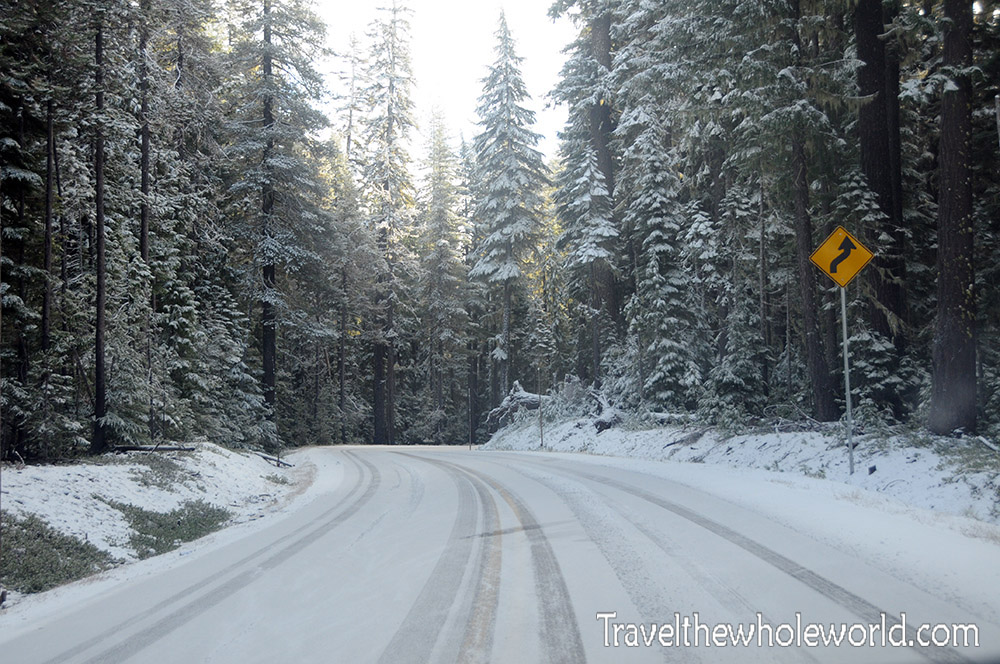
The roads were initially barren and foggy, but that changed dramatically within about an hour. It didn’t take long before I drove above the fog and began seeing patches of snow. A short time later I was in a completely different environment, surrounded by blue skies and snow-covered forests. In just a couple of hours I had gone from dead trees and thick fog to deep snow in the mountains.
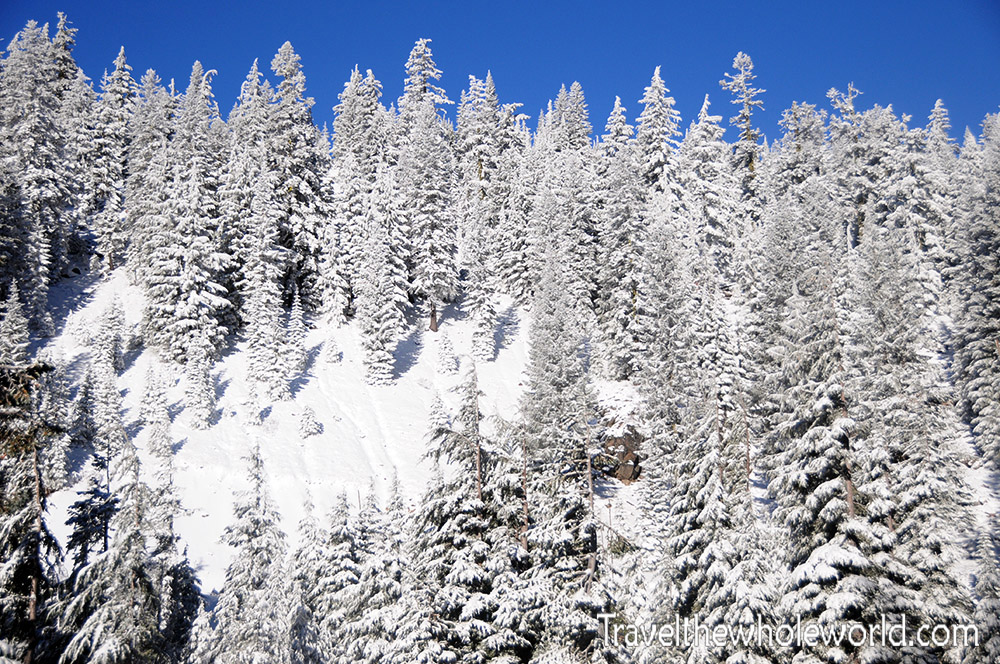
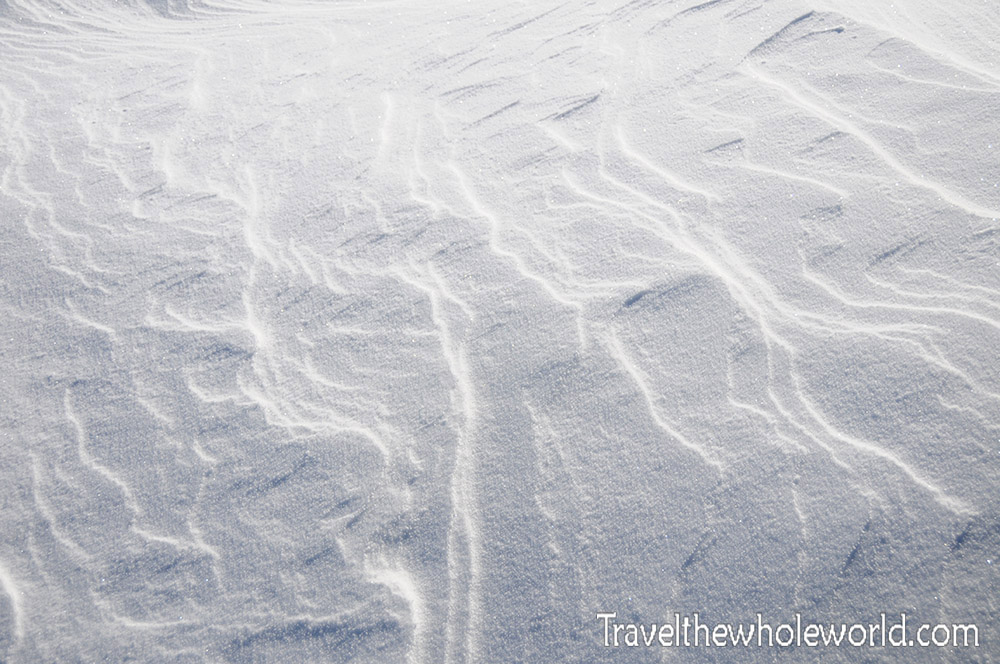
When I left that morning I honestly wasn’t even sure if there would be snow at Crater Lake. Clearly I wasn’t disappointed. This was a somewhat spontaneous trip and I hadn’t prepared very well, so I didn’t even have hiking shoes with me. By the time I reached the rim, I was looking at deep snow that I’d somehow have to hike through in running shoes.
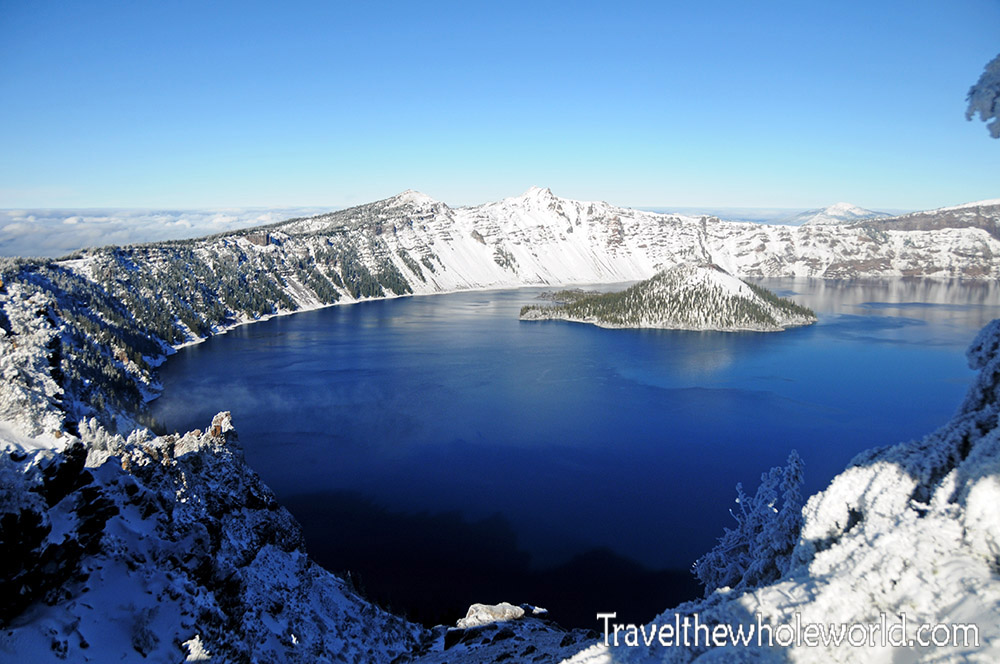
The road goes almost directly to the rim, giving you incredible views of Crater Lake without having to hike very far. The lake sits more than 6,000 feet above sea level in the caldera of Mount Mazama, an ancient volcano that collapsed thousands of years ago. At nearly 2,000 feet deep, Crater Lake is the deepest lake in the United States. Even without hiking, simply standing along the rim and looking across the enormous blue lake is worth the drive.
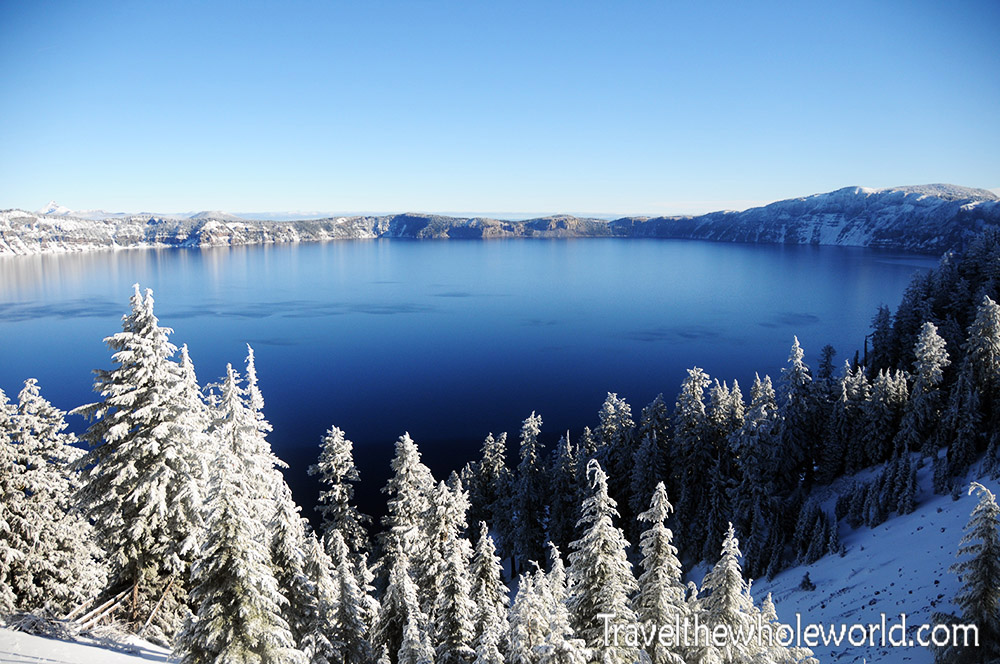
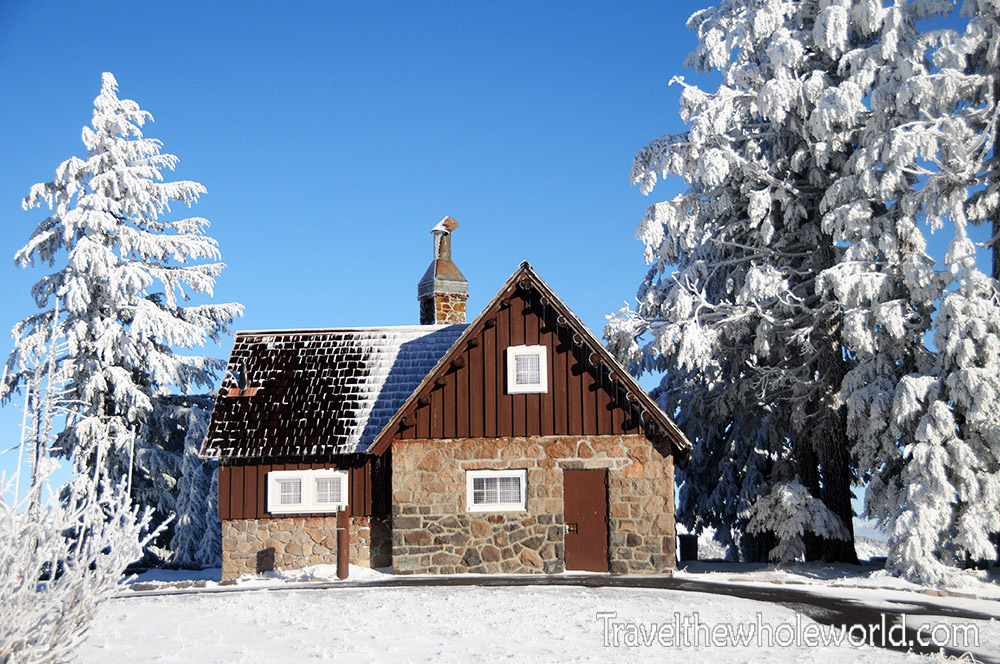
The thick blanket of snow covering the forest and trails caught me completely by surprise. I debated what to do since I was only wearing running shoes, but I had come too far to spend the entire visit sightseeing from a single overlook. I eventually accepted that I was going to get cold and wet and started hiking. The snow seemed to keep most other visitors away, and for much of the hike I felt like I had the park almost entirely to myself. The landscape was dominated by white snow and blue sky, with this cabin near the crater rim providing one of the few splashes of color.
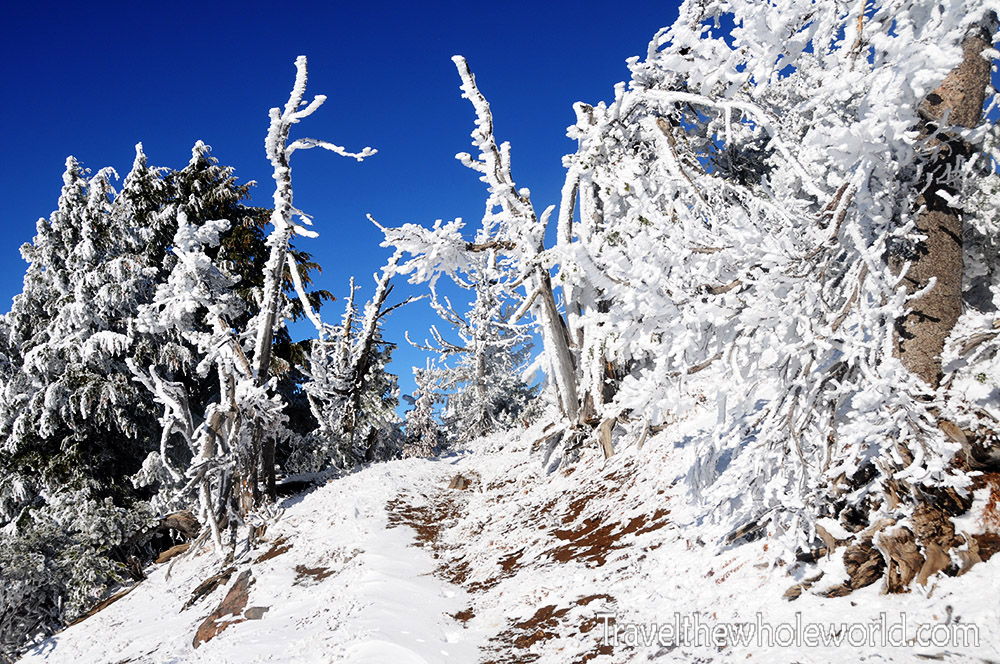
The trail was fairly steep where I began. Some sections were easy enough where exposed rock allowed me to walk normally, while moments later I’d suddenly find myself pushing through nearly knee-deep snow. As the trail continued climbing, the depth and conditions of the snow seemed to constantly change.
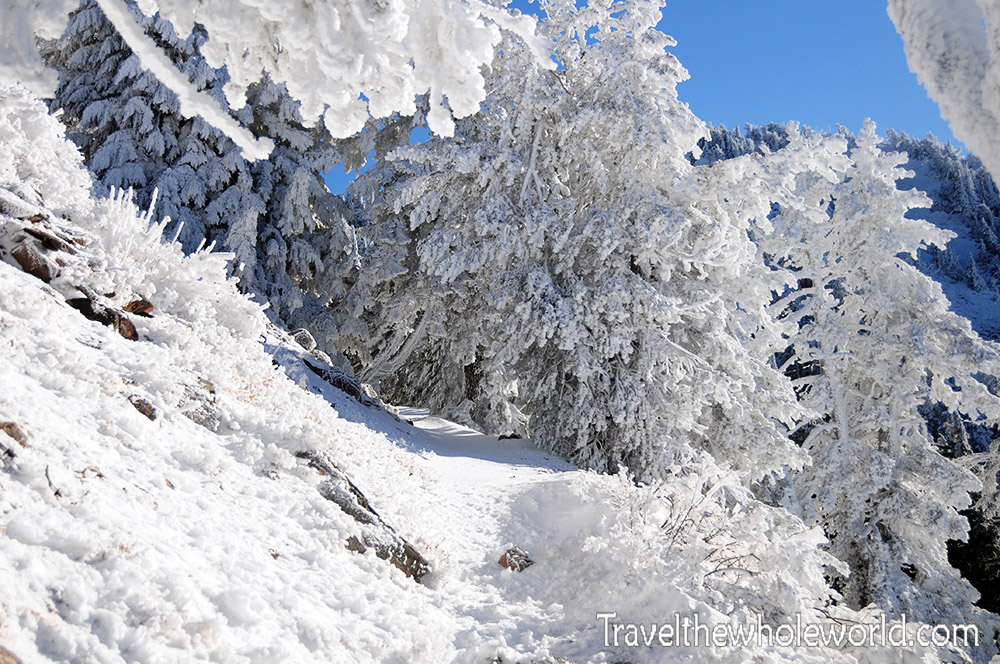
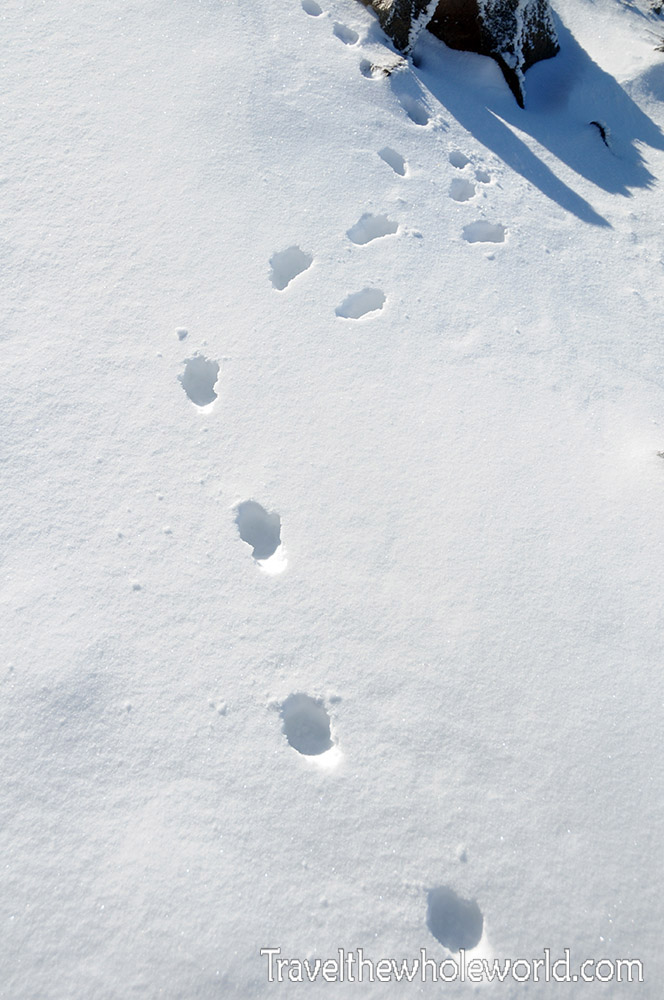
Since I had arrived so early, I didn’t expect anyone else to have hiked the trail before me. At first I found footprints in the snow, but eventually they turned around and disappeared. From that point forward I was breaking trail myself. I didn’t see any wildlife during the hike, although I did come across animal tracks like the deer prints photographed above.
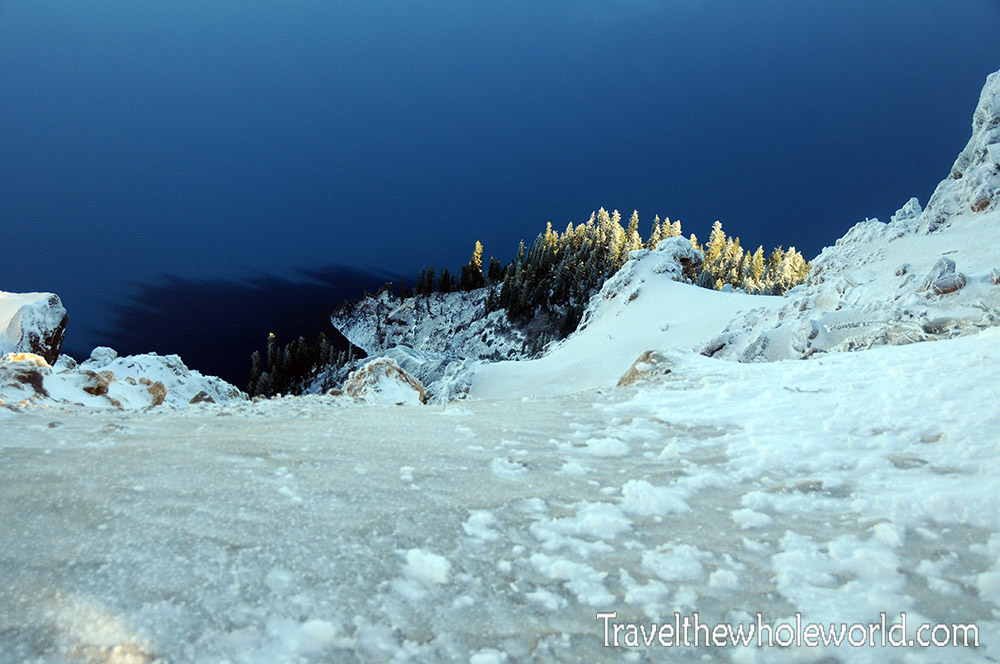
Crater Lake remained in view for much of the hike, and a few times I ventured away from the main trail to find better viewpoints. Some of the slopes around the rim are extremely steep, as the photo above shows, so this definitely wasn’t terrain where I wanted to lose my footing in the snow. Other sections of the trail passed beneath exposed rock formations rising above the rim.
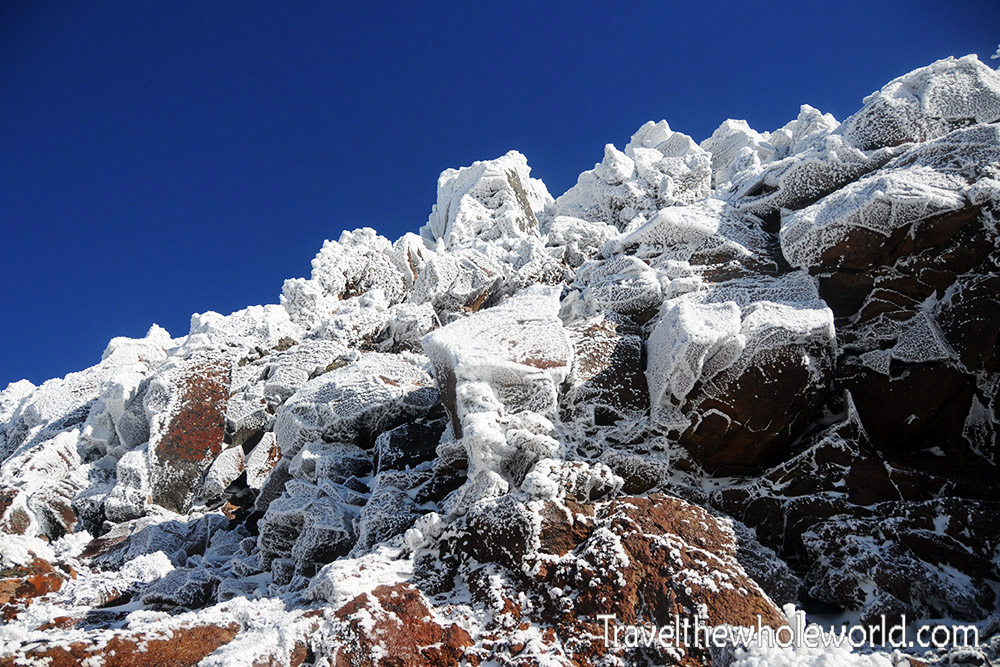
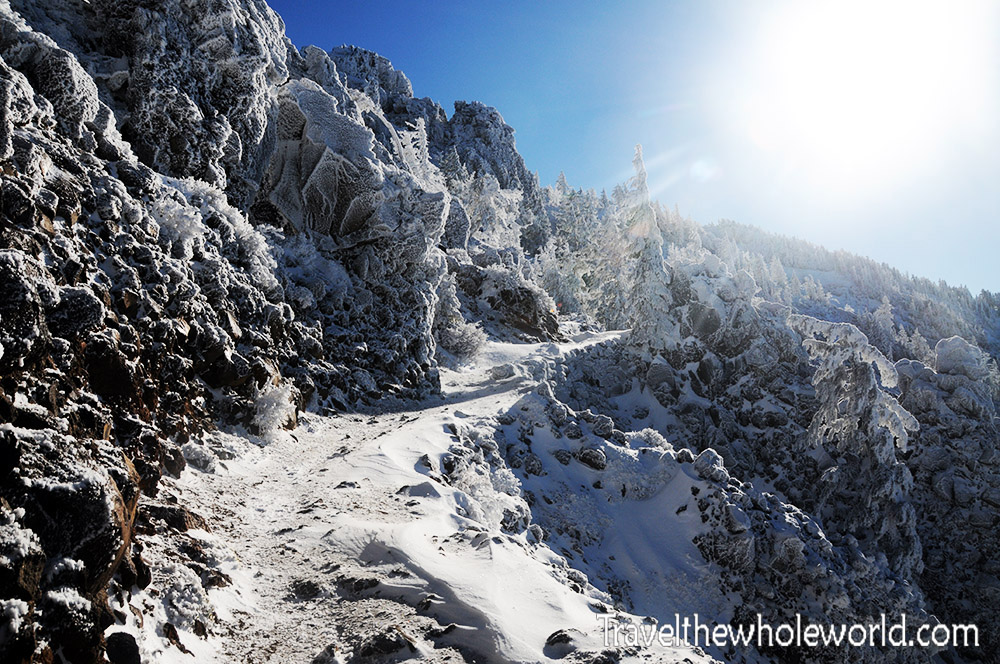
As the trail continued climbing, I was rewarded with some of the most beautiful scenery I had ever seen. With the storm gone, the sky was almost completely blue and the sunlight reflected off the snow covering the mountains. Above and below are two of my favorite shots from the hike, taken while walking almost directly toward the sun.
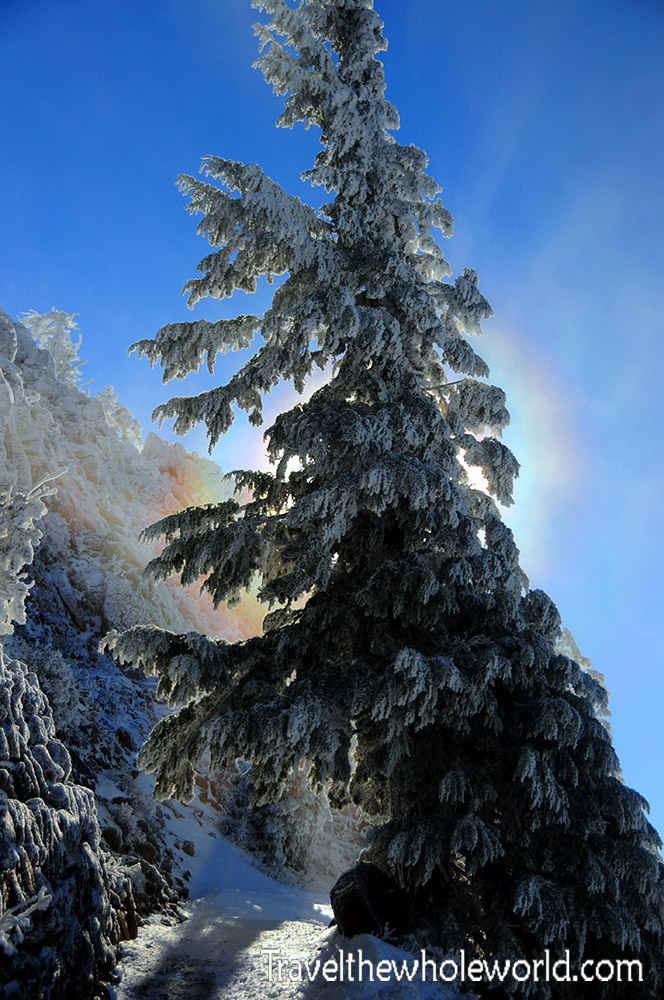
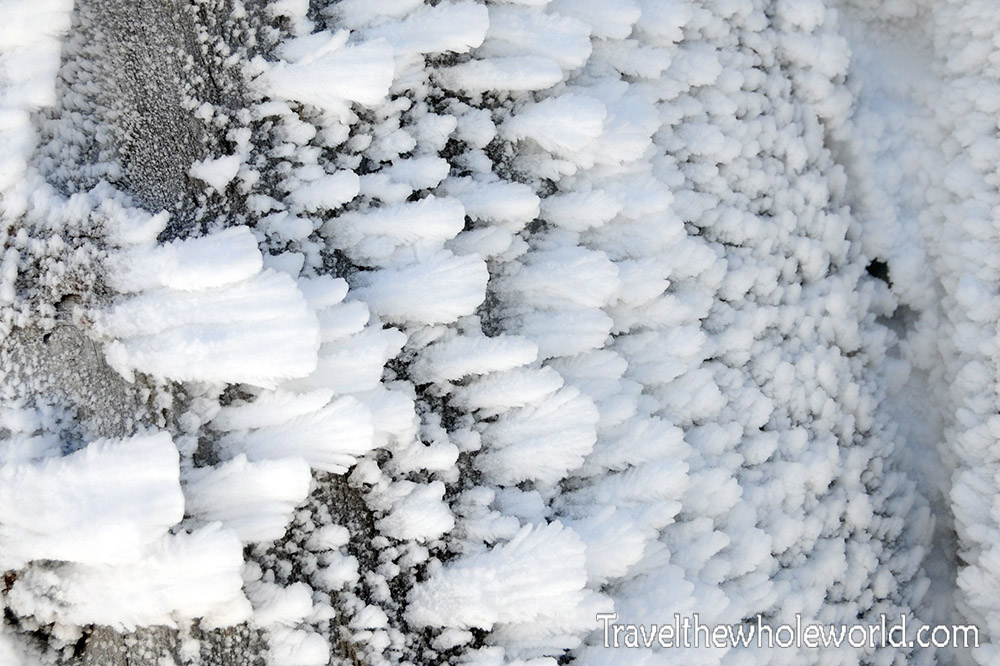
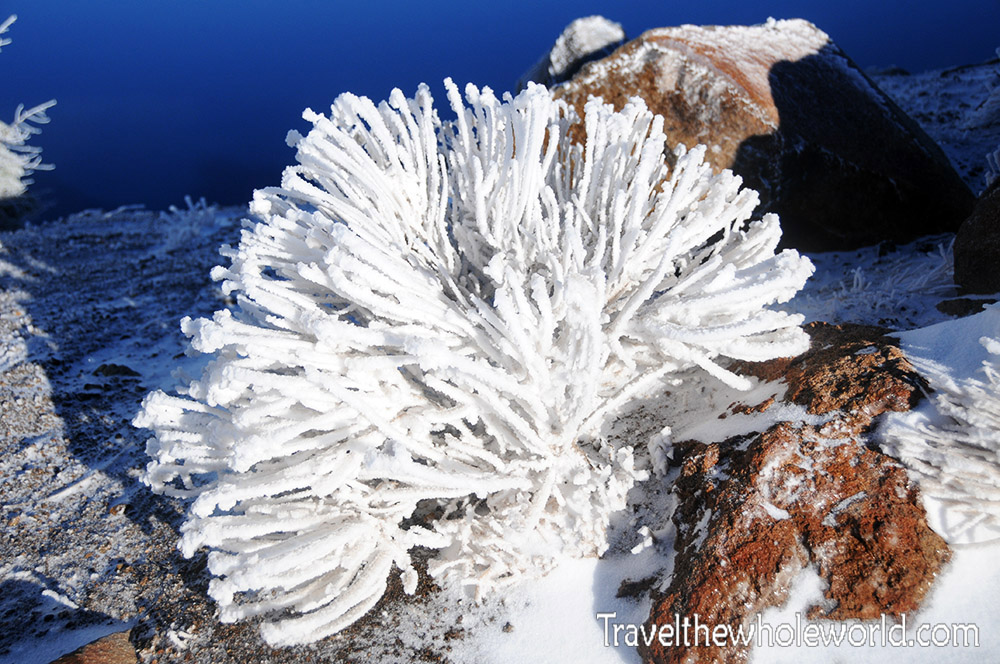
There were also plenty of interesting things directly along the trail. I’ve always loved rime ice formations, and many of the trees and plants here were covered in them. I had been hiking at a lower altitude the previous day in rainy weather, and that same weather system had apparently produced freezing conditions higher in the Cascades. Rime ice forms when supercooled water droplets freeze onto exposed surfaces, often creating thick formations on the windward side of trees and other objects.
One tree I passed looked like its coating of ice could simply be knocked off, so I hit one of the branches expecting it to shatter. Instead, it felt like I had swung at concrete. The photo above shows thick rime ice built up along a tree trunk, while the small plant below had been completely coated by the same conditions.
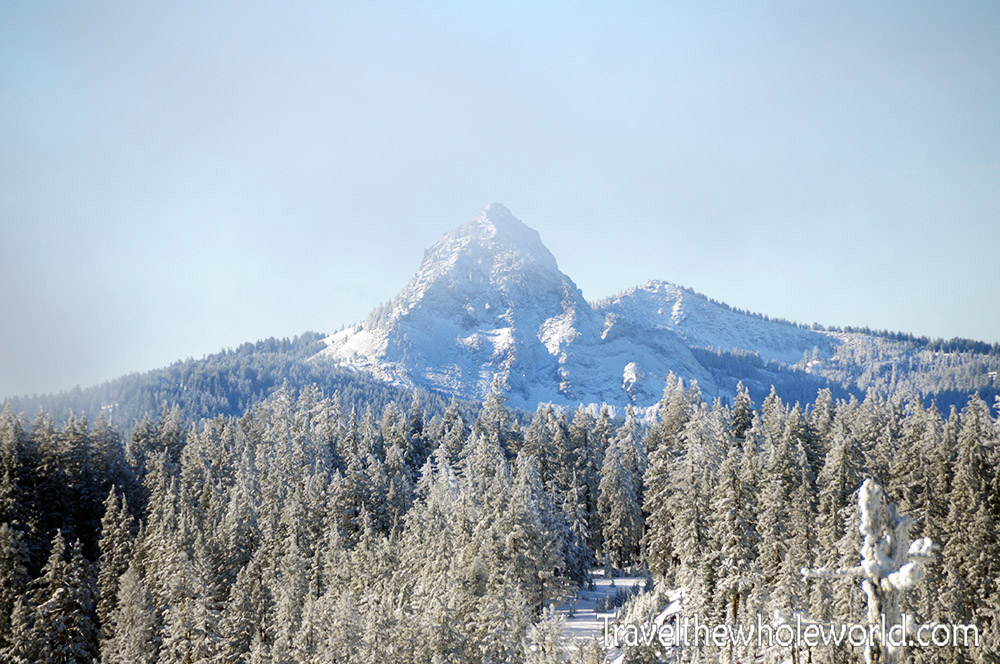
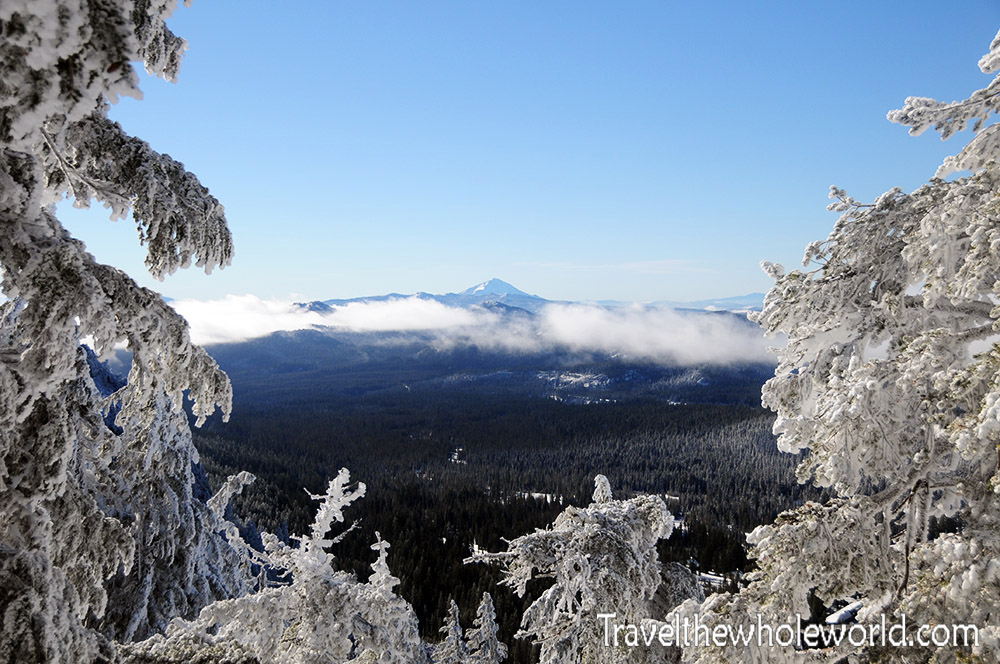
The scenery wasn’t limited to Crater Lake itself. From the higher sections of the trail I could see across the surrounding Cascade Mountains. The photo above shows Union Peak rising in the distance. Below is perhaps my favorite view from the entire hike, looking across the snowy landscape toward the surrounding mountains.
I had arrived at Crater Lake expecting little more than a scenic drive and some views from the rim, but the snow completely changed the experience. Hiking through deep snow in running shoes wasn’t exactly what I had planned, yet having so much of the trail to myself made the day even more memorable. Between the brilliant blue lake, snow-covered forests, rime ice, and distant Cascade peaks, Crater Lake ended up being one of the most beautiful places I visited in Oregon.