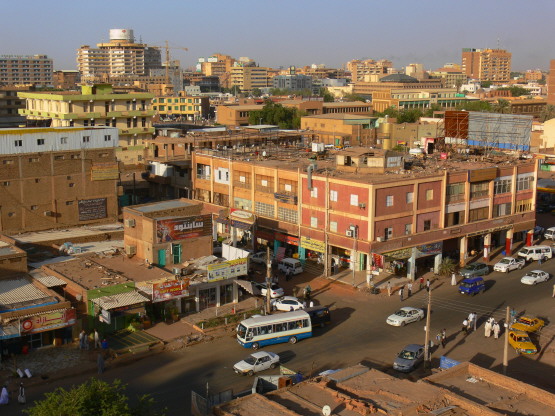
Khartoum is the capital of Sudan and sits at the remarkable point where the Blue Nile and White Nile come together. The city itself is part of a much larger urban area that includes Omdurman and Khartoum North.
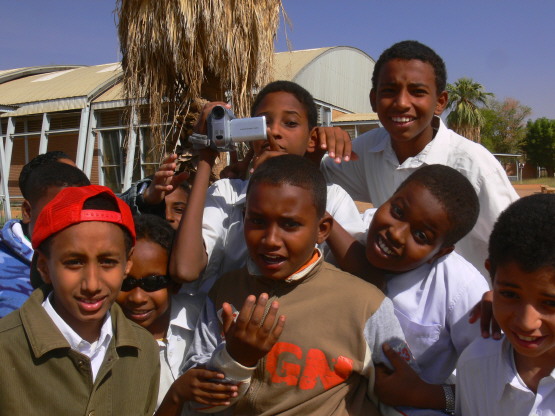
Above is a photo I took in Khartoum, followed by some students who were more than happy to have their picture taken. Nearly everyone I met during my travels through Sudan was friendly and welcoming. There was one guy in his twenties who seemed to follow me for a short time and gave me the impression that he didn’t like having a foreigner around, although for all I know he may simply have been curious and too shy to say hello.
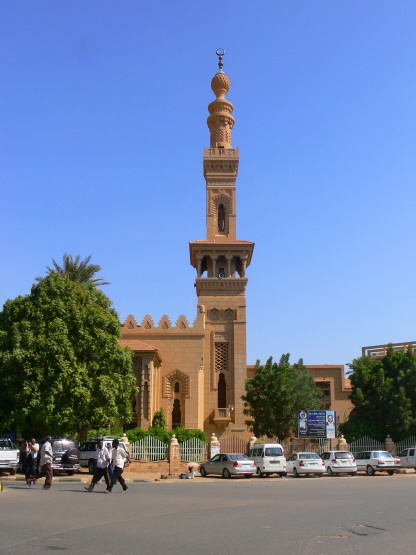
Sudan sits at a crossroads between North Africa, the Sahel and the cultures of the Nile Valley. Arabic and African influences are visible throughout Khartoum, while Islam has long played a major role in the country’s culture and daily life.
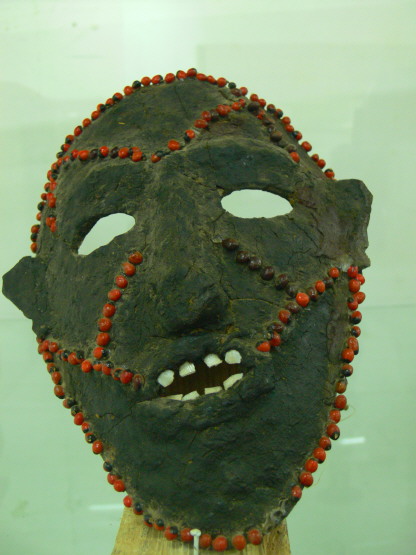
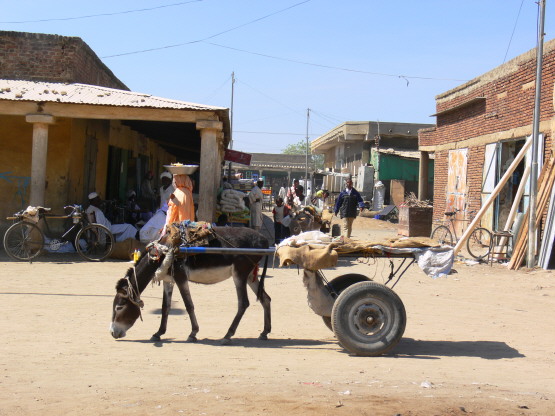
On the left is a traditional mask I photographed in a Khartoum museum. The center photo shows a donkey cart, while on the right is one of the city’s mosques.
I also came across Sudanese Christians during my visit and saw a large cathedral in Khartoum. As a traveler passing through the country, I wasn’t in a position to understand the much more complicated religious and political realities faced by different communities. I could only observe what I personally encountered during my time there.
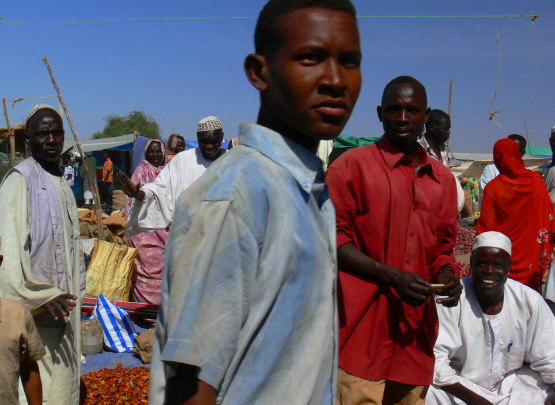
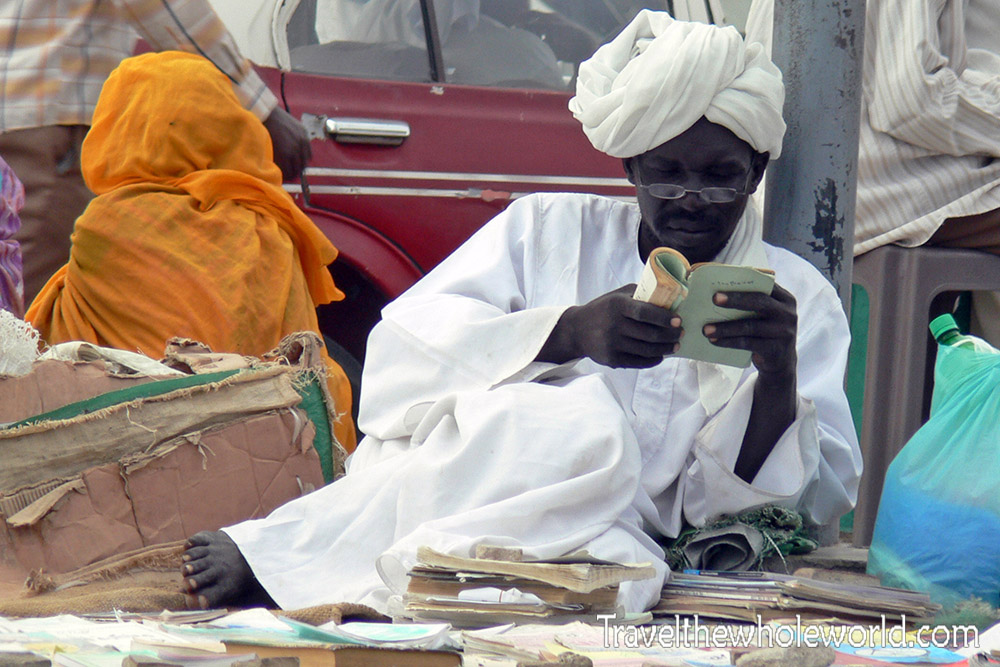
Above are a few more people I encountered while traveling through Sudan. The photo on the left was taken at a market in a village outside Khartoum. I’m not sure everyone was thrilled about having their picture taken, with the exception of the smiling guy. The man on the right was so involved in his book that he didn’t even seem to notice me.
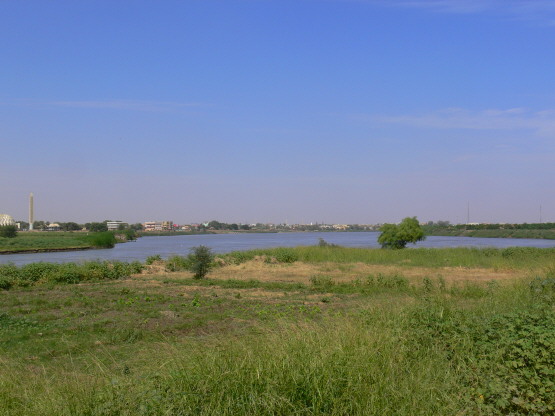
One of the most interesting geographical features of Khartoum is the confluence of the Blue Nile and White Nile. The Blue Nile flows north from Ethiopia while the White Nile approaches from the south. Here in Khartoum they finally meet before continuing north through Sudan and Egypt as the Nile.
Above is my view of the confluence, with the White Nile coming from the left and the Blue Nile from the right. To really appreciate the two rivers joining together you’d need an aerial view or at least a much higher vantage point than I had.
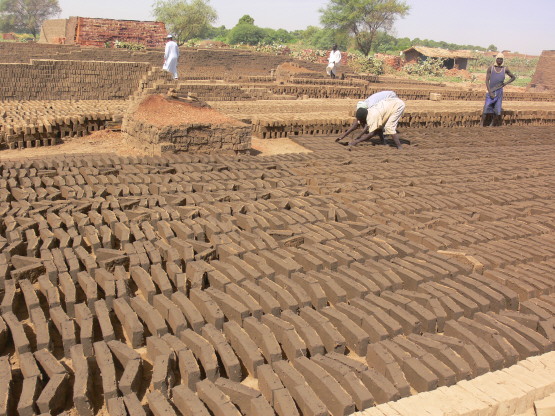
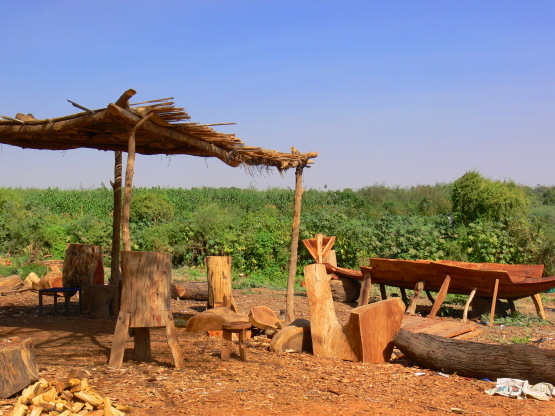
The Nile has supported communities in this region for thousands of years and remains just as important today. Along the river I watched people using material from the riverbanks to make bricks for construction. I also came across small workshops where people were using wood and other local materials to make carvings and even boats.
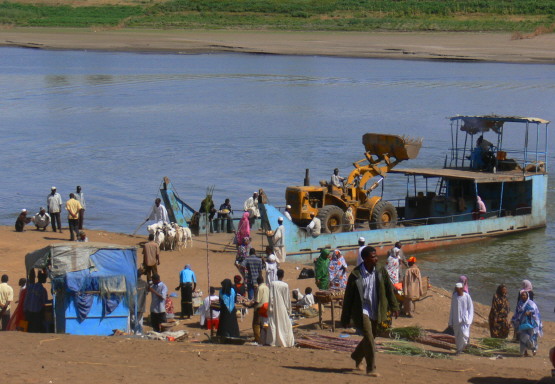
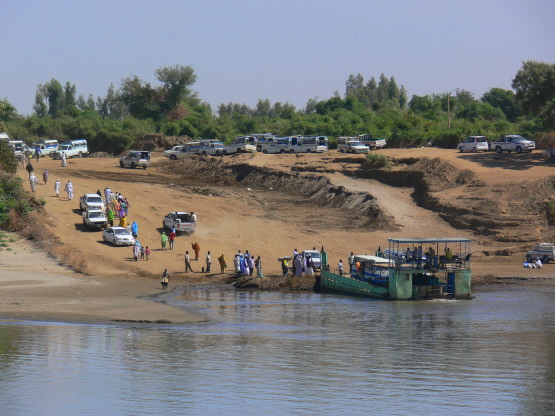
These photographs were taken farther south from Khartoum, where cars and people were being ferried back and forth across the Blue Nile. They show how a river that provides so much life can also create an enormous obstacle for transportation.
Even in Khartoum I had to take a small boat across one section of the Nile because a large nearby bridge was still under construction during my visit. It looked roughly halfway completed at the time.
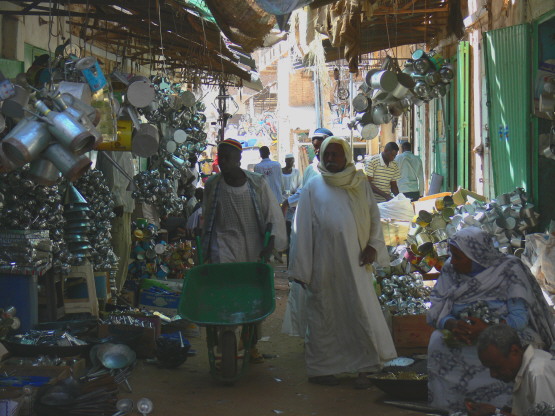
Across the Nile from Khartoum is Omdurman, another major part of the metropolitan area and a city with its own long history and identity. Of everything I saw there, the Omdurman Souq was easily the most interesting.
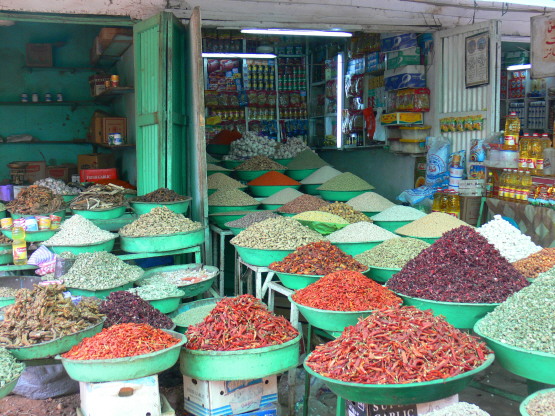
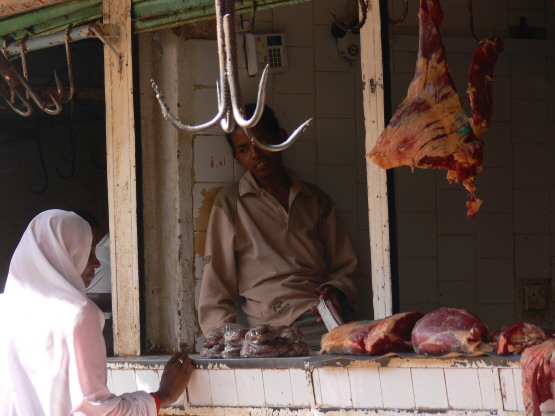
The market seemed enormous, with a maze of alleys and corridors packed with different types of merchandise. Some areas almost seemed to have their own specialties. I wandered through sections selling everything from toys and leather goods to food, cookware and spices.
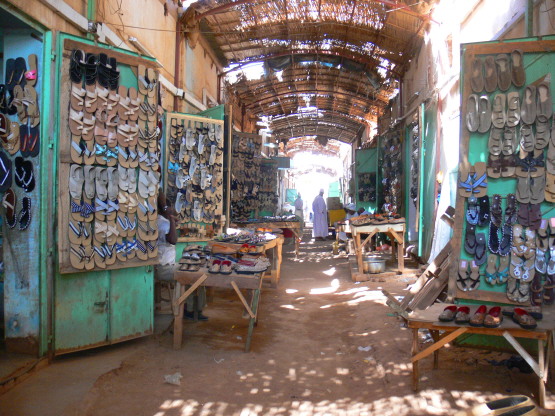
What really made the souq memorable was the sheer amount of merchandise squeezed into some of the shops and alleys. I passed walls completely covered in shoes and sandals, while other products were piled high on the ground or even suspended overhead.
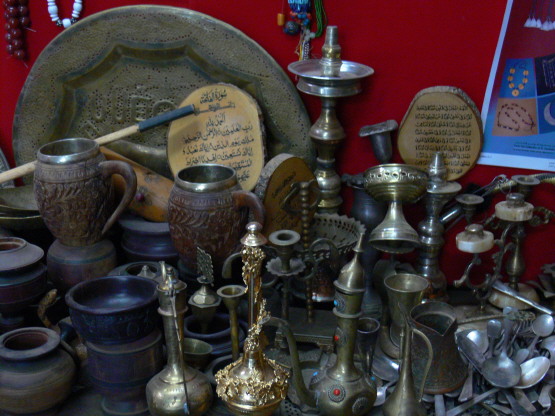
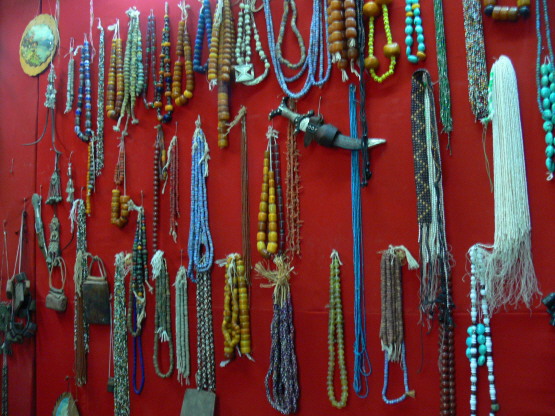
These two shops give an even better idea of what the market was like. One was packed with lamps while another displayed jewelry. Wandering through places like this is one of my favorite parts of visiting a new country because even an ordinary market can reveal a lot about everyday life.
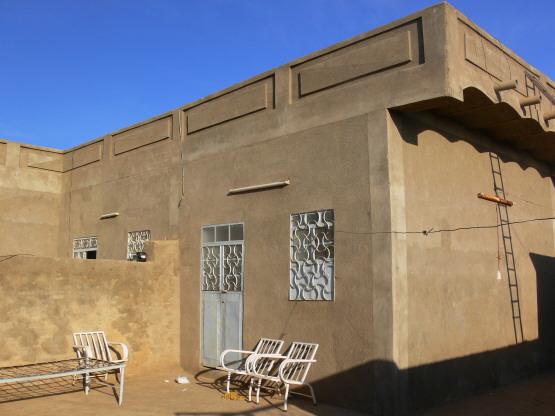
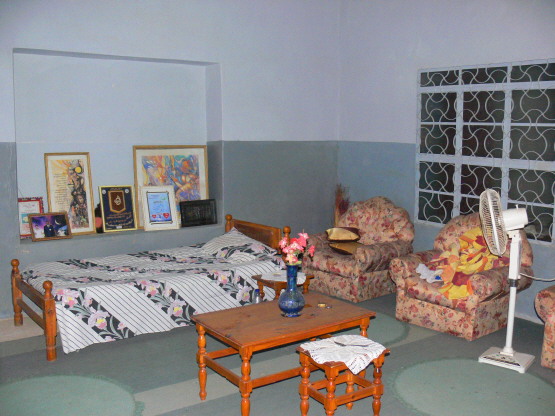
One of my favorite experiences in Sudan happened completely unexpectedly. During a road trip south of Khartoum, my driver invited me to stay with his family in their village.
I wasn’t sure what to expect before arriving. Inside, however, their home had most of the things you’d expect to find in any ordinary house: a kitchen, living area, bedrooms, electricity and even a television. The major thing they lacked at the time was running water—and, perhaps almost as importantly for some travelers today, internet access.
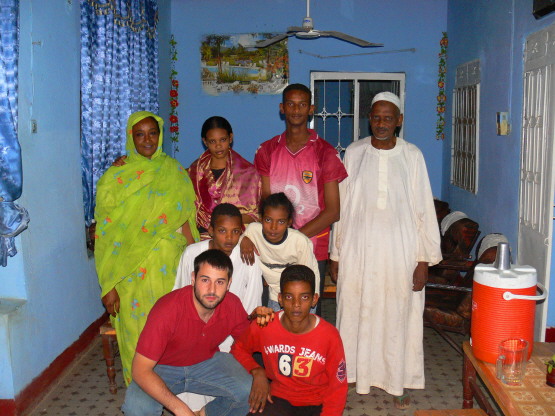
Above is a photo of me with the family. They were some of the nicest and most hospitable people I met during the entire trip. They invited me to eat with them, rest in their home and ultimately spend the night as though I were part of the family.
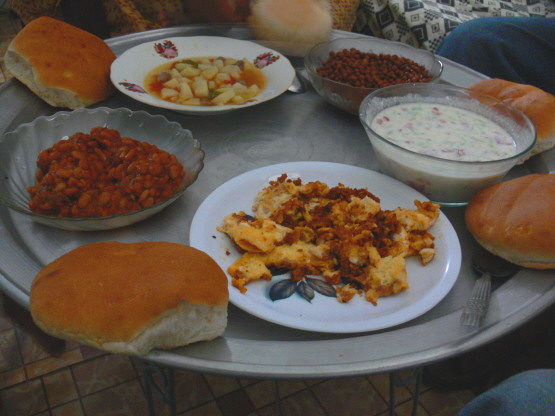
On the right is the dinner we shared. Several different foods were placed together with bread, and everyone ate from the same dishes rather than having individual plates and silverware. Sitting together and sharing that meal ended up being one of those simple travel experiences that I remembered long after leaving Sudan.