Islamabad! Pakistan’s capital sits at the foot of the Margalla Hills and felt dramatically different from the other Pakistani cities I had visited. After the intensity of Karachi, arriving in Islamabad felt almost like entering another country. The city is spacious, green, and much more spread out, with the mountains forming an impressive backdrop.
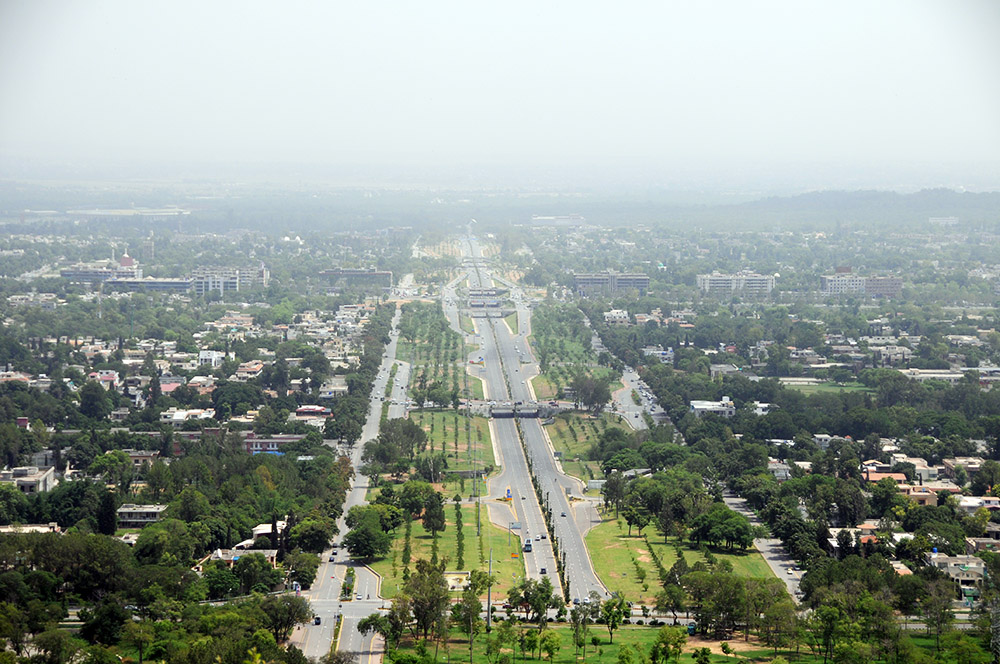
Islamabad is a relatively young capital, developed primarily beginning in the 1960s as a planned city. That becomes obvious as soon as you start exploring it. The roads are extremely wide, and commercial and residential areas are organized into different sectors rather than having grown organically around a historic center. Despite being a major city, Islamabad often felt more like a large suburb than a crowded metropolis.
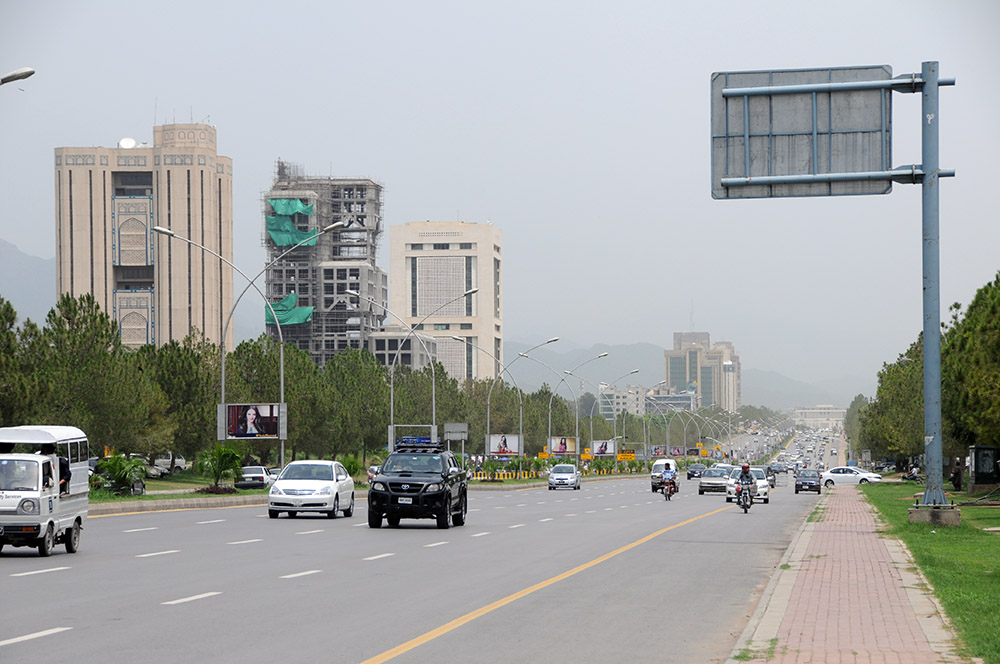
The highways were so broad that some almost looked like airport runways, and getting around was surprisingly easy compared with the traffic I experienced elsewhere in Pakistan. The planned nature of Islamabad continues throughout the city, with broad roads, landscaped areas, and modern commercial districts.
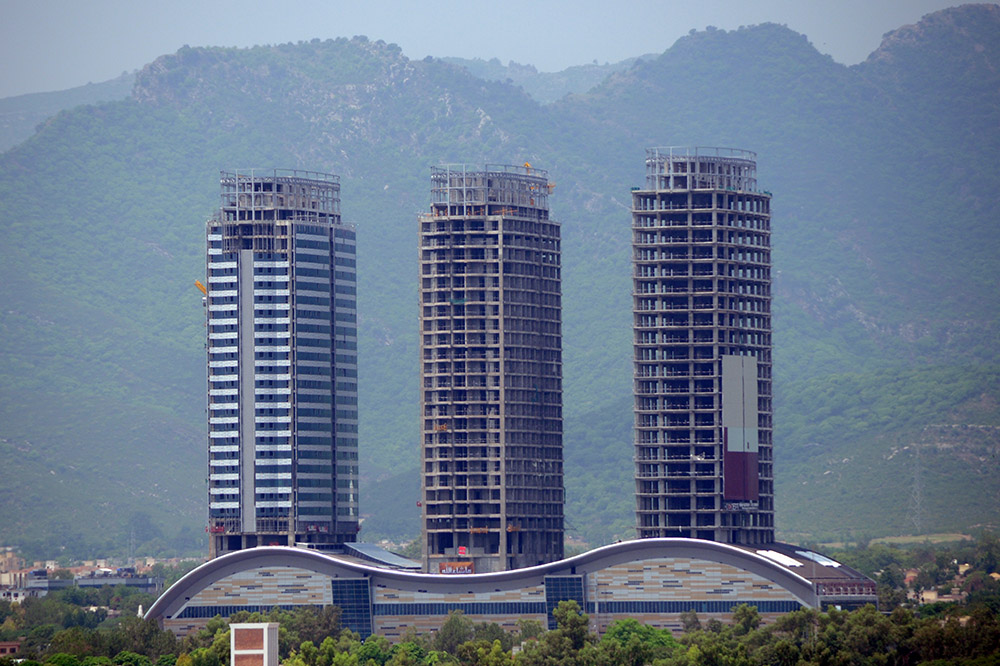
Nearby Rawalpindi has a completely different atmosphere and provides an interesting contrast despite being directly beside the capital. Islamabad itself has plenty of hotels, restaurants, shops, and international businesses.
One of my favorite places around Islamabad was Daman-e-Koh, a viewpoint in the Margalla Hills overlooking the capital. Besides the views, there are picnic areas, walking paths, and plenty of places to relax. It was a good introduction to just how green the surroundings of Islamabad really are.
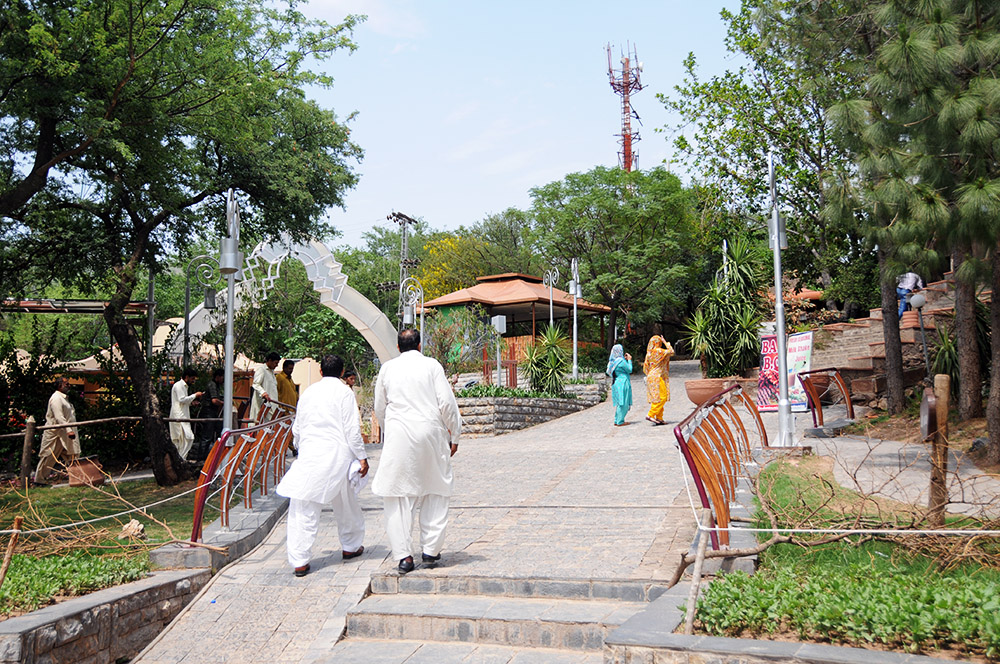
From the city below, Islamabad already looked green, but getting up into the Margalla Hills made the contrast even more obvious. Daman-e-Koh felt removed from the capital despite being close enough to look directly down over it.
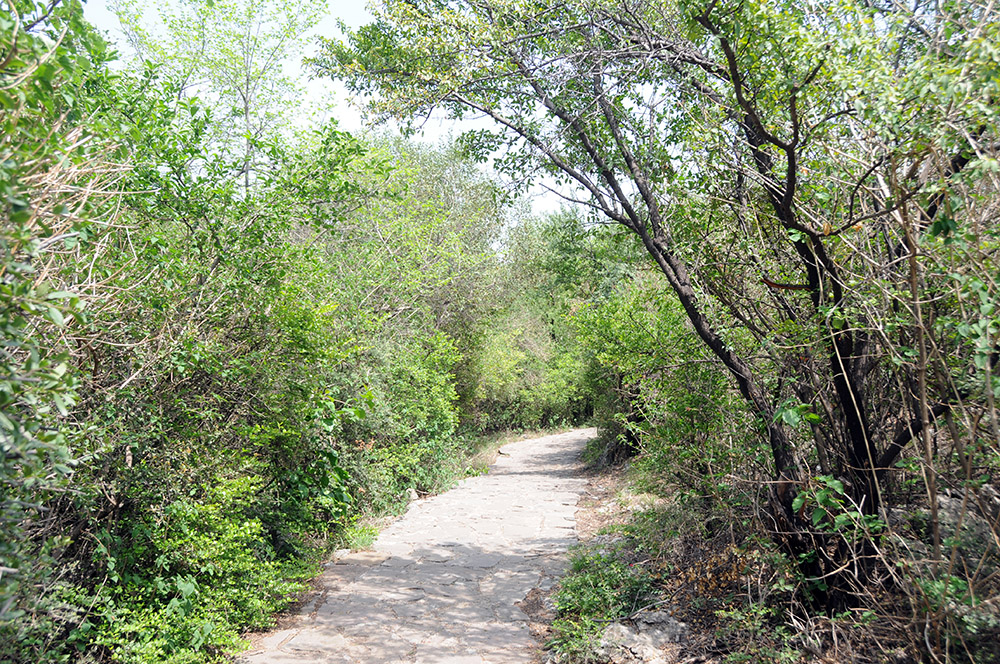
There were walking trails through the hills as well, making Daman-e-Koh more than simply a viewpoint where you drive up, take a photograph, and leave. I spent some time walking around and exploring the area before heading back toward the city.
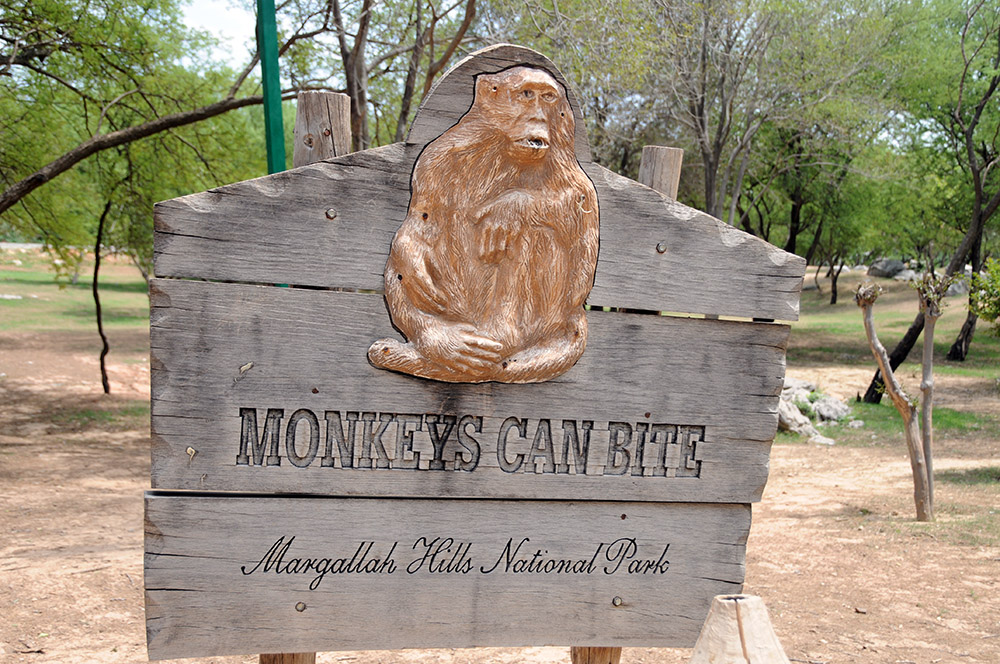
The Margalla Hills are also home to wildlife, including monkeys that sometimes appear around the developed areas. Signs reminded visitors that the animals were wild and shouldn’t be treated like pets.
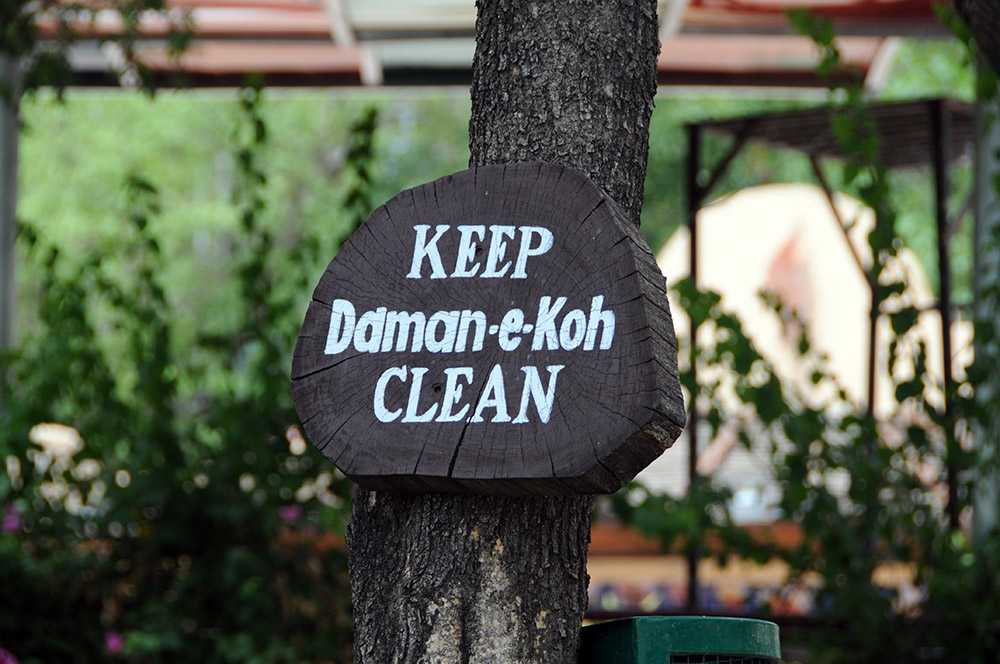
The park was well maintained, with signs encouraging visitors to protect the area. Having this much forest and mountain terrain immediately beside a national capital was one of the things I liked most about Islamabad.
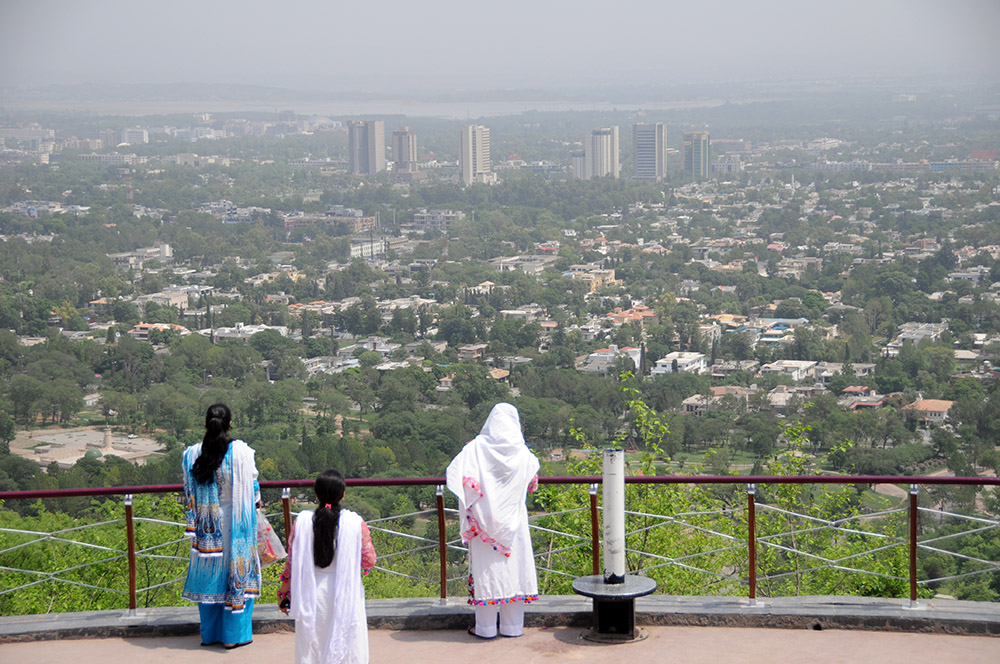
The view from Daman-e-Koh was one of the best I found in Islamabad. From up here I could see how the planned city spreads across the relatively flat land below while the Margalla Hills rise abruptly behind it.
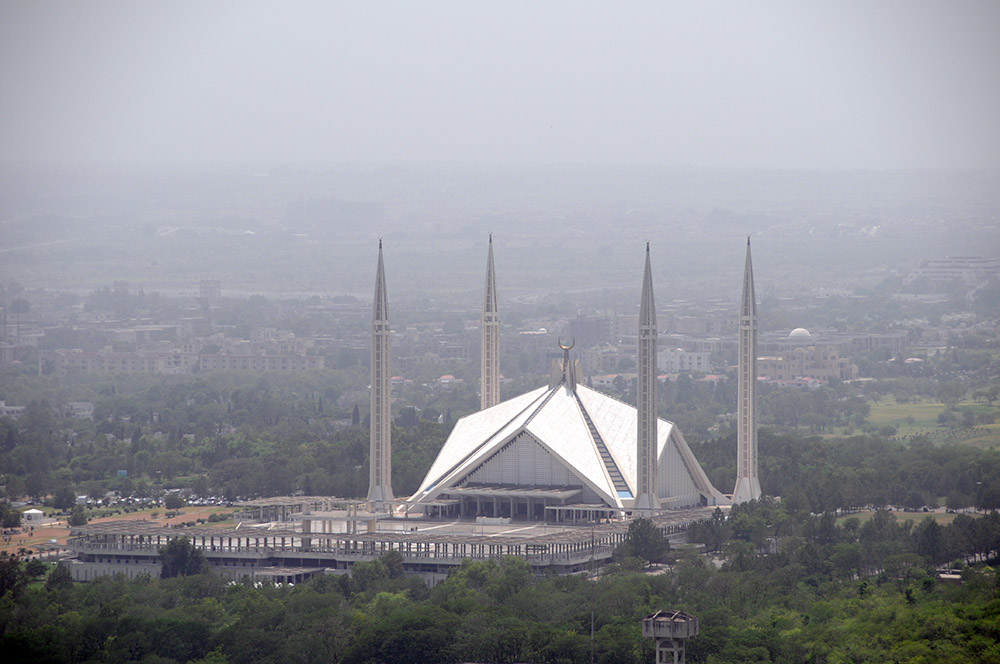
I didn’t make it inside Faisal Mosque on this trip, but from the hills I had a great view of the enormous structure. Completed in 1986, Faisal Mosque quickly became one of Islamabad’s most recognizable landmarks. Its modern design is quite different from the traditional domed architecture associated with many historic mosques, making it easy to recognize even from a considerable distance.
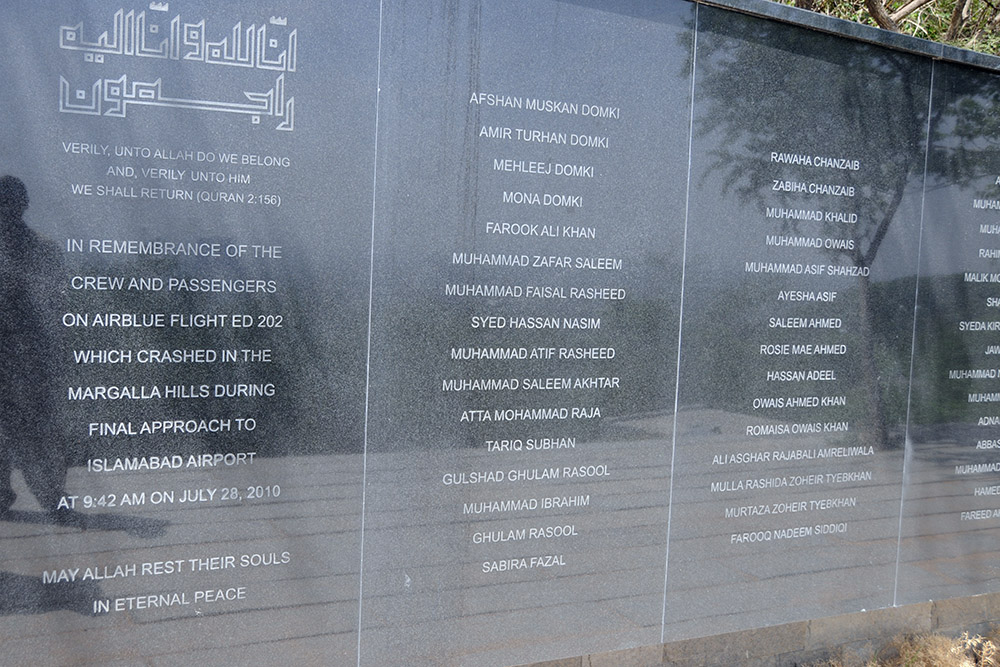
After leaving the viewpoint I came across this memorial to Airblue Flight 202, which crashed in the Margalla Hills in 2010. All 152 people aboard the aircraft were killed. The accident had occurred only a short time before my visit, and there were several other people quietly visiting the memorial when I stopped.
Back in the city, I felt comfortable exploring Islamabad independently, including walking around after dark. Most of the areas I visited were fairly relaxed.
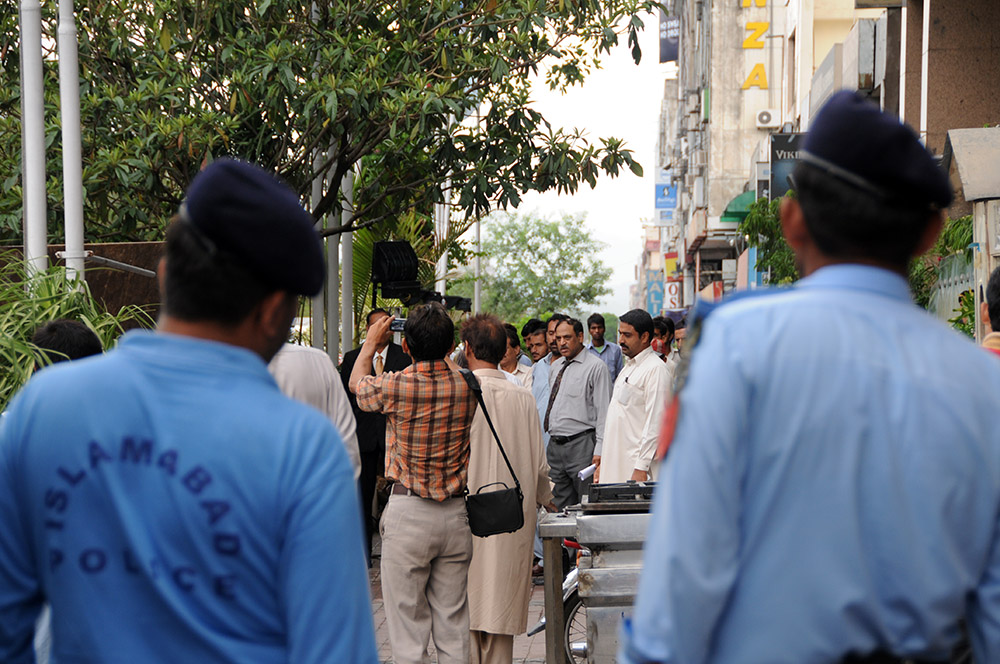
The only real commotion I encountered was this crowd. A television reporter appeared to be covering whatever was happening while nearby police watched the gathering. I never figured out exactly what the event was about, but it was the most activity I encountered while wandering around this otherwise fairly relaxed part of the city.
I happened to visit Pakistan during Ramadan, which made finding food during daylight hours more complicated than usual. I’m normally all about trying local cuisine when I travel, but after finding most restaurants closed during the day I eventually came across a Domino’s and somehow ended up eating a pepperoni pizza in Pakistan during Ramadan. Not exactly the culinary experience I had planned!
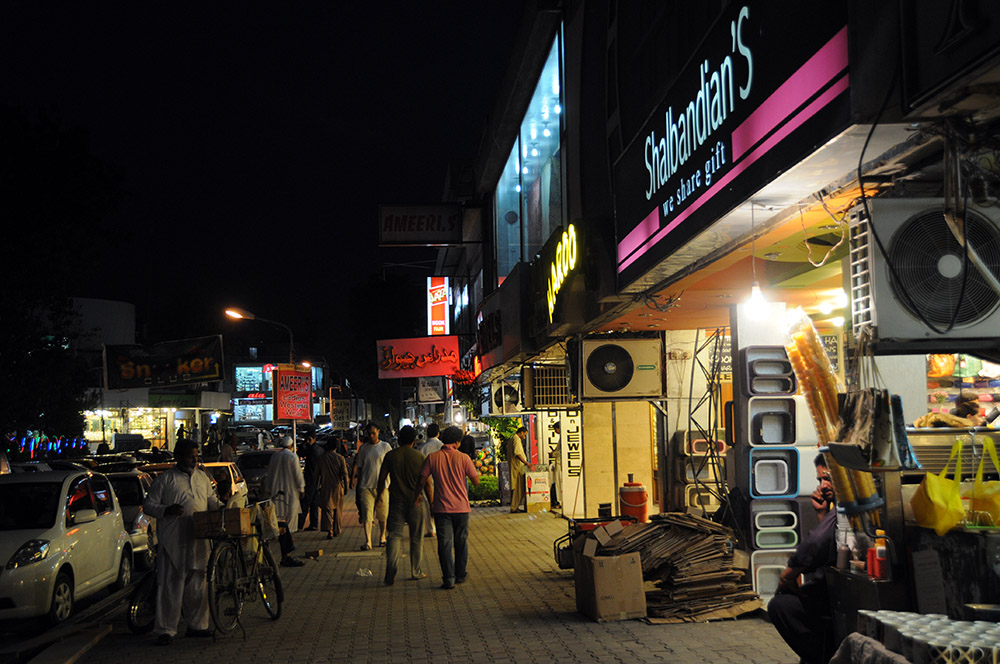
Jinnah Super Market was more of a modern shopping and dining district than the traditional bazaars I had encountered elsewhere in the region. Shopping in Islamabad was surprisingly convenient. I had forgotten a few things at home, including chargers, sunglasses, and sunscreen, but had no trouble finding replacements within a few blocks of the city center.
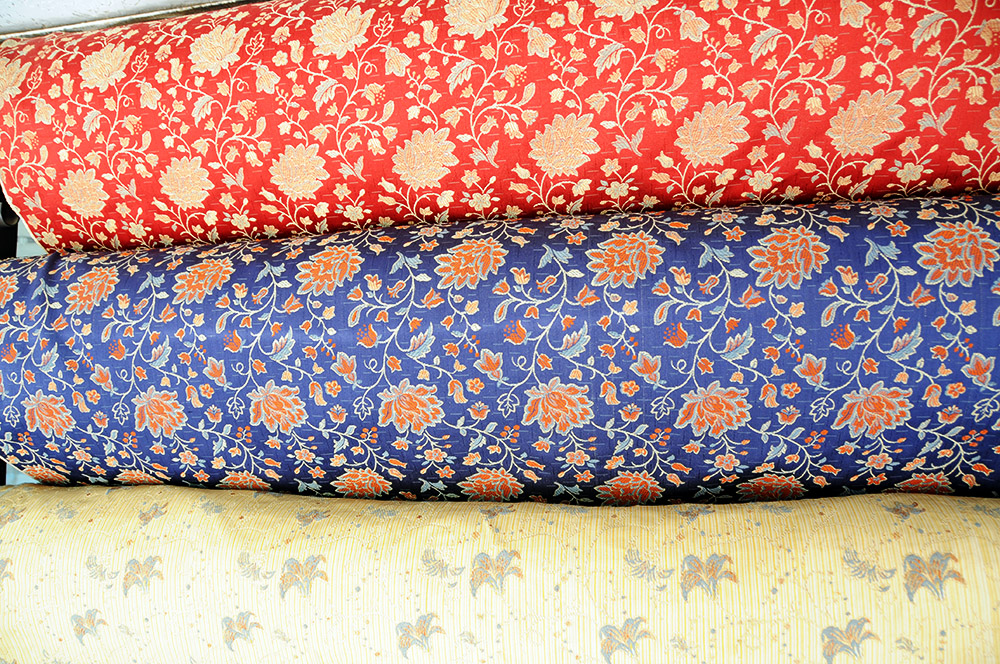
Shops sold everything from textiles and electronics to quality mountaineering and rock-climbing equipment, which makes sense considering Pakistan is home to some of the highest mountains on Earth.
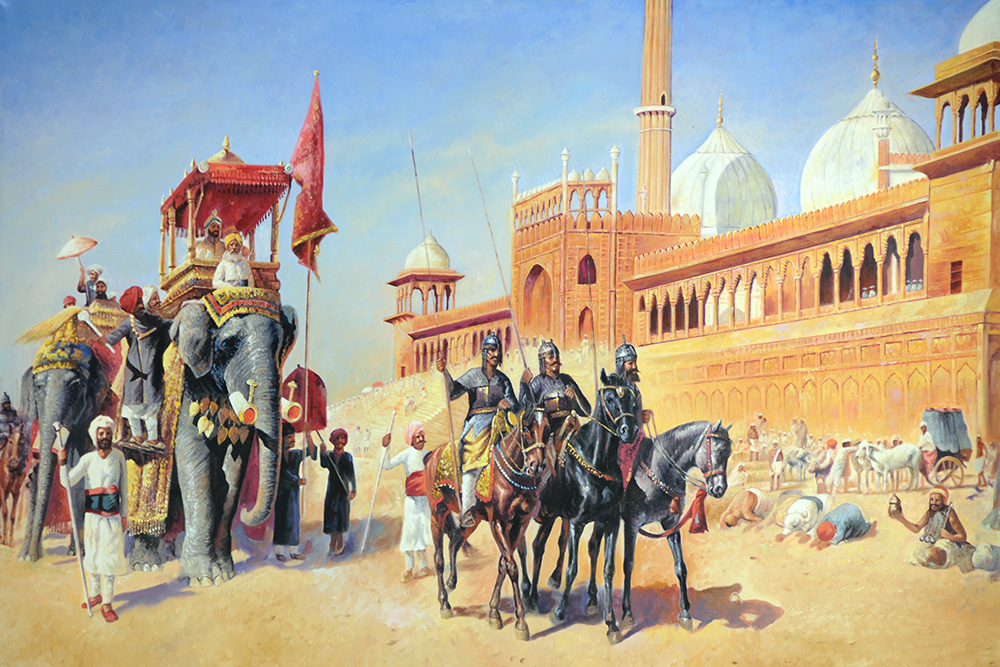
The markets were also good places to look for artwork and souvenirs. One shop had paintings depicting scenes from the region during the colonial era, including this one. I didn’t end up buying a souvenir here, although elsewhere in Pakistan I found plenty of interesting traditional handicrafts and artwork.
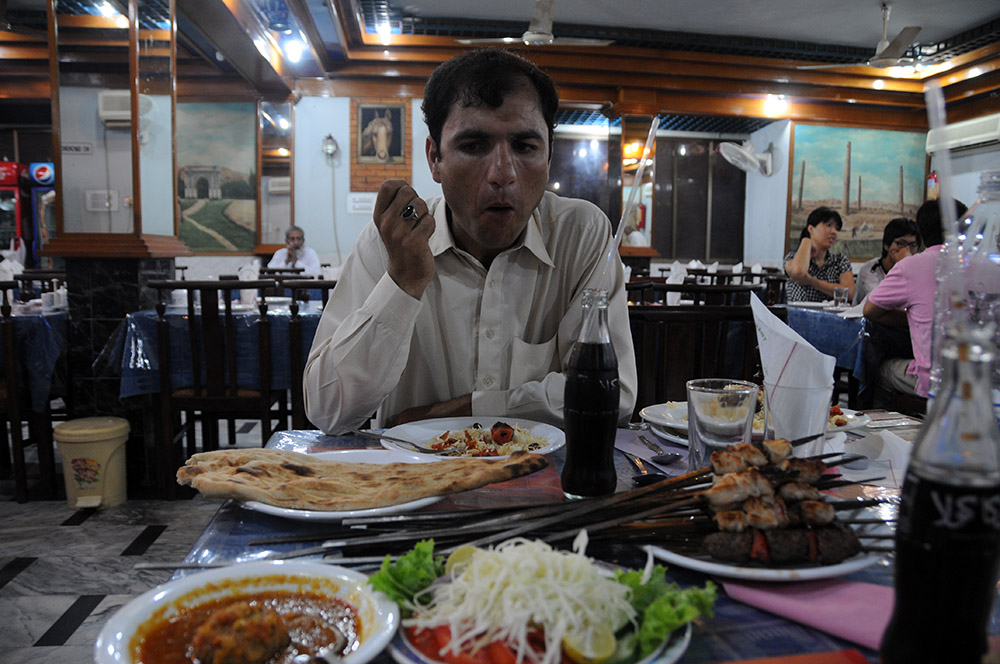
While exploring the area with a local, I stopped at an Afghan restaurant and had an excellent meal of kebabs, salad, and Afghan naan. This was much closer to the kind of meal I had hoped to find while traveling through the region than my unexpected Ramadan visit to Domino’s.
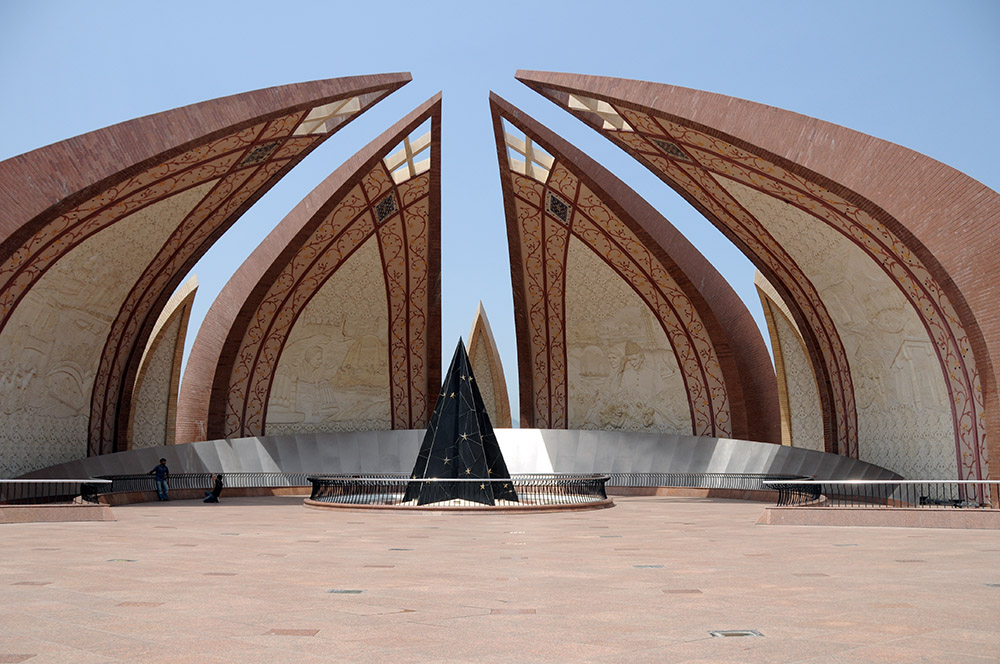
One of Islamabad’s most recognizable landmarks is the Pakistan Monument. Its enormous petal-shaped structures were designed to resemble a blossoming flower while representing the different regions and people of Pakistan. The monument sits on the western Shakarparian Hills and has become one of the symbols of the capital.
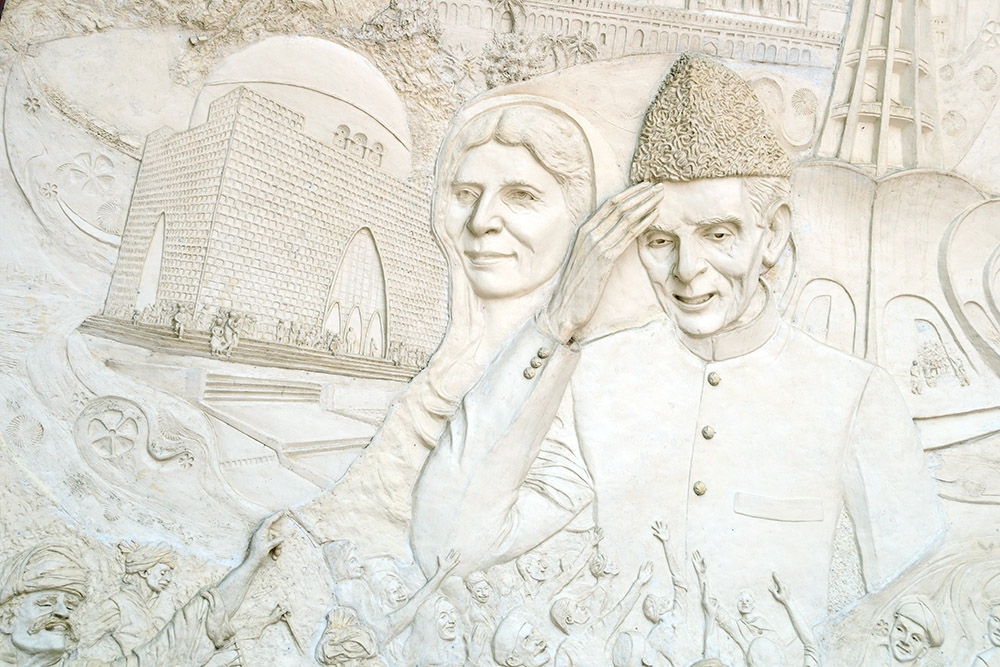
The interior surfaces of the monument contain detailed reliefs depicting important scenes and figures from Pakistani history, including Muhammad Ali Jinnah, who played the central role in the creation of Pakistan in 1947.
While walking around the monument I heard a woman speaking with an American accent and discovered that she had grown up only about twenty minutes from me in Virginia. Running into someone from practically my own neighborhood on the other side of the world was definitely unexpected.
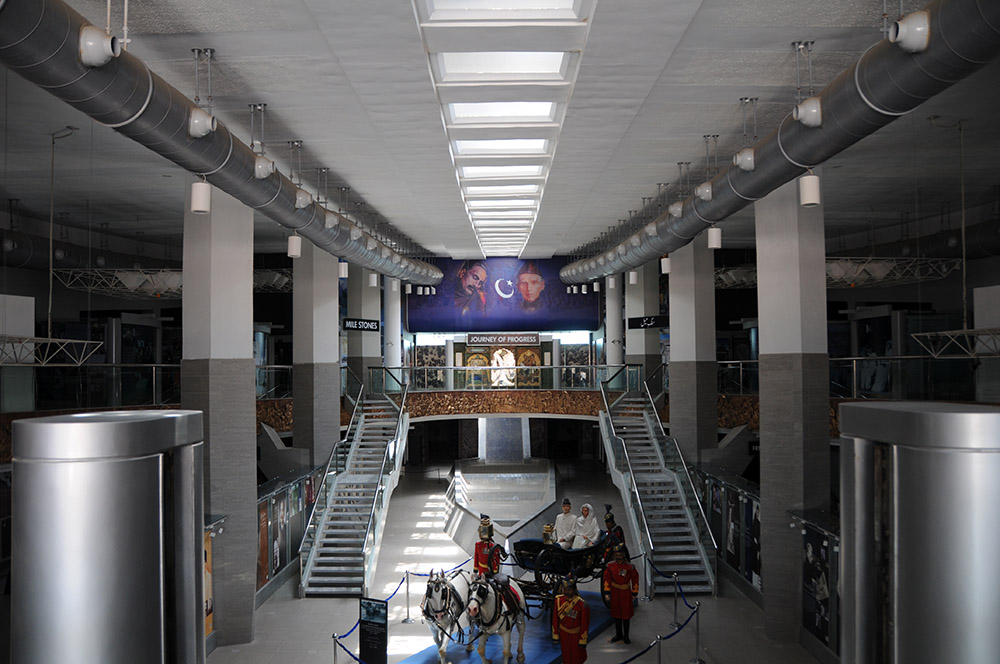
Unfortunately, the museum was closed when I arrived. From the entrance I could tell that it was a large and modern facility, and some people who were still inside allowed me to at least take a photograph near the entrance. It was another attraction I had to add to the list for a future visit.
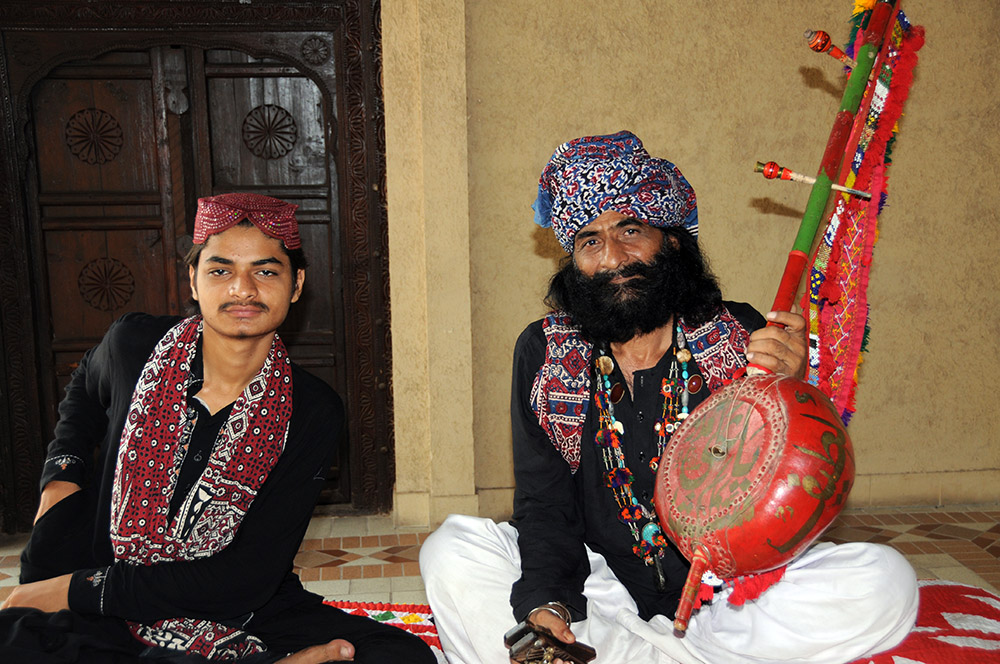
Elsewhere in Islamabad I came across these two musicians performing traditional music. Both played instruments while the older man provided the vocals. I really wanted to talk with them afterward because they seemed extremely friendly, but unfortunately the language barrier made conversation difficult. Experiences like this were some of my favorite parts of traveling around Pakistan because they happened completely unexpectedly while I was simply walking around.
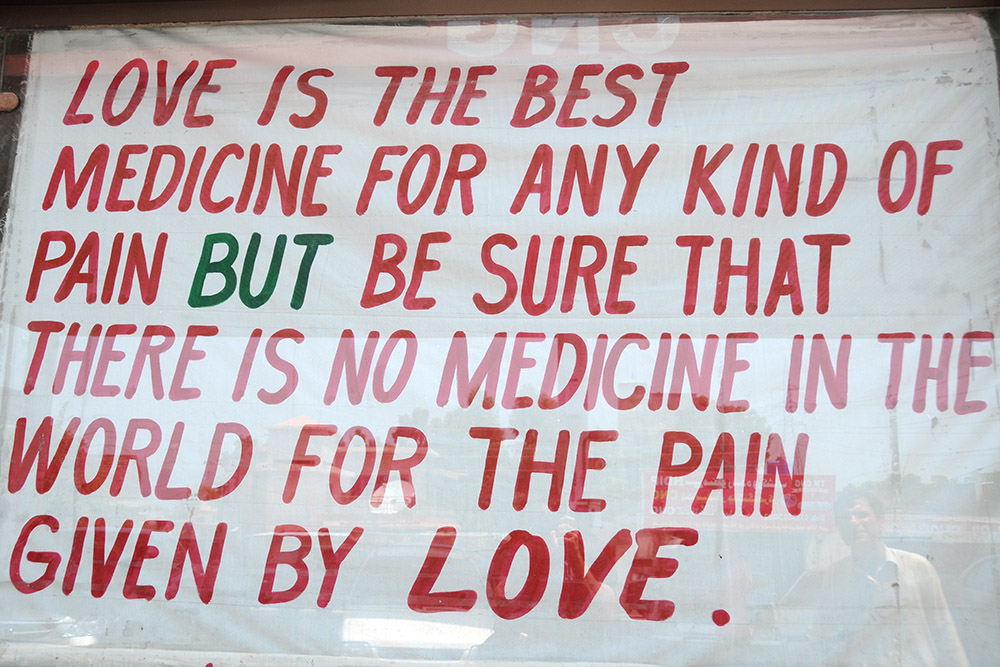
My final photo from Islamabad was completely random: this “With Love from Pakistan” image displayed at a gas station. I photographed it because it seemed like a fitting way to end my visit.
Pakistan is a country that many travelers know primarily through news reports and politics, but actually traveling through it gave me a much broader impression. Islamabad in particular showed a quieter and greener side of the country, and between the Margalla Hills, monuments, markets, restaurants, and friendly encounters, I found the capital to be one of the easiest places in Pakistan to explore.
Explore More of Pakistan
Islamabad • Karachi • Lahore • the Northern Areas