Some of Djibouti’s most remarkable landscapes are found west of the capital, where the country quickly changes from a relatively flat coastline into mountains, desert, volcanic terrain, and some of the strangest scenery I saw anywhere in Africa. I hired a taxi driver mainly to take me to Lake Assal, but the drive itself ended up becoming one of the highlights of the day.
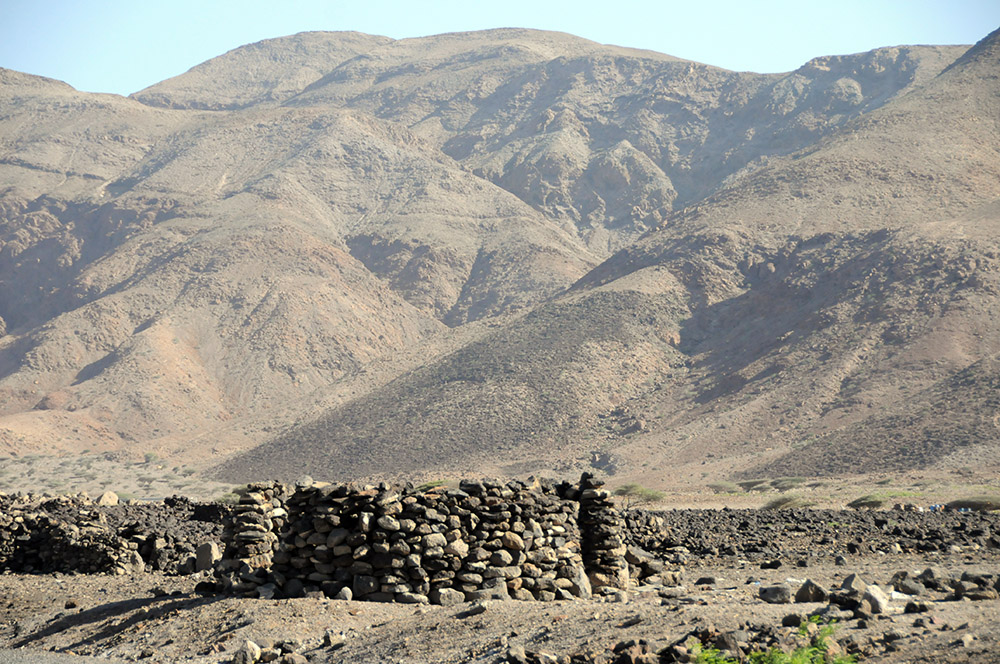
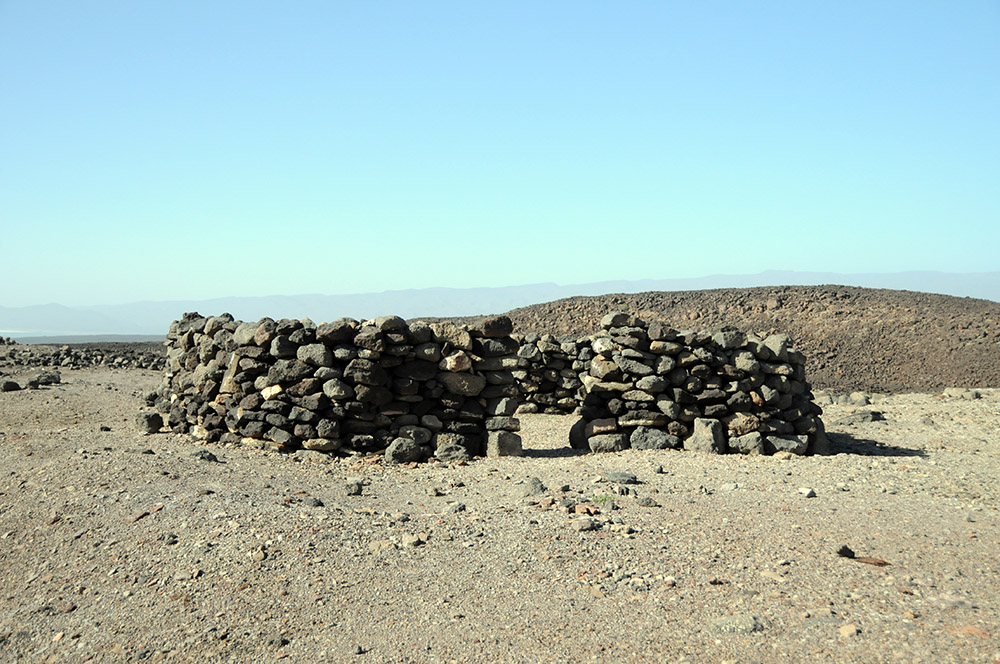
This part of Djibouti is traditionally associated with the Afar people, whose homeland extends across Djibouti and into neighboring Ethiopia and Eritrea. Along the way I passed several stone structures like this. I wasn’t sure how old they were or whether they were still being used, but they seemed perfectly suited to the harsh landscape surrounding them.
Into the Mountains
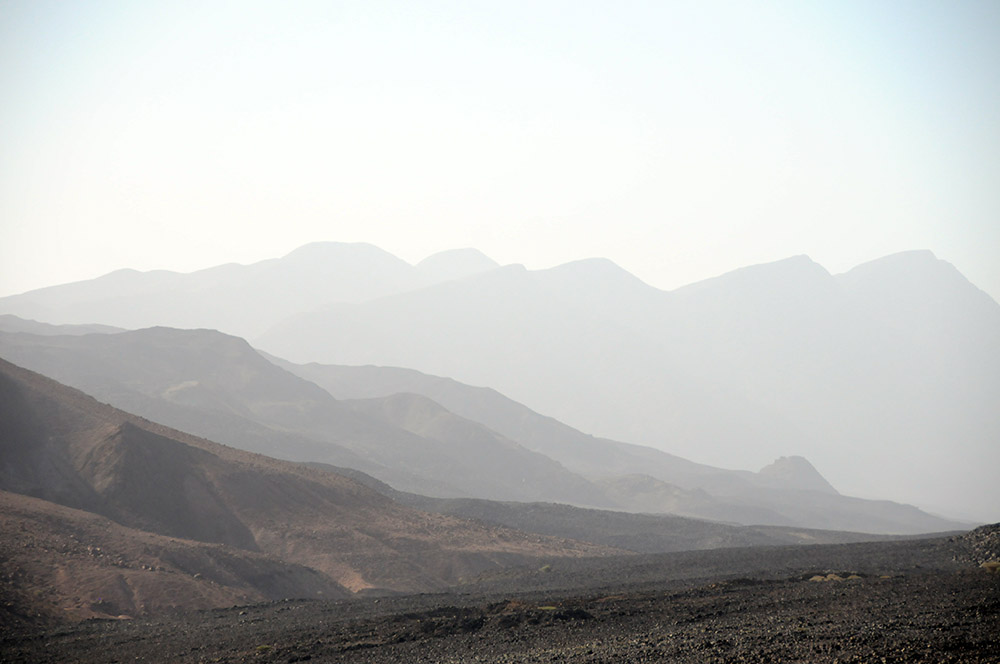
Driving west, it didn’t take long for the terrain to change dramatically. After spending time around Djibouti City and the Moucha Islands, where much of the landscape had seemed relatively flat, I wasn’t expecting large mountains to appear so quickly.
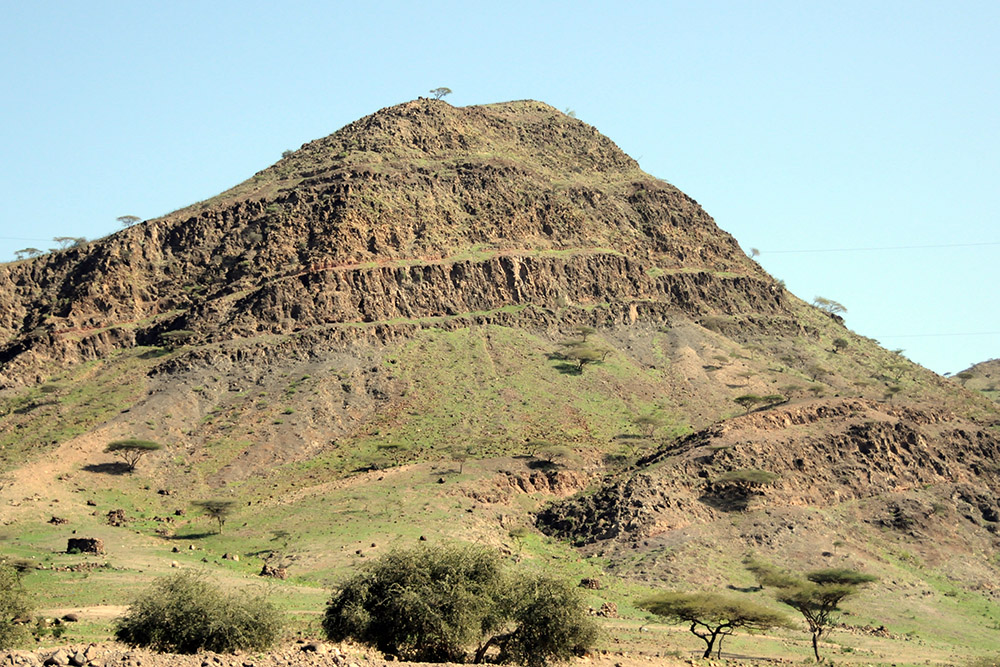
The farther we traveled, the more isolated everything became. Dark volcanic-looking mountains rose out of an almost completely barren landscape, and there were long stretches where there seemed to be very little around us besides the road.
A Bad Day to Go Off-Roading
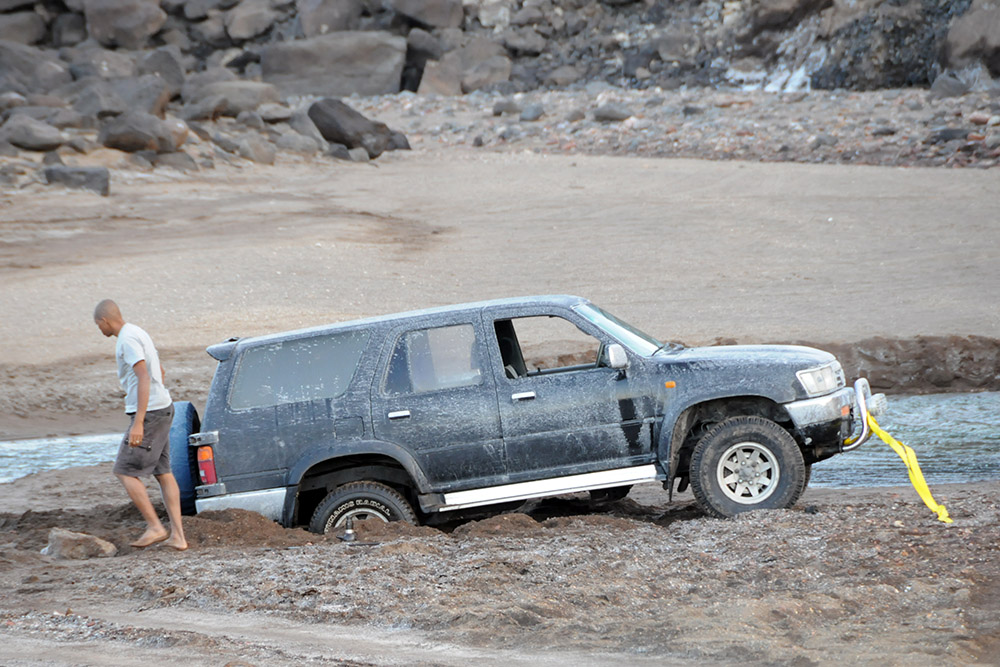
Along the way we came across this unfortunate guy who had taken his SUV off the road and managed to get it completely stuck in a muddy riverbed. Mud wasn’t exactly something I expected to see much of in Djibouti, which somehow made the situation even better. He spoke French with my driver, but since I couldn’t understand their conversation, I never found out exactly how he had managed it or what his plan was for getting back out. We were already at least an hour from the capital, so he certainly wasn’t having a good day.
The Canyons of Djibouti
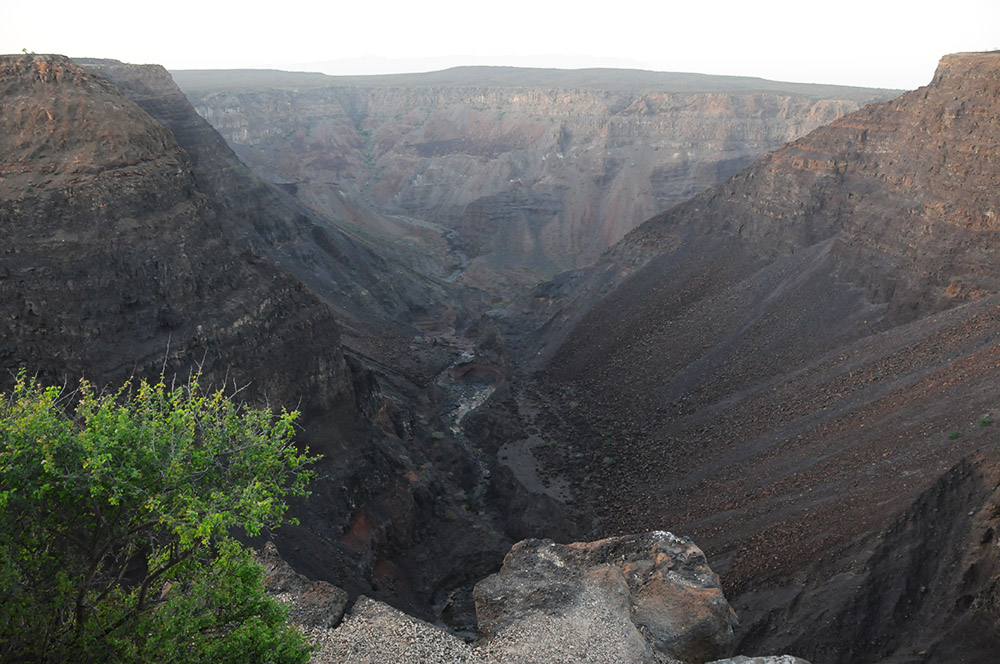
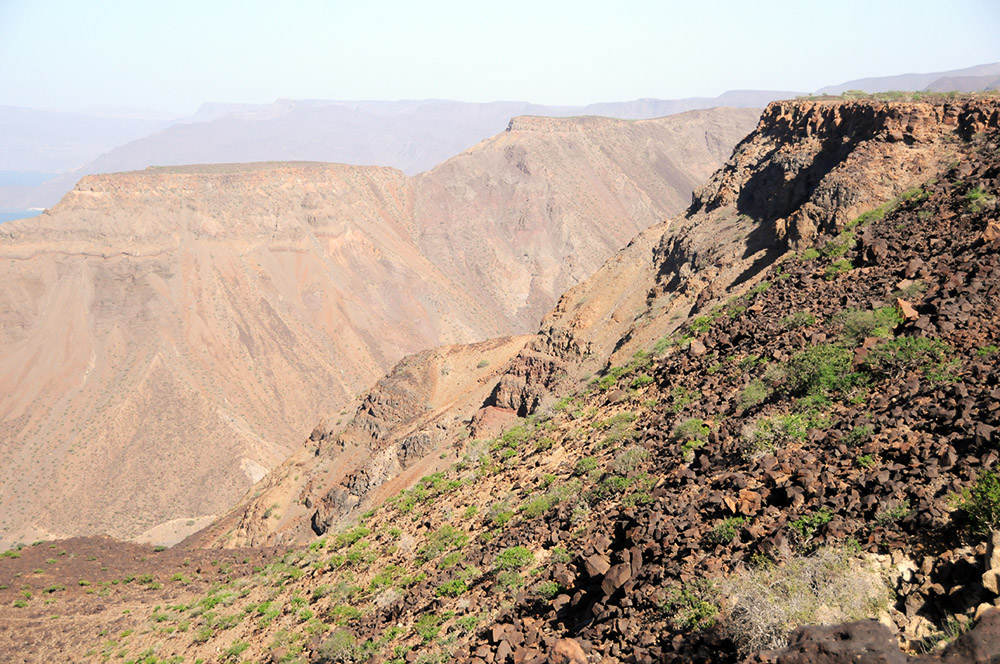
This wasn’t part of my plan at all. During the drive I noticed a place to pull over that looked like some kind of viewpoint. I had done plenty of research before traveling through Djibouti, yet somehow I had never come across any mention of these deep canyons.
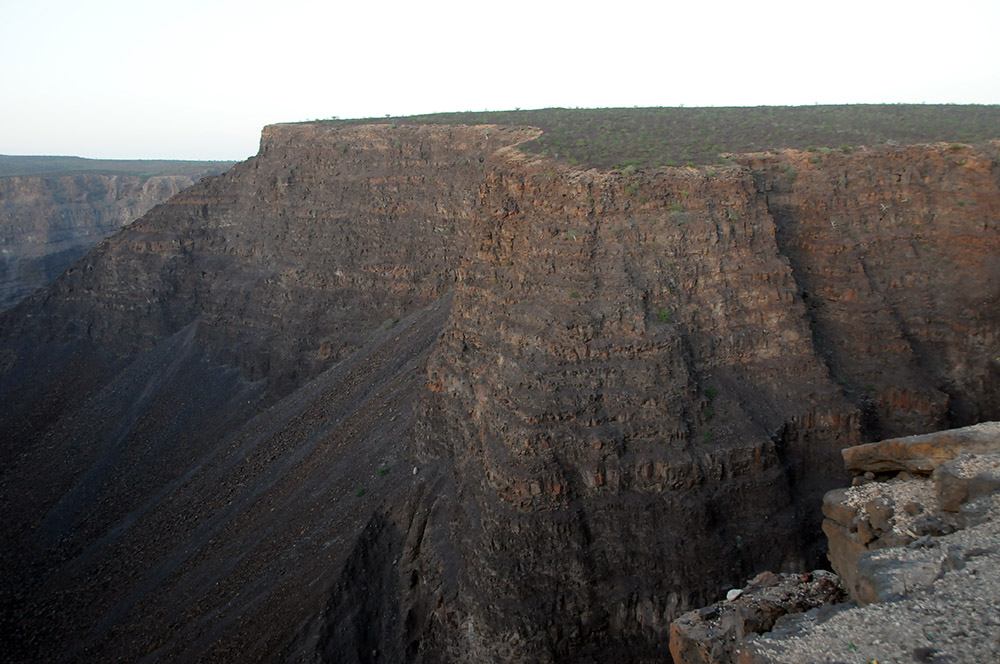
I later learned that this dramatic area is sometimes referred to as the Grand Canyon of Djibouti. I’d already visited much larger canyons in Namibia, but somehow this place impressed me even more. Maybe it was simply because I had no idea it was here. Sometimes stumbling across something completely unexpected makes it more memorable than the places you traveled specifically to see.
Ghoubbet Bay
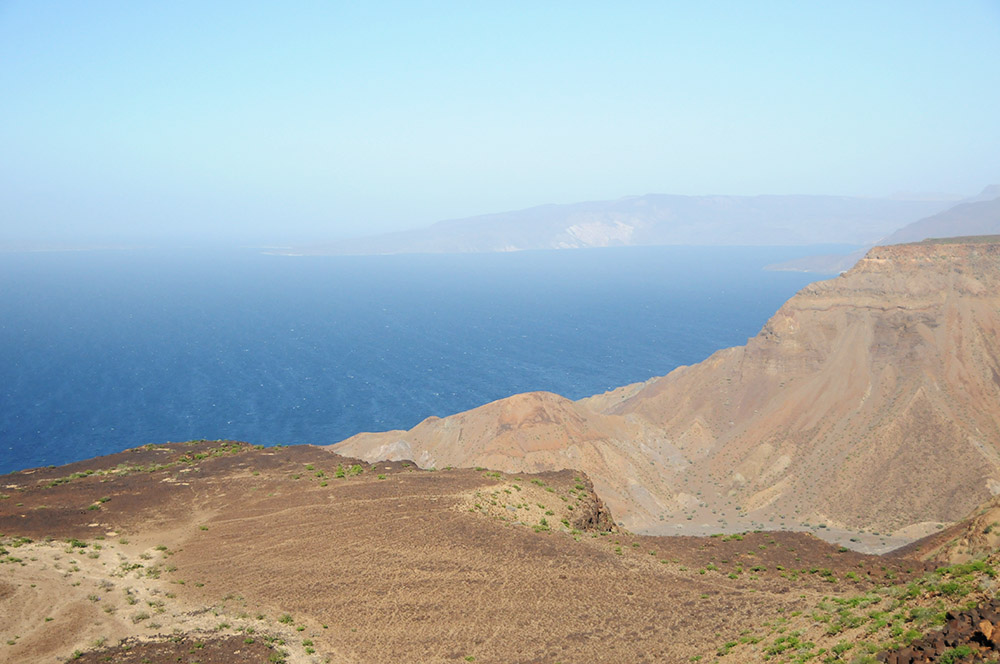
As we continued west, the scenery kept getting better. After unexpectedly finding the canyons, we reached the brilliant blue waters of Ghoubbet Bay. The contrast was incredible: intensely blue water surrounded by steep, almost completely barren mountains. As far as color went, this was one of the most beautiful bodies of water I’d seen in Africa.
Lake Assal
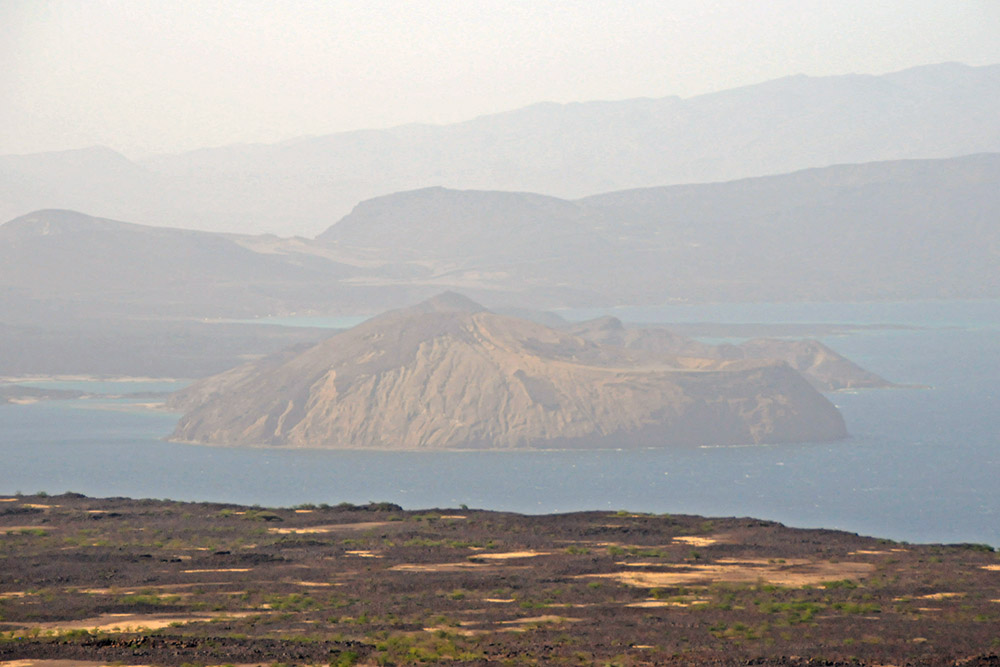
Just west of Ghoubbet Bay was my real destination: Lake Assal. Sitting about 155 meters, or roughly 509 feet, below sea level, Lake Assal is the lowest point in Africa and one of the lowest exposed places anywhere on Earth. The surrounding landscape is brutally dry, which makes the brilliant water, white salt deposits, and dark mountains stand out even more.
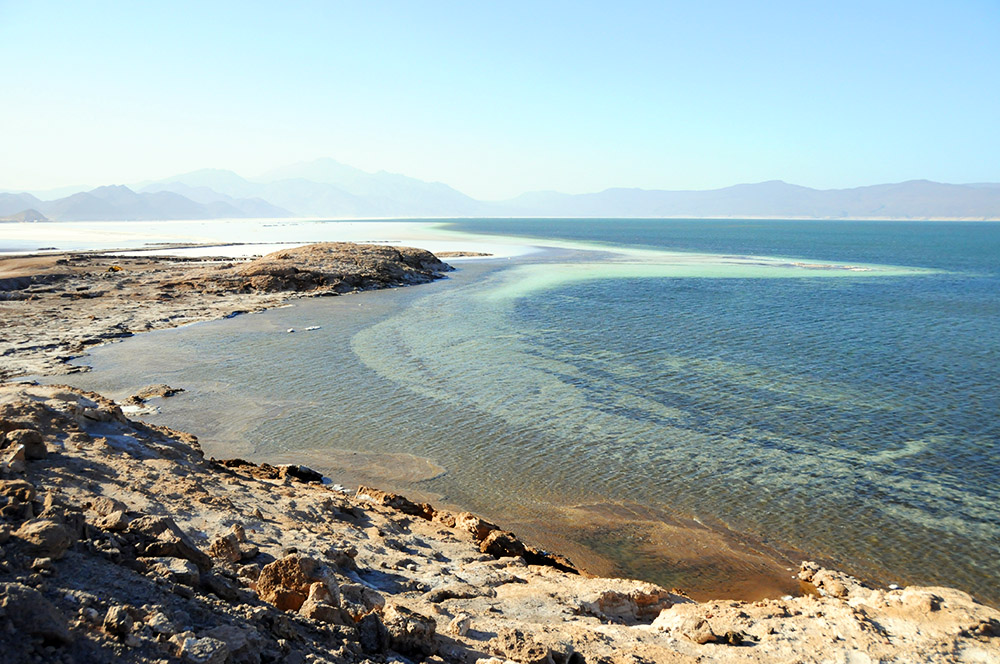
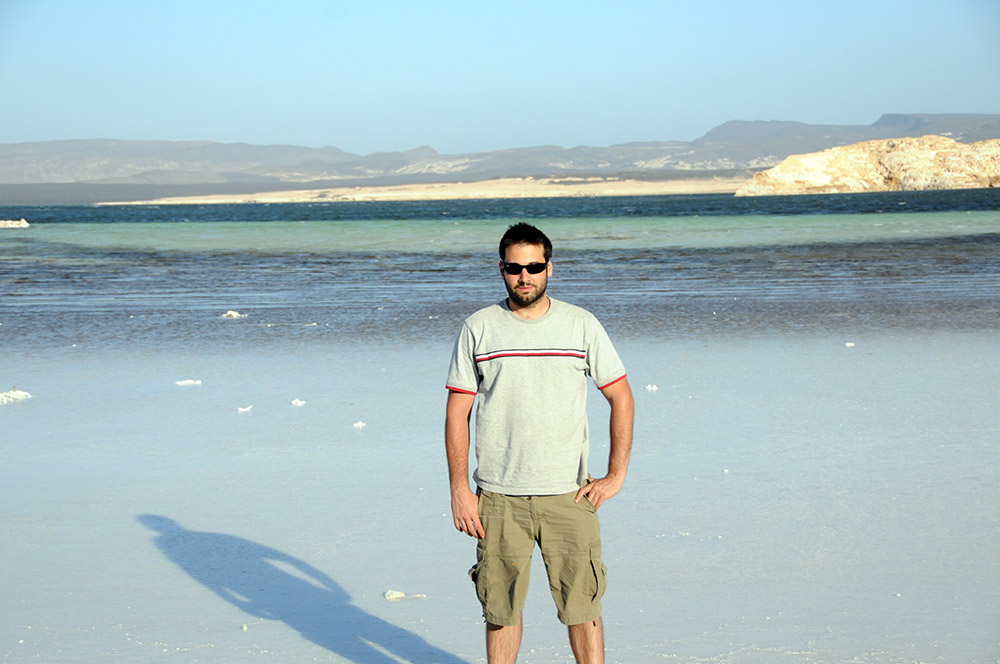
Lake Assal has an extraordinary concentration of salt. It has no river carrying water out to the sea, while the intense heat continuously removes water through evaporation. Over time, enormous quantities of salt have accumulated around the lake, leaving sections of shoreline that look almost as though they are covered in snow.
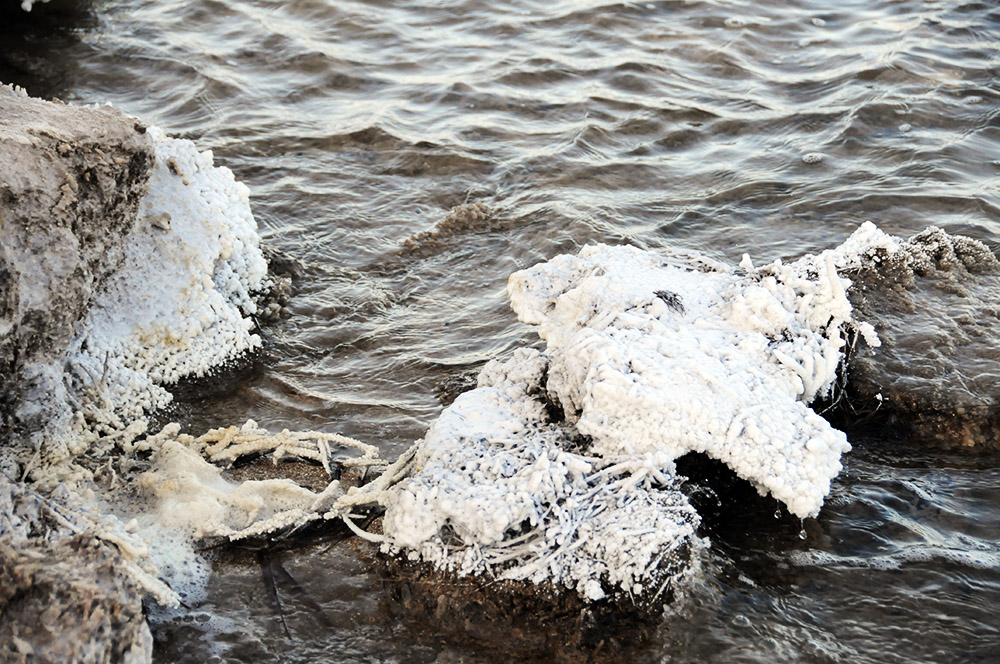
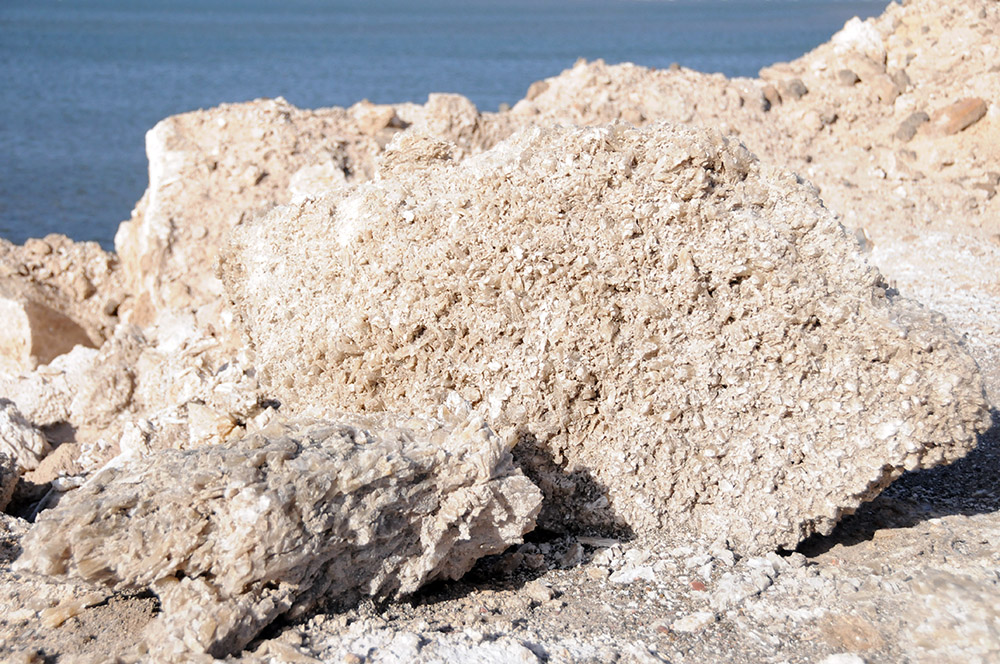
The salt wasn’t just a thin crust. In places it formed thick, rough deposits that completely transformed the shoreline. Combined with the mountains and strangely colored water, Lake Assal looked unlike almost anywhere else I’d visited.
Peanut Butter Mountain
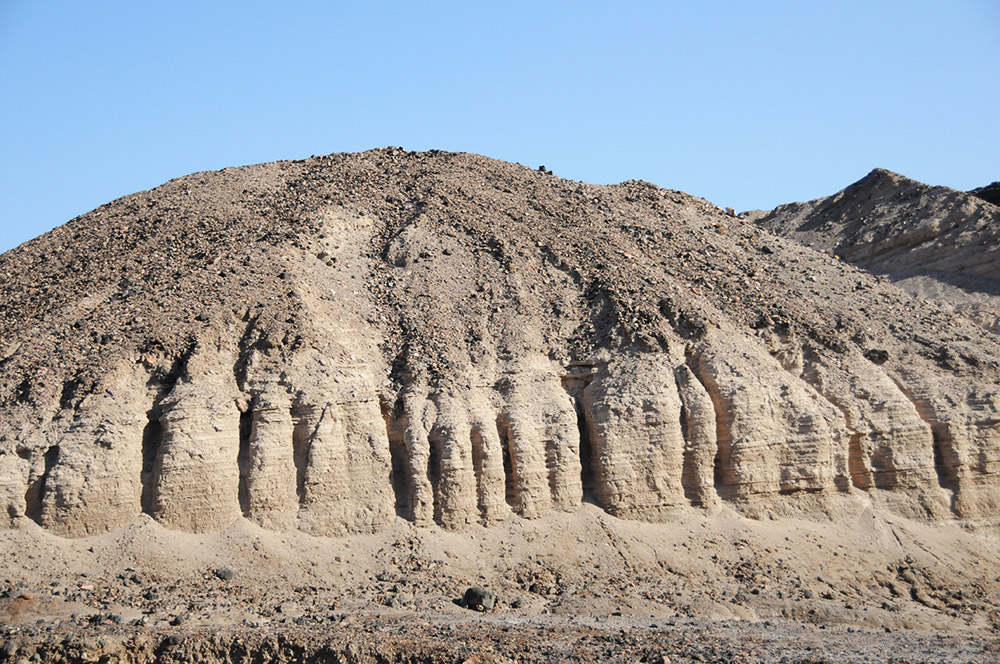
I nicknamed this “Peanut Butter Mountain” because the layers of brown and tan reminded me of peanut butter and chocolate. The name obviously exists only in my head, but it was another example of how surprisingly colorful this otherwise barren landscape could be.
The Changing Colors of Lake Assal
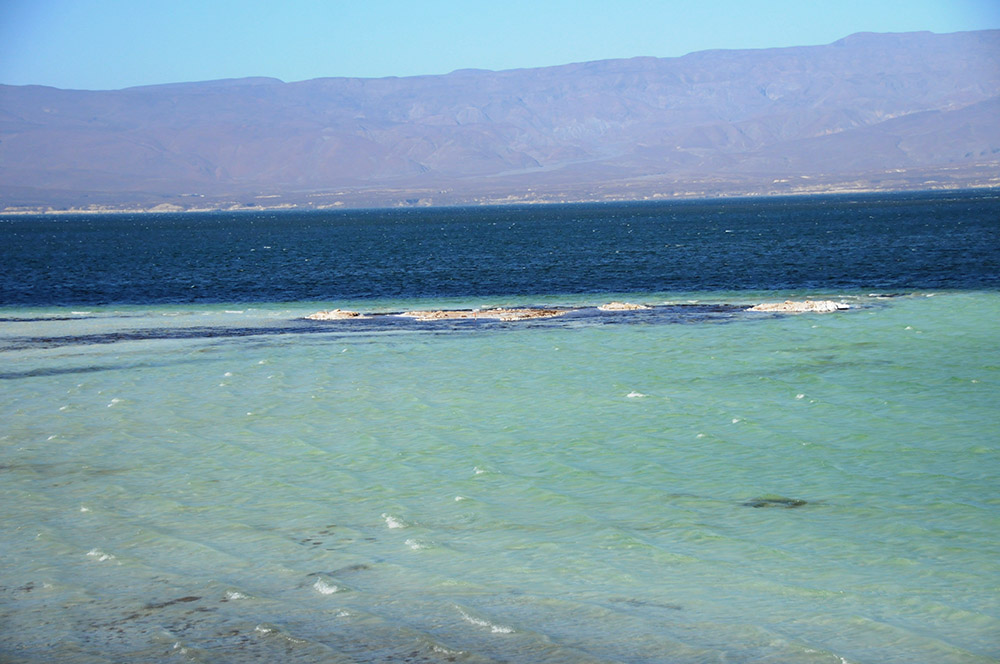
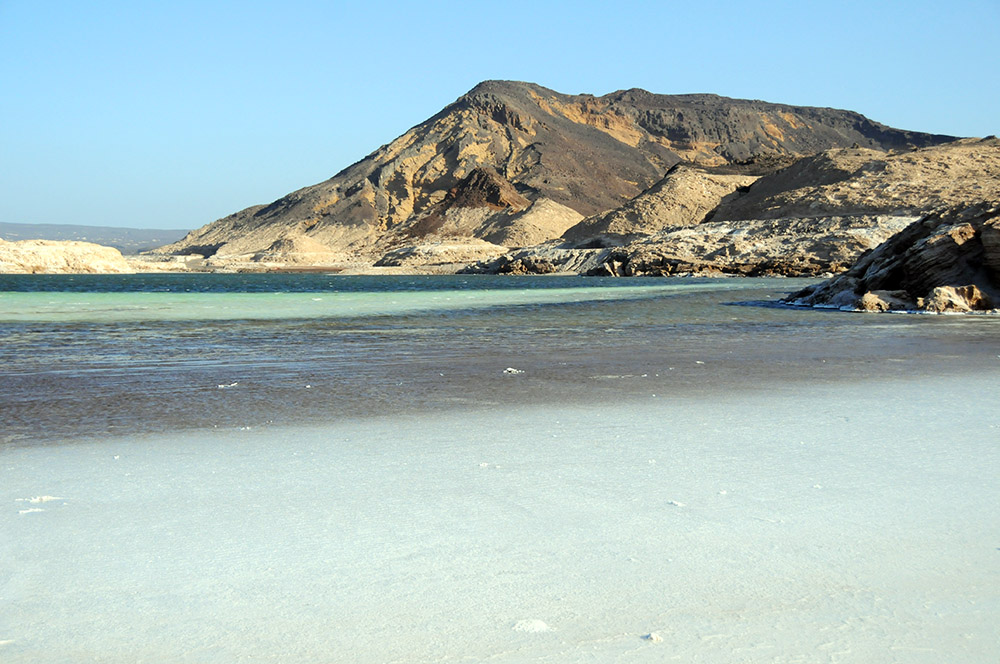
Not all of the lake was the same bright blue. In one area the water took on a noticeably green appearance. During an earlier trip through Bolivia’s Eduardo Avaroa National Park, I’d seen vividly colored lakes created by different combinations of minerals and microorganisms. I wasn’t sure what specifically caused the green color here, so I wasn’t going to guess, but it added yet another unusual shade to Lake Assal.
The Island
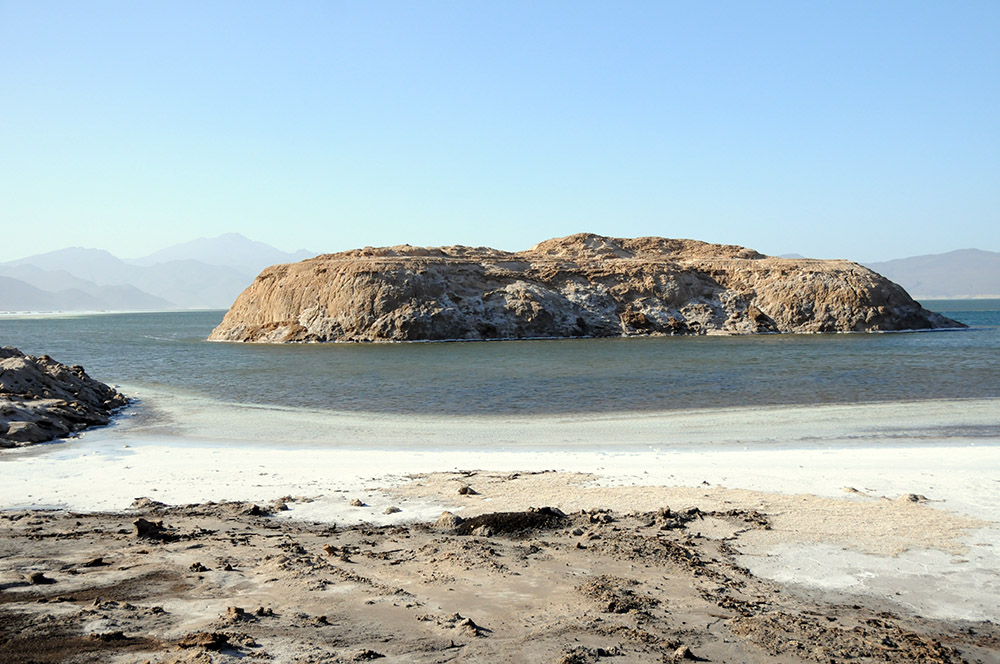
A small island sits out in the lake, although I had no desire to find out what it would be like trying to reach it. I did plenty of exploring along the shoreline and was perfectly happy staying on solid ground.
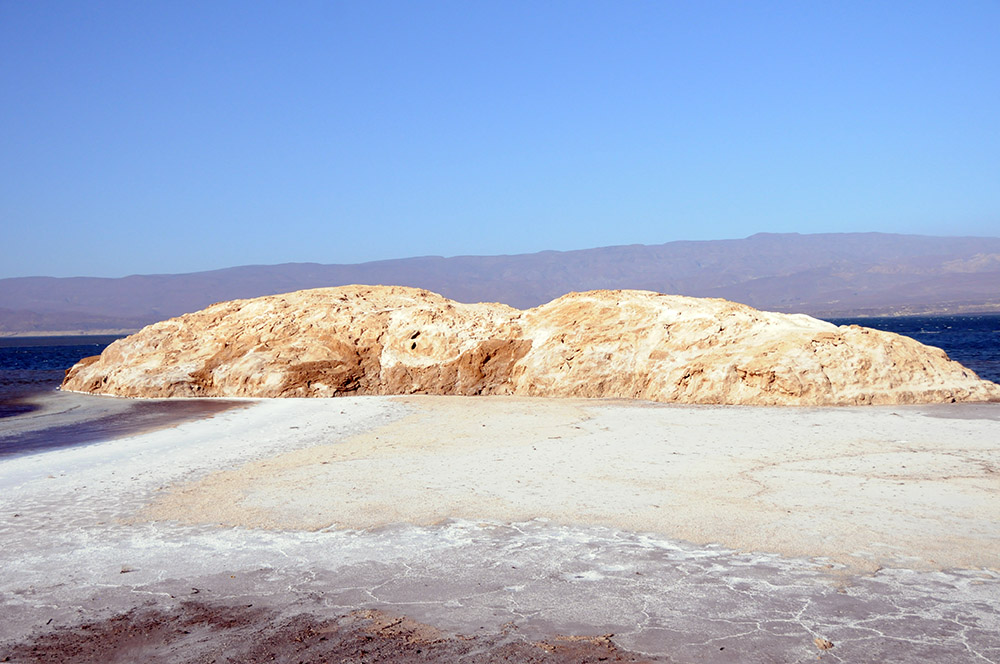
I visited in March, when temperatures were already climbing toward the hottest part of the year. Thankfully it wasn’t completely miserable yet, but the landscape made it very obvious that this was not somewhere I’d want to be wandering around without plenty of water.
Salt Souvenirs
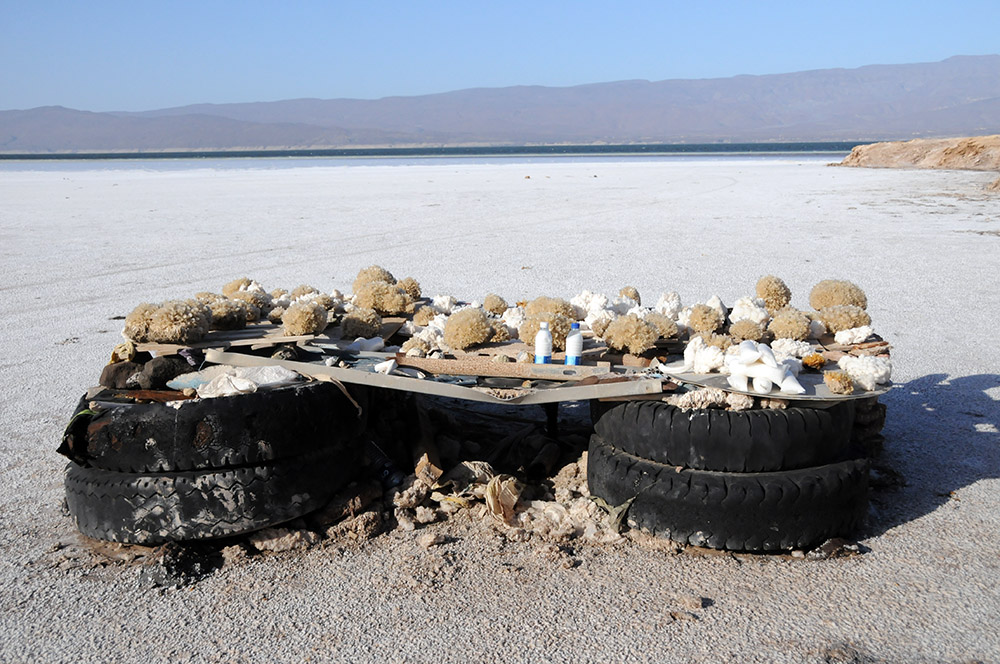
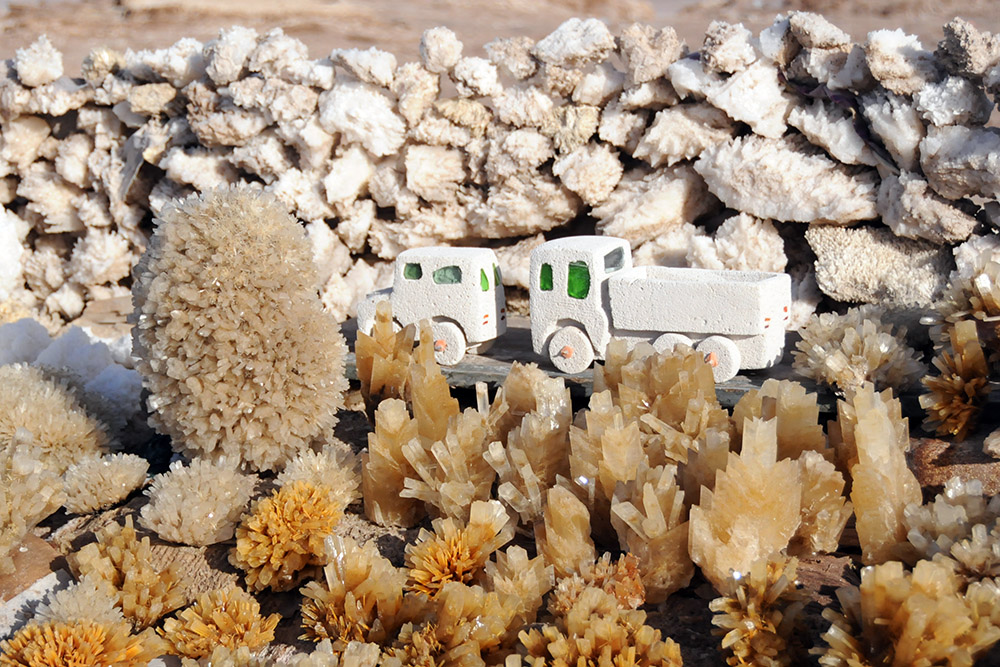
Even in such an isolated place, I found local vendors selling souvenirs made from the lake itself. Their goods were actually pretty interesting. Many had been carved or assembled from salt, while colorful minerals and other locally made objects were arranged beside them.
My Trip to Lake Assal
I had hired a driver because I wanted to see Lake Assal, but by the time we returned toward Djibouti City, the lake felt like only one part of the trip. I had stumbled onto a canyon I didn’t know existed, passed through surprisingly large mountains, watched somebody bury an SUV in one of the few patches of mud in Djibouti, and stopped beside the almost unnaturally blue water of Ghoubbet Bay before ever reaching my destination.
Lake Assal itself was every bit as strange as I’d hoped: salt covering the shoreline, green and turquoise water, dark volcanic terrain, an isolated island, and my very unofficial Peanut Butter Mountain. I went west to see one place and ended up liking nearly the entire drive just as much.
Explore More of Djibouti
Djibouti City • Lac Assal • the Moucha Islands