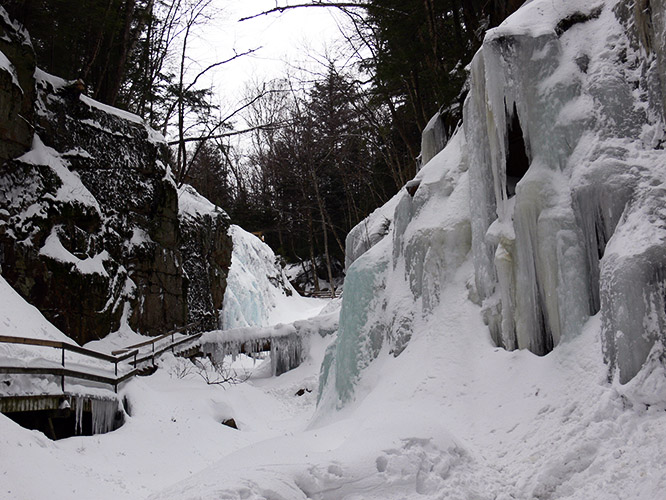
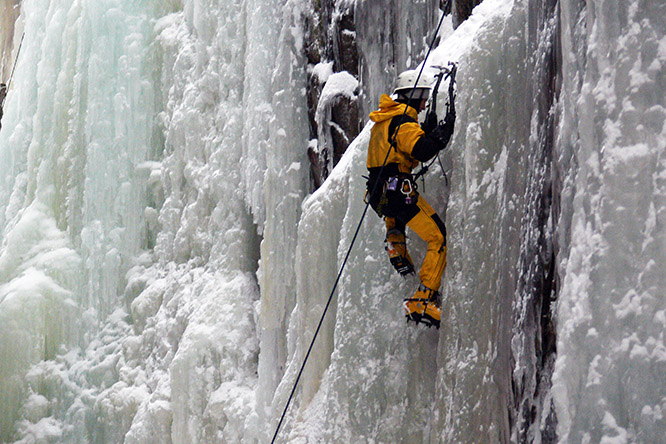
I’ve visited the White Mountains of New Hampshire twice, and both trips were in the dead of winter. For someone living on the East Coast like myself, the White Mountains are a short flight away and a perfect training ground for bigger mountains. During my first visit, nearly 10 years before my second, I stopped at a popular place known as Flume Gorge. The waterfalls here can freeze solid during the winter and provide some great ice climbing. I’ve never climbed the ice here myself, but I’d definitely be up for it if I return with more time. One of the great things about Flume Gorge is that it’s located right by the road, so only a short hike is needed to see this scenery.
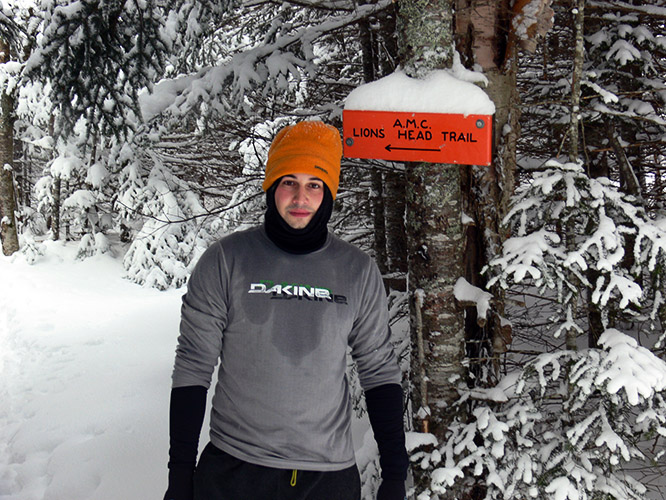
One of my very first mountains in America started right here at the base of Mt. Washington on the Lion Head Trail. You can see from the photo of me above that I made the extreme amateur mistake of allowing myself to sweat while hiking, something that can become dangerous very quickly in colder conditions. Fortunately, the first time I climbed Mt. Washington the temperatures were relatively mild, just below freezing in the mid-20s Fahrenheit (-4°C).
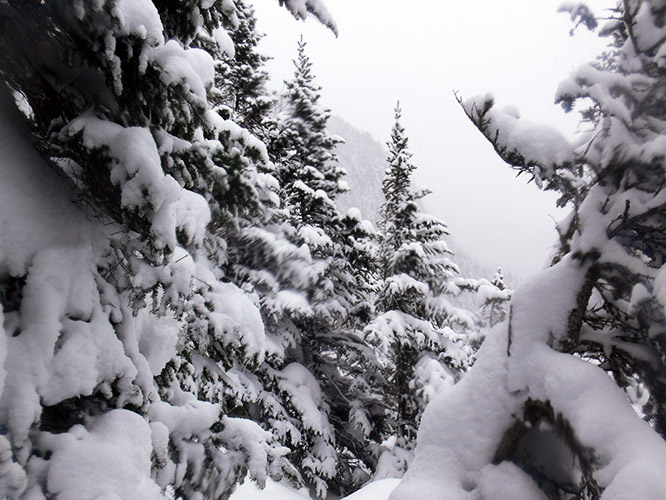
I had never hiked through deep snow like this before, and even though it was only about four hours to the summit, it was a great adventure for me at the time. Knowing that Mt. Washington can experience extreme subzero temperatures, I was actually a little disappointed with our mild weather. The mountain would certainly make up for that when I returned nearly a decade later.
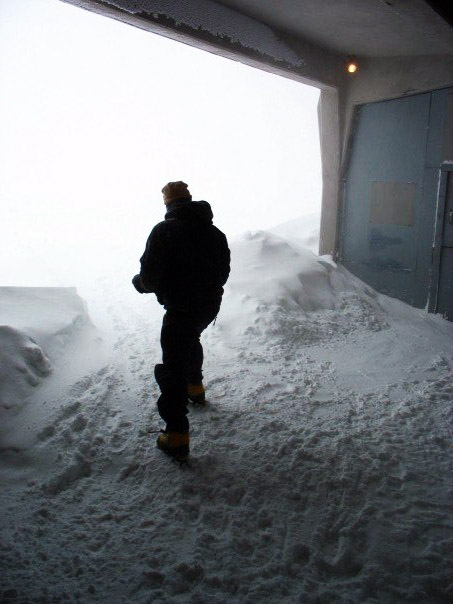
While it wasn’t especially cold on this first trip, the winds were annoying and visibility was poor because of the snow moving in. I had really wanted a clear view of the Mt. Washington Observatory, which sits in one of the most extreme weather environments in the United States. Mt. Washington famously recorded a 231 mph (371 km/h) wind gust in 1934, which at the time was the highest surface wind speed ever directly recorded. Temperatures can plunge far below zero, and the observatory’s equipment can become covered in thick rime ice. Above is a photo of me in an exterior section of the observatory.
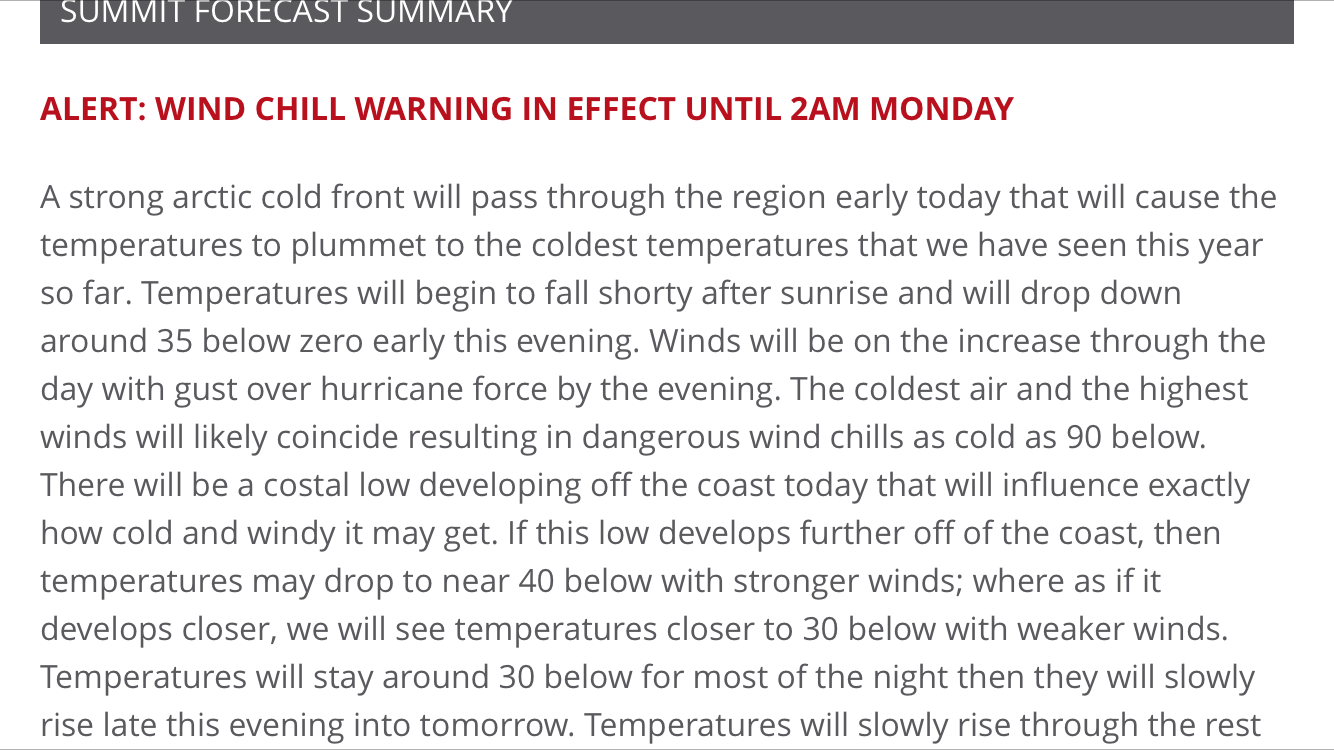
I returned to the White Mountains nearly 10 years later with the goal of completing the Presidential Traverse in winter. As luck would have it, the weekend I picked coincided with an exceptionally severe cold front. The White Mountains were going to be brutally cold even by their own standards, with forecasts predicting temperatures around 35 below zero and hurricane-force wind gusts.
This is the first time I’ve ever counted a screenshot as one of my travel photos, but I wanted to save the actual forecast. I’ve often heard people casually describe temperatures of 40 below zero in northern parts of the United States. Temperatures that low certainly happen, but they are far more unusual than people sometimes make them sound. So rather than taking my word for how cold it was supposed to get, the screenshot above shows the Mt. Washington Observatory’s forecast from the trip.
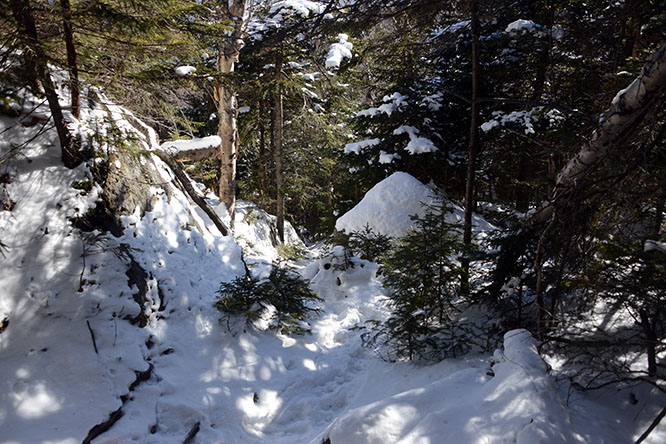
The trail started off with falling snow much like my first climb of Mt. Washington, except this time the temperature was probably around 15 below zero instead of 25 above. Both my friend and I were amazed that the trees could survive winters with temperatures like these.
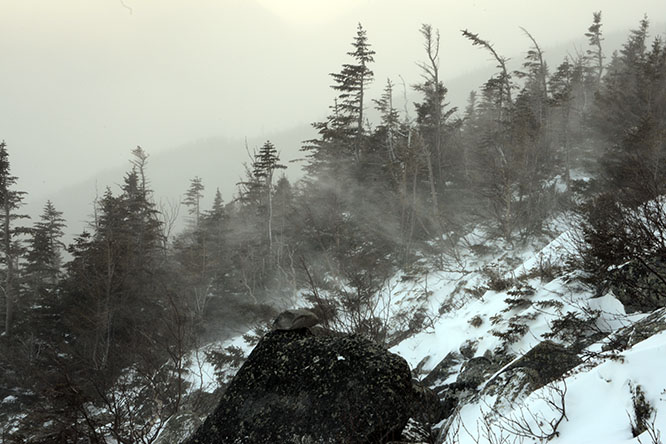
We hiked for several hours up Mt. Madison at the northern end of the Presidential Range. Our original goal was to reach Mt. Washington, spend the night there, and then finish the rest of the traverse the following day. With a late-morning start, waist-deep snow, sustained scrambling, and horrible winds slowing us down, we didn’t even make it to the summit of Mt. Madison on the first day.
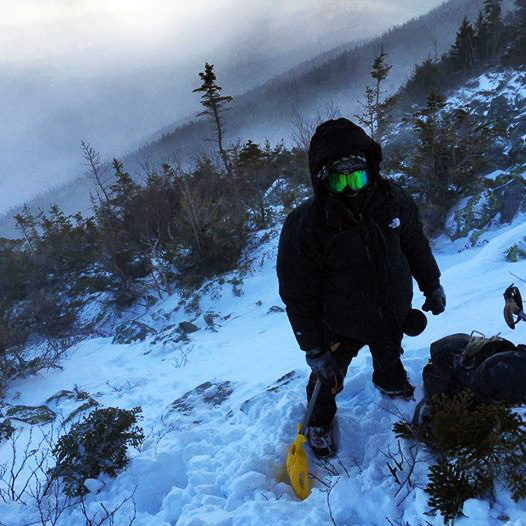
Conditions became bad enough that we had to make a makeshift campsite on a steep scrambling section of the mountain. Fortunately, there was so much snow that we were able to dig into the slope and create a level platform just wide enough for our tents.
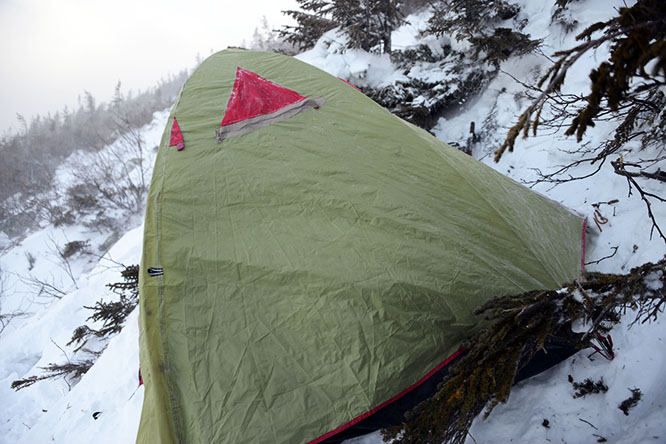
That night the temperature dropped to around 30 below zero. The only other place where I had experienced cold this brutal was on Denali a few years earlier. I knew I’d be fine inside my tent and sleeping system, but it was still a long night with loud winds hammering the mountain and bitter cold outside.
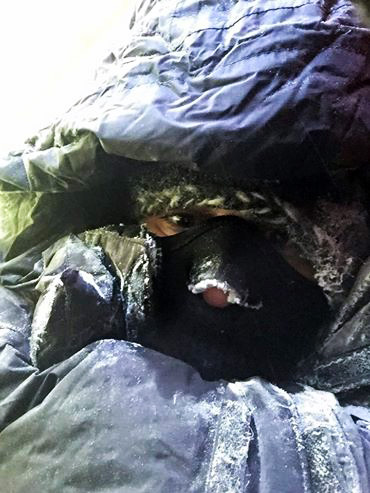
The next morning the weather had cleared considerably in terms of visibility, but the temperature was just as cold and the wind might have been even worse. Getting ready in temperatures like these is one of the worst parts of the day in my opinion, but we packed everything up and continued climbing.
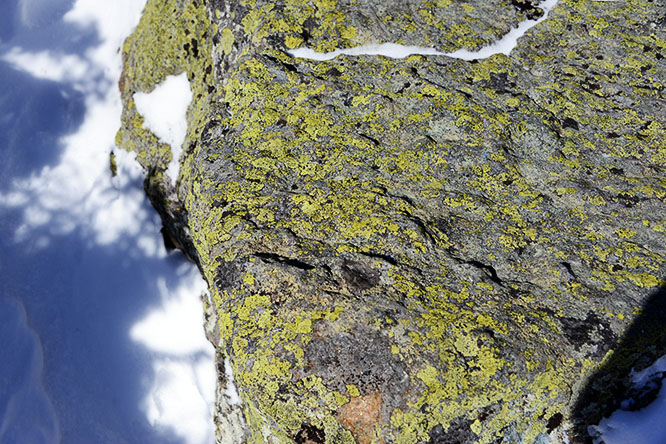
Higher on the mountain, the terrain became mostly rocks and small shrubs covered in green lichen. We were still amazed that any plant life could survive winters like this. The buried plants were also extremely annoying because they acted like trip wires beneath the snow.
My friend was becoming extremely cold, and on the way up one of his crampons broke, leaving him unable to safely continue. It was disappointing, but the conditions were brutal and there wasn’t much choice. After we got off the mountain, we discovered that he had actually suffered frostbite on his fingers and toes, although fortunately there was no permanent damage. At this point we made a risky decision: he would descend while I continued alone toward the summit of Mt. Madison.
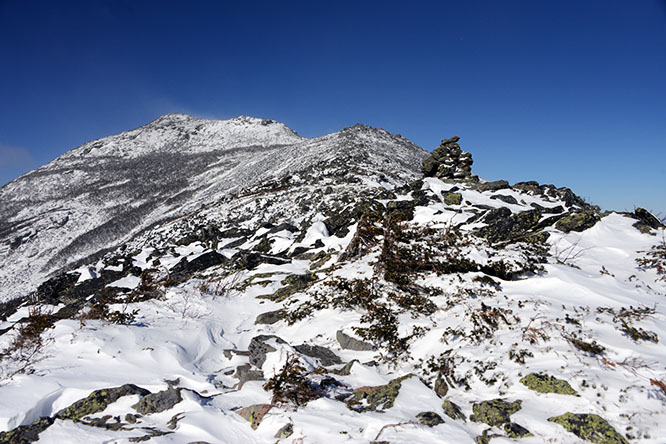
The views from the summit were absolutely amazing. I could see across much of the Presidential Range and several of the surrounding peaks. Before arriving in New Hampshire, we both knew Mt. Madison would be one of the hardest parts of the traverse because of its steep terrain. Beyond Madison, the ridge becomes more rolling, with gentler ups and downs that would normally allow much faster travel.
The problem was the wind. It was so powerful that it knocked me down several times while I tried to take photos. Continuing along an exposed ridge in winds like that would have been extremely dangerous, especially with the temperature around 20 below zero. Even if my friend’s crampon hadn’t broken, we would have had to turn around.
I left disappointed that we weren’t able to complete the traverse, but the trip still gave me something valuable. I had once again experienced temperatures around -30°F (-34°C), this time combined with severe winds and difficult terrain, and came away confident that under less extreme conditions we could easily return and finish what we started.
Explore More of New Hampshire
Concord • Portsmouth • the White Mountains