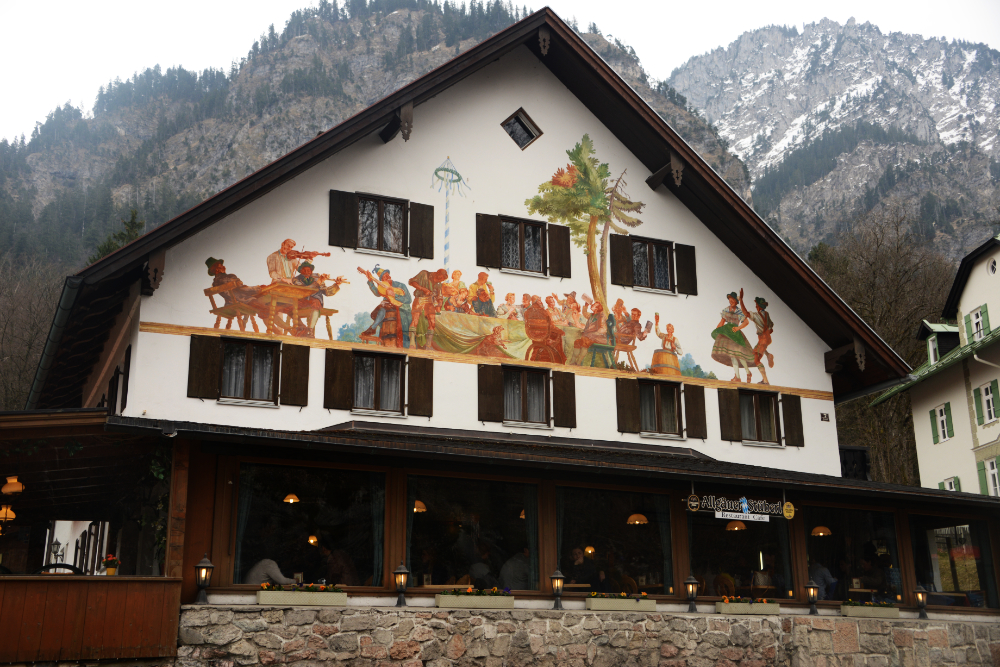
Neuschwanstein Castle was one of those places I had seen in photos years before ever coming to Germany. Some call it the most beautiful castle in Germany, and for me it was the most beautiful castle I had ever seen at the time. It’s located in southern Germany very close to the Austrian border. I wasn’t sure what to expect when I arrived, but the town below the castle is pretty touristy. Above is a restaurant at the base of the mountain.
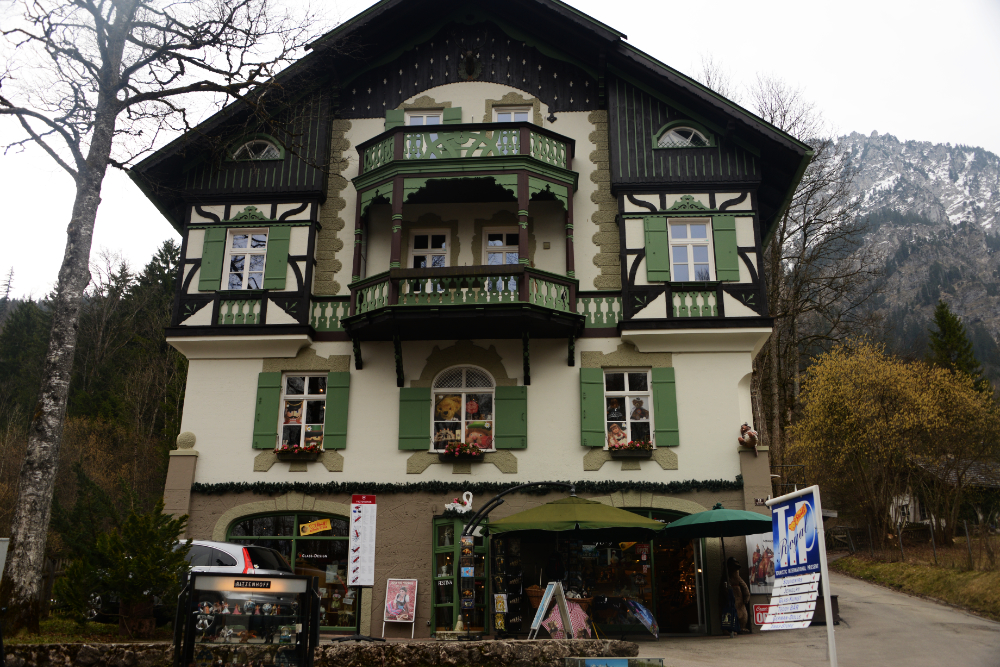
There are also souvenir shops around the village, including the one photographed above. It’s over a mile to the castle from the town below, so you can stop at the shops or grab lunch before heading up. I opted to walk, but there are also horse-drawn carriages for people who would rather not make the climb.
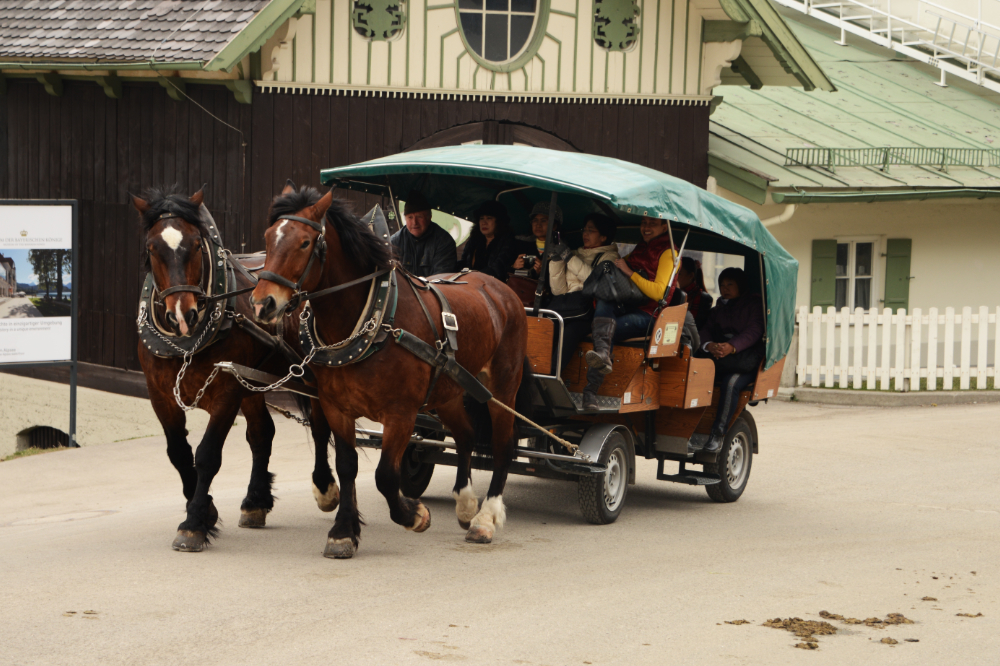
Horse-drawn carriages are a popular alternative to walking uphill toward the castle. I preferred to make the climb on foot, but plenty of visitors took advantage of the carriage service.
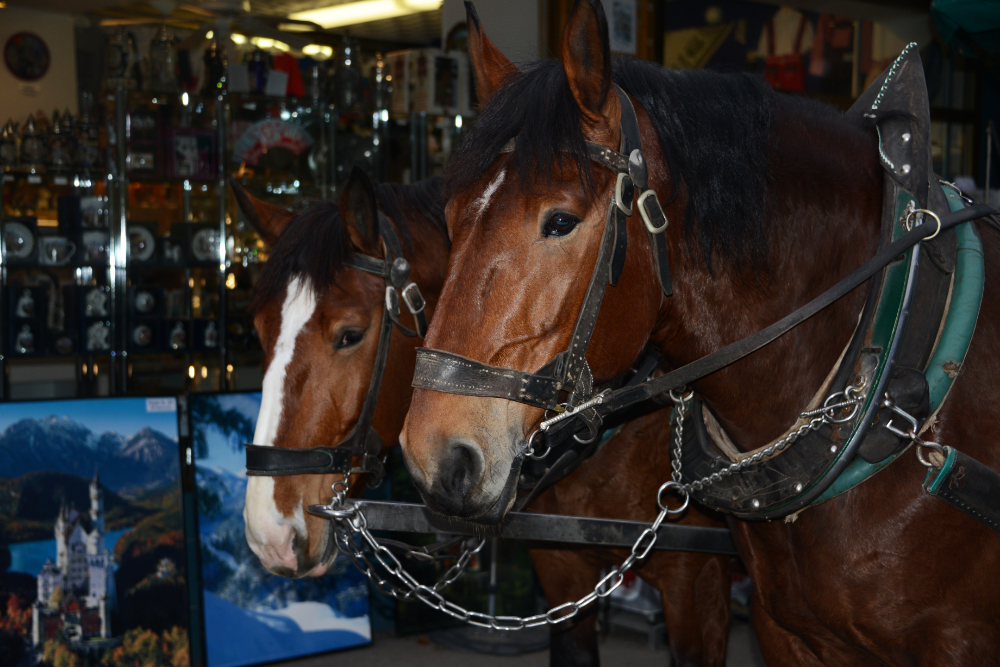
These are some of the horses used to transport visitors up the mountain. Even though the castle is one of Germany’s most famous tourist attractions, the surrounding landscape still feels distinctly rural and Alpine.
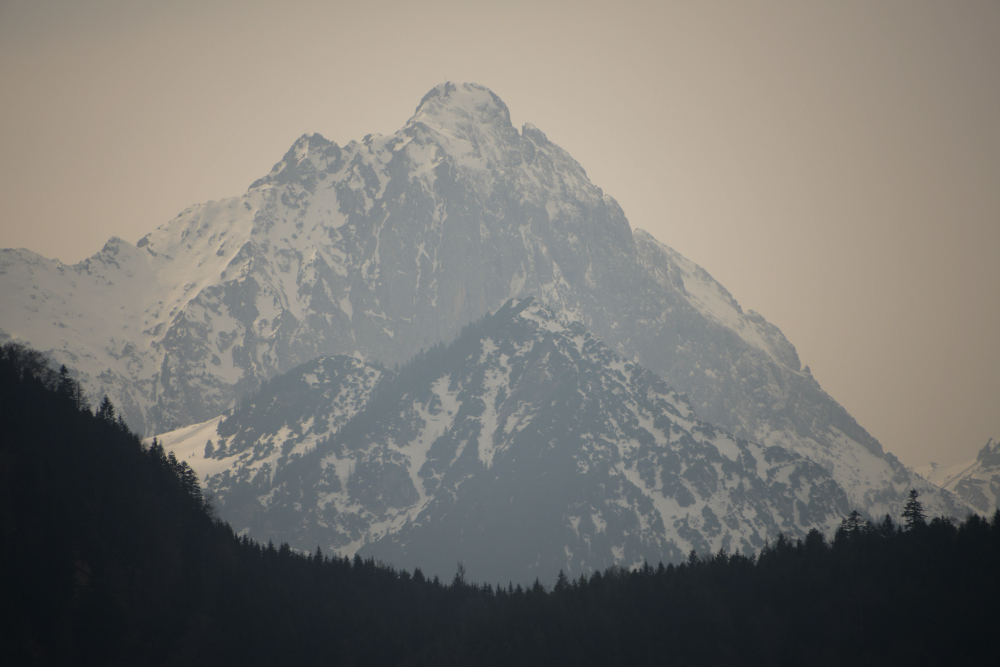
The road up to the castle gives you some great views of the surrounding mountains and waterfalls. I had no idea what the name or height of this mountain was, but it was my favorite of the ones I saw while traveling through this part of Germany.
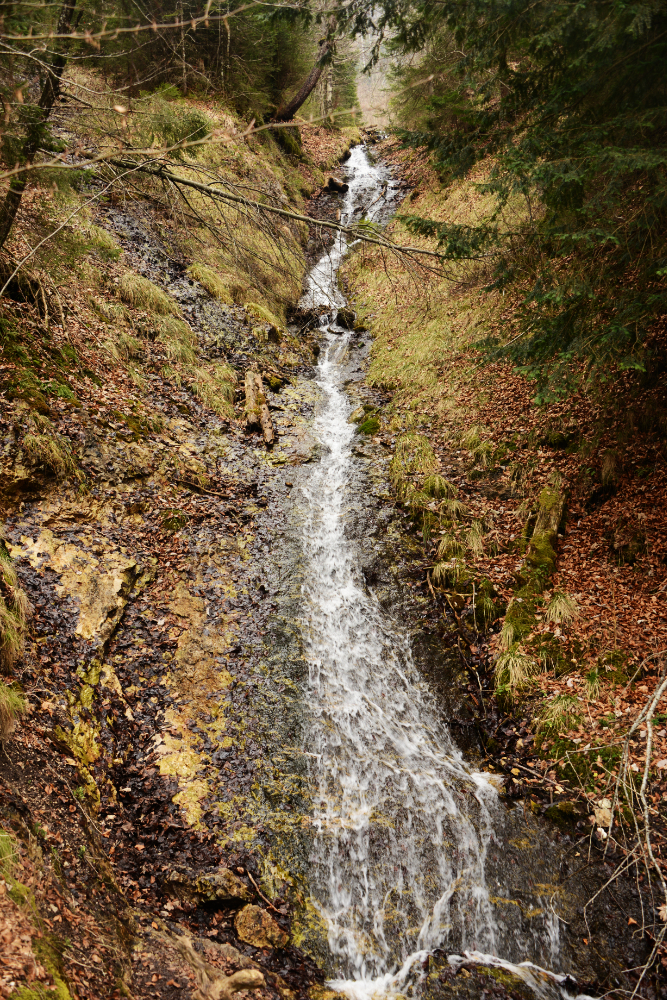
There were also streams and waterfalls along the route, making the walk considerably more scenic than I had expected. The castle may be the main attraction, but the surrounding mountains and forests are worth exploring in their own right.
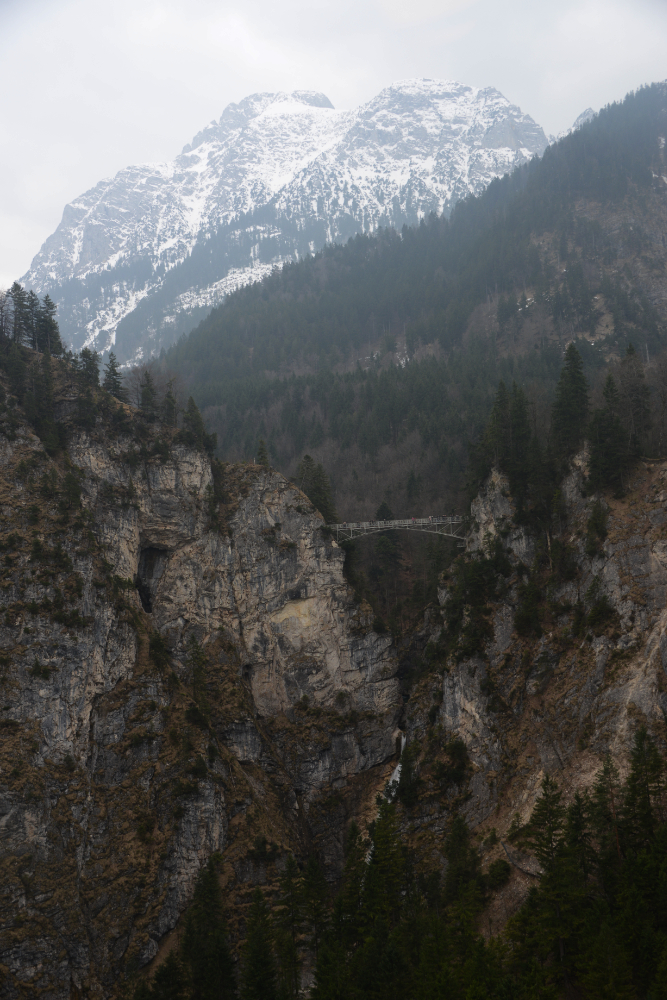
Walking around the castle grounds and surrounding trails is free, but going inside requires a timed ticket. When I bought mine after waiting in line, I was told the next available tour was still about three hours away. I figured I’d hang out in town, but for some reason I decided to hike up to the castle anyway. That turned out to be a good decision because there are plenty of trails to explore while you wait. One of the most famous attractions nearby is Marienbrücke, the bridge photographed above.
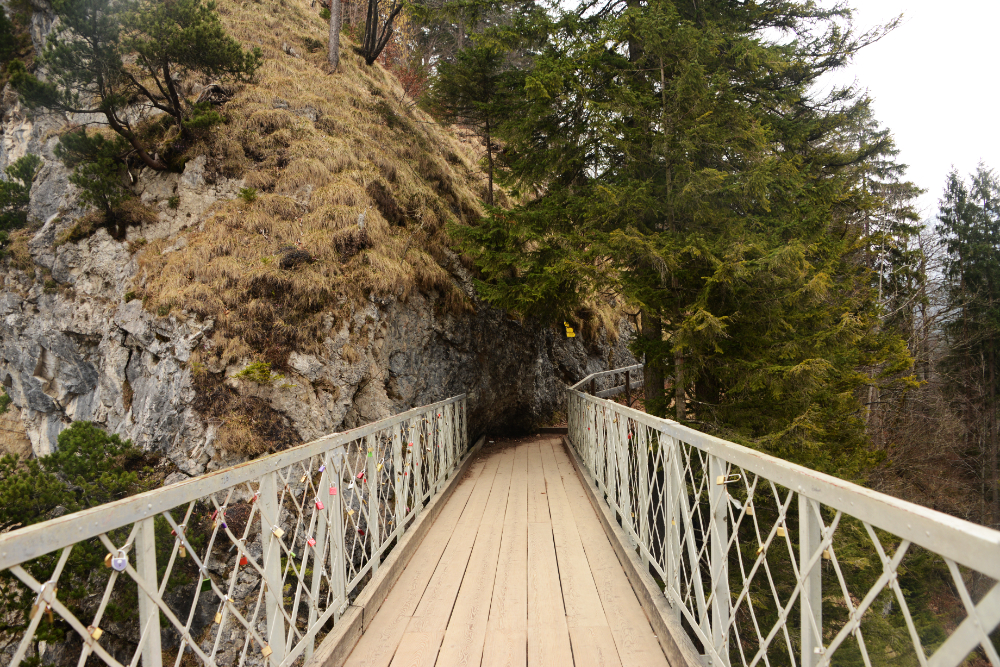
It takes a short hike to reach Marienbrücke, and once there you get some of the best views of the castle and the gorge below. The bridge is suspended high above the valley, making it an impressive attraction even without the castle nearby.
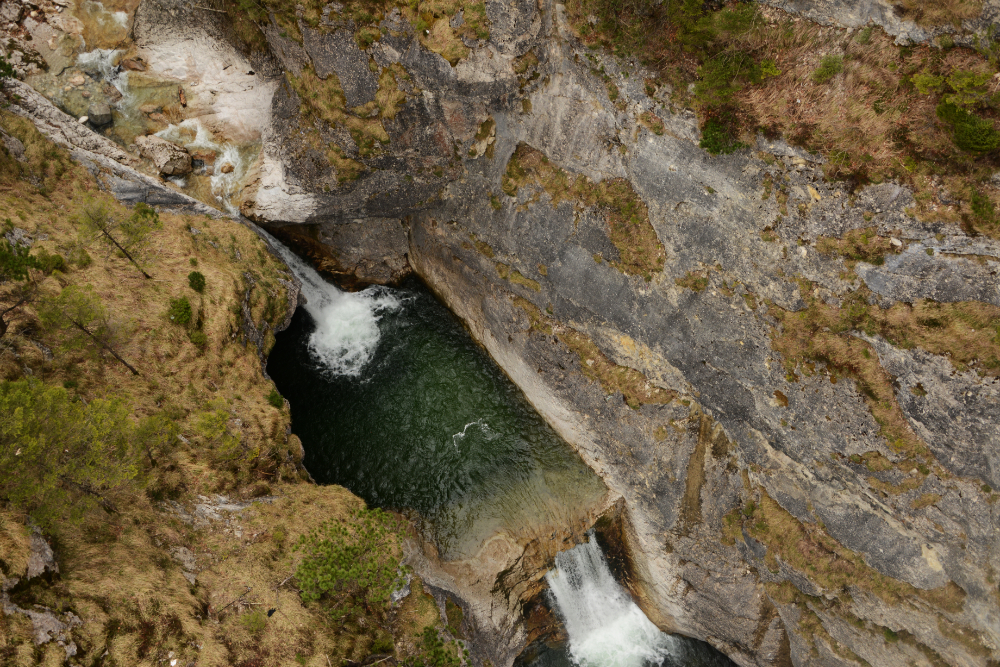
The views from Marienbrücke are among the best reasons to explore beyond the main castle entrance. From the bridge, the surrounding mountains and steep gorge become much more apparent.
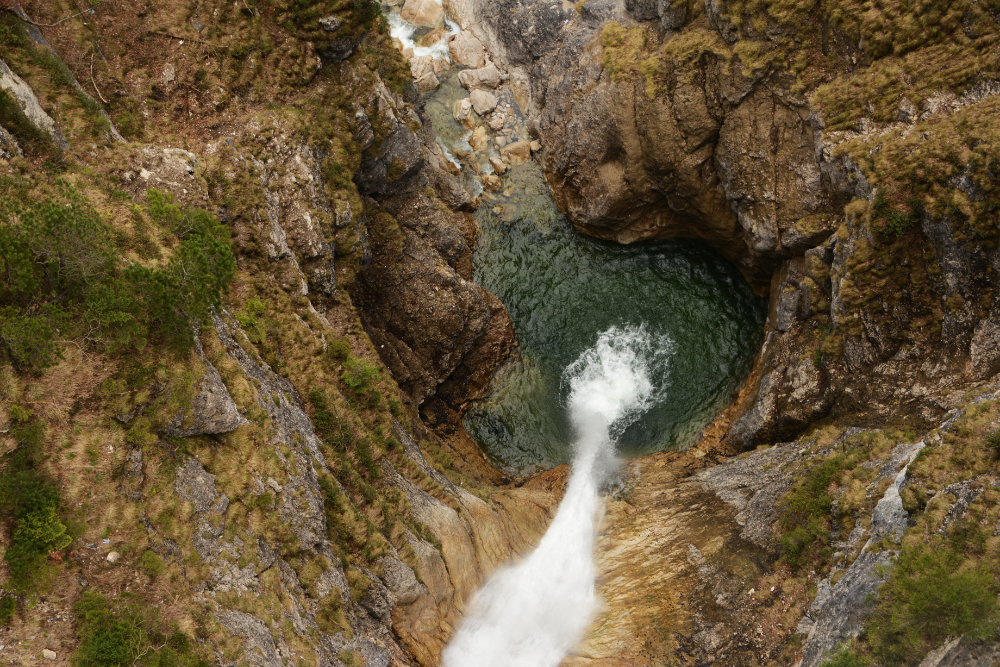
Another view from the bridge shows just how dramatic the landscape around Neuschwanstein really is. The scenery alone made the wait for my castle tour worthwhile.
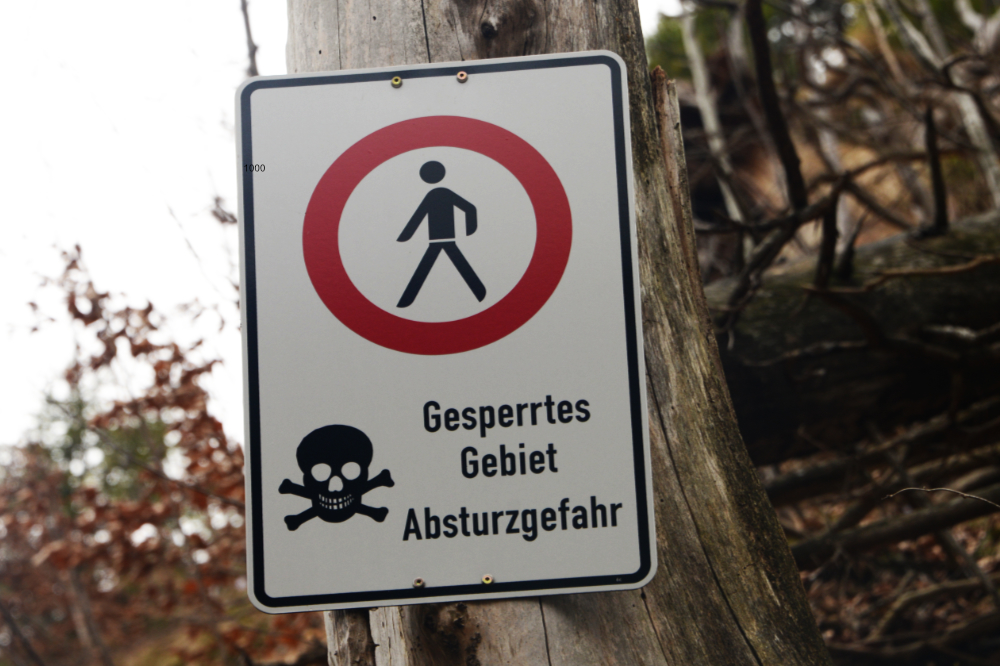
Beyond the bridge, the hiking trail changes from a developed path into a more rugged and steep climb. I’m not sure exactly what the warning sign said, but the message was pretty clear that the terrain could be dangerous.
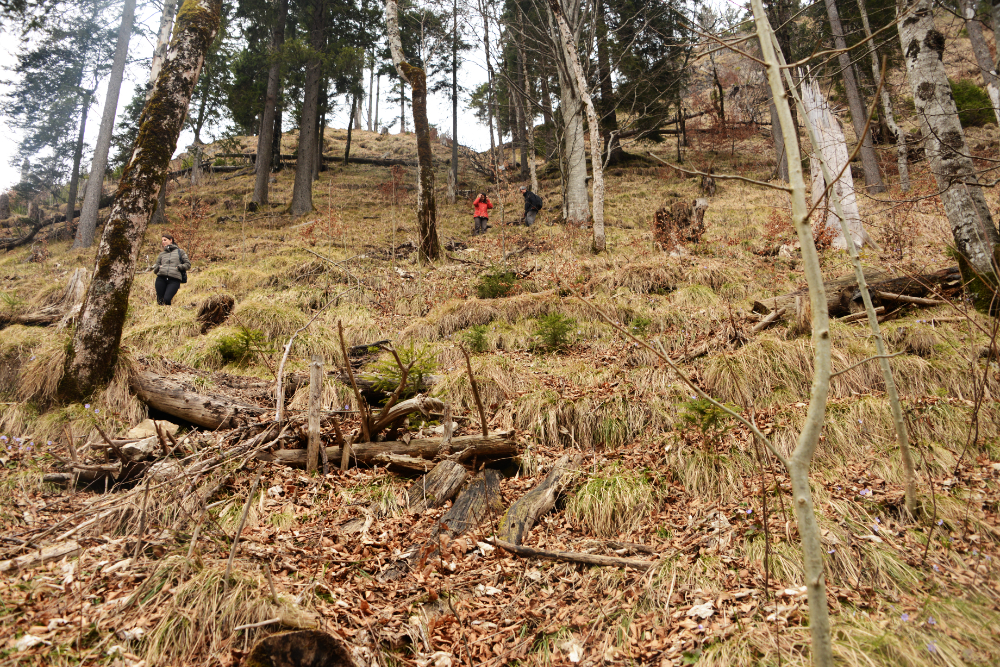
Some sections of the trail are steep enough that a careless step could definitely send you down the slope. The path becomes considerably more rugged beyond the bridge, but continuing uphill also provides some of the best viewpoints of the castle.
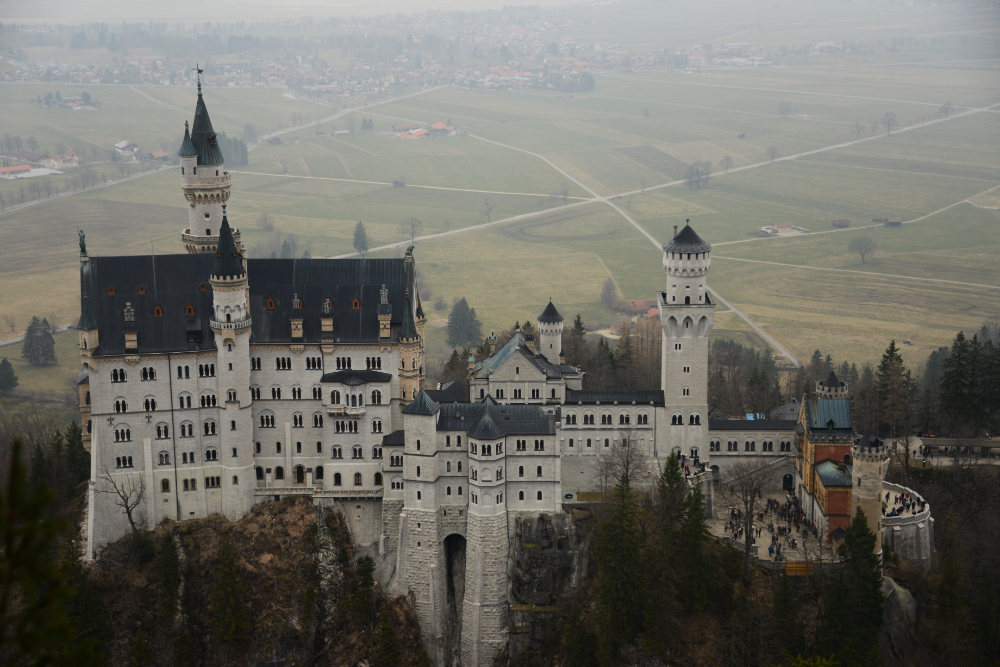
From the trails beyond the bridge I got by far the best views of Neuschwanstein Castle. I always assumed Neuschwanstein was a medieval castle, but it was actually built much more recently in the 19th century. Construction began in 1869 for King Ludwig II of Bavaria, who wanted to create an idealized romantic castle inspired by medieval legends and architecture.
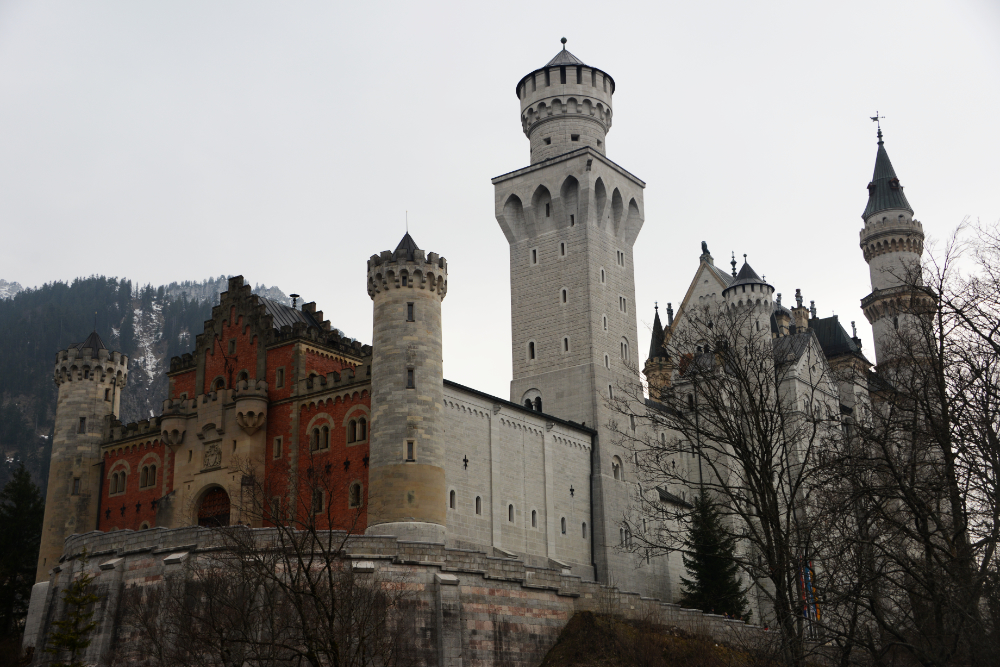
This photograph shows another perspective of Neuschwanstein as I approached the castle from the town below. Its towers, white limestone walls, and dramatic mountain setting make it look much older than it actually is.
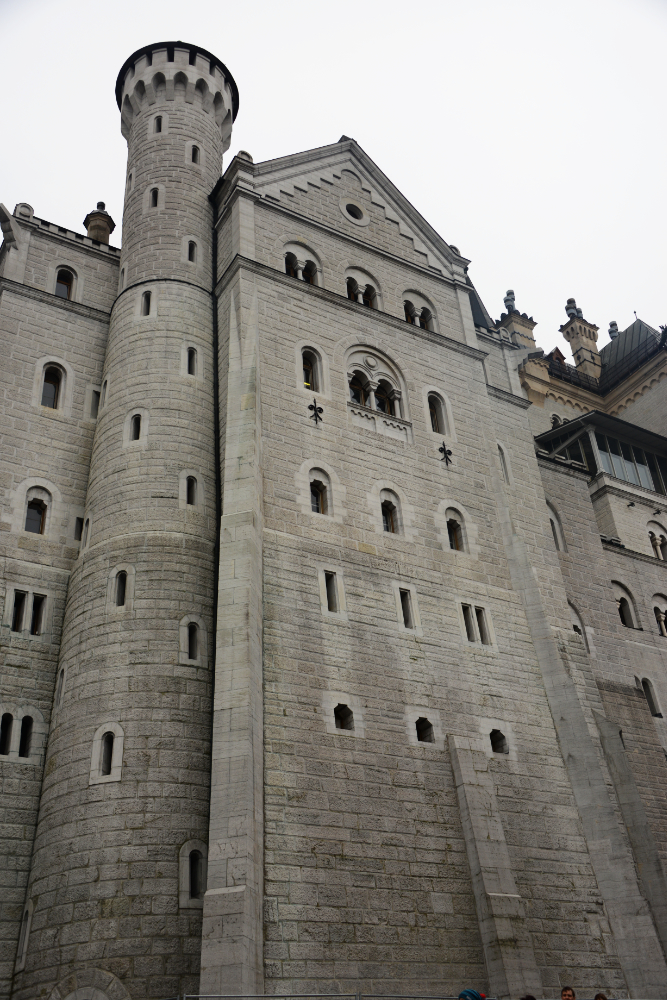
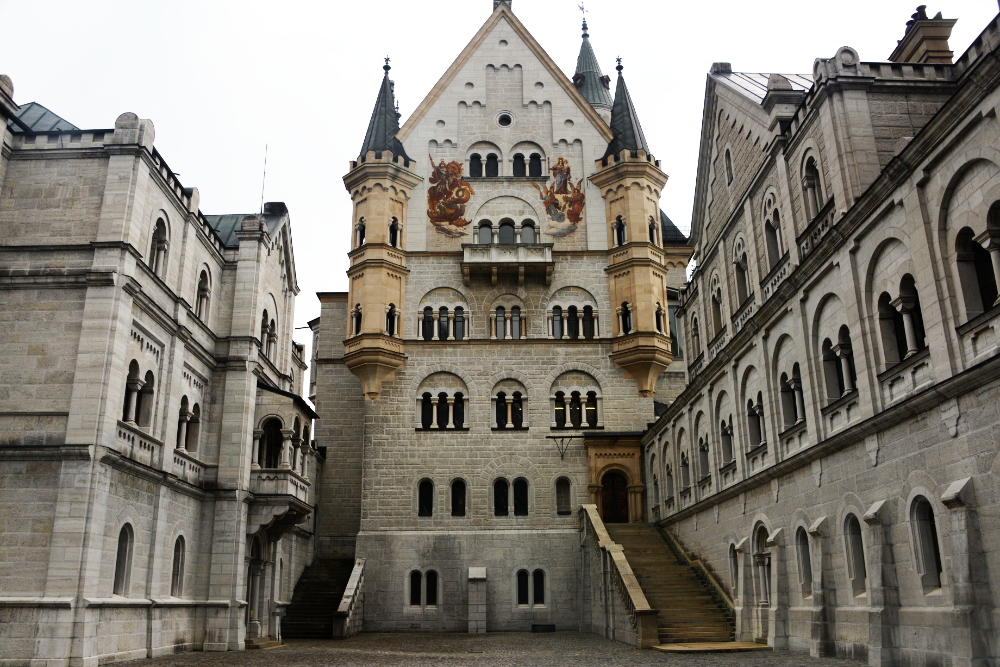
You can get very close to the outside of the castle without a tour ticket, although some areas of the courtyard and interior are restricted to ticket holders. Up close, the elaborate architectural details are just as impressive as the overall silhouette of the castle.
Ludwig II became king of Bavaria at just 18 years old and became famous for his ambitious and extravagant building projects. Neuschwanstein was financed from Ludwig’s personal fortune and extensive borrowing rather than directly from Bavarian public funds, but the enormous cost still contributed to growing conflict between the king and his government.
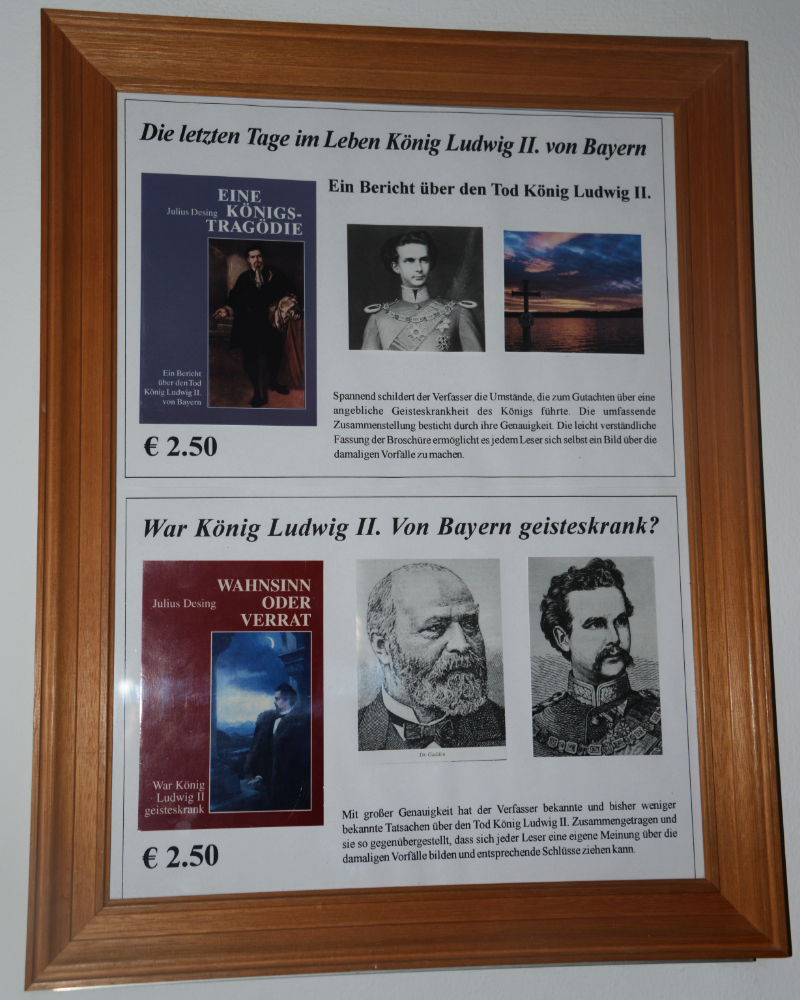
As Ludwig continued spending heavily on Neuschwanstein and his other palaces, his relationship with the Bavarian government deteriorated. In 1886 he was declared mentally incompetent and removed from power. Shortly afterward, Ludwig and the psychiatrist overseeing him were both found dead in Lake Starnberg. Ludwig’s death was officially ruled a suicide by drowning, but the circumstances have remained controversial ever since and inspired plenty of alternate theories.
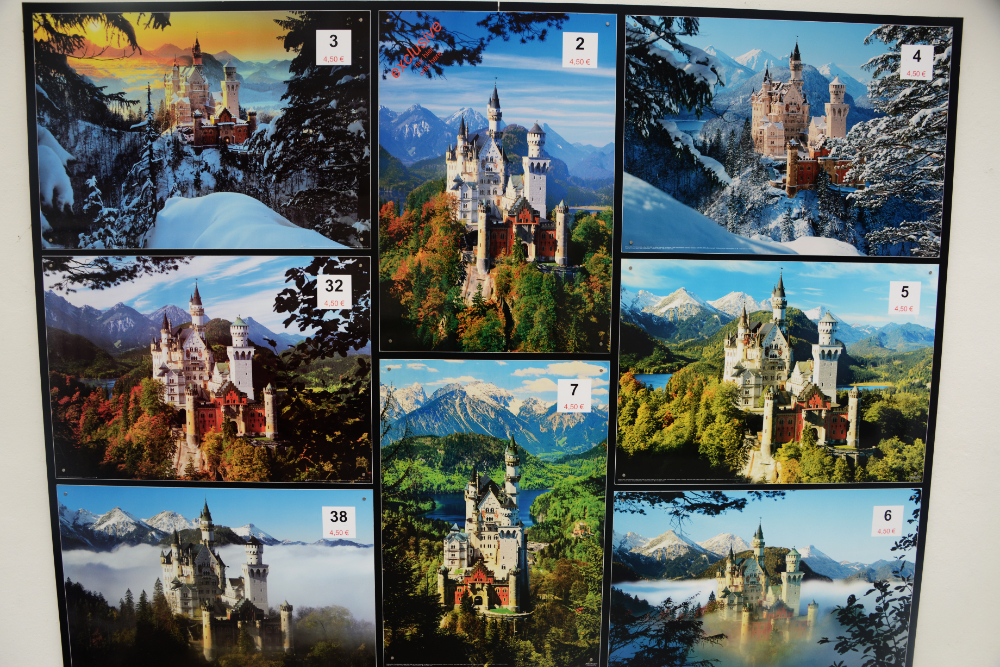
Above are photographs and posters showing Neuschwanstein from some much better angles and weather conditions than I had during my visit. The castle’s extraordinary appearance has made it one of Germany’s most recognizable landmarks.
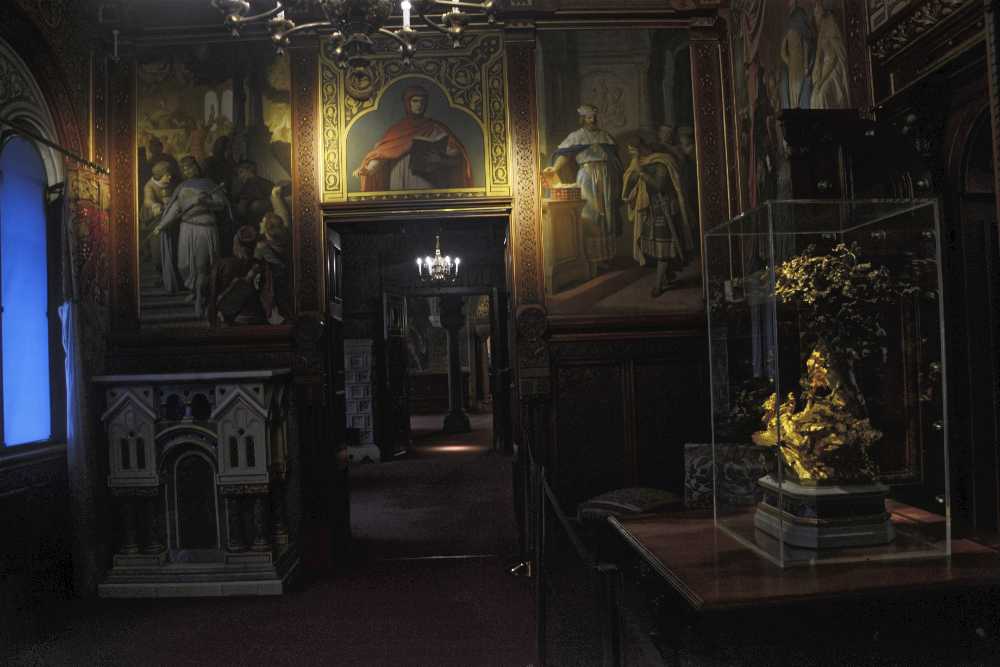
The interior is just as elaborate as the exterior, filled with richly decorated rooms, murals, carved woodwork, and details inspired by medieval legends and German mythology. Above is a view from inside the castle, showing some of its ornate architectural details.
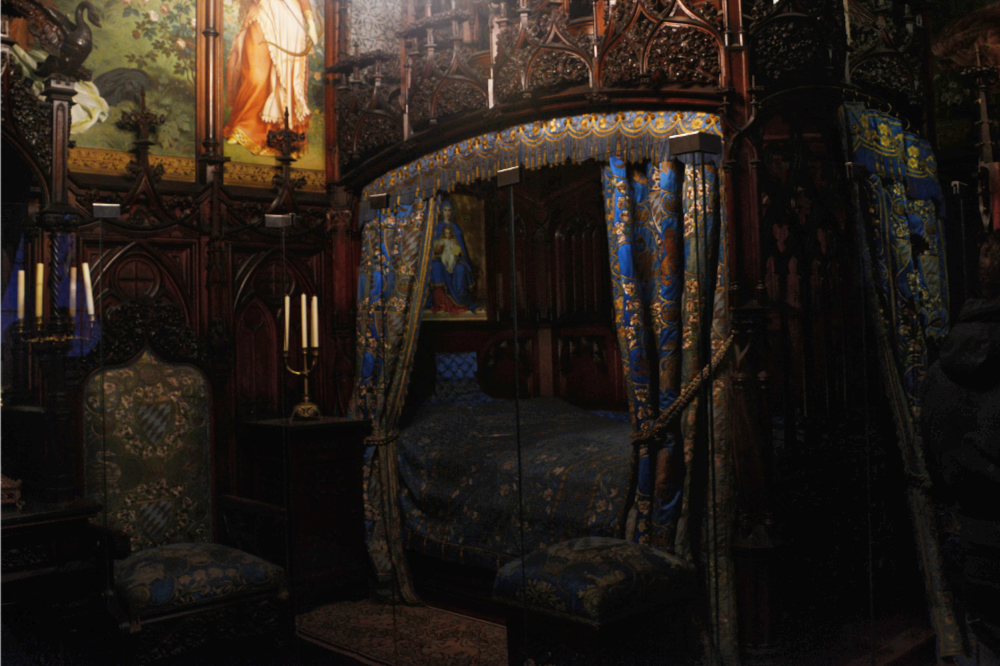
One of the most impressive rooms is Ludwig’s royal bedchamber, with its intricate woodcarving and elaborate decoration. Neuschwanstein was never fully completed before Ludwig’s death, but even unfinished it became one of the most recognizable castles in the world.
