Yemen has some of the most extraordinary history, architecture, and landscapes anywhere in the Middle East. Ancient cities rise from mountain valleys, towering mud-brick buildings fill historic neighborhoods, and the remote island of Socotra contains plants and animals found nowhere else on Earth. Few countries in the region offer such a distinctive combination of culture, history, and natural scenery.
Unfortunately, Yemen has also endured years of war and political instability. My own visit gave me a very different experience from the images of Yemen normally seen in the news. The Yemenis I met were overwhelmingly welcoming and eager to share their country with me, and the places I visited remain some of the most memorable from my travels in the Middle East.
Explore Sana’a
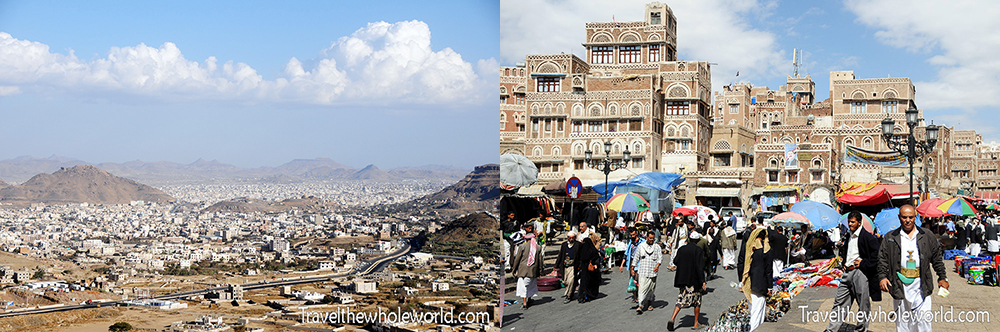
Yemen’s capital, Sana’a, is one of the oldest continuously inhabited cities in the world. The highlight is the incredible Old City, where thousands of traditional multi-story tower houses rise above narrow streets and gardens. Many are decorated with geometric brickwork and bright white gypsum patterns that give Sana’a an appearance unlike any other city I’ve visited.
The Old City of Sana’a is a UNESCO World Heritage Site and contains mosques, traditional markets, bathhouses, and buildings representing centuries of Yemeni history. Outside the old city are more modern neighborhoods, museums, restaurants, and some of the country’s largest mosques.
Explore Aden
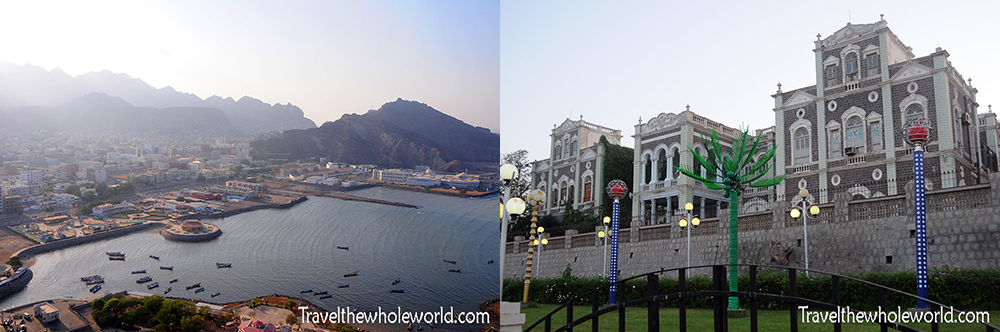
Aden is another ancient Yemeni city, built around a natural harbor along the Gulf of Aden. Its strategic location made it an important port for centuries, and it later became the capital of South Yemen until northern and southern Yemen unified in 1990.
The city contains historic mosques, markets, old fortifications, and reminders of its long maritime history. Aden also has a very different landscape from high-altitude Sana’a, with volcanic mountains rising directly beside the sea and neighborhoods spreading around the ancient crater.
Explore Shibam & Central Yemen
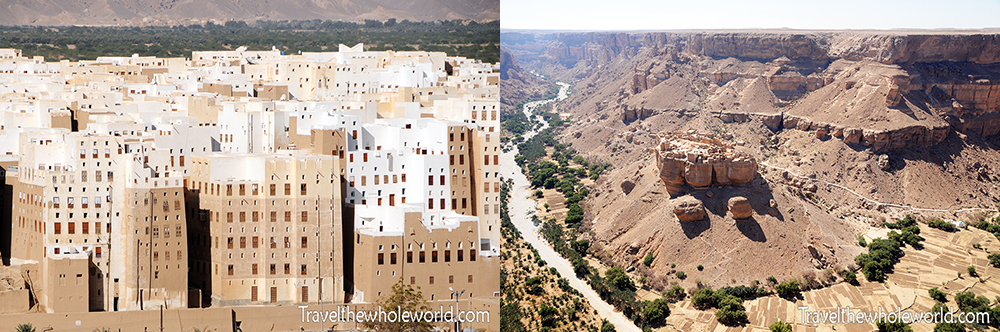
Shibam is one of the most remarkable cities in Yemen and is often nicknamed the “Manhattan of the Desert.” The walled city is packed with tall mud-brick tower houses that rise as high as several stories above the floor of Wadi Hadramaut.
The surviving city largely dates to the 16th century, although settlement in the area is far older. What makes Shibam so extraordinary is its early use of vertical urban construction, with closely packed tower houses creating a skyline that looks almost like a modern city built entirely from earth. The old walled city is now protected as a UNESCO World Heritage Site.
Explore Socotra
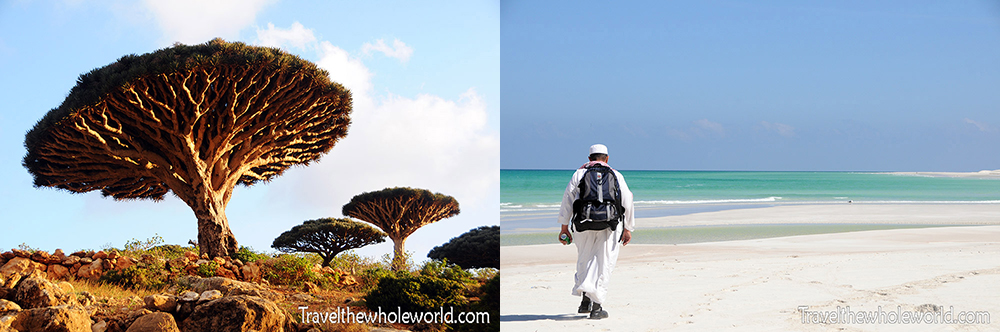
The islands of Socotra are not just a highlight of Yemen, but one of the most unusual natural environments in the entire Middle East. Their long geographic isolation allowed unique plants and animals to evolve here, earning Socotra frequent comparisons with the Galápagos Islands.
The most famous species is the dragon’s blood tree, but Socotra also has spectacular beaches, mountains, enormous cave systems, sand dunes, and excellent marine life. The entire archipelago is recognized as a UNESCO World Heritage Site for its exceptional biodiversity.
Explore Taiz
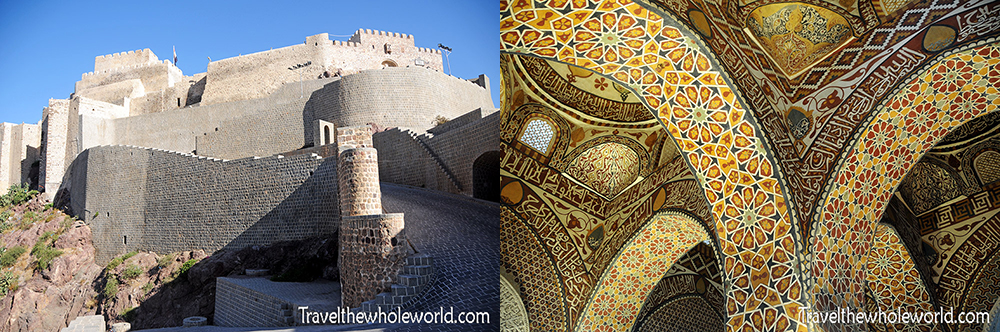
Located in Yemen’s highlands between Sana’a and Aden, Taiz was historically one of the country’s most important cities and served as a capital during earlier periods of Yemeni history. The city is surrounded by dramatic mountains and contains historic mosques, old neighborhoods, fortifications, and traditional markets.
Taiz also reflects Yemen’s long and complicated cultural history. Jewish communities lived in the wider region for centuries alongside Muslim populations, while the city’s architecture and mountain setting reveal another side of Yemen completely different from coastal Aden, desert Shibam, or remote Socotra.