Tanzania was one of my earliest international adventures and my first real solo adventure. Unfortunately, this trip was in the late 1990s, when I barely took photographs, and the few I came home with aren’t exactly masterpieces. When I return, I’ll give Tanzania the photographic justice it deserves.
I had two main goals for this trip: go on a camping safari and climb Mount Kilimanjaro. I began with a weeklong safari and saw an incredible variety of wildlife, including all of the Big Five: lion, leopard, rhinoceros, elephant and African buffalo. The term “Big Five” originally came from big-game hunting and referred to five animals considered particularly difficult and dangerous to hunt on foot, rather than simply the five largest animals in Africa.
I also saw giraffes, gazelles, hippos, cheetahs, baboons, flamingos and countless other birds, along with enormous herds of wildebeest and zebra. During my early travels, wildlife and nature were almost always my priority. They still are, but over the years I’ve also learned to appreciate the cities, towns, history and culture of the countries I visit.
There’s still an enormous amount of Tanzania I haven’t seen. When I return, Zanzibar is high on my list, along with Dar es Salaam and other parts of the country beyond the safari circuit I experienced on this first trip.
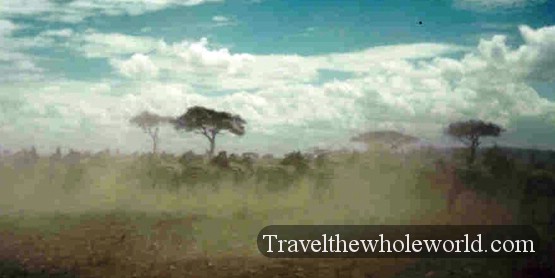
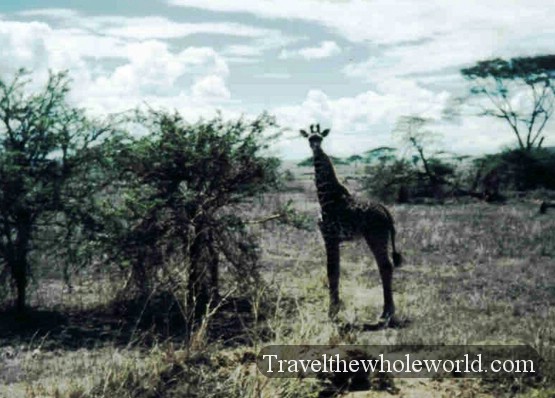
Both photographs above were taken in the Serengeti. Its name comes from the Maasai word siringet, commonly translated as “endless plains,” which is a perfect description of the landscape.
The first photo shows a herd of zebras moving across the Serengeti, while the second shows one of the most unmistakable animals in Africa: a giraffe. Adult male giraffes can stand more than 18 feet (5.5 meters) tall, making giraffes the tallest living land animals.
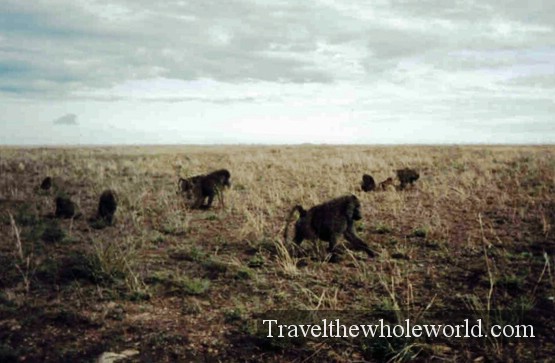
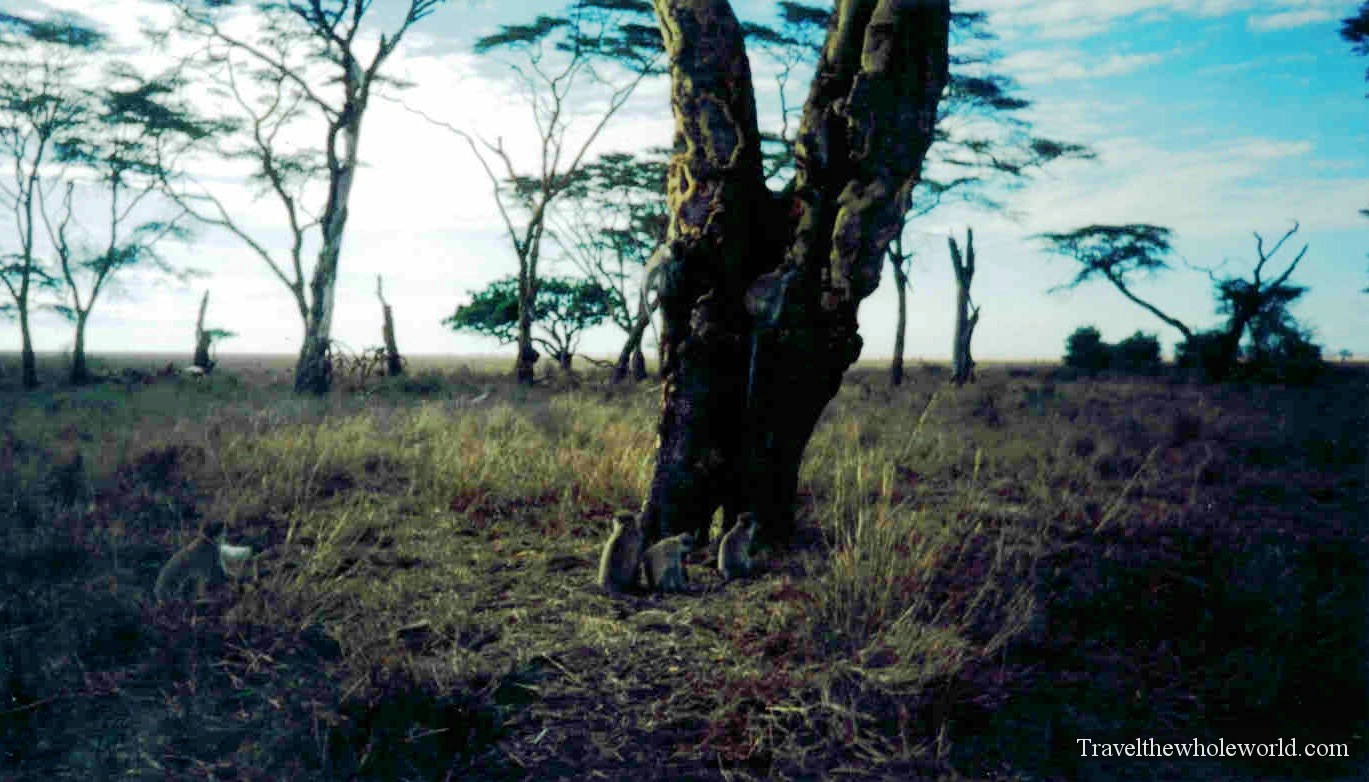
Primates were another common sight during the safari. Above are a group of baboons and some smaller monkeys gathered around a tree. Tanzania is home to numerous primate species, ranging from the baboons and monkeys of the savanna to chimpanzees in the forests of western Tanzania.

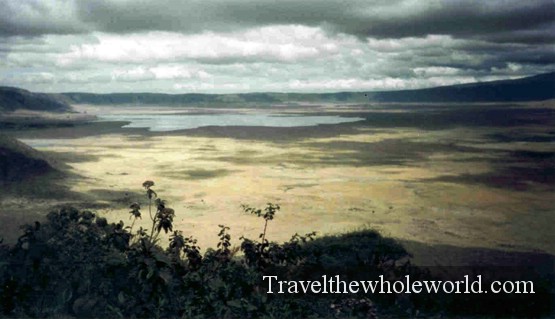
The lion above was photographed in the Serengeti. The second photograph shows the enormous Ngorongoro Crater, one of the most impressive wildlife destinations I visited in Tanzania.
Ngorongoro is a vast volcanic caldera formed after a large ancient volcano collapsed. The crater floor covers roughly 260 square kilometers (100 square miles), while its walls rise hundreds of meters above the floor. From the rim, what looked like tiny black dots scattered across the landscape were actually herds of animals far below.
The crater supports an extraordinary concentration of wildlife, including lions, elephants, buffalo and the critically endangered black rhinoceros. Its lakes and wetlands provide water and habitat for wildlife throughout the caldera.
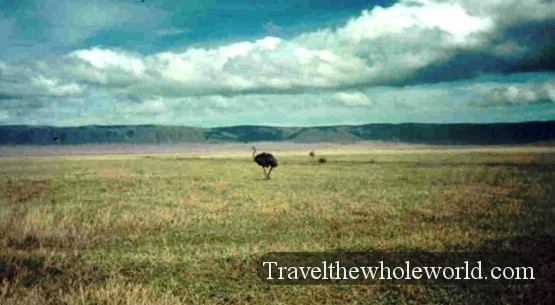
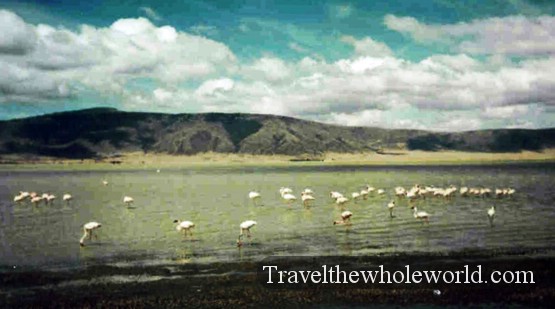
Above are two more scenes from Ngorongoro Crater. The first shows an ostrich, the world’s largest living bird. The second shows flamingos gathered around one of the crater’s lakes.
Only a small number of flamingos were visible when I took this photograph, but their numbers can vary dramatically with water levels, food availability and seasonal conditions. When large flocks gather on the shallow alkaline lakes of northern Tanzania, thousands of birds can turn sections of the water pink.