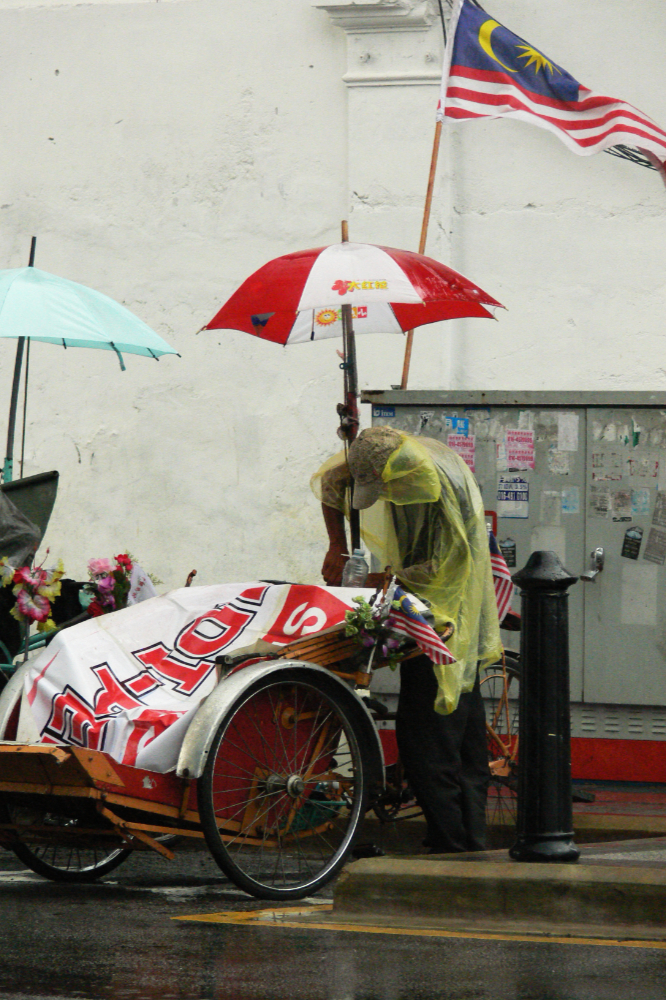
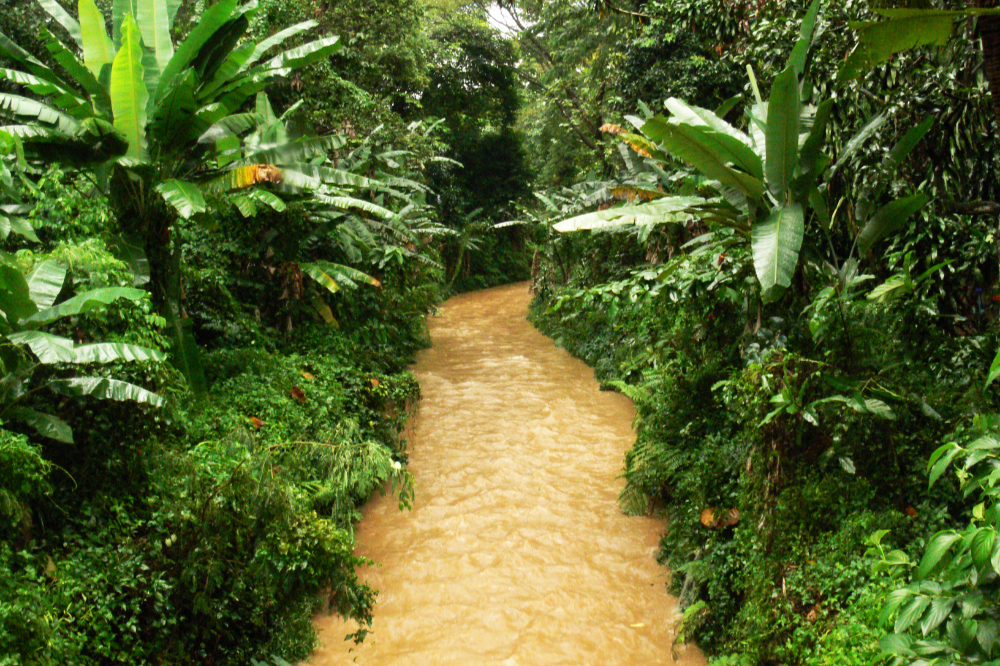
I visited Malaysia during the rainy season in October. Most days were overcast, although the clouds would occasionally break in the morning and give me a little sunshine. It rained almost every day I was there, but fortunately the storms were usually short and intense rather than lasting all afternoon. Above is a man quickly preparing for one of those storms, followed by a creek carrying muddy water through the forest after a heavy downpour.
Exploring Penang
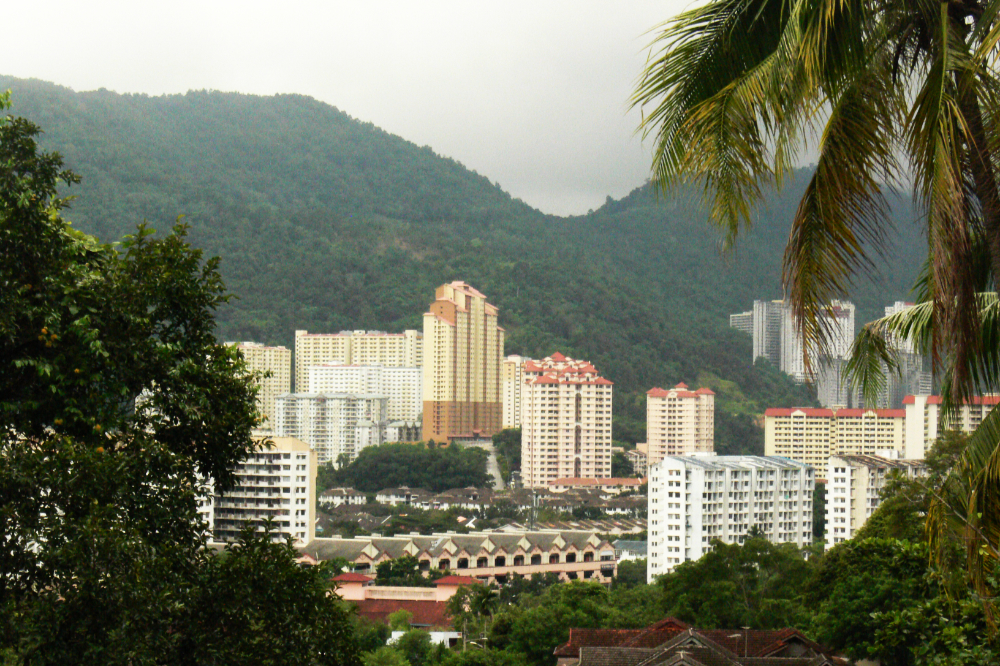
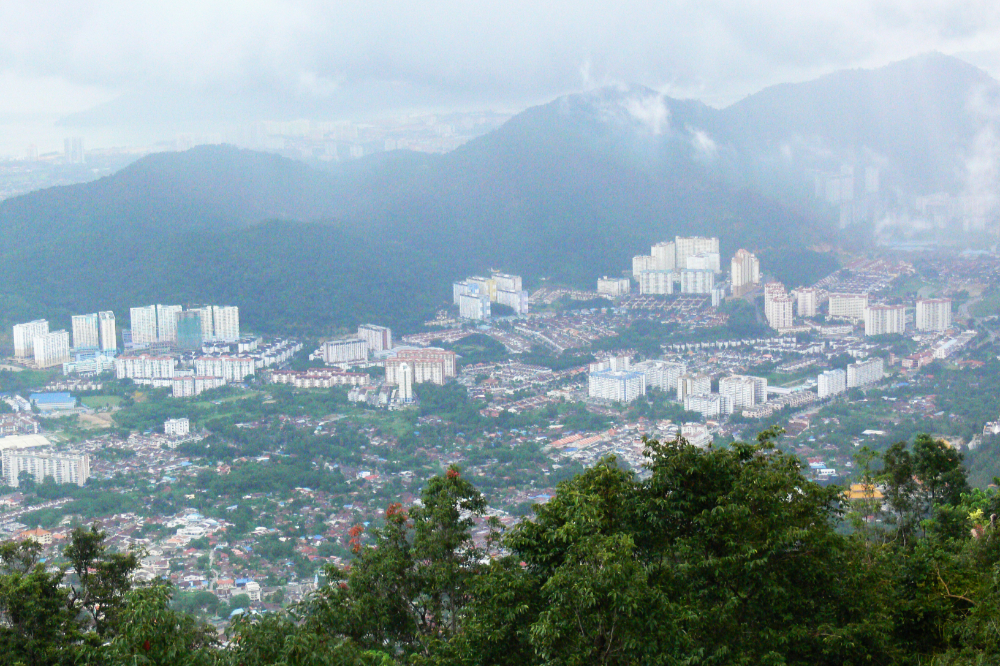
Penang is an island off the western coast of Malaysia in the Strait of Malacca. I expected it to feel fairly small and tropical, but there is a lot packed onto the island. High-rise apartments and dense neighborhoods cover parts of the coastline, while historic districts, temples, beaches, and forested hills are all within relatively short distances of each other.
The second photo was taken from Penang Hill, which rises more than 800 meters above sea level and gives one of the best views over the island. Unfortunately the rainy season wasn’t helping me very much that day. Clouds and haze covered much of the view, although I could still get a good idea of how developed Penang really is.
Kek Lok Si Temple
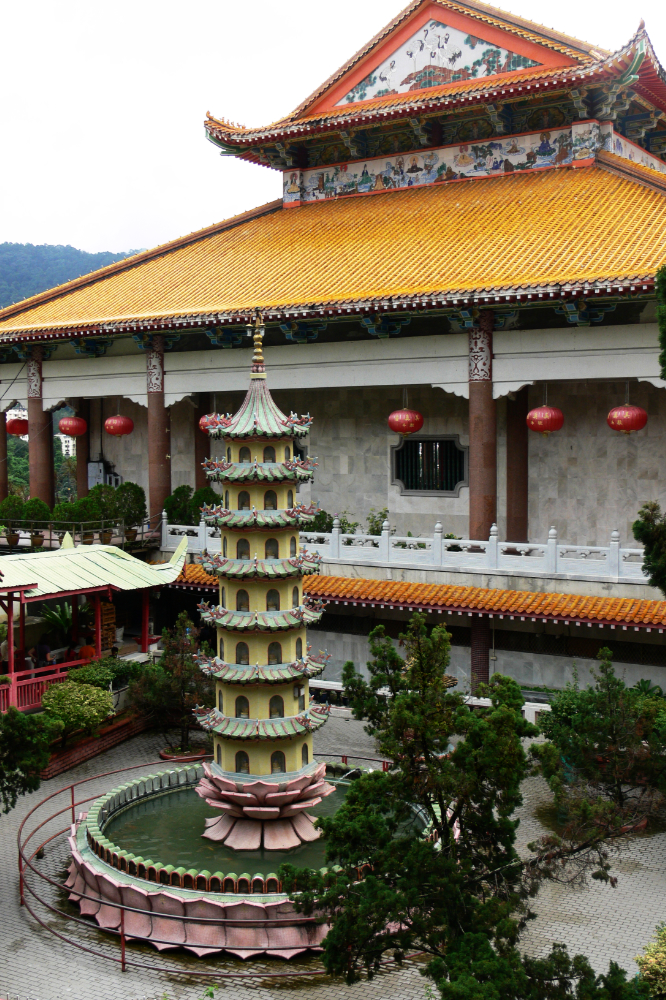
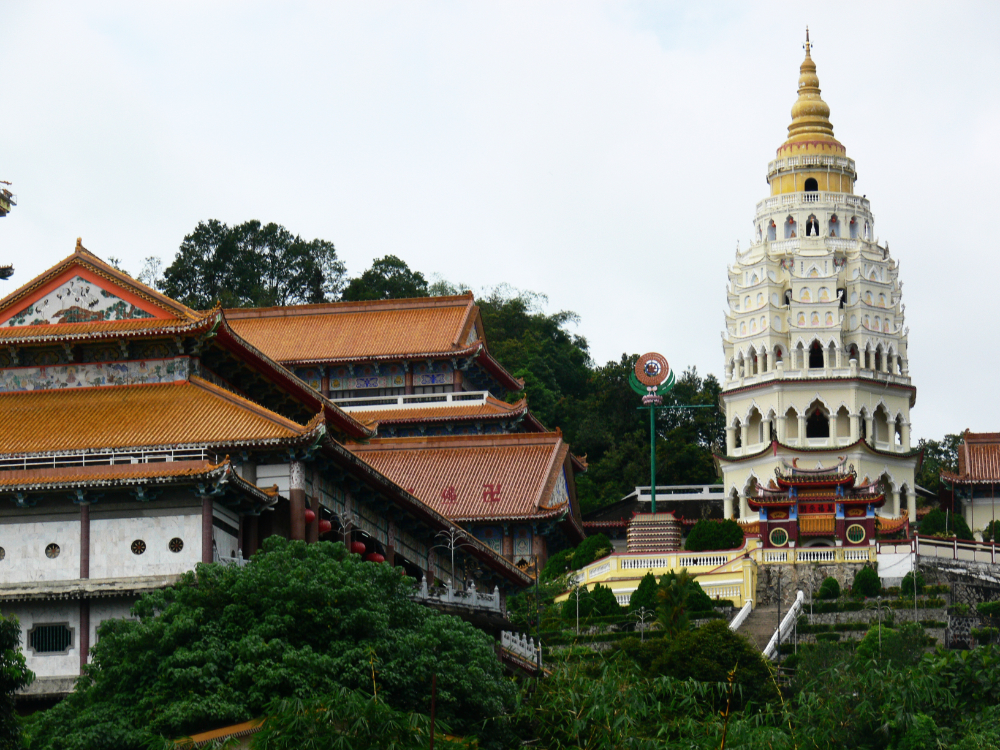
One of the most impressive places I visited on Penang was Kek Lok Si, whose name translates roughly as the Temple of Supreme Bliss. The complex is one of the best-known Buddhist temples in Malaysia and is especially important to the country’s Chinese community.
Kek Lok Si isn’t one single building. It’s a large complex made up of courtyards, halls, shrines, pagodas, and other religious structures spread across the hillside. Construction began in the late 19th century, but additions have continued over time, so parts of the temple feel much newer than others.
I spent quite a while wandering through the different levels. Even without knowing much about Buddhism at the time, the combination of colorful architecture, incense, statues, and views across Penang made this one of the more memorable religious sites of my trip.
Wat Chayamangkalaram
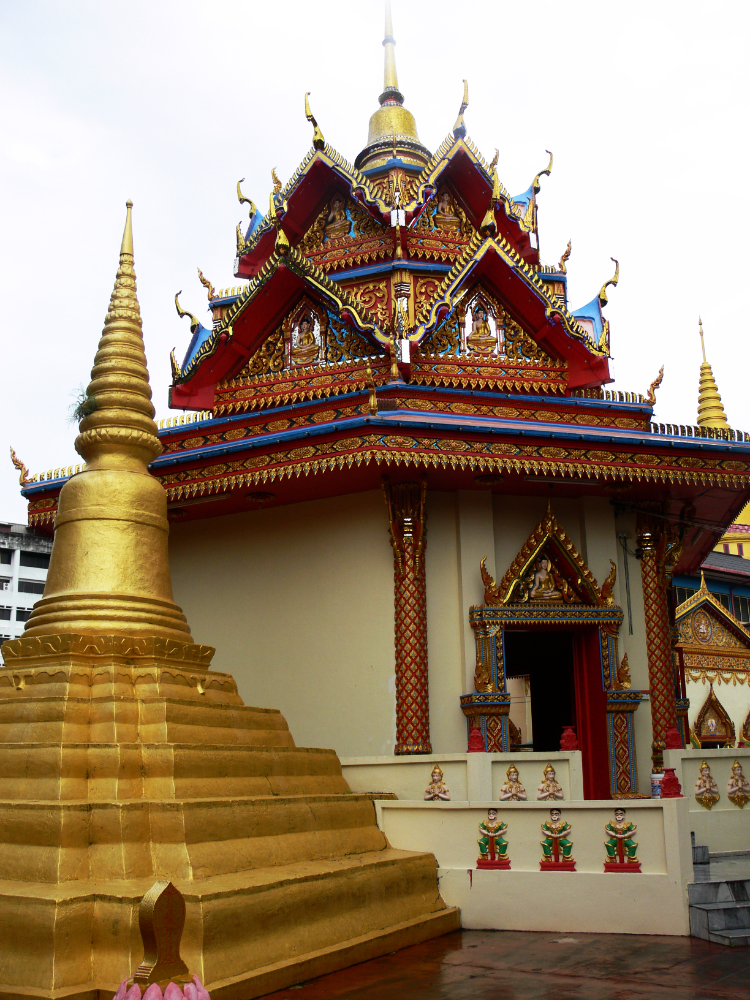
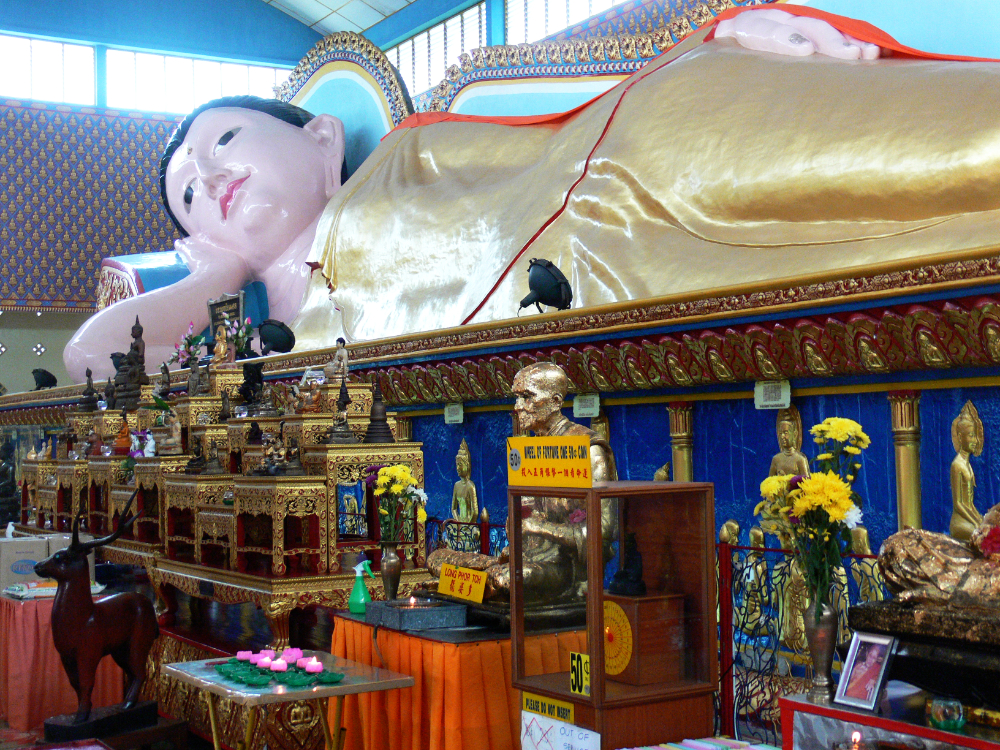
Penang’s religious diversity was one of the things I found most interesting about the island. Not far from the Chinese Buddhist temples are Hindu shrines, mosques, and Thai Buddhist temples such as Wat Chayamangkalaram.
The temple is especially famous for its enormous reclining Buddha. Walking inside and seeing a statue this large stretched across the interior was pretty impressive, and it gave me another example of how many different cultures and religious traditions coexist on such a small island.
The Snake Temple
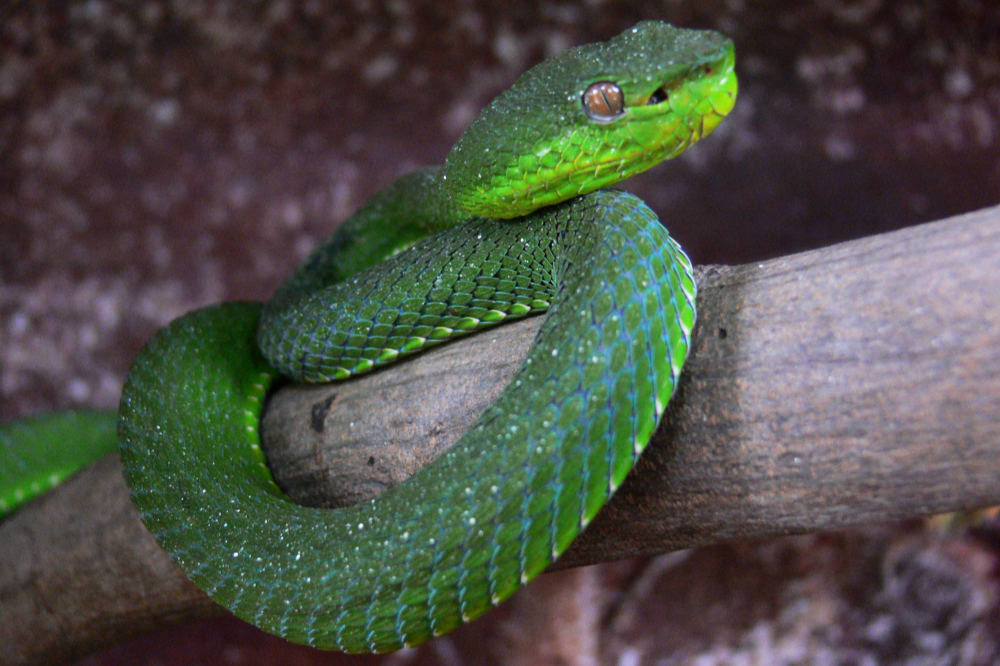
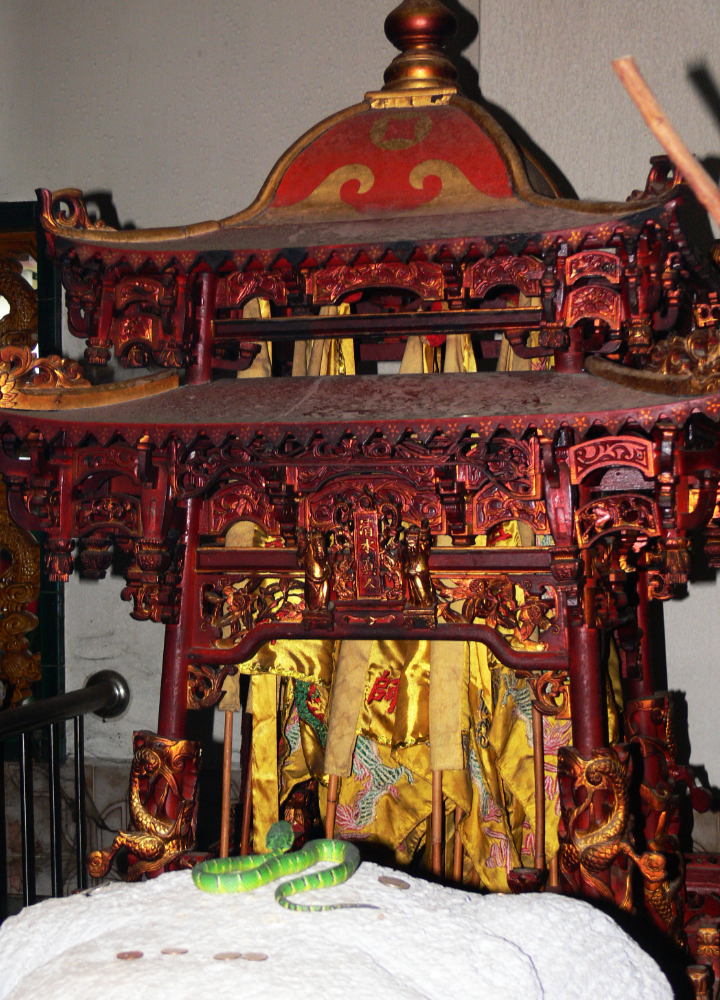
My favorite and definitely the strangest religious site in Penang was the Snake Temple, also known as the Temple of the Azure Clouds. As the name suggests, the temple is famous for having live pit vipers around the grounds.
Some of the snakes were resting on branches and structures around the temple rather than being kept behind glass. That makes the entire experience a little different from walking through a normal religious site. I was told the snakes were venomous, which gave me plenty of motivation not to get too adventurous with my photography.
The snake above almost looks like it’s participating in the ceremony itself while resting beside the altar. Whether the snakes care about any of this is another question, but it certainly made this one of the most unusual temples I’ve ever visited.
Rainforest of Penang
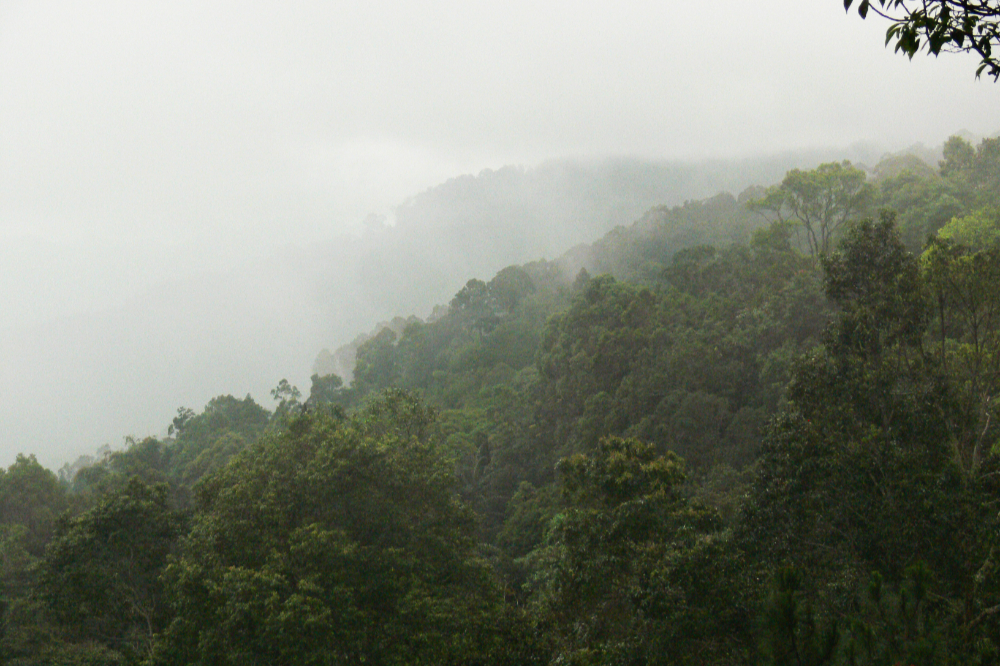
Once I moved away from the more developed parts of Penang, the island became surprisingly green. Tropical rainforest still covers sections of the hills, and the rainy season made everything look especially lush.
I had read that some of Malaysia’s tropical forests are among the oldest surviving rainforests in the world. Whatever their exact age, the environment definitely felt ancient compared with the heavily developed areas only a short distance away.
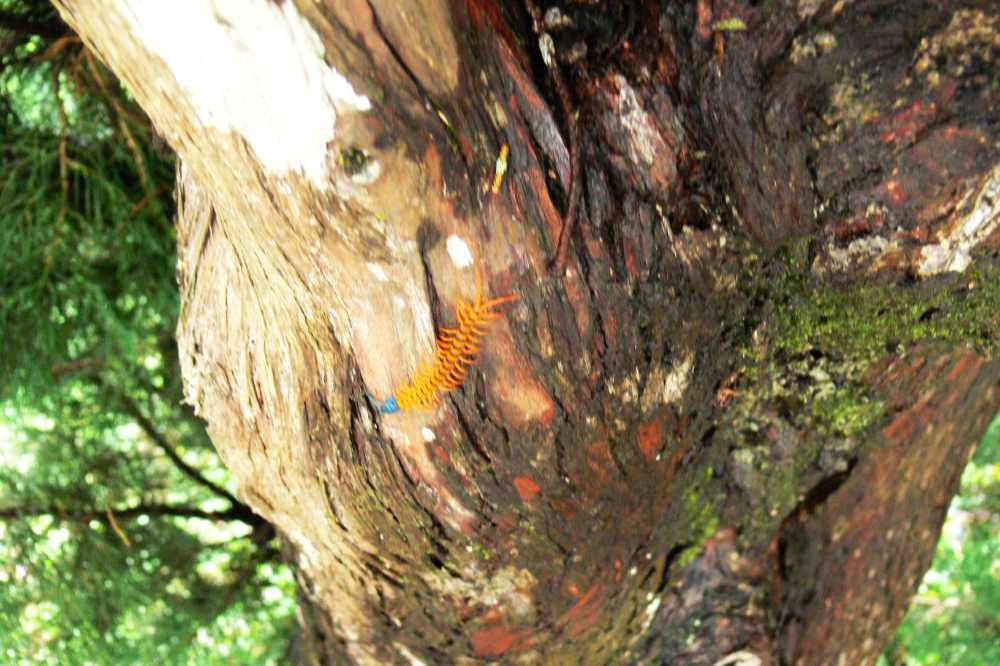
This large millipede was one of the smaller creatures I came across. I originally thought it was a centipede, but looking back at the photograph it appears to be a millipede. It moved quickly enough that getting a sharp photo was difficult.
Wildlife
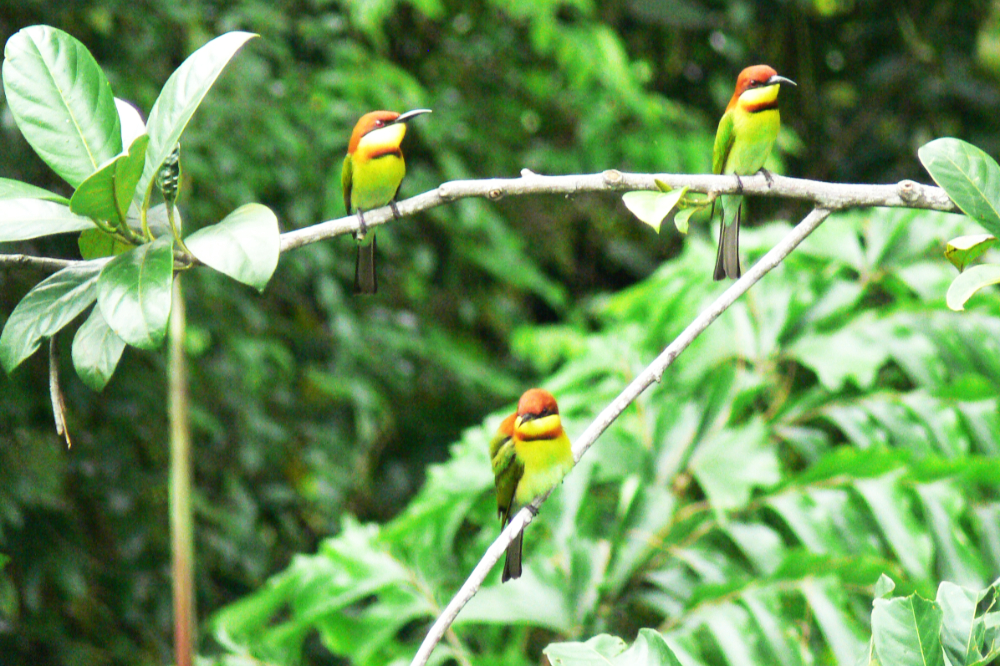
The colorful birds above are chestnut-headed bee-eaters. For some reason I seem to encounter bee-eaters whenever I’m traveling in Africa, but this was the first time I remember seeing them in Asia. Their bright colors made them stand out immediately against the green forest.
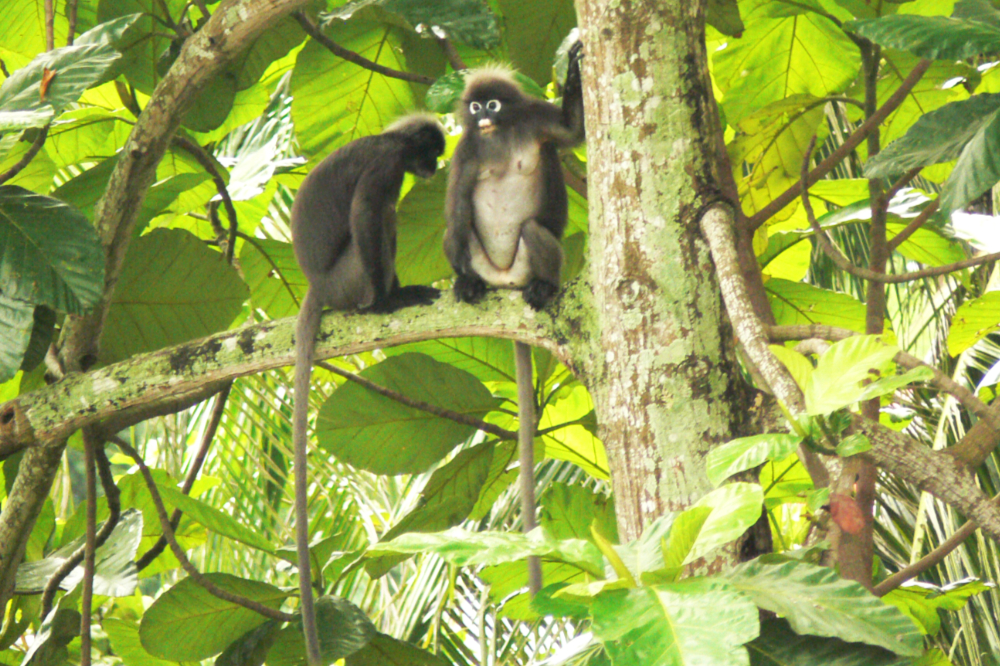
In another tree nearby were these dusky leaf monkeys. They’re easy to recognize by the pale circles around their eyes and their extremely long tails. Compared with the monkeys I encountered at Batu Caves, these seemed much more interested in staying in the trees and keeping their distance from people.
Penang ended up giving me a little bit of everything I associate with Malaysia: modern development, tropical weather, temples from several cultures, strange wildlife, and rainforest all packed onto one island. I didn’t get the clear views from Penang Hill that I had hoped for, but between Kek Lok Si, the Snake Temple, and the wildlife, there was still more than enough to make the visit worthwhile.
Explore More of Malaysia
Kuala Lumpur • Penang