Botswana was one of my earliest major trips, and looking back at it now, both my travel style and photography were pretty rough compared with what they eventually became.
I had rented a car all the way down in South Africa and driven north through Namibia before entering Botswana. By the time I reached the country, I was already a very long way from where the car eventually had to be returned. Once I realized just how much driving I still had ahead of me, I started feeling rushed.
That definitely affected how I traveled through Botswana. There are places I would spend several days exploring today that I moved through much faster back then. The photographs also show their age. This was one of my first trips, long before I had the camera equipment or photography experience I would eventually develop.
I debated whether some of these older pages were even worth keeping because of that.
But this was still my experience, and Botswana surprised me almost immediately. Before arriving, I pictured a very poor and undeveloped country. Instead, I found modern towns, good infrastructure, friendly people, and one of the safest and most stable countries I had traveled through in Africa.
Outside the cities, however, Botswana quickly becomes incredibly rural. Huge stretches of the country are made up of open bush, desert, salt pans, villages, and wildlife. In the north, that dry landscape suddenly gives way to one of Africa’s greatest natural environments: the Okavango Delta.
That contrast between desert and wetlands made Botswana one of the most interesting countries I visited in southern Africa, even if I wish today that I had slowed down and photographed it better.
Francistown
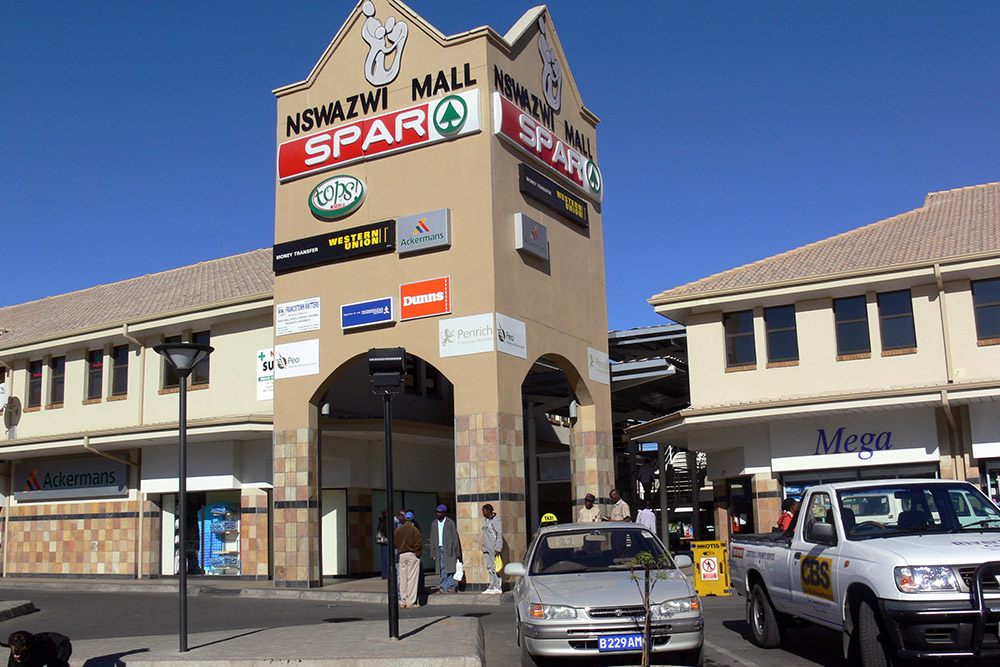
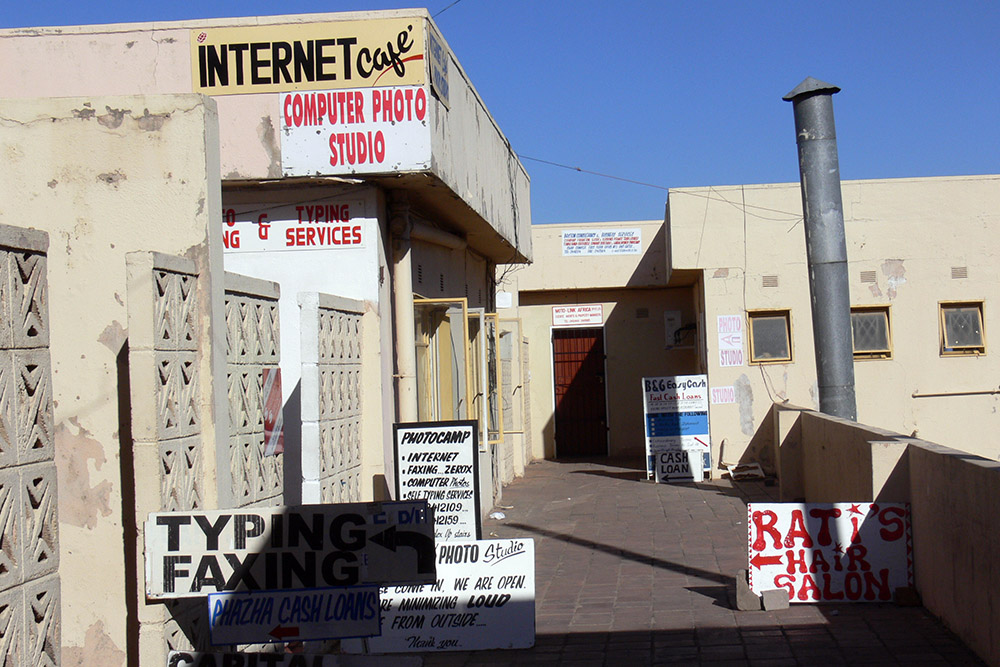
Francistown was my first stop in Botswana, and it immediately challenged some of my expectations.
I had expected to arrive in an extremely poor country, but Francistown had modern shopping centers, internet cafes, paved roads, and most of the conveniences I needed as a traveler.
This trip was also during a very different era of travel for me. Having easy access to an internet cafe actually mattered. Smartphones weren’t doing everything for travelers yet, and being able to stop somewhere and get online was something worth noticing.
Once I left the cities, Botswana became a completely different place.
Rural Botswana
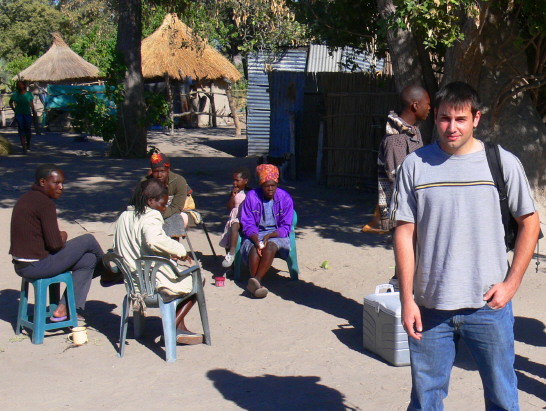
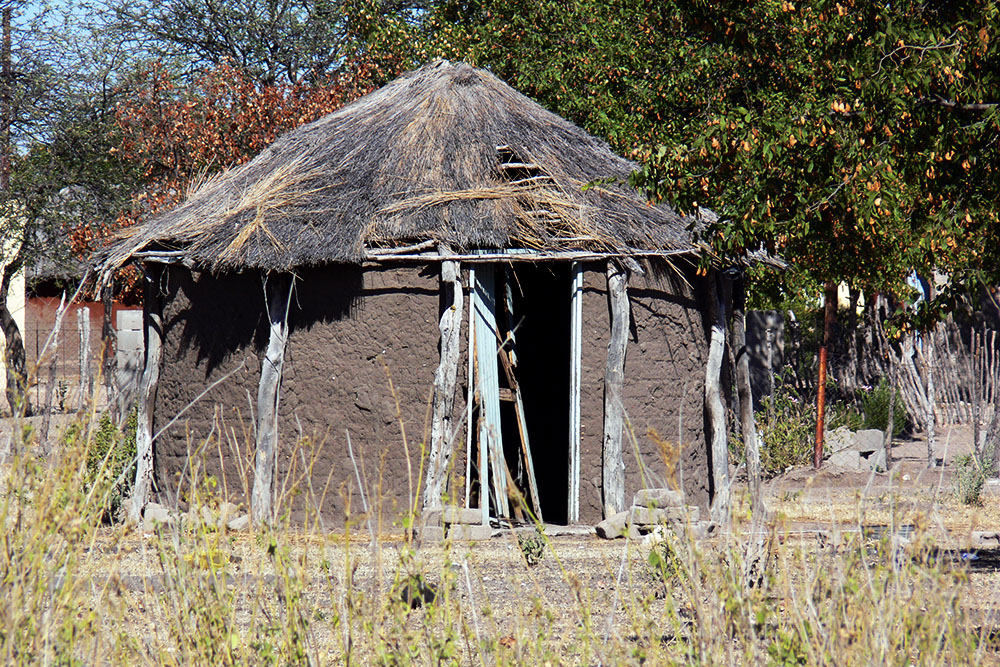
Driving across Botswana showed me just how sparsely populated much of the country really is.
Outside the larger towns, I passed small settlements and traditional homes scattered across huge stretches of open land. Sometimes there would be only one or two houses, while other areas had entire villages made up of similar structures.
Near Maun, I stopped and visited one of these small villages.
This is also one of the places where I wish I had slowed down more. At the time, I was thinking too much about the enormous distance I still had to cover in the rental car rather than realizing how much material I was passing for a future travel page.
Sharing the Highway
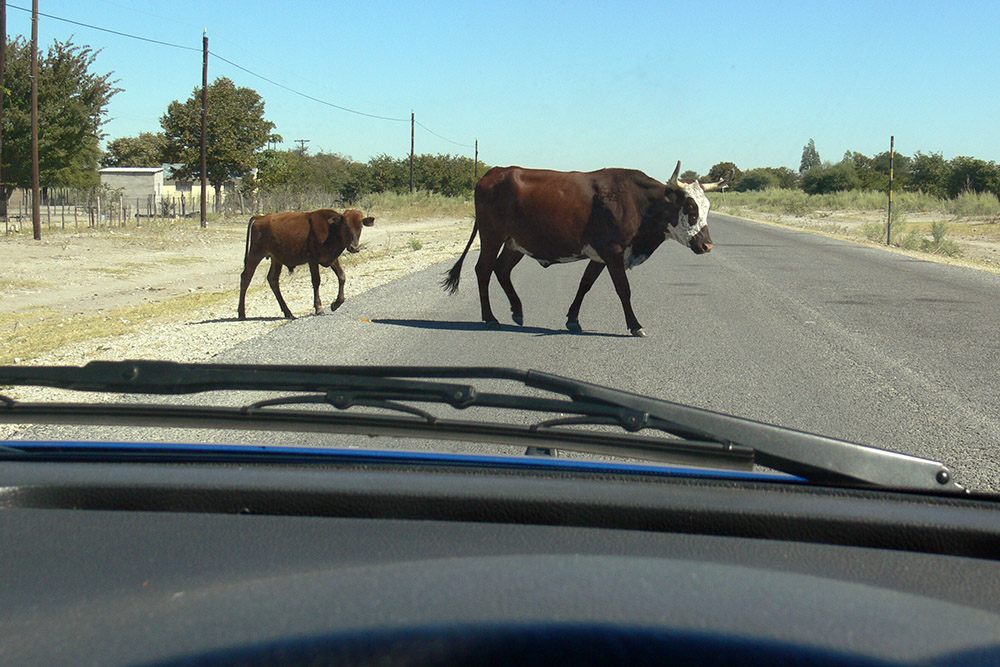
Livestock were everywhere in rural Botswana.
I regularly had to slow down or stop for cattle, goats, and donkeys wandering across the highway. After enough driving, seeing animals standing in the middle of the road stopped feeling unusual.
Considering how much distance I was trying to cover, these interruptions probably stressed me out more at the time than they should have.
Giant Termite Mounds
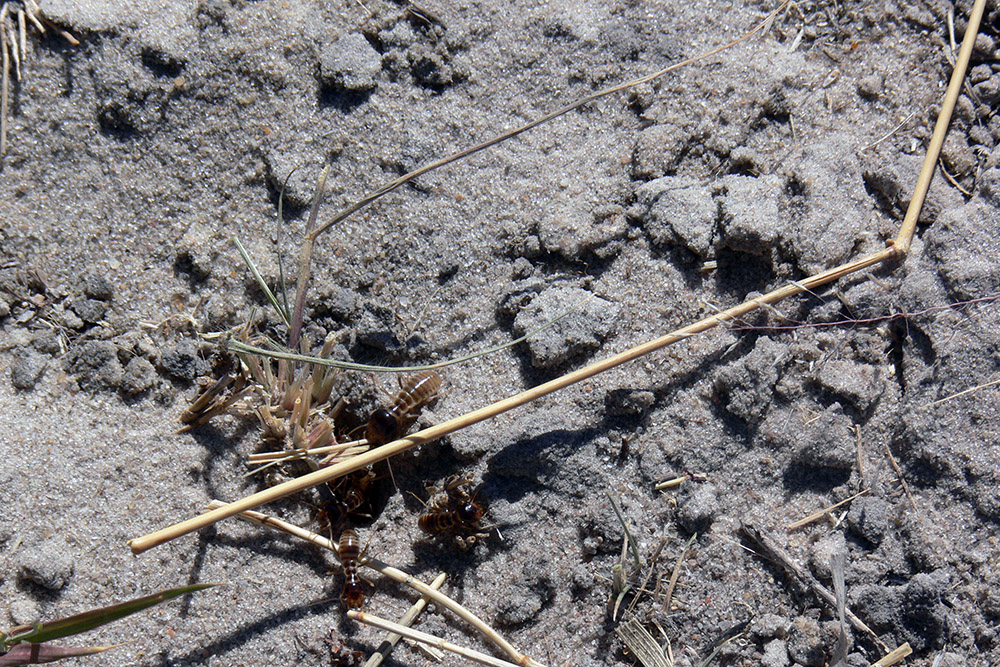
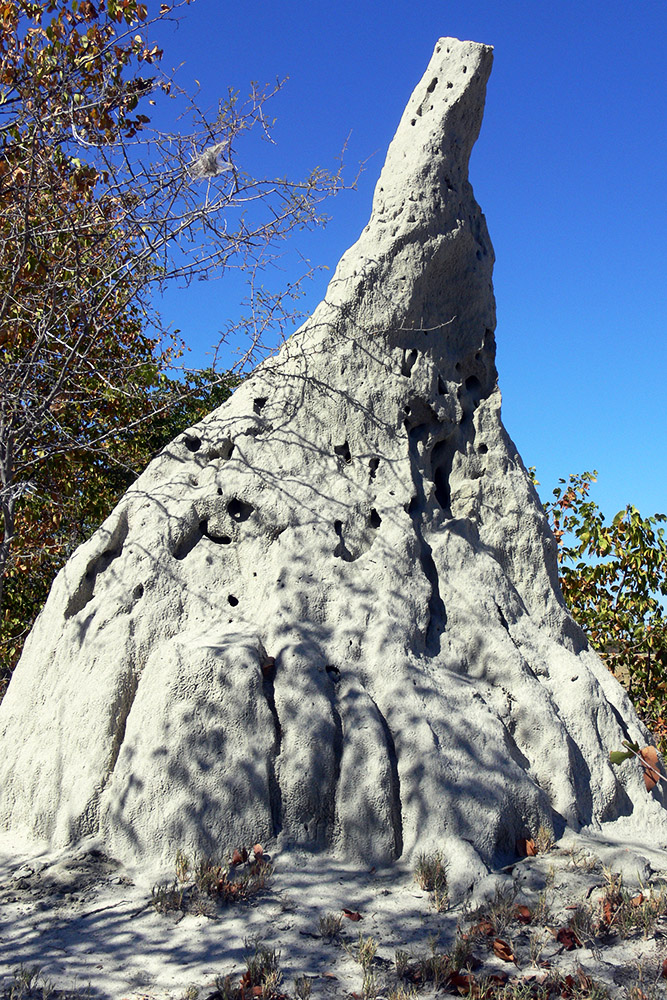
I’d seen termite mounds in several African countries, but some of the largest I encountered were in Botswana.
The mound above was at least eight feet tall. It’s strange to think that something built by insects can become a permanent feature of the landscape, but some of these structures were impossible to miss.
Botswana’s Salt Pans
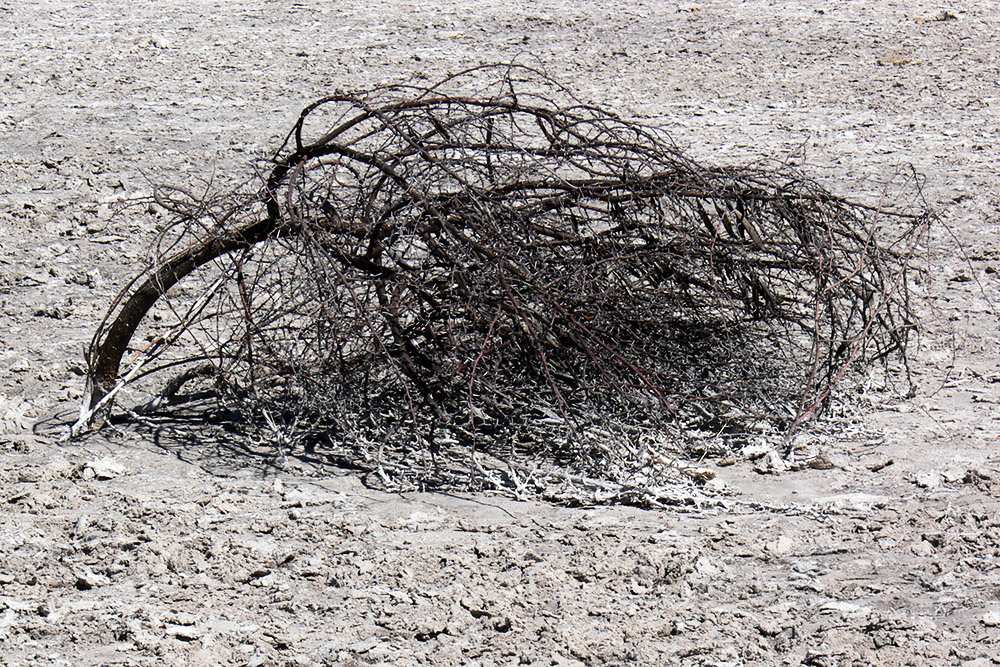
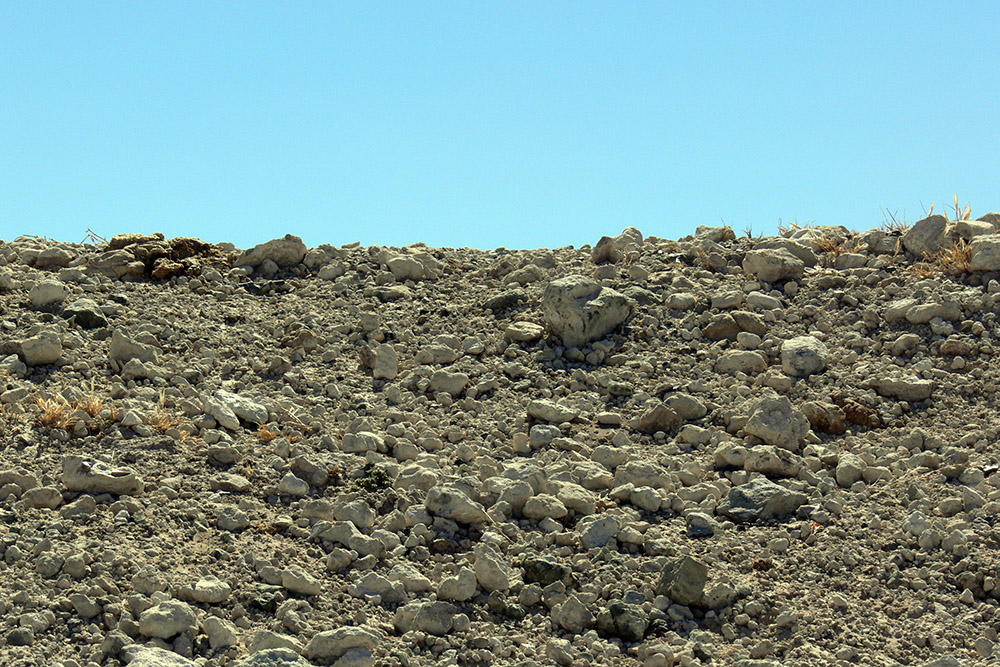
Botswana’s salt pans were another landscape unlike anything else I had seen in the country.
Ancient lakes once covered this region. As the water disappeared, enormous salt pans were left behind.
The scenery itself isn’t dramatic in the traditional sense. That’s exactly what makes it interesting.
Driving across the pans, there were places where all I could see from horizon to horizon was perfectly flat grayish-white terrain. Without trees, buildings, or mountains nearby, it became surprisingly easy to lose my sense of distance and scale.
Unfortunately, this is also one of those places where my old photographs don’t come close to showing what the landscape actually felt like. If I returned today, I’d probably spend hours trying to photograph the emptiness properly.
Across Northern Botswana
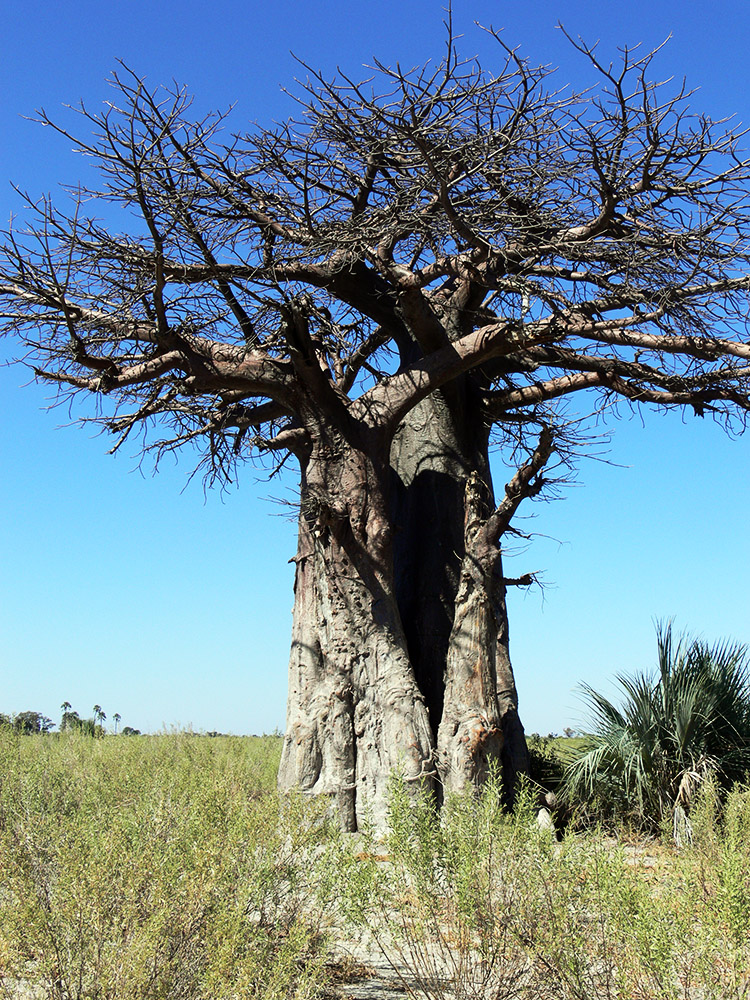
Most of Botswana is relatively flat, which made the occasional enormous baobab tree stand out even more.
These trees look almost prehistoric, with massive trunks and branches that can appear more like roots reaching into the sky.
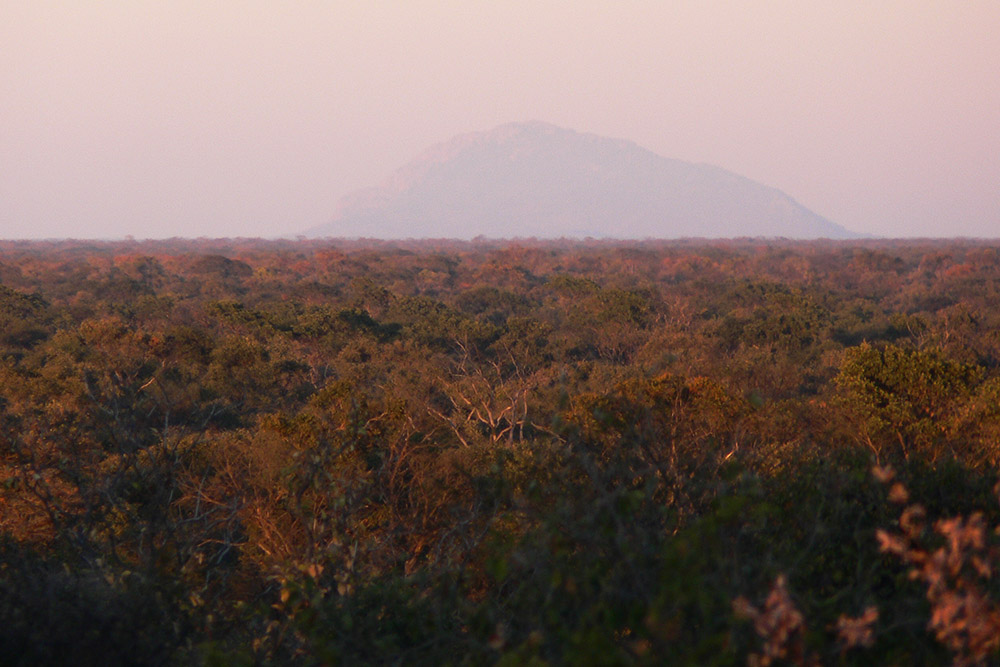
In northwestern Botswana, the Tsodilo Hills suddenly rise above the surrounding flatlands.
After so much time driving through nearly level terrain, even these relatively modest hills looked dramatic in the early morning.
Again, this is somewhere I would handle completely differently now. I was rushing through an enormous country in a rental car that eventually had to make its way back toward South Africa. Today I’d build much more time around a place like this instead of treating it as another stop along the road.
The Okavango Delta
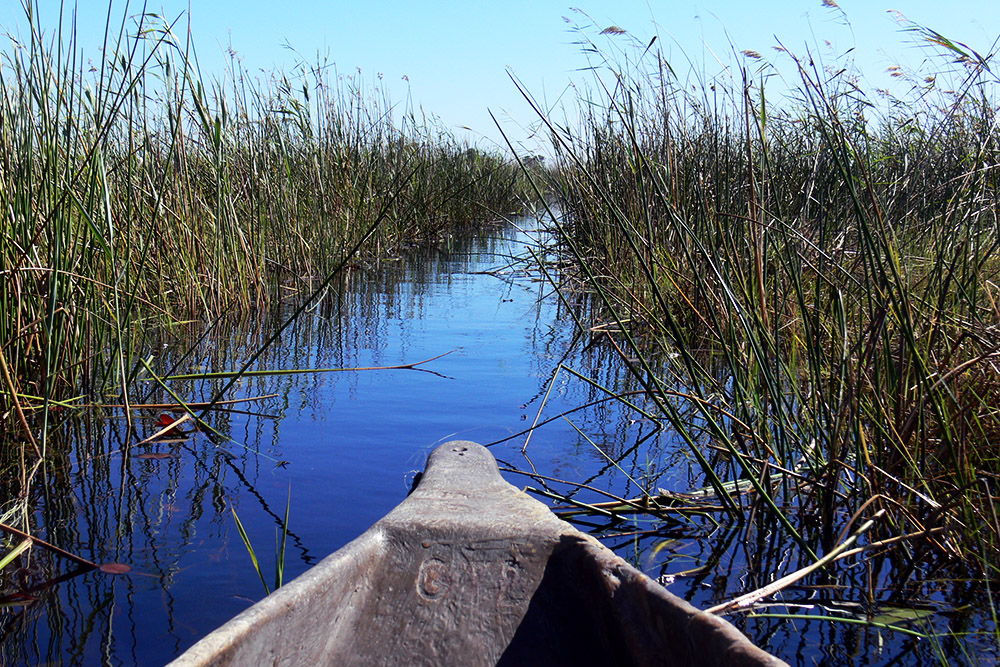
The highlight of Botswana for me was easily the Okavango Delta.
After traveling through so much dry country, suddenly entering a huge wetland filled with channels, islands, reeds, birds, and wildlife was almost difficult to comprehend.
The Okavango is an inland delta. Instead of reaching the ocean, the river spreads across northern Botswana and creates a maze of waterways and seasonal wetlands before eventually disappearing into the dry landscape.
I explored part of it in a traditional dugout canoe called a mokoro.
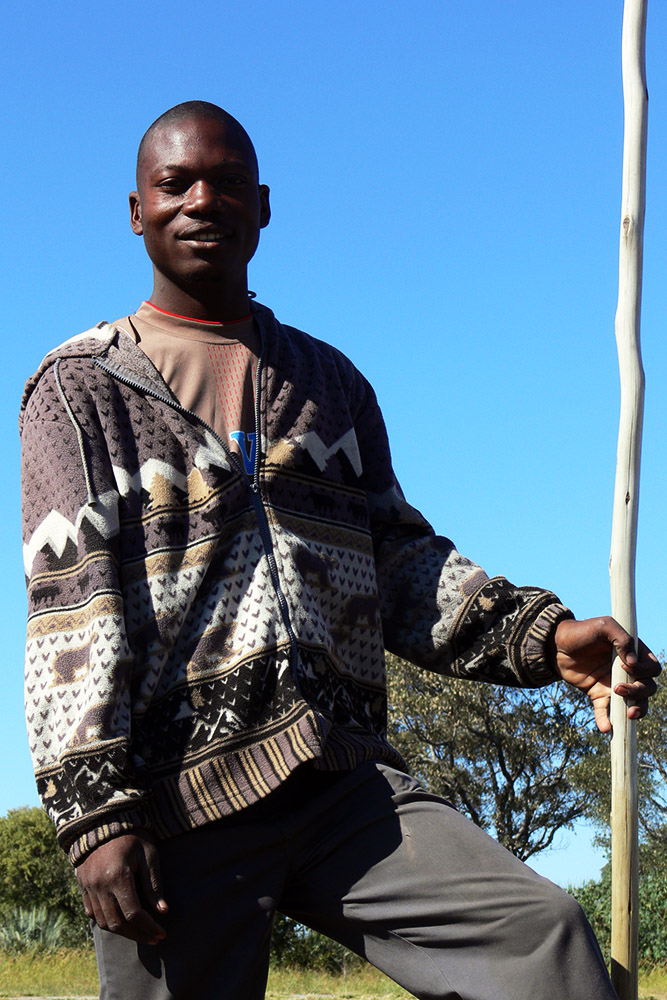
A local guide stood at the back and pushed us through the shallow water using a long pole.
There was no engine noise. We just quietly moved through the reeds and water.
It was probably the best possible way to experience the delta.
Even though I rushed through too much of Botswana, the Okavango was one of the places where travel naturally forced me to slow down. Sitting low in a mokoro while someone quietly pushed us through narrow channels was the complete opposite of spending hours driving across the country.
Life in the Water
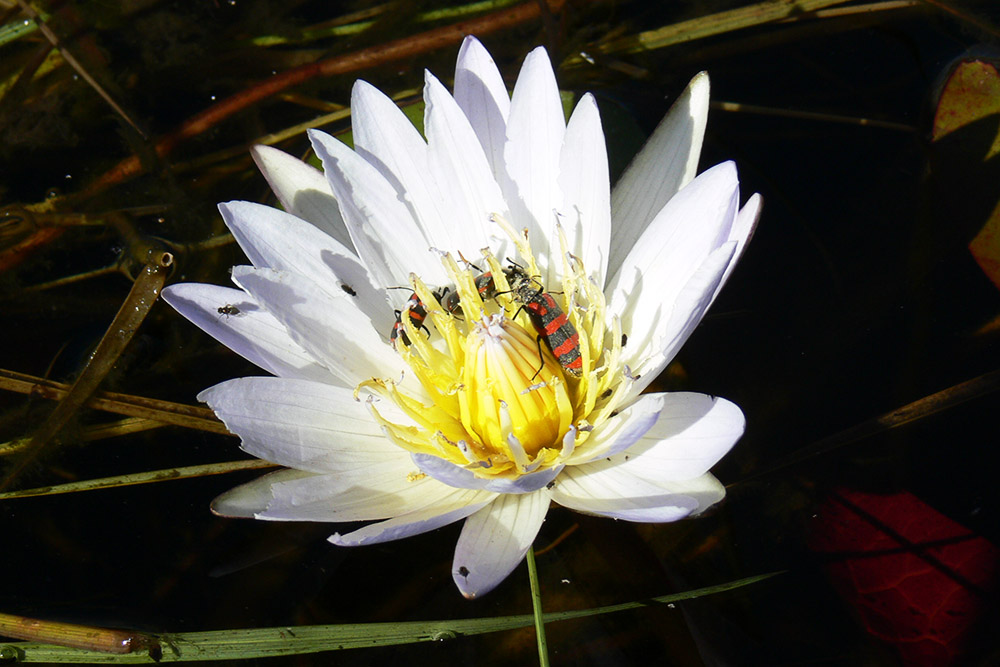

Many of the smaller channels were extremely calm, with lilies and other plants covering the surface.
Once I started looking closely, there seemed to be life everywhere. Insects covered some of the lilies, while frogs hid among the plants beside the water.
Walking the Islands
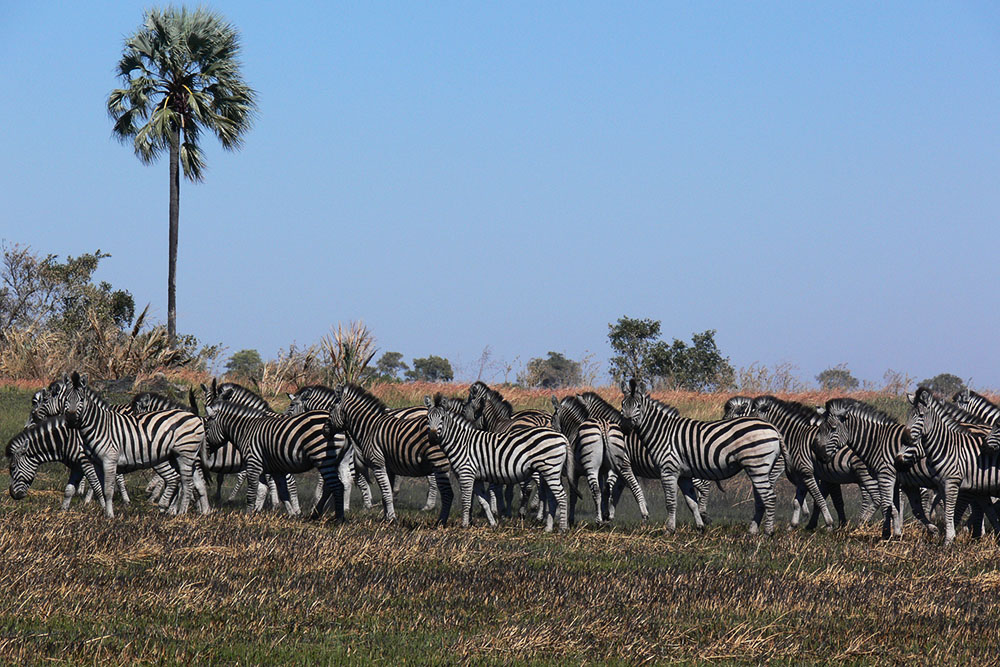
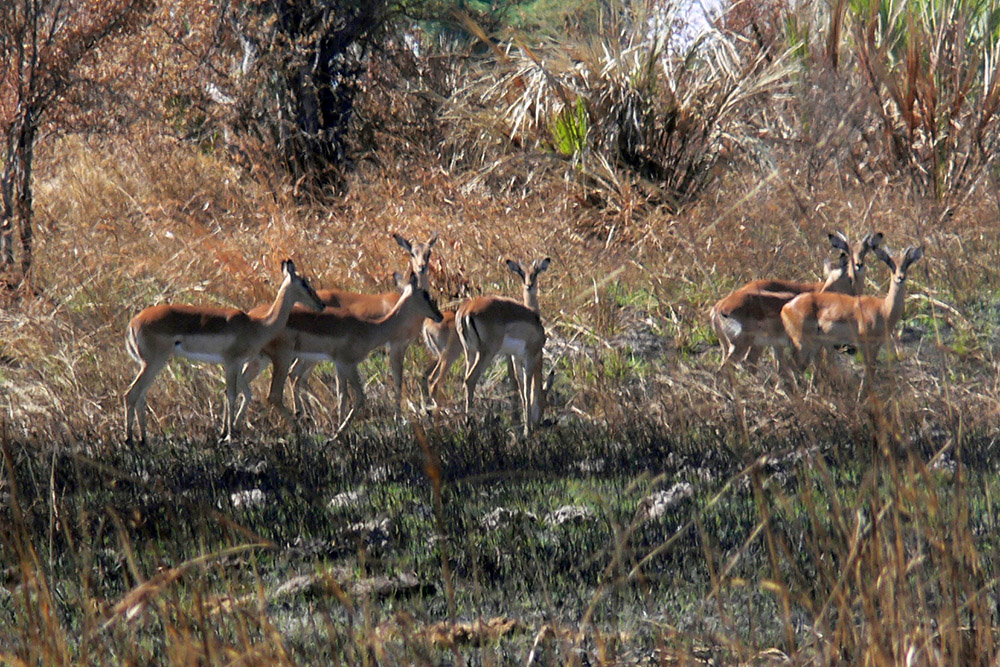
I eventually left the mokoro and explored one of the delta’s islands on foot.
That explains why some of my Okavango photos look surprisingly dry. The delta isn’t one continuous body of water. It is a mixture of channels, marshes, floodplains, and islands.
While walking, I came across herds of zebras and several types of antelope, along with baboons and other game animals.
Knowing that much larger animals also lived throughout the delta made walking through it considerably more interesting.
A Bird-Watcher’s Paradise

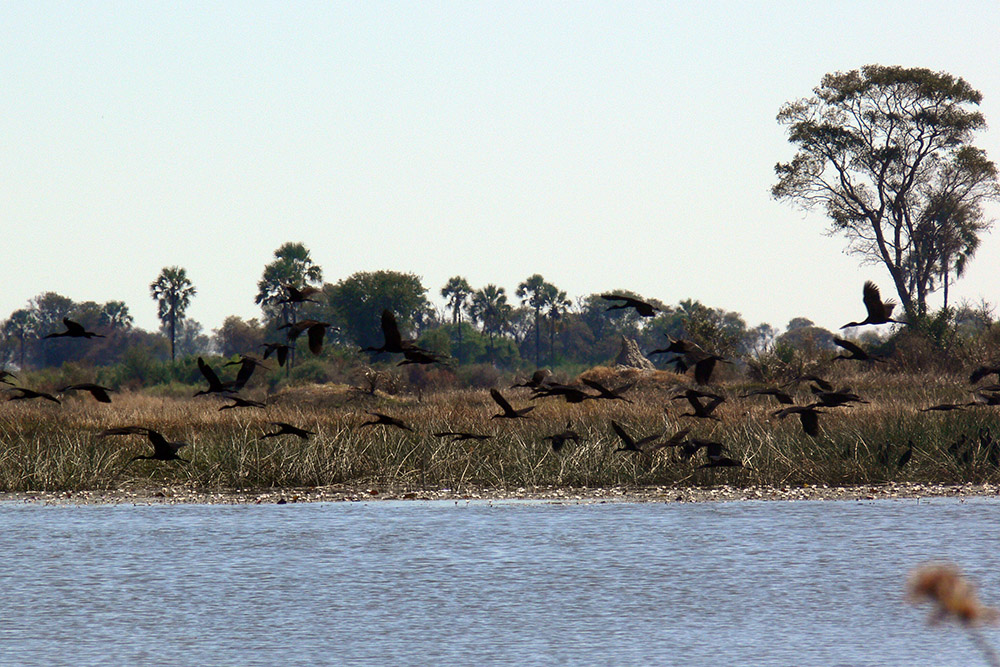
I wasn’t specifically traveling to Botswana for bird-watching, but the Okavango made it impossible not to pay attention to the birds.
They were everywhere.
I watched this kingfisher resting after diving into the water, while storks and other large birds regularly passed overhead.
Sausage Trees and Eagles
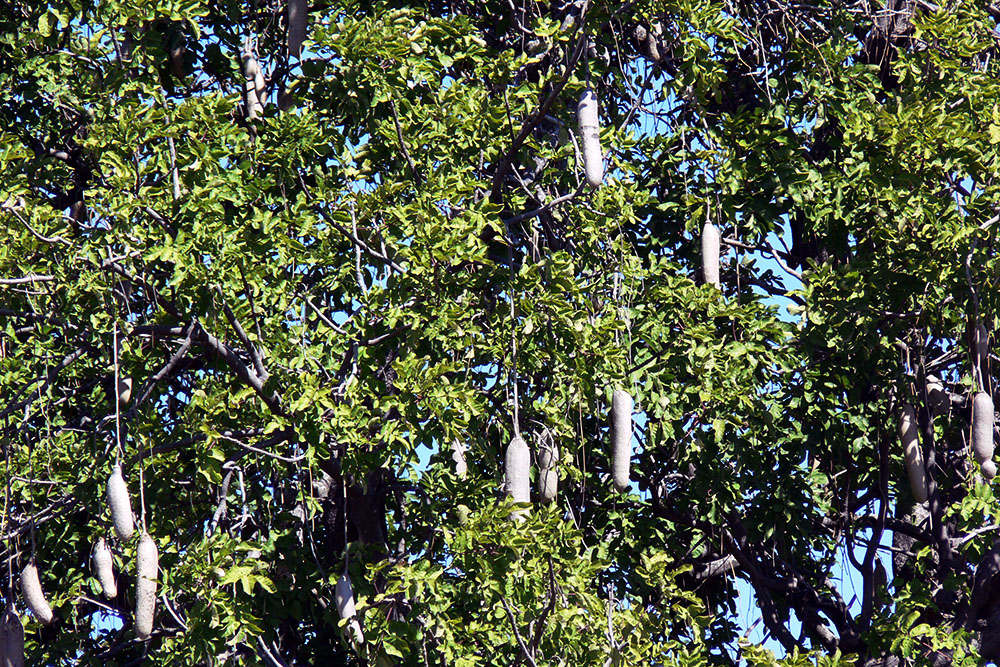
The vegetation could be just as interesting as the animals.
One of my favorites was the sausage tree, named for the enormous fruits hanging from its branches. They really do look like giant sausages growing from a tree.
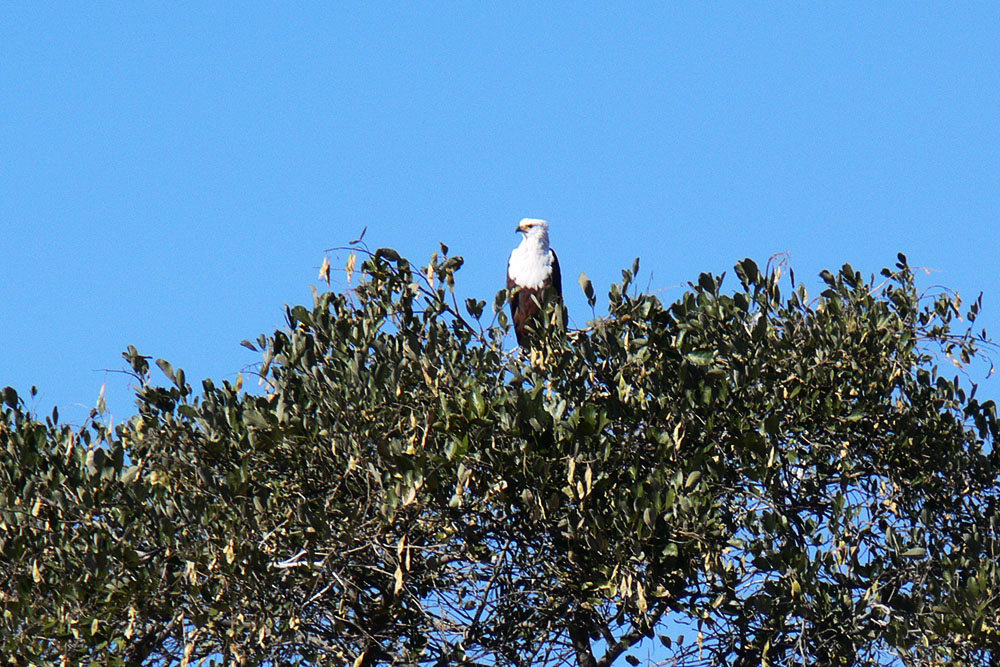
Above the wetlands, birds of prey watched the same channels I was exploring below.
Looking Back at Botswana
Botswana wasn’t at all what I expected before arriving.
I started in a modern city, drove through tiny rural villages, waited for cattle to clear the highway, crossed enormous salt pans, passed giant termite mounds and baobab trees, and eventually reached one of the richest wildlife environments in Africa.
The Okavango Delta alone would have made Botswana worth visiting.
Moving silently through the reeds in a mokoro and then stepping onto an island to look for wildlife on foot gave me an experience completely different from a traditional vehicle safari.
Looking at this page today, I can also see how early in my travels this trip really was. The photographs aren’t great, and in several places I clearly rushed through landscapes that I would spend far more time exploring now.
Part of that was simply inexperience. Part of it was logistics. I had rented the car in South Africa, driven an enormous distance through Namibia and into Botswana, and eventually started worrying about how far I still had to travel to get everything back where it belonged.
If I made the same trip today, I’d plan it completely differently.
But I don’t want to erase the trip just because I would do it better now.
These old photographs and rushed stops are still part of how I experienced Botswana at the time. If anything, looking back at them now makes it easier to see how much my travel and photography changed over the years.
And even with the rushed schedule and primitive camera work, Botswana still managed to leave an impression strong enough that I remember the salt pans, endless roads, baobabs, villages, and especially the Okavango Delta all these years later.