On day three we left Suanggama and headed into the bush, where our trek officially began. After a few hours I definitely felt like I was in the jungle and was happy to finally be on my way toward Carstensz Pyramid.
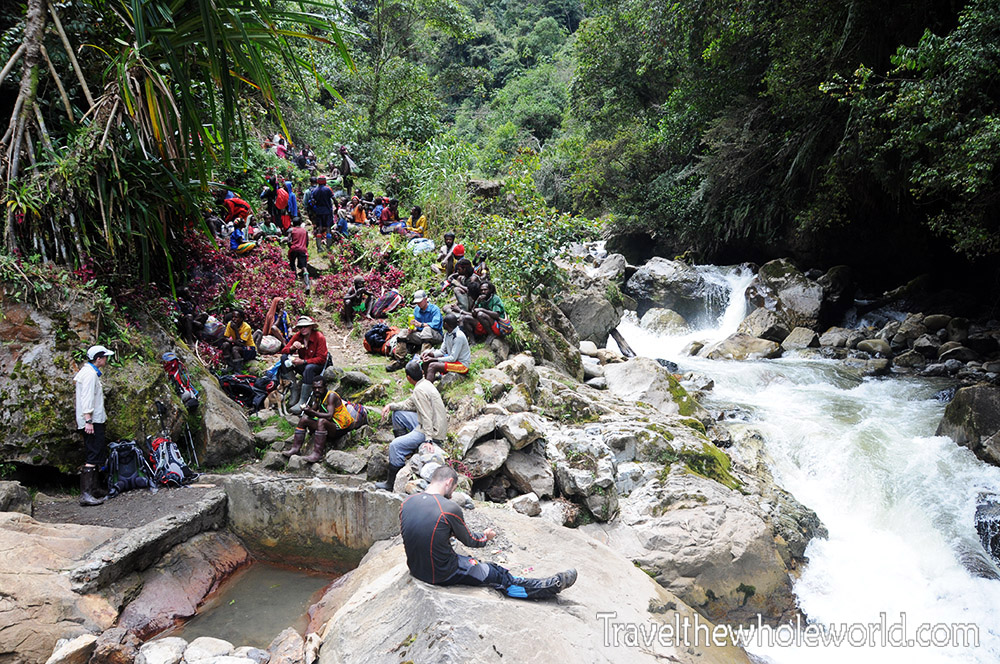
I was surprised by how many people we had picked up for the expedition. We had nearly 30 porters supporting only six climbers. Above is our entire expedition taking a break beside a river. You can see why having a climbing team come through was such a big deal locally.
I doubted we actually needed that much support, and some of the porters had probably negotiated their way into jobs as our expedition passed through. Earlier, when we hadn’t been allowed to continue into the jungle, we had even debated among ourselves whether we could simply carry all of our own gear. That clearly wasn’t going to happen. The expedition depended on local access, local knowledge, and the footbridges and routes crossing their land.
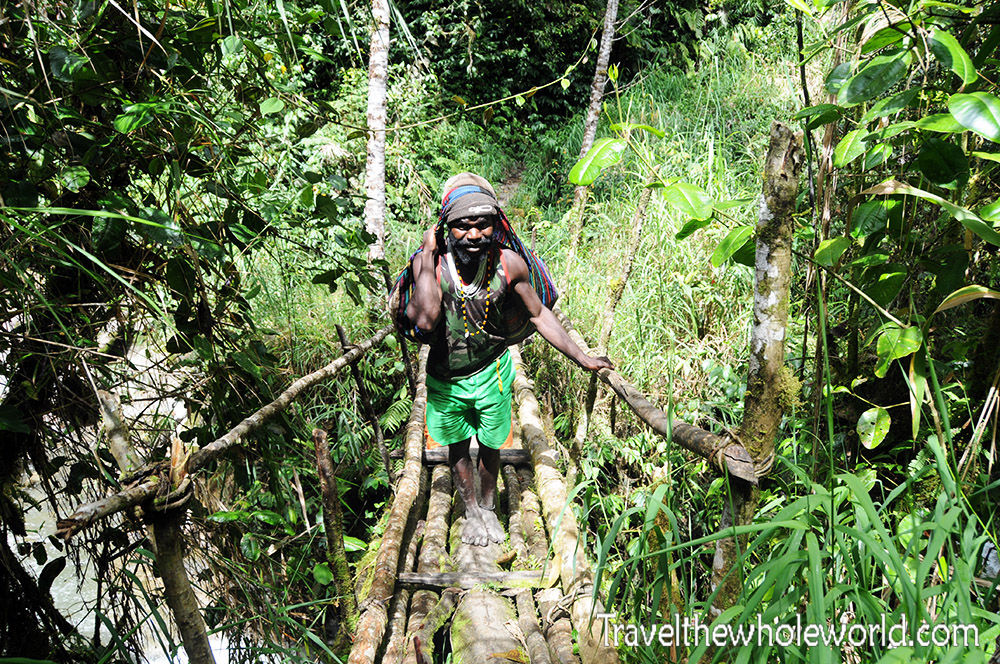
Once inside the jungle, we had plenty of streams and rivers to cross, but local people had built bridges across them. Above, one of our barefoot porters carries supplies across one of those bridges.
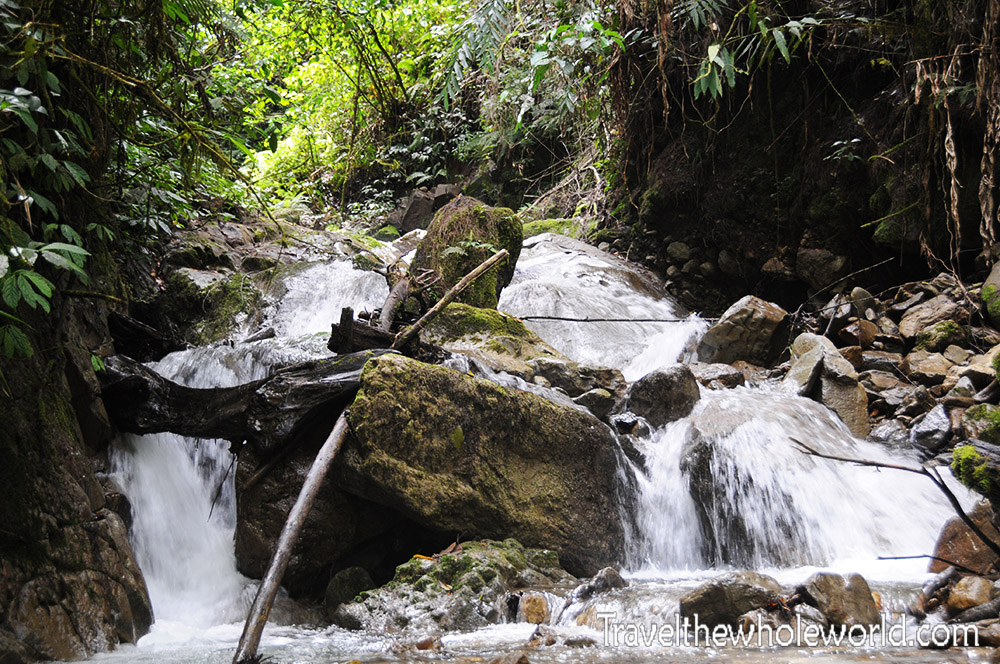
This was one of the fast-flowing creeks we crossed. Without the local bridges, obstacles like this would have been much more difficult and time-consuming. We probably would have spent hours figuring out how to cross some of them safely.
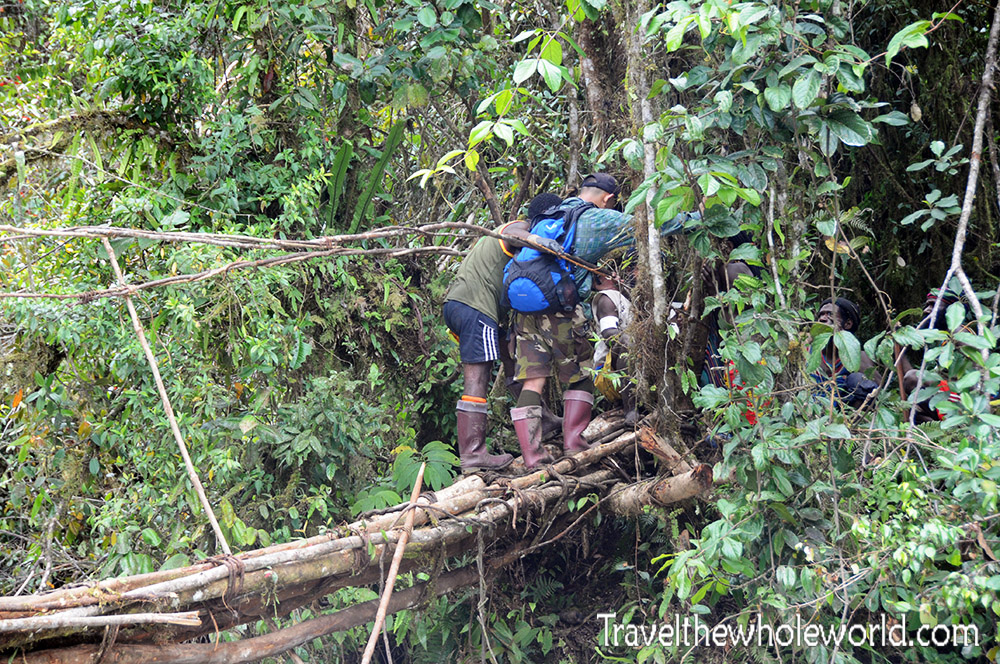
The roadblocks we had encountered near the villages had been some of the most aggravating parts of the trip. I assumed that once we entered the jungle they would finally be behind us, so I was disappointed when we reached another one at a bridge.
One of our Indonesian guides tried to negotiate while the rest of us waited for several hours. At the time I had no idea whether there would be ten more roadblocks ahead, but luckily this turned out to be our last one.
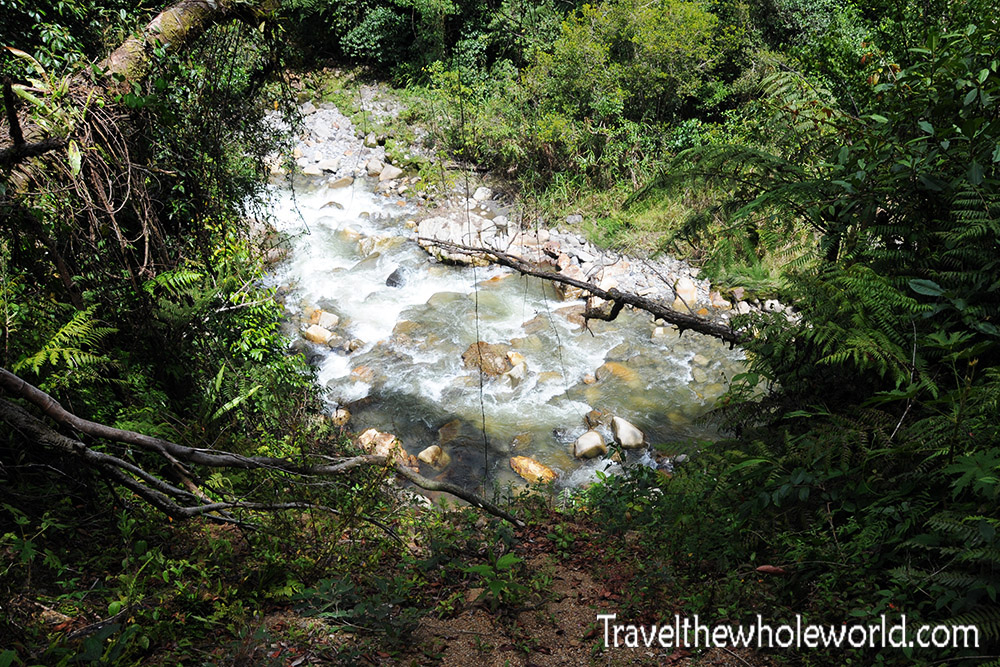
Aside from the delays, the terrain itself was difficult and came with plenty of hazards. Here, the trail crossed an exposed slope with a drop of more than 25 feet (8 meters). Everything was slippery, so a fall probably wouldn’t have killed me, but it could easily have broken a bone and ended the expedition.
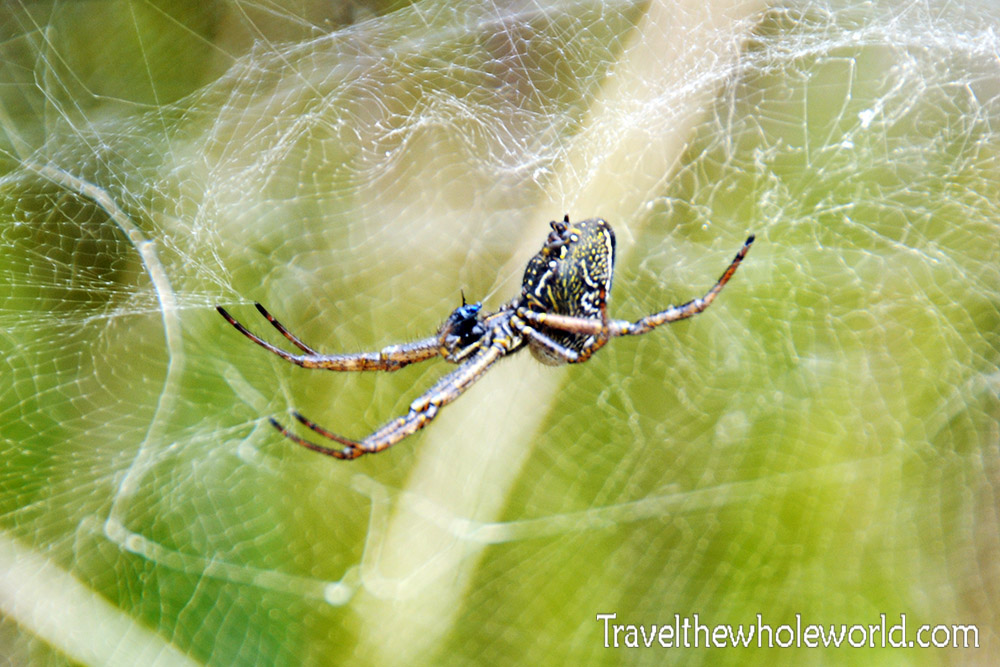
The plants and insects created their own problems. A few times I grabbed sharp plants for support or fell into them and ended up with tiny cuts. I continued hiking while hoping none of the plants contained some undiscovered poison that was about to cause excruciating pain or sudden death.
We eventually crossed an open area where the trail was lined with some of the thickest spider webs I had ever seen. The massive spiders responsible for them sat right in the middle of the webs. I had no idea whether they were dangerous, and I wasn’t particularly interested in finding out.
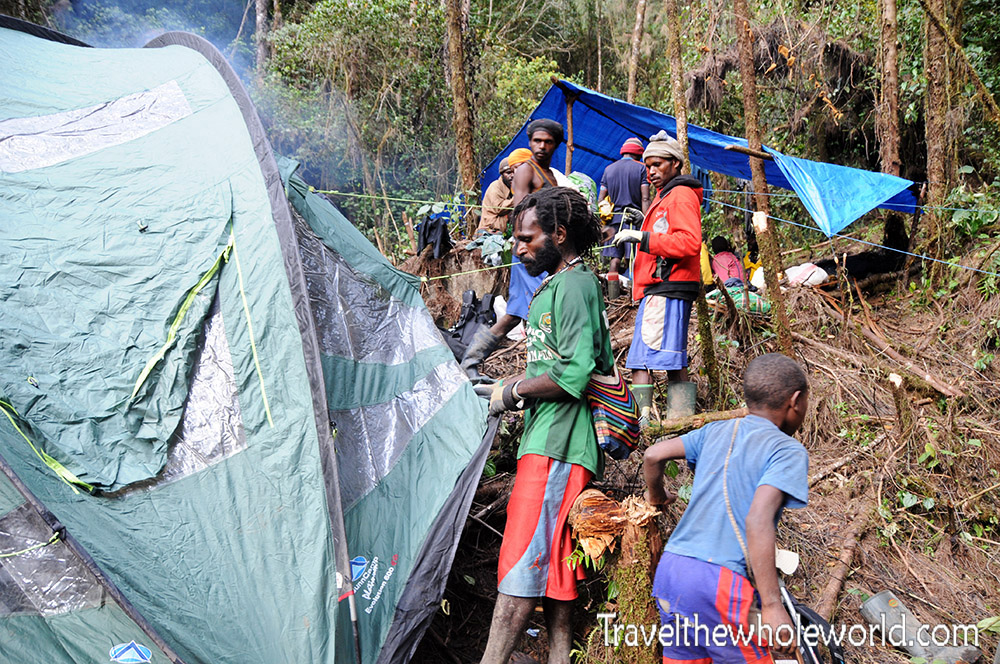
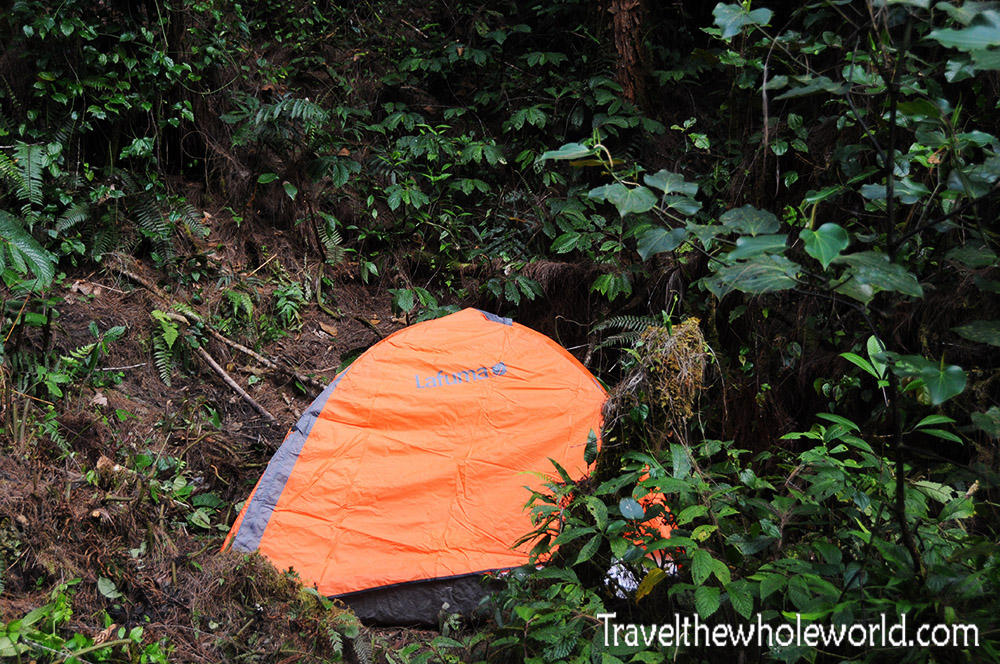
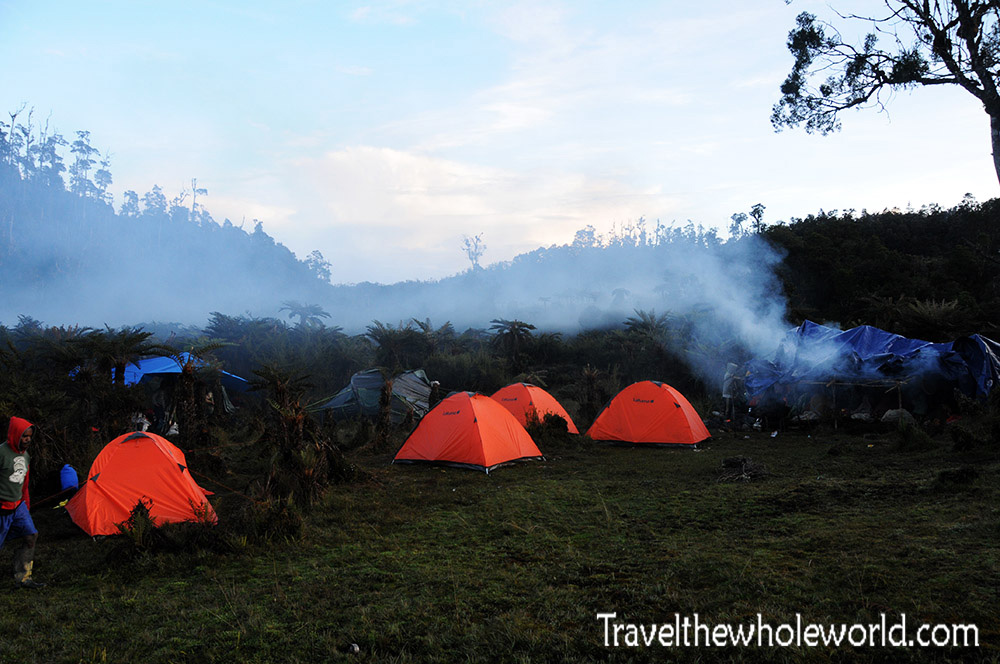
After a long day we reached Camp I, which was little more than a small hill where enough vegetation had been cleared away to make room for our tents. Thick rainforest surrounded us and there was hardly any open space.
Some tents had to be pitched in little depressions that looked like they would immediately flood if heavy rain arrived. Above, some of the porters are setting up the cook tent.
The hiking that day had been a serious challenge because of the constant ups and downs. Our net elevation gain was almost 2,000 feet from where the motorbikes dropped us off, but considering all the hills we climbed and descended, it felt like we had gained much more.
After two days of travel, we had essentially worked our way back to around 7,000 feet, roughly the same elevation as Sugapa. That was discouraging, but at least the following day we would finally start reaching new altitude.
The hike had been exhausting, but luckily we hadn’t been hit by rain yet. I crawled into my tent dry and comfortable, and it was still warm enough to sleep in a T-shirt and shorts. During the night, a curious frog wandered between my rain fly and the tent itself.
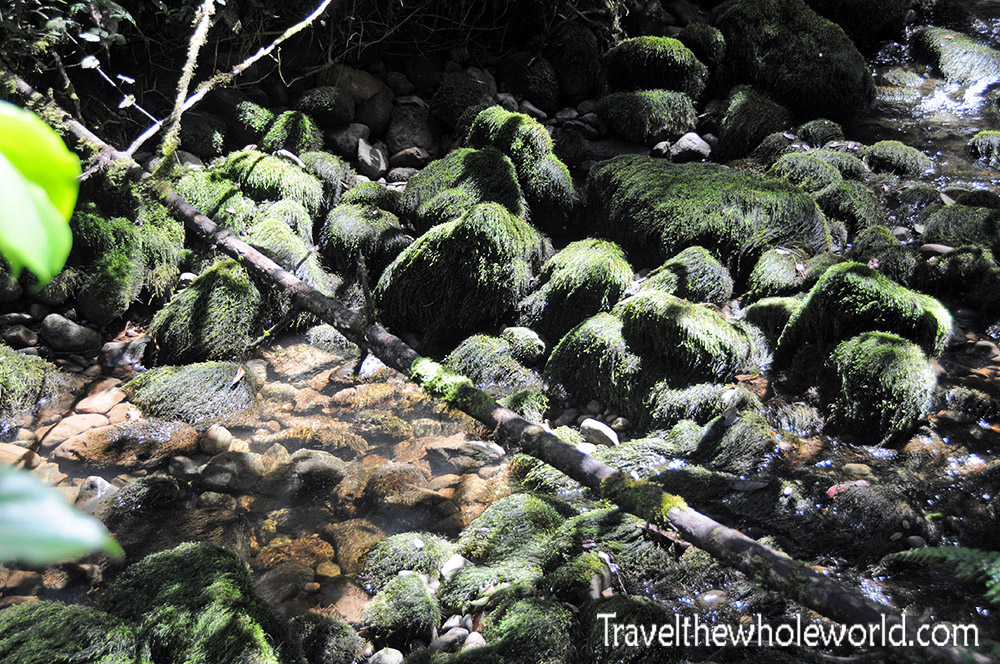
The next day brought even more difficult terrain. There were more streams to cross, and mud was becoming a serious problem. We weren’t following anything resembling a maintained trail. Most of the time we were simply following footprints through the mud and climbing over fallen trees.
Tree roots sometimes formed huge tangled walls several feet high, forcing us to climb over them using our hands and knees while covering ourselves in cold, wet mud. By now we were above 8,000 feet, so repeatedly pulling myself out of the mud became surprisingly exhausting.
The best comparison I can make is an obstacle course. Most obstacle courses last only a few hundred feet. Imagine doing one continuously for several miles at elevations between 8,000 and 10,000 feet.
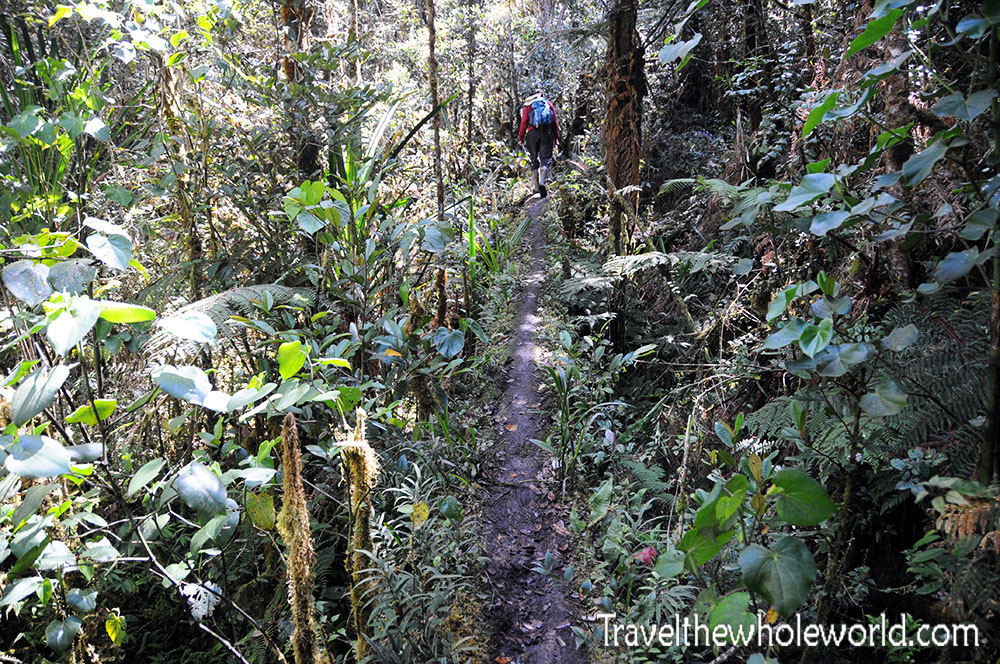
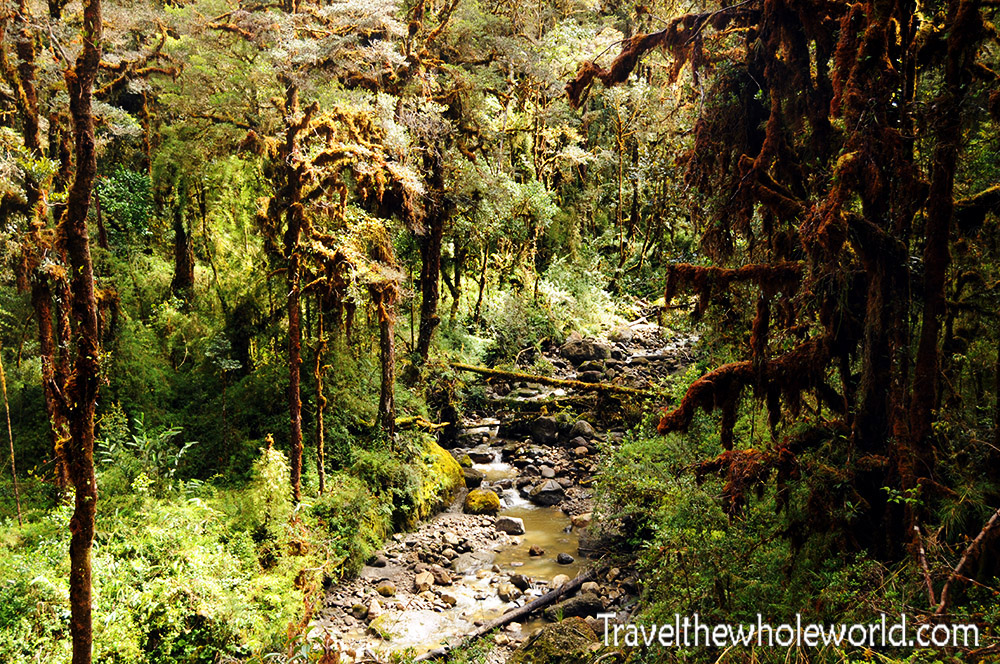
Slippery logs sometimes became part of the trail, occasionally several feet above the ground. Vines acted like trip wires and wrapped themselves around our boots. It seemed as though every step through the rainforest came with an opportunity to sprain an ankle or suffer an injury serious enough to end the expedition.
Those concerns weren’t imaginary. I later stayed in contact with another expedition whose members reported sprains, broken ribs, and other injuries on the approach.
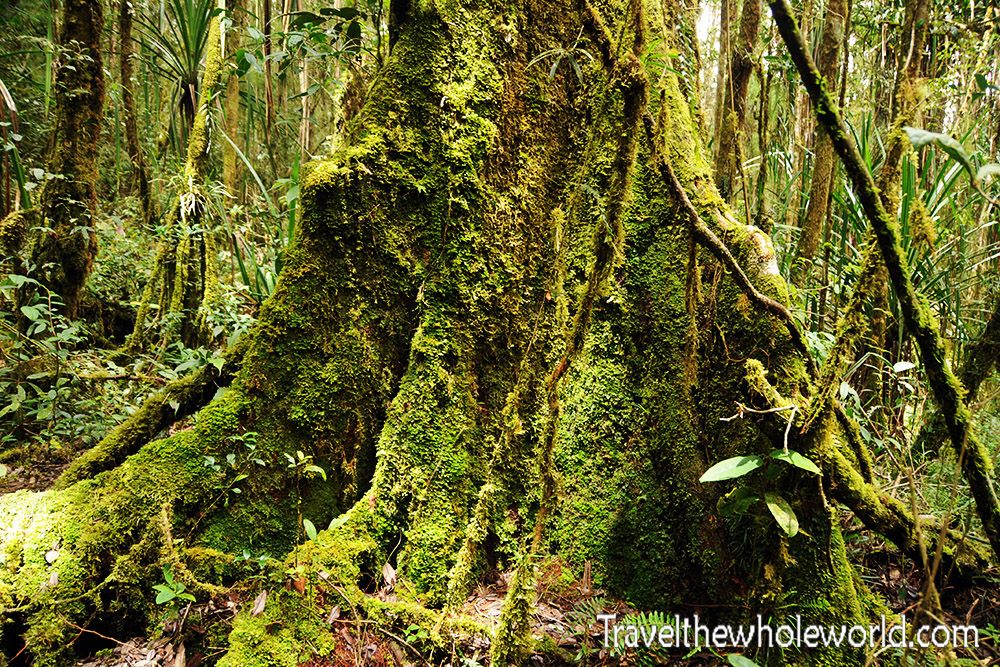
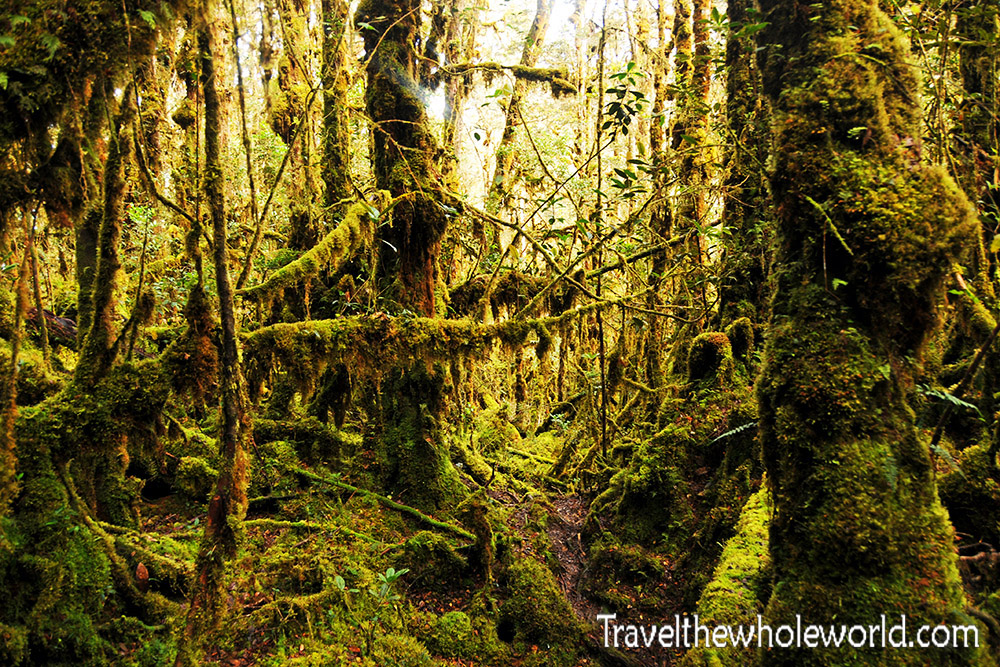
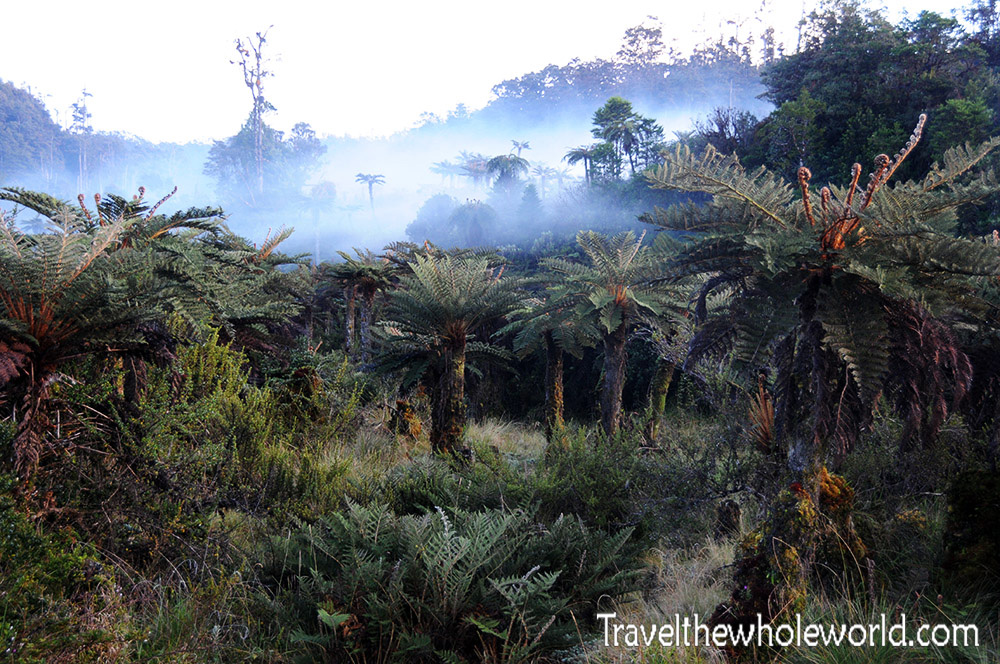
The moss began gradually. At first I noticed it covering rocks beside the creeks, but as we climbed higher it spread onto the trees. Eventually it seemed to take over almost everything in sight.
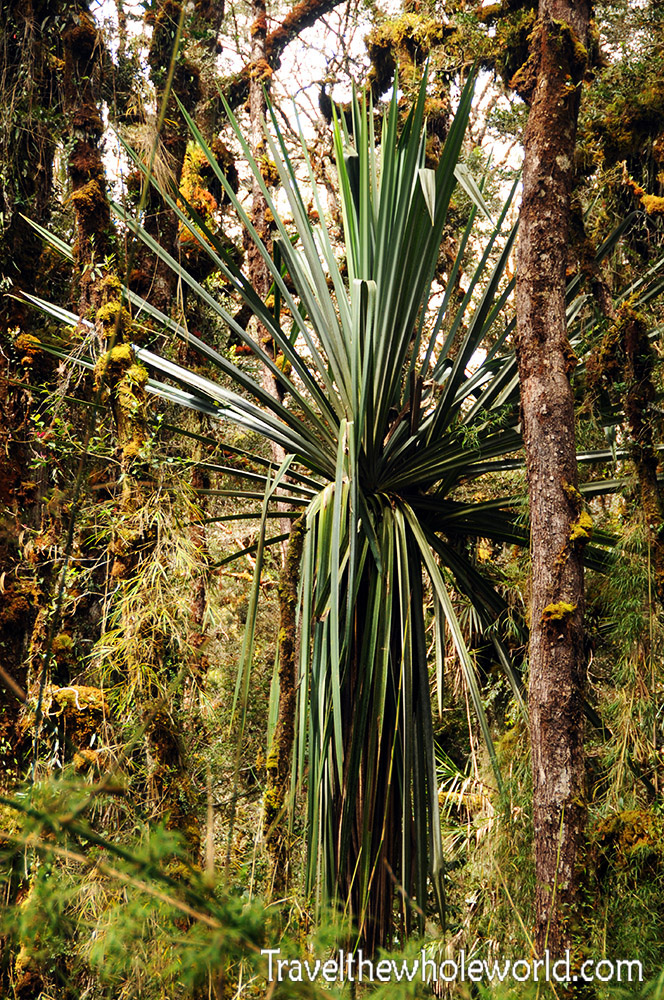
Seeing this palm-like tree was strangely encouraging. By this point the moss seemed like a curse spreading across the entire forest, so seeing one tree standing relatively free of it somehow felt like a tiny glimmer of hope.
Unfortunately, the changing vegetation didn’t make the terrain any easier.
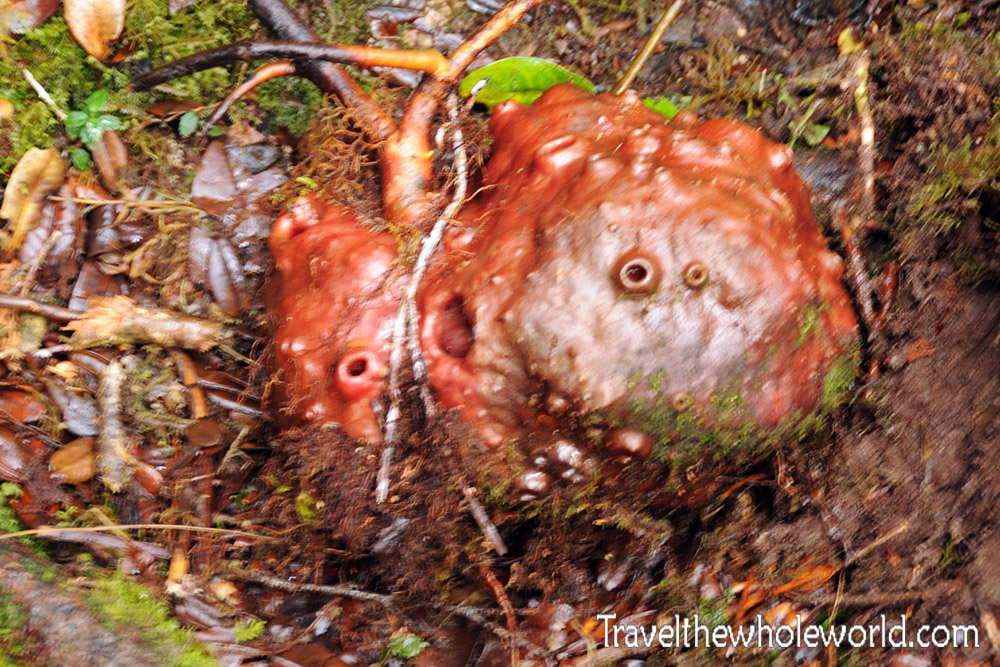
There was never a shortage of mud or strange plants in the mosslands. I had heard horror stories about hiking through this terrain before the expedition, but when I first encountered it I actually found the moss and mud interesting.
It didn’t take long for that novelty to disappear.
Just when I thought the conditions couldn’t become much worse, heavy rain finally arrived. It’s difficult to emphasize how exhausting this terrain was. At the time, I would rather have crossed a glacier at 17,000 feet (5,000 meters) than continue fighting mud, roots, vines, and rain at 10,000 feet (3,000 meters).
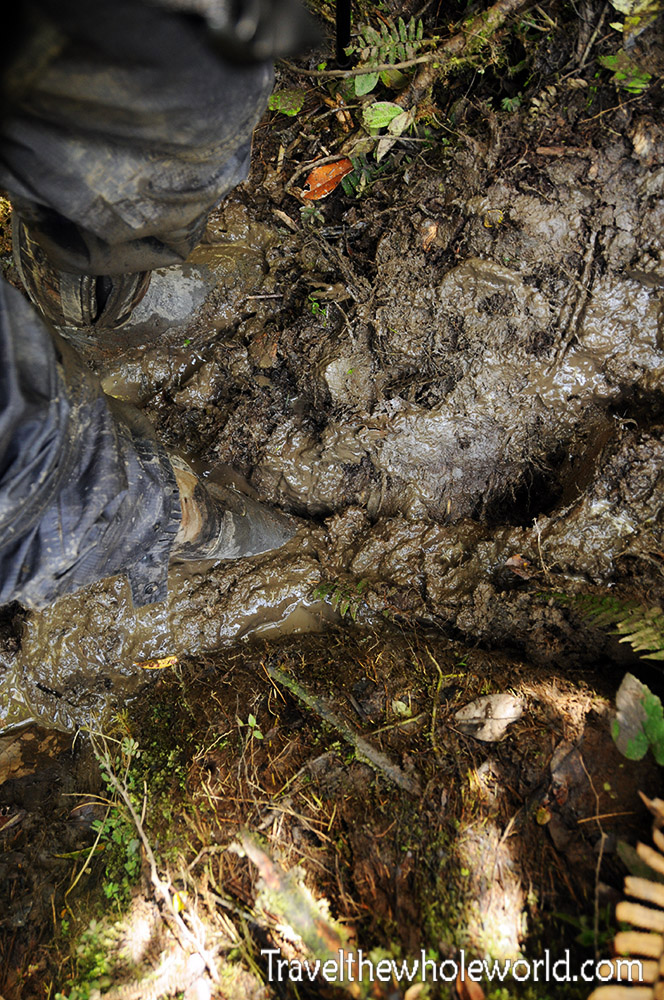
The mud in this photo was only about six inches deep. I occasionally stepped into sections closer to 16 inches deep, nearly three times worse than what you see here.
The final section of rainforest became incredibly steep. At times it felt like climbing a muddy ladder. I was using my hands and knees to climb upward, and occasionally I’d grab a plant or root only to have it tear loose and nearly send me tumbling backward.
Another problem was simply the height of each step. Sometimes the next foothold was nearly two feet higher than the previous one. I had to raise my foot as high as possible and make enormous steps upward, which absolutely destroyed my thigh muscles.
Then there was the rain. At times it felt like I was climbing a muddy waterfall.
Nothing lasts forever, though. After an entire day of torture, the rainforest finally opened beneath a gloomy sky and I stumbled into Camp II.
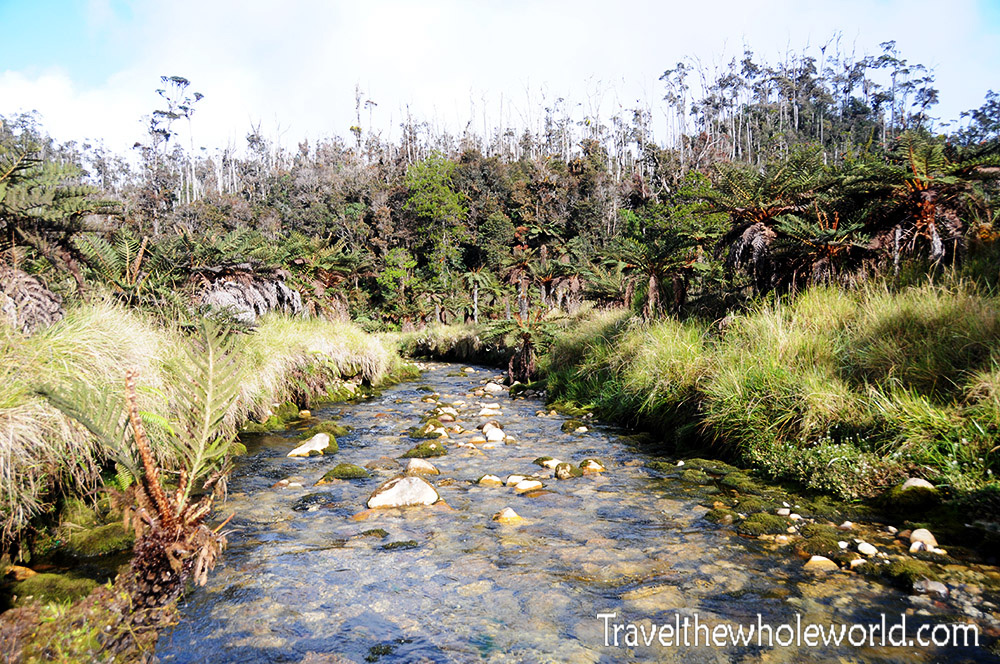
Camp II was around 10,000 feet (3,000 meters). A stream beside camp provided water for drinking and cleaning, and I immediately used it to wash myself and my clothes. The mud on my pants had reached almost to my waist.
Back in Sugapa, we had seen a confusing map showing the route and camps between the villages and Carstensz Pyramid. We had been told the entire trek would take about five days, including the approach through Suanggama.
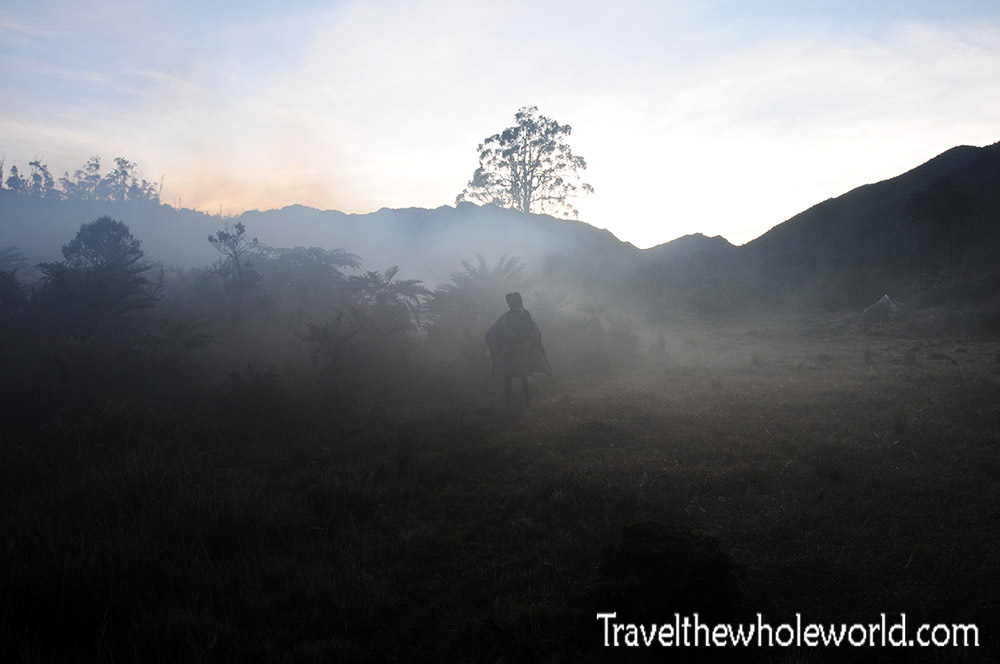
By Camp II, fog and light rain had settled in and the temperature was beginning to drop. Then we had a deeply disturbing conversation about how far we actually were from the mountain.
We believed we had two more days before reaching base camp. Our expedition leader came over and told us we were wrong.
We had three more days.
That was incredibly depressing. A single additional day doesn’t sound like much sitting at home, but after experiencing these conditions, another entire day in the mud felt enormous.
Luckily, after more discussions with the locals, our expedition leader returned and told us he had made a mistake.
Two more days.
That sounded much better.
By morning the rain had stopped, although everything remained just as muddy. We had gained enough altitude that the temperature was noticeably colder, and I couldn’t get away with wearing a single layer anymore.
After a day in the jungle and two days in the rainforest, I had developed nasty blisters on both heels. They were bad enough that putting on my boots and walking had become painful.
Now I had another problem to worry about. I had to keep forcing food down and continue hiking while wondering how much worse the blisters might become after spending day after day inside wet, muddy boots.
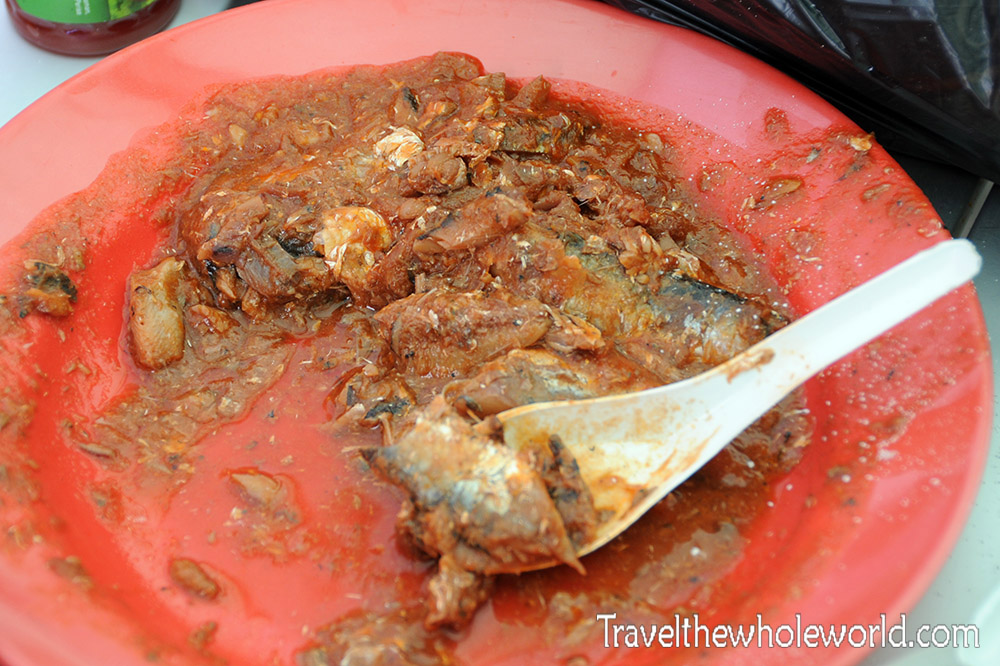
And the food wasn’t exactly helping my morale either. I was finding some of it extremely difficult to eat.
Continue the adventure: From the Rainforests to the Highlands →