At 19,341 feet (5,895 meters), Mount Kilimanjaro is the highest mountain in Africa and the highest free-standing mountain in the world. Climbing Kilimanjaro is more of a high-altitude trek than a technical mountain climb, with several different routes leading toward the summit.
Kilimanjaro was my first experience on a major mountain. I was only 18 years old when I climbed it in 1999, long before I knew that mountaineering would become such a major part of my life. What I remember most was watching the entire environment change as we climbed—from dense rainforest to grassland, strange high-altitude vegetation, barren alpine desert, snow, and finally the summit.
I climbed the Machame Route, which I chose because it was considered more challenging and scenic than the popular Marangu Route. At the time, I had no idea this mountain would eventually become the first of my Seven Summits.
Into the Rainforest

Rainforest on Mount Kilimanjaro
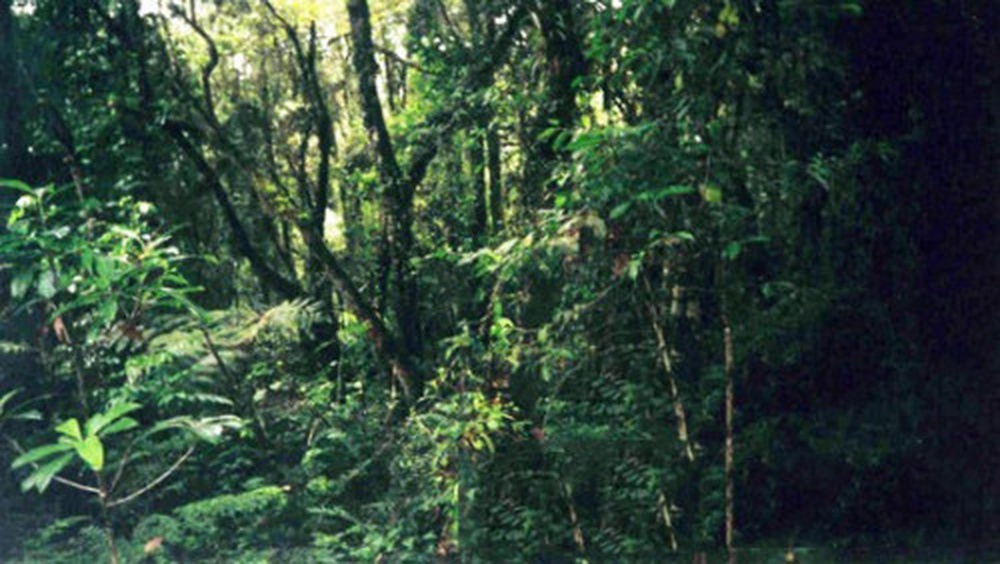
Hiking Through Kilimanjaro’s Rainforest
The climb began in a muddy rainforest. Immediately before Kilimanjaro I had been on safari elsewhere in Tanzania, and during those two weeks I’d seen almost nothing but clear skies and dry plains. I knew I was attempting Kilimanjaro during a short rainy season in November, but after all that sunshine it was difficult to imagine just how wet the mountain would be.
Once we started climbing, the rain seemed unstoppable. It went on day and night, and by the end of the first day we were beginning to leave the rainforest behind and enter a completely different environment.
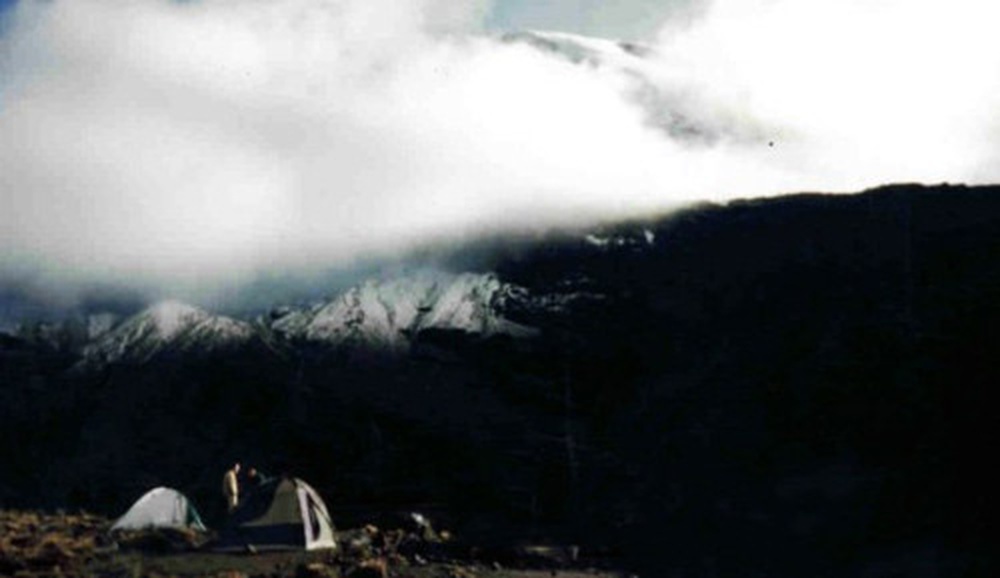
Camp on Mount Kilimanjaro
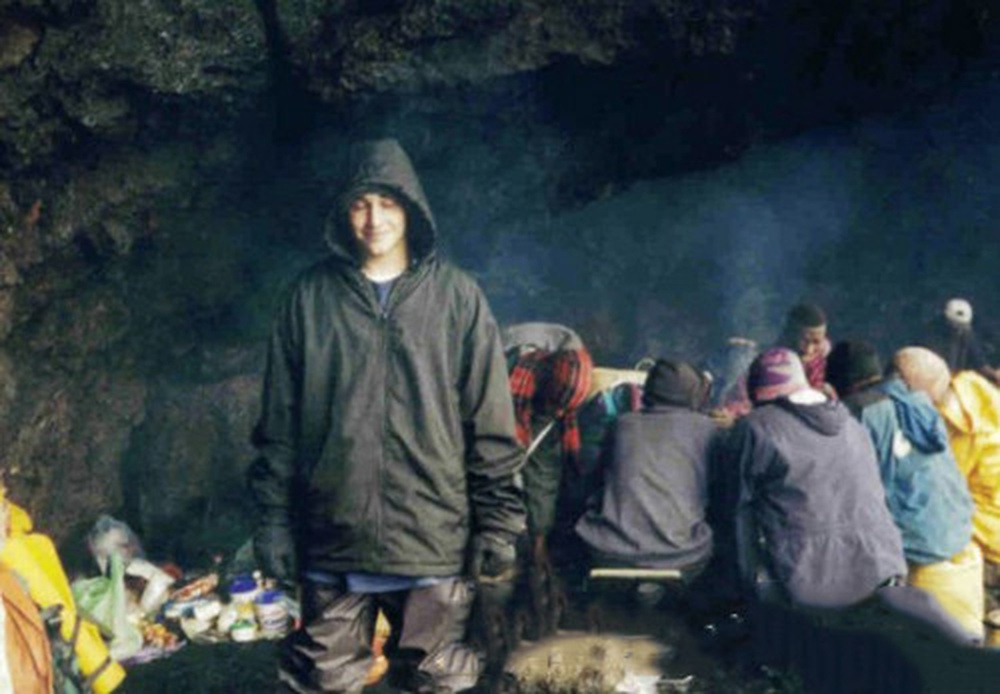
Me at Camp on Kilimanjaro in 1999
One of the photos above shows one of our campsites, where a small cave provided the perfect shelter from the constant rainstorms. Each day I’d get soaking wet and then try to dry all my gear by the fire at night. The smoky smell stayed on everything for almost a year afterward, no matter how many times I washed it.
And yes, that’s me at camp way back in 1999!
A Changing Landscape
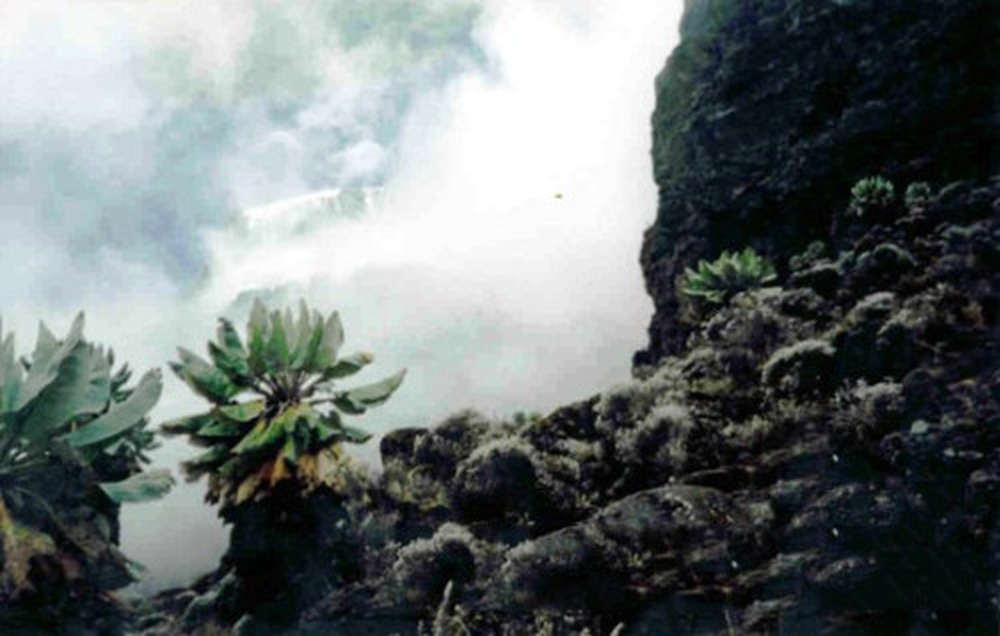
Giant Senecio Plants on Kilimanjaro
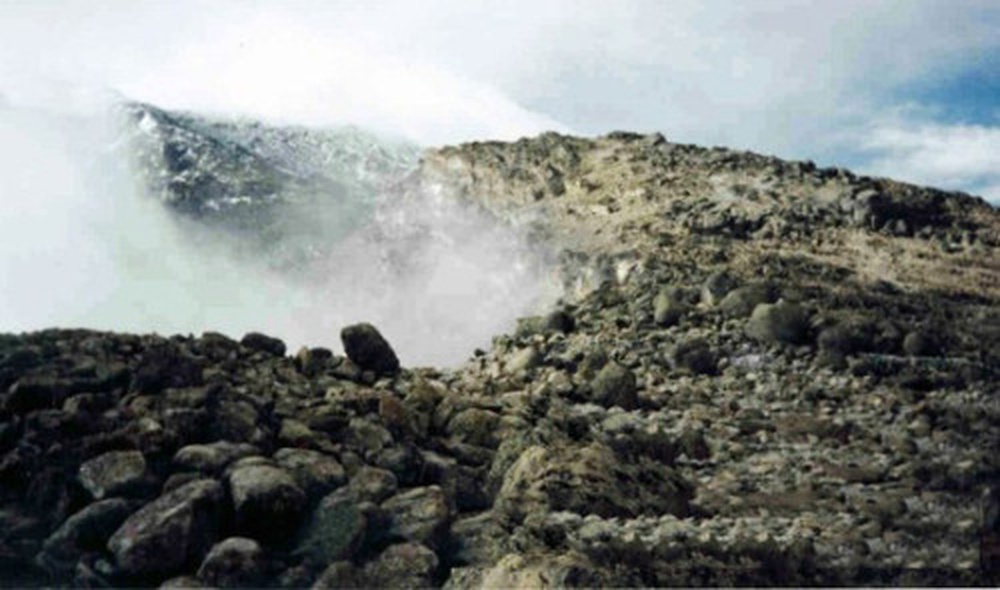
The Alpine Desert
One of the things I loved most about Kilimanjaro was how dramatically the landscape changed as we climbed. Higher on the mountain we entered a rocky environment filled with giant senecio plants. Some of these strange plants can grow enormous, with thick trunks and clusters of leaves that almost make them look like palm trees.
Combined with the volcanic terrain, they made parts of Kilimanjaro feel like another planet. Eventually even the strange vegetation disappeared and we entered the alpine desert, where there was almost nothing left but rock, fog, and the mountain above us.
The Snows of Kilimanjaro

The Snows of Kilimanjaro in 1999
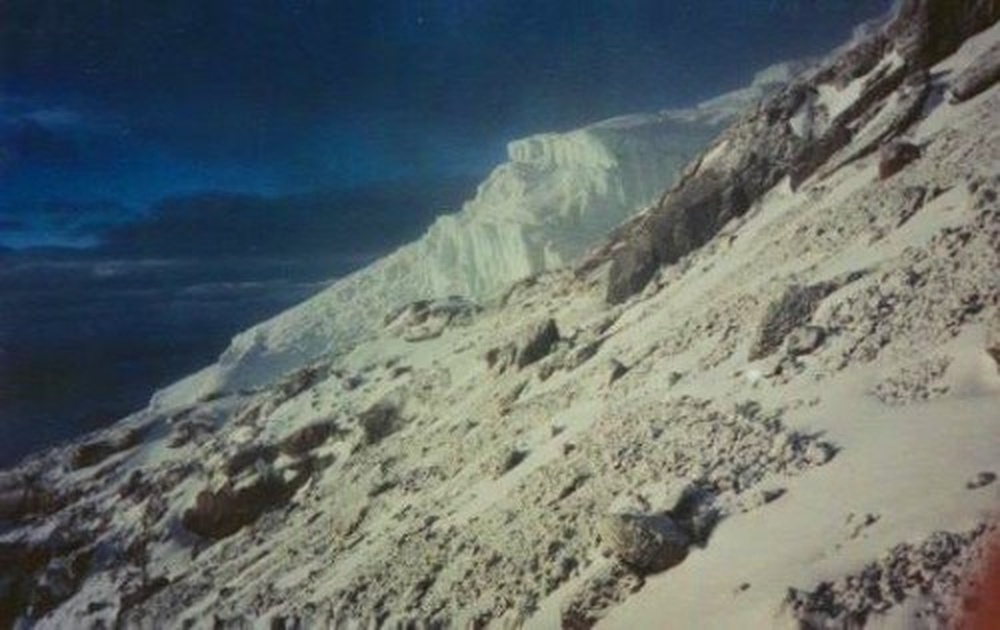
Arrow Glacier
Eventually we climbed high enough that the temperature dropped below freezing. Oddly enough, I had been looking forward to it. Rain had finally become snow, which meant I was no longer fighting a constant battle to keep myself and my gear dry.
On summit day we left camp around midnight with the goal of reaching the top for sunrise. Two others in our group were moving incredibly slowly, so when the sun finally began to rise we were still some distance from the summit.
I remember looking over and seeing an enormous block of ice. This was my first real adventure, I was only 18, and my reaction was basically, “Whoa! What is that?” My guide explained that I was looking at the Arrow Glacier. Ironically, the first glacier I ever saw in my life was almost directly on the equator in Africa.
These old scanned photographs were taken during my 1999 climb and preserve what the snow and ice looked like when I was there. The photo above is particularly meaningful to me now. At the time, Arrow Glacier was simply the first glacier I had ever seen in my life. Today, Arrow Glacier has disappeared entirely. What was just a cheap-camera travel photo from my first major adventure has unintentionally become a historical record of a part of Kilimanjaro that no longer exists.
My First Summit

Sunrise Above the Clouds Near the Summit
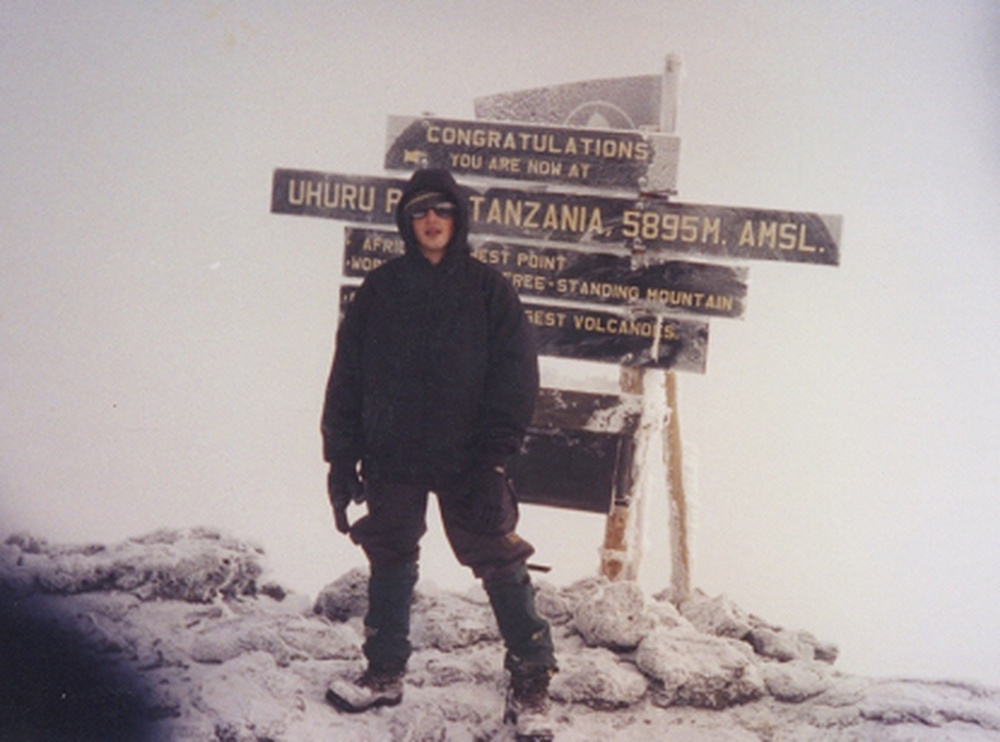
My First of the Seven Summits — November 27, 1999
In the first photo above, the sun was rising while I stood between two layers of clouds, almost at the summit. On November 27, 1999, I reached the top of Mount Kilimanjaro at 18 years old.
At the time it was simply the biggest adventure I’d ever attempted. I didn’t know that years later I’d climb Everest, Denali, Aconcagua, Elbrus, and other mountains around the world.
Kilimanjaro had quietly become the first of my Seven Summits.
