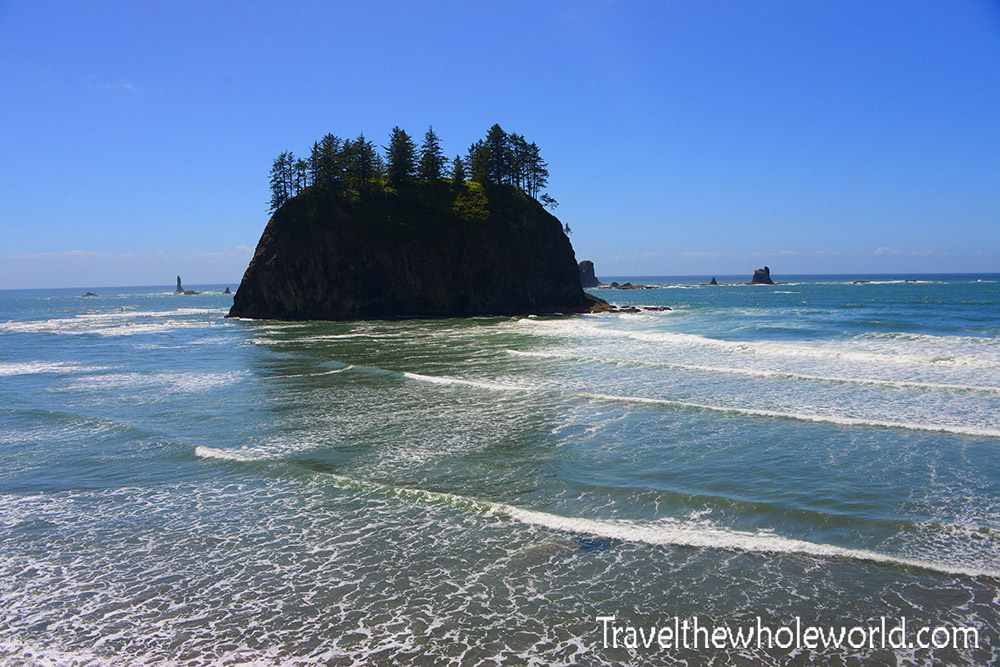
If I could visit only one place in Washington state, Olympic National Park would probably be my choice. Even though I had traveled to Washington several times, it took more than 15 years after my first visit to finally make it here. I consider it one of the best national parks in the country, largely because of the incredible variety packed into the Olympic Peninsula. Within the same park you can explore rugged Pacific beaches, dense temperate rainforests, and mountains that hold snow and glaciers throughout the year.
Second Beach
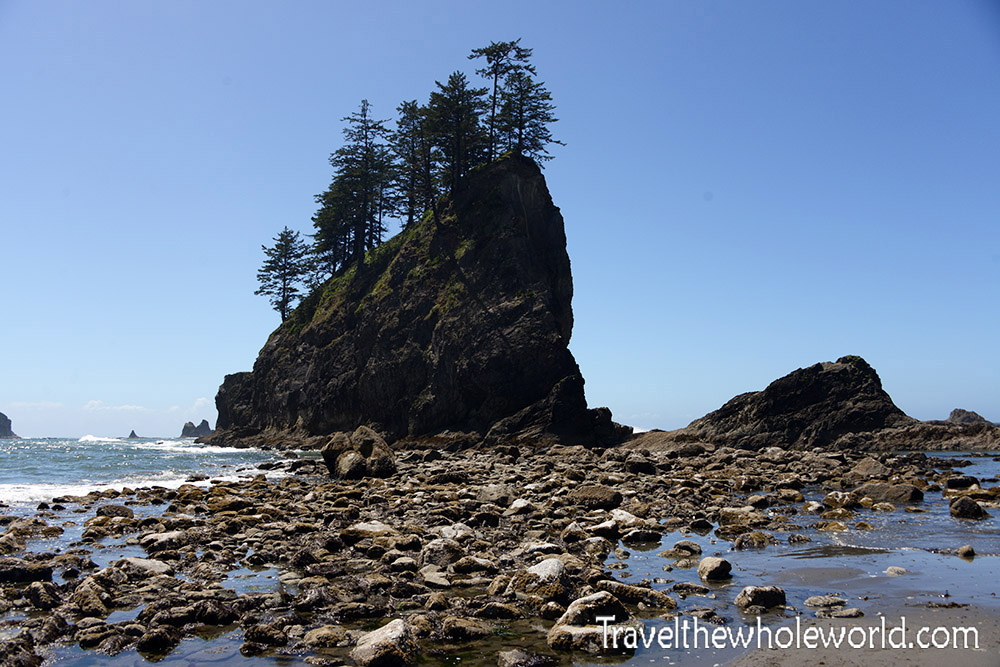
Along the western coast of the Olympic Peninsula are countless beaches to explore. Even in July the Pacific water was extremely cold, so I wasn’t tempted to spend much time swimming. Fortunately, the coastline offers plenty of other activities, including kayaking, beach camping, hiking, and exploring tidepools. I came to Second Beach after several people recommended it for its scenery and marine life. The dramatic coastline definitely lived up to the recommendations, and I even did a short scramble up one of the rock formations for a better view.
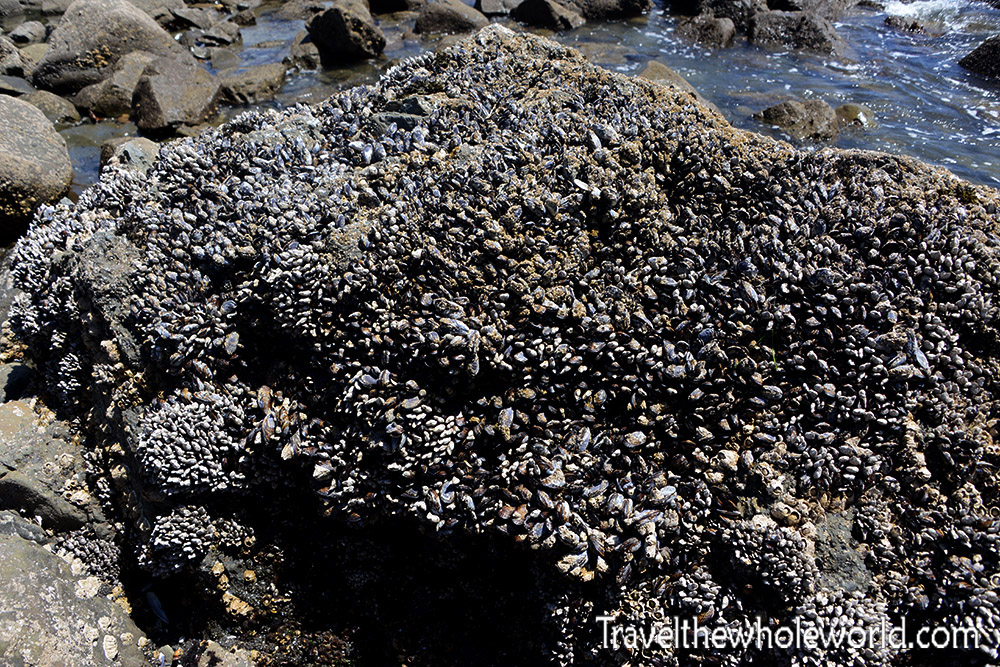
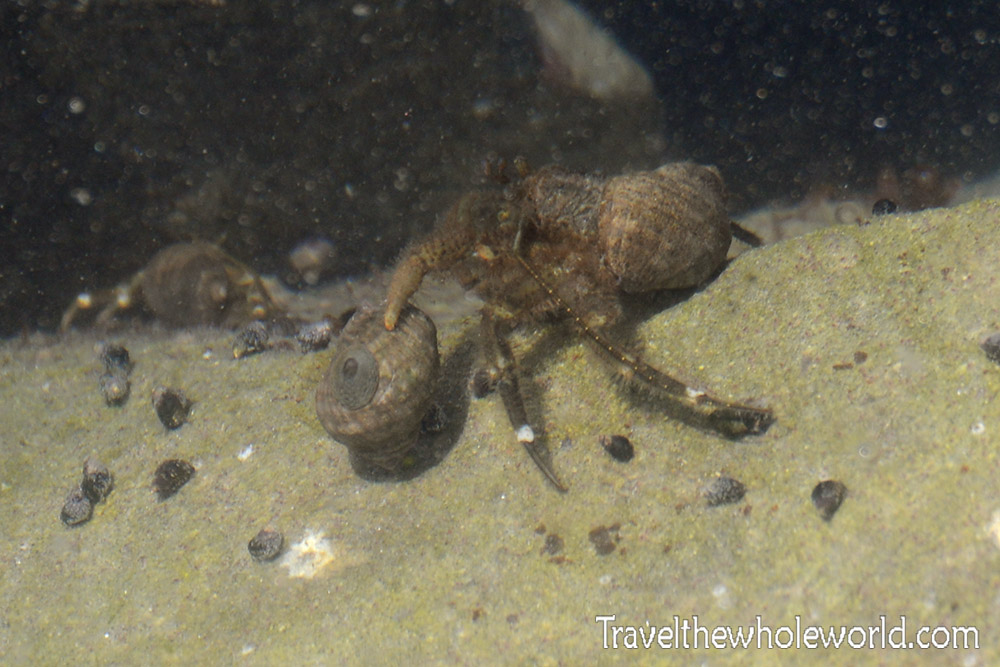
Tidepools were something I had never really explored before, so I was looking forward to seeing what I could find. I don’t think I arrived at the ideal time of day, since the tide had already covered many of the areas I wanted to explore. When the tide retreats, pools of seawater remain among the rocks and can reveal all kinds of marine life, including starfish, anemones, crabs, and barnacles. At first most of what I found seemed to blend into the rocks, including the barnacles above and the crab below.
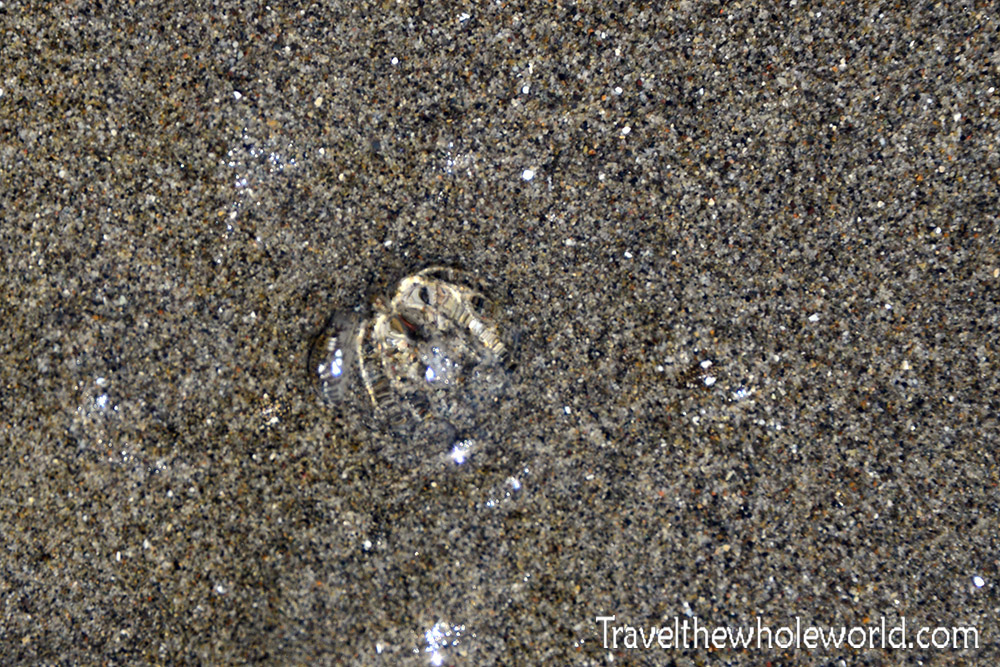
I also found one of the strangest things I’ve ever seen along a beach. The photograph wasn’t easy to take because water was constantly flowing back toward the ocean, but in the sand was a gelatinous-looking ball with a tiny animal moving around it in circles. I never figured out exactly what I was looking at, but discovering little things like this was part of what made exploring the tidepools interesting.
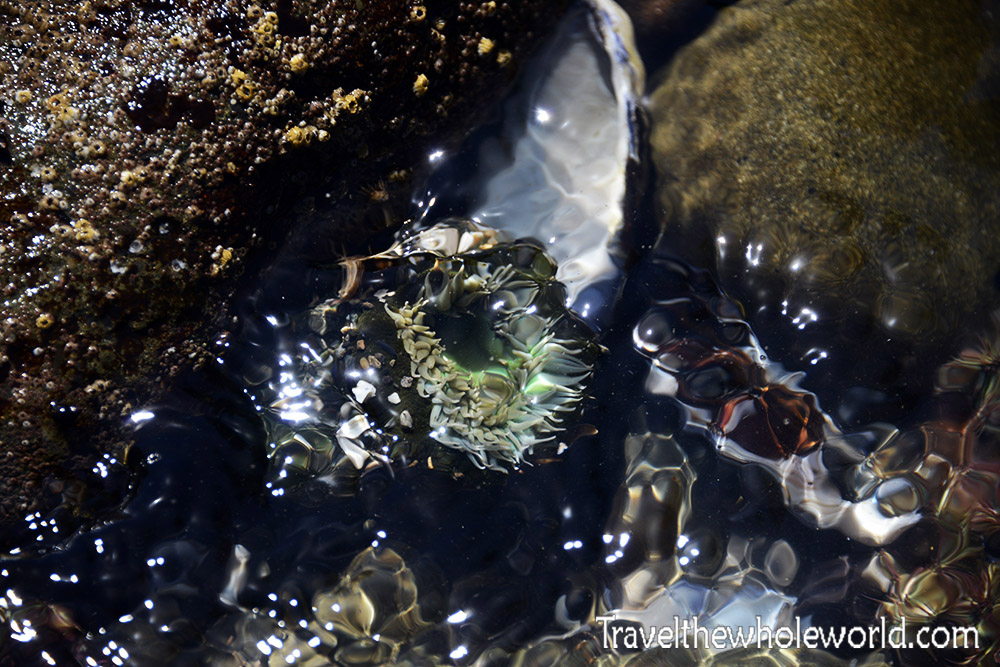
Once I slowed down and looked more carefully, I started finding more interesting marine life hidden among the rocks. The anemones were especially easy to overlook until I began paying attention to the smaller pools and crevices. The photographs above and below show a couple of the stranger-looking ones I came across.
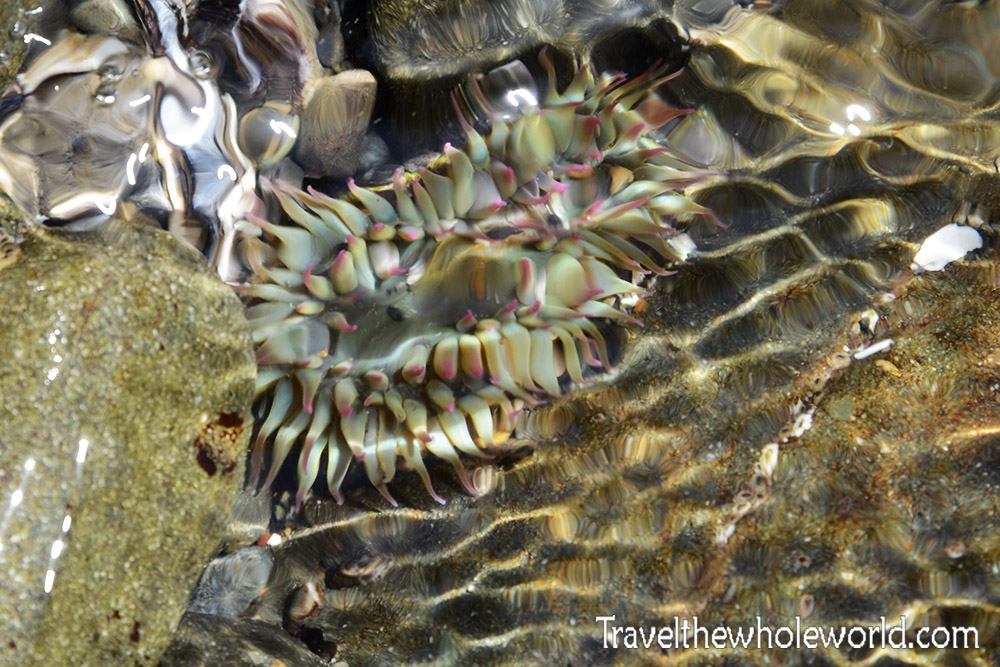
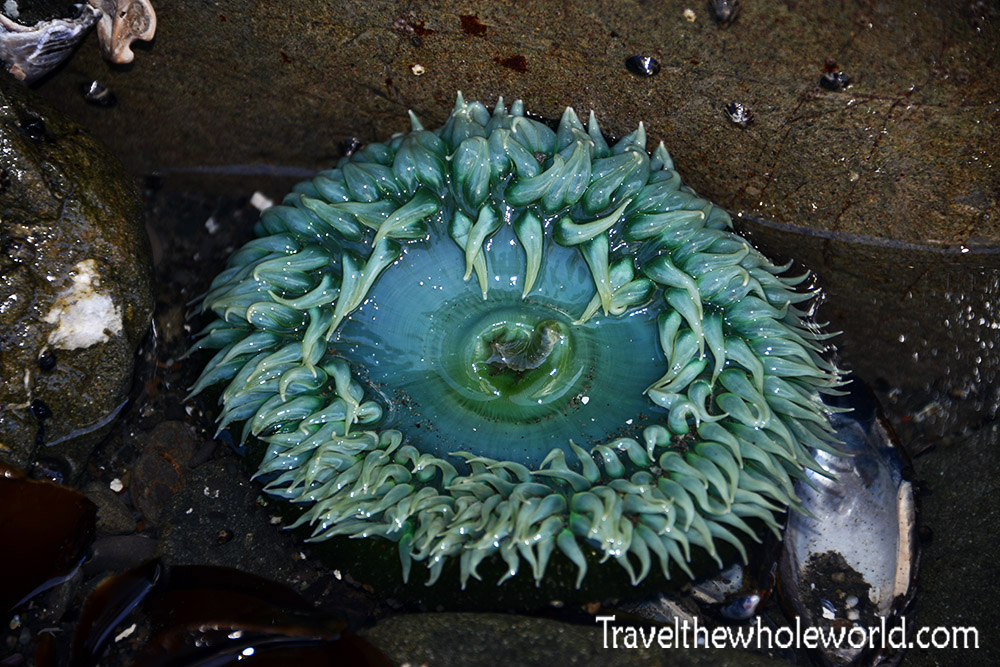
This was by far my favorite discovery in the tidepools. After looking it up, I learned that it was a giant green anemone. I had hoped it might be something unique to the Pacific Northwest, but its range actually extends from Alaska south along much of the Pacific coast. Out of the water it can appear surprisingly brown, but once submerged it opens its tentacles and reveals the bright green color that gives it its name. Exploring the tidepools reminded me a little of searching for wildlife in a forest: patience and a careful eye can completely change what you see.
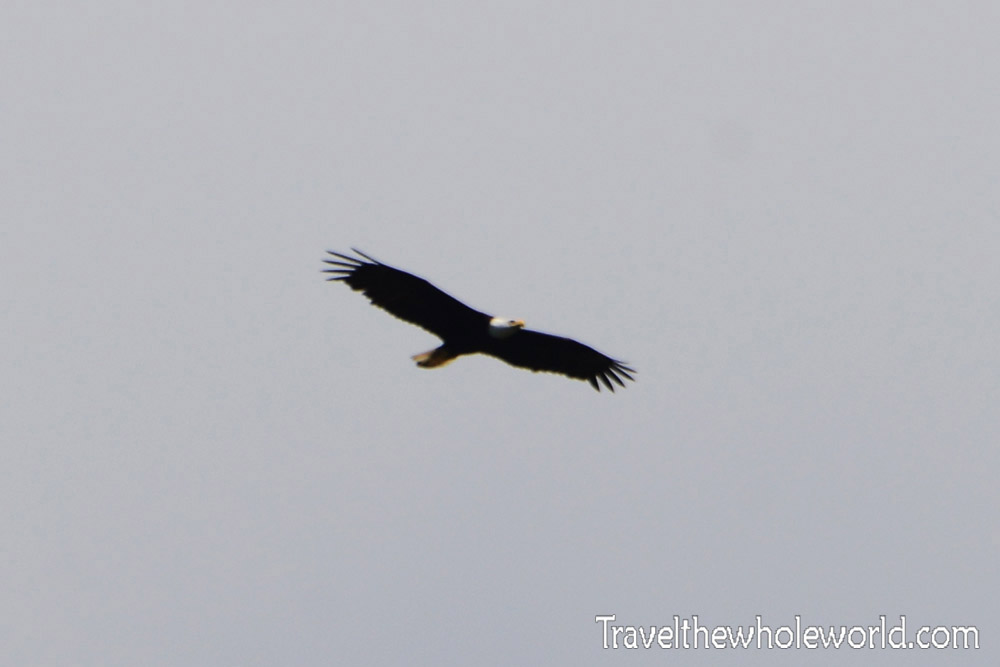
While I had been hoping to find a few colorful starfish, I definitely wasn’t expecting bald eagles. Just as I was leaving Second Beach, I spotted not one but three circling overhead. They were too far away for a great photograph, but seeing them above the Pacific coastline was an impressive way to end my visit to the beach.
Hoh Rain Forest
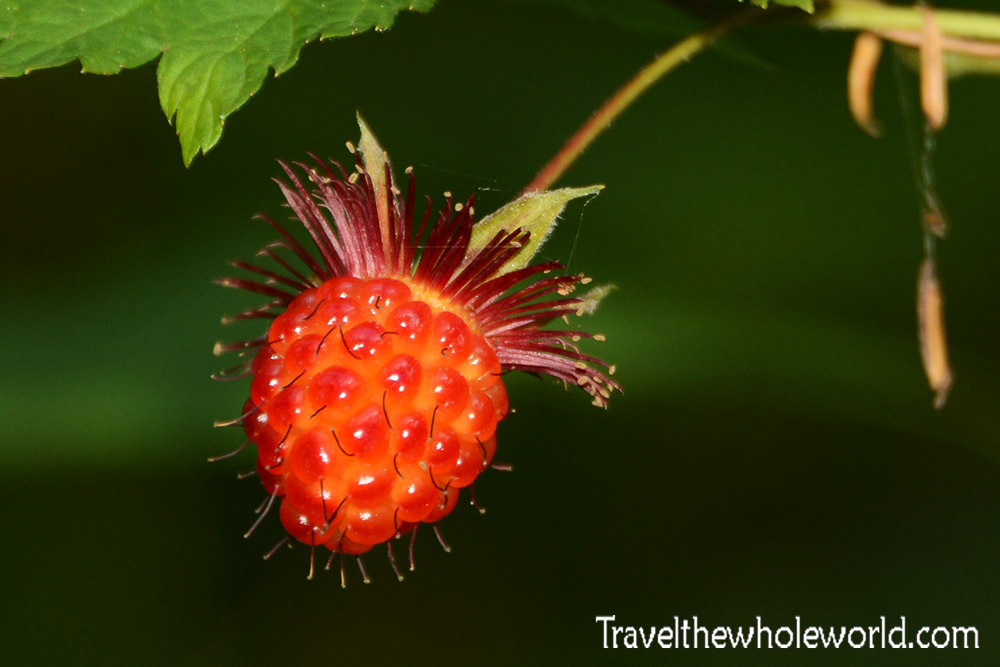
After finishing at Second Beach, I headed inland through the temperate rainforest. Within minutes of leaving the coast I started noticing colorful berries among the thick vegetation. I first came across bright yellow ones near the coast, while farther inland I saw similar berries that were completely red.
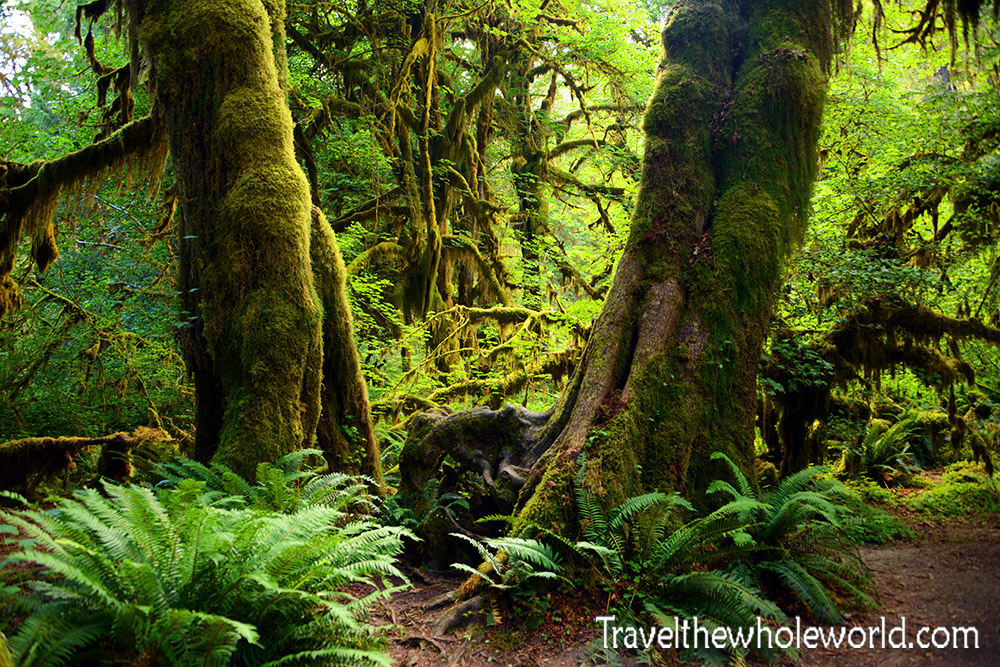
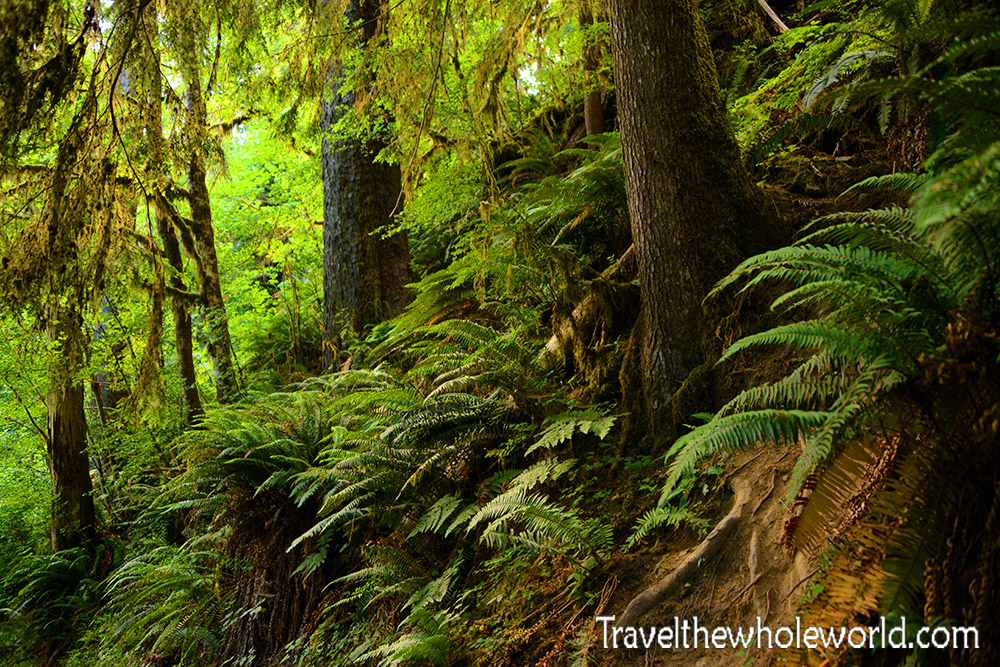
The Olympic Peninsula receives enormous amounts of precipitation, creating some of the best examples of temperate rainforest in the United States. Summer is generally the driest and easiest season for exploring the area, although moisture is still everywhere. These photographs show some of my first views after entering the Hoh Rain Forest, where enormous trees, ferns, moss, and dense vegetation dominate the landscape.
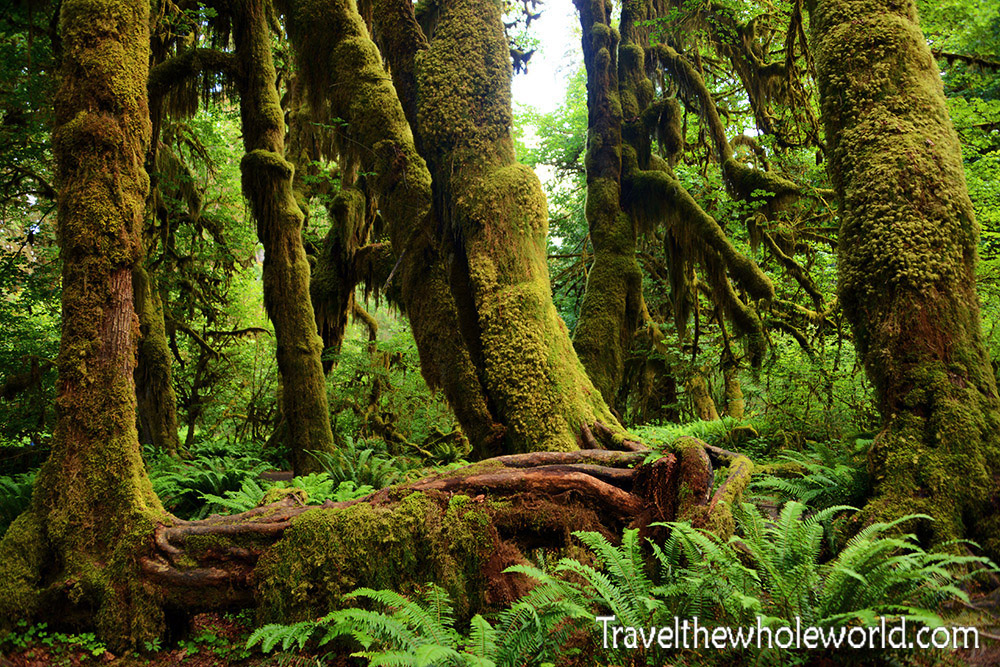
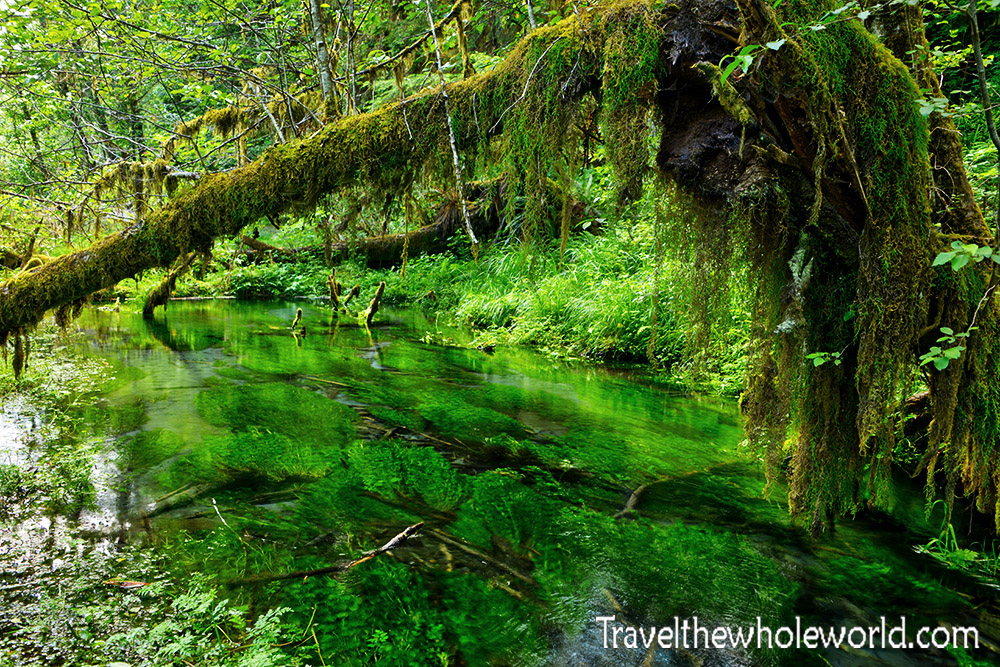
Everything seemed to be covered in a hundred different shades of brown and green. Moss grew across trunks and branches, ferns covered the forest floor, and even the creek photographed above had bright green vegetation growing beneath the water. The constant moisture gives the entire forest an almost prehistoric appearance.
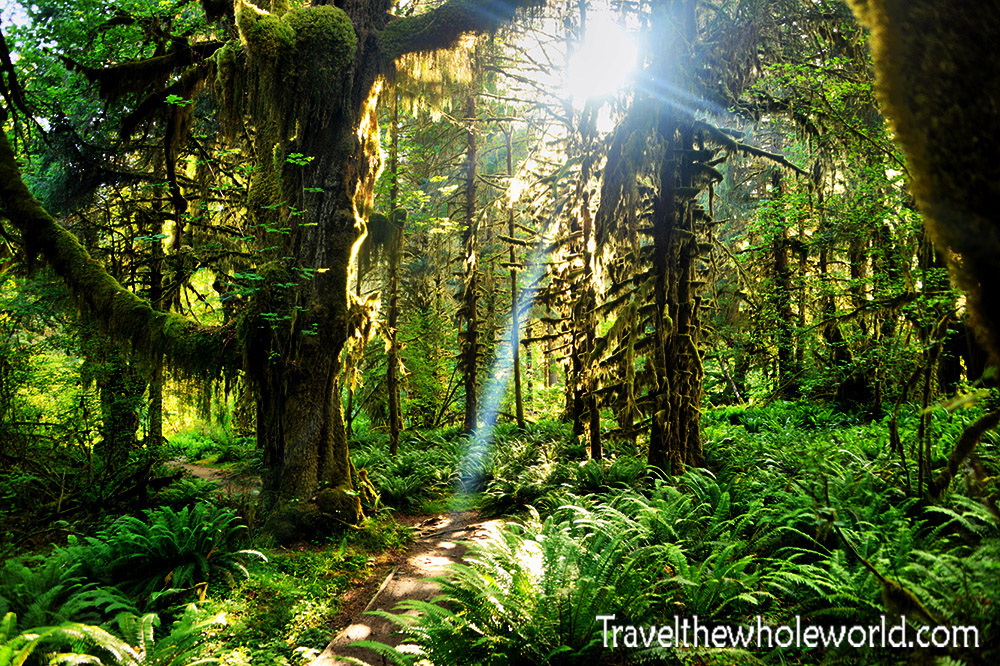
The scenery here reminded me surprisingly of parts of my expedition to Carstensz Pyramid. That trip involved weeks of traveling through tropical rainforest on the way to one of the Seven Summits. The environments were obviously different, but the cool temperatures, dense vegetation, and dramatic mountains rising beyond the forest brought back some familiar memories.
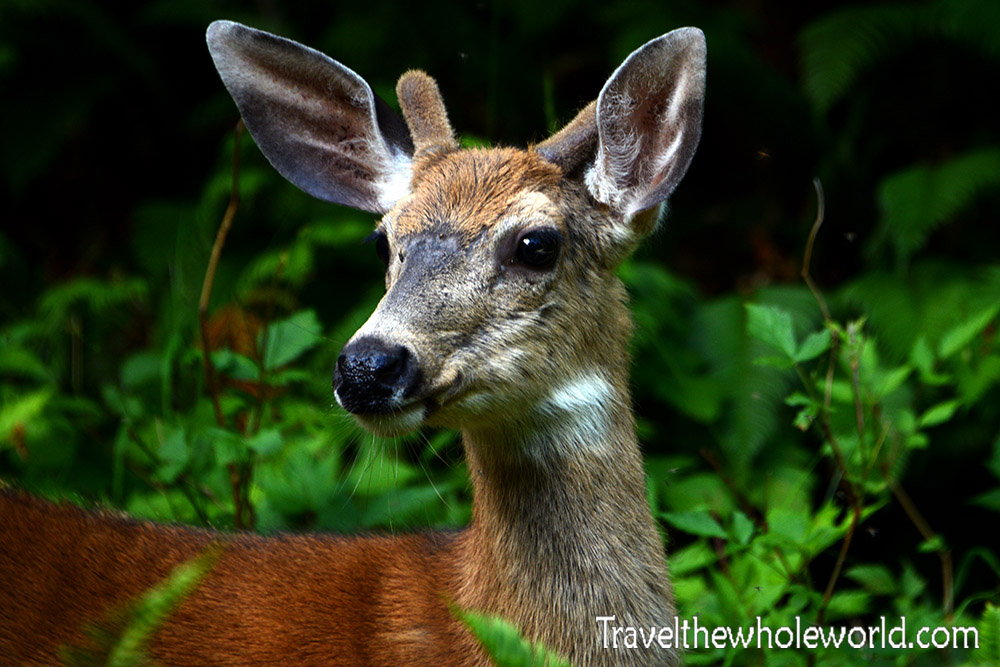
The rainforest supports plenty of wildlife, although the dense vegetation can make animals surprisingly difficult to spot. I eventually came across this deer, which seemed completely unconcerned by my presence. Black bears, Roosevelt elk, mountain lions, and many other animals also live throughout Olympic National Park, but in a forest this thick you can easily hike for hours without seeing much wildlife at all.
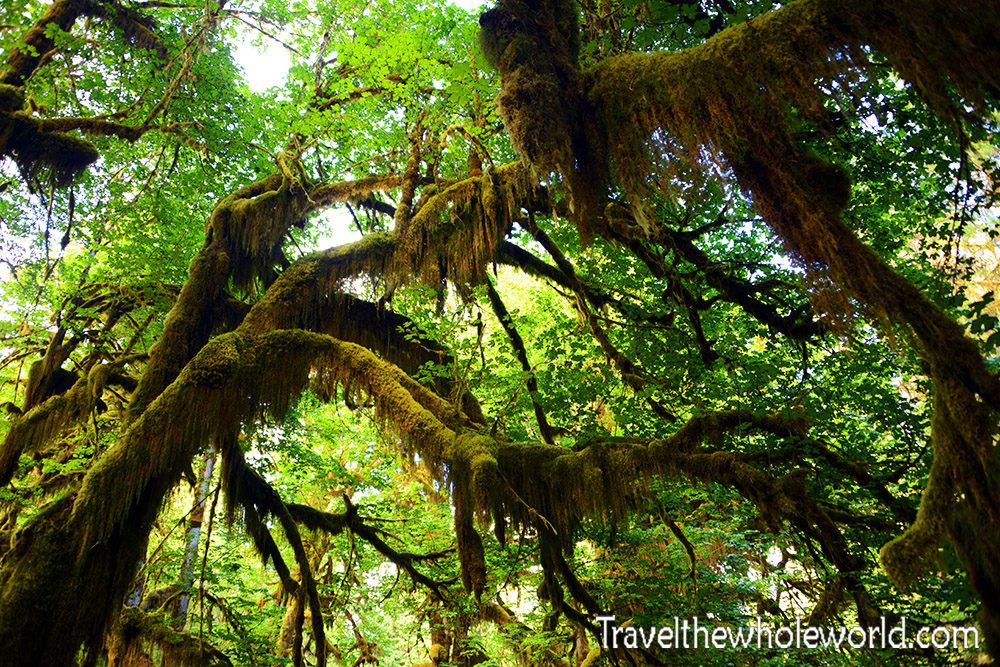
While exploring the rainforest, it’s worth remembering to look up. Some of the most distinctive scenery is overhead, where enormous branches are covered in thick layers of moss. The canopy also supports plenty of birdlife, although spotting birds through such dense vegetation can be challenging.
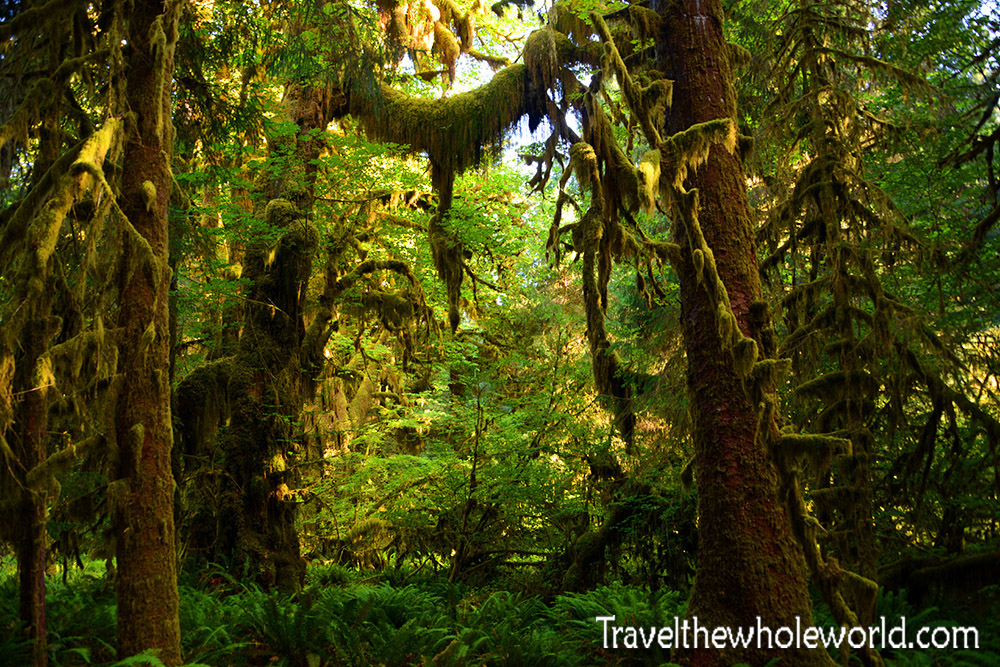
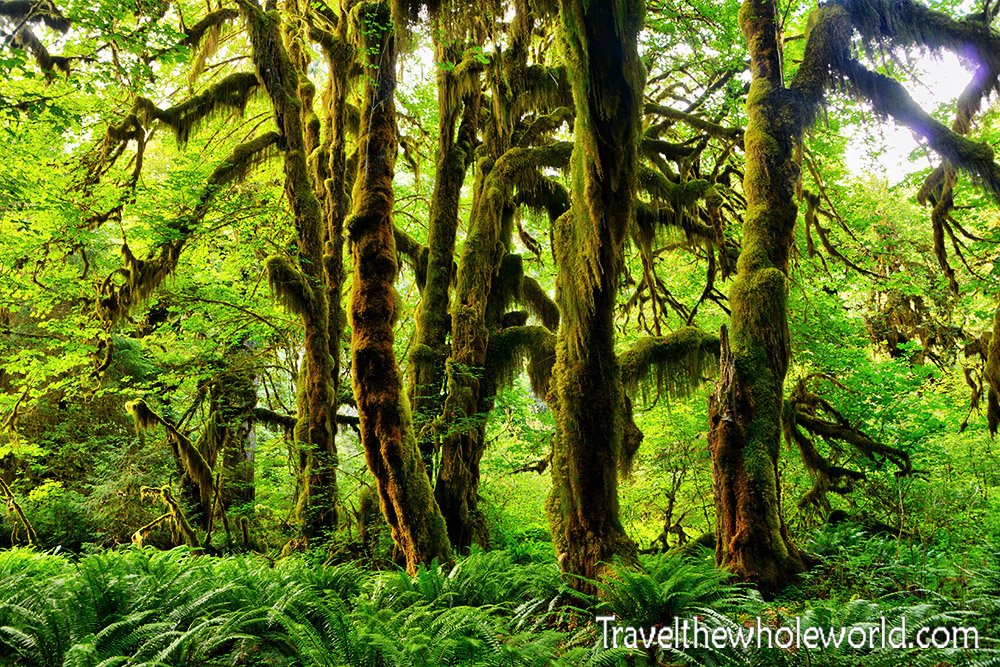
This final rainforest photo was taken along the Hall of Mosses Trail and shows one of the most famous scenes in Olympic National Park. Huge maple trees are draped in moss and surrounded by dark green ferns, creating exactly the kind of landscape people imagine when they hear the words temperate rainforest. The trail is only about a mile long and relatively flat, making this scenery accessible to almost anyone. For more serious hikers, however, the surrounding wilderness has trails extending deep into the Olympic Mountains and destinations that can take days to reach.
Climbing Mount Washington
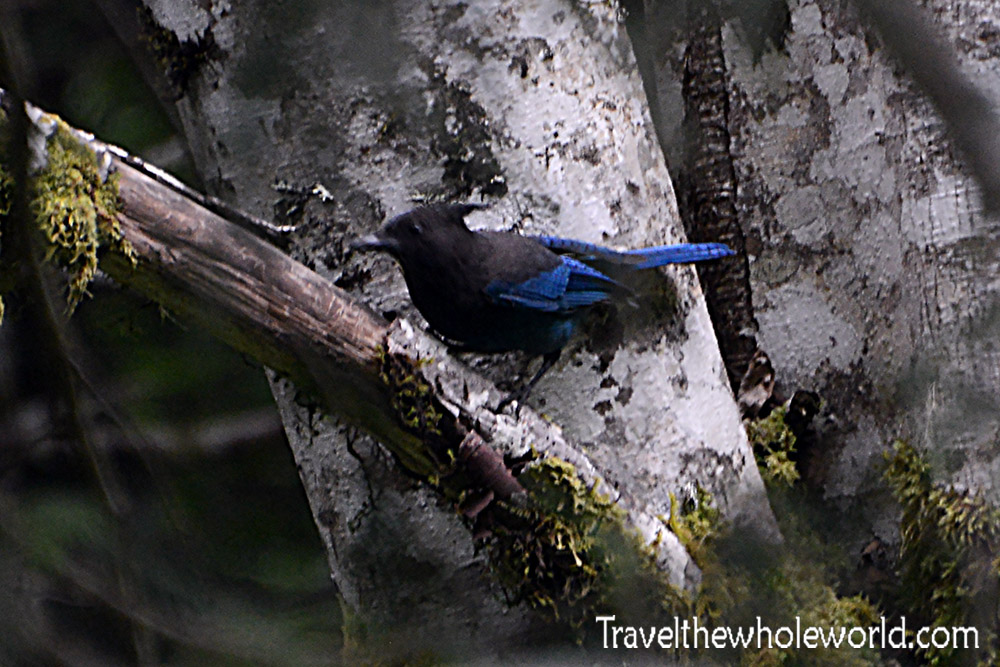
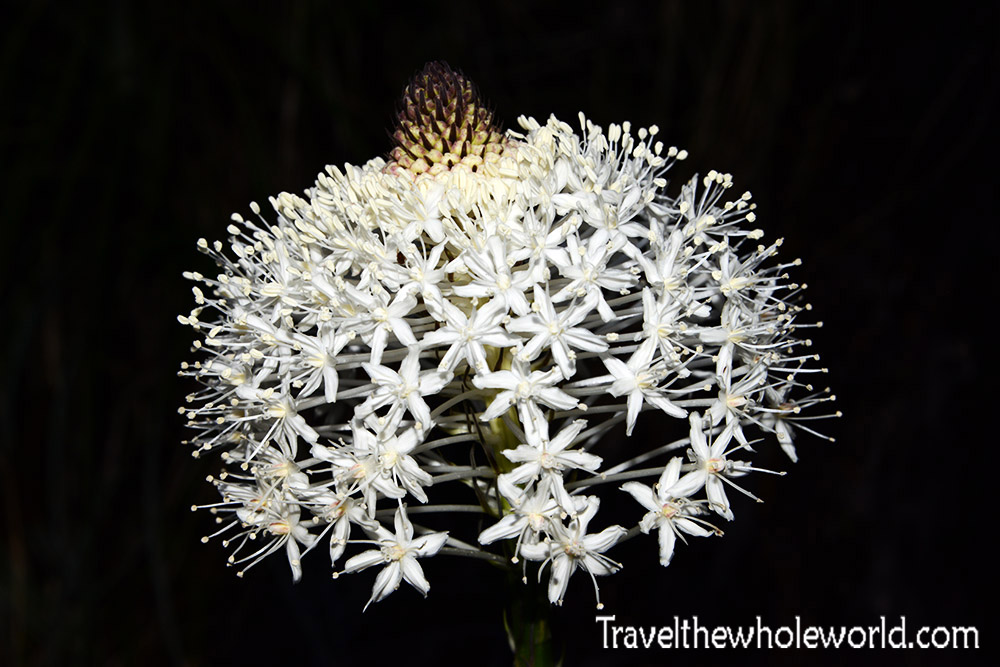
It wasn’t until I actually visited Olympic National Park that I began to appreciate its mountains. I had learned long ago never to judge a mountain’s difficulty by elevation, but the Olympic Mountains reinforced that lesson. The highest peaks don’t even reach 8,000 feet (2,500 meters), yet the steep terrain, snow, glaciers, exposed ridges, and unpredictable weather can create some serious challenges. When bad weather ended my plans for Mount Shuksan, I decided at the last minute to try Mount Washington, a mountain I had never heard of that rises just over 6,000 feet (1,800 meters). The hike began far from the rainforest in a thick conifer forest, where I spotted this Steller’s jay and the unusual plant photographed below.
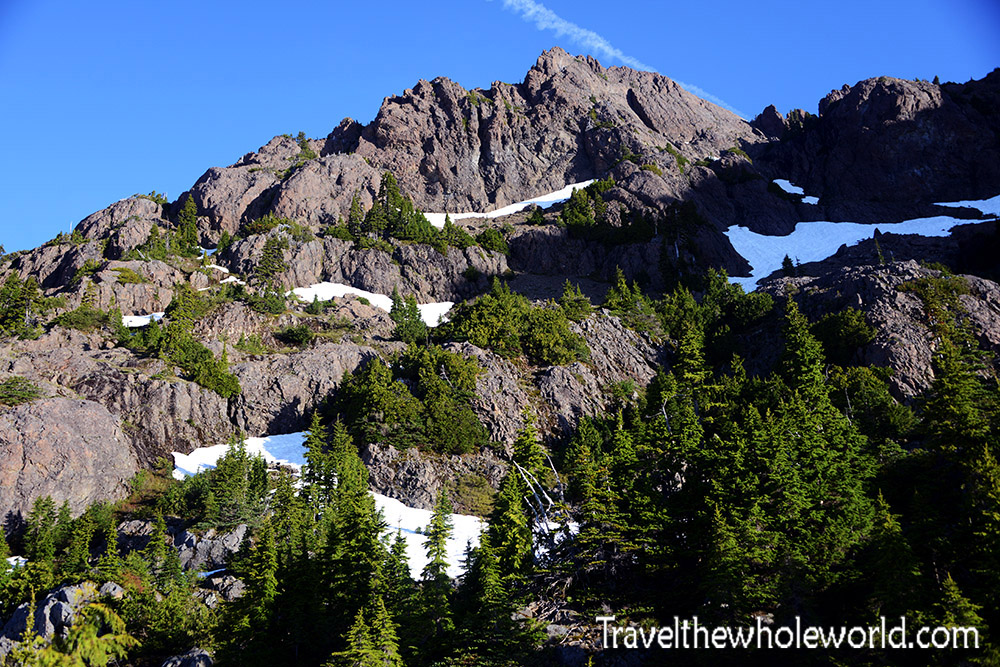
The hike started with some fairly steep terrain, at least by East Coast standards. After gaining elevation, the trail eventually emerged from the forest into a large basin where Mount Washington and neighboring Mount Ellinor came into view. Even though this was July, patches of snow still remained across the surrounding slopes.
The hike initially went smoothly and the trail was mostly easy to follow. The only questionable section came where the route entered a ravine beside a steeper rock face. I chose the rock instead and quickly discovered that climbing it with a heavy backpack was more involved than I expected. I put on my harness and placed some protection while climbing upward, but because we had started much later than planned, daylight was already disappearing. Rather than continue complicating the route, we eventually used the ravine and made our way to camp.
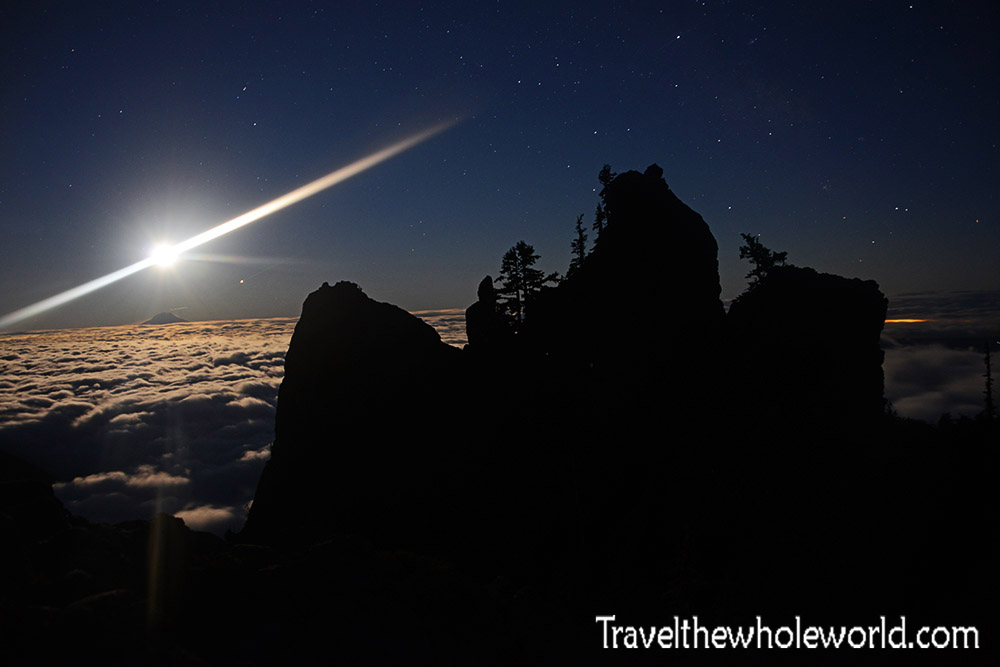
The timing at least gave us an incredible reward. As darkness settled over the mountains, the moon rose above a layer of low clouds beside the rock formations where I had been climbing. It initially appeared deep red before quickly losing its color. I missed the best moment with the camera, but the photograph above still captures some of what made that evening so memorable.
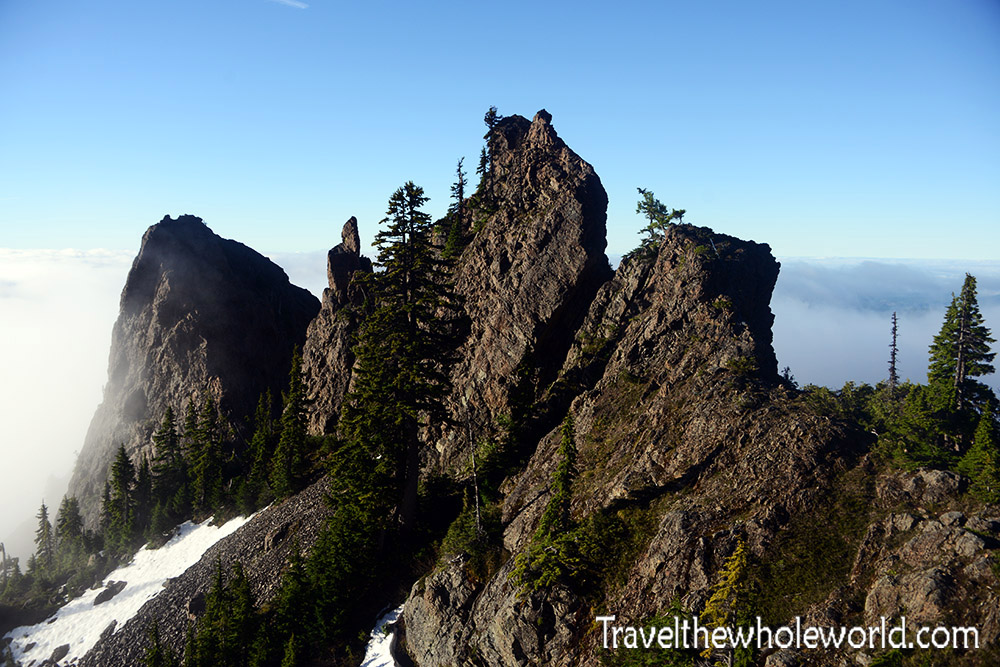
The next morning brought beautiful weather, and we were grateful that the night had remained dry. If you look closely at the photograph, you can barely see my rope on the third rock pinnacle where I had climbed the previous evening. I had brought technical climbing equipment in case we decided to vary the route, but for the summit attempt we chose the normal route. I left the unnecessary gear at camp and we headed upward with much lighter packs.
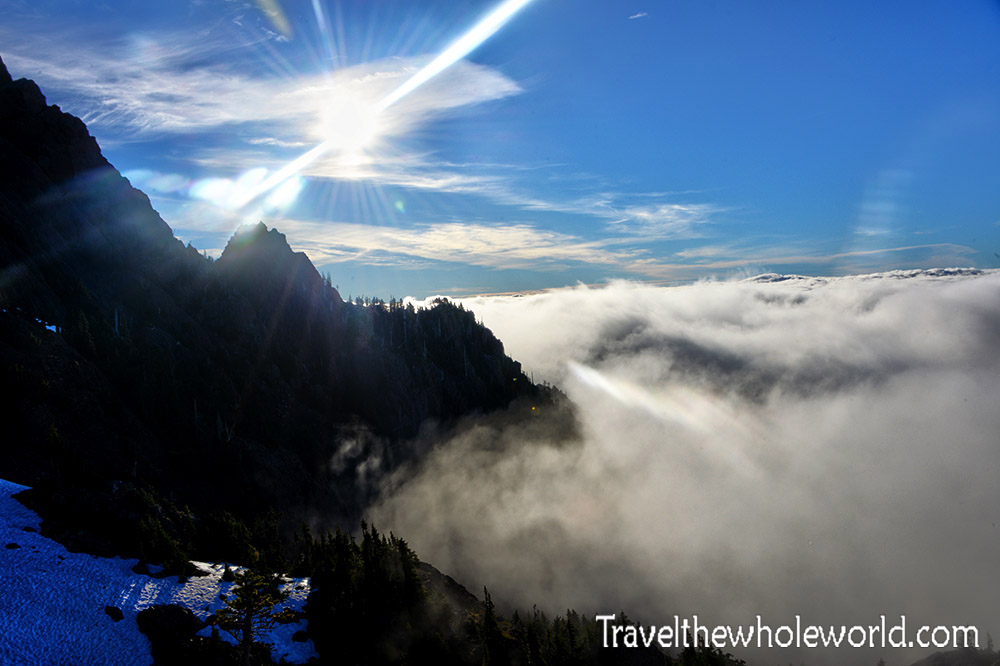
The strange horizontal beam coming from the moon in my nighttime photograph wasn’t an intentional effect. When I took this photo the next morning, I realized something was on my camera lens, possibly sunscreen. Once I cleaned it, the exaggerated streaks around bright light disappeared. This photograph was taken from camp toward the summit just before we started climbing, with early morning clouds already rising through the valley. The photo below looks in the opposite direction toward Mount Ellinor.
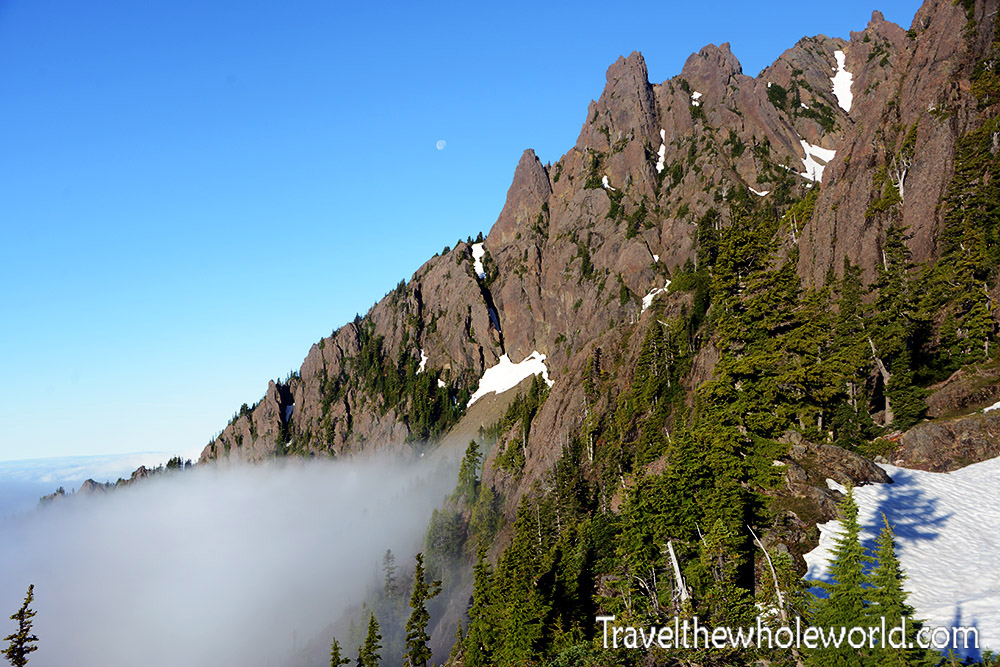
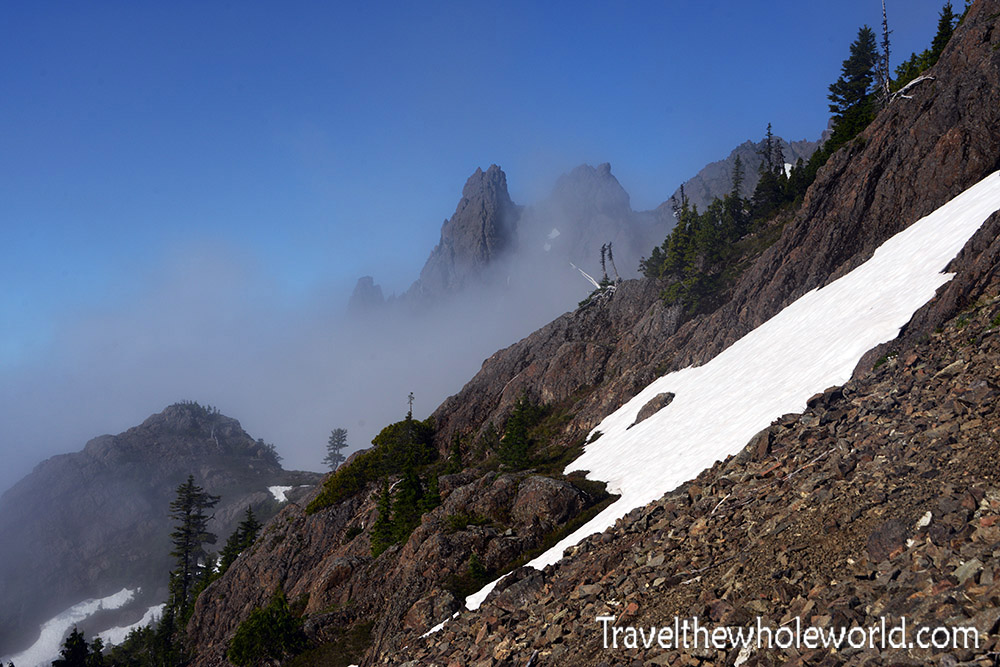
Above camp, the character of the route changed considerably. We were now above the forest, climbing across rocky slopes and loose scree rather than a packed trail. I also noticed that there seemed to be several variations of the normal route. The path we followed uphill avoided most of the remaining snow, while on the descent we encountered other trails that crossed snowfields or followed rougher terrain. Even on a relatively popular mountain, choosing one variation over another could make the route feel surprisingly different.
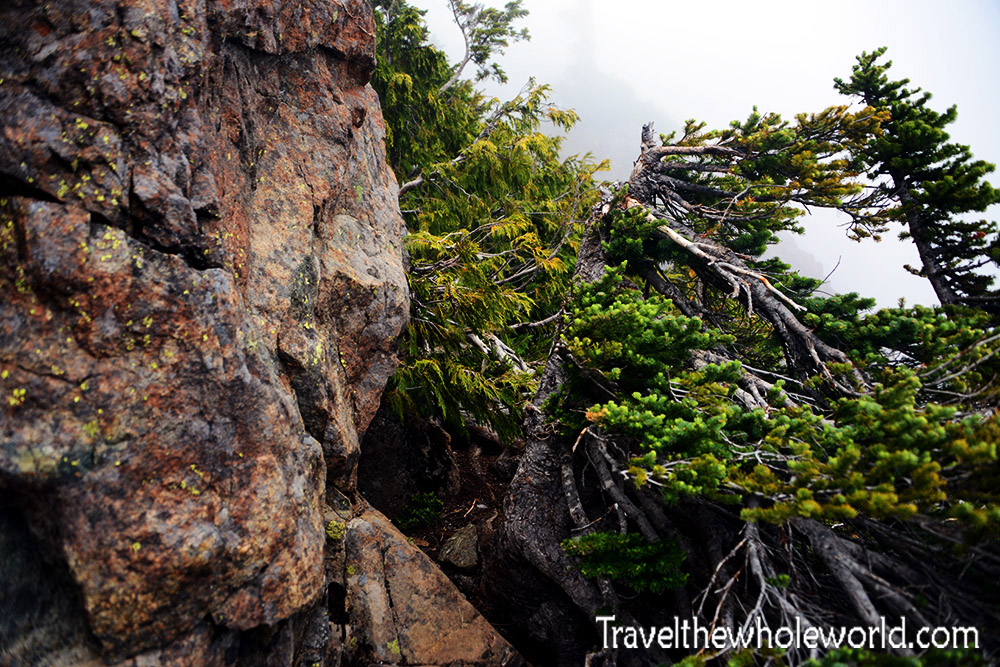
After crossing a short but steep section of snow, we returned to scree-covered terrain. Boot prints made it obvious that plenty of climbers had traveled this way, but at one point the route seemed to disappear completely. A patch of mountain-goat fur caught on a tree helped reveal where the trail continued, and once we stepped beyond it the route became obvious again.
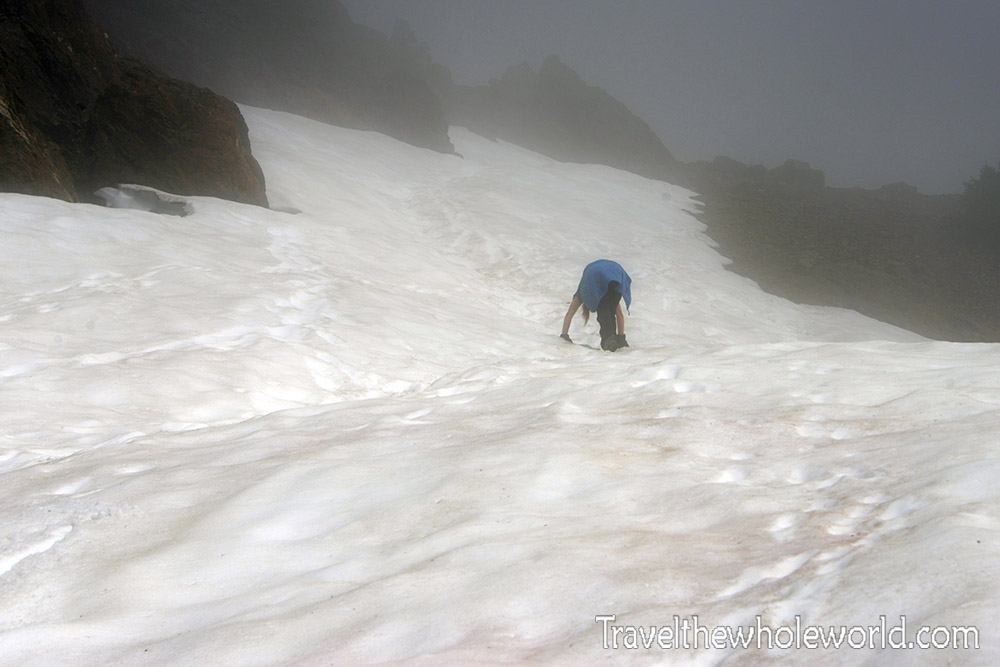
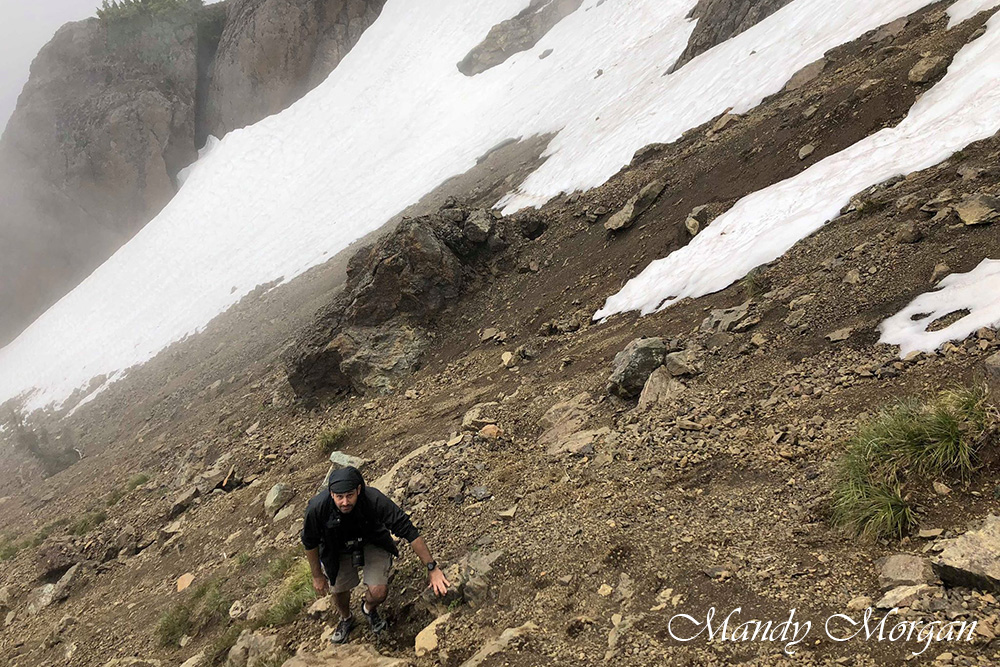
Before attempting Mount Washington, I had asked at the ranger station about snow conditions and was told there wasn’t much remaining. That was mostly accurate, although we still encountered two short snow crossings. The snow was soft enough to kick solid steps into the slope, and each crossing only took a minute or two. My friend is photographed above making one of the traverses, while below I’m scrambling farther up the rocky terrain toward the summit.
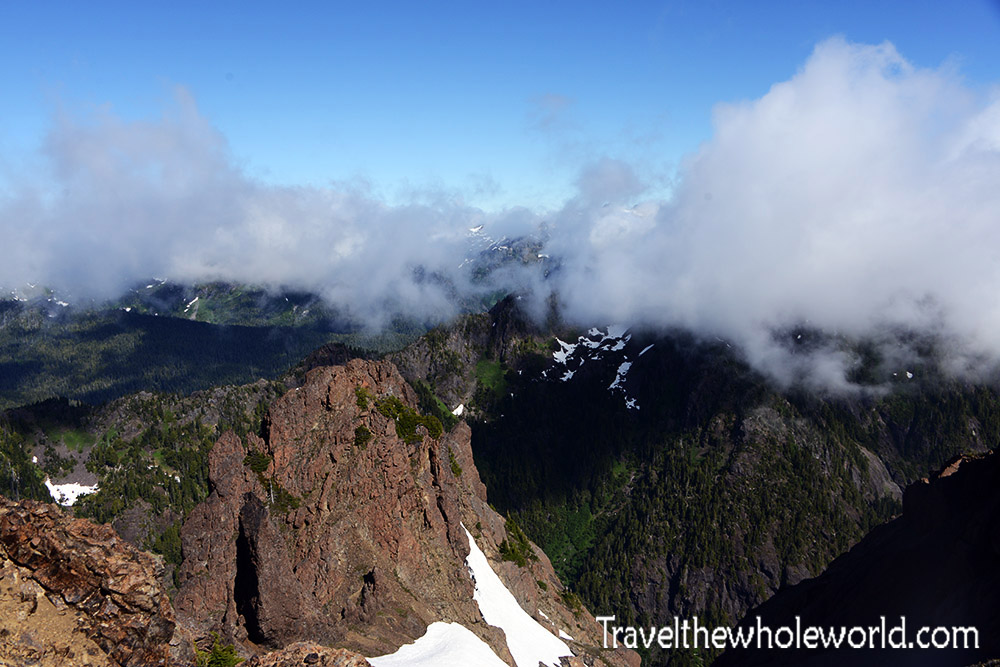
After the steeper terrain, we eventually reached a ridge with the summit block directly ahead. For the first time we could see deeper into the Olympic Mountains beyond Mount Ellinor and Mount Washington, although clouds were already beginning to obscure some of the distant views.
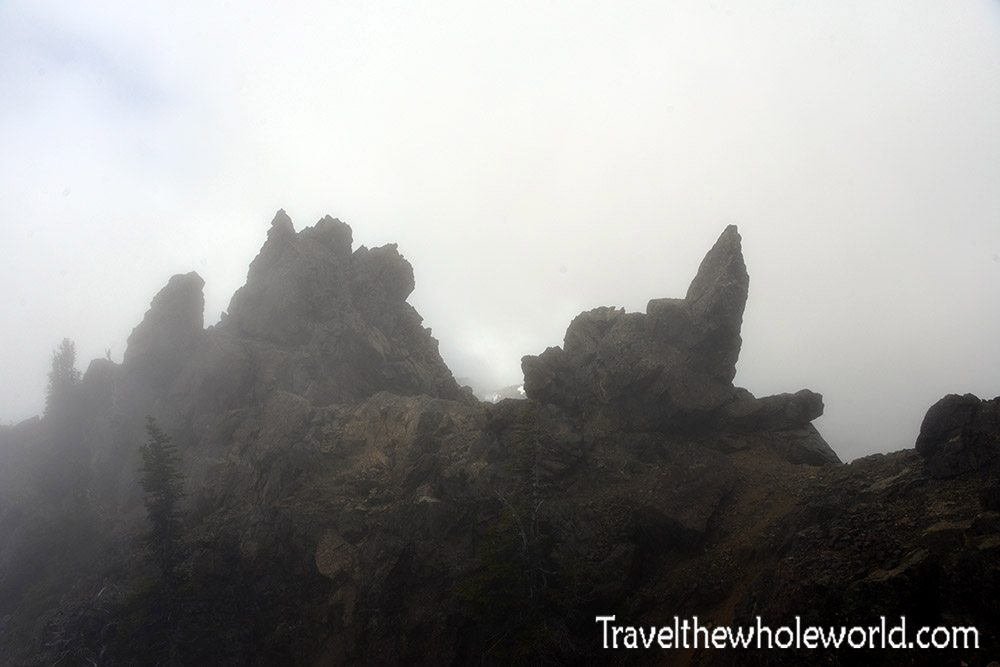
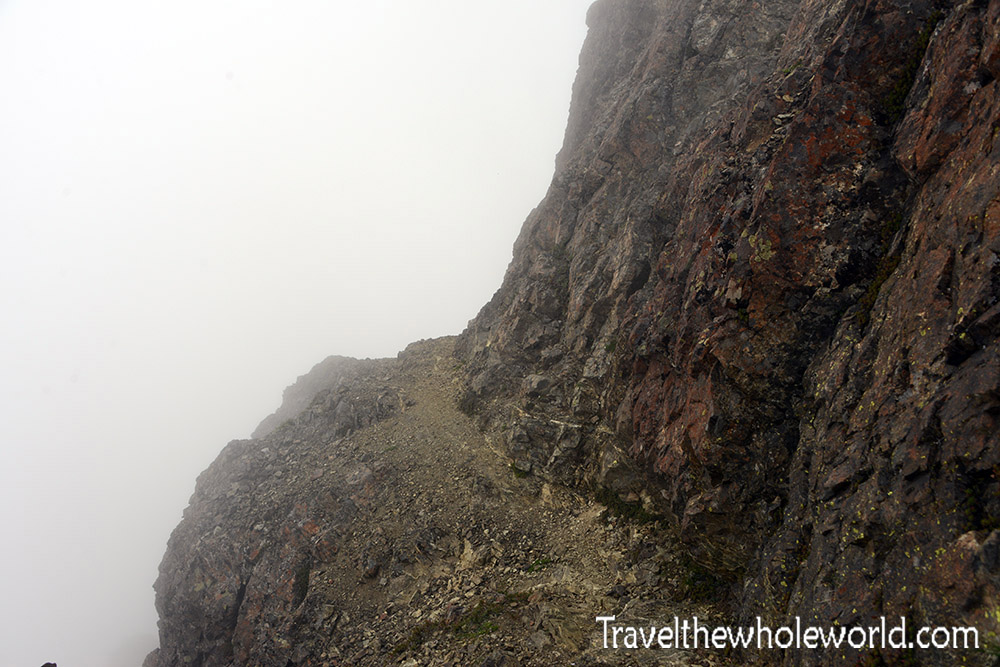
Reaching the summit block required traversing a narrow feature known as the Devil’s Horns. Beyond that, the route followed an exposed path beside the rock wall photographed below. The footing was good and the trail itself was wide enough to move comfortably, but there was still a considerable drop below us.
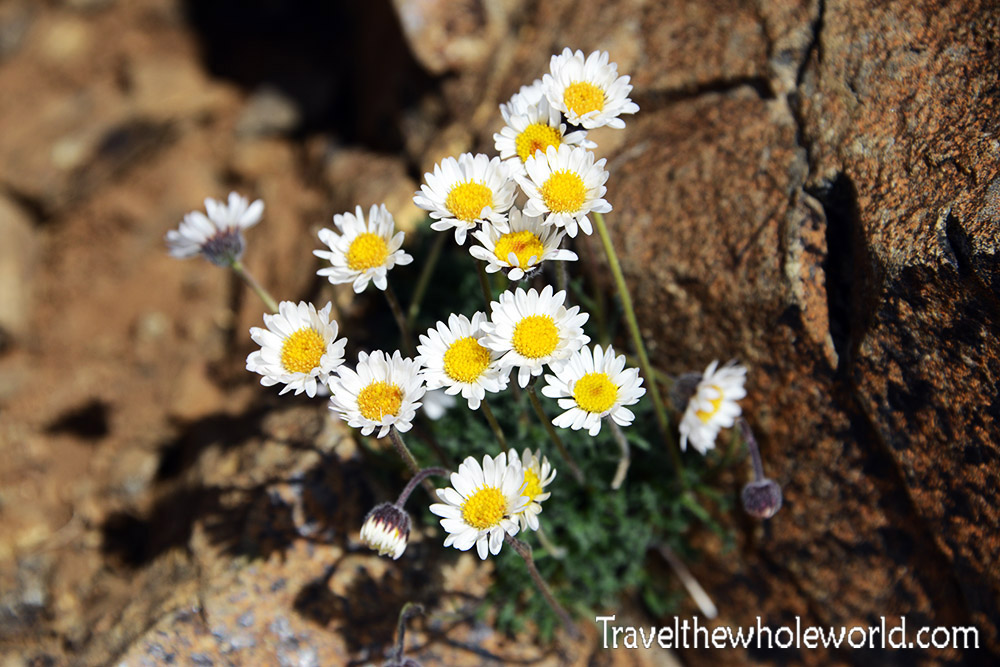
Beyond the exposed ridge came what I considered the most serious part of the climb: a short, steep slope covered in loose rock where a fall could have serious consequences. Having climbed much more technical mountains such as Carstensz Pyramid and the Matterhorn, I was still surprised by how much challenge Mount Washington managed to pack into such a relatively low elevation. I wasn’t thinking much about photography while crossing the steeper terrain, but I did stop long enough to photograph these flowers growing surprisingly close to the summit.
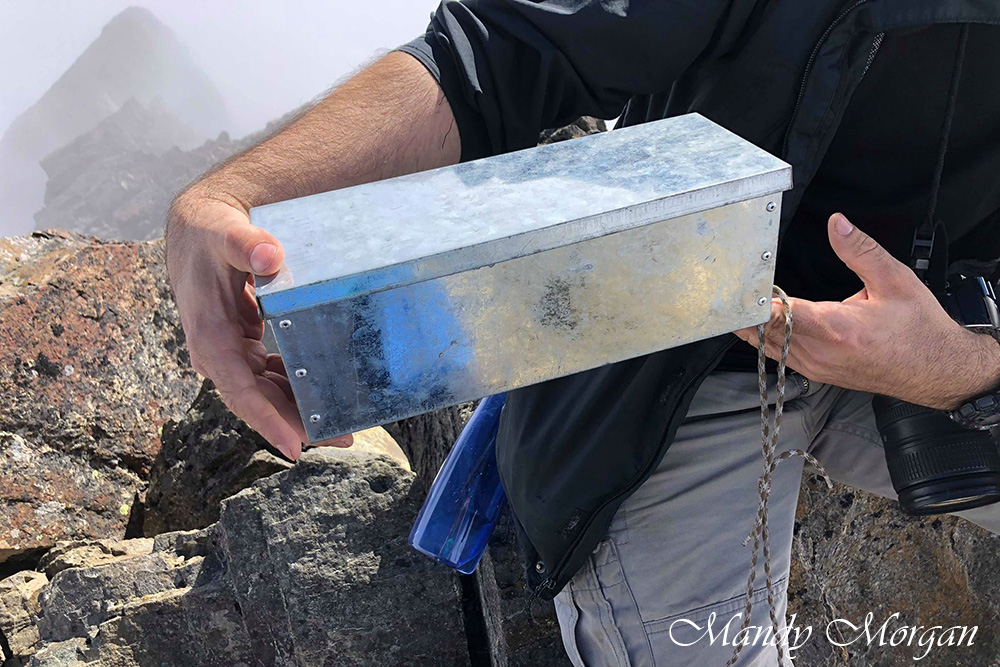
After the loose section, only a short stretch of enjoyable scrambling with good holds remained before reaching the summit. At the top we found a tiny summit box containing notebooks sealed in plastic bags along with a few markers. I had started the trip with very modest expectations for Mount Washington, but the combination of beautiful scenery, route finding, scrambling, snow, and exposed terrain made reaching the summit surprisingly satisfying.
The climb also gave me an entirely new respect for the Olympic Mountains. Before this trip I hadn’t given much thought to climbing Mount Olympus, but after seeing how much adventure could be found on Mount Washington, I left wanting to explore much more of the range.
Explore More of Washington
Olympic National Park • Olympia • Seattle • the North Cascades