South Korea is an incredibly mountainous country, with national parks protecting many of its most beautiful landscapes. Naejangsan was the first one I visited.
It probably wouldn’t have been my first choice during most of the year, but I arrived in mid-November, when Naejangsan is famous for some of the country’s most spectacular autumn colors. I had read online that the foliage had peaked only a day before my visit. Once I arrived, I suspected I was closer to a week late.
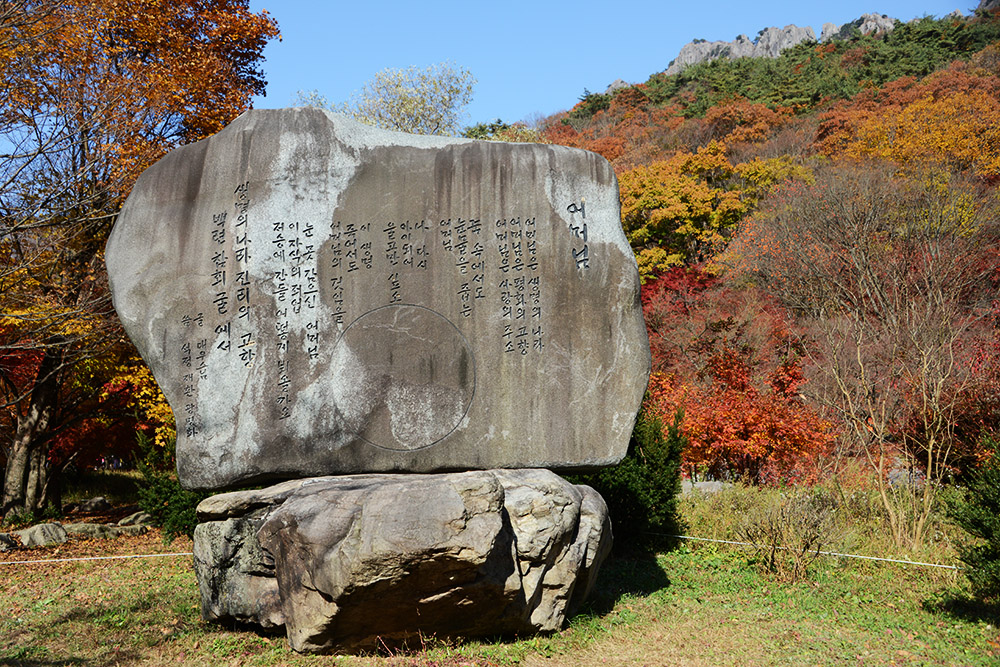
One of the first things I encountered after entering the park was this massive stone monument with an inscription in Korean.
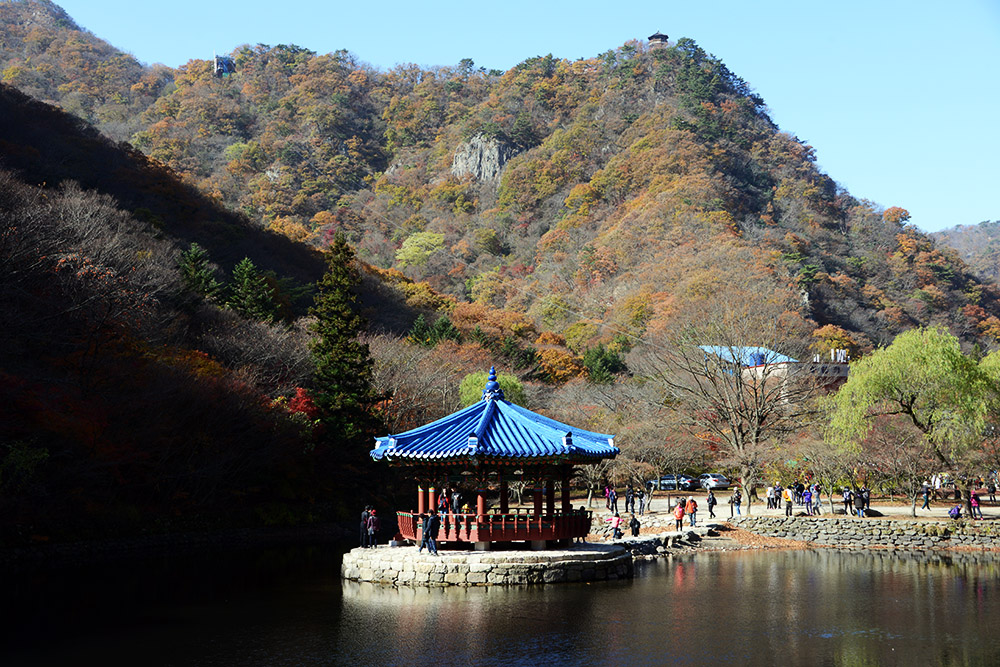
One photograph in particular had convinced me to visit Naejangsan: a small pavilion reflected in a lake and surrounded by brilliant red maple leaves.
Well, photographers are pretty good at making places look perfect.
By the time I arrived, most of the trees immediately surrounding Uhwajeong Pavilion had already dropped their leaves. The pavilion itself also looked different from some of the older photographs I had seen. The original concrete structure had been replaced in 2016 with a new pavilion built in a more traditional Korean architectural style. It remains one of the park’s most famous autumn photography spots.
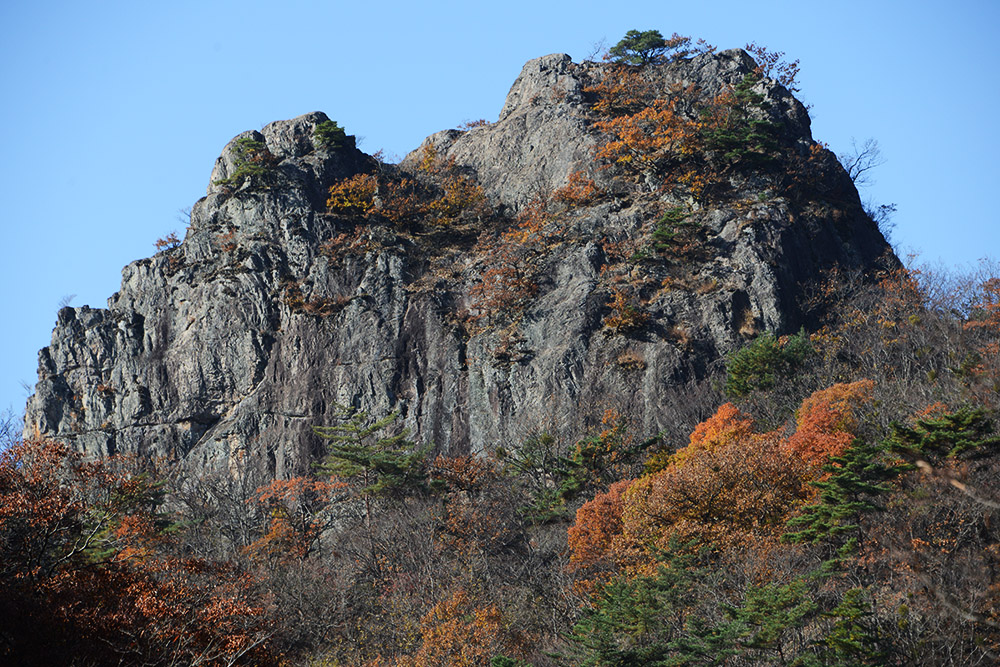
Immediately after entering the park, I could see the rugged mountains surrounding the valley. Hiking trails climb many of the major peaks, although some of the exposed rock formations looked steep enough that I couldn’t help wishing I had brought my climbing gear.
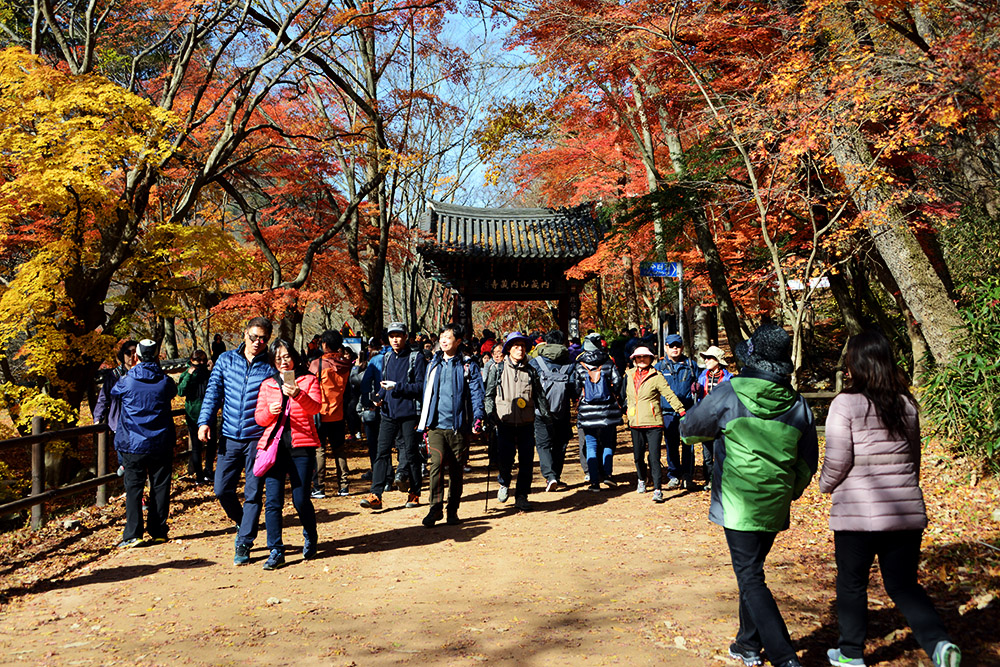
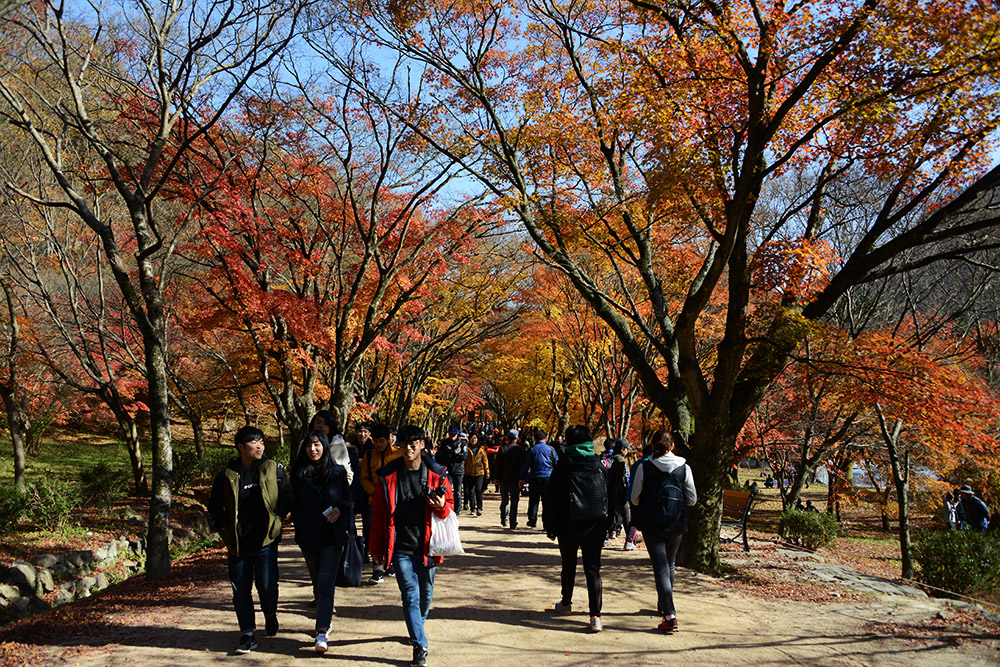
The autumn colors might have been slightly past their peak, but there were still enough brilliant trees to make the trip worthwhile.
The downside was the crowd.
Naejangsan is one of South Korea’s best-known destinations for fall foliage, and during peak autumn weekends the most accessible parts of the park can become extremely busy. That was definitely my experience. At times I felt like I was moving through the park as part of a giant human river rather than taking a peaceful walk through the mountains.
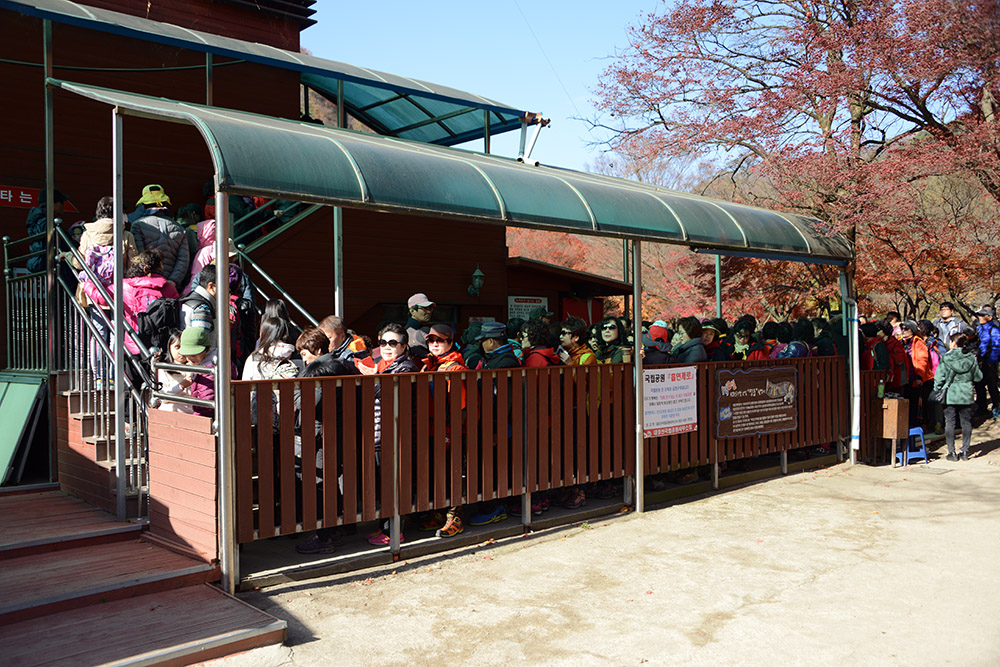
One popular option is the cable car, which carries visitors higher above the valley and provides views across the surrounding mountains. The weather and sunlight were perfect for it when I visited, and maybe I should have gone.
Then I saw the line.
No thanks.
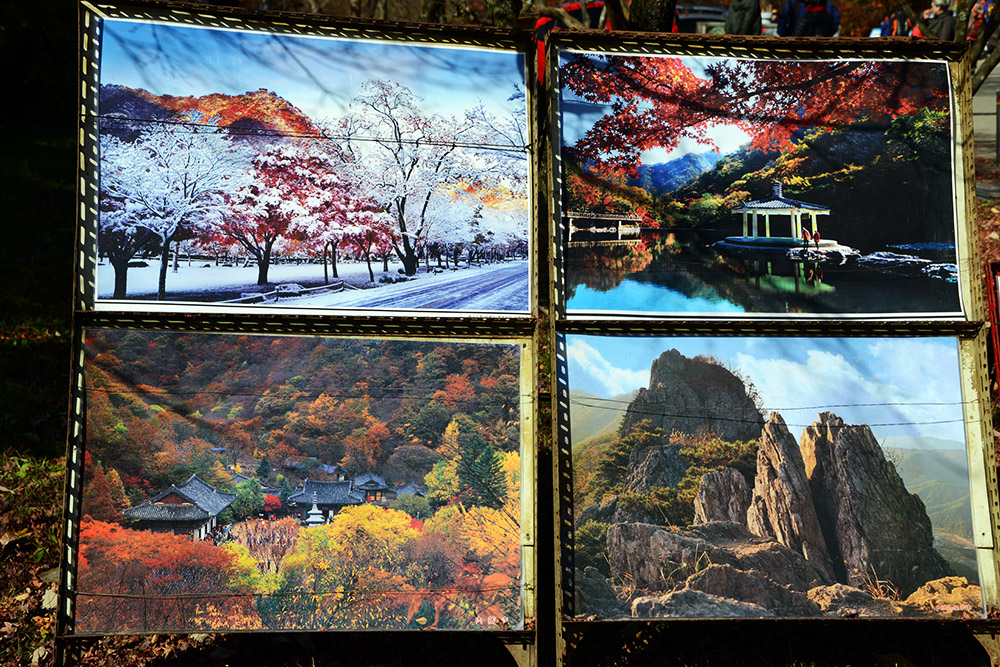
Before visiting, I had found surprisingly little information about what was actually inside the park beyond transportation, entrance information and fall foliage. Once I arrived, I discovered restaurants, shops, exhibits and plenty of vendors. This one was selling photographs and artwork of Naejangsan, including exactly the kind of perfect autumn scene that had convinced me to come here in the first place.
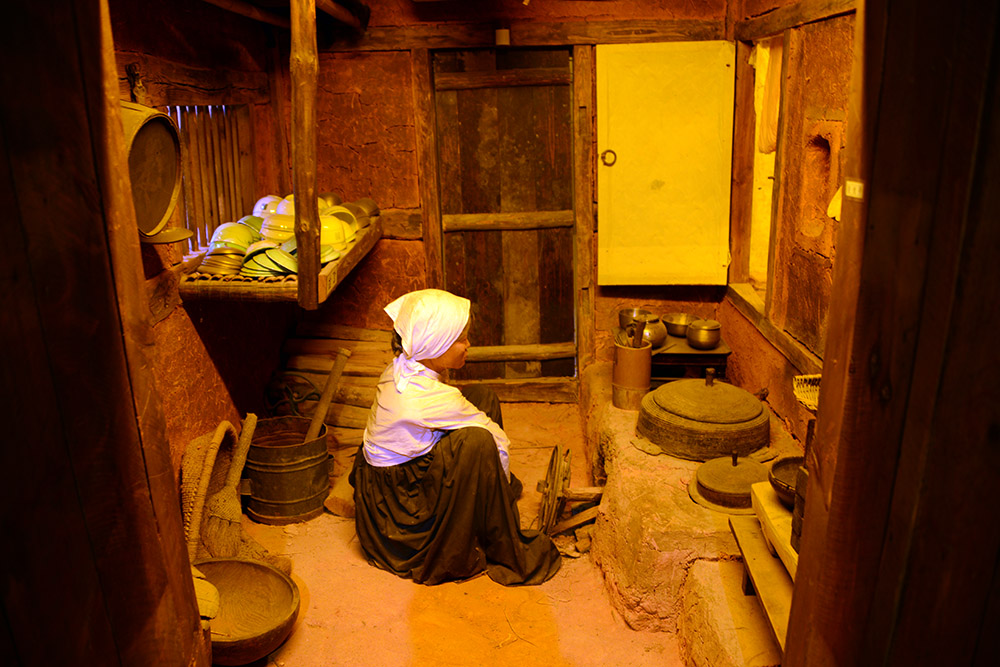
I also stopped at a small museum inside the park. Admission was free when I visited, so there was no reason not to look around.
The only problem was that most of the descriptions were in Korean, which limited how much I could learn from the exhibits. I photographed the display above but couldn’t read enough of the explanation to confidently say exactly what it represented, so I’ll leave it at that rather than inventing an answer.
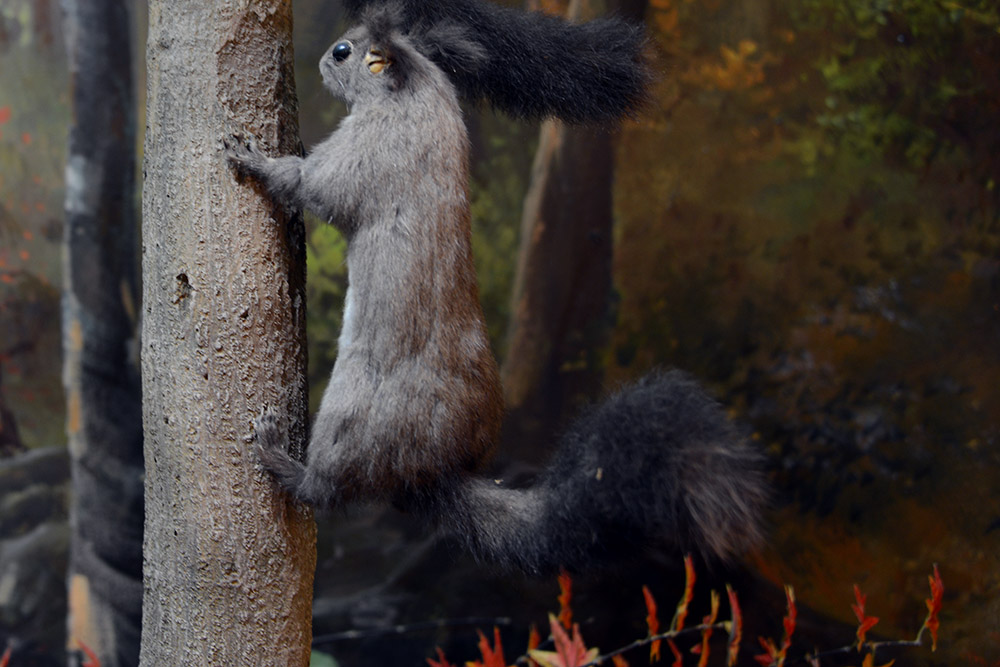
What I did get from the museum was a better idea of the wildlife living in the surrounding mountains. Ironically, I didn’t see a single wild animal while I was hiking—not even a bird. Considering the crowds that weekend, I can’t really blame the wildlife for keeping its distance.
The squirrel above was one of the museum specimens representing animals found around Naejangsan.
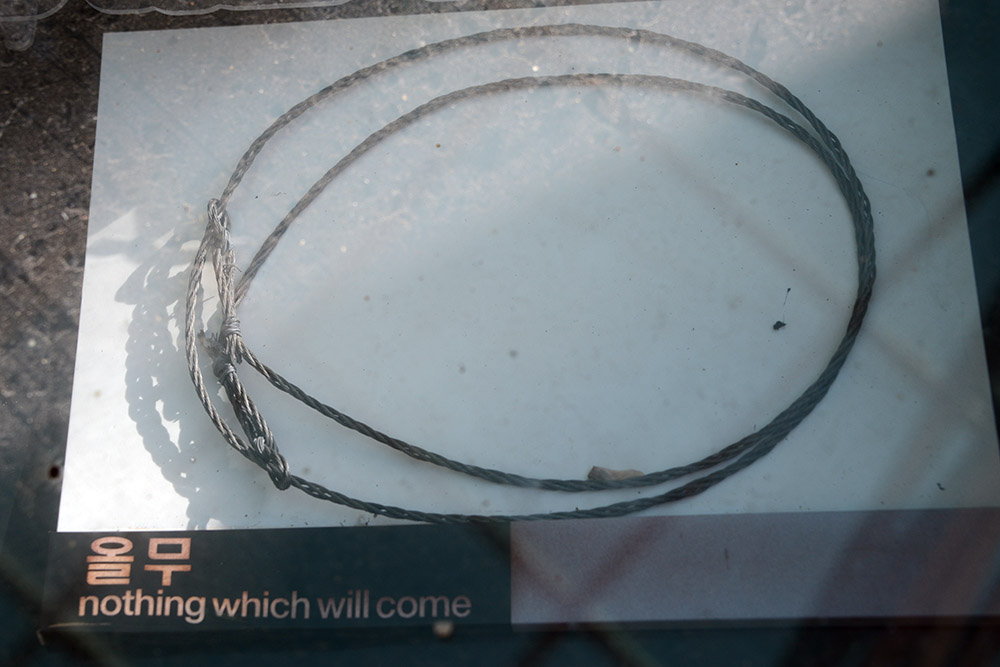
Some exhibits included English translations. Most were straightforward descriptions of tools, traps and other objects used around the mountains.
And then there was the mysterious “Nothing Which Will Come.”
I still have no idea what was supposed to come.
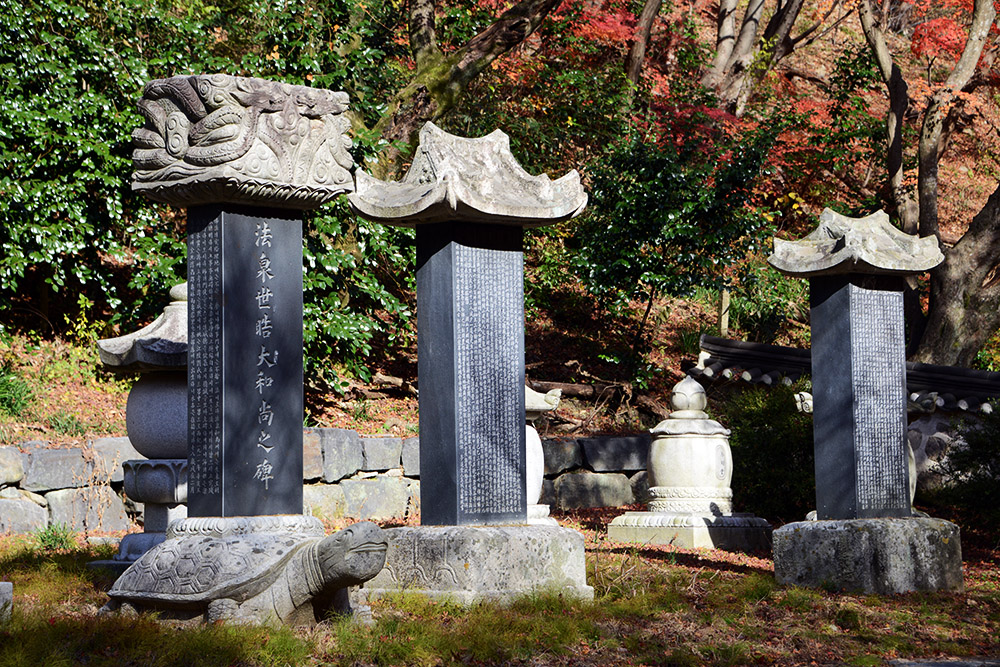
Eventually I started heading deeper into the park. Along one of the crowded trails I passed this walled area containing what appeared to be graves or memorial stones. I didn’t see any English information explaining exactly what I was looking at, and most people walked straight past it.
After seeing a Korean family stop and walk closer, I followed them and took this photograph.
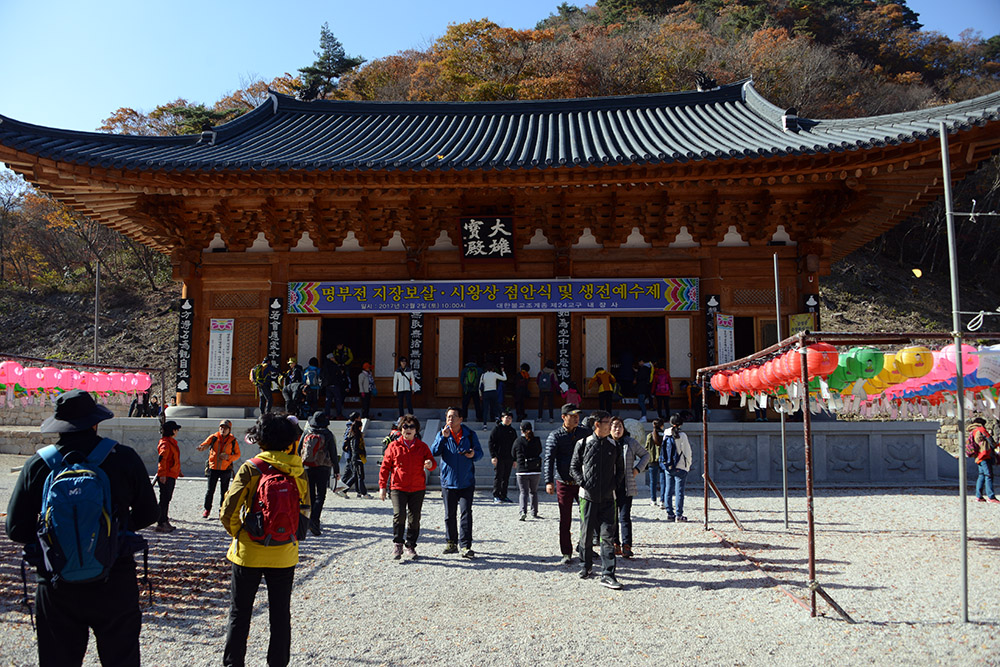
Farther into the valley is Naejangsa Temple, one of the park’s major historic sites. According to Korean tourism authorities, the temple is traditionally believed to have been founded in 636 during the Baekje Kingdom. The complex once contained roughly 50 buildings but was repeatedly destroyed during warfare, including the Japanese invasions of Korea and the Korean War. Most of the structures standing today were rebuilt later.
The temple sits surrounded by the peaks of Naejangsan, and its location alone makes it worth visiting—especially during autumn.
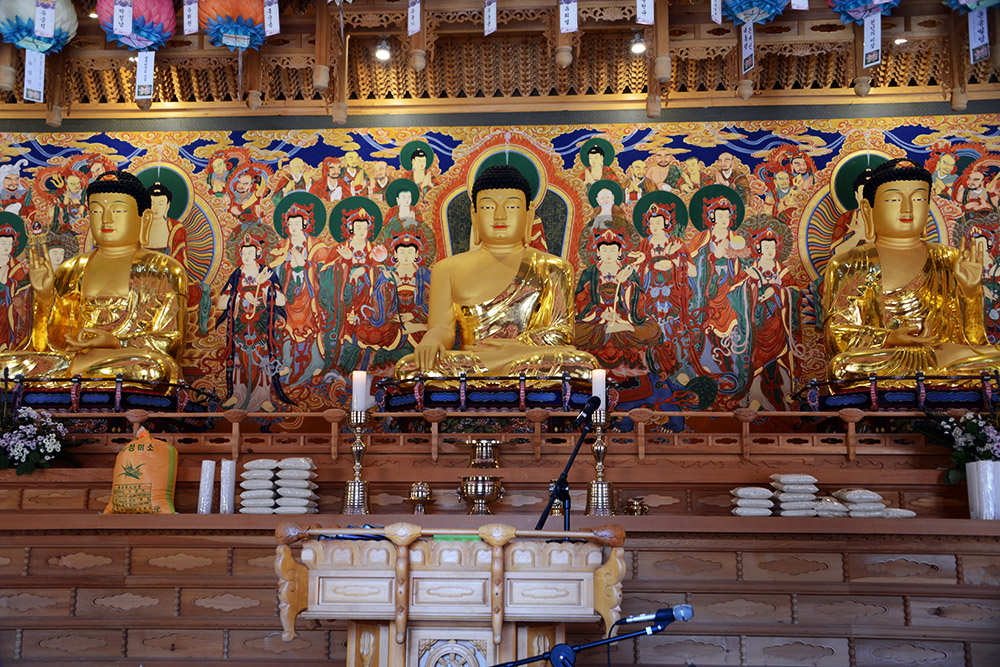
From Naejangsa, trails branch off in several directions. A ranger recommended that I concentrate on the northern part of the park, where some of the best remaining autumn colors could still be found.
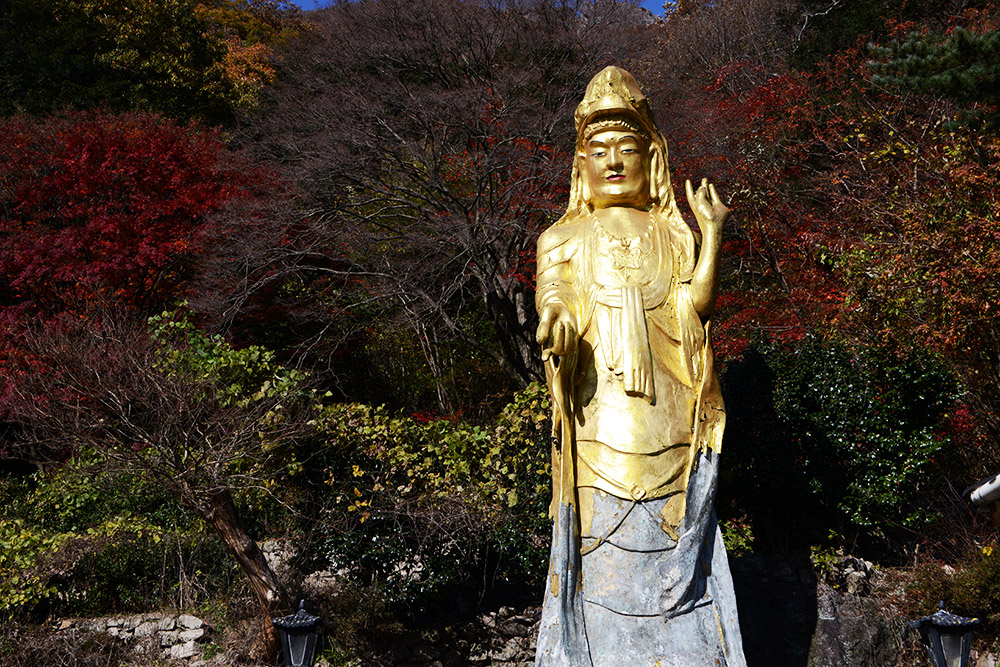
A short hike brought me toward Wonjeokam. The smaller temple itself didn’t stand out to me as much as Naejangsa, but this large Buddha statue was definitely worth stopping to photograph.
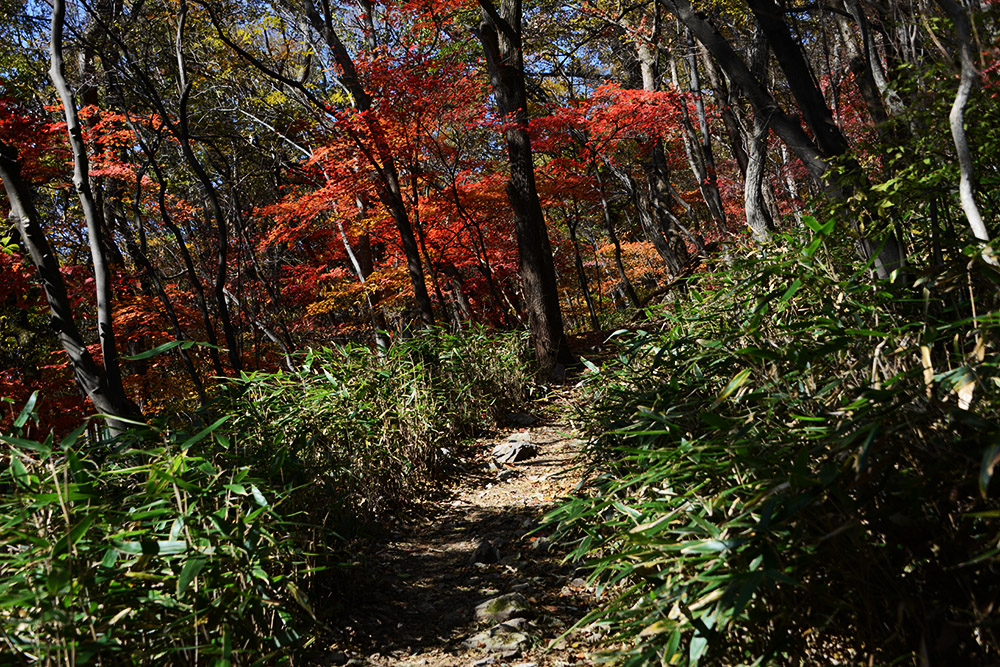
Once I started climbing into the mountains, something wonderful happened: the crowds disappeared.
The trail became steep almost immediately. It wasn’t particularly difficult, but apparently it was difficult enough to discourage most of the people who had packed the lower valley. For long stretches I hiked almost completely alone, interrupted only when an occasional group came descending past me.
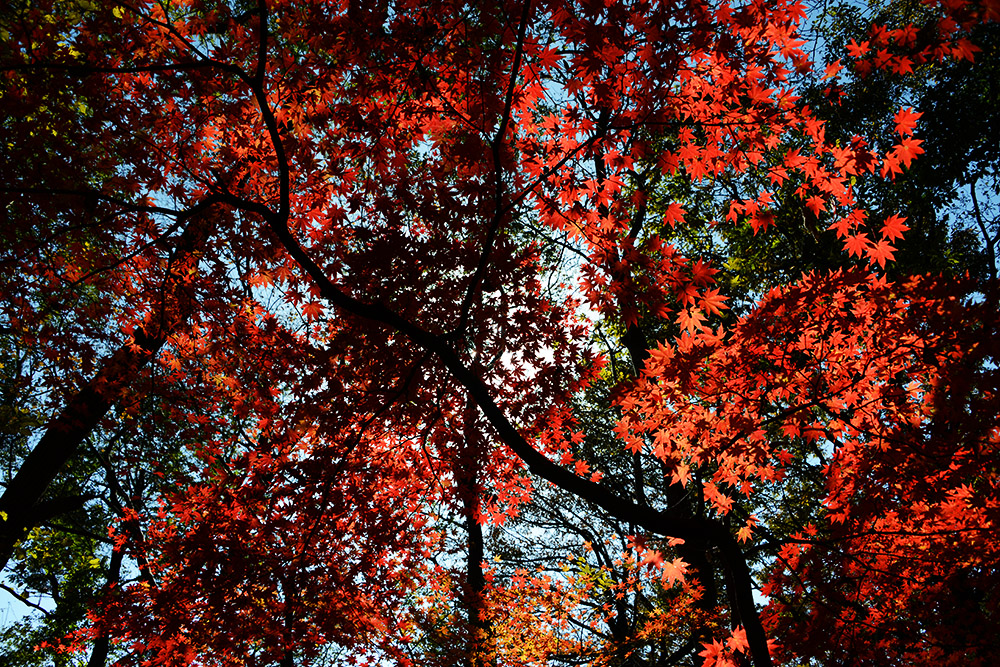
The ranger had given me good advice. Most of the leaves I had seen earlier were faded or already on the ground, but every so often I entered a pocket of forest that still looked like peak autumn.
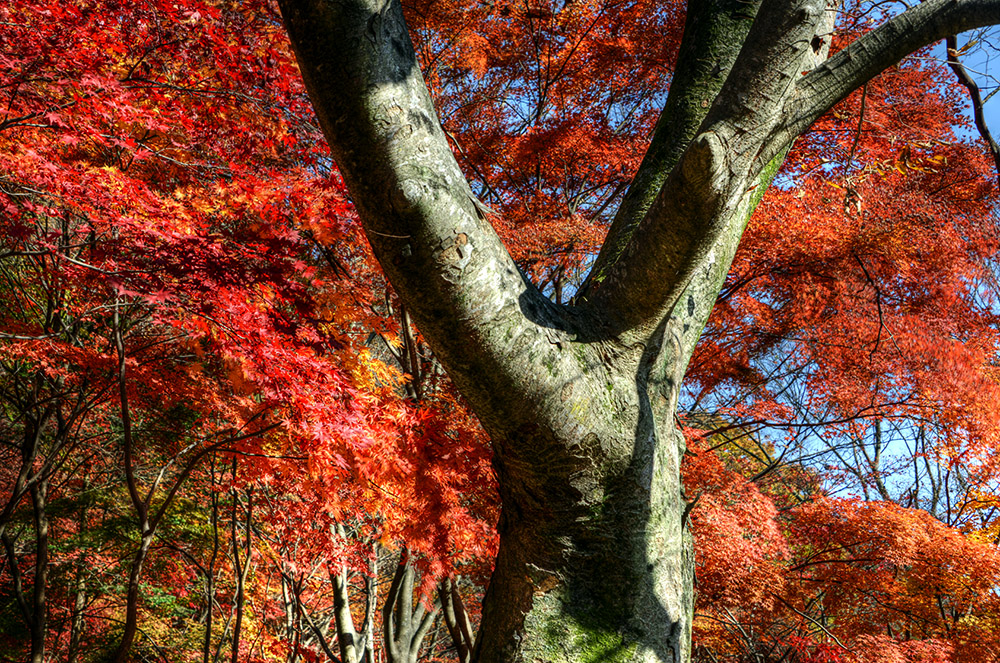
Suddenly I’d find myself beneath a brilliant red canopy like this one.
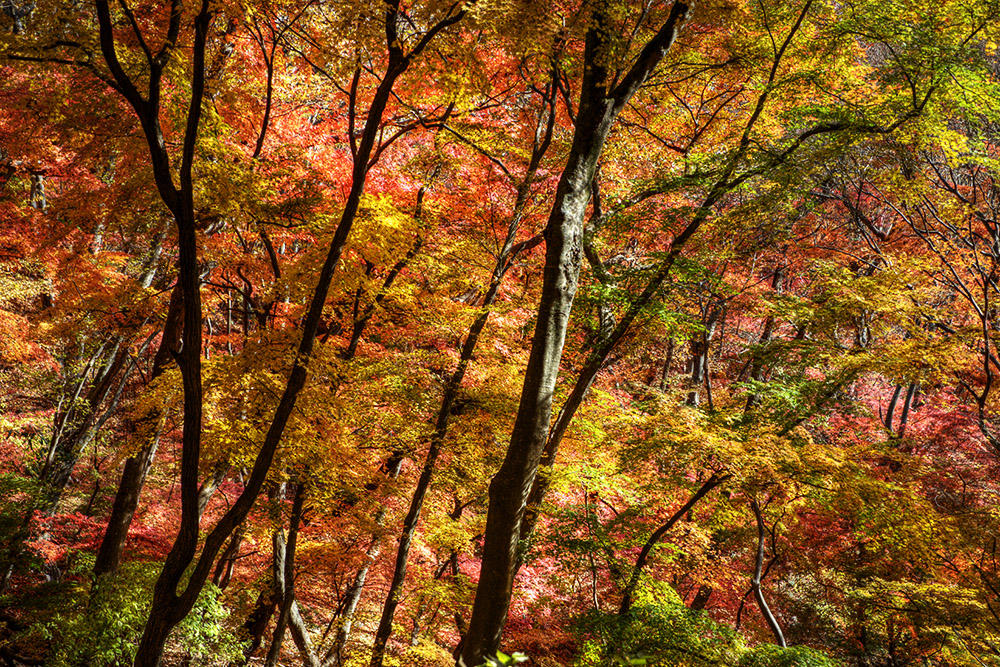
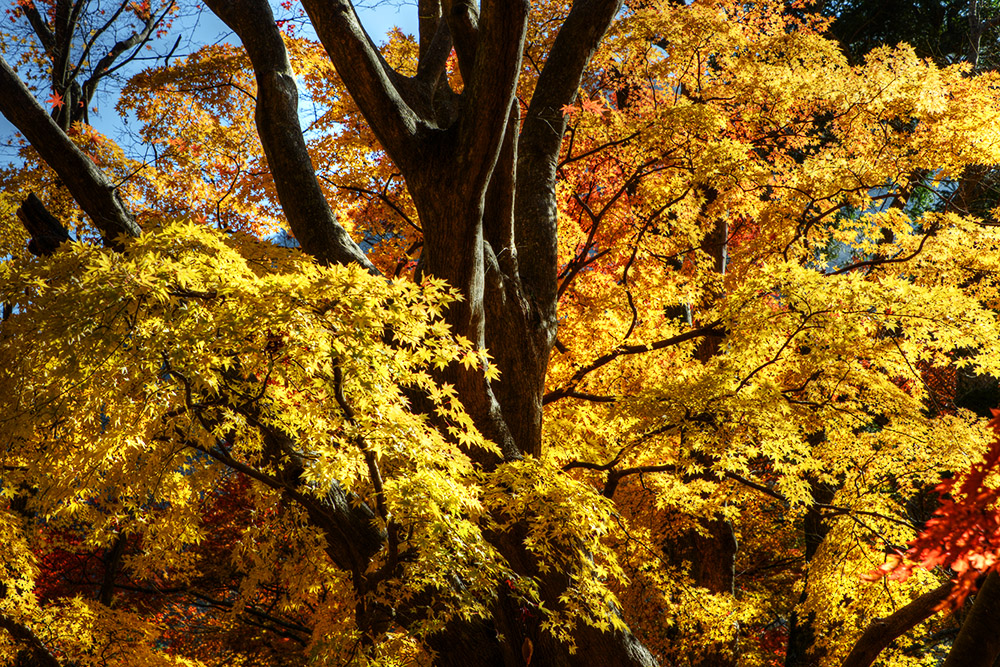
These trees had some of the best colors I saw all day. Naejangsan is especially famous for its maples, which can turn everything from yellow and orange to deep red depending on the species, weather and stage of the season.
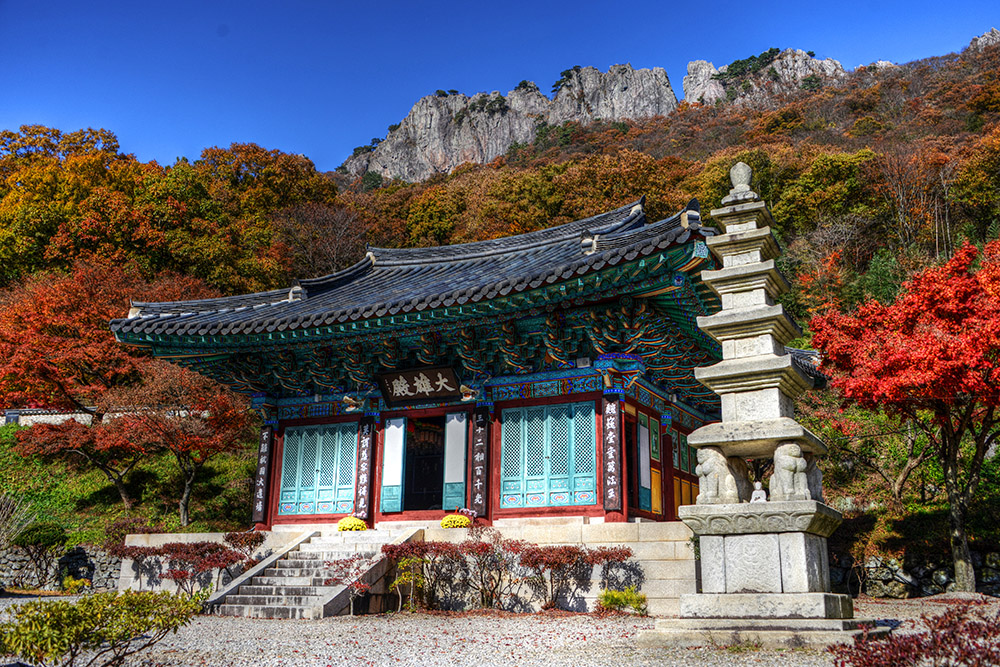
After a moderate climb from Naejangsa, I reached what became my favorite religious site in the park: Byeokyeonam.
I knew very little about the place when I arrived, but I didn’t need a history lesson to appreciate the setting. The buildings sat beneath the surrounding mountains, and from here I also had excellent views toward Seoraebong Peak.
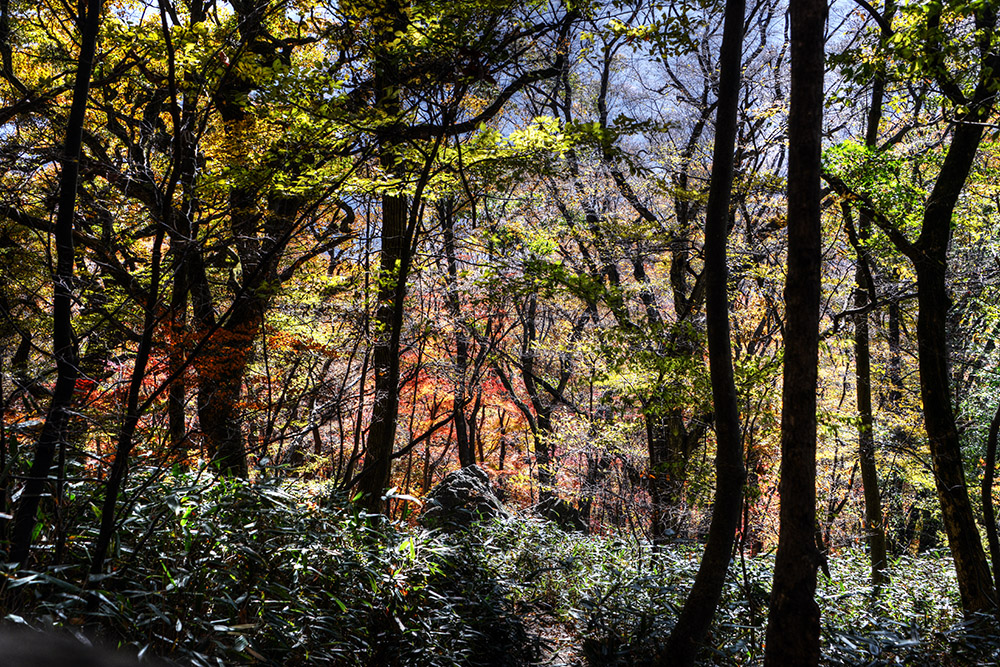
From Byeokyeonam I decided to follow the signs toward Seoraebong. The summit wasn’t far away in horizontal distance, but the trail gained elevation quickly.
At first I was still walking through colorful forest.
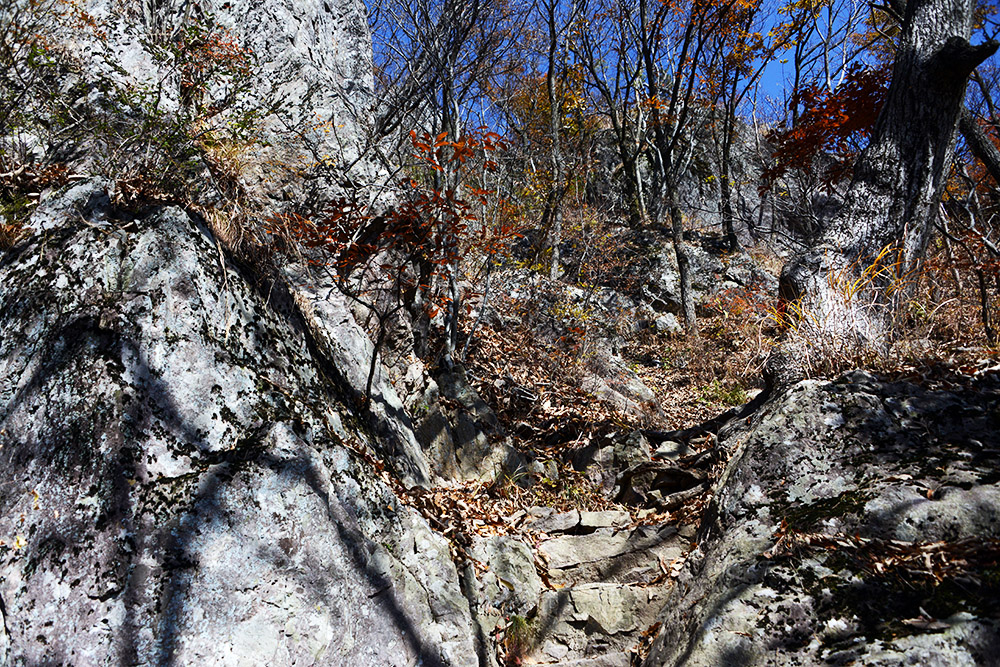
Then the character of the hike changed completely. The trail became steeper, the leaves thinned out and the terrain grew increasingly rocky.
Eventually I climbed out of the forest and reached sections where stairs and constructed walkways replaced what otherwise would have been much more awkward scrambling.
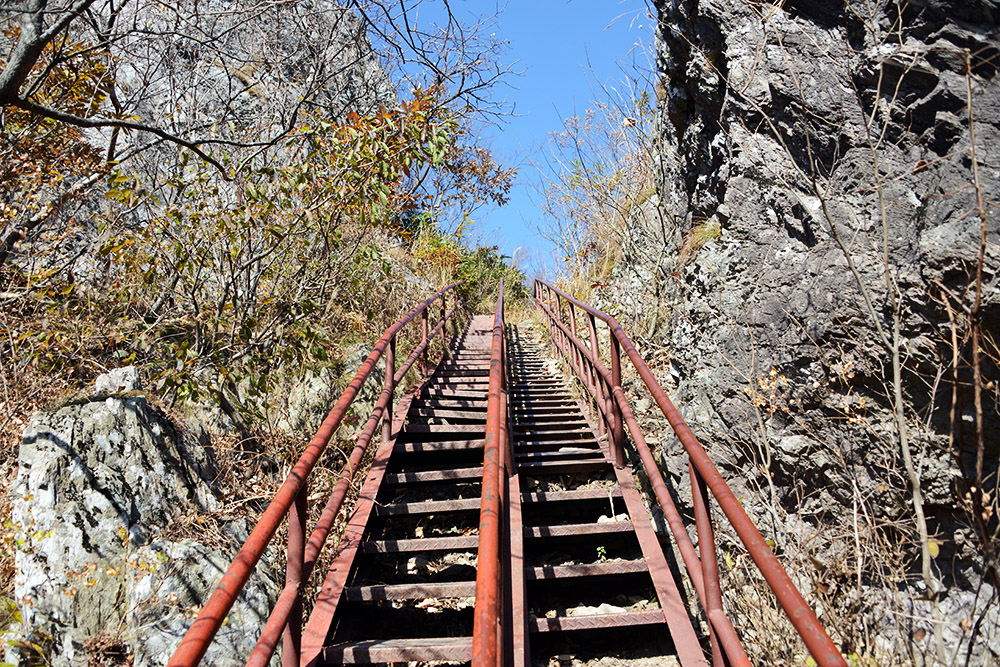
For such a low mountain, the final climb gave me a better workout than I expected. I felt slightly embarrassed that a peak only around 600 meters high was making me work at all, but the short distance hid how steep some sections actually were.
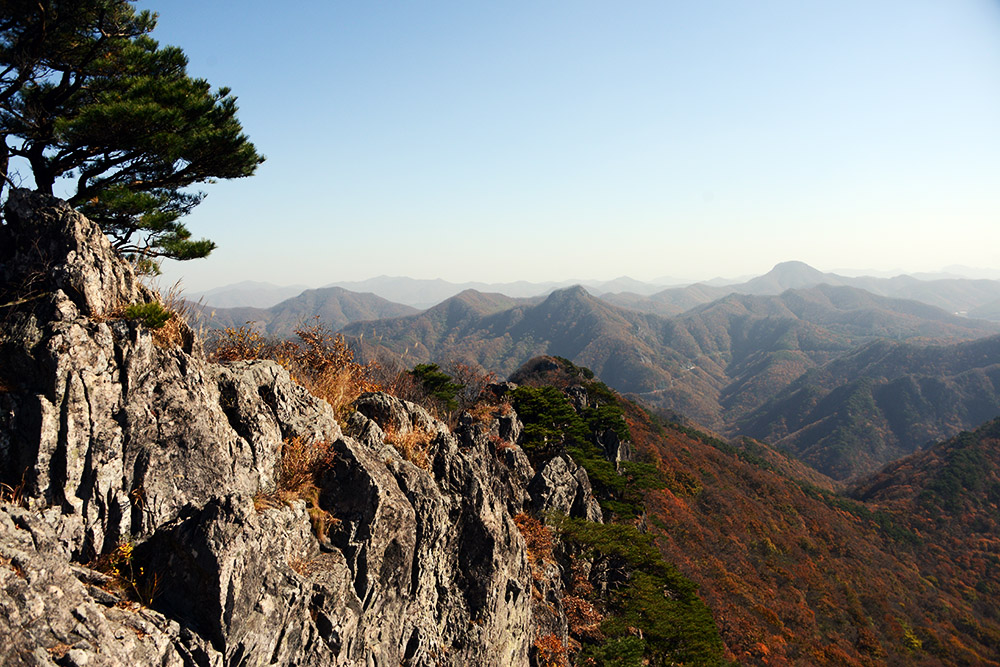
The views from Seoraebong made the effort worthwhile. From the ridge I could look across the entire valley and toward the other peaks of Naejangsan.
Across the valley was Sinseonbong, the highest summit in the park at roughly 763 meters (2,503 feet). Trails connect a series of peaks around the valley, meaning someone interested in a much longer hike could continue along the ridgeline rather than dropping immediately back toward Naejangsa.
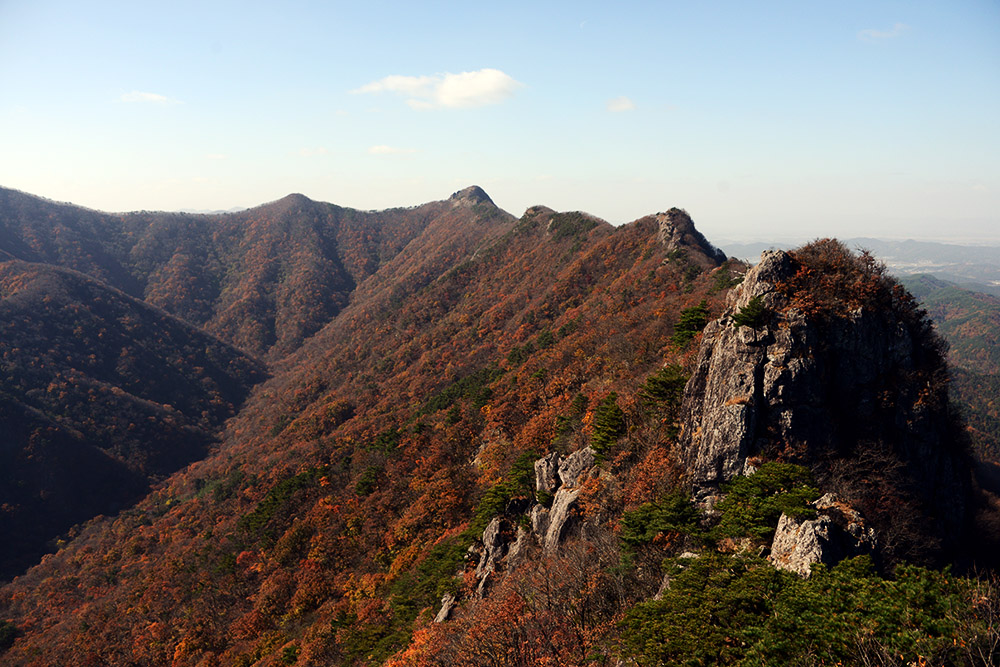
Looking across that ridge, I realized how different the experience had become from the crowded entrance only a few hours earlier. Down in the valley I had been surrounded by thousands of people chasing autumn leaves. Up here, a little effort had given me the quiet mountain experience I had hoped to find in the first place.