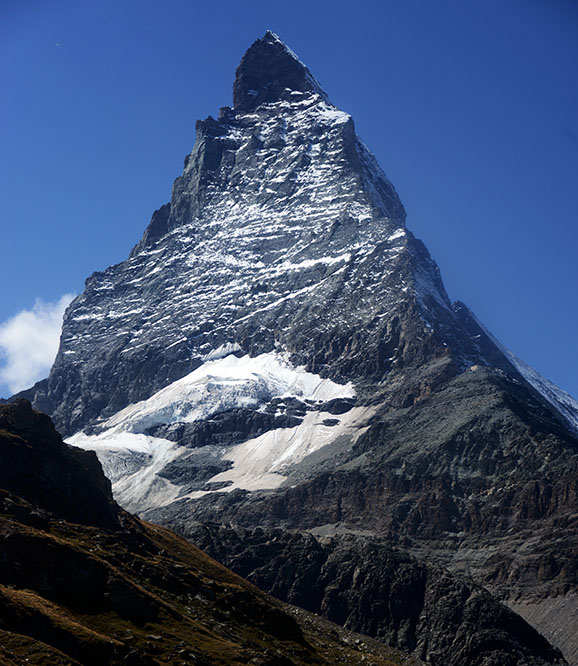
I’ll start by getting the disappointing part out of the way: I didn’t summit the Matterhorn. Bad weather forced my friend and me to turn around before reaching the top.
Giving up was incredibly difficult, especially because we were climbing well and felt capable of finishing the route under better conditions. Still, knowing when to turn around is part of mountaineering, and getting as far as we did on the Matterhorn made this one of the most memorable climbs of my life even without standing on the summit.
Just getting to the mountain had already been a nightmare. Delayed travel and lost baggage cost me valuable acclimatization time before the climb even began.
The photograph above was taken from one of the lifts above Zermatt while we were acclimatizing. Once you’re in Zermatt, the Matterhorn dominates the landscape. Whenever the clouds clear, it seems to appear everywhere you look.
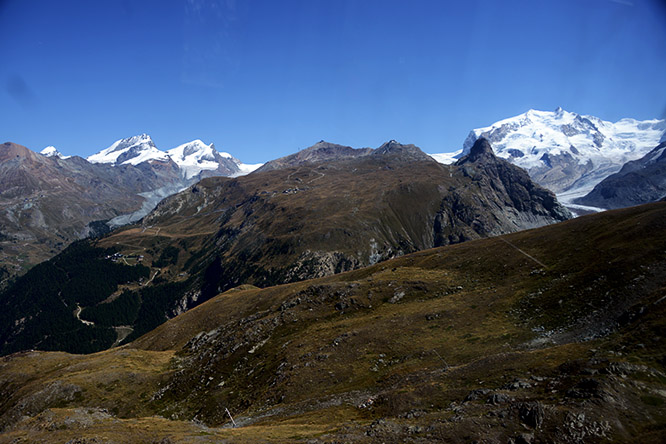
Zermatt sits at roughly 1,620 meters (5,315 feet), while the summit of the Matterhorn rises to 4,478 meters (14,692 feet). Spending a night in town gave us a start on acclimatization, but we certainly weren’t planning to jump directly from Zermatt onto the Matterhorn.
Our original plan was to spend the first night in town, climb some easier 4,000-meter peaks to acclimatize, and then head toward the Matterhorn.
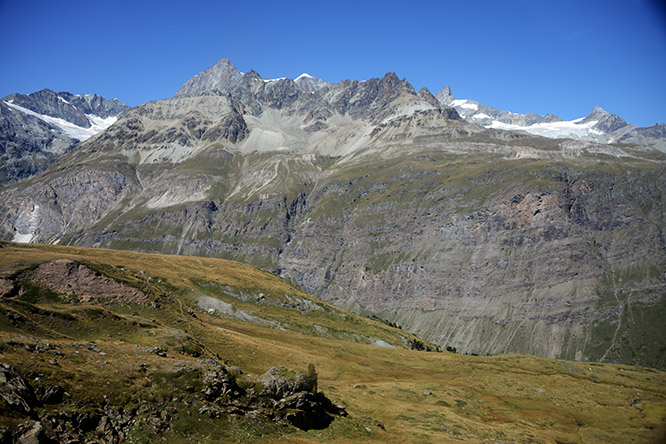
The easiest and most accessible 4,000-meter peak in the area is the Breithorn. From Zermatt it looks like an intimidating alpine mountain, but its normal route is dramatically easier than the Matterhorn.
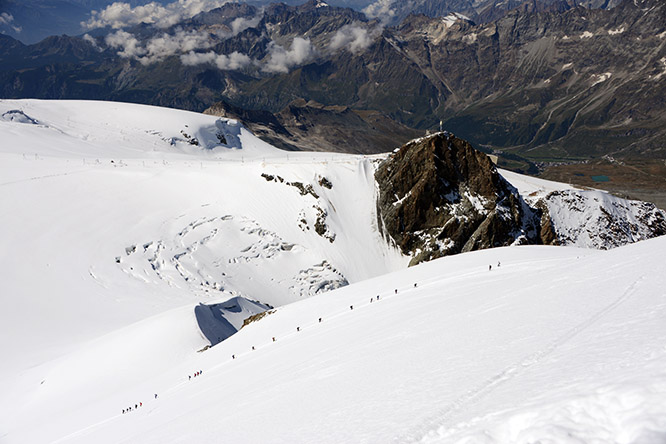
A cable car carries climbers high into the mountains, leaving a relatively short glacier climb to the summit. It was perfect for what we needed: spend time above 4,000 meters and get our bodies better prepared for the Matterhorn.
The photograph above shows other climbers below us with the upper lift station in the distance.
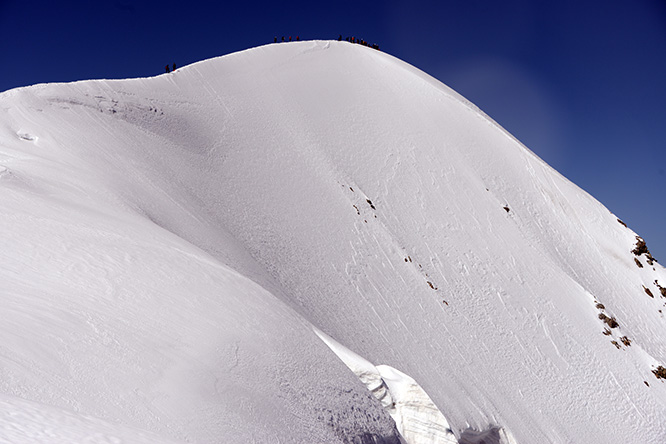
Unfortunately, I had already lost a day of acclimatization because of the problems getting to Switzerland. Then, during our first night in Zermatt, we learned that a major storm was approaching and expected to dump a huge amount of snow across the mountains.
That completely changed our plans. Fresh snow on the Matterhorn can make the route considerably more dangerous and, this late in the climbing season, a major storm could effectively end our opportunity to climb it.
We didn’t have many options. The best plan we could come up with was to climb the Breithorn again for additional acclimatization and then head directly toward the Matterhorn in hopes of getting an attempt in before the storm arrived.
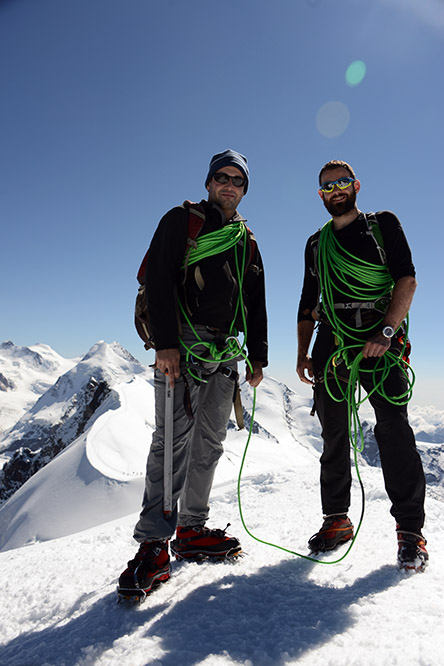
Above are my friend and me after summiting the Breithorn for the second time.
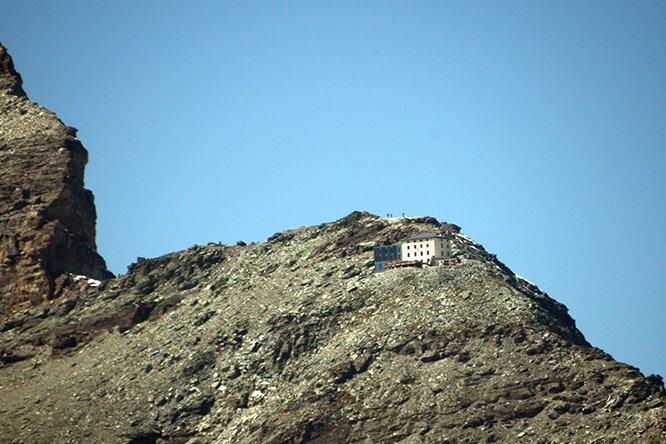
That same day, after climbing the Breithorn, we headed toward the Matterhorn. We took the lifts toward Schwarzsee and then continued on foot toward the Hörnlihütte.
The hike to the hut took roughly two hours. Sitting at about 3,260 meters (10,700 feet) on the Hörnli Ridge, the Hörnlihütte is the traditional starting point for the Matterhorn’s normal Swiss route.
Our timing also happened to be historically interesting. The hut had just reopened following a major renovation completed for 2015, the 150th anniversary of the first ascent of the Matterhorn. The original first ascent took place on July 14, 1865.
We had already climbed the Breithorn that day and now found ourselves hiking toward the base of one of the most famous mountains in the world. With the storm approaching, everything felt rushed. There wasn’t much time to relax or think about where we were.
We were so focused on climbing quickly and staying ahead of the incoming weather that we barely took any photographs or video during the ascent.
Eventually, conditions forced us to make the decision neither of us wanted to make: turn around.
Once we had accepted that the summit wasn’t happening and started descending, the pressure disappeared. We could finally slow down, take a few videos and actually look around at the mountain we had spent all that effort trying to climb.
The video above shows a few sections from our descent.
Not reaching the summit was frustrating, but I don’t consider the climb a failure. We pushed high onto the Matterhorn, felt strong on the route and made the decision to retreat when the weather stopped cooperating. The mountain wasn’t going anywhere.
I’ll just have to come back.