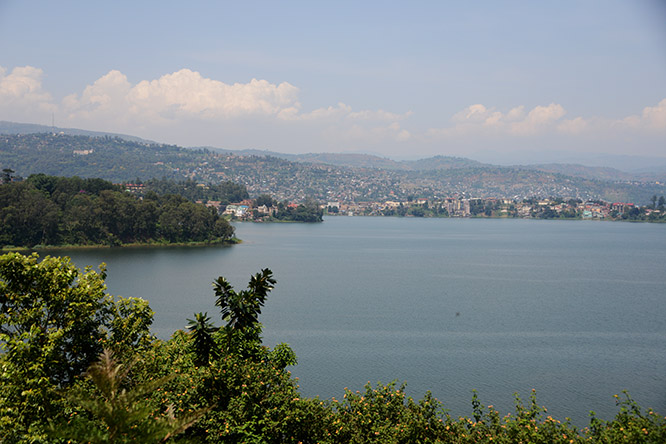
From Goma, I took a two-and-a-half-hour boat ride south across Lake Kivu to Bukavu. Even though the two cities sit along the same lake, Bukavu immediately felt different.
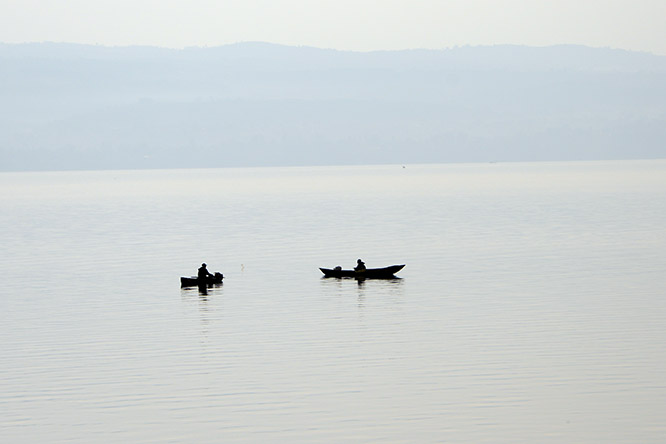
From the water, the city was surprisingly beautiful. Colorful buildings covered the hillsides above the calm shores of Lake Kivu, while fishermen and small boats were scattered across the water. Looking at Bukavu from a distance, it was easy to imagine how different the region’s tourism potential might be without its long history of conflict and instability.
Because I had heard so much more about Goma before this trip, I assumed it would feel considerably larger than Bukavu. When I stepped off the boat, though, Bukavu seemed much bigger than I expected.
I asked a local which city was larger. His immediate answer was, “Bukavu! Goma is nothing.”
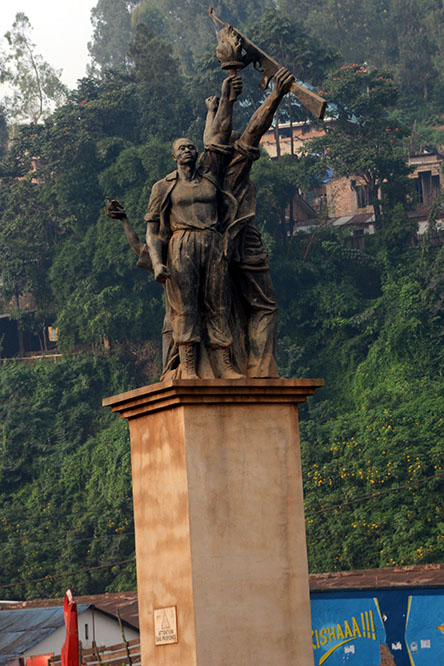
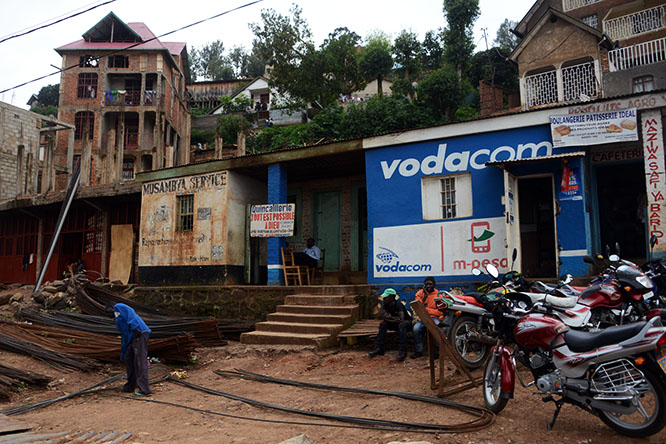
I came across a large cathedral and this memorial near the city center, but I didn’t spend enough time sightseeing to build a long list of traditional attractions. As with Goma, what interested me most was simply seeing everyday life in the city.
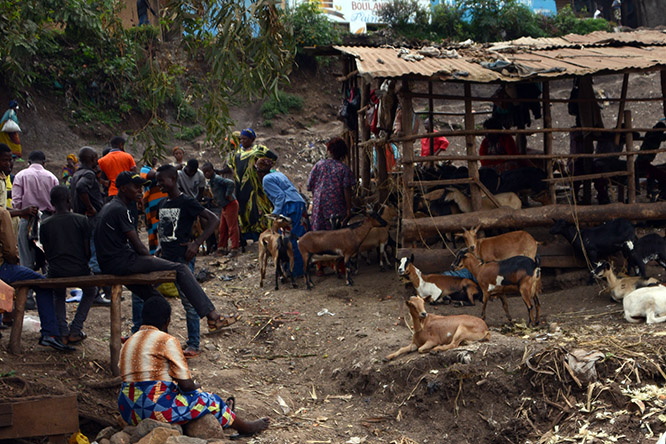
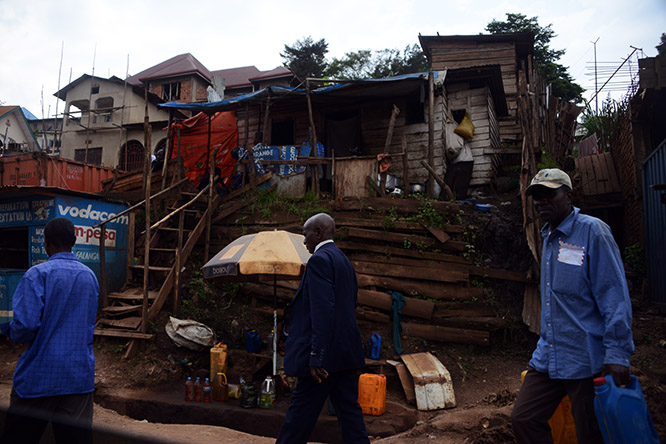
Bukavu had its share of rough streets and crowded neighborhoods, but it also had surprisingly comfortable hotels and restaurants. I stayed at what was probably one of the nicest hotels of my entire Congo trip and somehow never took a single photograph of it.
It was popular with foreigners and had excellent rooms, service and food. Apparently even by this point in my travels, I was still capable of forgetting to photograph the obvious things.
Kahuzi-Biega National Park
From Bukavu, I headed by road to Kahuzi-Biega National Park. Compared with Virunga, it felt much farther removed from the tourism circuit.
If someone had time for only one national park during the kind of trip I made through eastern Congo, Virunga would have been difficult to beat because of its combination of mountain gorillas and volcanoes. Kahuzi-Biega offered something completely different, though: an enormous protected landscape of lowland rainforest, montane forest and mountains, and one of the world’s most important populations of Grauer’s gorillas, also known as eastern lowland gorillas.
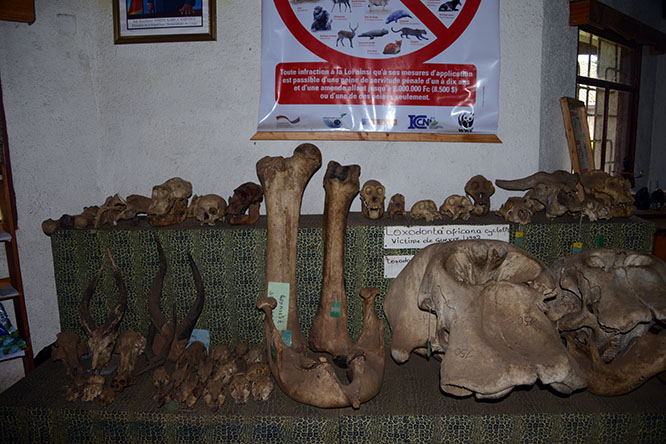
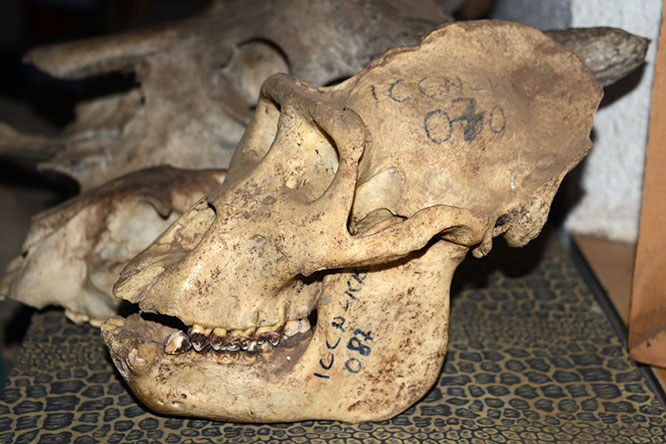
I began at a ranger station, where several animal bones and skulls were displayed. Some were immediately recognizable, including enormous elephant remains. Others belonged to animals I couldn’t identify. The skull below is from a Grauer’s gorilla.
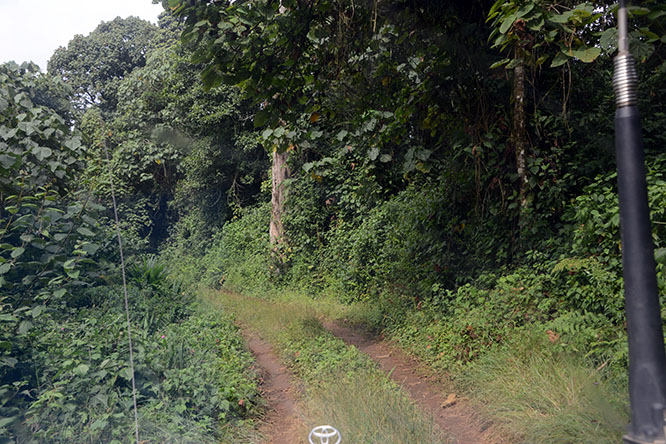
At the ranger station I received another briefing on how to behave around gorillas and what to expect during the trek. Once that was finished, we took an incredibly rough drive farther into the park before continuing into the forest on foot.
Since it was winter back home, I had apparently decided that being in tropical Africa meant I absolutely refused to wear pants. The rangers strongly recommended them because of insects and vegetation.
There was only one problem: I hadn’t brought any.
I hadn’t brought insect repellent either, so I headed into the forest in shorts and hoped I wouldn’t regret my wardrobe choices too badly. Fortunately, the bugs weren’t nearly as overwhelming as I had imagined.
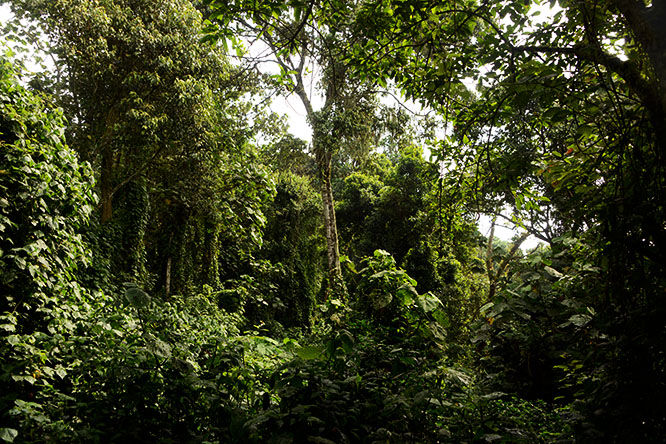
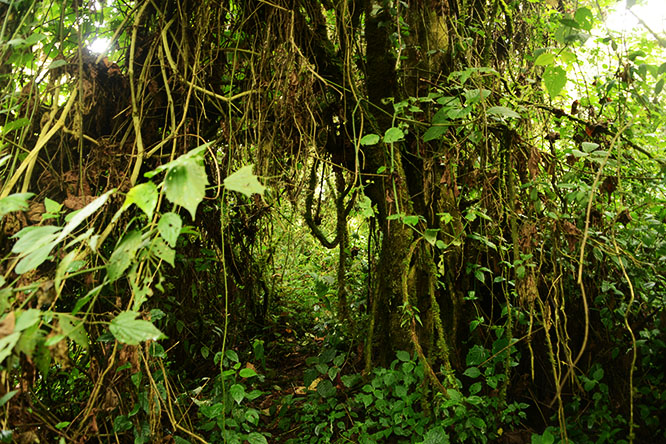
The forest itself was incredible. Kahuzi-Biega protects more than 600,000 hectares across the Albertine Rift and Congo Basin, ranging from lowland rainforest to montane and bamboo forests.
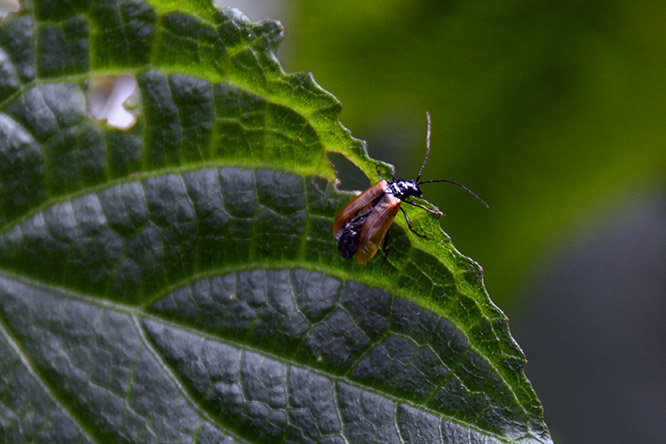
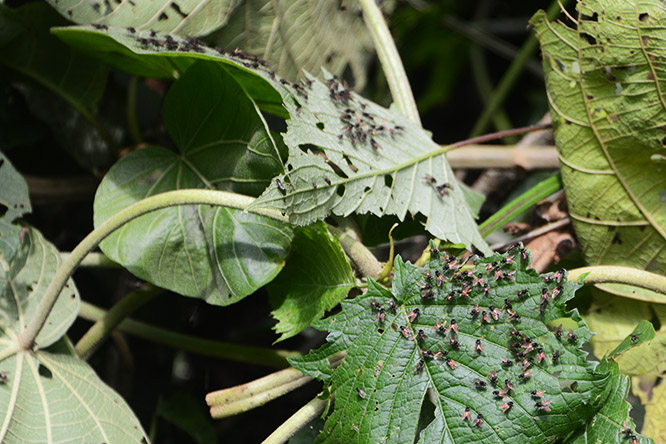
The larger insects didn’t bother me much as long as they left me alone. The flies were considerably less pleasant. At times, small clouds of them seemed to appear out of nowhere.
There were mosquitoes and gnats as well, and pants probably would have been a good idea after all. Nothing ruined the hike, but next time I’d at least remember the insect repellent.
Grauer’s Gorillas
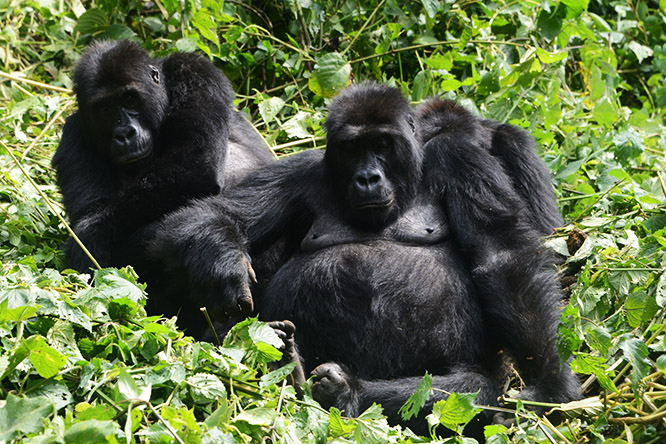
We hiked for less than an hour through dense forest before finding a group of gorillas. Around a dozen were resting on the forest floor, while several others were higher in the trees.
I was extremely lucky that most of the group was on the ground in a relatively open area. After hiking through vegetation where visibility could disappear within a few feet, suddenly having an unobstructed view of an entire gorilla family felt almost unreal.
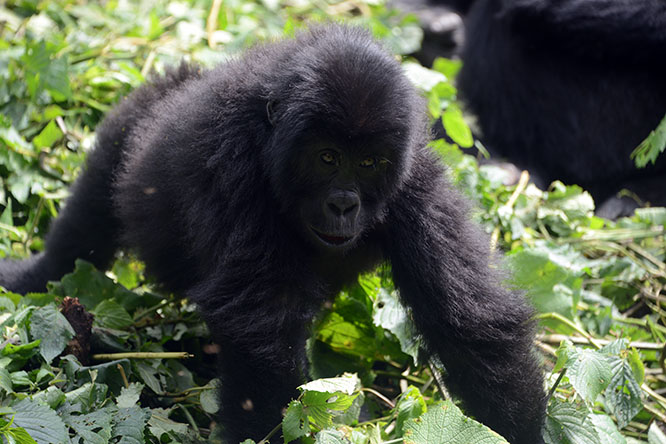
This juvenile was easily the most entertaining member of the group. He kept running around and bothering the others as they tried to relax.
At one point he tagged another gorilla and suddenly ran directly toward me. Judging by the rangers’ reaction, I wasn’t the only person who briefly thought I was about to become part of his game.
At the last second he changed direction and ran back toward his family.
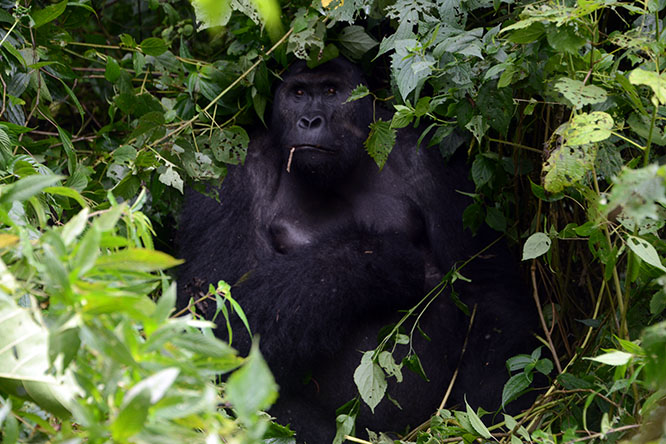
This was the dominant silverback. He sat apart from much of the group, calmly eating in a small grove.
His size was intimidating even though his behavior wasn’t. Grauer’s gorillas are the largest gorilla subspecies and therefore the largest living primates. Adult males can weigh well over 400 pounds (180 kilograms).
Standing near an animal that powerful while he casually ate and barely seemed interested in my presence was one of the highlights of the trip.
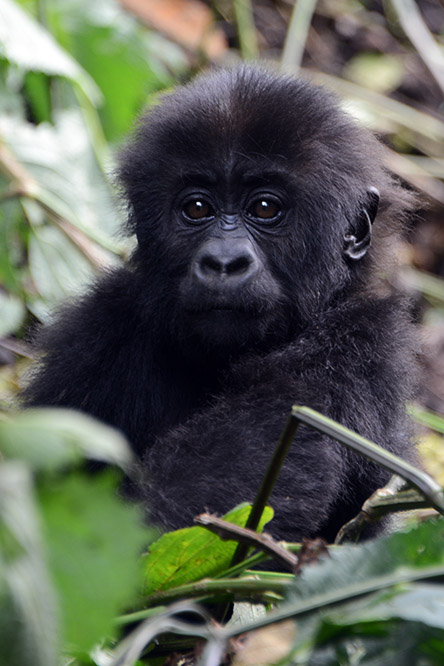
Lastly, I caught this baby hanging out with its mother. The rangers told me the youngster was about nine months old.
After seeing mountain gorillas in Virunga and then Grauer’s gorillas here, I appreciated how fortunate I had been to encounter both subspecies during the same trip through eastern Congo.
Kahuzi-Biega didn’t have the dramatic volcanoes that made Virunga immediately spectacular to me, but the forest itself felt immense and wild. Seeing one of the world’s rarest great apes inside that landscape made the park memorable for an entirely different reason.
Explore More of the Congo
Kahuzi Bieza National Park • Goma • Virunga National Park