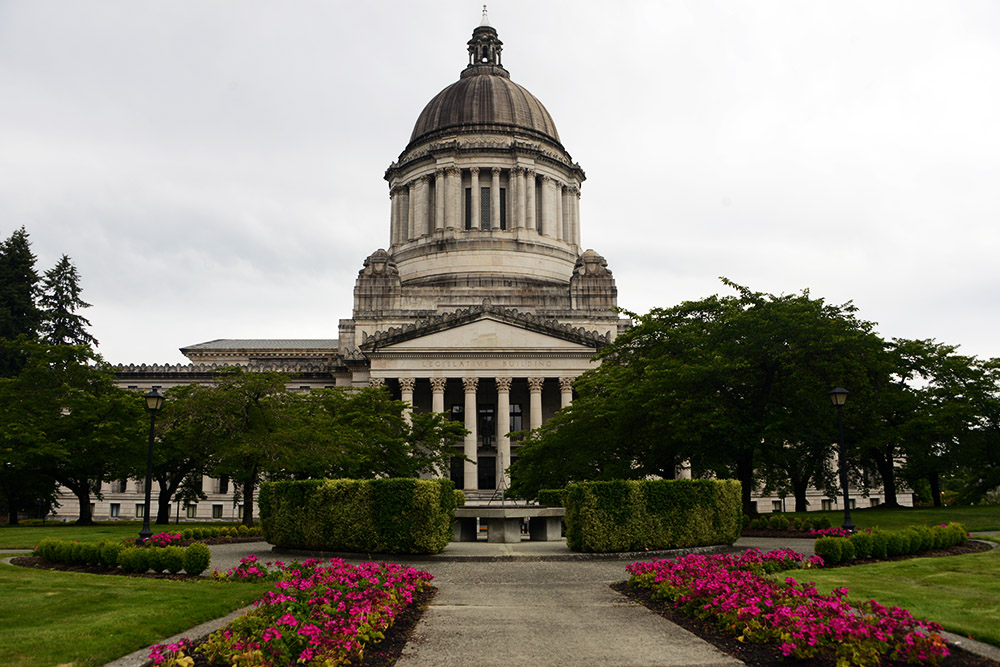
Washington’s capital is Olympia, a relatively small city located about an hour south of Seattle at the southern end of Puget Sound. Like much of the coastal Pacific Northwest, Olympia sees plenty of cloudy and rainy weather, and that was my experience on two of my three visits. My most recent trip was another overcast day, although at least the rain held off. The photograph above shows the Washington State Capitol Building, one of the city’s most recognizable landmarks.
Capitol Campus
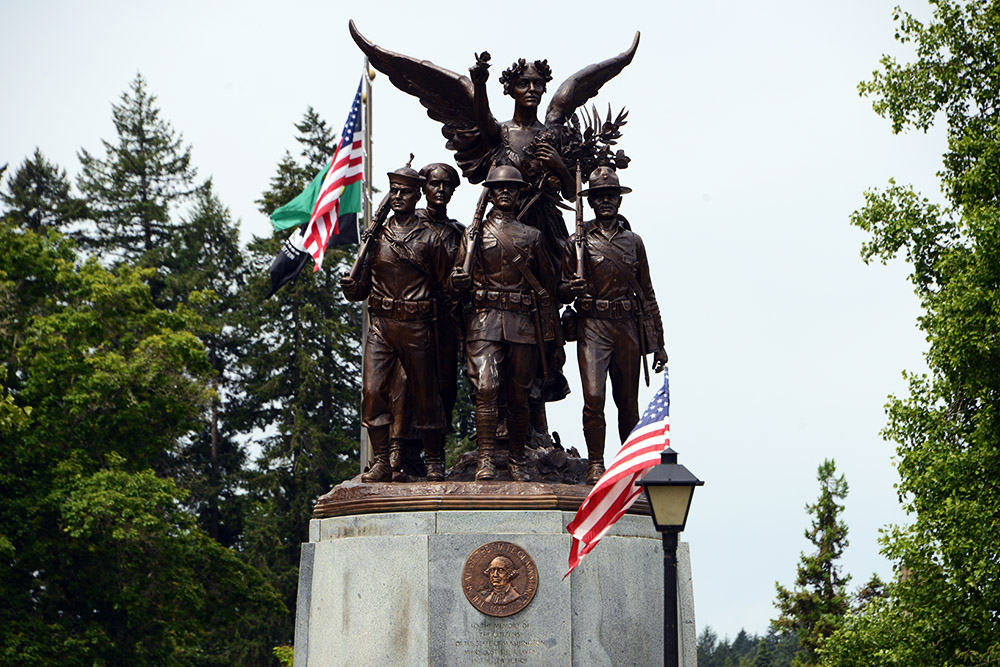
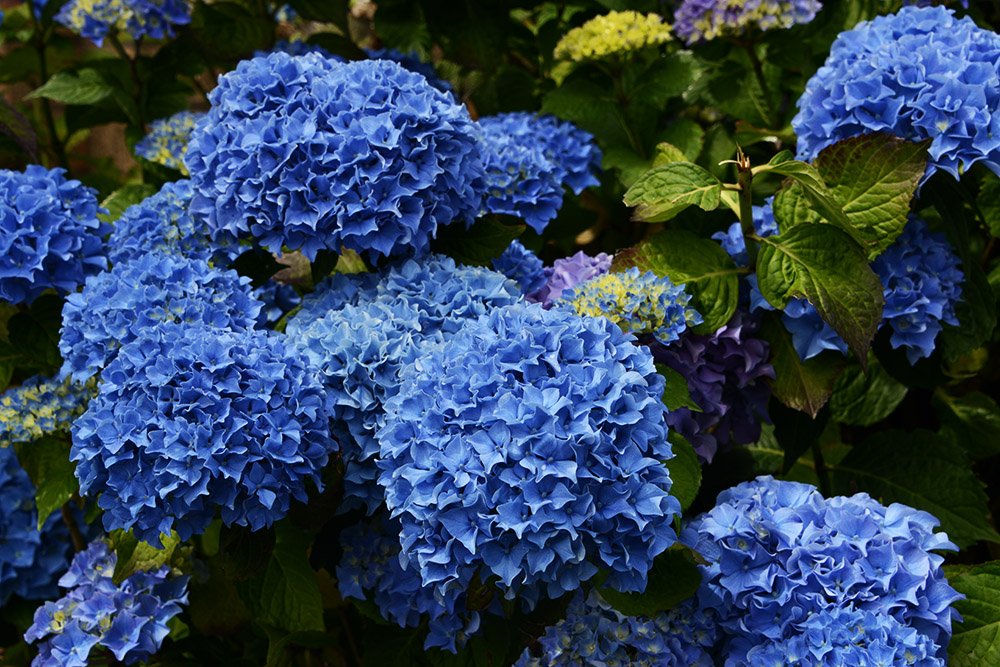
The Capitol Campus is one of the nicest parts of Olympia. Compared with many state capitols I’ve visited, the grounds here felt especially green, with gardens, mature trees, memorials, and walking paths spread around the government buildings. Above is one of the veterans memorials, while the photo below shows some of the landscaping around the campus.
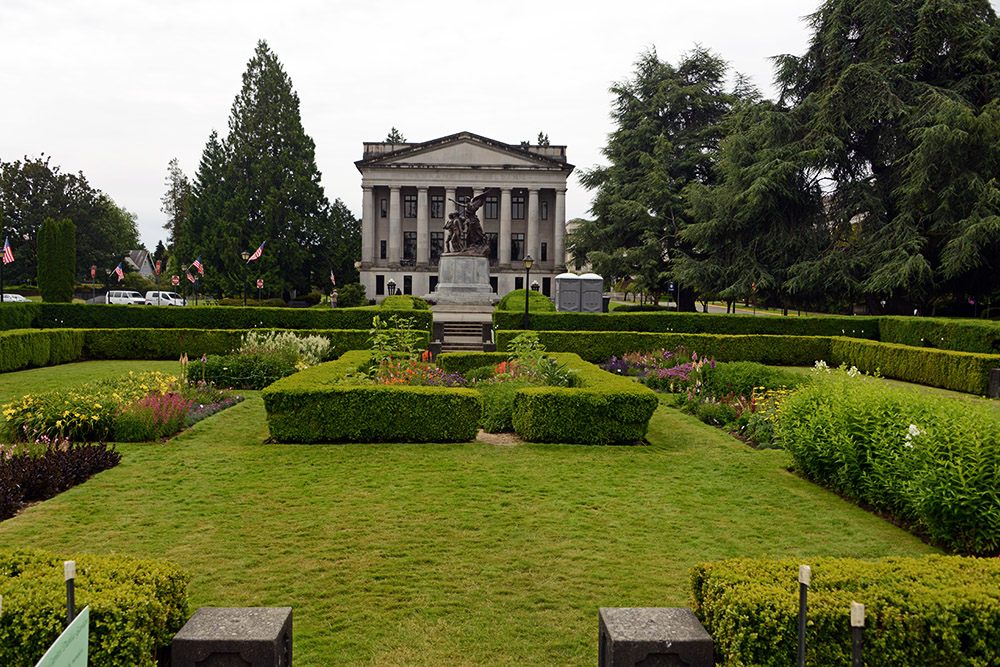
I had always imagined Olympia as a fairly young western city, so I was surprised to learn how far its history goes back. The settlement developed in the mid-19th century and became an important political and commercial center for the Washington Territory. As Olympia grew, the state added larger government buildings around the Capitol Campus, creating the mixture of historic and more modern architecture that surrounds the legislature today.
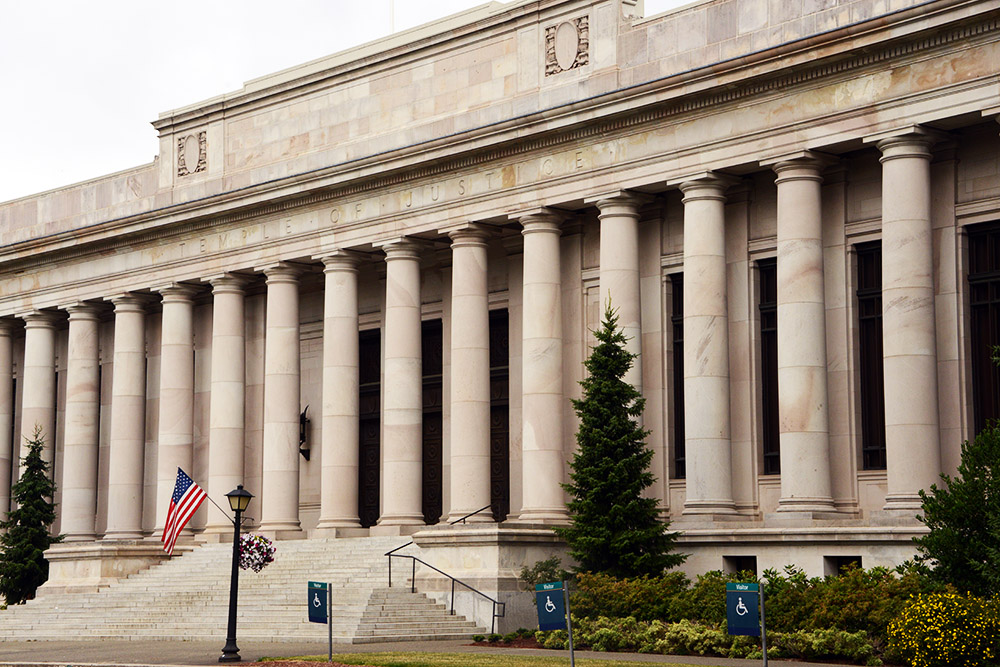
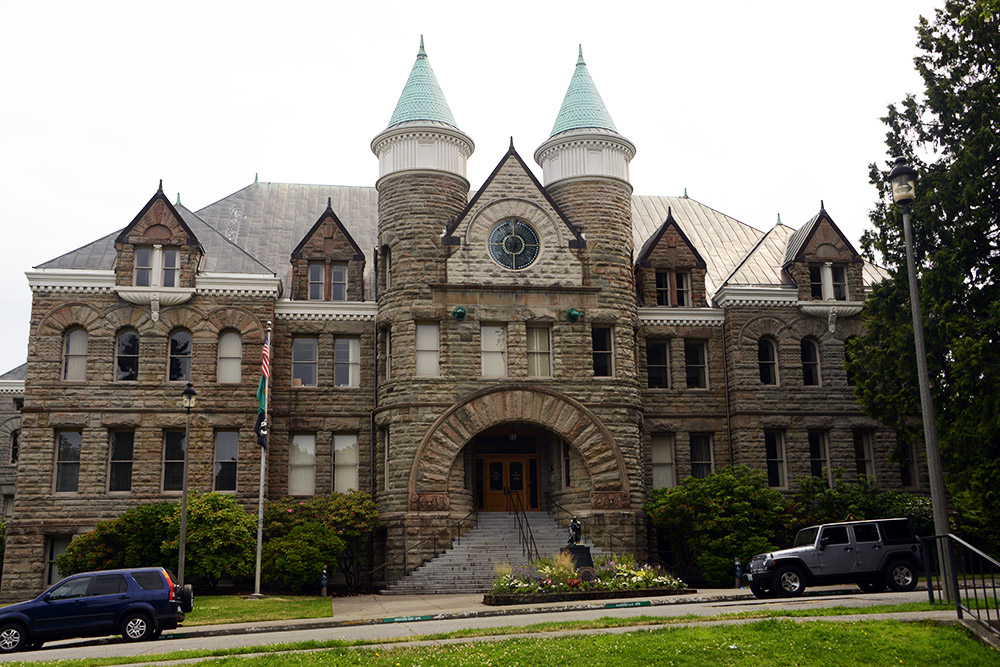
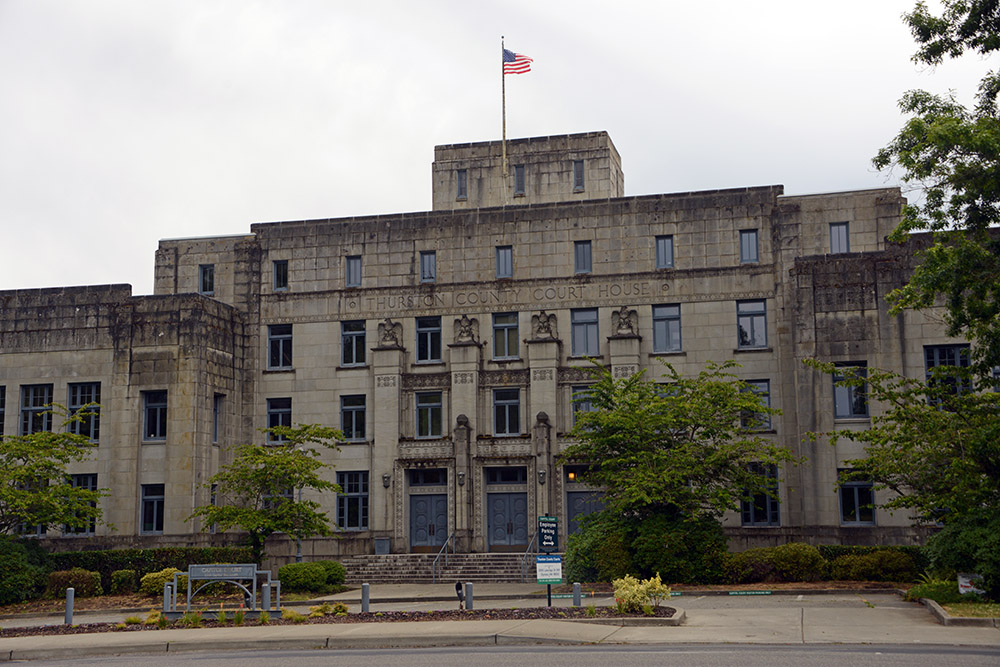
I didn’t realize until after returning home that the building above had once served as Washington’s state capitol. Originally built as a county courthouse, it later housed the state government for several decades before the current Capitol Building was completed. Today it remains part of Olympia’s government district and is another reminder that the city’s political history extends well beyond the modern capitol complex.
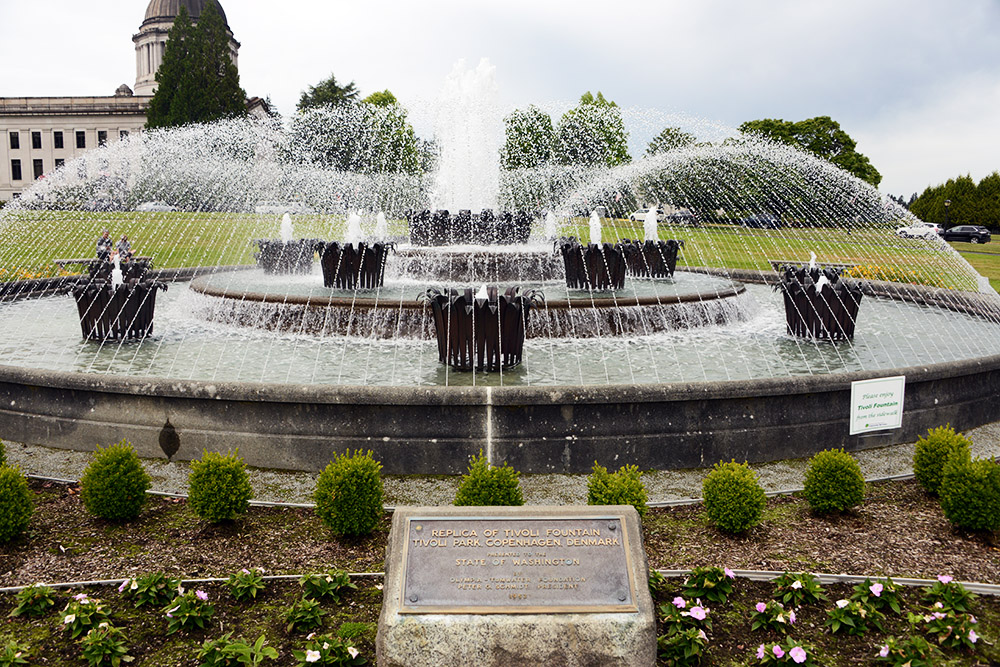
The heavy overcast wasn’t doing my photography any favors, but at least it wasn’t raining. One of the more decorative features of the Capitol Campus is the Tivoli Fountain, inspired by a fountain in Tivoli Park in Copenhagen. Even though I visited during July, the cool temperatures and blooming flowers made the day feel more like spring than the middle of summer.
Downtown Olympia
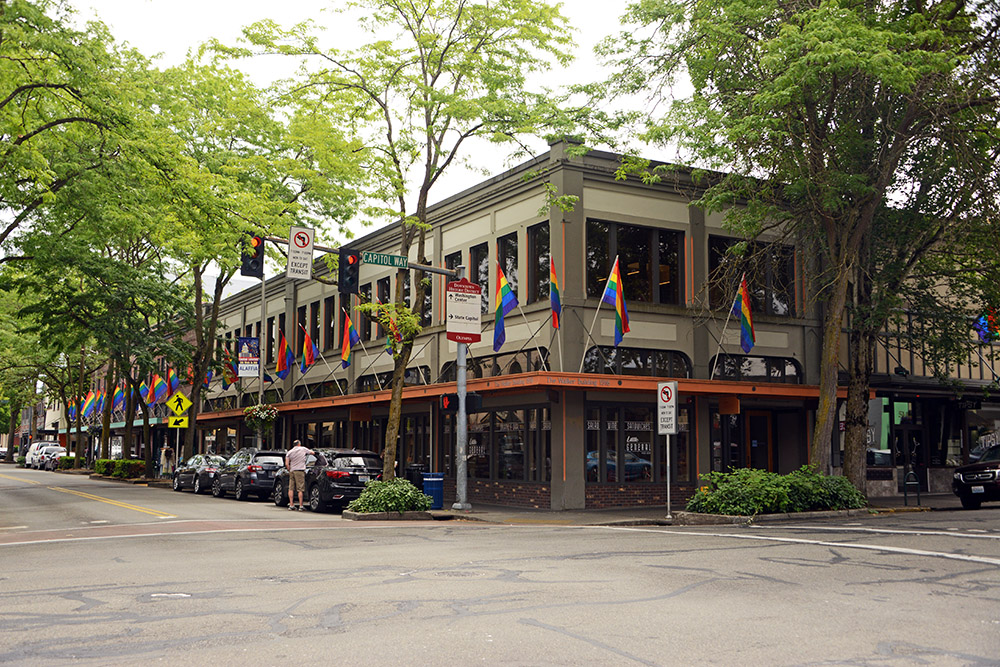
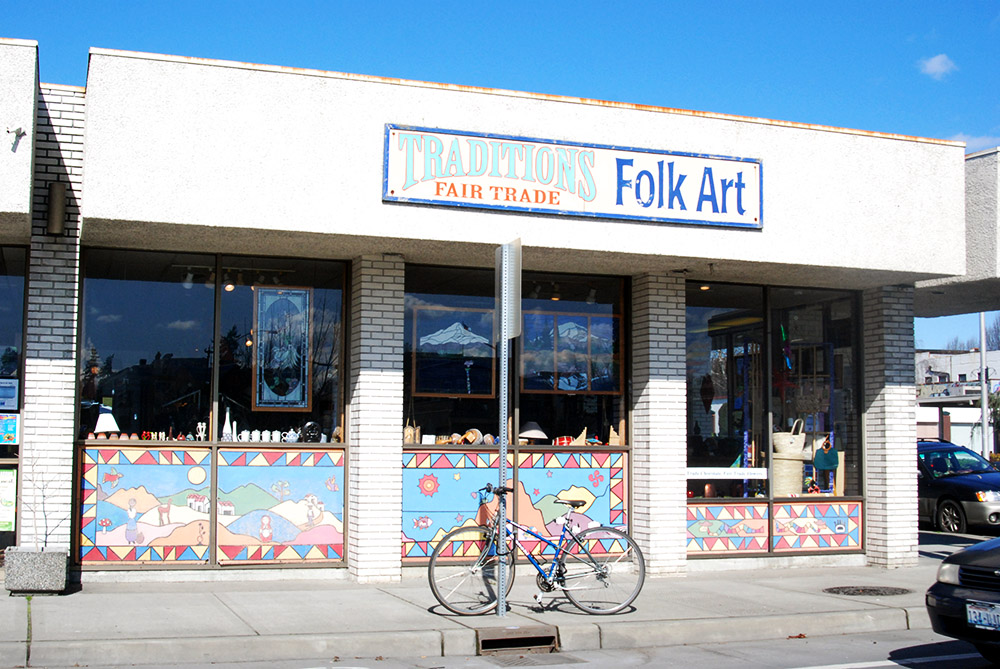
Olympia isn’t one of Washington’s major tourist destinations, but it works well as a relaxed day trip. Downtown is compact and easy to explore on foot, with independent shops, restaurants, cafes, galleries, and a strong local character. Compared with Seattle, everything here felt quieter and more laid-back.
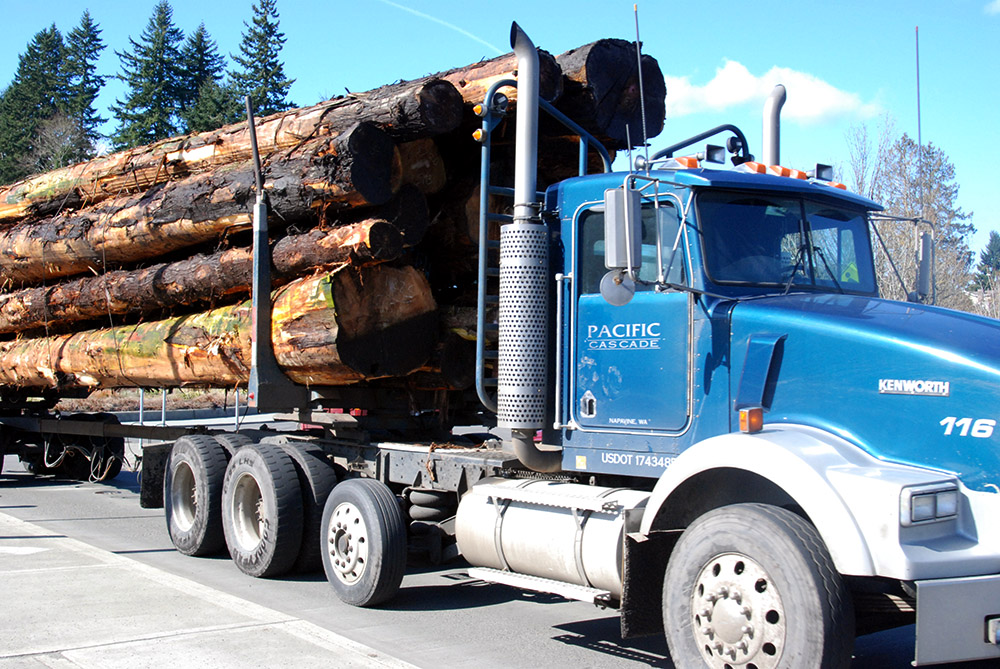
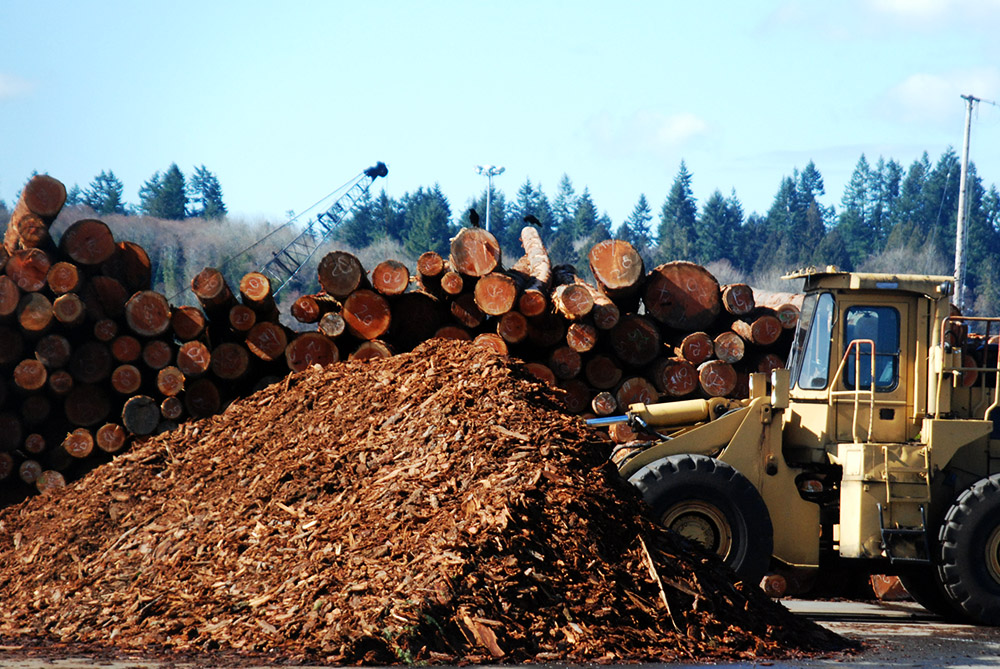
Another part of Olympia’s identity comes from Washington’s long connection with the timber industry. Forest products have been economically important throughout the Pacific Northwest since the region’s early settlement, and logging remains visible around the city today. While exploring Olympia, I saw several trucks carrying logs toward the industrial waterfront and port areas.
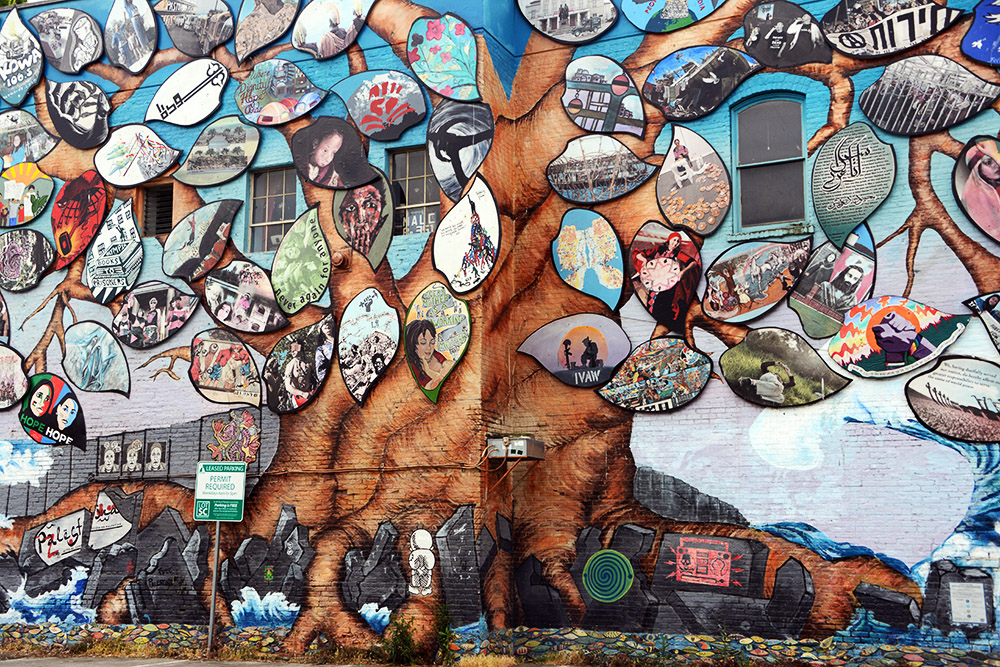
One of my favorite things I came across downtown was this giant mural. I never learned the story behind it, but I liked the design of the enormous tree, with individual leaves containing different portraits and objects. Public artwork like this helped give downtown Olympia more personality than I had expected from such a small capital city.
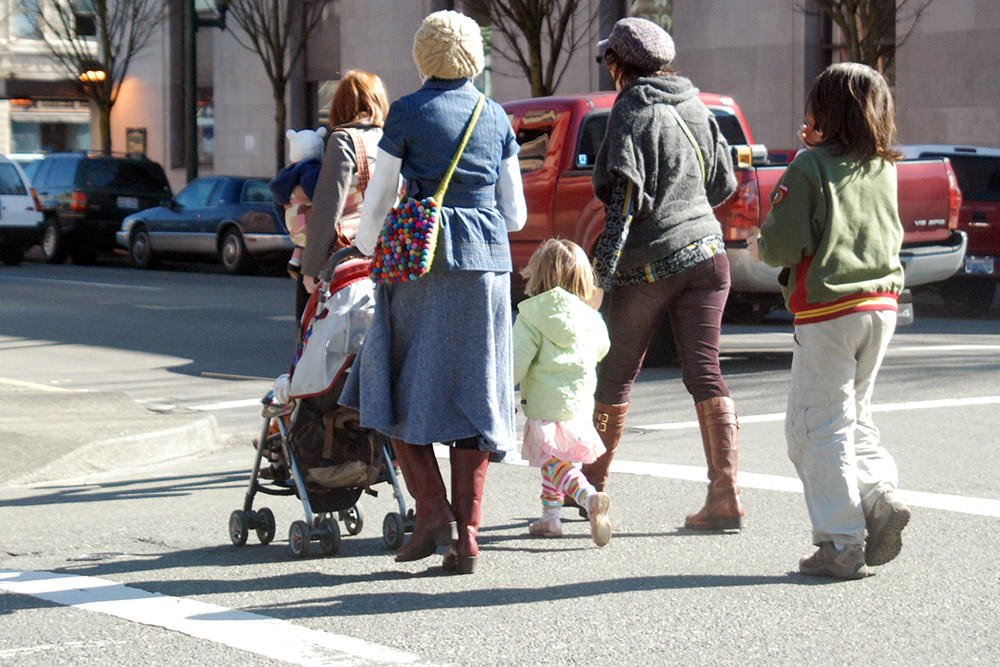
Even during the summer, Olympia never felt particularly crowded or hectic. That’s part of what separates it from Seattle. The streets and public spaces were active enough to feel like a real city, but the pace was much quieter and more relaxed.
Olympia Waterfront
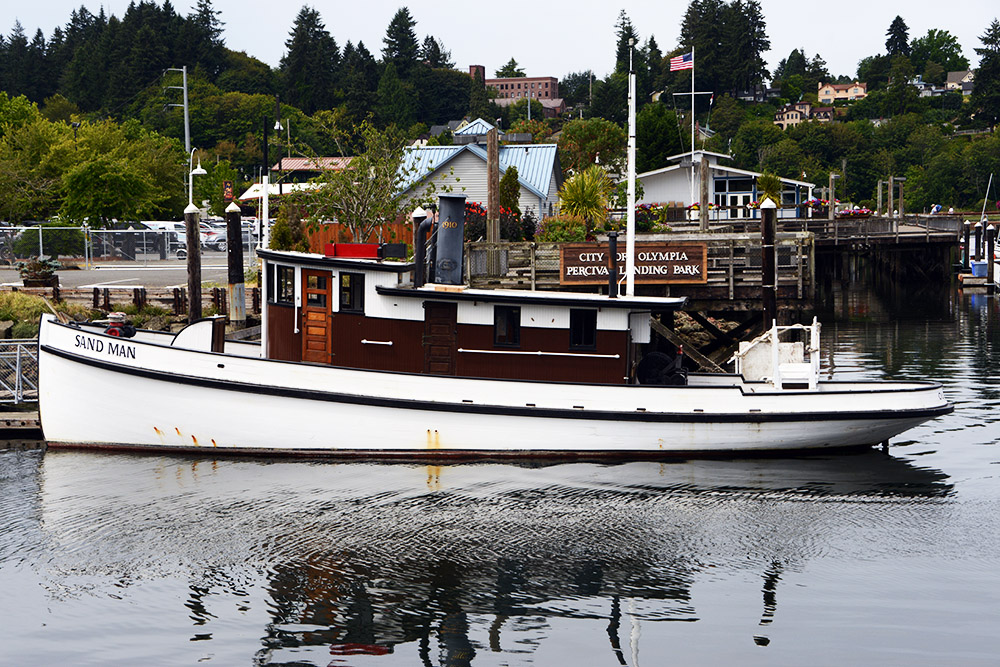
Before visiting, I had never really pictured Olympia as a waterfront city. On a map it appears far inland compared with places directly on the Pacific coast, but Olympia sits at the head of Budd Inlet, one of the southernmost reaches of Puget Sound. From here, a maze of waterways extends north toward Tacoma, Seattle, the Strait of Juan de Fuca, and eventually the open Pacific.
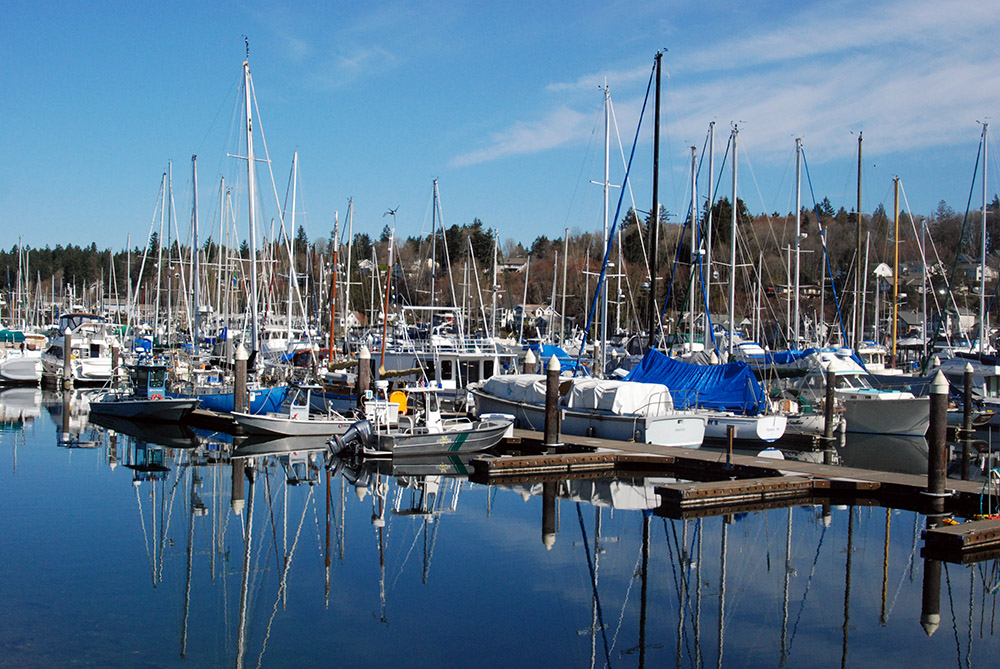
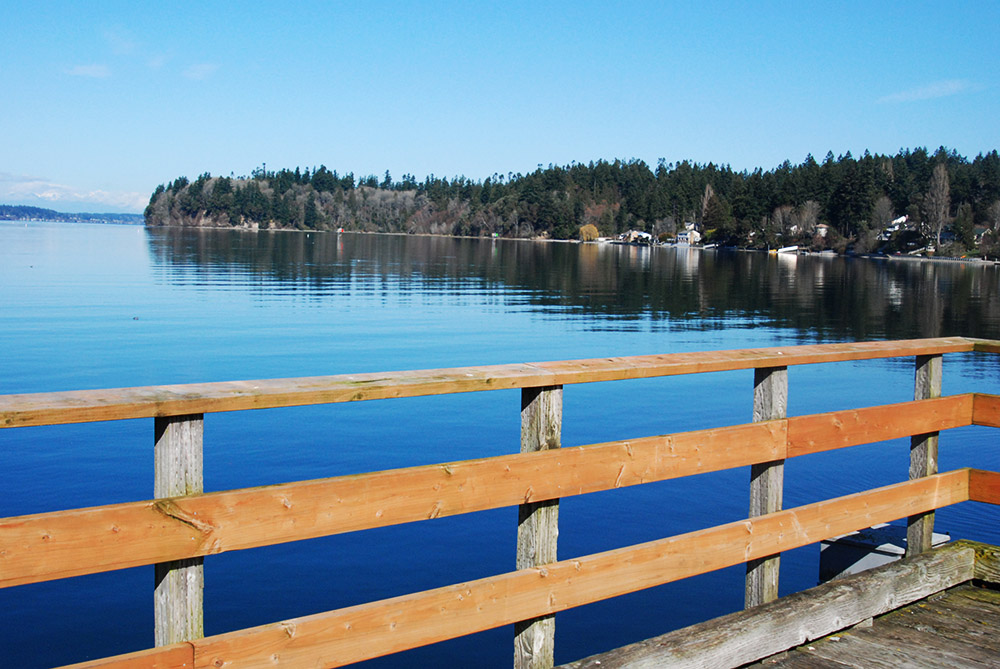
Budd Inlet is essentially Olympia’s connection to the rest of Puget Sound. Sailing north from here would eventually take you past Tacoma and toward Seattle before reaching the larger waterways leading toward the Pacific. The network of inlets, islands, and channels is one of the defining geographic features of western Washington and gives Olympia a maritime character that I hadn’t expected before arriving.
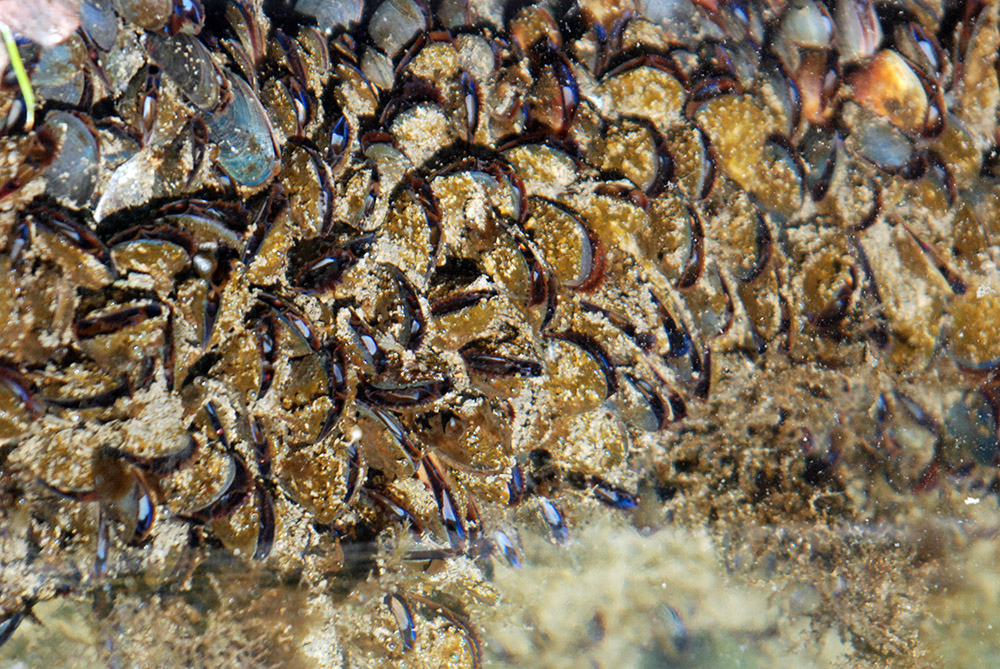
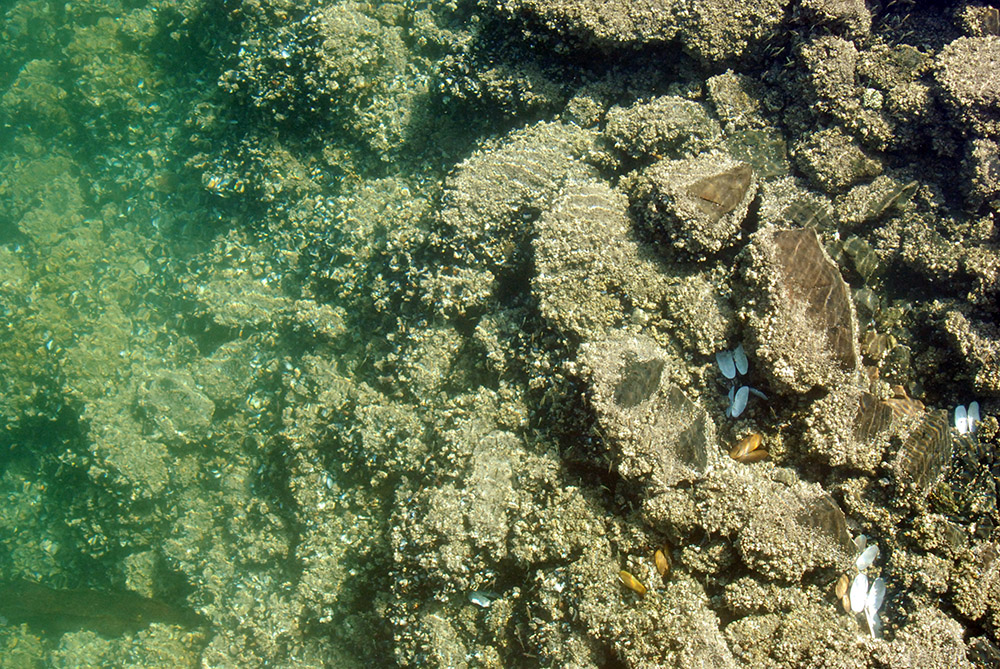
These aren’t exactly artistic photographs, but I wanted to show what I saw when I looked over the dock and into the water. I was surprised by how clear it appeared in some areas, and the bottom was covered with shellfish. The protected waters of Puget Sound support an enormous variety of marine life, and shellfish have long been an important part of the region’s ecology and culture.
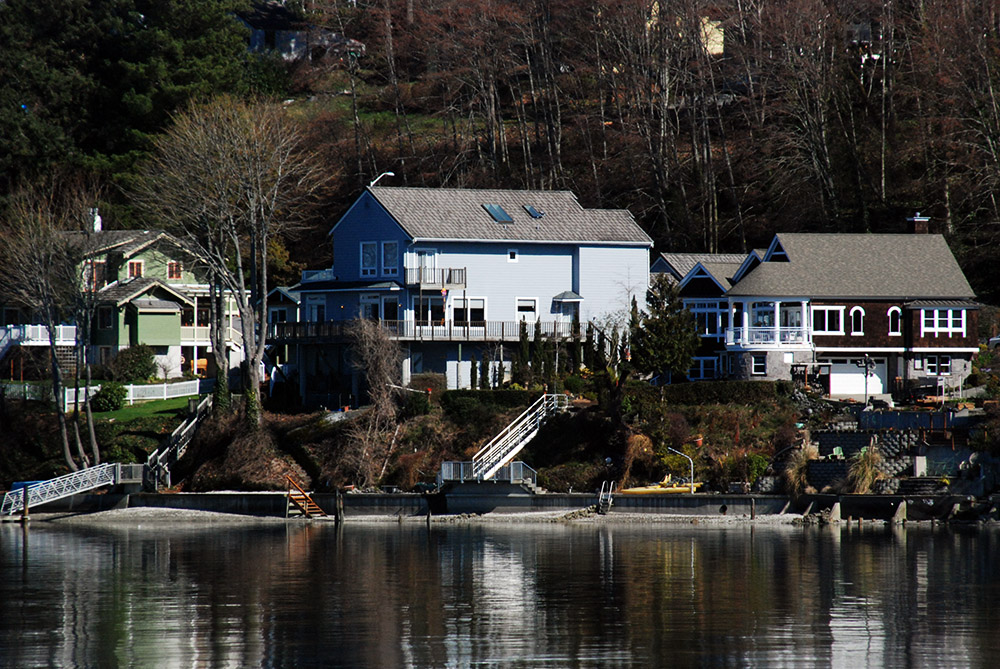
Some of Olympia’s most attractive homes are built along the waterways surrounding Budd Inlet. Between the water views, quiet neighborhoods, and easy access to the rest of the Puget Sound region, it’s easy to understand the appeal of living along this part of the city.
Olympia probably isn’t a city I’d plan an entire Washington trip around, but after visiting several times I think it’s worth exploring if you’re already traveling through the region. The Capitol Campus is beautiful, downtown has its own character, and the waterfront gives the city a setting that I didn’t fully appreciate until I saw it in person. For a state capital, Olympia feels less like a major government center and more like a quiet Pacific Northwest city that happens to have one of the country’s most impressive capitol complexes.