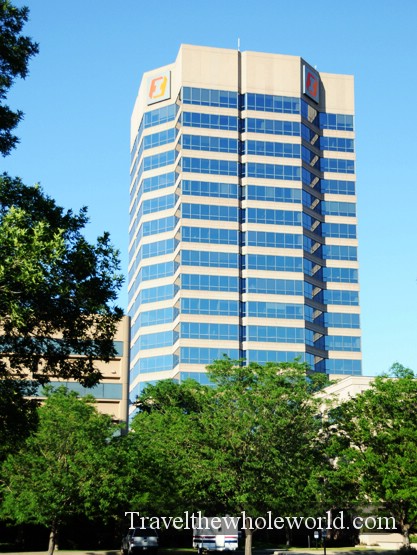
Located on the Great Plains in the south-central part of the state, Billings is the largest city in Montana. Despite being much larger than Helena, I felt like there was less to do here by comparison. Downtown was nice with plenty of restaurants and places for entertainment, but it didn’t seem to have quite as much history as Helena.
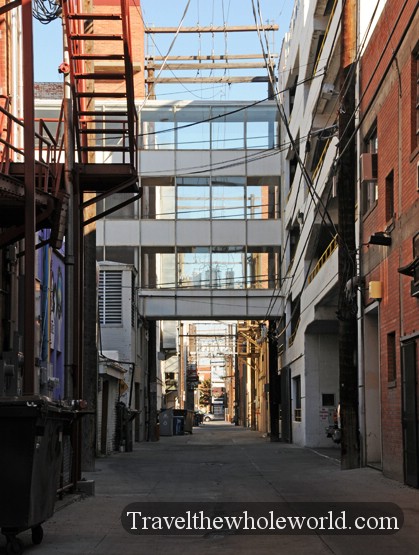
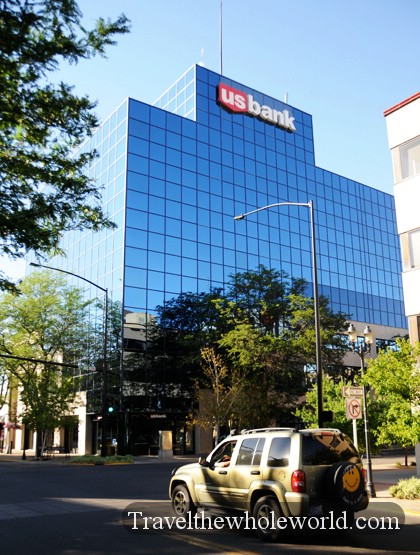
The photos above are from my walk around downtown. Believe it or not, the building on the left was the tallest building in Montana when I visited. The First Interstate Center rises 272 feet above the city and definitely stands out against the otherwise low skyline. The alley on the right also gave Billings more of a big-city feel than I expected from Montana.
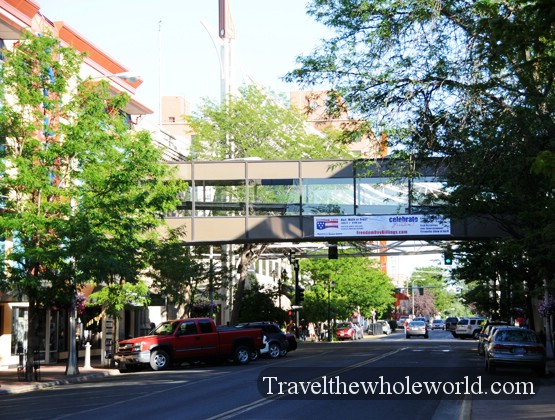
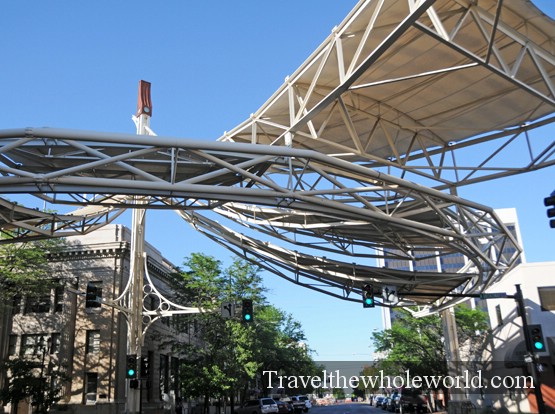
These are a couple more views from downtown Billings, including one of the main commercial streets and an artistic canopy installed over one of the intersections. The city center isn’t huge, but it has enough restaurants, shops, and activity to feel like the urban center of Montana.
Horses and Downtown Billings
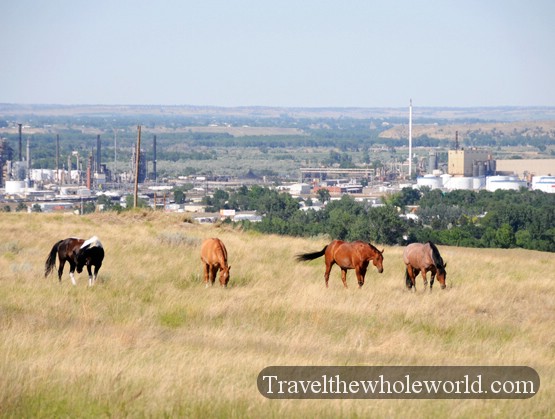
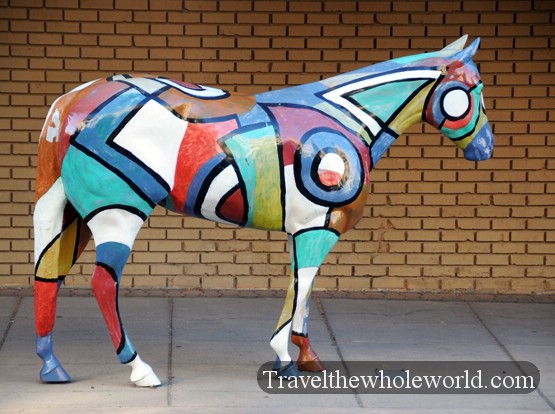
The thought of Montana always brings horses to mind. In most major cities you normally have to drive quite a distance before coming across ranches, but right outside Billings I found several. Even downtown had horses of a different kind, with colorful horse sculptures decorating parts of the city.
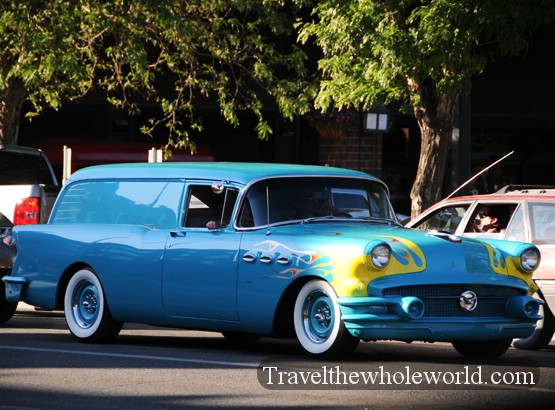
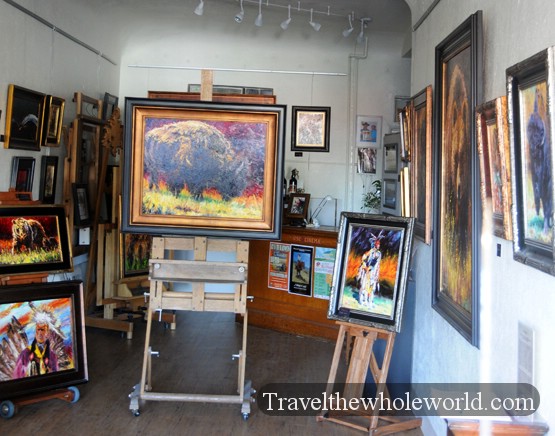
These photos are also from downtown Billings. On the left was the second unusual car I came across during my travels through Montana, although unlike the one I saw in Helena, this one was actually drivable. Either by coincidence or because the people inside saw me take a picture, the car seemed to keep appearing on the same random streets as me for the next 15 minutes.
I visited Billings on a Saturday, and even though it wasn’t very late, quite a few businesses were already closed. That included places like the art shop above and the antique store below.
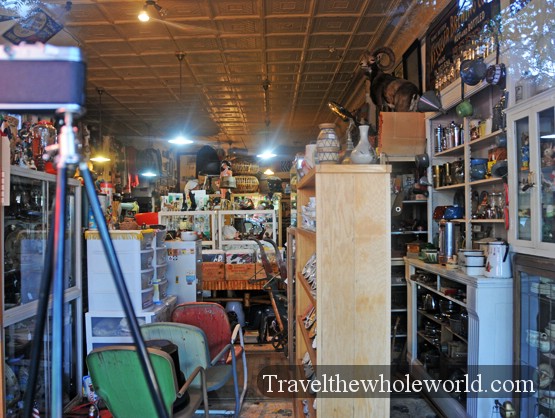
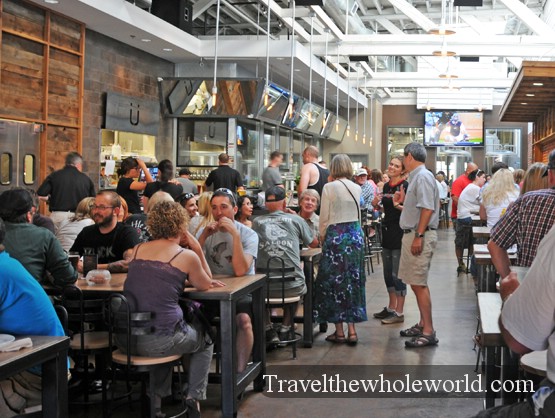
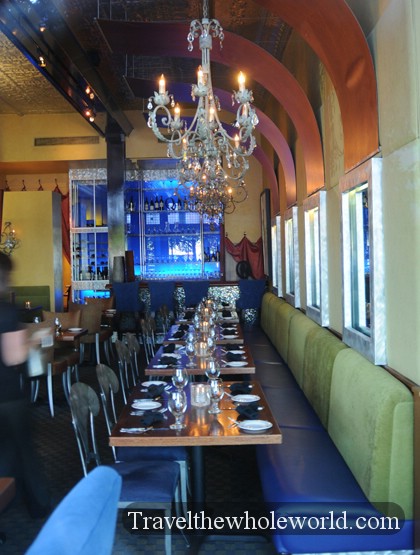
While some of the shops were quiet, the restaurants were a different story. The restaurant on the left was packed, although there were also plenty of quieter and more formal options around downtown.
Pictograph Cave
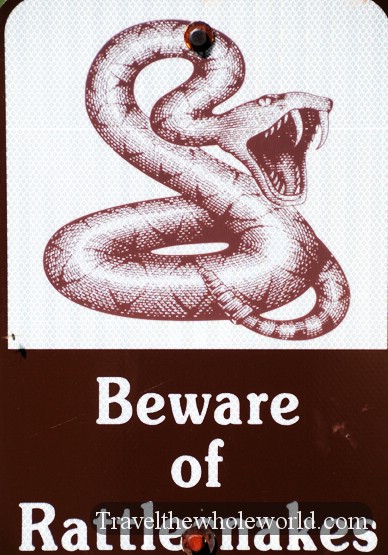
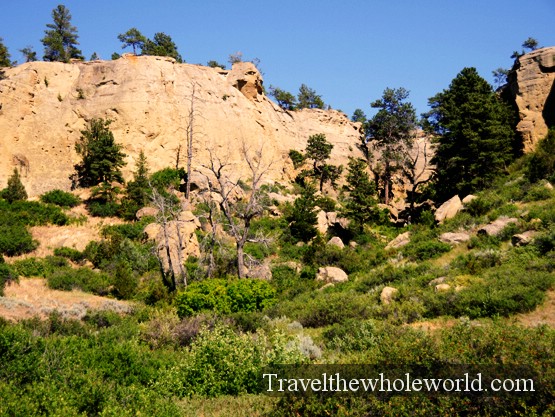
One of the more interesting places to visit just outside Billings is Pictograph Cave State Park, known for Native American artwork left behind on the cave walls. The surrounding landscape is rocky and dry, with short but steep cliffs rising above the trails. Signs also warn visitors to watch out for rattlesnakes.
I have to admit that I found the pictographs themselves a little underwhelming. The cave was a decent size, but by the time I visited many of the images had become extremely difficult to see. Exposure to the natural elements over the centuries has caused much of the artwork to fade.
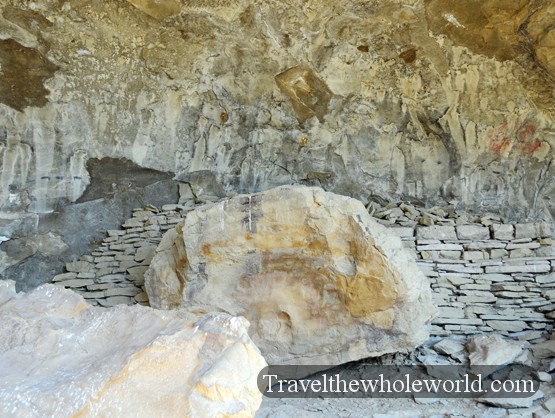
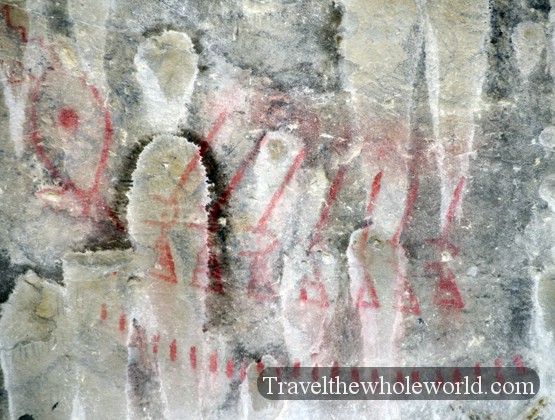
The photo on the left shows more of the cave itself, while the photo on the right shows one of the pictographs I was still able to make out. Even with much of the artwork faded, it was interesting knowing that people had been using these caves long before the modern city of Billings existed.
Pompeys Pillar
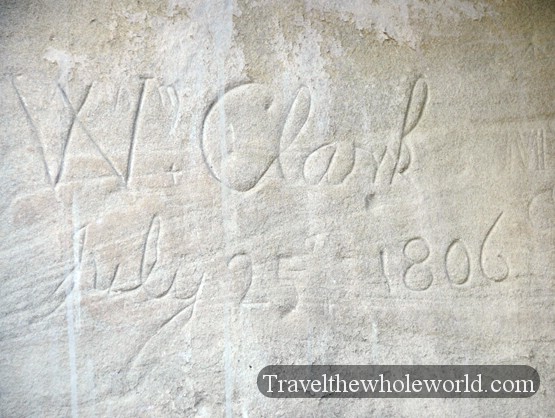
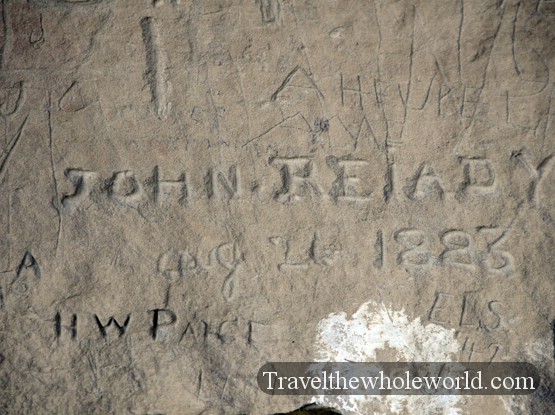
About 30 miles east of Billings is another interesting historic site called Pompeys Pillar. Somehow I took the time to visit the place but forgot to actually photograph the pillar itself! At least I got a photo of the most interesting part.
I never realized how widespread America’s fascination with Lewis and Clark was until I started doing more serious traveling through the western United States. It sometimes seemed impossible to drive very far without coming across another historical marker connected to their expedition. Considering the enormous distances they traveled through territory that was largely unknown to Americans at the time, it’s easy to understand why their journey became such an important part of the country’s history.
What made Pompeys Pillar especially interesting to me was seeing something William Clark physically left behind. Clark carved his name and the date into the sandstone during the expedition’s return journey in 1806, and his signature remains visible today. The other photo shows names left by people who passed through the area in later decades. It’s one thing to know that someone important once stood in the same place you’re visiting, but it’s much more interesting when you can still see something they actually left behind.