As the world’s first national park, Yellowstone is famous around the globe for its natural beauty, wildlife, and thermal activity. Yellowstone’s scenery includes dozens of waterfalls, large lakes and rivers, thick forests, and dramatic canyons. The park is also one of the best places in North America to go on an American “safari,” with everything from elk and bison to the giant grizzly bear. On top of all this, there is no other place in the world quite like Yellowstone when it comes to geysers and hot springs.
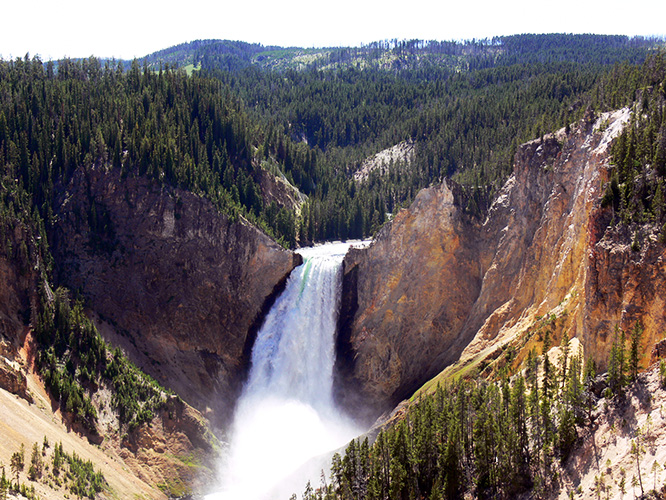
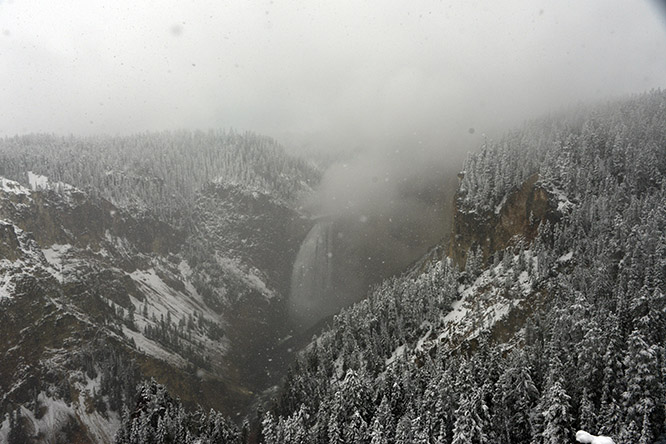
Yellowstone is famous for the large waterfalls found throughout the park. One of the most famous areas is the Upper and Lower Falls of the Yellowstone River. I’ve visited Yellowstone twice in my life, with the trips nearly a decade apart. The first time I came to Yellowstone I used an older camera, and I assumed that on my return I’d take much better photos. Instead, a late summer snowstorm made photography difficult, but it did give me the chance to photograph Yellowstone during two very different times of year.
My first visit was in June, while my second was in mid-September when snow was already coming down hard. The photo above shows Lower Falls during my first trip, while below you can see what the same area looked like during a snowstorm almost ten years later.
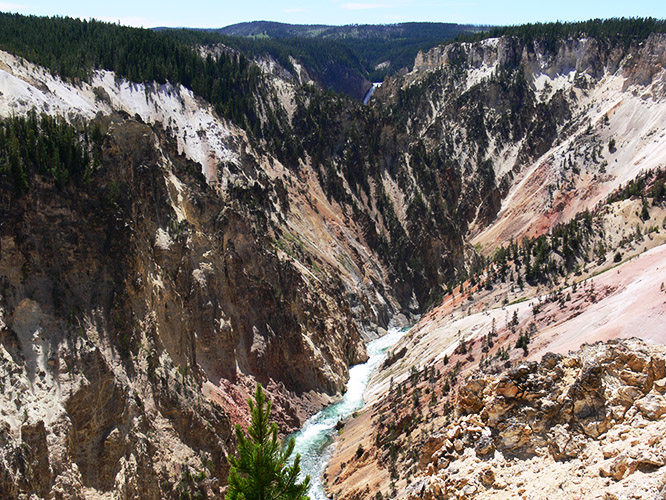
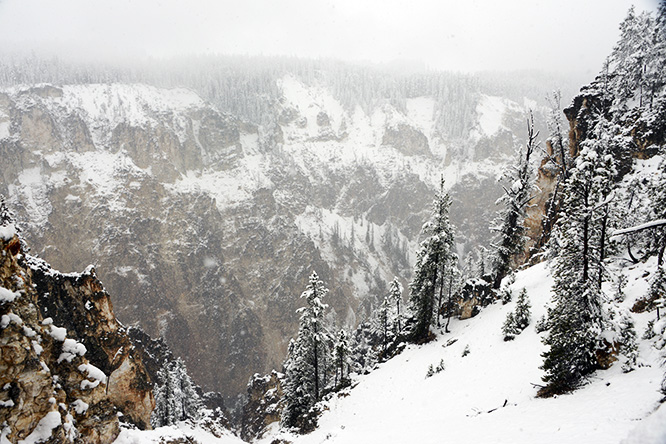
The river flowing away from the Upper and Lower Falls has carved the Grand Canyon of the Yellowstone. Having visited the Grand Canyon in Arizona, I can promise you the two aren’t really comparable, but Yellowstone’s canyon is still an impressive sight in its own right. The photo above shows the canyon on a clear day, while the photo below was taken nearly ten years later under very different conditions.
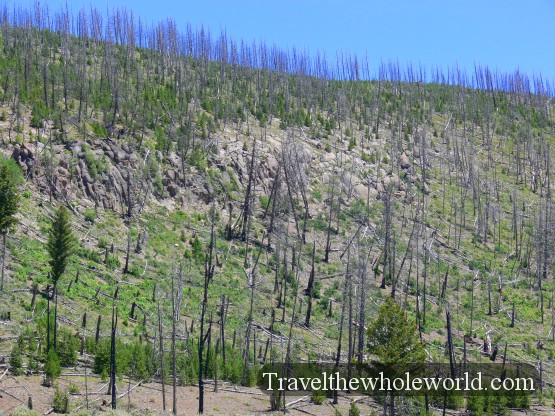
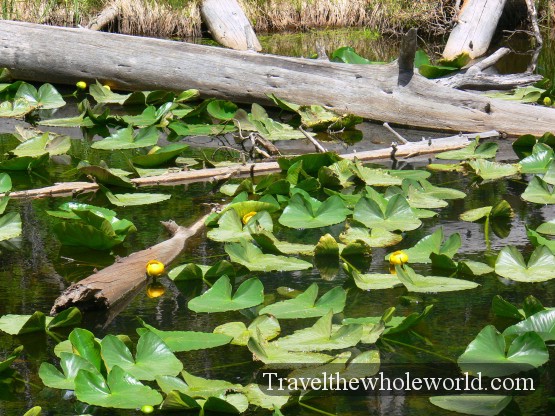
Many areas of Yellowstone contain dead or burned trees from past forest fires. Fire is a natural part of the Yellowstone ecosystem, and burned forests are a common sight while traveling through the park. On the left are some of these trees, while on the right are large lily pads growing in one of Yellowstone’s ponds.
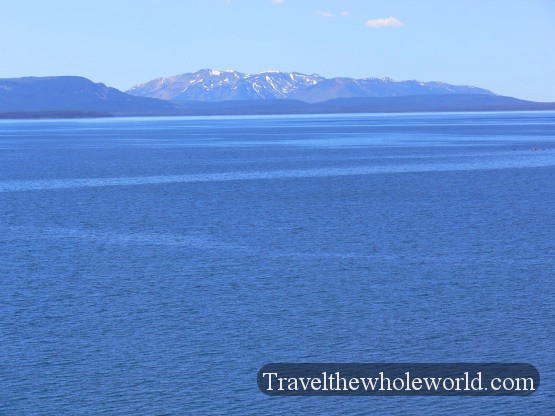
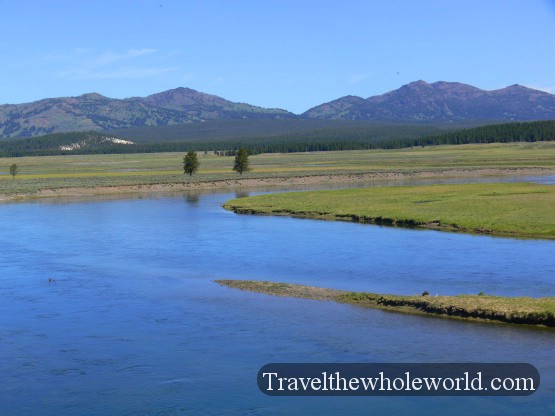
Yellowstone Lake sits at an elevation of more than 7,700 feet (2,350 meters), making it one of the largest high-elevation lakes in North America. People canoe, kayak, and fish on the lake, and I even saw a few people taking a quick swim despite how cold the water can be. The Yellowstone River flows through the lake before continuing north through the park.
Wildlife in Yellowstone
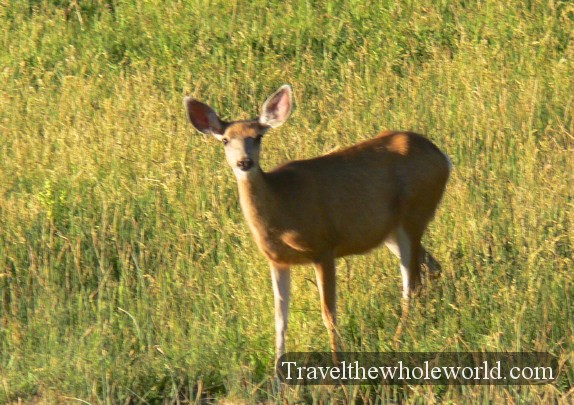
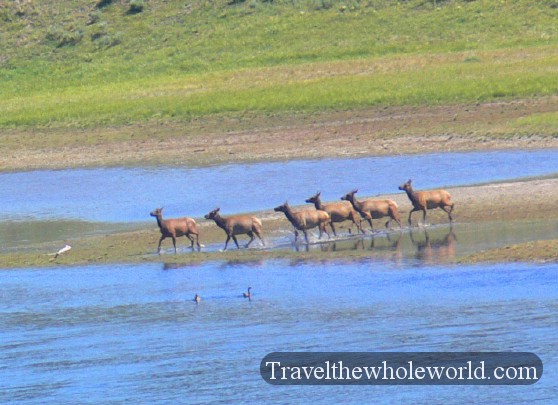
On the left is a mule deer, which is common throughout Yellowstone and much of western North America. A more exciting sight for me was the group of elk on the right attempting to cross a river. Spotting a large bull elk or bull moose is one of the real wildlife prizes in Yellowstone.
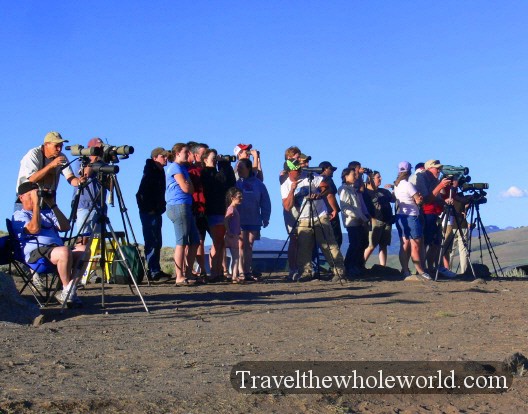
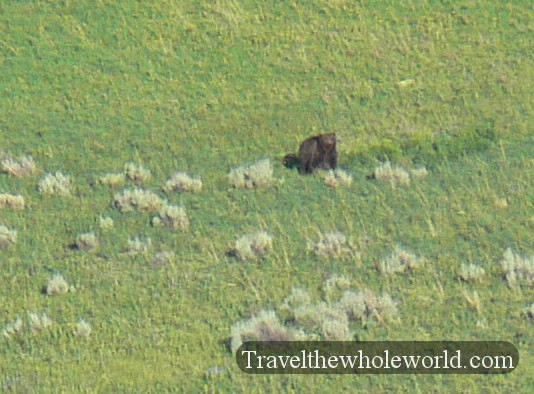
Many people visiting Yellowstone hope to spot a grizzly bear, one of the largest predators in North America. I met one person who had visited Yellowstone six times and had never seen one. Luckily, on my first day I spotted one in the distance.
On the left are a group of visitors with cameras and binoculars trying to get a closer look at the grizzly. The bear was extremely far away, so the photo on the right was the best I could do. It was probably about a mile away and required a huge amount of zoom, but you can still make out the bear near the lower right side of the photo.
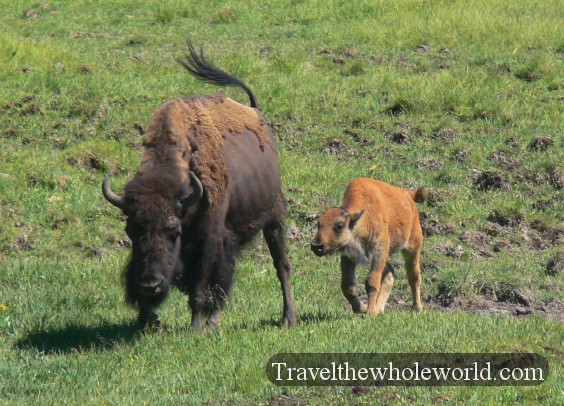
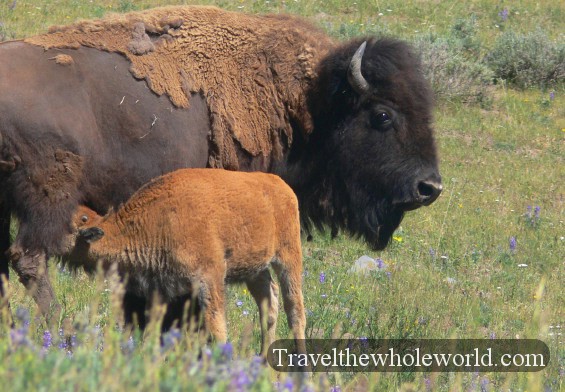
Millions of bison once roamed North America, but hunting brought their population close to extinction during the 1800s. Yellowstone became one of the most important refuges for the species, and today large herds can once again be seen throughout the park. The two photos above show bison with their calves.
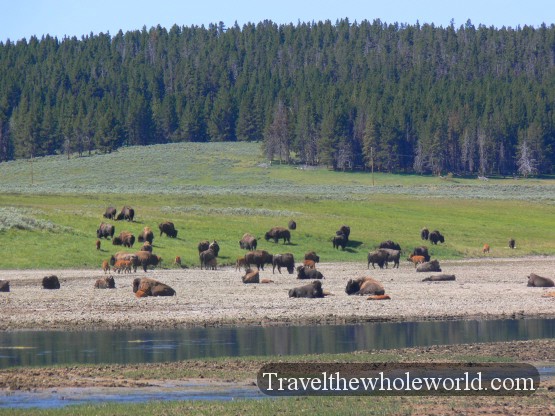
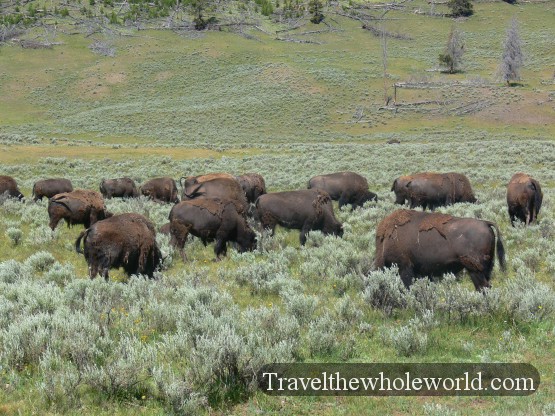
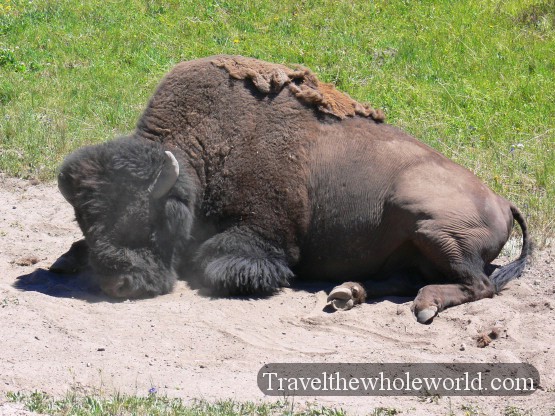
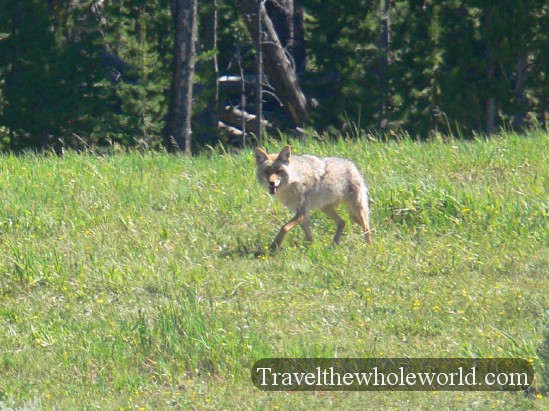
Above you can see another large bison resting in the grass. On the right is a coyote running through a field. Yellowstone also has wolves, but unfortunately I didn’t come across any during my visits.
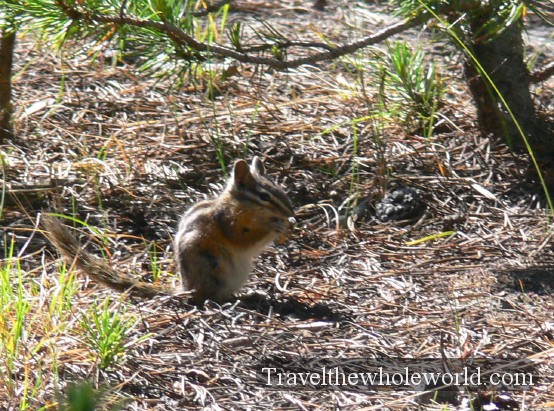
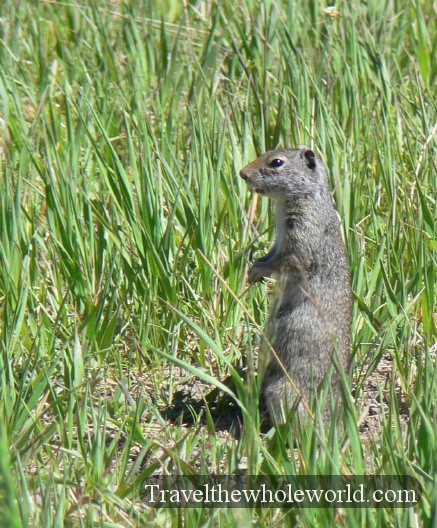
Above are two of the smaller animals I saw while exploring Yellowstone. On the left is a chipmunk, while on the right is a ground squirrel that makes its home in underground burrows rather than in trees.
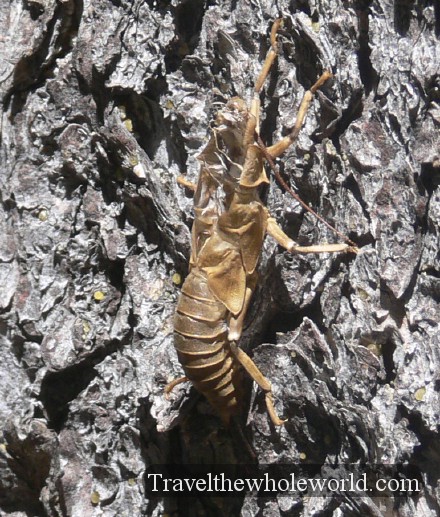
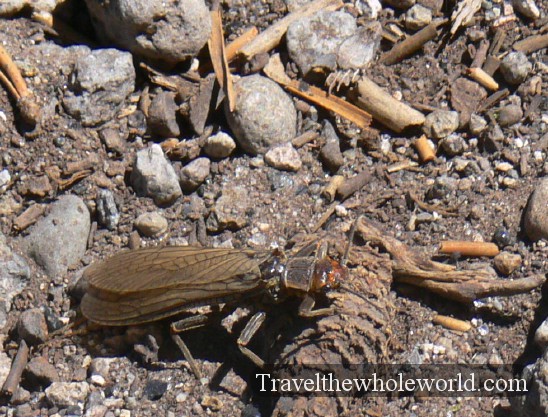
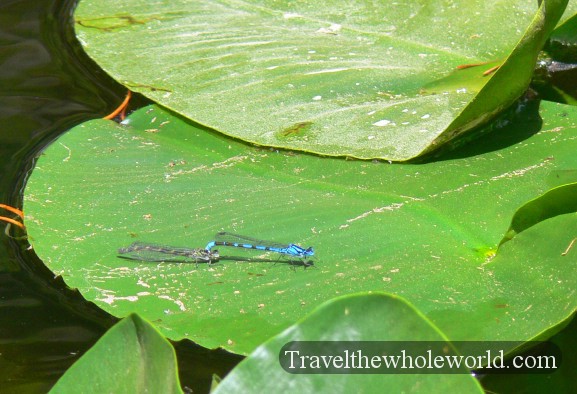
Because of Yellowstone’s cooler weather and high altitude, there didn’t seem to be anywhere near as many insects as I was used to seeing in warmer places like Florida. I came across large flies, insect shells attached to trees, and the huge roach-like insect above along the banks of a river. Yellowstone’s ponds had plenty of insect life as well, including these dragonflies resting on a lily pad.
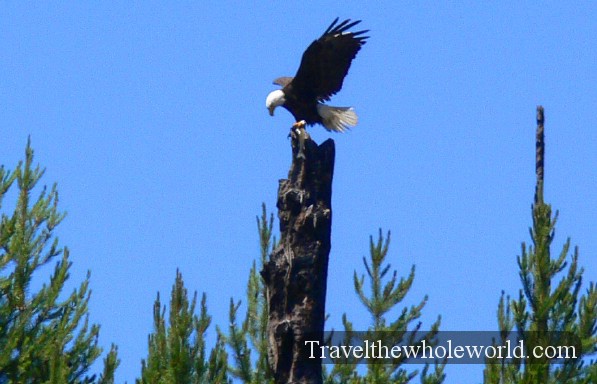
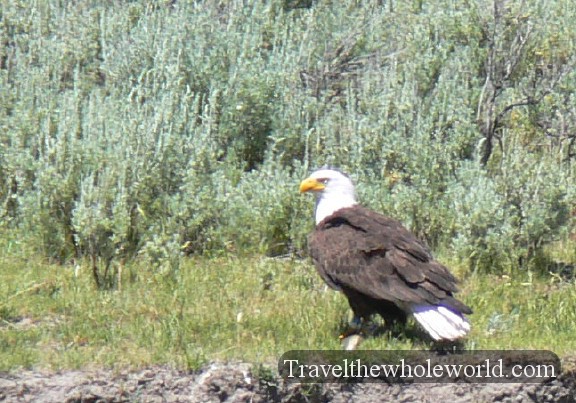
Until I visited Yellowstone I had never seen a bald eagle in the wild. I spotted the eagle above within about 30 minutes of entering the park, which gave me a great first impression of Yellowstone. I later saw another bald eagle flying above Yellowstone Lake.
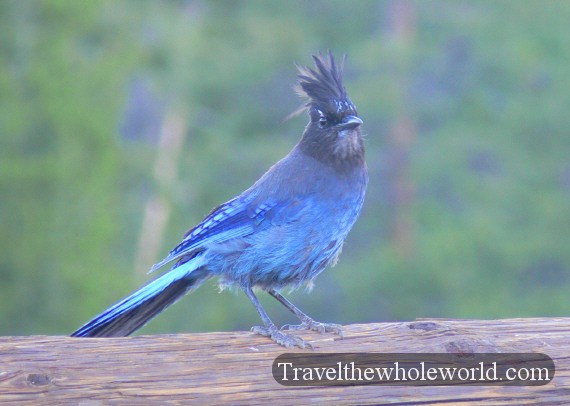
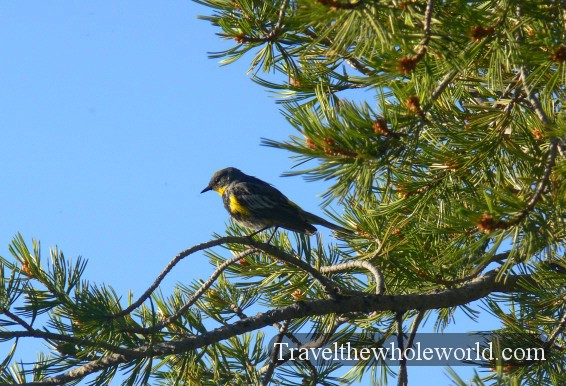
The two birds above were species I hadn’t seen before. The bird on the left is a Steller’s jay, while I never identified the bird on the right. I also saw an even brighter blue bird during the trip but unfortunately missed the chance to photograph it.
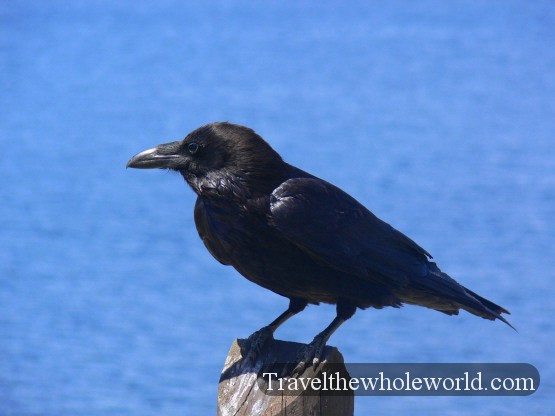
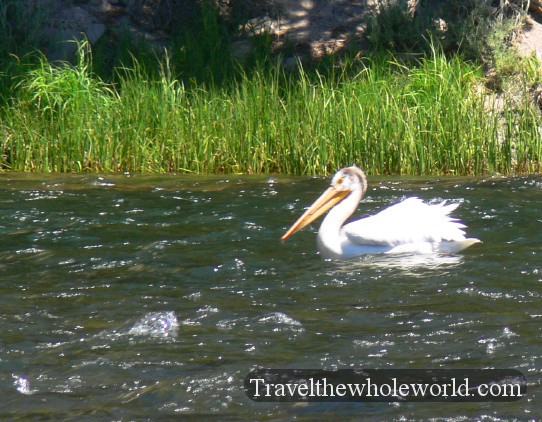
Above are two more of Yellowstone’s birds. On the left is a raven, while on the right is an American white pelican cruising along the water.
Geysers & Hot Springs
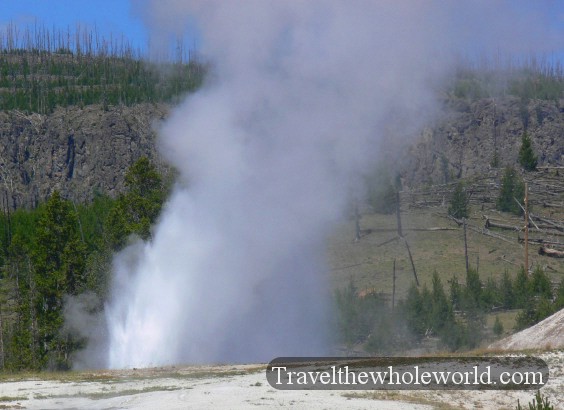
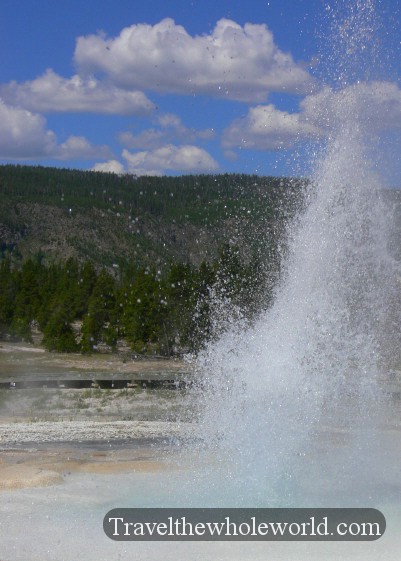
Geysers can be found in several parts of the world, including Iceland and New Zealand, but Yellowstone has an extraordinary concentration of geothermal features. Some geysers erupt frequently while others can remain quiet for hours, days, or much longer. Above are two of the active geysers I saw, one considerably larger than the other.
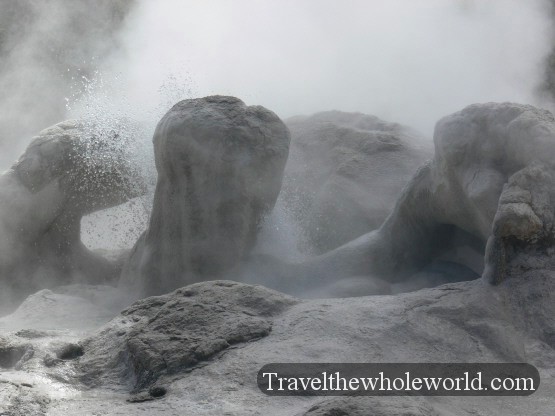
This was one of my favorite geothermal formations because of the strange landscape surrounding it. I started calling it the “alien geyser” because the formations looked like something from another planet.
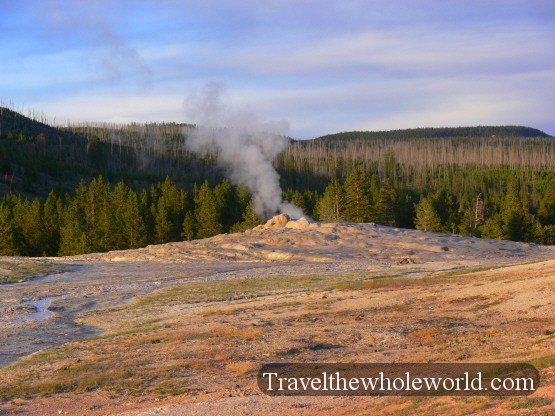
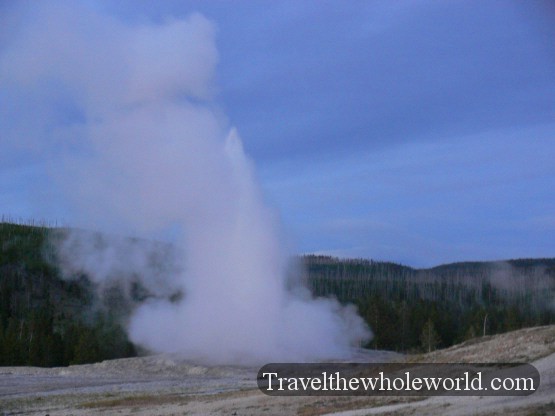
Old Faithful is easily Yellowstone’s most famous geyser. Its eruptions are predictable enough that visitors can usually plan around the estimated eruption time. On the left you can see Old Faithful steaming between eruptions, while on the right it is erupting and sending a column of hot water and steam high into the air.
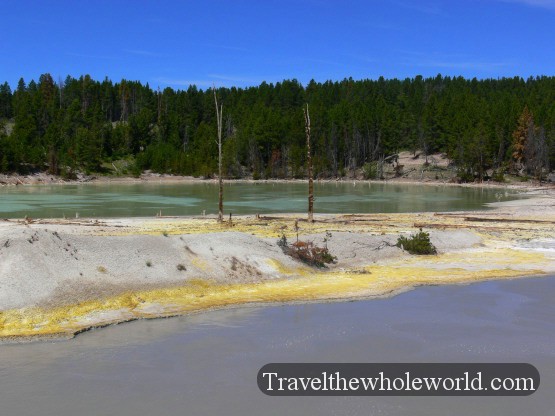
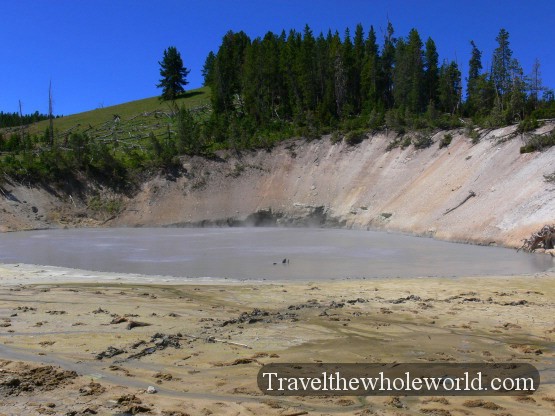
Yellowstone’s geothermal landscape isn’t limited to geysers and clear hot springs. There are also bubbling mud pots and cauldrons where heat, water, gases, and altered rock combine to create pools of hot mud.
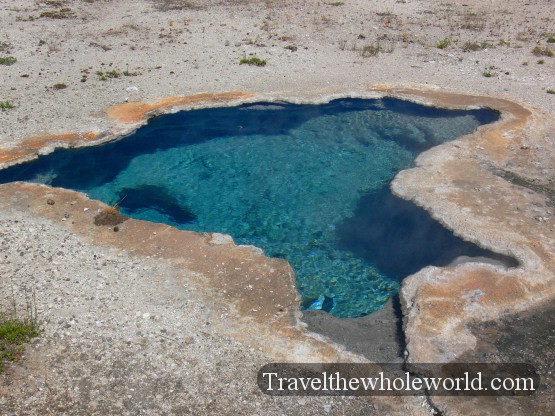
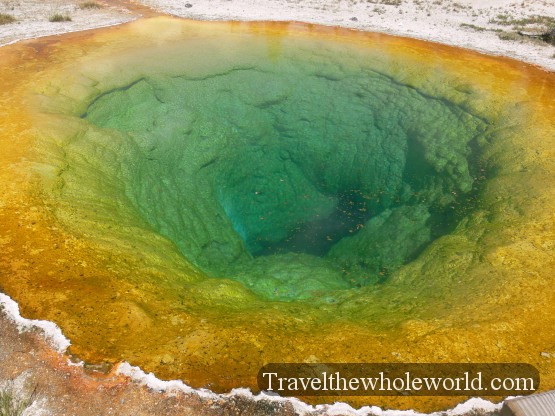
I actually found the hot springs just as interesting as the geysers. Looking into the deep, clear water almost feels like looking through a small doorway into the earth. The intense temperatures and different microorganisms living around the springs create some incredible colors. On the right is the famous Morning Glory Pool.
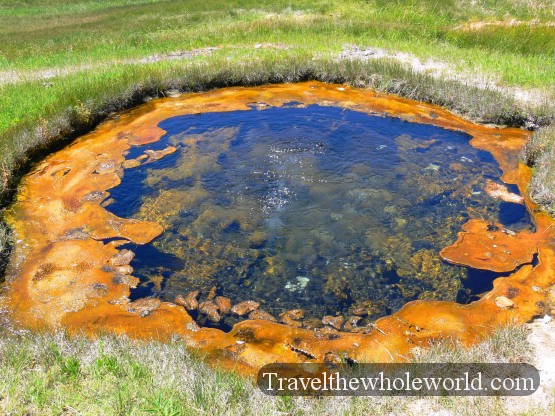
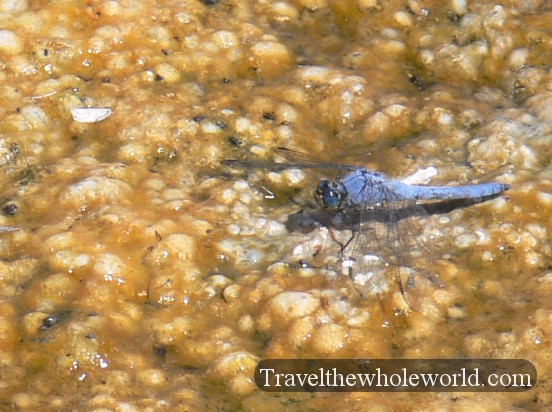
The hot spring on the left was unusual because grass grew surprisingly close to the water. Around many of Yellowstone’s hottest springs, the surrounding ground is too hostile for ordinary vegetation. On the right is a dragonfly resting near another geothermal pool.
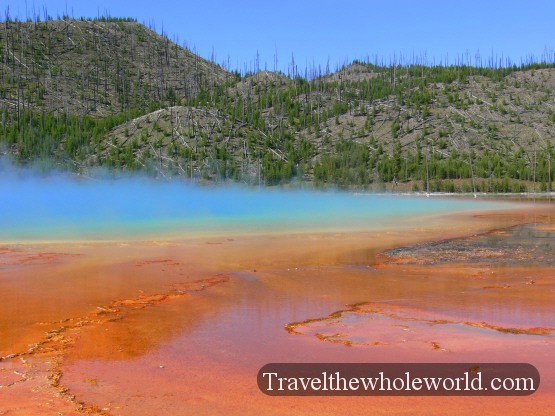
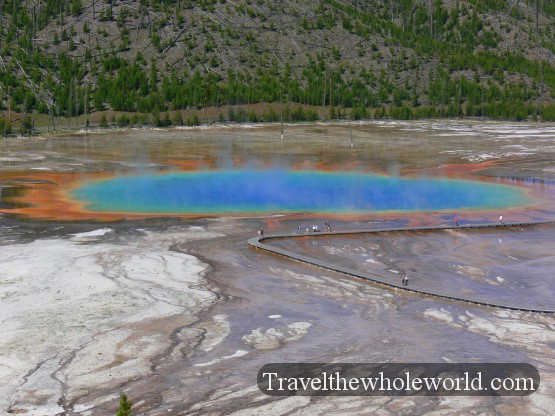
My favorite hot spring was Grand Prismatic Spring. The combination of deep blue water surrounded by bands of yellow, orange, and brown makes it one of Yellowstone’s most incredible sights. The colors around the cooler edges are produced by heat-loving microorganisms, while the deeper center appears intensely blue.
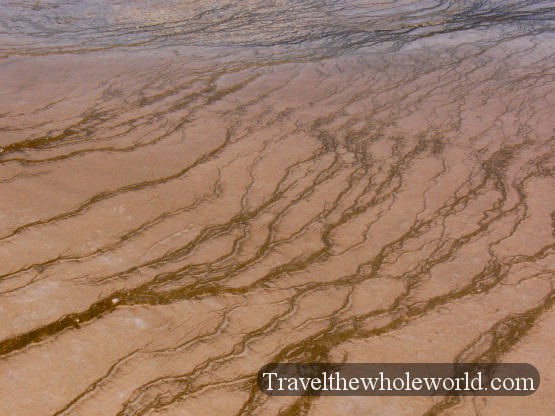
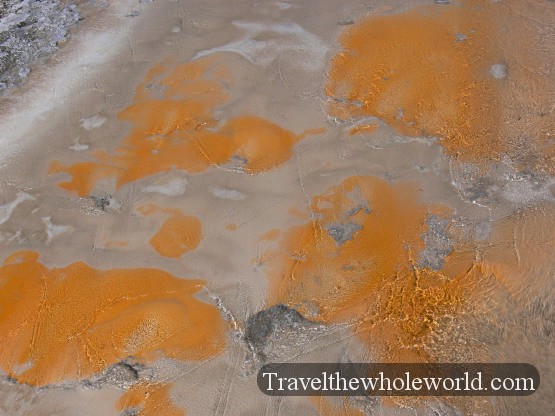
Some of Yellowstone’s springs discharge enough water to create their own runoff channels. On the left is runoff from Grand Prismatic Spring. From this angle it almost looks like a landscape photographed from an airplane, even though the camera was only a short distance above the ground. Other geothermal runoff channels support colorful mats of microorganisms.
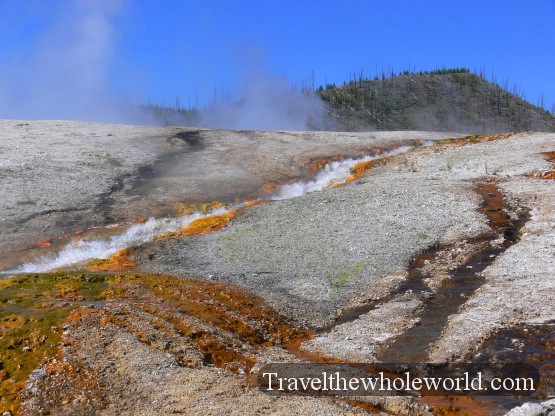
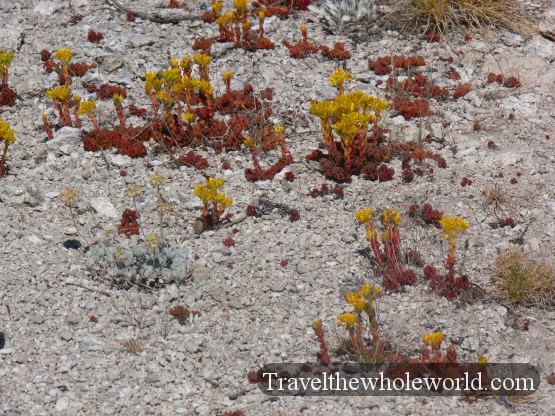
Some of the larger spring runoff channels become small steaming creeks. The water can remain extremely hot even after leaving the spring. I also found it interesting to see how plant life changed around these geothermal areas, with certain small plants growing surprisingly close to the heated ground.
Between the waterfalls, canyons, wildlife, forests, lakes, geysers, and brilliantly colored hot springs, Yellowstone feels like several completely different parks combined into one. Having visited during both summer and early winter conditions, I was also able to see just how dramatically the landscape changes with the weather. Even after two trips, Yellowstone is the kind of place where I could return and still find something completely different to explore.
Explore More of Wyoming
Devil’s Tower • Devils Tower • Gannett Peak • Cody • the Grand Tetons • Yellowstone