My Arctic adventures in Norway have so far focused on whale watching and hunting for the northern lights. In other parts of Scandinavia I’ve also gone reindeer and dog sledding, stayed in an ice hotel, and even tried ice karting. Many of these activities can be found throughout northern Scandinavia, but Norway’s long Arctic coastline makes it especially good for cruises through the fjords.
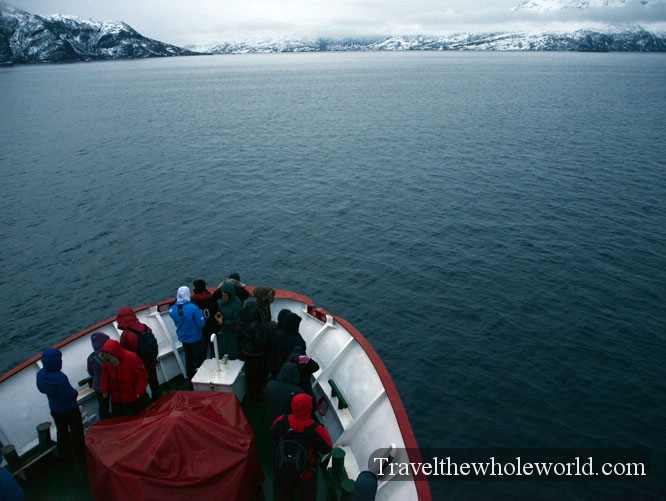
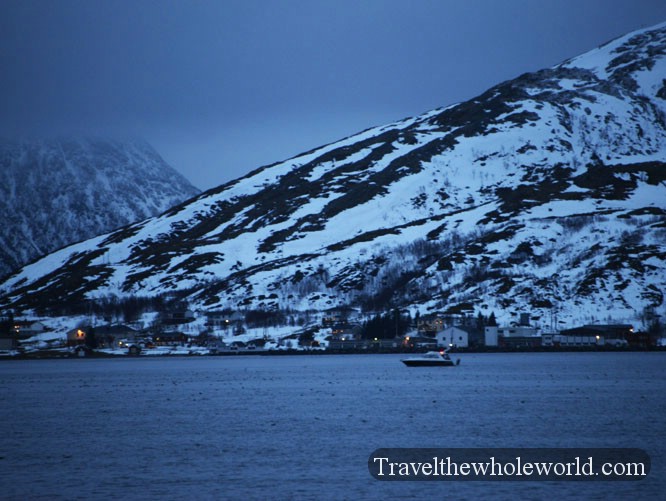
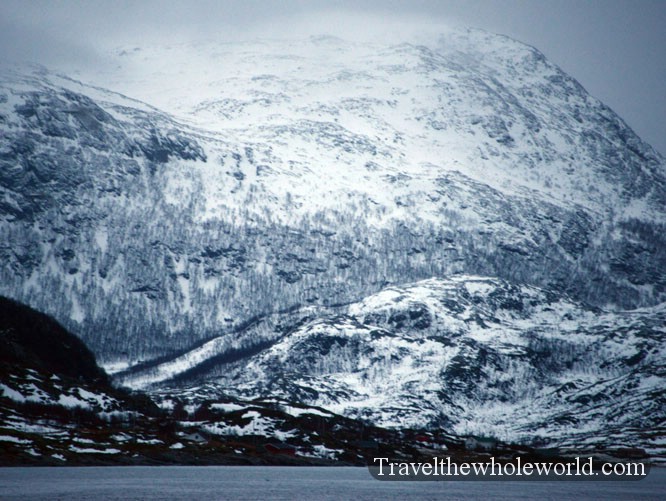
The cruise I took at the end of December was a whale-watching trip focused mainly on humpbacks. These whales spend part of the year feeding in colder northern waters before migrating thousands of miles toward warmer breeding grounds. Above are two views from our Arctic cruise as we headed out in search of them.
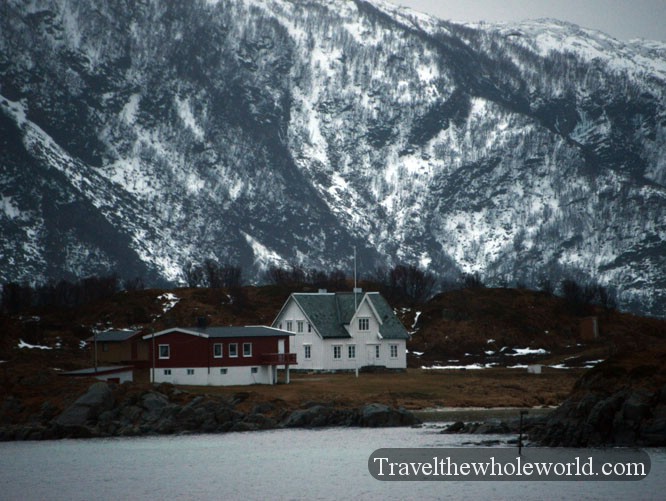
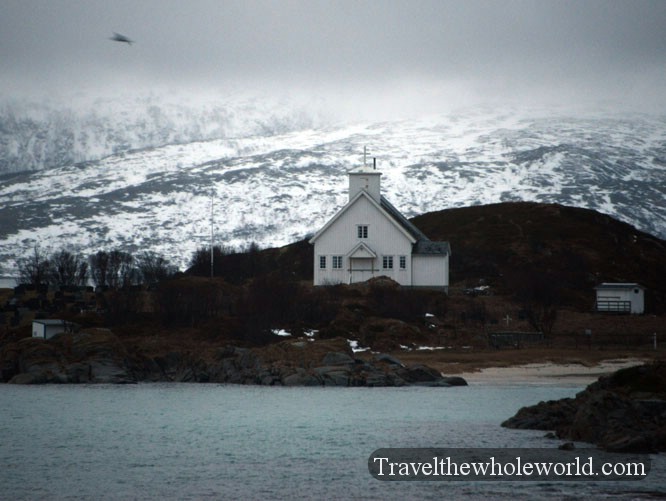
As we left Tromso we passed isolated homes and tiny communities along the fjords. Living this far north, surrounded by mountains and water, seemed like a completely different lifestyle from anything I’m used to. I imagine the long summer days must be beautiful, although I don’t think I’d enjoy spending an entire winter this far into the Arctic!
Whale Watching
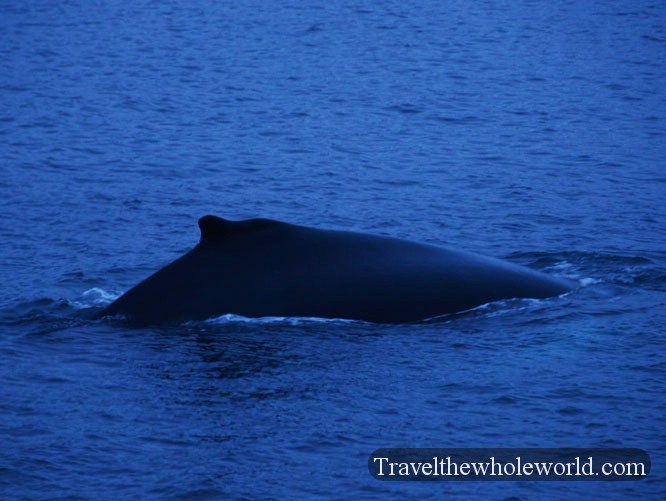
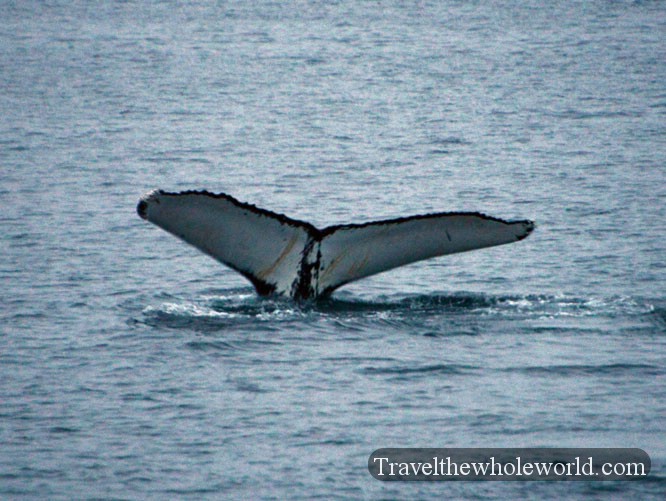
Almost a decade earlier I had taken some terrible photos of humpback whales in Antarctica, mostly because my camera at the time was pretty limited. I always planned to redeem myself, but photographing whales in northern Norway presented a completely different problem. I visited just after the winter solstice, when the sun doesn’t rise above the horizon. Around midday there is still a period of twilight, but to a camera it’s extremely dark and the higher ISO introduces a lot of noise.
So once again my whale photos weren’t exactly award-winning, but the experience itself was excellent. There were plenty of humpbacks around us, and the scenery made the trip worthwhile even without perfect photography. Above you can see one humpback diving and another showing its tail before disappearing beneath the water.
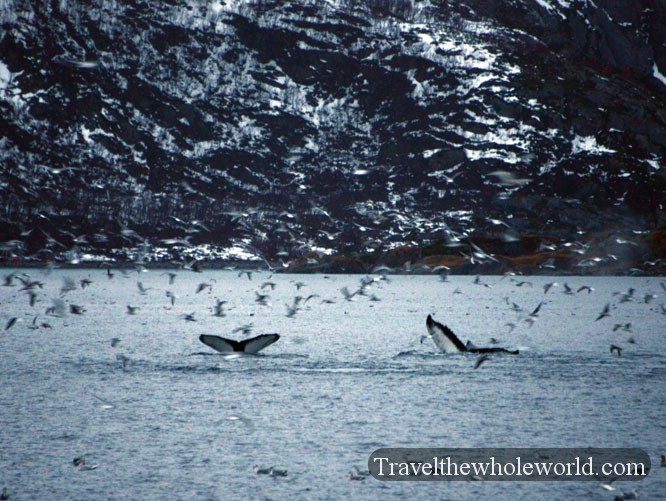
Being surrounded by steep Arctic mountains while watching humpbacks feed made this one of my favorite experiences in northern Norway. I also got to watch the whales use a feeding technique known as bubble-net feeding. The whales dive beneath schools of fish and release bubbles that help concentrate the fish into a tighter group before the whales rise toward the surface to feed.
The seabirds quickly figure out what’s happening too. When the whales started feeding, large groups of gulls gathered overhead hoping to take advantage of the fish being pushed toward the surface.
Hunting the Northern Lights

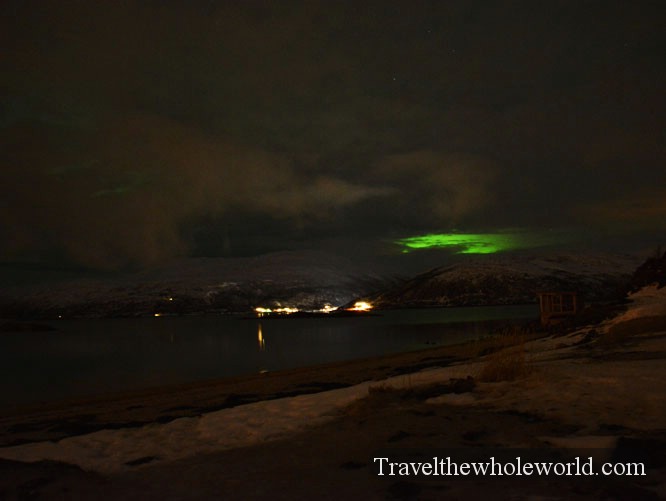
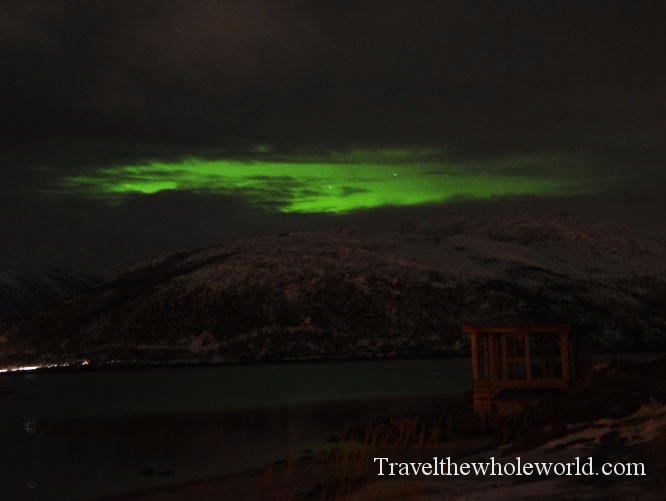
Above all else, my main goal in the Arctic was to see the northern lights. I joined an organized trip that took us away from Tromso to a quiet shoreline where the darker skies offered a better chance of seeing the aurora. Almost immediately my camera picked up a faint green glow that was much easier to see in the photograph than with my naked eye.
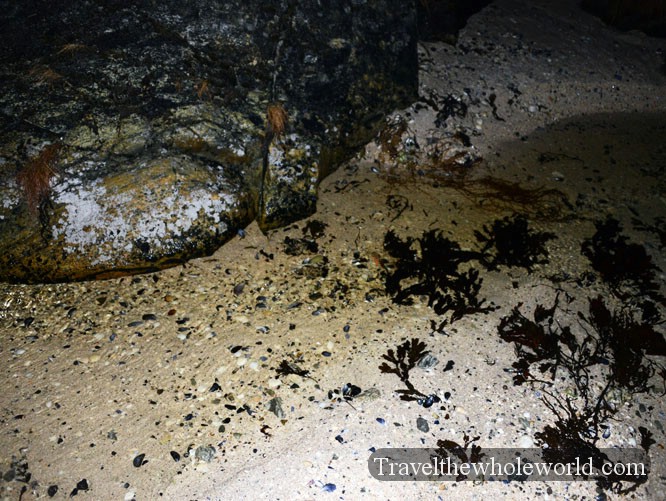
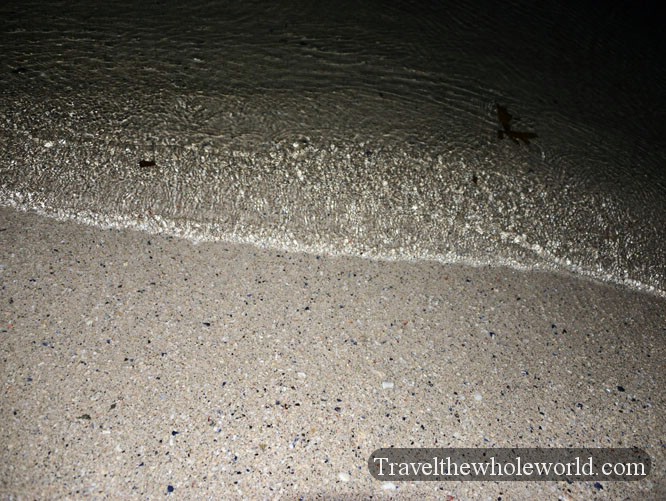
The forecast suggested the sky might clear, so I felt confident that patience would eventually pay off. It wasn’t exceptionally cold, only a few degrees below freezing, but standing around waiting eventually got boring. I wandered along the shoreline and tried taking photographs despite the darkness. The water was incredibly clear, and along the edge of the beach the waves had frozen around shells and other debris.
Unfortunately the clouds only became thicker as the night went on. After nearly two hours, the faint displays below were about the best view of the northern lights I managed to get. Despite spending roughly two weeks in the Arctic, the aurora never really gave me the spectacular show I had hoped for.