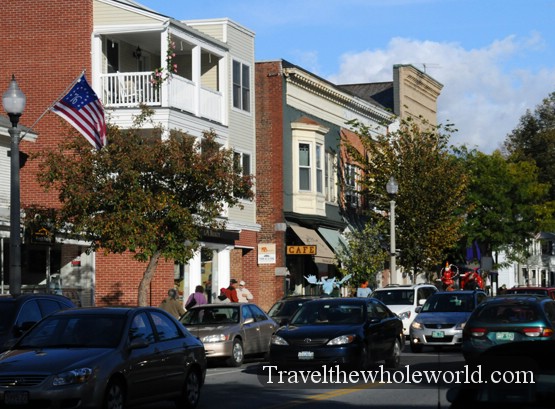
The last major town I visited in Vermont was Bennington, located in the southwestern corner of the state near the borders of New York and Massachusetts. It’s a small, quiet town with the usual collection of local shops, restaurants, and historic buildings. Above is a view of downtown Bennington.
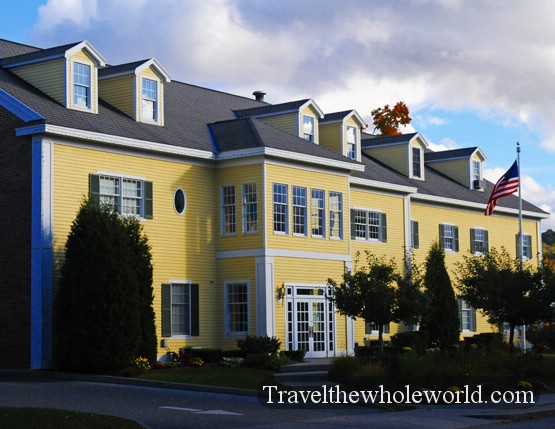
Above is a large bank building that caught my attention because it looked more like an old mansion than a commercial property. Architecture like this fits in well with the historic character found throughout much of Vermont.
Covered Bridges
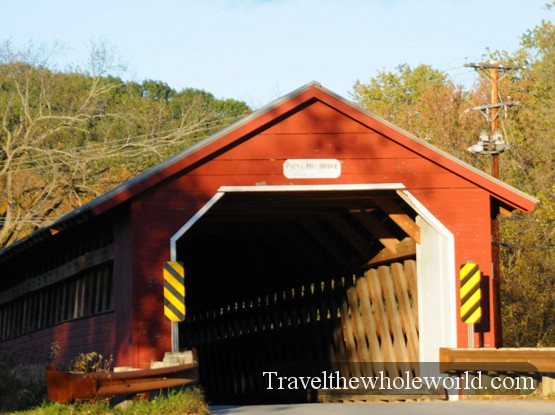
Bennington is also known for the covered bridges found throughout the surrounding countryside. Covered bridges were common in the 19th century, with the roof and walls helping protect the wooden structure underneath from weather and extending the life of the bridge.
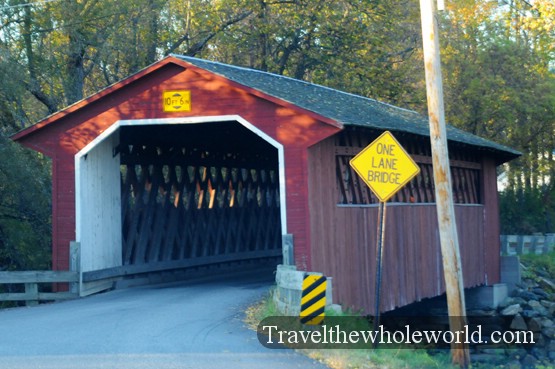
Today many surviving covered bridges are preserved as historic landmarks. They’re especially associated with New England, and Vermont has an impressive number scattered throughout the state. Seeing them while driving between small towns is one of those classic Vermont experiences.
Around Bennington
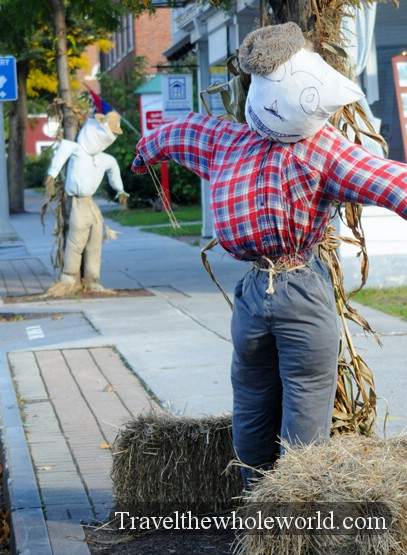
I visited in October, so Halloween decorations were everywhere. These mannequins were part of the seasonal displays I came across around town. I saw similar decorations throughout New England during the trip, which made fall an especially fun time to visit.
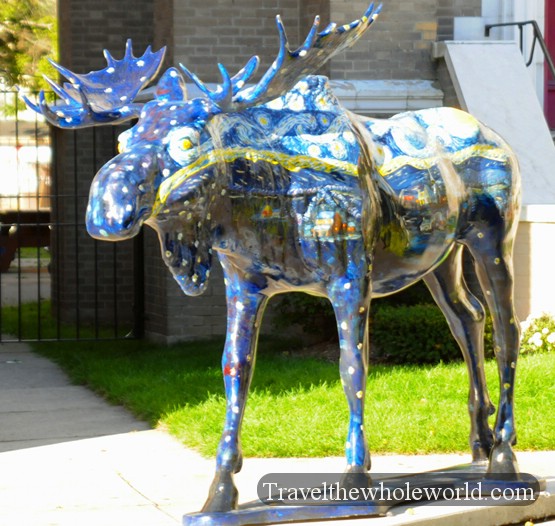
Bennington also had several large moose sculptures placed around town. Unlike the Halloween decorations, these seemed to be a local theme unique to Bennington and added a little personality to the streets.
Battle of Bennington
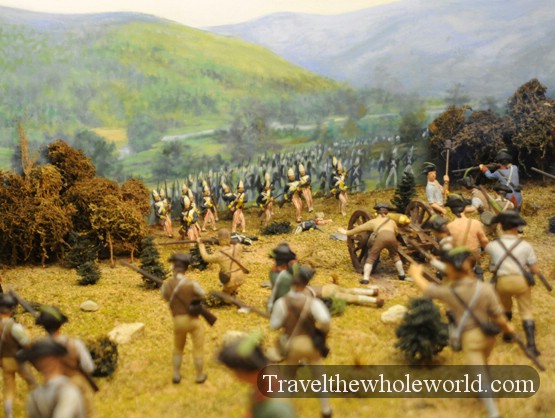
One of the most important historic events associated with the town is the Battle of Bennington, fought during the American Revolution in August 1777. Despite the name, the battle actually took place several miles west in what is now New York. The American victory disrupted British plans in the region and contributed to the events that led to the major American victory at Saratoga later that year.
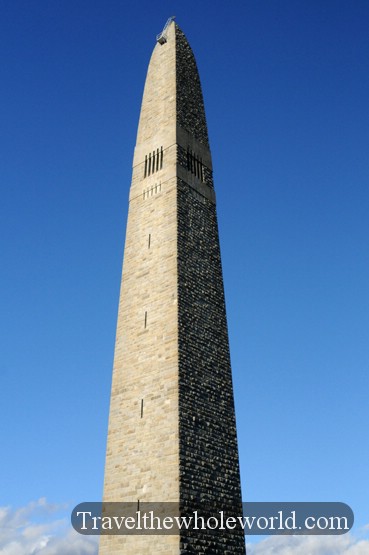
Above is the Bennington Battle Monument, one of Vermont’s most recognizable landmarks. The massive stone obelisk rises above the surrounding town and countryside and commemorates the American victory. A small museum and historical exhibits explain the battle and its importance during the Revolution.
Southern Vermont
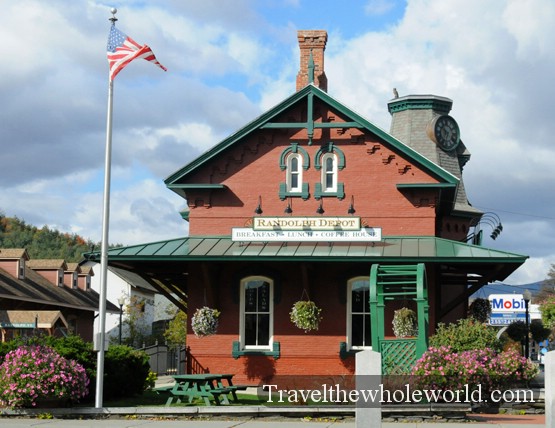
Outside Bennington, much of Vermont is made up of small towns and rural communities connected by winding roads through the mountains. Above is one of the small railroad stations I passed while traveling through the state.
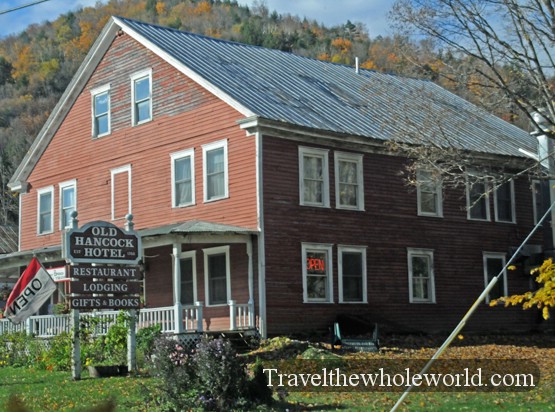
Above is a small country hotel tucked into the mountains, similar to the type of place I stayed during the trip. Lodging like this feels much more appropriate in rural Vermont than a giant chain hotel.
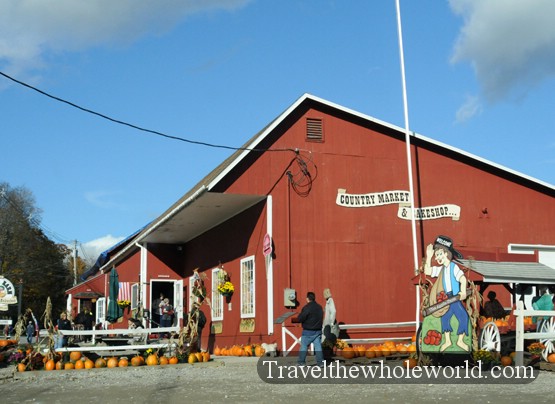
Small country stores are another common sight while driving through southern Vermont. Some sell groceries and basic supplies, while others feel almost like local gathering places filled with regional products and seasonal items.
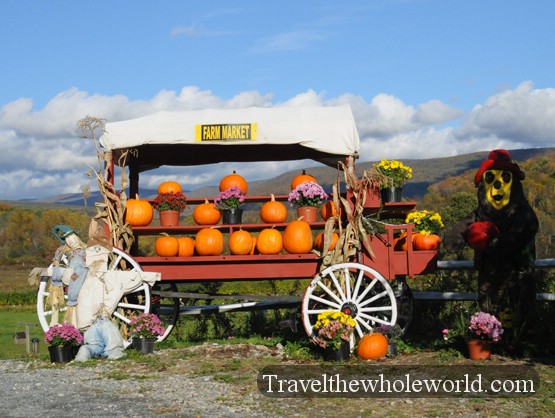
Since Halloween was only a couple of weeks away, pumpkins were everywhere. Visiting during October meant that even ordinary roadside markets fit perfectly into the fall scenery.
Fall in Vermont
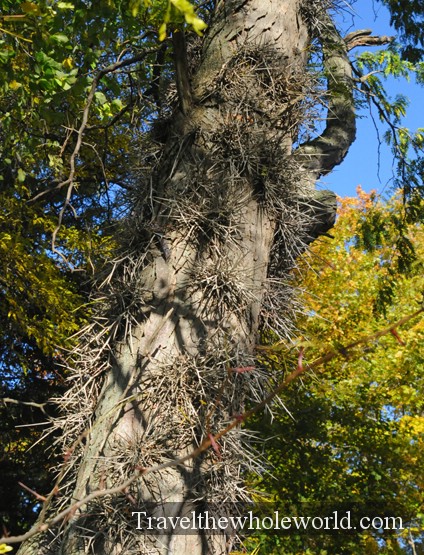
Above is a tree with an unusual spiky-looking growth covering part of its trunk. I never figured out exactly what it was, but it stood out enough that I had to stop for a photograph.
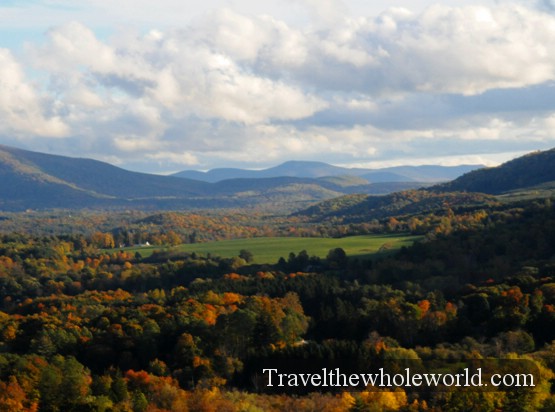
And finally, one of my favorite views from the trip. Vermont has some of the best scenery in the eastern United States, especially during fall when the mountains become covered in changing leaves. Much of the drive through the state felt like this: small towns, forested mountains, and bright fall colors stretching across the landscape.
Bennington itself is small enough to explore without much time, but combined with the covered bridges, Revolutionary War history, and surrounding countryside, it makes a worthwhile stop while traveling through southern Vermont.