The Adirondacks are a place I’d wanted to visit forever. The park is enormous, covering a huge section of northern New York and containing mountains, forests, rivers, and countless hiking trails. So far my only real experience in the Adirondacks has been a winter climb of Mt. Marcy, the highest point in New York.
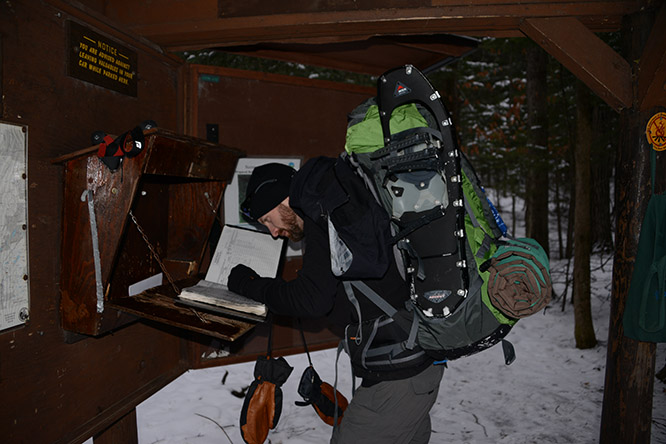
The summit reaches 5,344 feet (1,630 meters) and is normally a straightforward hike during the warmer months. We decided to attempt it in early January, which turned it into a much more serious challenge. The hike started easily enough. After my friend registered us in the trail logbook, we began hiking through only an inch or two of snow.
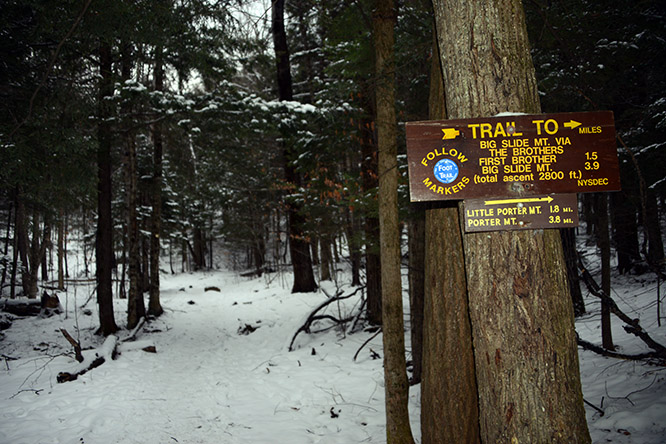
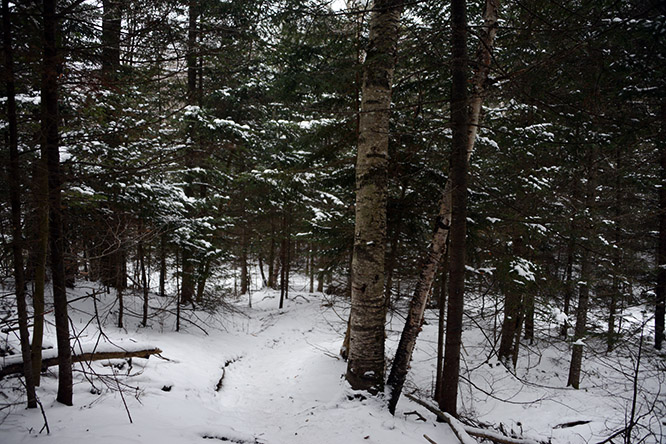
The beginning of the trail passed through mostly deciduous forest, with more evergreens appearing as we climbed higher. The first five miles or so had a relatively gradual elevation gain of roughly 2,000 feet (600 meters).
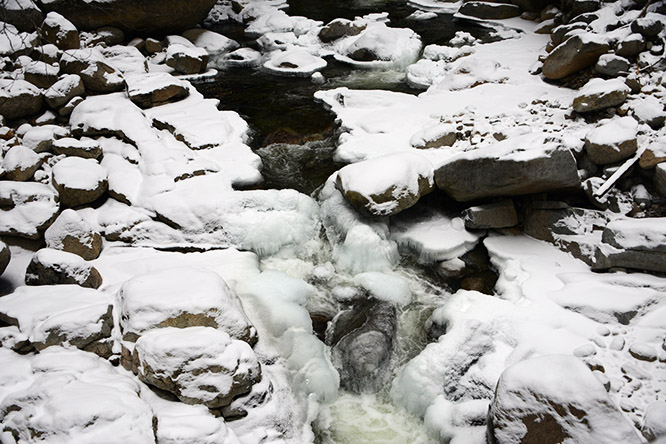
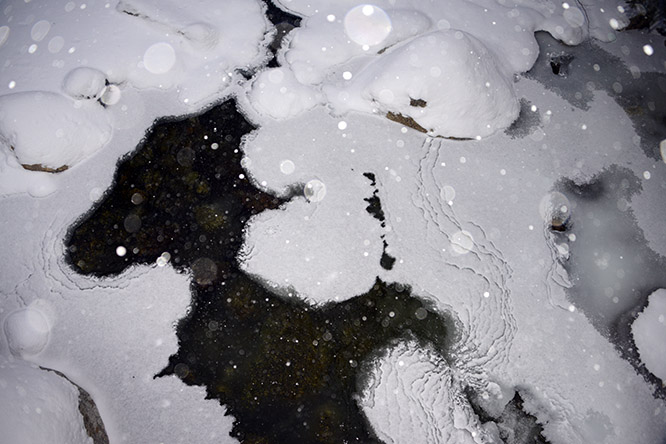
The photo above shows one of the icy creeks near the beginning of our hike. The temperature was around 15°F (-10°C) when we started, but it continued dropping as we climbed and daylight disappeared.
Some of the higher creeks were still flowing beneath a layer of ice, which meant you had to pay attention to where you stepped. Others were frozen so completely that you could cross them without even realizing you’d walked over a stream.
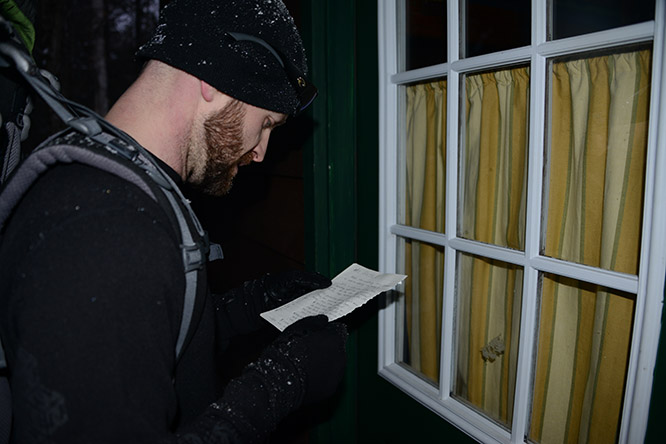
We saw very few people on the trail, only a couple of groups who were already heading back out of the woods. By coincidence, my friend’s sister was staying in a cabin along our route with her husband and some other people. We stopped by hoping to see them, but only found a letter on the door saying they had gone hiking.
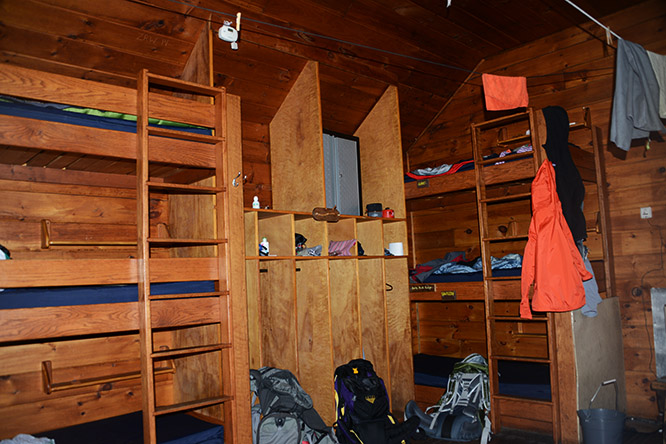
We only stayed for a few minutes, but we did take a quick look inside. The cabin had no electricity, although it came with a propane stove, kitchen, and bunk beds, so it seemed pretty comfortable for a backcountry shelter.
We also passed several lean-tos during the hike. Before visiting the Adirondacks I hadn’t heard the term, but they’re basically three-sided wooden shelters with a roof that hikers can camp inside. Leaving one entire side open seems strange at first, especially during winter, but they can still be extremely useful along remote trails.
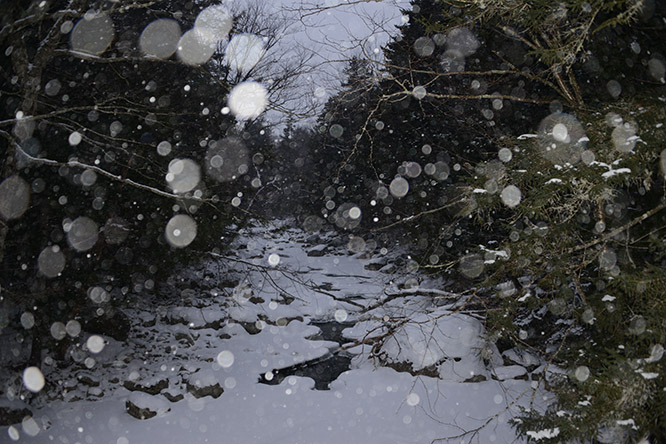
The hike was fun at first, but gradually became less enjoyable as the snow intensified. It began lightly and quickly turned heavy. We had also made the questionable decision to start around 2:00 in the afternoon, so we only had about two hours of daylight before darkness completely took over.
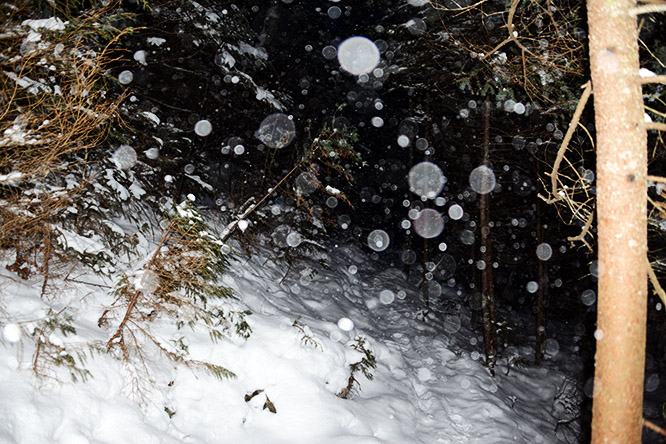
We switched to headlamps, but the light reflecting off the falling snow made it surprisingly difficult to see very far ahead.
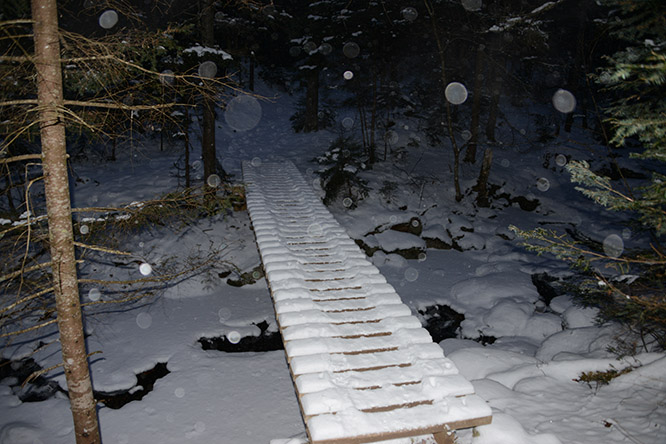
The terrain was getting more difficult as well. Instead of a relatively flat trail, we were now climbing steep slopes through increasingly deep snow. Every so often my foot would punch through nearly to my knee, forcing me to pull myself back out before continuing.
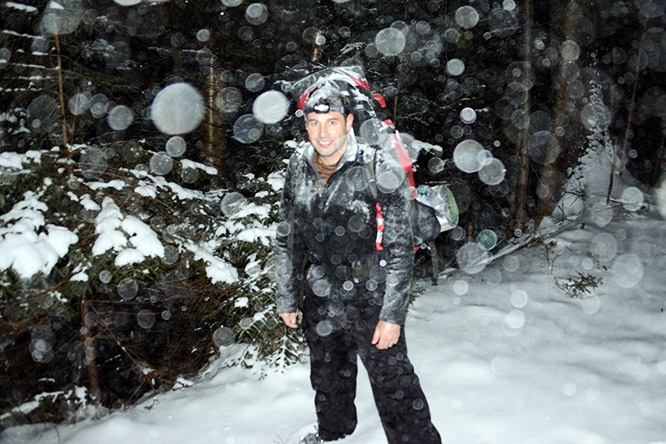
A Miserable Night on Mt. Marcy
Eventually we’d had enough and decided to pitch the tent. By then I was soaked from melting snow and wasn’t feeling especially good. Unfortunately the forest was dense and the terrain was steep, leaving us with very few reasonable places to camp.
We considered hiking higher in hopes of finding flatter ground, but there was no guarantee we’d actually find anything better. We finally chose the least terrible spot we could find and set up the tent.
By the time I crawled inside I was dangerously wet and cold. Even inside my -20°F (-30°C) sleeping bag, it took a while before I finally started warming up. Once we were comfortable again, neither of us had much motivation to go back outside and cook dinner, so we survived on the snacks we’d brought and tried to sleep.
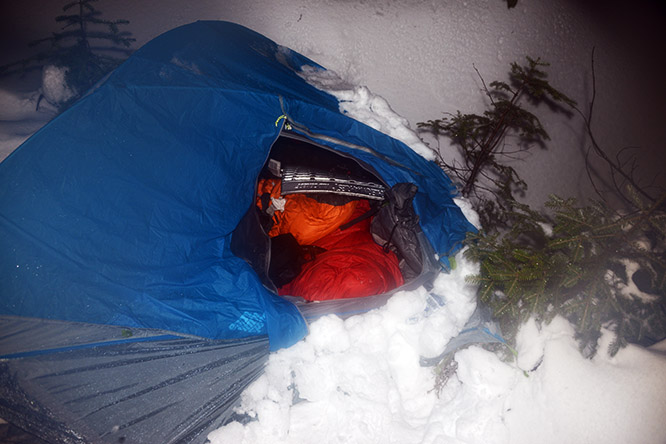
Early in the night our tent essentially slid and partially collapsed because of the terrible campsite we’d chosen and all the heavy snow accumulating on top of it. My friend was nearly on top of me, and without exaggerating there was about a three-foot difference between where my feet and chest were positioned inside the tent.
Our alarm went off around 5:30 in the morning. Once we climbed outside, we discovered that the entire tent had actually slid downhill and was now partially sitting on the trail. Somehow I had slept reasonably well through all of this. My friend had barely slept at all. :contentReference[oaicite:1]{index=1}
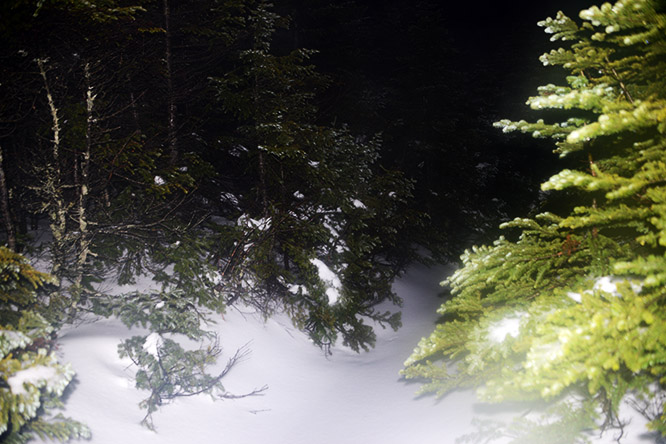
We both felt pretty disgusting the next morning, especially since most of my gear had never completely dried. After forcing ourselves to get ready, we started toward the summit in darkness with our headlamps.
It didn’t take long before the snow began falling hard again.
Into the Alpine Zone
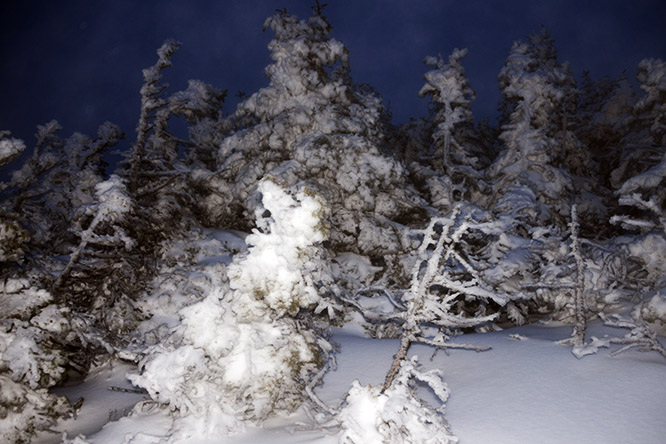
We still had some steep terrain to climb before the slope gradually eased. Within about an hour we were above 5,000 feet (1,500 meters) and entering Mt. Marcy’s alpine zone.
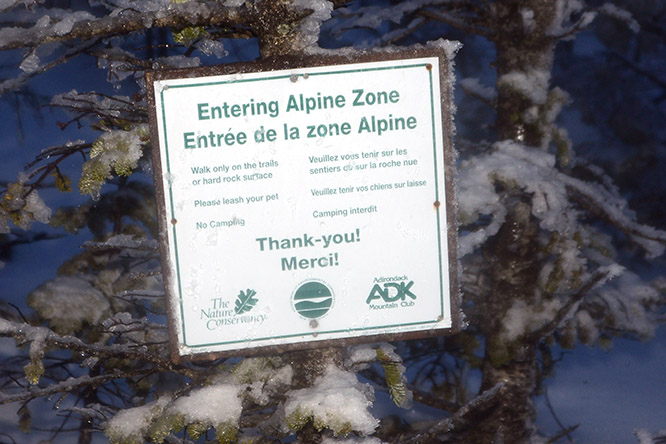
A sign warned hikers to protect the fragile alpine vegetation. I found it pretty amazing that anything could grow up here at all. These plants spend much of the year buried beneath snow and are exposed to extremely low temperatures and powerful winds.
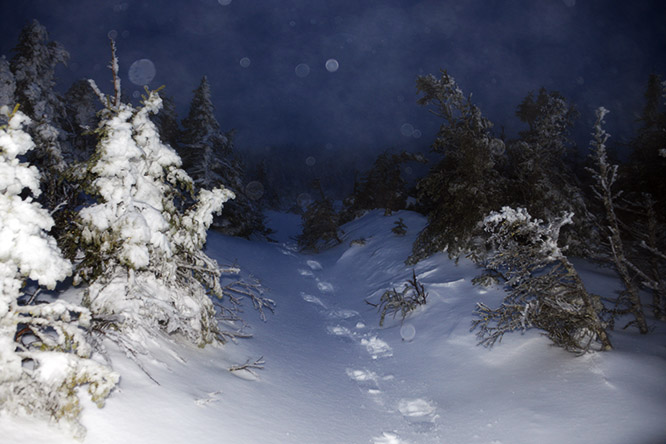
The higher we climbed, the smaller the trees became. Eventually the forest disappeared entirely and was replaced by low vegetation and exposed rock.
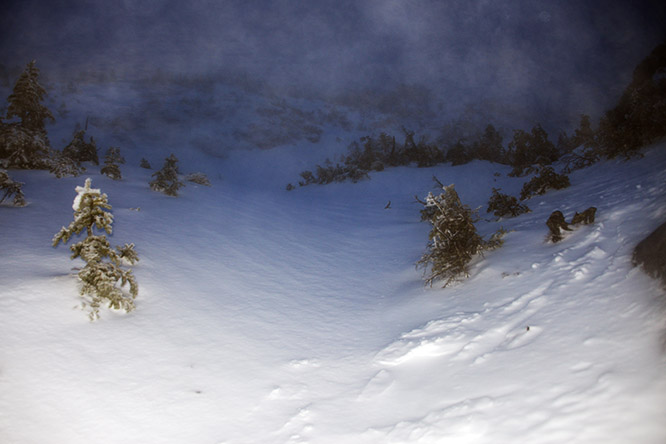
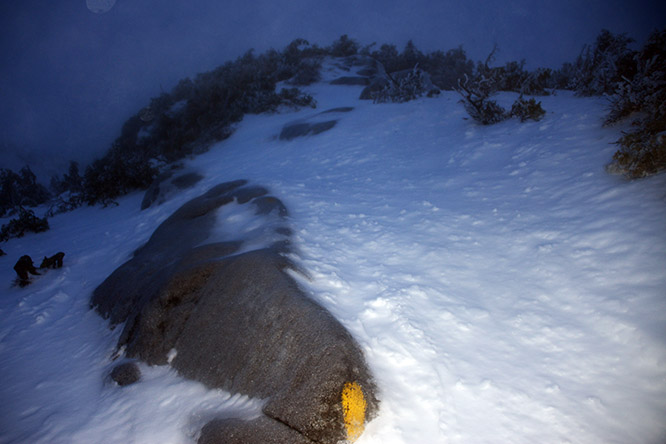
Only a few hundred feet higher there were no trees at all. The remaining plants were only inches tall, and the terrain became much rockier. Surprisingly, this actually made travel easier because we were no longer constantly sinking into deep snow.
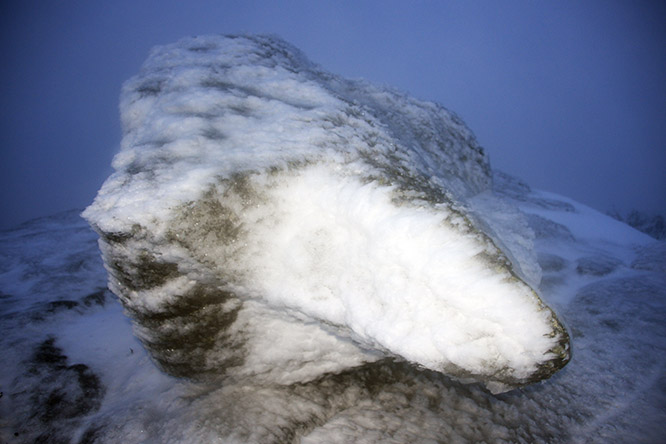
The lack of trees seemed to have as much to do with the wind as the temperature. At one point we were hit by gusts strong enough that they nearly knocked me over. I estimated some were easily above 50 mph (80 km/h).
The Summit of Mt. Marcy
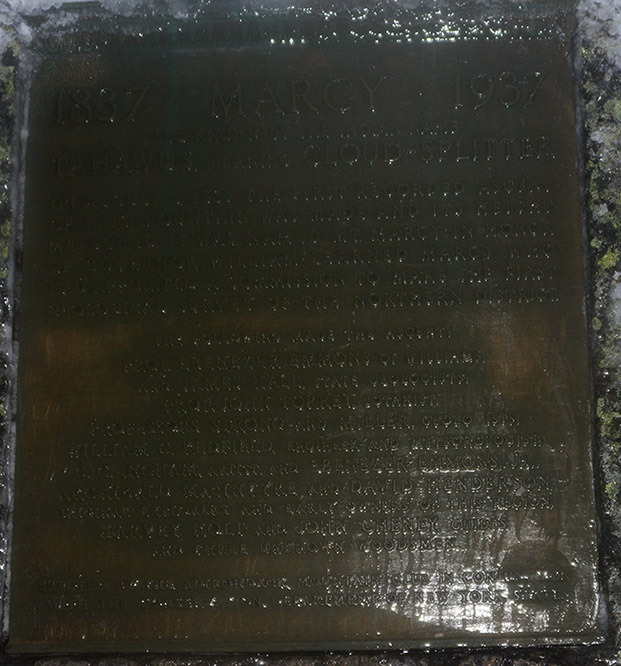
Just around the corner we finally reached the highest point in New York. I had recorded most of summit day, but somehow managed to turn off my camera immediately before reaching the top!
A plaque at 5,344 feet (1,630 meters) marked the summit and included information about the mountain’s history and first ascent. According to the sign, the Native American name listed for the mountain was Tahawus, translated there as “Cloud Splitter.”
Oddly enough, we were considerably less miserable at the summit than we’d been when we first crawled out of the tent that morning. I had packed equipment for extreme cold, but summit day itself was unusually warm. The wind made the top cold and uncomfortable, but conditions weren’t nearly as brutal as we’d feared.
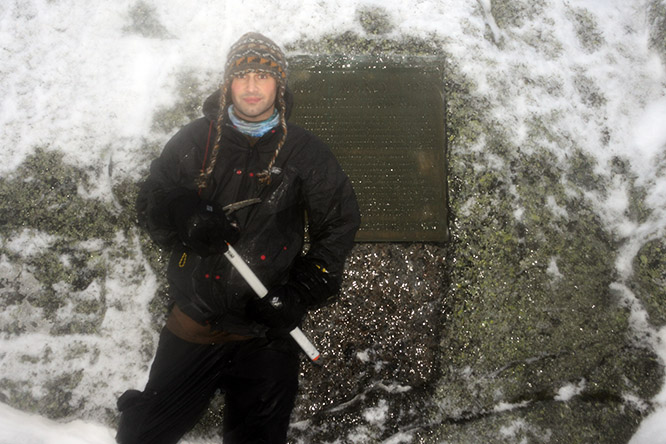
Reaching the summit was only half the adventure. I still had roughly nine miles to hike back to the parking lot, followed by a two-hour drive to Albany to catch my flight home.
The descent was miserable. Light to moderate rain fell for much of the day, and the snow was noticeably deeper than it had been during our climb. Our tracks from the previous day had completely disappeared beneath fresh snow. Descending the steep terrain with heavy packs meant constantly sliding, slipping, and trying to stay balanced.
I eventually reached the airport soaking wet and disgusting, but extremely happy that we’d made the summit. The weather was about to become much worse. The forecast called for summit winds around 70 mph (115 km/h) later that day and temperatures dropping toward -25°F (-32°C) over the following days as an Arctic weather system moved into the region. :contentReference[oaicite:2]{index=2}
My flight home that same day had some of the worst turbulence I’ve ever experienced, which seemed like an appropriate ending to the trip.