Located near the center of the United States, Missouri has always felt like a mixture of Midwestern and southern culture. Much of the state’s population is concentrated around St. Louis and Kansas City, while large areas between the two cities are made up of small towns, farmland, forests, and the hills of the Ozarks.
Missouri also played an important role in America’s westward expansion. St. Louis became known as the Gateway to the West, while the Lewis and Clark Expedition began its journey from this region before heading across the continent. My own trip through Missouri ended up combining several very different sides of the state, from major cities and Civil War history to lakes, forests, and some surprisingly scenic parts of the Ozarks.
Jefferson City
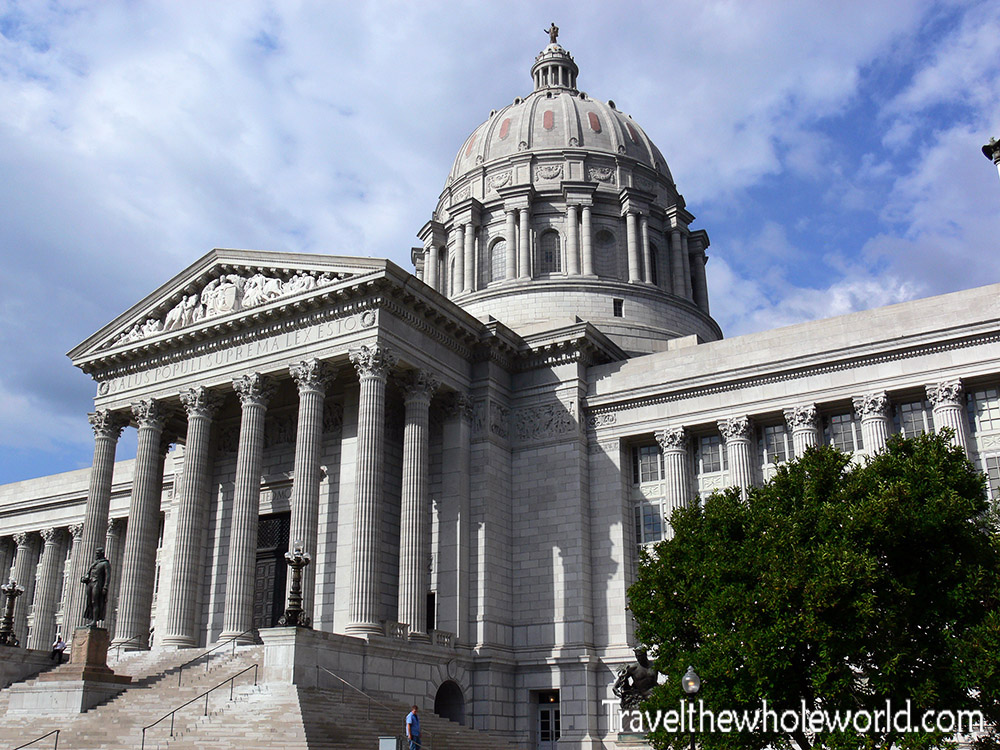
Like many Americans outside the region, I barely knew anything about Jefferson City before visiting. Missouri’s capital is a small city, and I was mostly passing through rather than making it a major stop. My main reason for visiting was the State Capitol, since one of my long-term travel goals has been to see every state capitol building in the country.
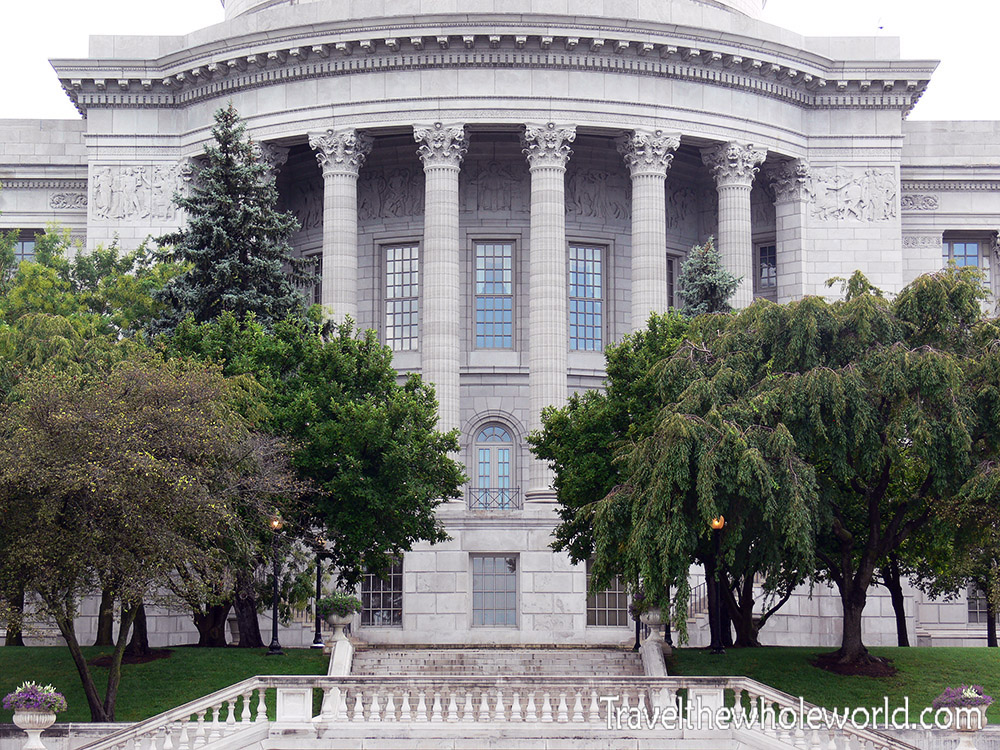
The capitol is easily the most impressive building I saw in Jefferson City. I didn’t spend enough time exploring the rest of town, so this is one of those places where I probably left without giving the city a fair chance.
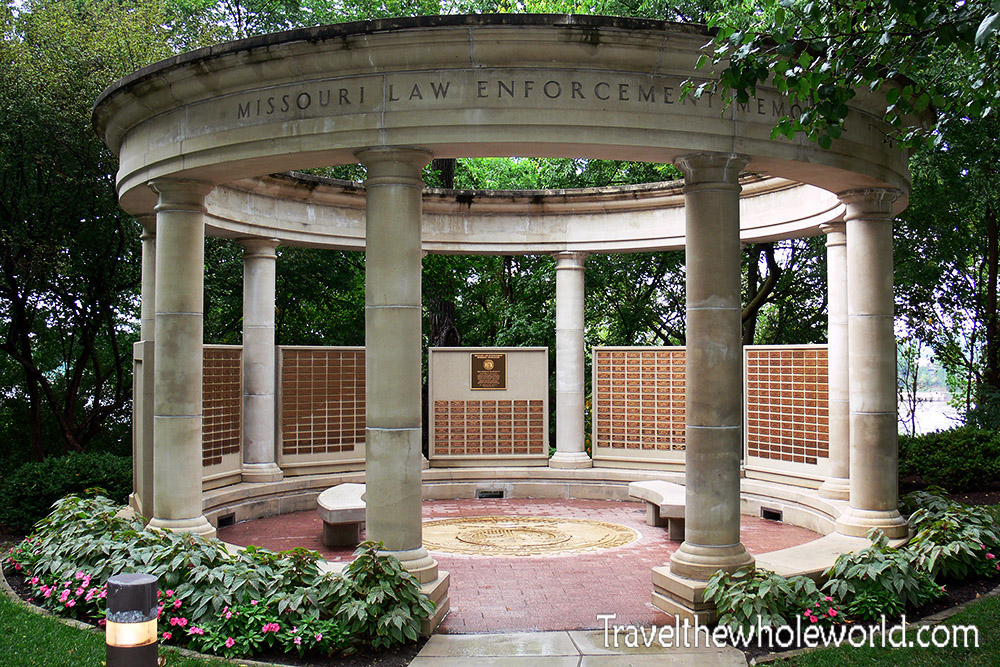
I also stopped at the Law Enforcement Memorial on the capitol grounds. The memorial honors Missouri law enforcement officers who died in the line of duty and was one of the more striking monuments around the State Capitol complex.
Kansas City
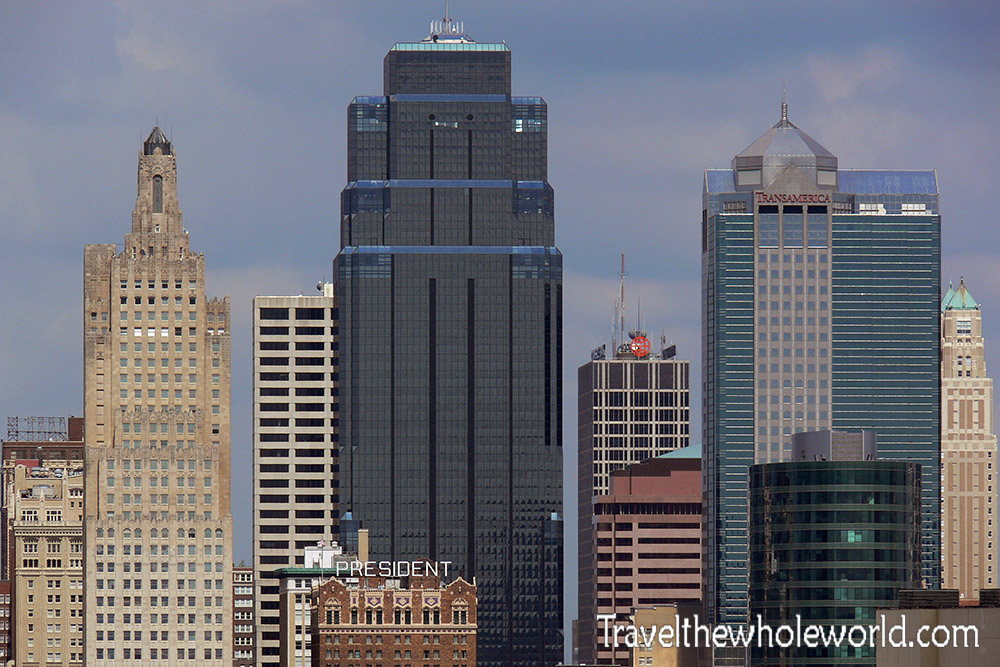
My first real stop in Missouri was Kansas City. Beyond knowing the name, I really didn’t know much about the city beforehand and ended up being more impressed than I expected. Kansas City has a large downtown, plenty of museums and neighborhoods to explore, and much more going on than I had pictured for a city in the middle of the country.
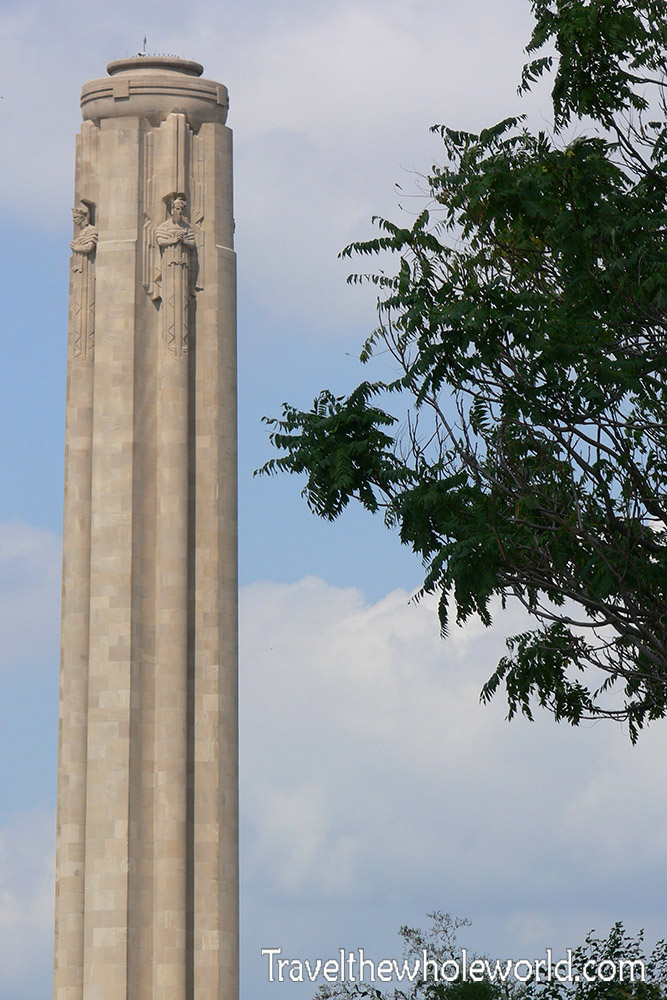
I took my skyline photo while visiting the Liberty Memorial. The memorial was built to honor those who served in World War I and is also home to the National World War I Museum. The tower rises above the surrounding area and gives excellent views back toward downtown Kansas City.
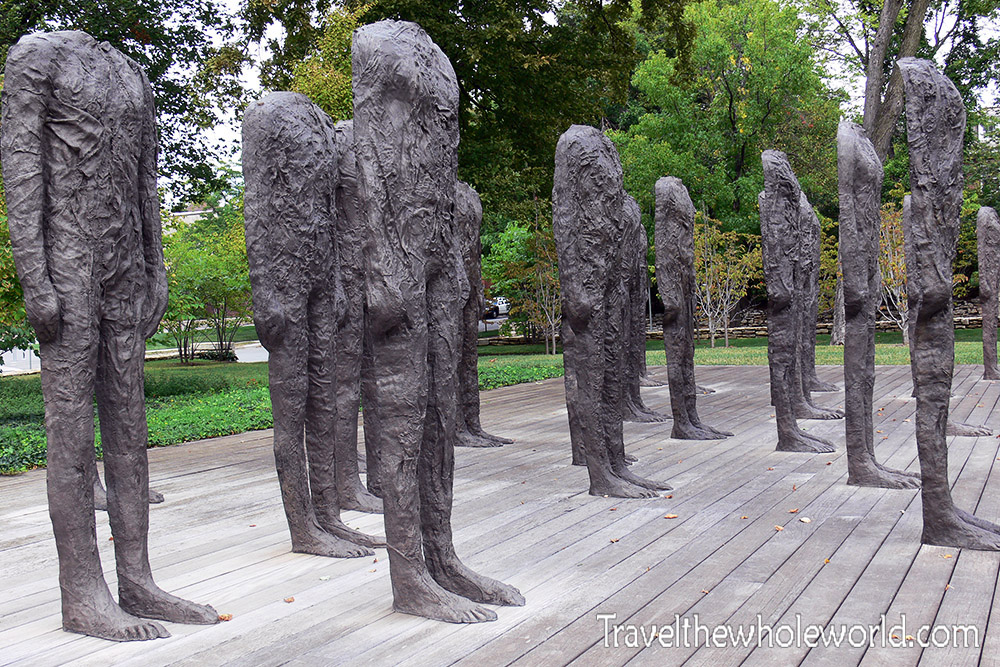
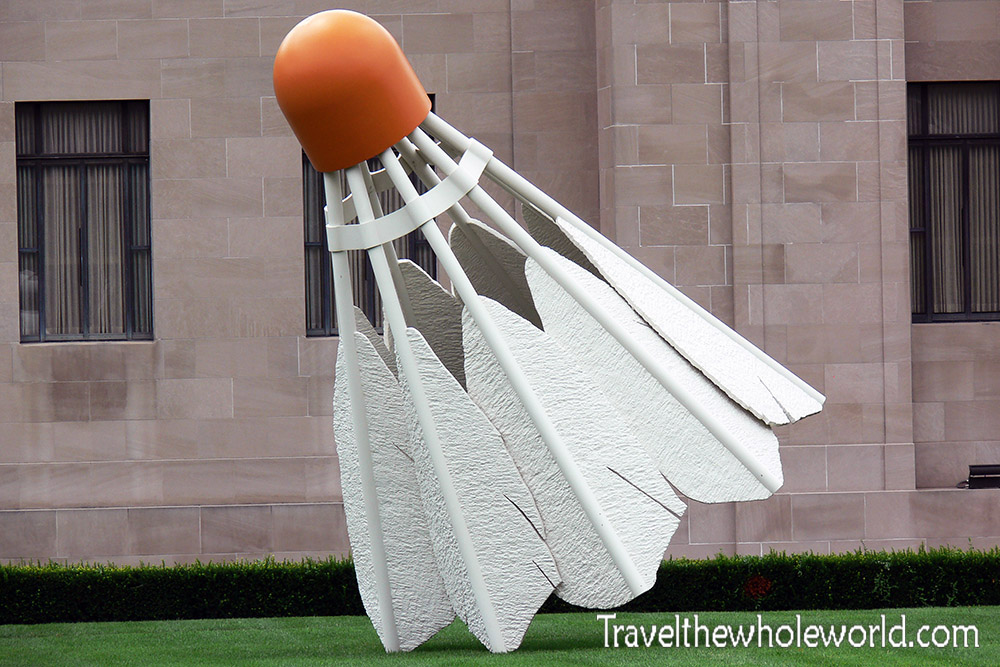
Another major museum in Kansas City is the Nelson-Atkins Museum of Art. The sculptures on the lawn immediately caught my attention, including the strange headless figures above and the giant shuttlecock below. For some reason I decided I’d rather stay outside that day and never actually went inside the museum, which is something I’d definitely correct on another visit.
Fountains and Country Club Plaza
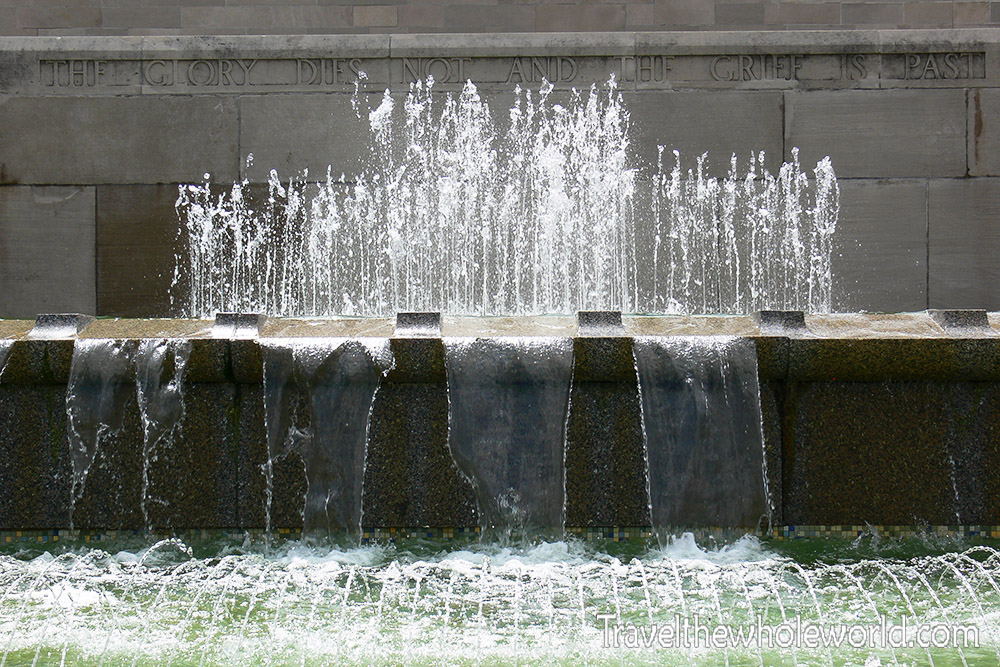
Kansas City is famous for its fountains, which I definitely wasn’t expecting before visiting. They appear throughout the city in parks, plazas, and public spaces, giving Kansas City a much more decorative appearance than I had imagined.
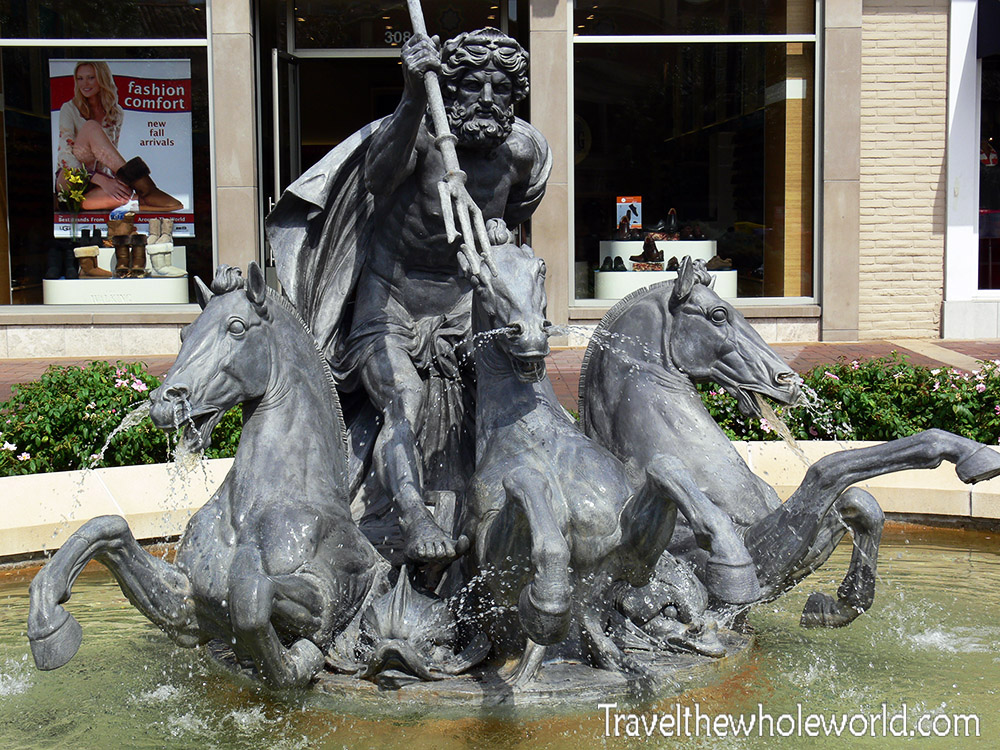
These two fountains weren’t necessarily the most impressive in the city, but they give some idea of how common they are. I was told some of the best ones are especially attractive at night when they’re illuminated.
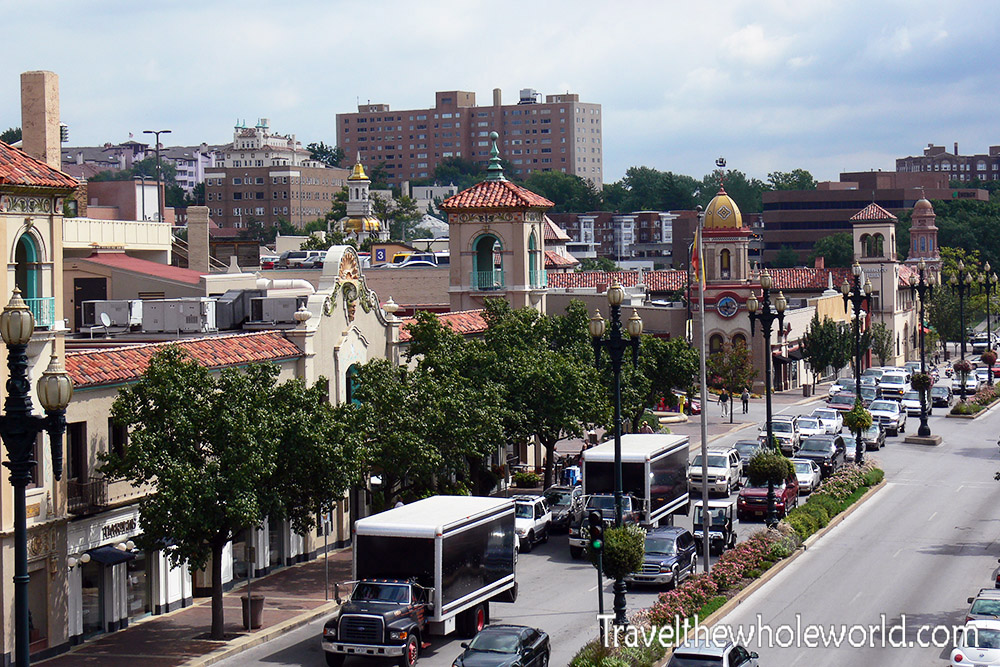
One of the most popular shopping and dining districts in Kansas City is Country Club Plaza. Built during the early 20th century, the district was designed around the automobile and covers a large area filled with stores, restaurants, plazas, and decorative architecture.
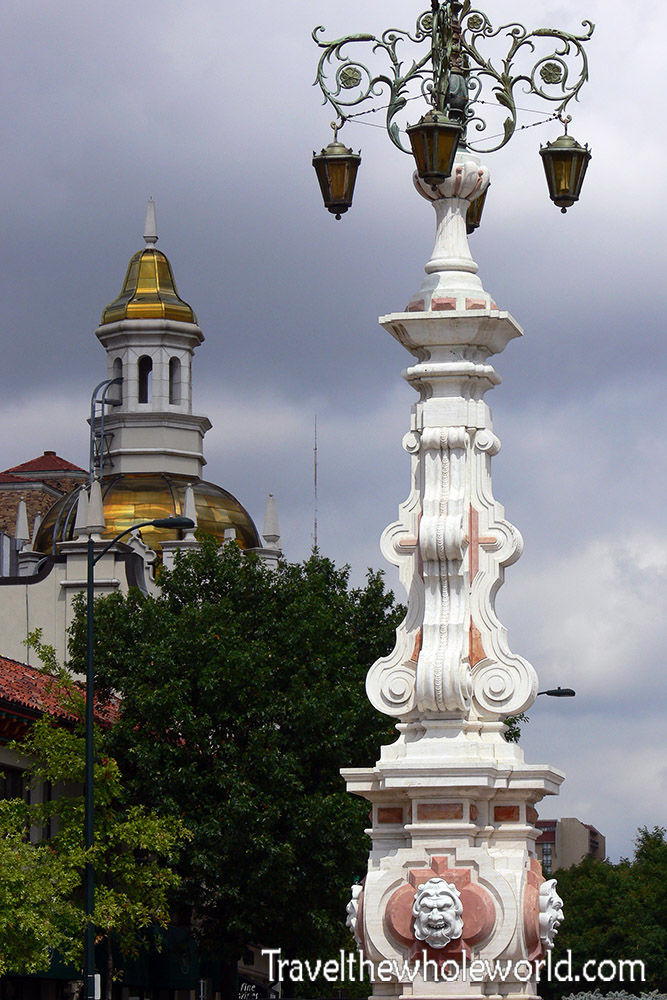
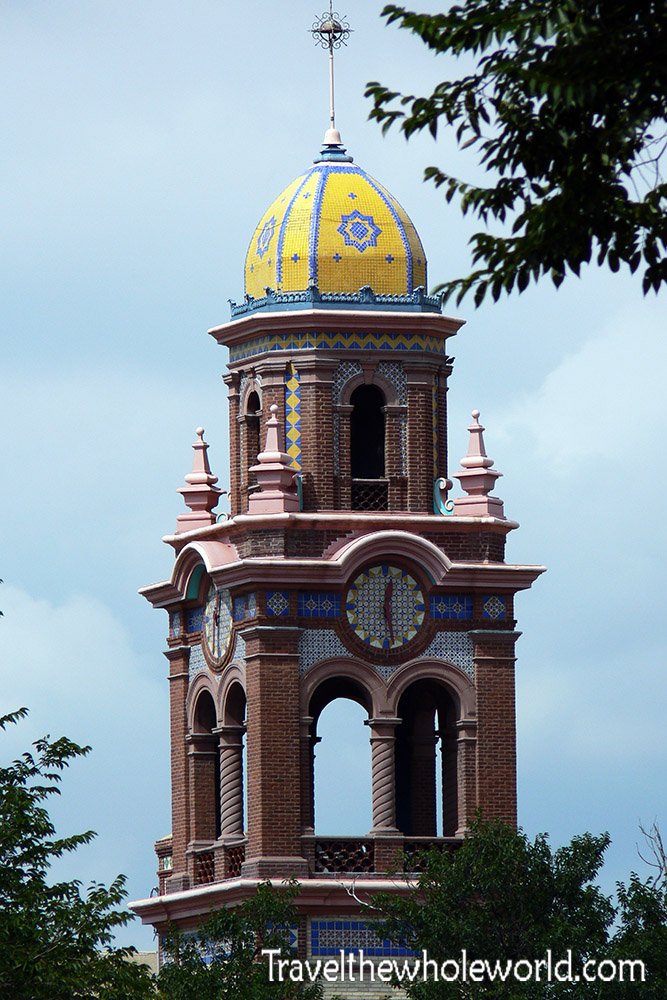
The shopping itself wasn’t what interested me most. Much of the architecture was influenced by Seville, Spain, with decorative towers, tiled details, fountains, and even Spanish flags around parts of the plaza.
St. Louis
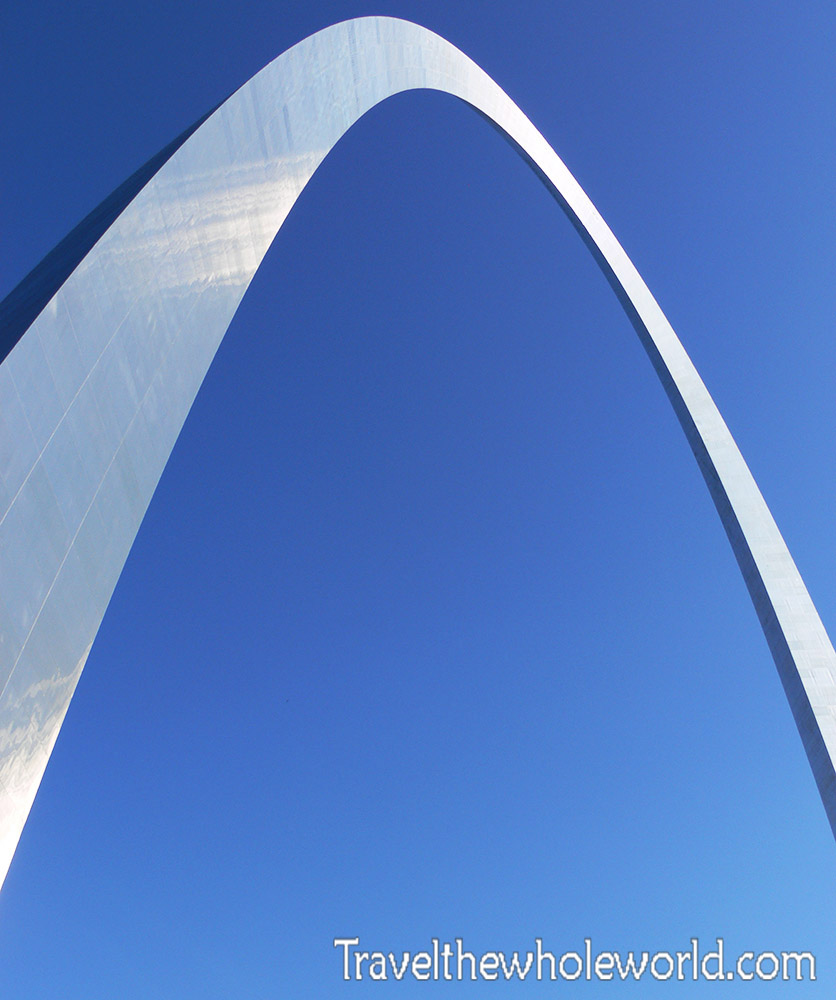
After Kansas City, my next major stop was St. Louis. The city’s history is closely connected with westward expansion, and expeditions and settlers heading into the interior often passed through the region. That history is represented today by the Gateway Arch, one of the most recognizable landmarks in the United States.
The arch rises 630 feet above the riverfront and looks incredibly thin from the outside. Somehow there is still enough room inside for a tram system that carries visitors to the top. I haven’t done that yet, and looking at how narrow the structure is from below doesn’t exactly make me eager to squeeze inside.
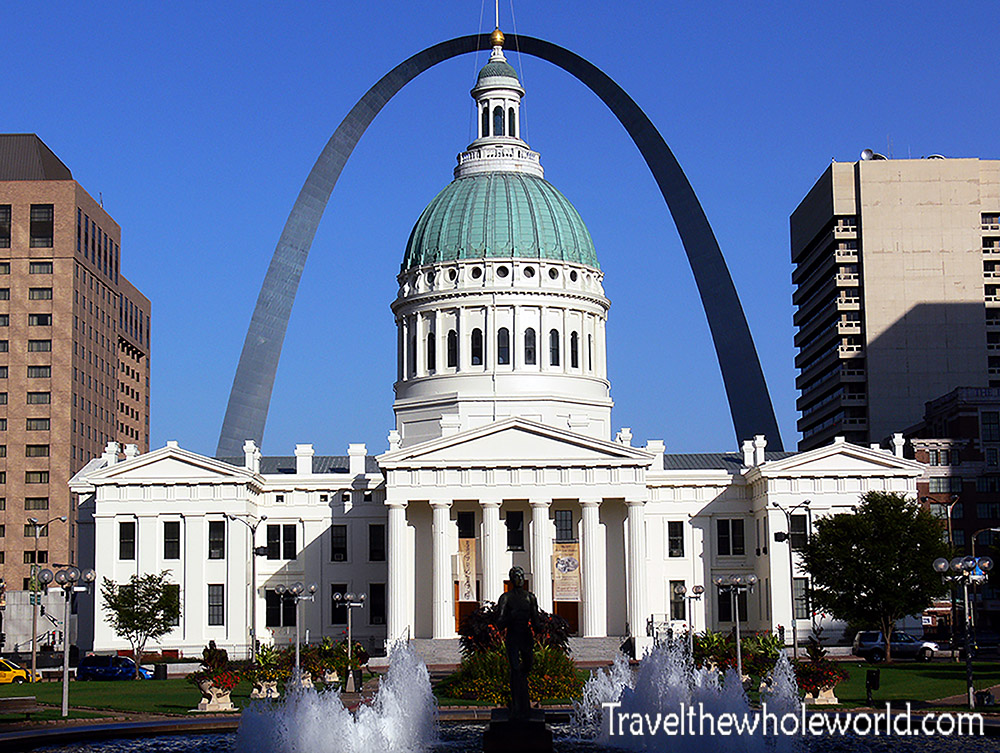
Another famous landmark is the Old Courthouse, which sits near the Gateway Arch. The combination of the historic courthouse in front of the modern arch makes this one of my favorite views in Missouri.
The courthouse is closely associated with the Dred Scott case. Scott was an enslaved man who sued for his freedom after living in territories where slavery was prohibited. His legal battle eventually reached the U.S. Supreme Court, where the Court ruled against him and declared that people of African descent could not be citizens under the Constitution. The decision became one of the most infamous rulings in American history and further intensified tensions before the Civil War.
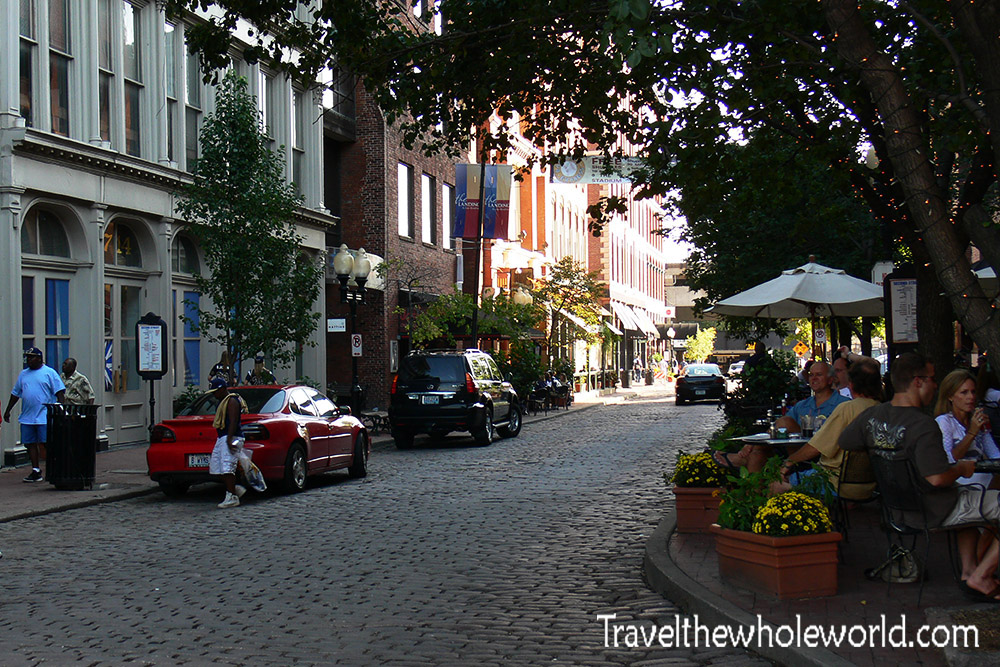
Somehow I left St. Louis with only a handful of photographs. One of my other stops was this riverfront area, where I grabbed a late lunch while most of the surrounding bars and restaurants were packed with people watching a football game.

St. Louis may not compete with Kansas City in the fountain department, but there are still enough around the city to make hot Missouri summers a little more tolerable.
St. Charles
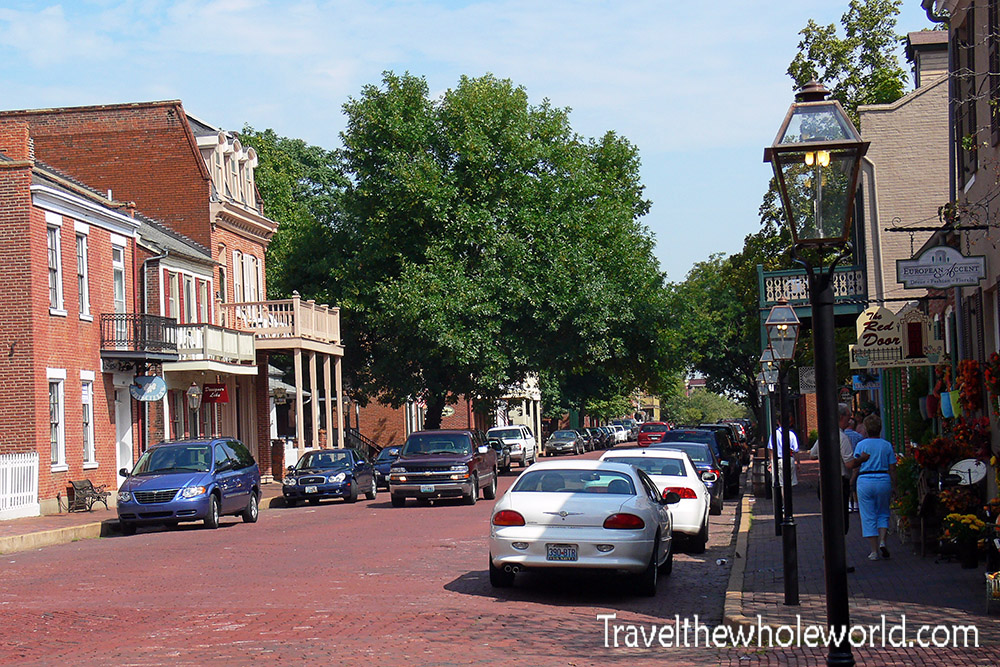
After St. Louis I spent more time exploring smaller towns and rural areas. One of my next stops was St. Charles, which was founded during the colonial period and later served as Missouri’s first state capital.
The town also has strong connections with Lewis and Clark. Their expedition passed through the area before heading farther west, and today the historic center preserves much of its old-town atmosphere with brick buildings, shops, restaurants, and festivals.
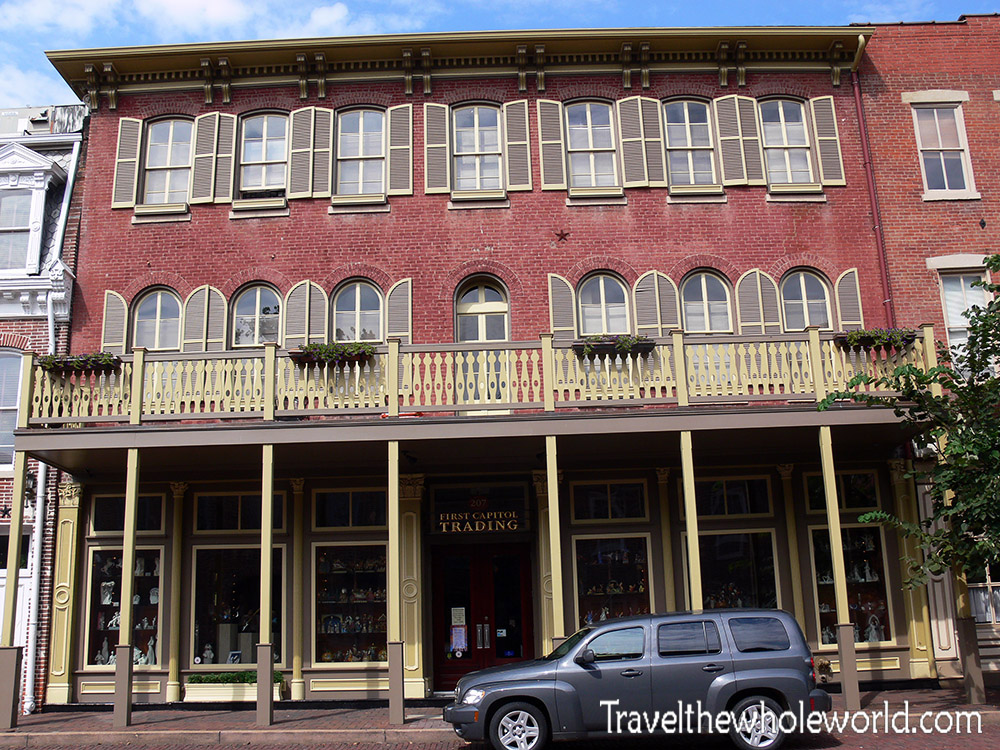
St. Charles was one of the places in Missouri where the historic character was much more obvious than I expected. Even though it’s now part of the larger St. Louis region, parts of the old town still feel completely separate from the modern suburbs around it.
Civil War History in Lexington
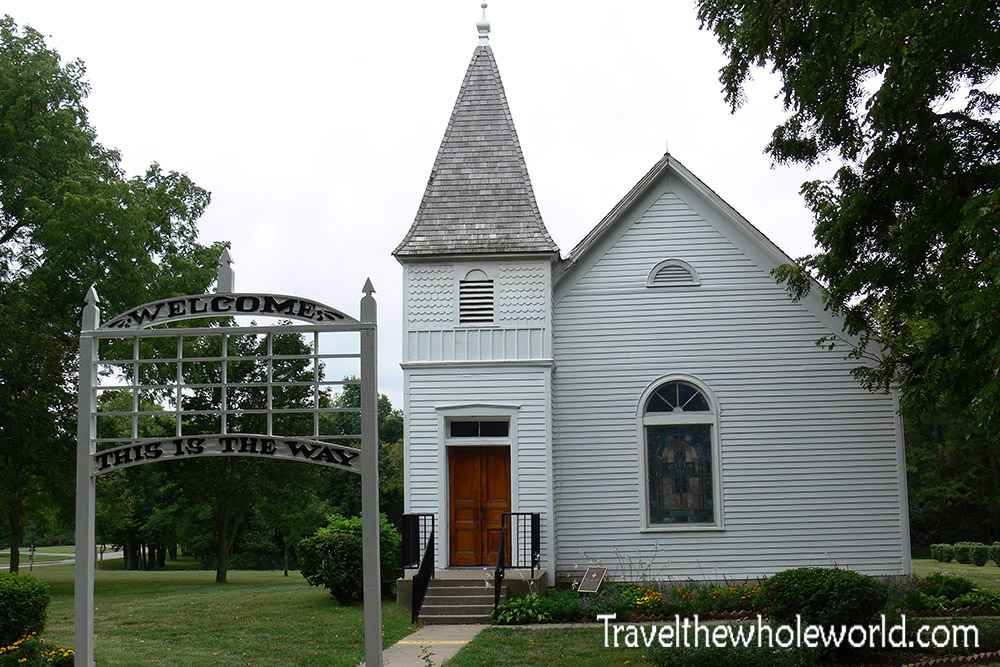
Missouri’s history isn’t limited to westward expansion. The state was deeply affected by the Civil War, with both Union and Confederate sympathies dividing communities across the region.
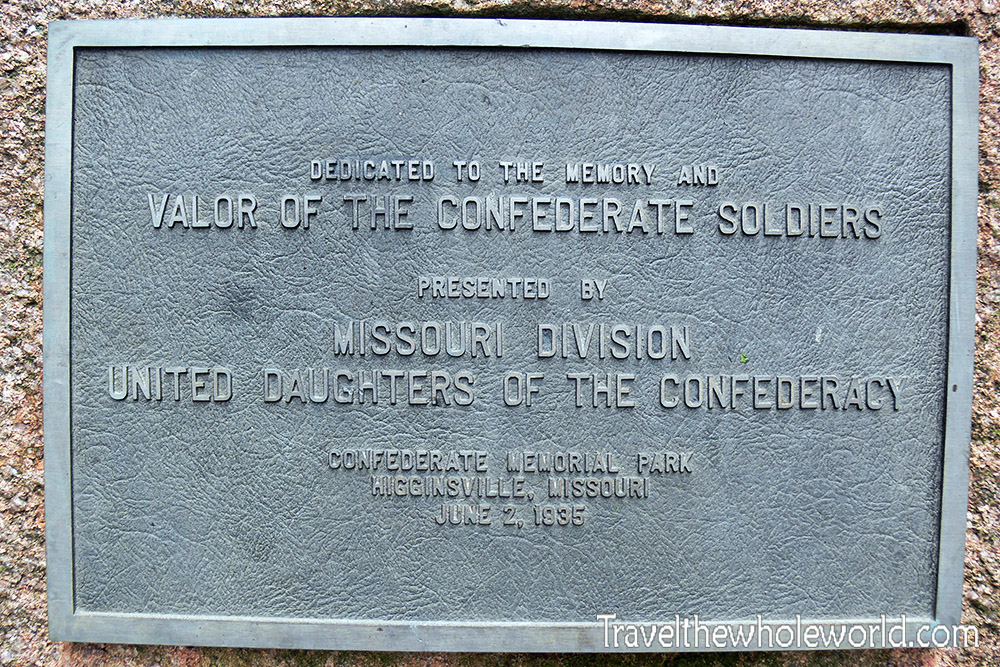
In 1861, fighting reached Lexington when Confederate-aligned forces returned to challenge Union troops holding the town. The Battle of Lexington became one of the major early clashes in Missouri and ended in a Confederate victory.
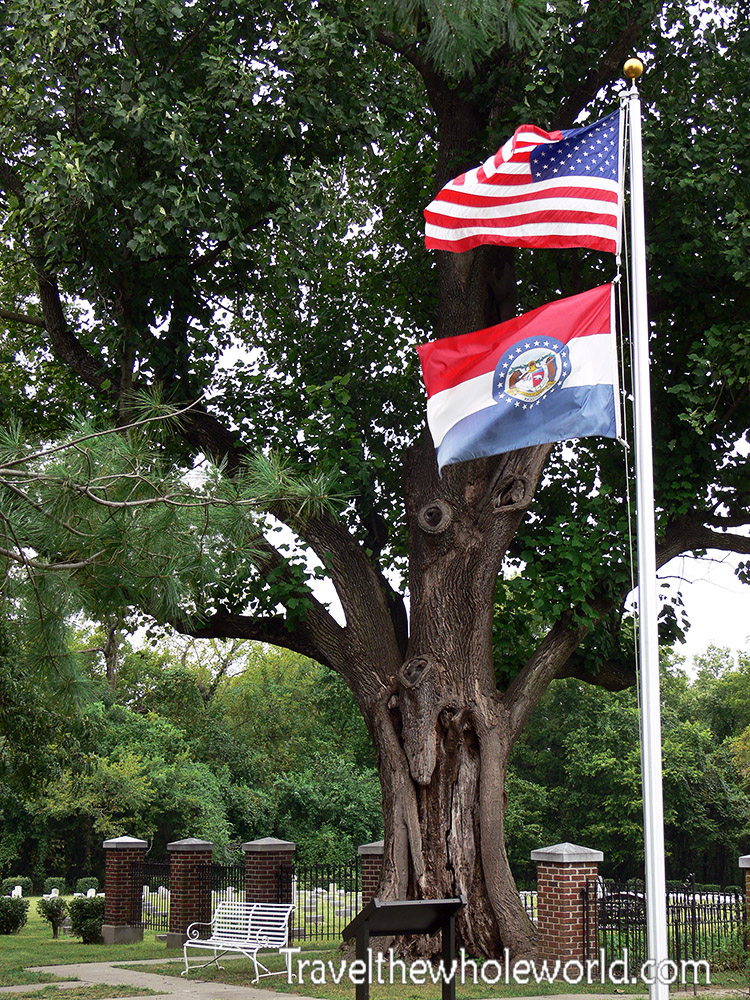
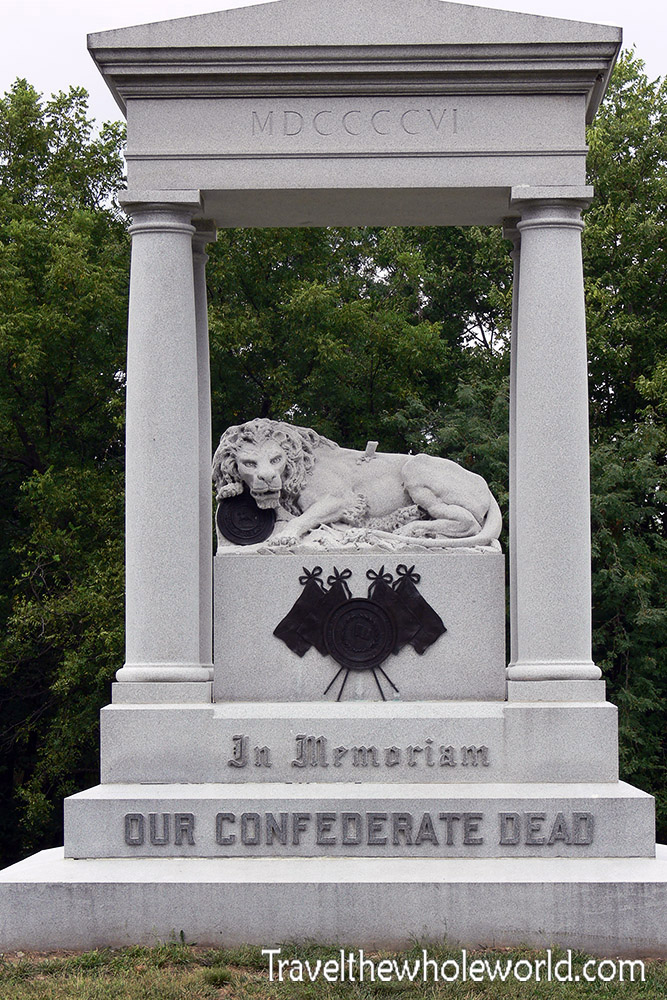
The battle was only one of many Civil War engagements fought across Missouri. The state experienced repeated fighting throughout the war, ranging from major battles to smaller raids and skirmishes.
Lake of the Ozarks
The final part of my Missouri trip focused more on the outdoors. Missouri isn’t usually the first state that comes to mind when people think about mountains or wilderness, but the Ozarks cover a large part of southern and central Missouri and continue south into Arkansas.
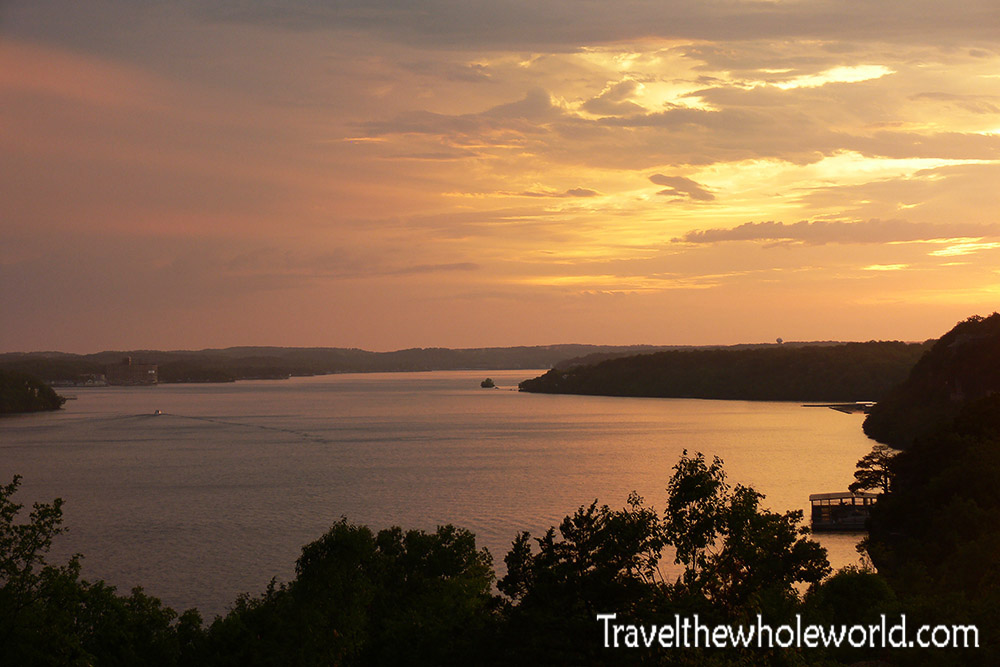
I spent some time around Lake of the Ozarks, an enormous reservoir with countless branches and coves that make it look almost like a giant river system on a map. The lake is popular for boating, fishing, water sports, and weekend trips from cities across the region.

Hiking around the Ozarks was rewarding even though I had to deal with constant rain and heavy humidity. One of the better wildlife encounters was this box turtle, which I believed to be a three-toed box turtle. I had grown up with an eastern box turtle as a pet, so coming across a different-looking one in Missouri immediately caught my attention.
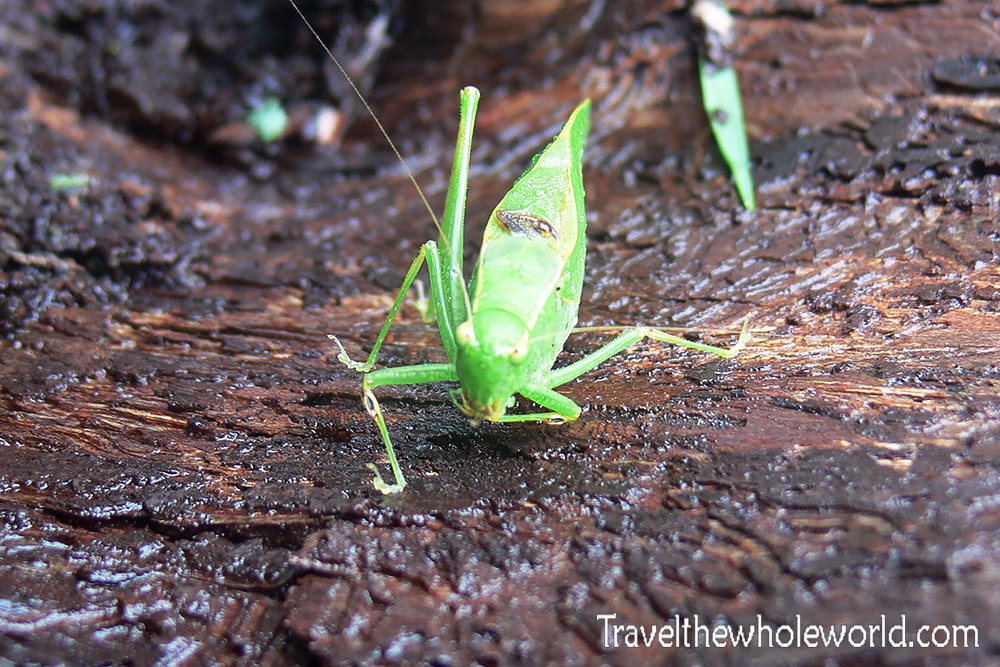
I also found this large katydid feeding along the forest floor. Between the rain and humidity, insects definitely weren’t difficult to find.
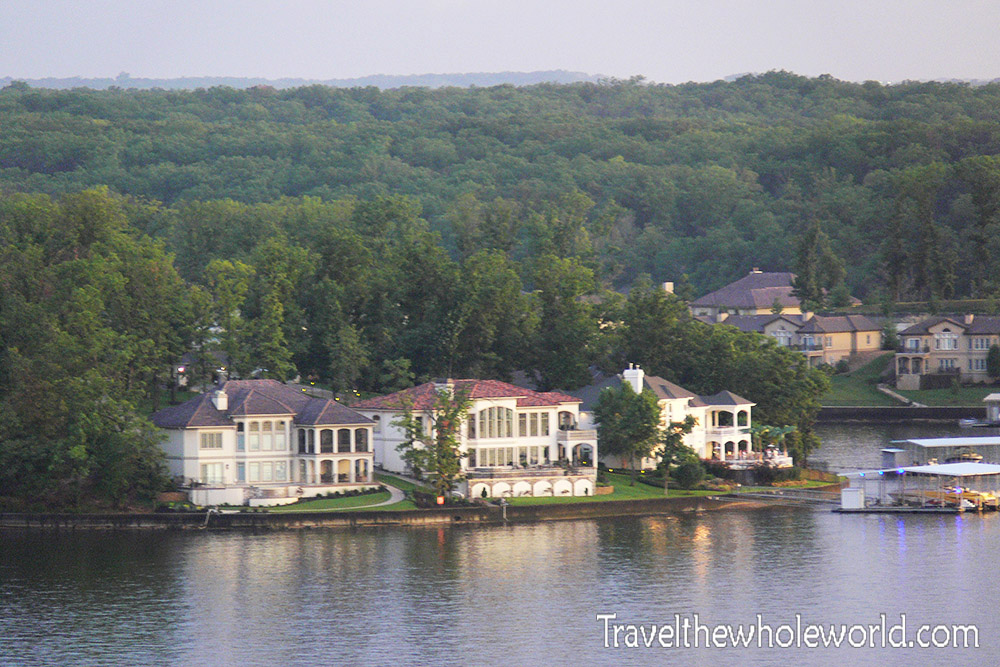
Communities around Lake of the Ozarks vary dramatically. Some areas are quiet and rural, while others are filled with resorts, restaurants, entertainment, and enormous waterfront homes like these.
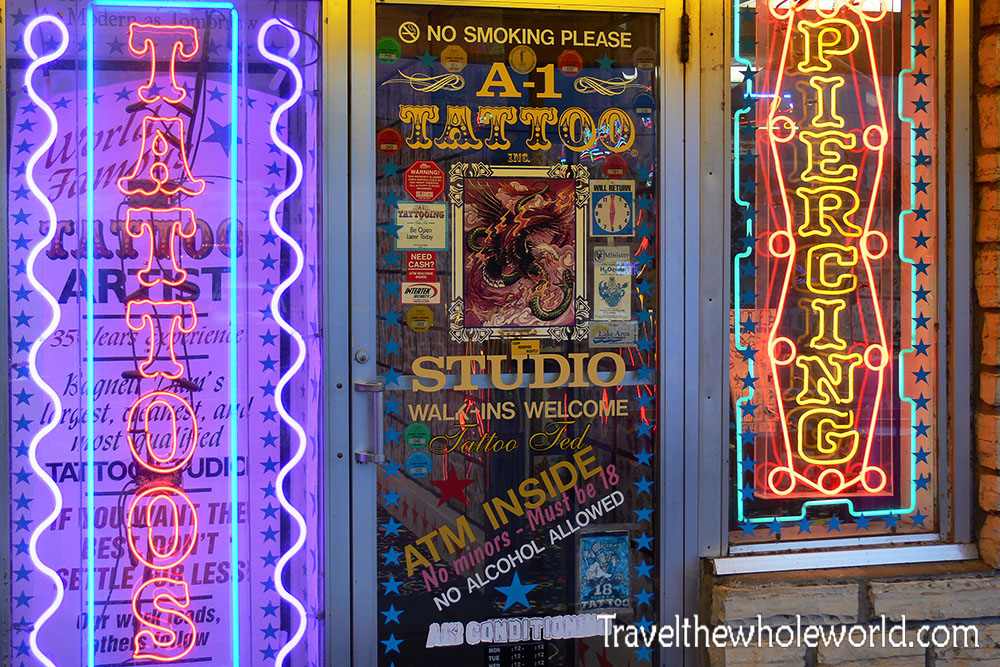
Other parts had more of a beach-town atmosphere, with arcades, tattoo parlors, amusement attractions, and similar businesses. I visited Osage Beach while it was raining heavily, so instead of finding a lively lake town I mostly found empty streets and bad weather.
Elephant Rocks State Park
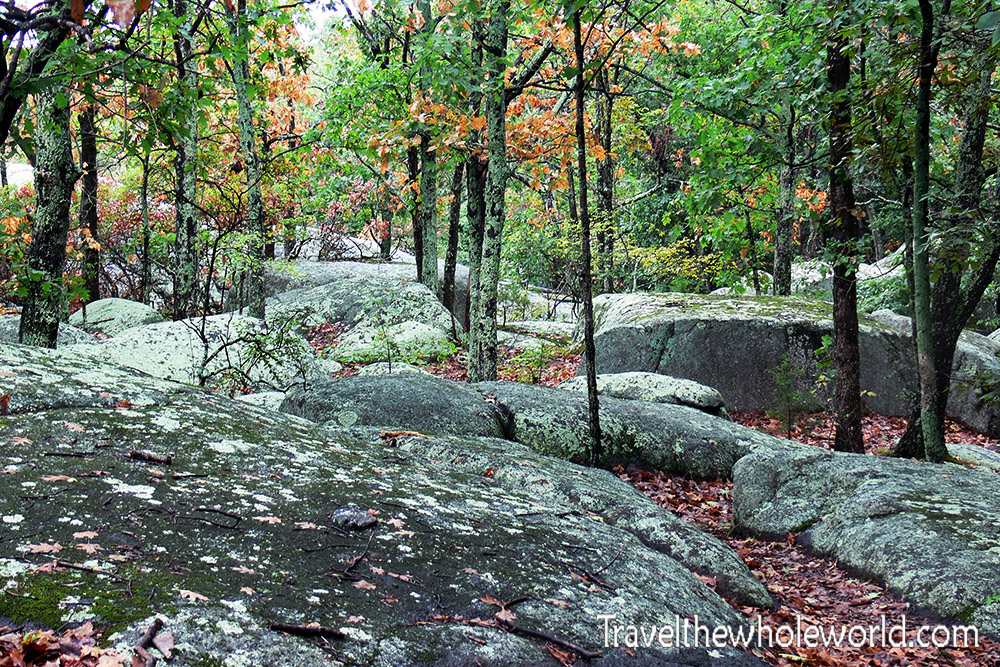
As I traveled farther south, the Ozark landscape became noticeably more interesting. One of my favorite natural stops in Missouri was Elephant Rocks State Park, where giant granite boulders are scattered through the forest.
The terrain immediately looked different from most of the state. Instead of ordinary wooded hills, huge rounded rocks cover parts of the forest floor and create natural passages between them.
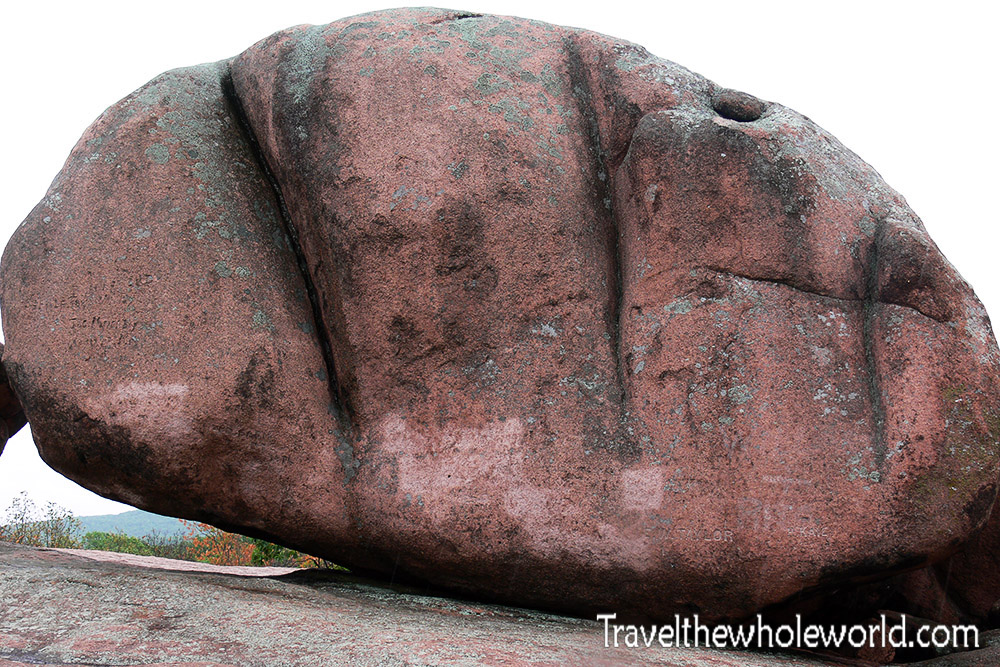
I continued to have rain and overcast skies, but Elephant Rocks was still probably the most scenic natural area I visited in Missouri. This enormous boulder was known as Dumbo Rock and was easily one of the most impressive formations in the park.
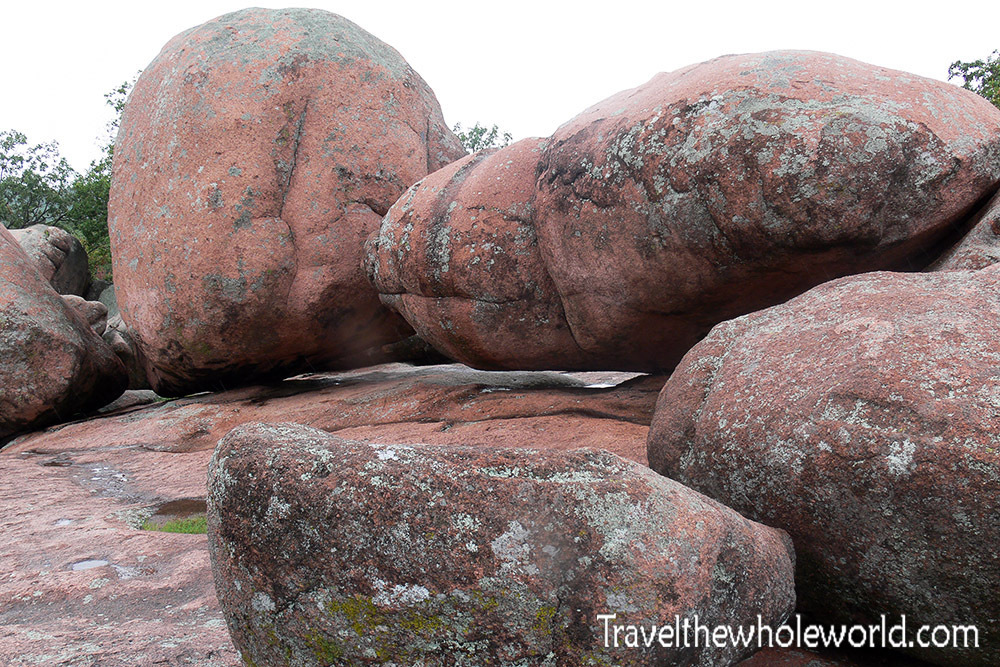
The park also has an industrial history. Granite was quarried here during the 19th century, and evidence of those operations remains mixed into the natural landscape.
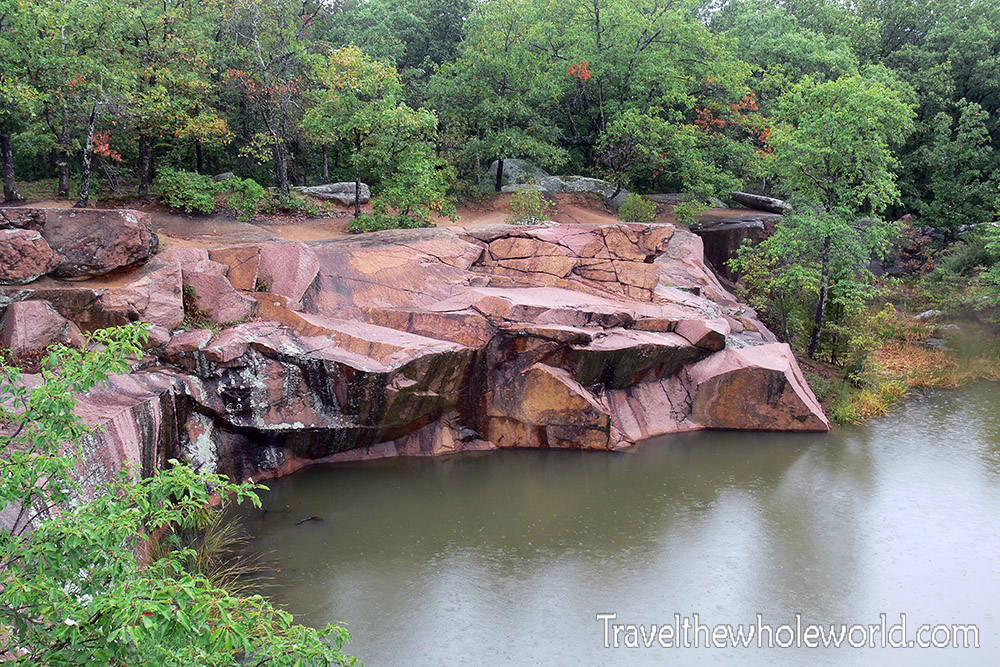
This pond formed in one of the old quarry areas after mining stopped and water collected in the excavated rock. Much of the granite taken from the region was eventually used in construction projects elsewhere in Missouri and beyond.
Wildlife at Elephant Rocks
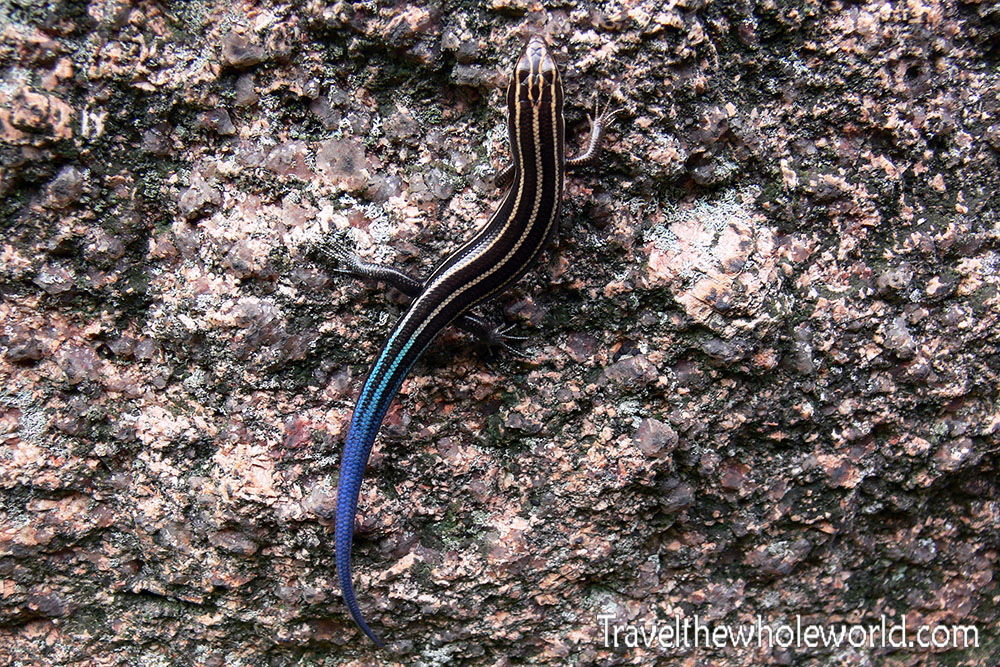
I also came across one of my favorite lizards in the United States, a juvenile five-lined skink. Young skinks have an incredibly bright blue tail that gradually fades as they mature. I had seen these growing up in Virginia, but it had probably been close to a decade since I’d last come across one.
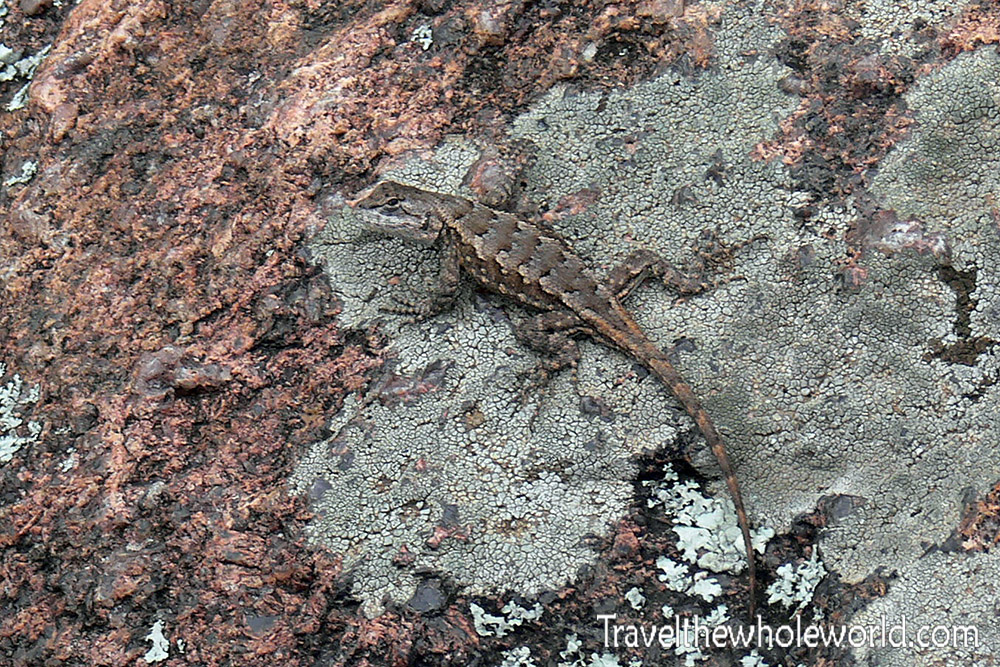
This second lizard was much harder to spot because its coloring blended almost perfectly with the surrounding rock and forest floor.
Missouri ended up being much more varied than I expected when I started the trip. Kansas City and St. Louis gave me the big-city experience, towns like St. Charles and Lexington added plenty of history, and the Ozarks showed me a much more natural side of the state. Elephant Rocks was probably my favorite outdoor stop, while Kansas City surprised me the most overall.