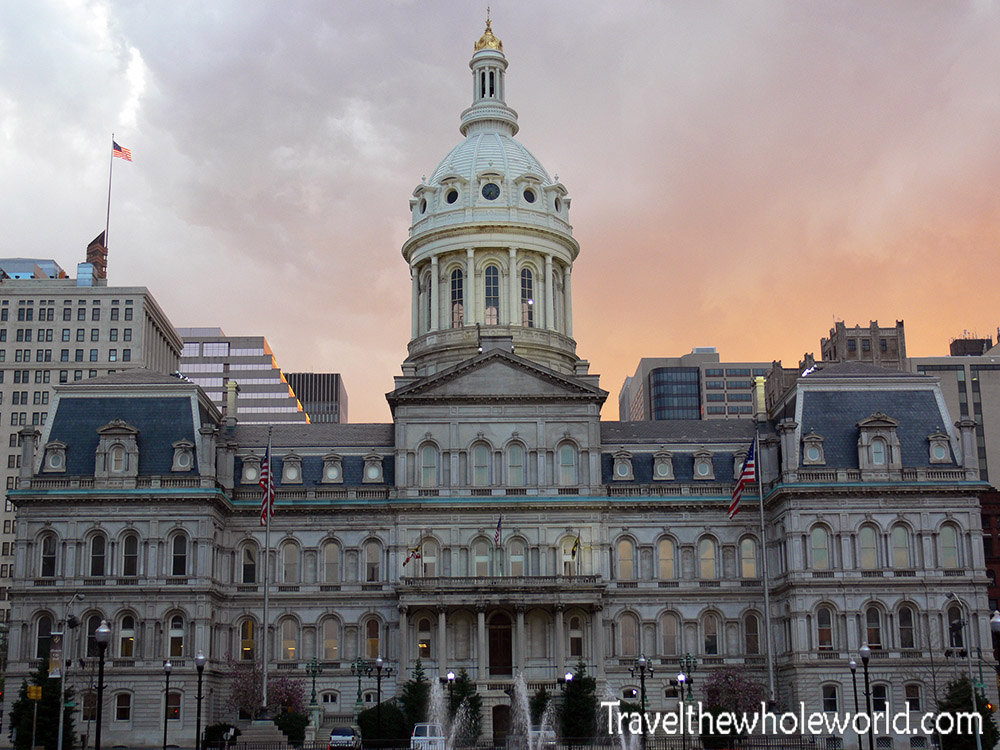
Outside of the Washington, D.C. area, Baltimore is the closest major city to my hometown. Despite being able to get here in less than an hour, I’ve actually visited countries like Japan and Chile more times than I’ve visited Baltimore! Most of the photos on this page were taken more than ten years ago, including this shot of Baltimore City Hall with my old pre-SLR camera.
Baltimore is one of America’s older major cities and has played an important role in the country’s history. While I’ve never explored it as thoroughly as cities much farther from home, there’s a surprising amount to see here, especially around the waterfront and historic neighborhoods.
Inner Harbor
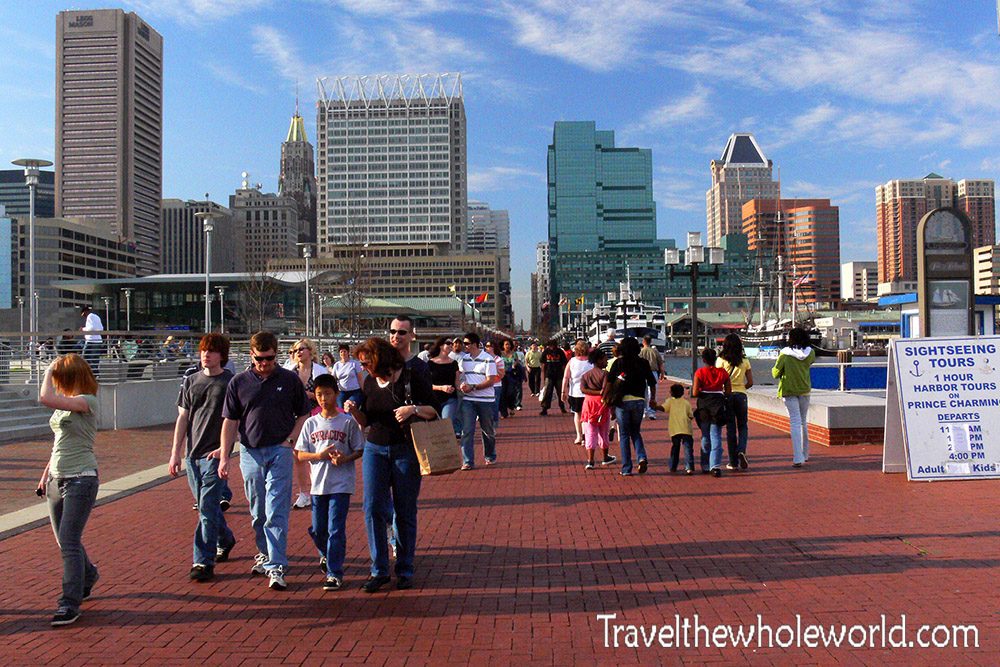
There’s a lot to do in Baltimore, but the Inner Harbor is the city’s best-known visitor destination. I took these photos in early spring on what was probably one of the first really nice days of the year. After a long winter, plenty of people had the same idea and were outside walking around the waterfront.

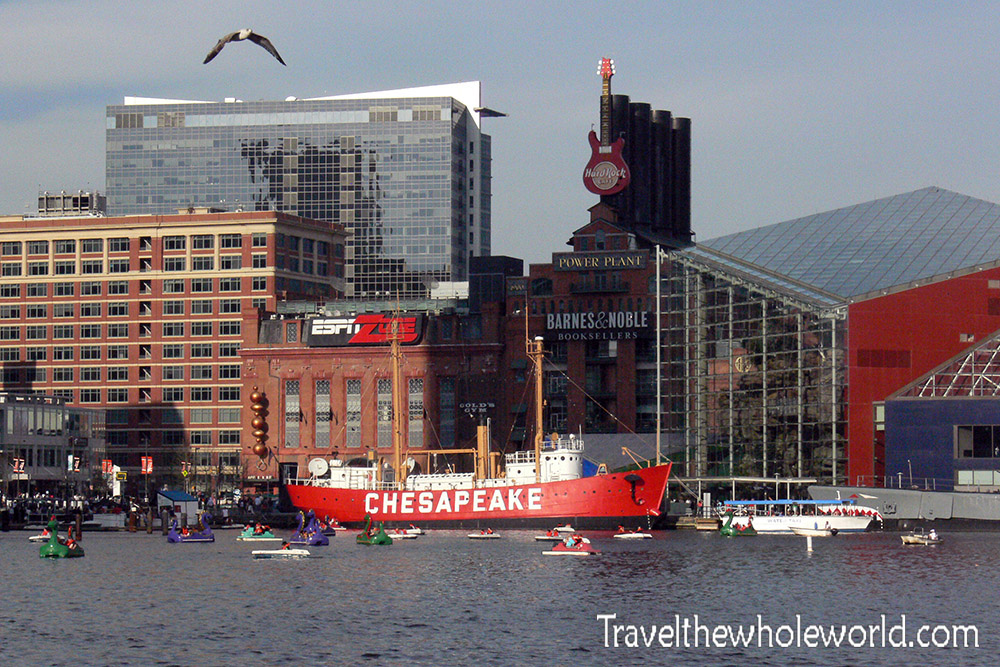
The Inner Harbor is surrounded by restaurants, hotels, museums, historic ships, and other attractions. It’s an easy part of Baltimore to explore on foot and probably the best introduction to the city for a first-time visitor.

One of the attractions along the waterfront is the Maryland Science Center, where I photographed this Tyrannosaurus rex display. Baltimore’s museums and historic attractions are concentrated enough around the harbor that it’s possible to see quite a bit without traveling far across the city.
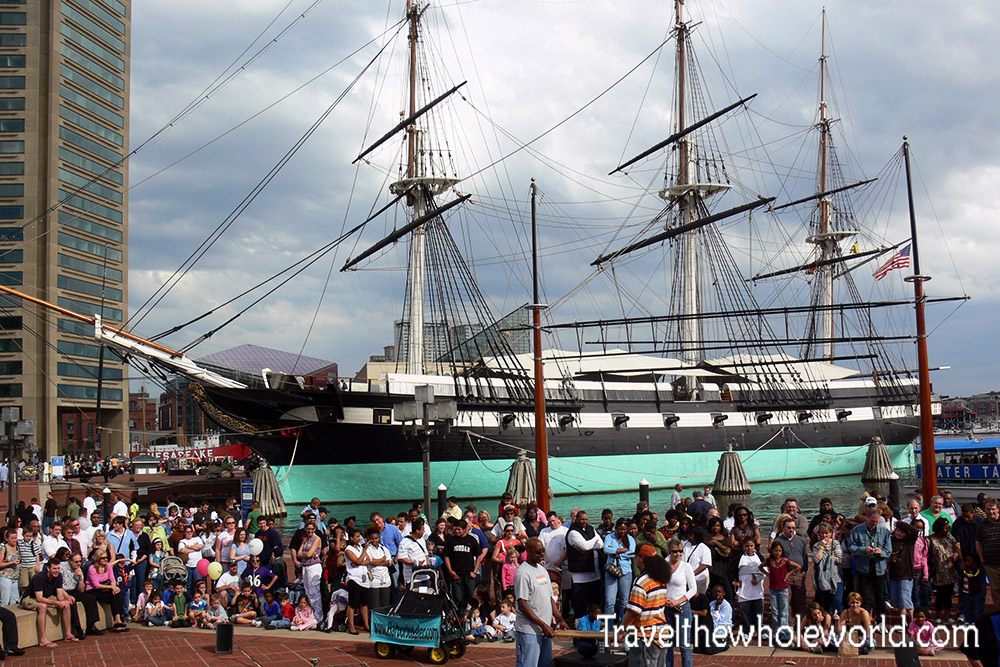
The historic ship above is the USS Constellation, another major attraction along the waterfront. Launched in 1854, the ship served in the U.S. Navy during the 19th century and is now preserved as a museum ship in Baltimore.
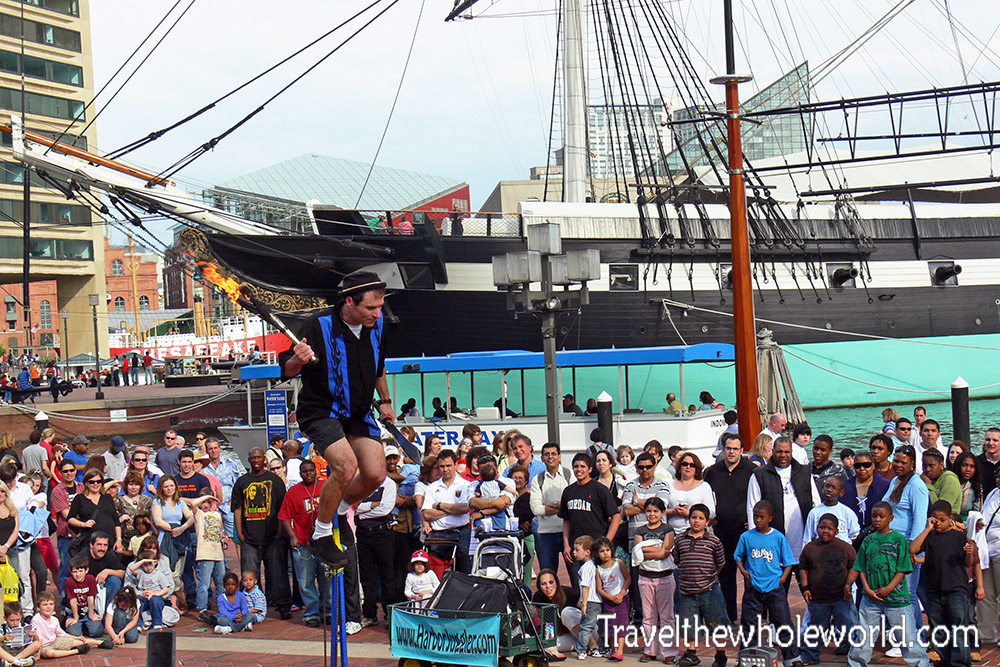
The crowd near the Constellation wasn’t there just for the ship. A street performer had attracted an audience while doing balancing acts and juggling flaming torches. Scenes like this made the harbor feel more like a public gathering place than simply a collection of tourist attractions.
Birthplace of the Star-Spangled Banner
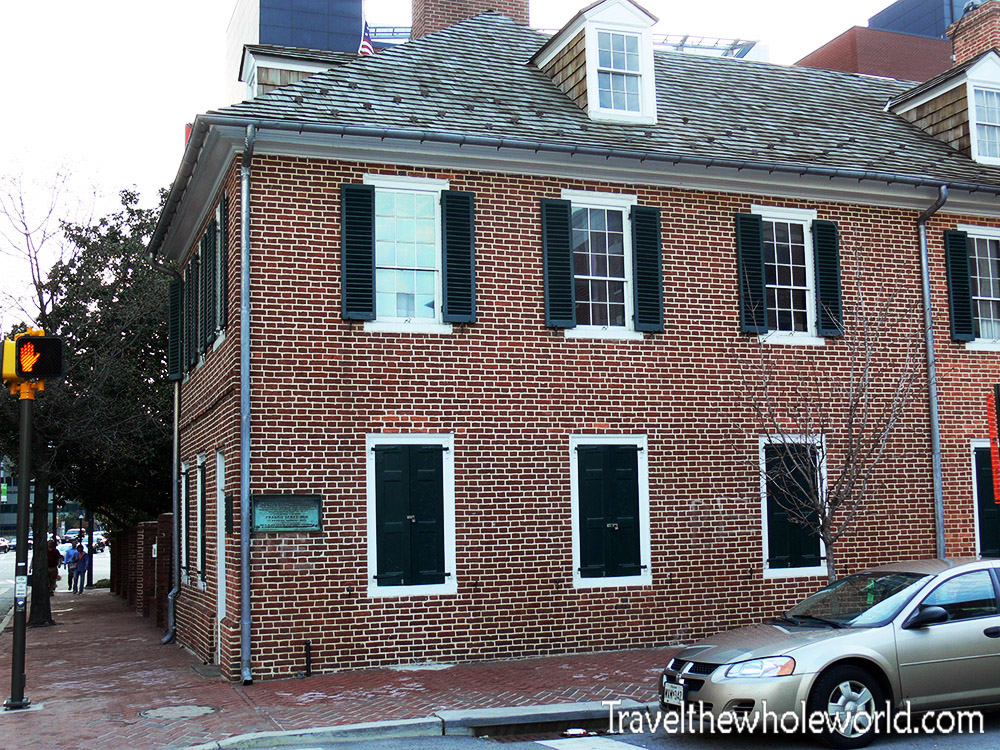
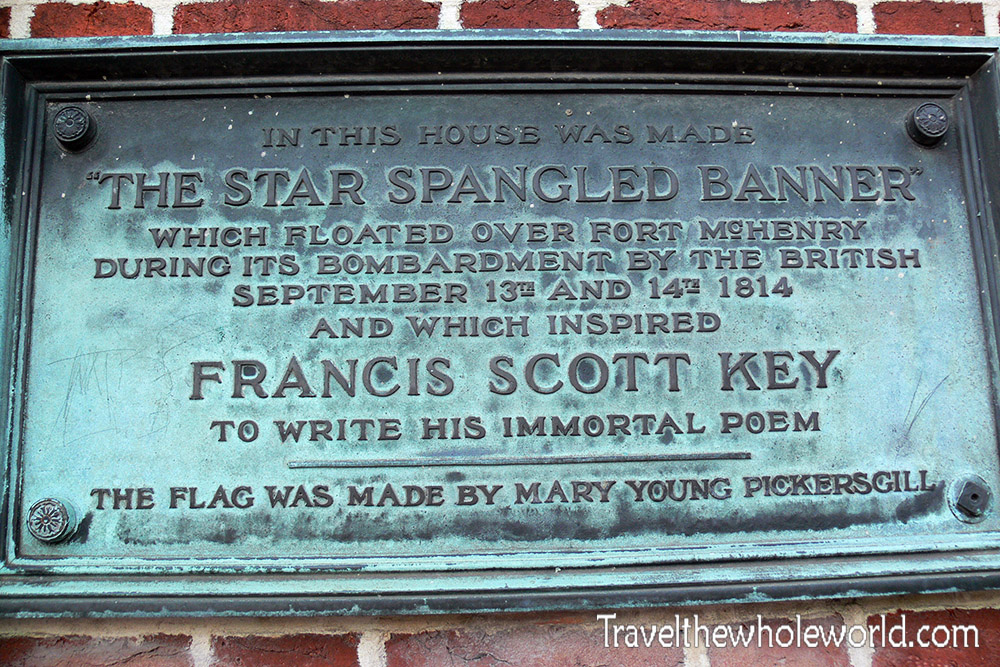
Baltimore has plenty of impressive historic buildings, but this relatively simple house is connected to one of the most recognizable symbols in the United States. It was the home and workplace of Mary Pickersgill, who sewed the enormous American flag that flew over Fort McHenry during the Battle of Baltimore in 1814.
After witnessing the bombardment of Fort McHenry and seeing the American flag still flying the following morning, Francis Scott Key wrote the poem that became The Star-Spangled Banner. More than a century later, it became the national anthem of the United States.
Little Italy
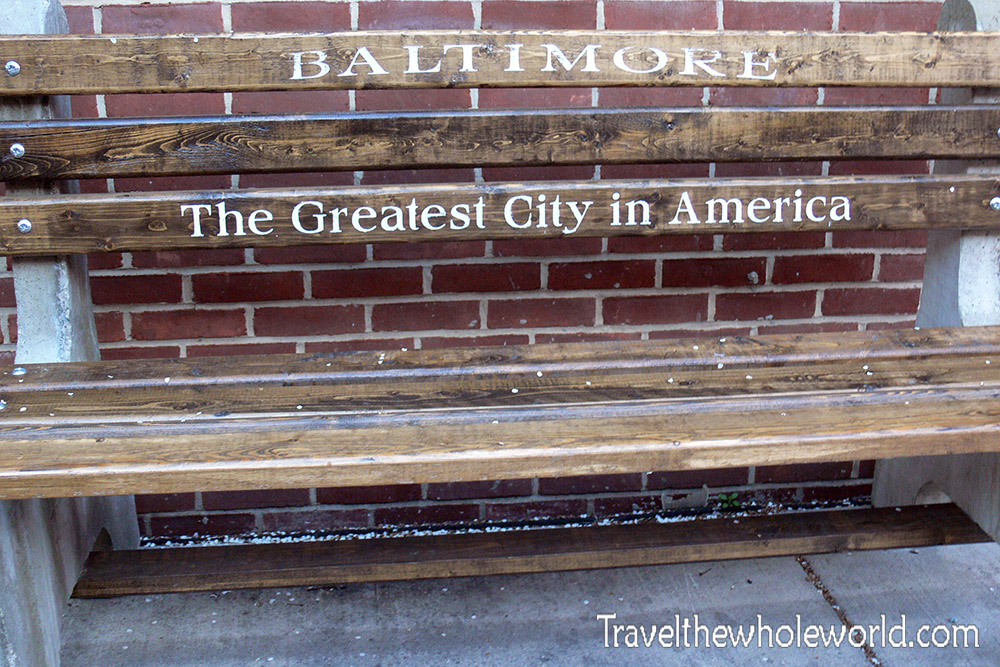
Baltimore has struggled with a reputation for crime, and some neighborhoods do have serious problems. But that isn’t the entire city, and the parts most visitors explore can feel completely different from the image outsiders sometimes have of Baltimore. The city even once promoted itself with the wonderfully confident slogan, “The Greatest City in America.”
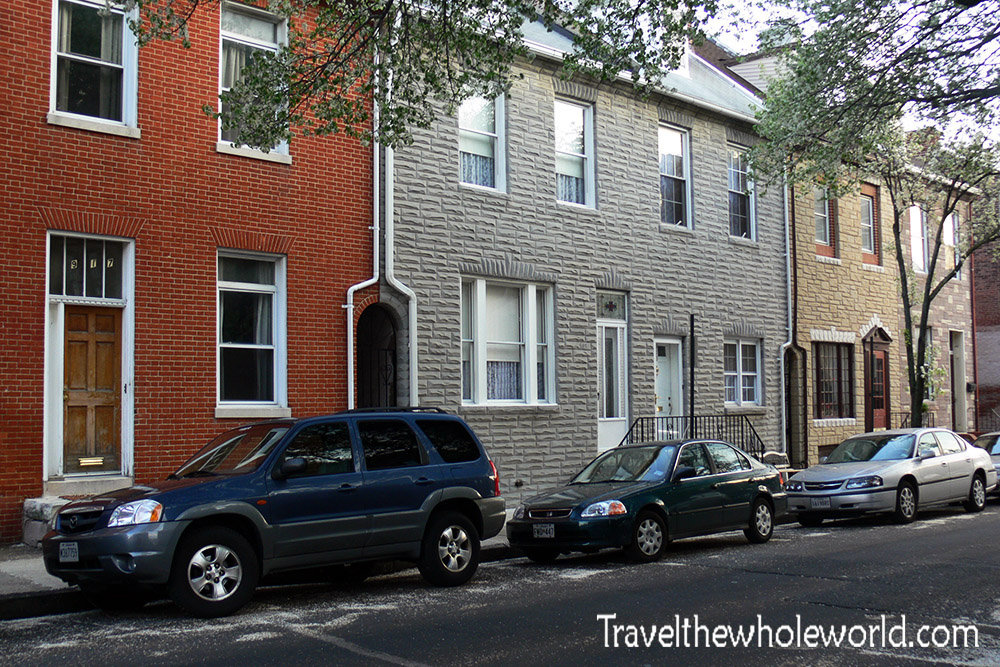
One of the neighborhoods that gives Baltimore its character is Little Italy. Thousands of Italian immigrants arrived in Baltimore during the late 19th and early 20th centuries, and the neighborhood that developed near the harbor remains closely associated with that heritage.

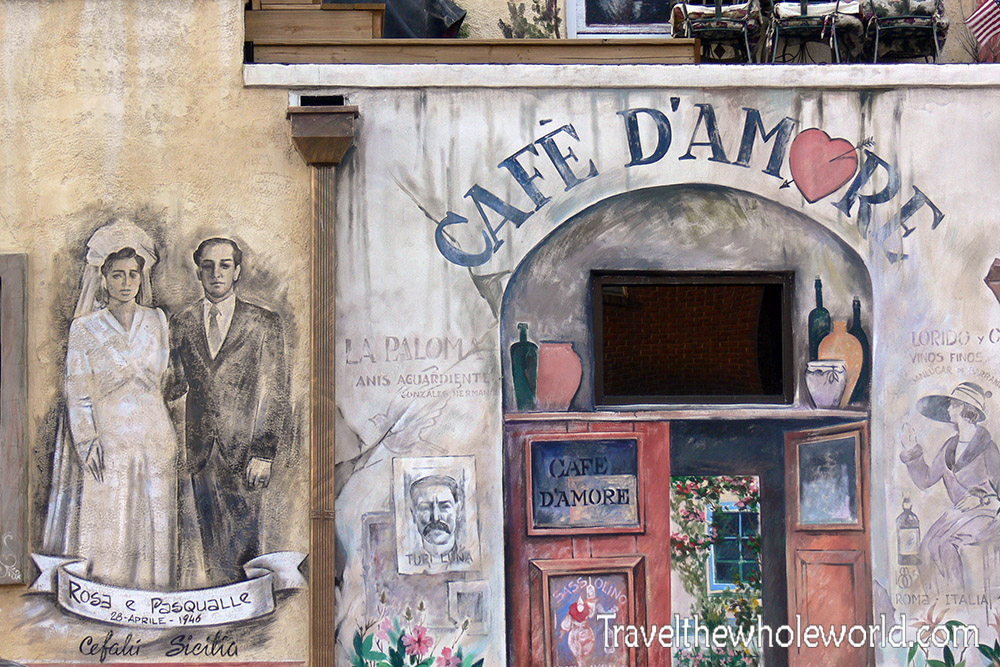
Food is naturally one of the neighborhood’s biggest attractions. Little Italy is packed with Italian restaurants and cafes, but its identity goes beyond food. There are churches, festivals, traditional row houses, and even bocce courts that preserve some of the neighborhood’s Italian-American character.

Edgar Allan Poe
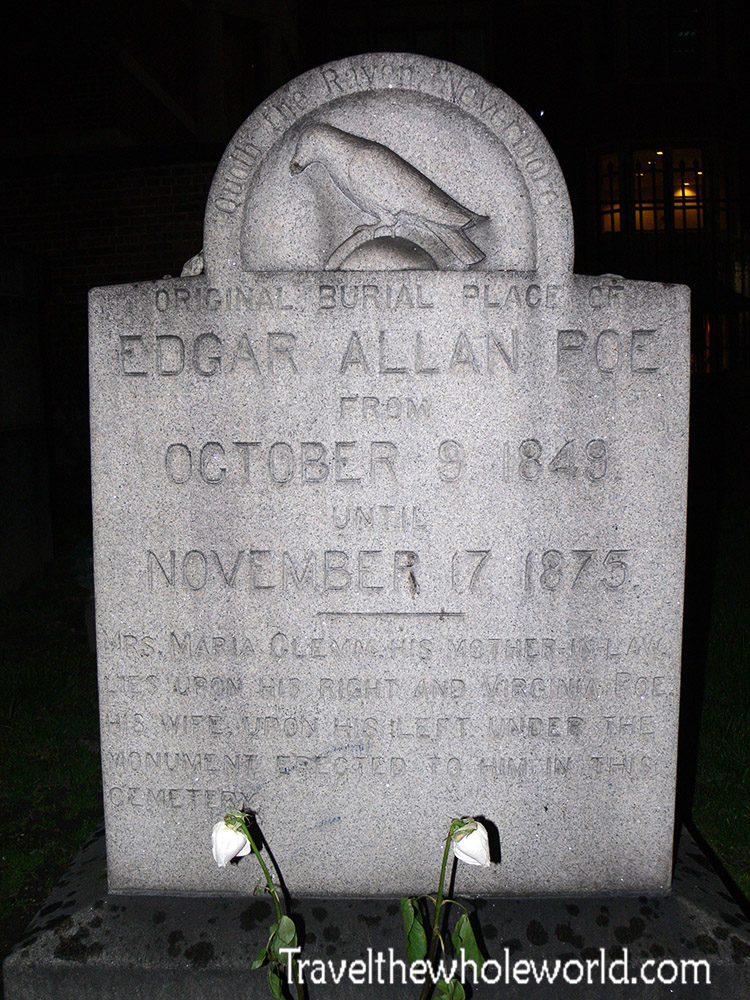
Finally, one of the places I wanted to visit in Baltimore was the grave of Edgar Allan Poe. Poe became one of America’s most famous writers through poems and short stories known for their dark and mysterious themes, including The Raven, The Tell-Tale Heart, and The Fall of the House of Usher. Although he lived in several American cities during his life, his connection with Baltimore remains especially strong.
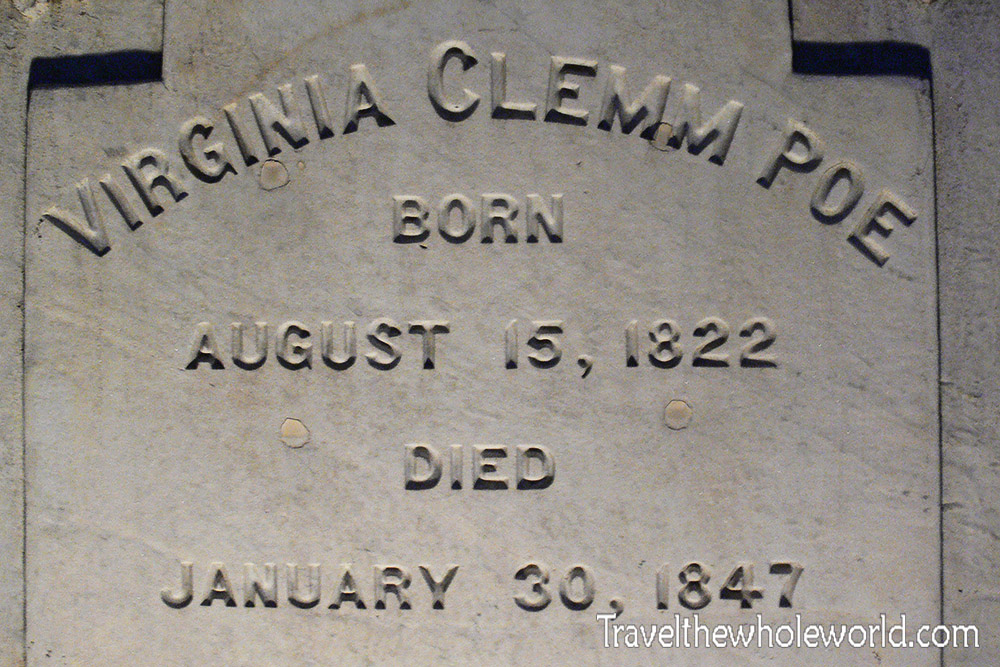
Poe is buried at Westminster Hall and Burying Ground alongside his wife and cousin, Virginia Clemm Poe, who died of tuberculosis at only 24 years old. For a writer so closely associated with death, mystery, and the macabre, visiting his grave felt like an appropriate final historical stop in Baltimore.