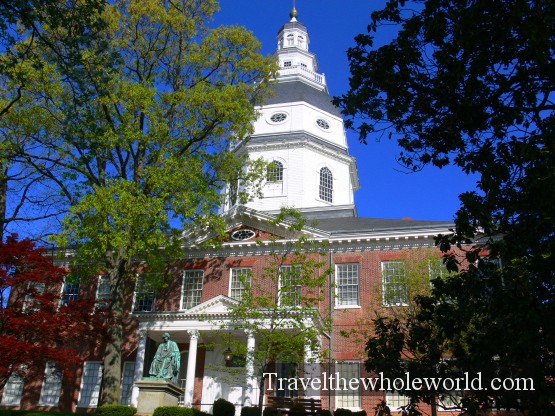
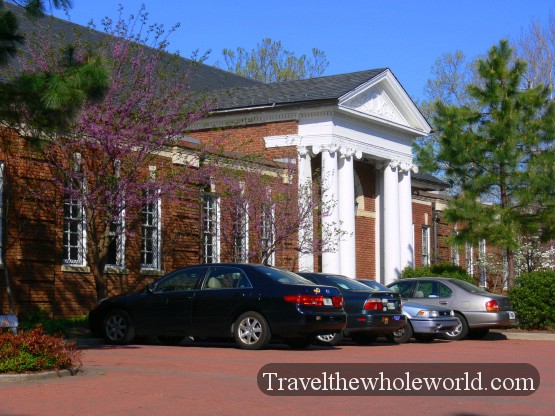
Maryland’s capital of Annapolis is a small city, but it has a surprising amount of history packed into a compact area along the Chesapeake Bay. Above is the Maryland State House, followed by St. John’s College, one of the oldest colleges in the United States. Walking around Annapolis feels very different from most state capitals, with historic buildings, narrow streets, and a waterfront that gives the city more of a small coastal-town atmosphere.
Historic Annapolis
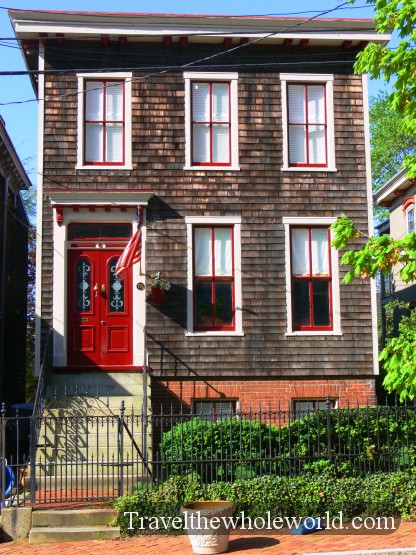
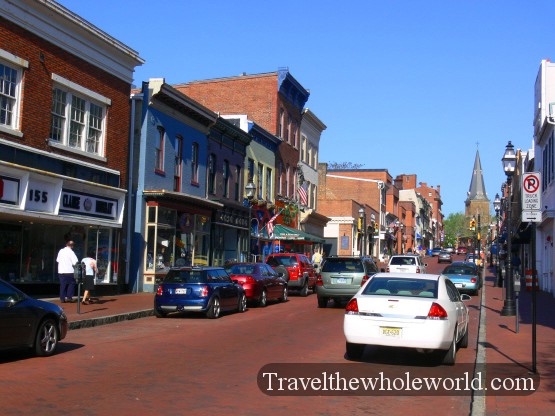
Much of the historic center still has the quiet small-town character I expected from Annapolis. Older homes, brick buildings, shops, and restaurants fill the streets between the State House and waterfront. It doesn’t feel like a large capital city at all, which is part of what makes it interesting to explore on foot.
America’s Sailing Capital
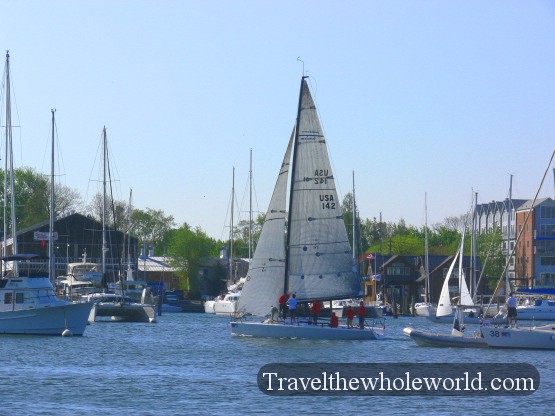
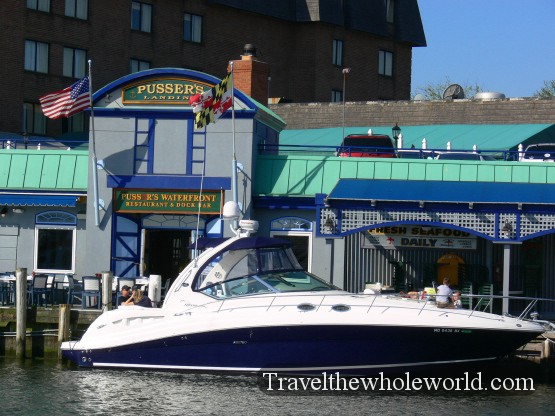
Annapolis is often called America’s sailing capital, and it’s easy to understand why once you reach the waterfront. Sailboats and yachts fill the harbor, while much of the surrounding infrastructure is built around boating and access to the Chesapeake Bay.
Sailing has been part of the city’s identity for centuries. Today the waterfront combines working docks, restaurants, shops, marinas, and plenty of expensive boats tied up only a few feet from the streets.
Kunta Kinte Memorial
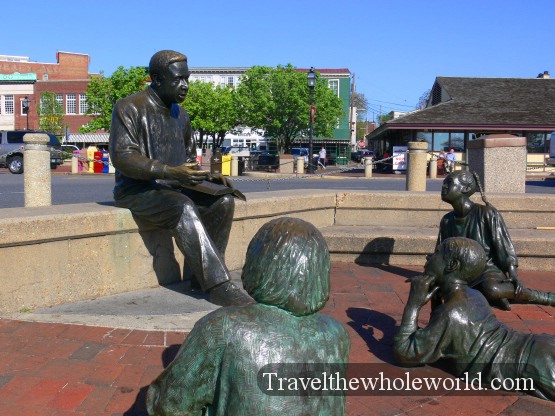
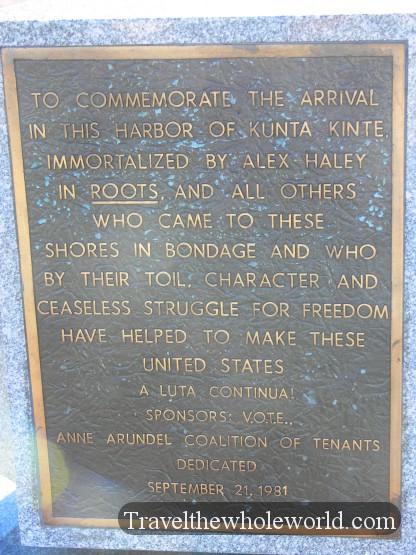
Annapolis was also an important colonial port connected with the Atlantic slave trade. Enslaved Africans were brought through the Chesapeake region and sold into slavery, and the city’s waterfront includes a memorial connected with Kunta Kinte, the ancestor made famous through Alex Haley’s Roots.
The memorial gives the waterfront a much more serious historical layer beyond the restaurants and sailboats. It’s a reminder that Annapolis’ importance as a port also included one of the darkest parts of early American history.
United States Naval Academy
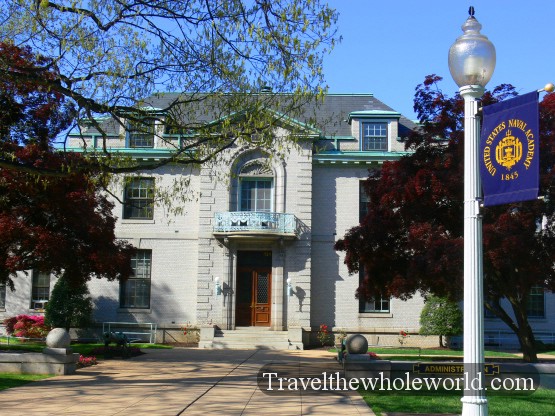
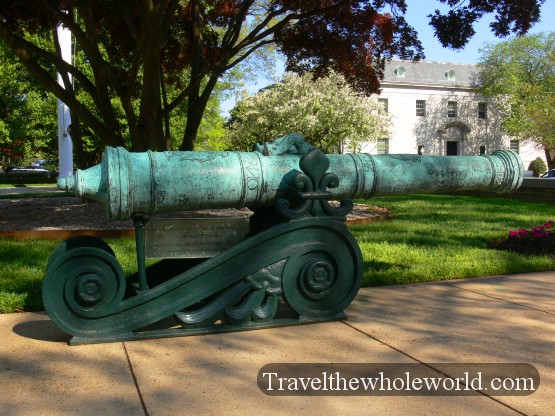
Annapolis is also home to the United States Naval Academy. Of all the Navy installations I’ve visited, this was definitely one of the nicest. The grounds feel more like a historic university campus than a military base, with large stone buildings, monuments, courtyards, and views toward the water.
The cannon above was displayed on the grounds as part of the academy’s military history. Walking around the campus, it was easy to see how closely Annapolis and the Navy have become connected.
Naval Academy Chapel
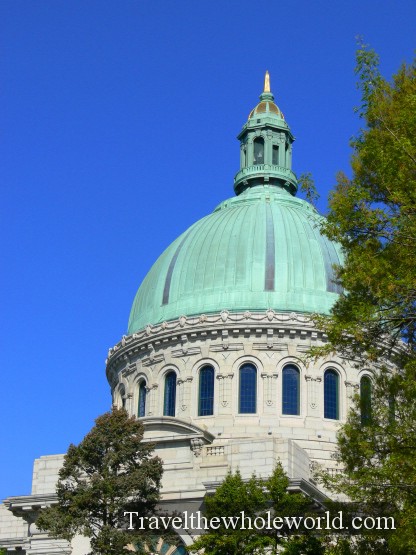
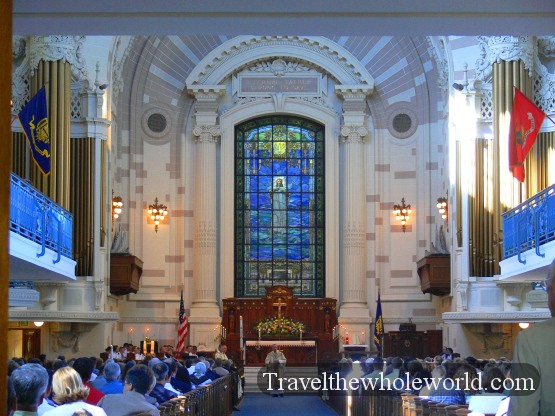
One of the most impressive buildings on the grounds is the Naval Academy Chapel, completed in the early 20th century. The chapel dominates part of the campus and has a much more elaborate interior than I expected from a military academy.
Beneath the chapel is the crypt of John Paul Jones, one of the most famous American naval commanders of the Revolutionary War. His victories against the British helped make him one of the early heroes of the United States Navy, and today he is often remembered as one of its founding figures.
Between the historic downtown, sailing culture, Naval Academy, and waterfront, Annapolis ended up having much more to see than its small size would suggest. It’s probably one of the more distinctive state capitals I’ve visited because the city’s identity is tied just as much to the Chesapeake Bay and Navy as it is to state government.