After crossing the land border between Pakistan and India, I continued by train to Amritsar, the first major city along my route. Its location made it a convenient place to stop after leaving Pakistan, but I quickly discovered that Amritsar was a destination worth visiting on its own. The city is one of the most important centers of Sikh culture and religion in India and is also home to several significant historic sites.
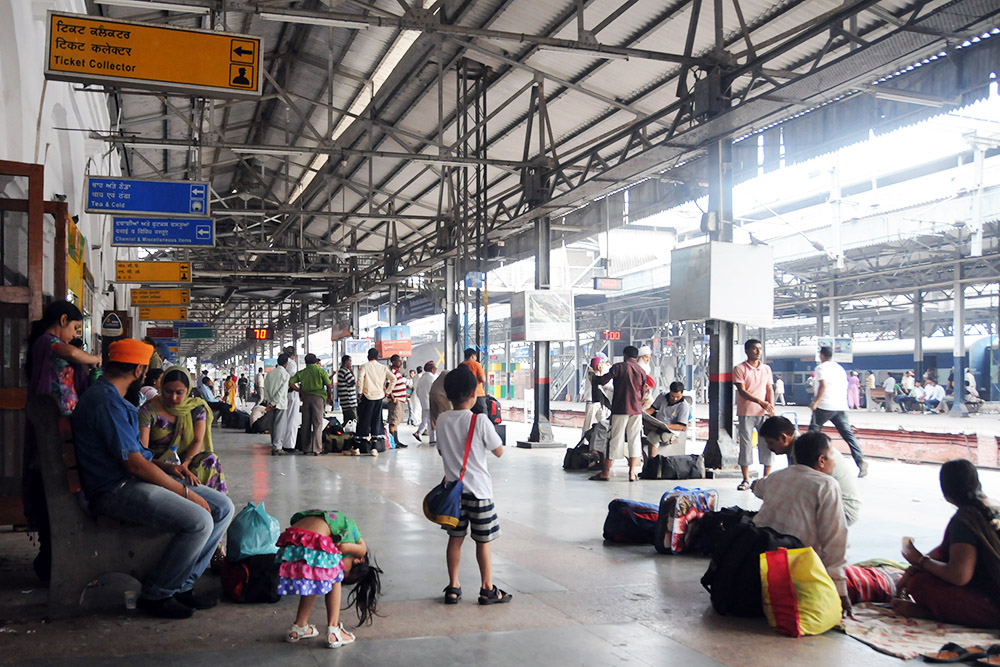
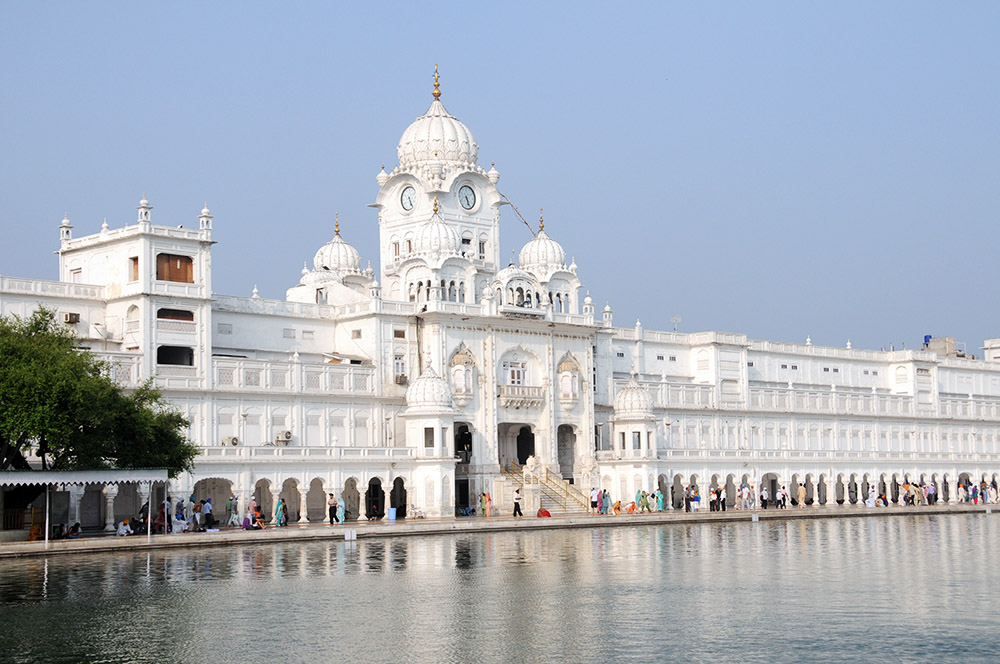
The most important cultural and religious site in Amritsar is the Golden Temple, which easily became one of my favorite places from my entire trip through India. Thousands of Sikh pilgrims and other visitors come here, creating an atmosphere unlike anywhere else I visited. The building photographed above stands along the entrance I used to reach the Golden Temple complex.
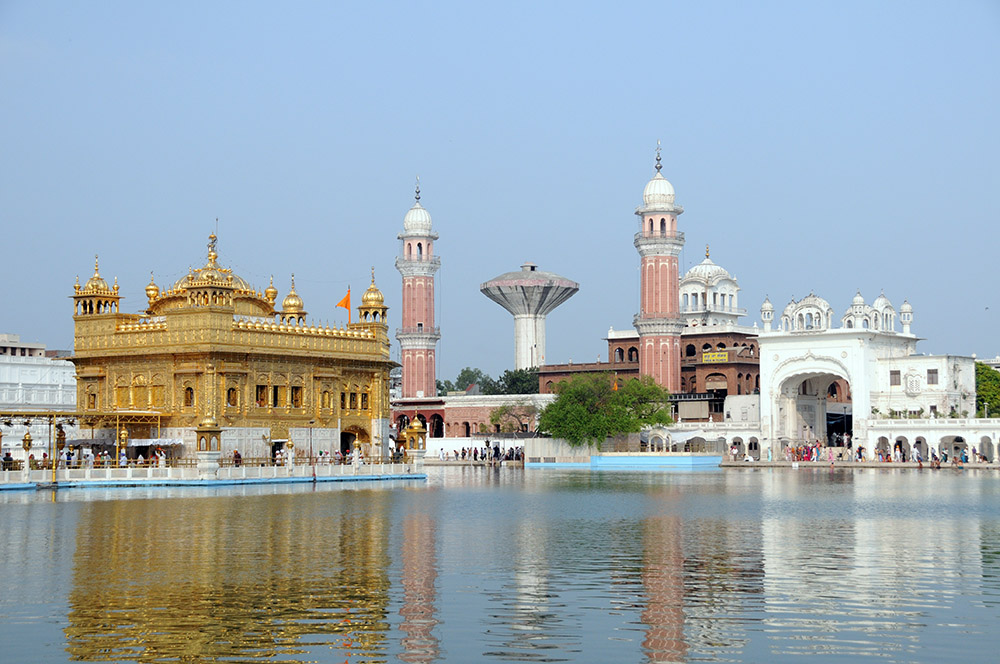
The Golden Temple, also known as Sri Harmandir Sahib, is the most important gurdwara in Sikhism. The temple’s history dates to the 16th century and is closely associated with Guru Ram Das, the fourth Sikh Guru, who founded the city of Amritsar, and Guru Arjan, the fifth Sikh Guru, who oversaw the temple’s construction. One of the things that impressed me about Sikhism during my travels was its emphasis on equality and welcoming people regardless of religion, culture, or background. That openness is immediately apparent at the Golden Temple, where visitors from around the world are welcome to enter and experience the complex.
I explored quite a bit of Amritsar while walking toward the temple. As I got closer, I began seeing more Sikh pilgrims and religious figures along the streets. Visitors are required to cover their heads before entering the Golden Temple, and simple head coverings were readily available around the area.
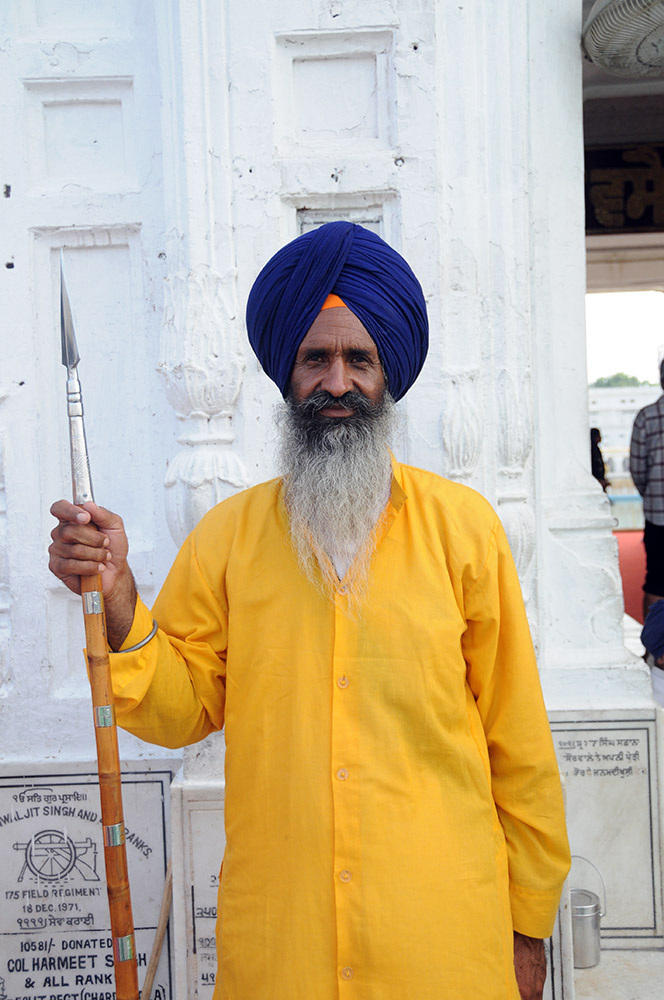
Inside the complex I encountered traditionally dressed Sikh attendants and guards, including the man photographed above wearing bright orange robes and a dark blue turban. The clothing, architecture, pilgrims, and constant activity surrounding the temple made visiting the complex one of the most memorable cultural experiences of my trip.
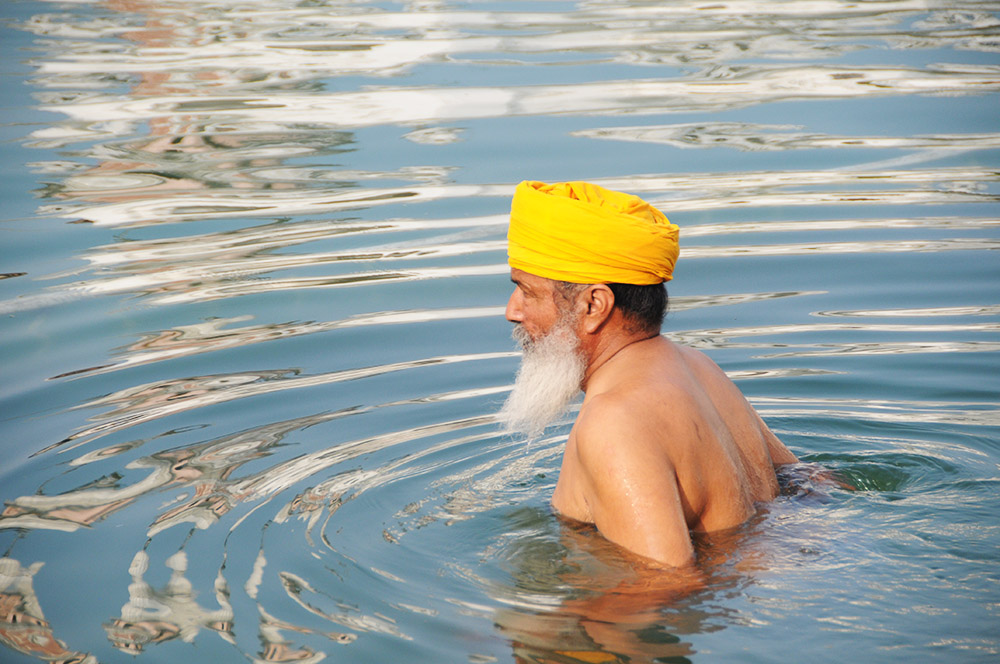
Pilgrims travel to the Golden Temple from across India and around the world. At the center of the complex is the sacred pool known as the Amrit Sarovar, where many pilgrims bathe as part of their religious devotion. I didn’t enter the water myself, but I photographed this Sikh man descending into the pool. Like the rituals I later witnessed along the Ganges River, it was fascinating to see how important sacred water can be within India’s different religious traditions.
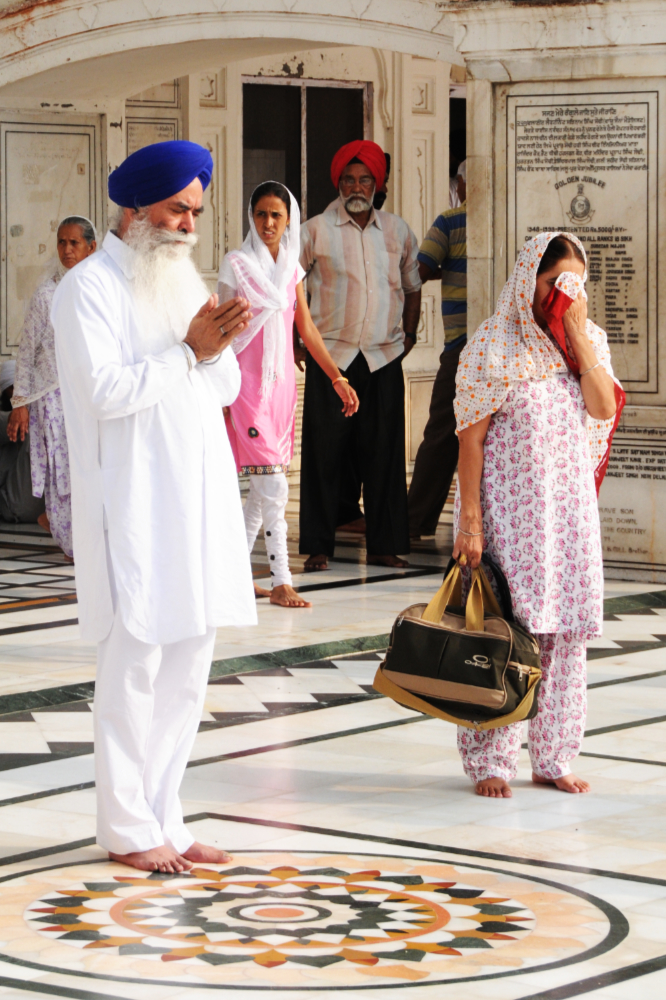
Throughout the Golden Temple complex I also saw people praying and meditating. The constant flow of visitors never seemed to take away from the spiritual atmosphere, and there were quiet spaces throughout the complex where people could sit in reflection.
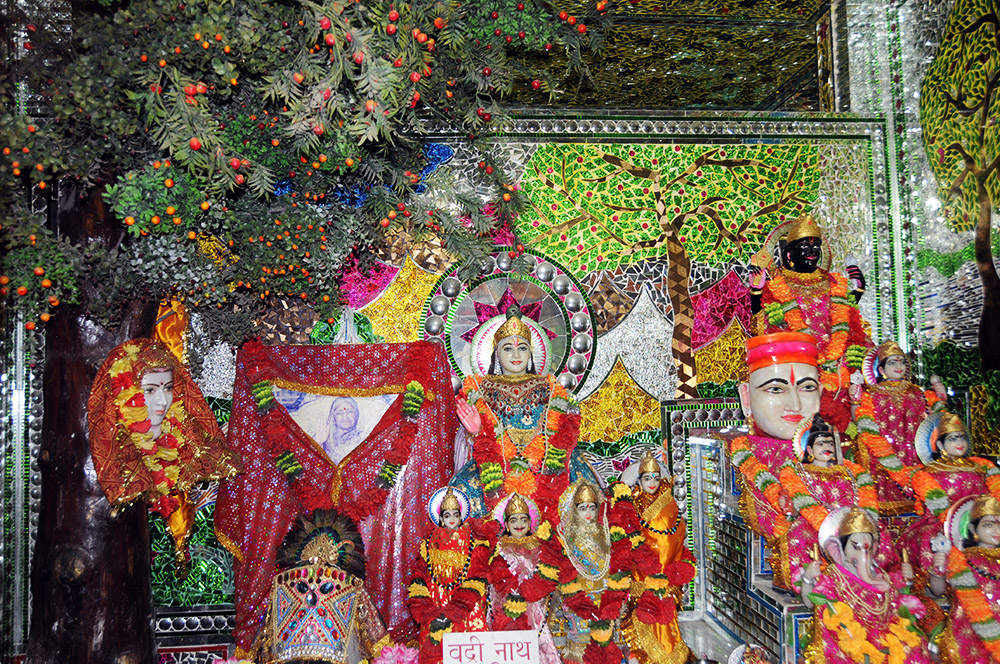
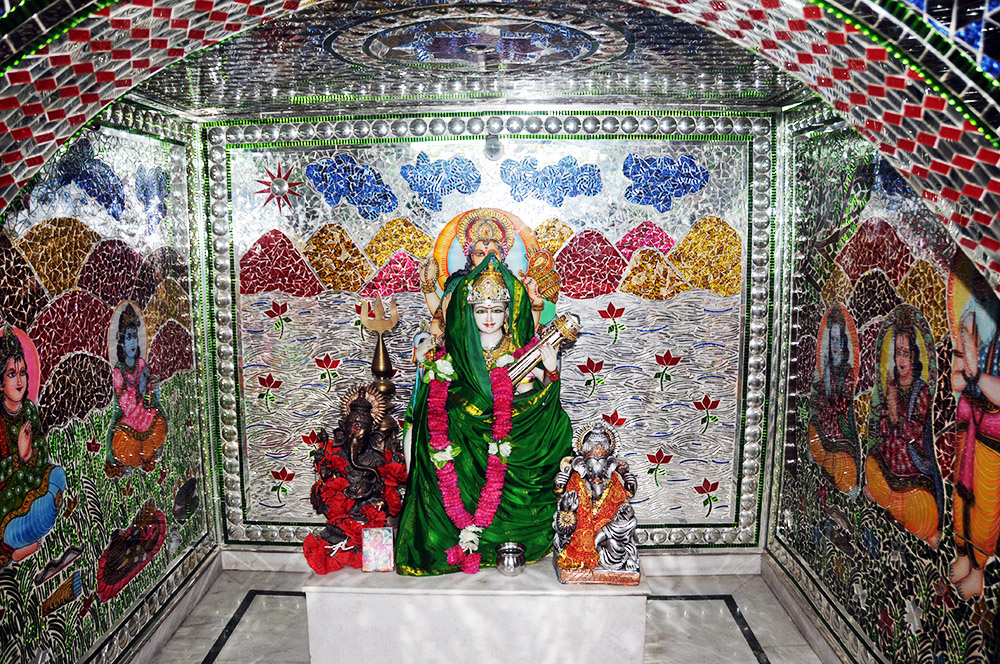
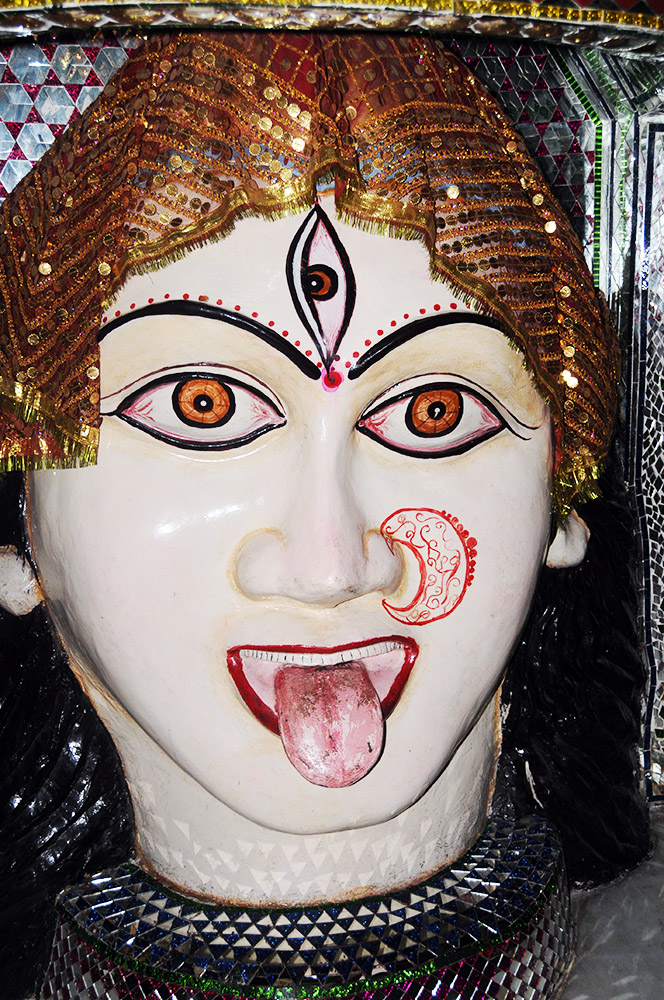
After visiting the Sikh Golden Temple, I went to a completely different religious site in Amritsar. The Mata Temple offered a very different experience, with its lower level containing more traditional spaces where people gathered for prayer and other activities. The photos above and below show some of the colorful interiors I encountered while exploring the temple.
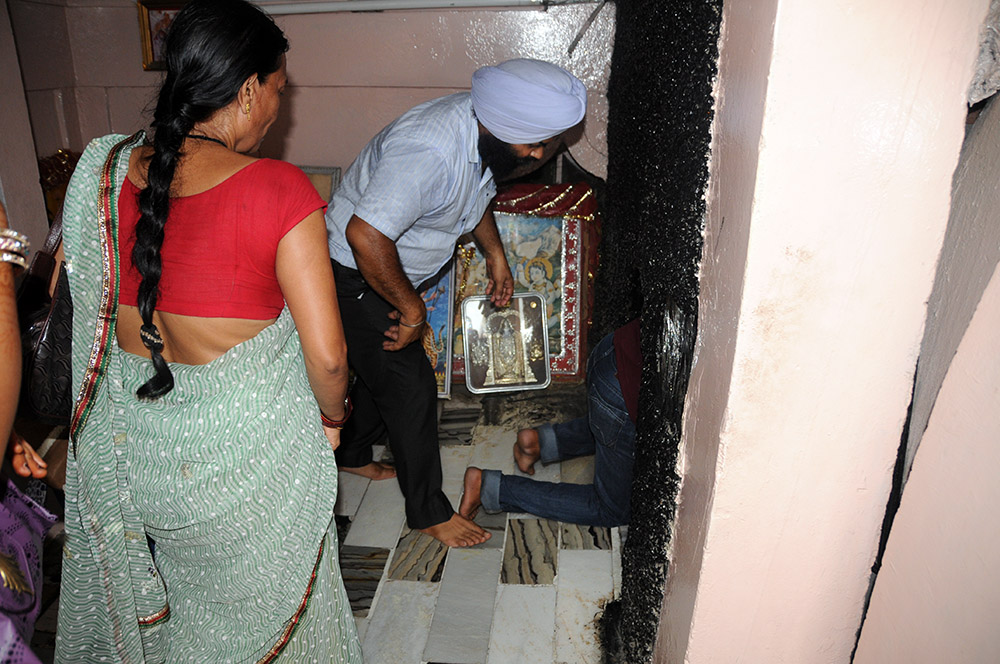
Exploring farther into the Mata Temple was a surprise. Instead of simply walking from one room to another, parts of the route took visitors through narrow passages and tunnels surrounded by Hindu imagery, statues, and religious decorations. At times you had to crouch, crawl, or climb to continue through the temple. The photo above shows a family making its way through one of these passages.
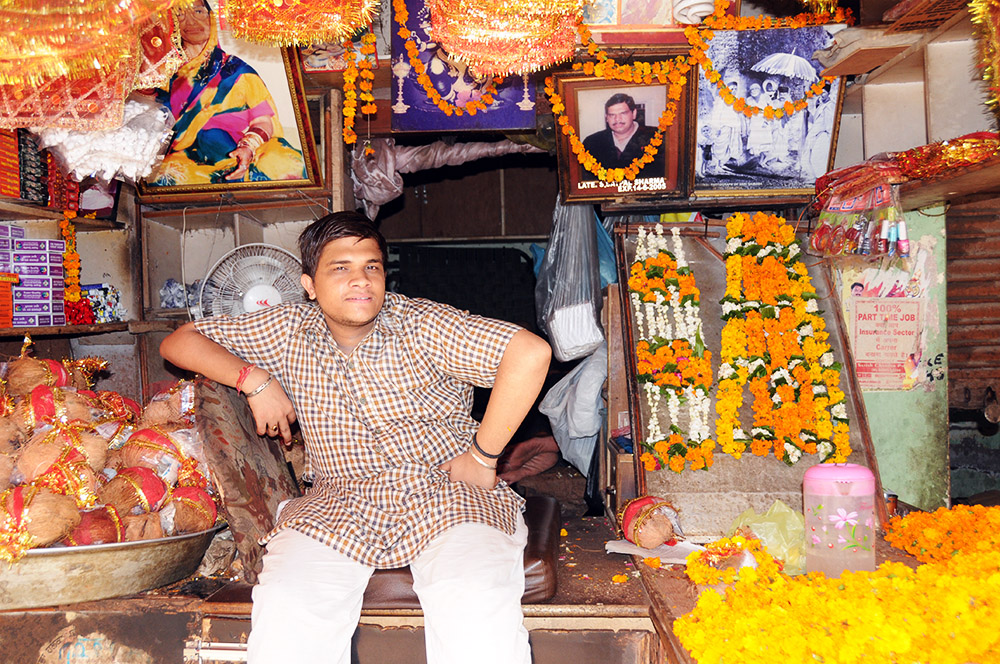
The Mata Temple was definitely one of the more unusual religious sites I visited in India. Outside, this man was selling religious pictures, flowers, and other items that could be used inside the temple or taken home as souvenirs. I didn’t buy anything, but he asked me to take his photograph.
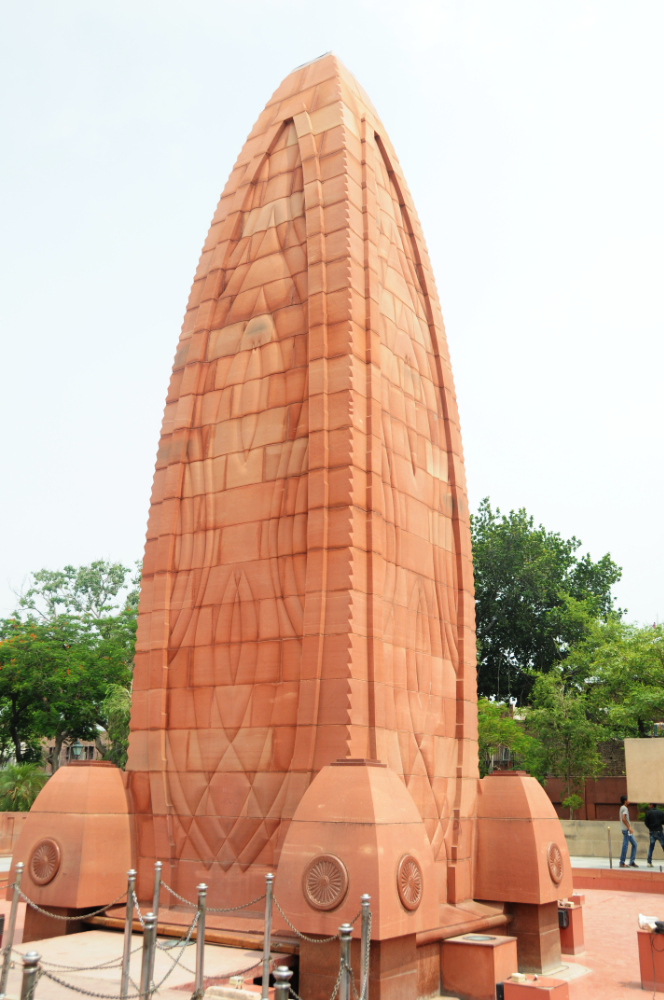
Amritsar is also the site of one of the most significant events in India’s struggle against British colonial rule. On April 13, 1919, thousands of people had gathered at Jallianwala Bagh when troops under Brigadier General Reginald Dyer entered the area and opened fire on the crowd. Hundreds of people were killed and many more were wounded. The massacre caused outrage throughout India and became an important turning point in the independence movement. Above is the memorial that now stands at Jallianwala Bagh.
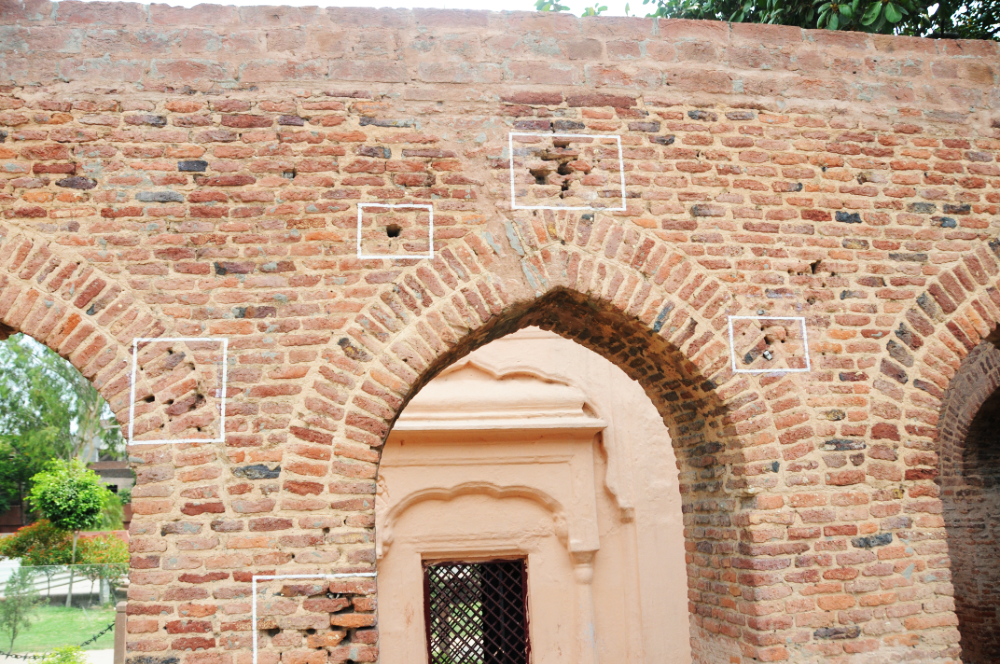
More than a century later, physical reminders of the massacre remain at Jallianwala Bagh. Bullet marks can still be seen in some of the surviving walls, preserving evidence of what happened here. Walking through the site and seeing these marks in person made the history feel much more immediate than simply reading about the event.
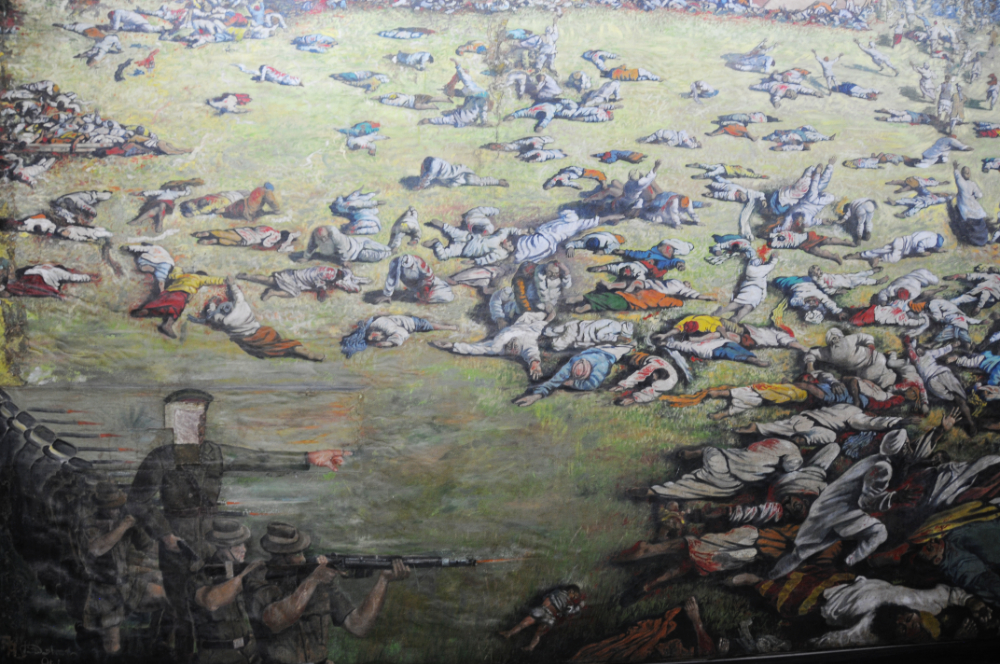
Above is a painting depicting the Jallianwala Bagh massacre. During the shooting, people desperately searched for ways to escape the enclosed grounds. Some jumped into a well to avoid the gunfire, where many died. The well has been preserved as part of the memorial complex and remains one of the most haunting parts of the site. The massacre was condemned by many in Britain as well as India and became one of the defining examples of the brutality of colonial rule.
Explore More of India
Amritsar • New Delhi • the Taj Mahal • Varanasi