Not far from Bujumbura is Rusizi National Park, one of the most accessible places in Burundi to see wildlife. The park protects a mixture of forest, wetlands, grassland, and vegetation along the Rusizi River as it approaches Lake Tanganyika.
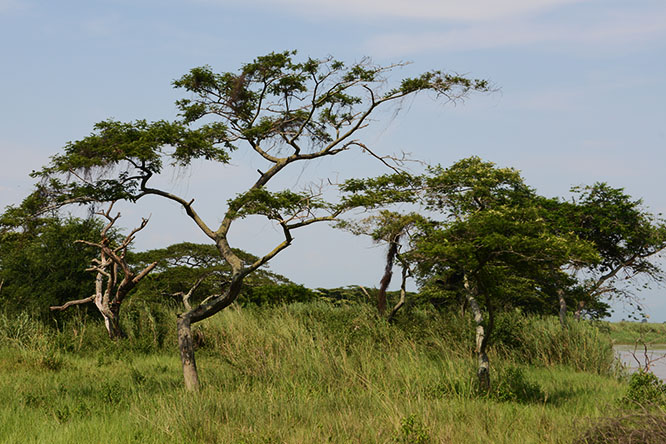
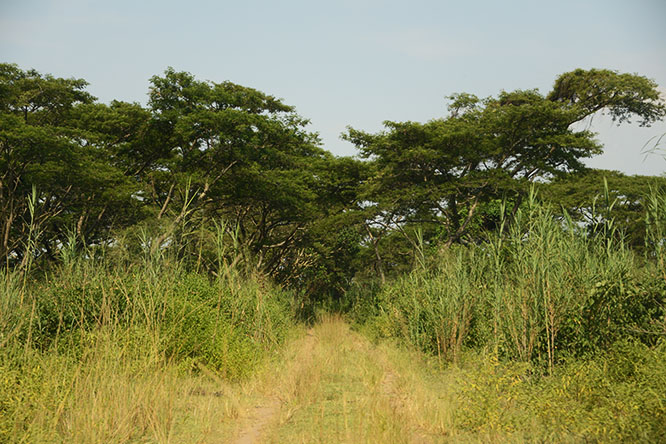
Once I entered the park, I hired a local ranger who drove me around to different areas. These were some of my first views of Rusizi.
Searching for Gustave
I should probably get the biggest disappointment out of the way for anyone who has heard of Burundi’s legendary crocodile named Gustave.
I didn’t find him.
Gustave became famous as an enormous Nile crocodile that lived around the Rusizi River and northern Lake Tanganyika. Over the years, local stories blamed him for hundreds of human deaths. Some of the legends became increasingly ridiculous, including claims that he was forty feet long or had killed more than a dozen people in a single attack.
Those stories were clearly exaggerated, but Gustave himself was real.
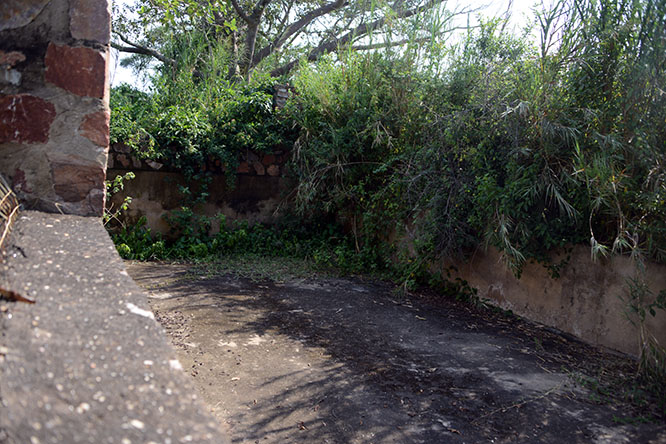
He became famous enough that attempts were made to capture him alive. A huge cage was constructed and animals were used as bait, but Gustave was never caught.
The photograph above shows the cage that was intended to hold him. By the time I visited, vegetation was already taking it over.
Gustave hadn’t been reliably seen for years when I was there. I kept telling people that I figured he had probably died.
The locals seemed considerably less willing to make that assumption.
Bird-Watching in Rusizi
Even without Gustave, there was plenty of wildlife to find.
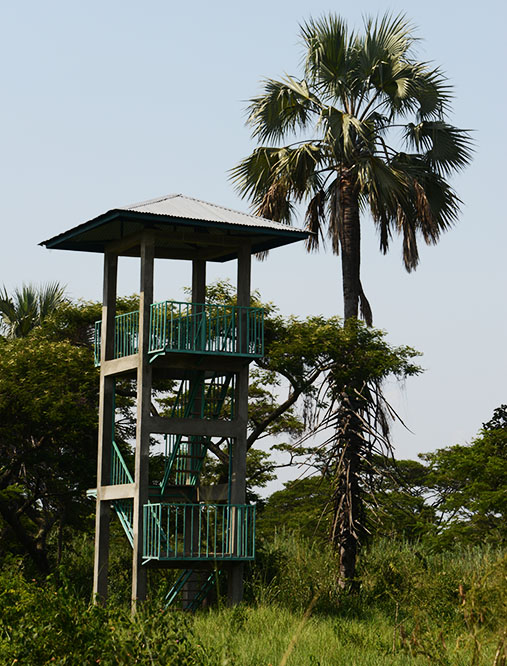
Birds were particularly easy to spot, and the park had bird-watching towers that provided a much better view over the surrounding vegetation.
From one of these towers I was able to see quite a few species.
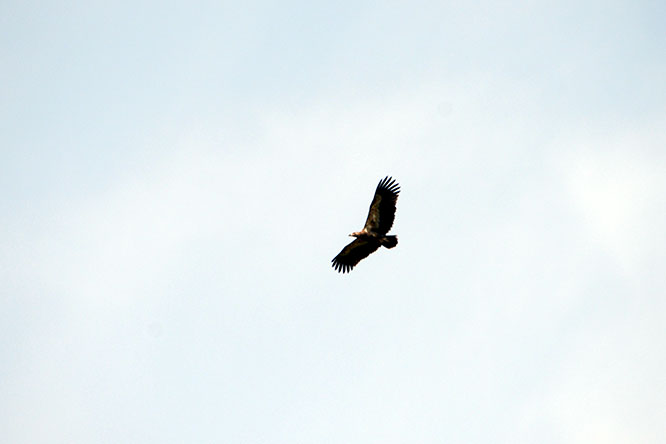
I never figured out exactly what the bird above was. At the time I thought it might have been some type of vulture.
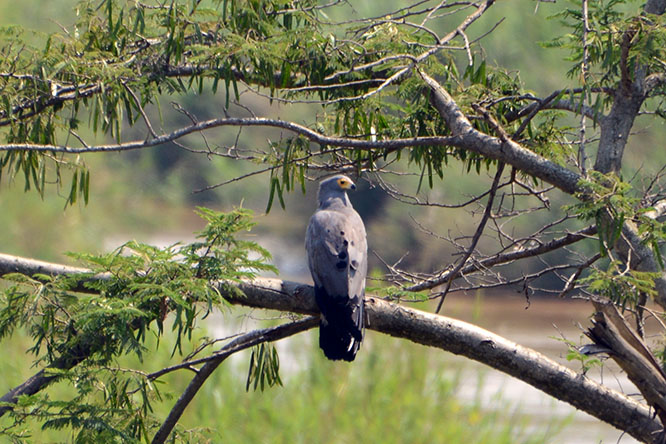
This one was easier.
Above was a large eagle, while another colorful bird I encountered was one of the bishop birds that seemed fairly common during my time in Burundi.
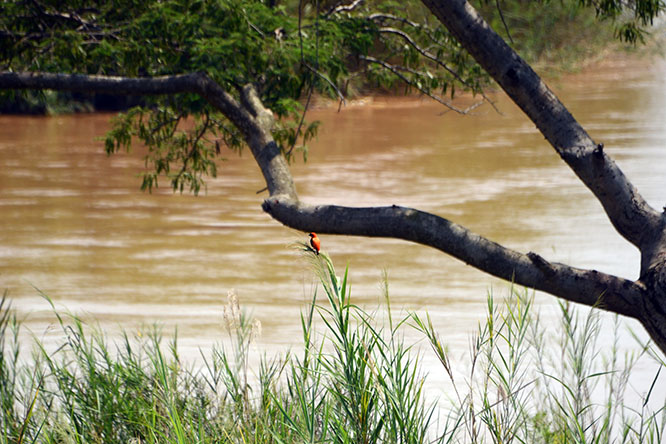
Weaver Birds
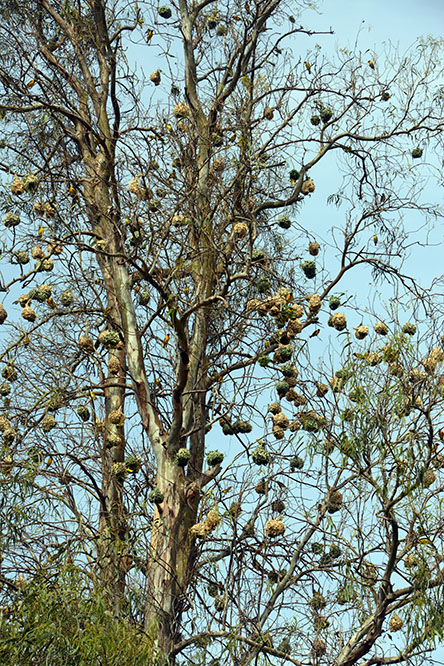
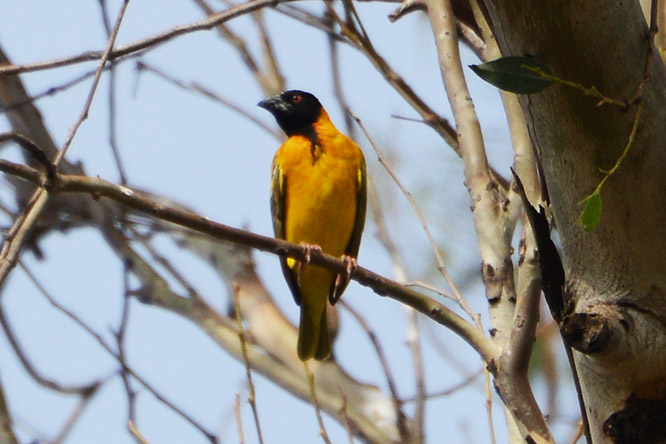
Even more common were weaver birds. They construct distinctive woven nests that hang from trees and shrubs.
I was pretty sure I had seen the same species, or at least something very similar, when I traveled through Somalia.
Exploring Inland
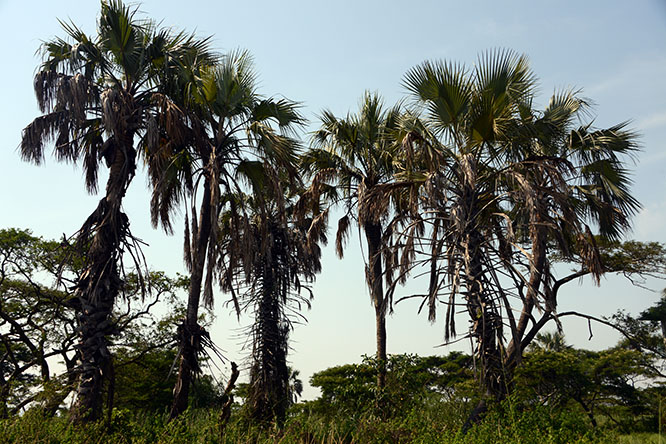
Rusizi isn’t the kind of East African national park where you drive around looking for lions, elephants, or giraffes. Much of the wildlife here is associated with the river, wetlands, and dense vegetation.
I spent most of my time close to the water, but my ranger also took me farther inland and pointed out some of the native and invasive plants growing in the park.
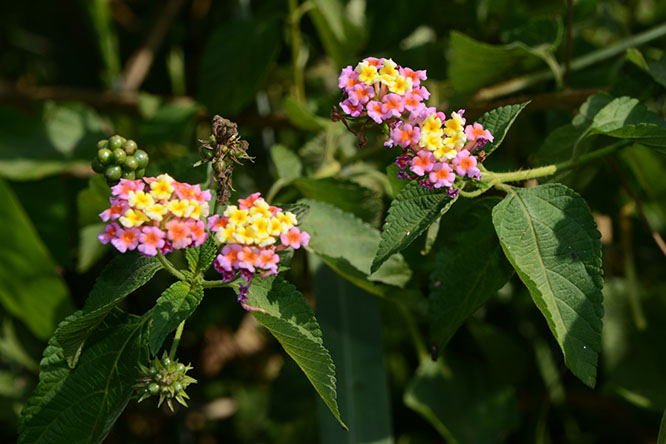
I thought these flowers looked decent enough.
My ranger hated them.
He explained that the invasive plants spread rapidly, competed with native vegetation, and weren’t useful as food. He became increasingly passionate while describing how much better things would be if everyone worked together to destroy them.
For a moment I expected him to go into a rage and attack the plant with his machete.
He left it alone.
The Rusizi River
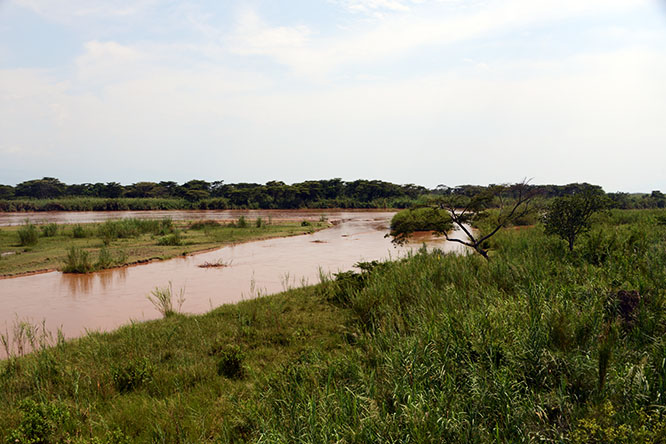
The most important feature of the park is the river that gives it its name.
The Rusizi River flows south from Lake Kivu, between Rwanda and the Democratic Republic of the Congo, before continuing through Burundi and emptying into Lake Tanganyika.
The dense vegetation makes wildlife inland much harder to see, but along the river things become considerably easier.
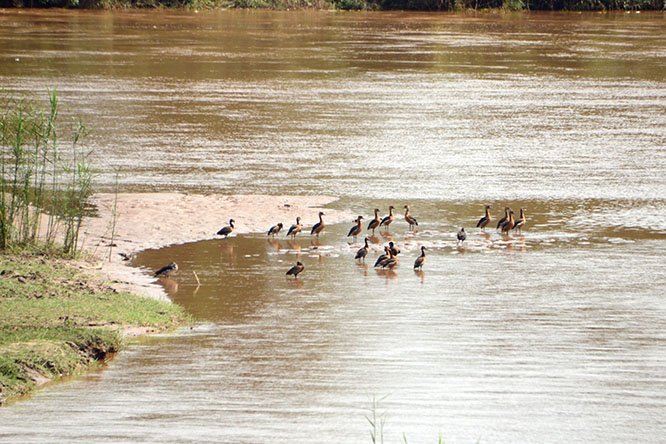
Hippo Country
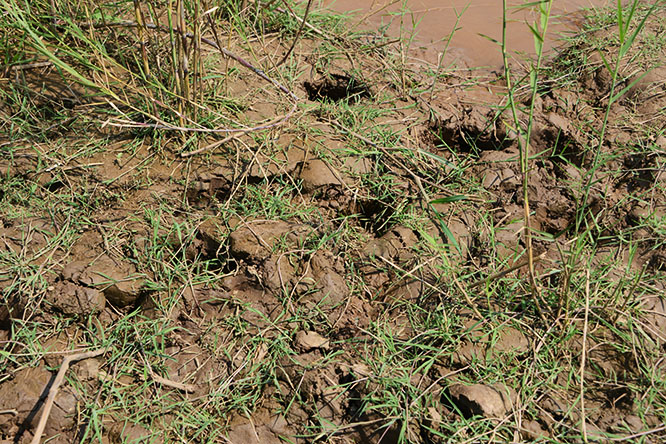
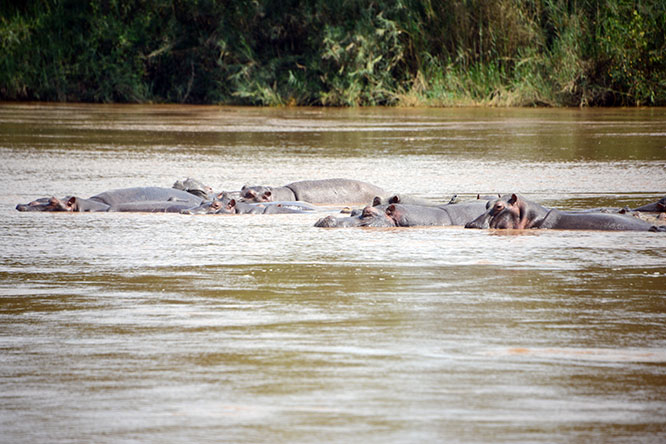
If there was one large animal I didn’t have to search for in Rusizi, it was the hippopotamus.
Fresh tracks near the water made it obvious that they were everywhere.
Hippos are also the animals here that deserve the most respect. Despite their appearance, they can be extremely dangerous when people get too close or accidentally place themselves between a hippo and the water.
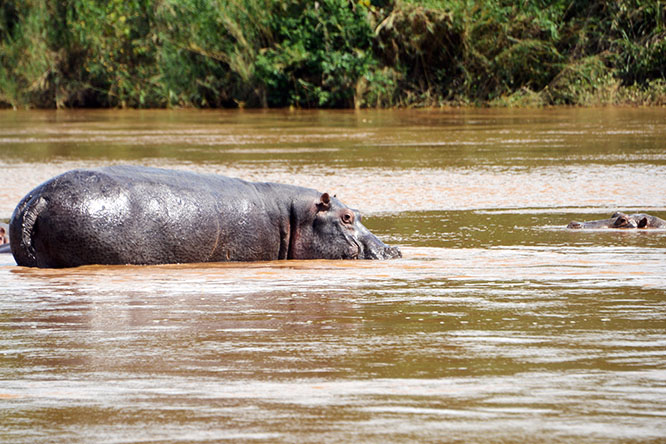
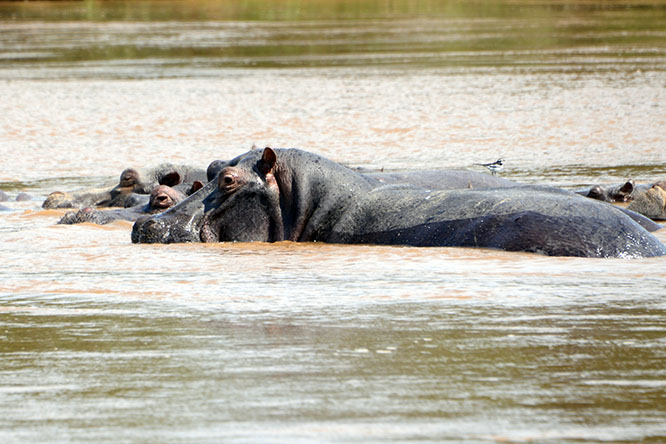
Searching for hippos really wasn’t much of a task.
A short trip along the river was enough to find them, sometimes gathered together in groups of around a dozen animals.
After spending so much time hearing stories about one legendary crocodile, it was the hippos that actually dominated my wildlife experience in Rusizi.
Crocodiles also live along the river, although spotting one required considerably more luck. Taking a boat along the Rusizi would probably be one of the better ways to search for them.
My Time in Rusizi
Rusizi was completely different from the famous safari parks I had visited elsewhere in Africa.
There weren’t herds of giraffes crossing open plains or lions sleeping beside the road. Instead, I followed the river through wetlands and dense vegetation, climbed a bird-watching tower, saw weaver nests hanging from trees, listened to my ranger declare war on an invasive flower, and found more hippos than I could possibly miss.
And somewhere in all of that was an abandoned cage slowly disappearing beneath the vegetation, built for a giant crocodile that apparently understood perfectly well that going inside it was a terrible idea.
I never found Gustave.
Considering what he was famous for, that was probably just as well.