Uyuni itself wasn’t the reason I traveled to southwestern Bolivia. The town is mostly a jumping-off point for the enormous salt flat and desert landscapes surrounding it, but because so many travelers pass through, there were plenty of places to eat, sleep, and arrange tours.
What I had really come to see was Salar de Uyuni, the largest salt flat in the world. Nothing prepared me for how enormous it felt once I was actually out there. The white surface seemed to continue forever, broken only by distant mountains, strange mirages, islands covered with giant cactus, and the occasional 4×4 crossing the horizon.
Uyuni
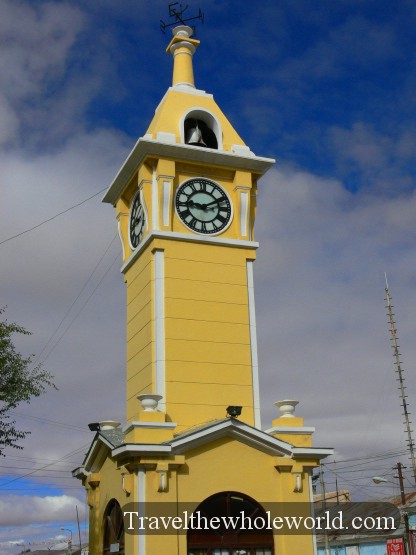
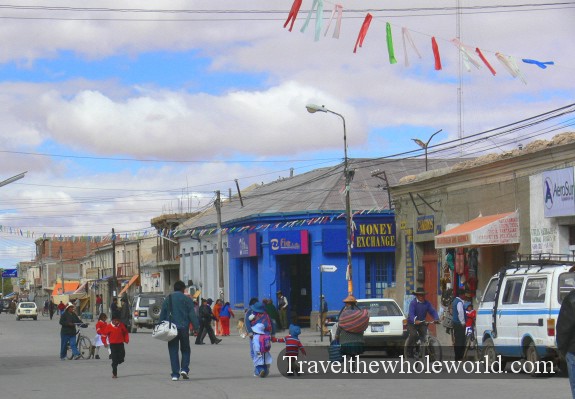
Uyuni wasn’t especially interesting to me as a destination by itself, but it had everything I needed before heading into the desert.
When I passed through town, it also looked like nearly every schoolchild in Uyuni had gathered along one of the streets.
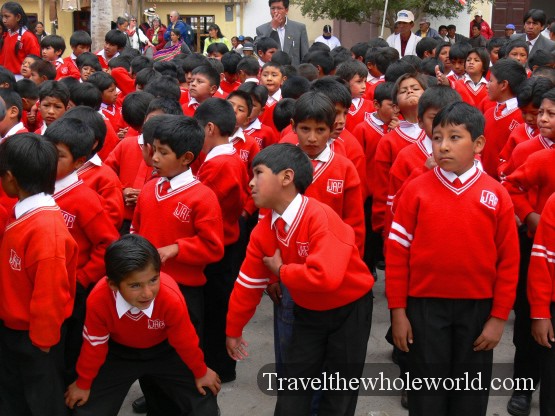
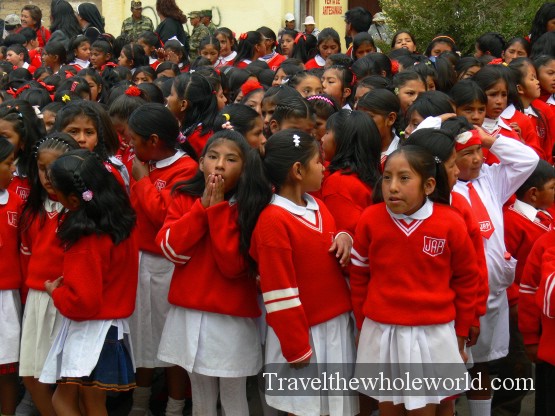
Speakers had been set up and it looked like they were preparing for either a parade, ceremony, or some other community event.
Unfortunately, I had to leave before finding out what it actually was.
Salar de Uyuni
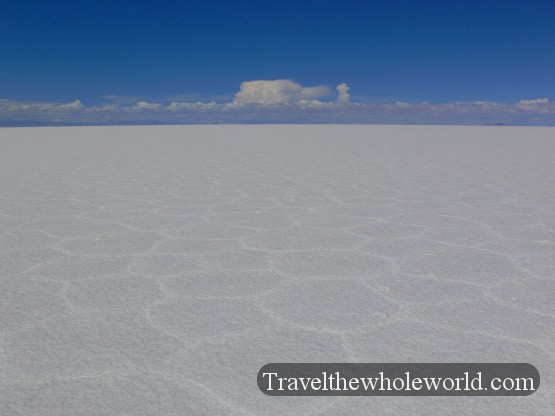
Salar de Uyuni was formed from ancient lakes that once covered this part of Bolivia. What remains is an enormous flat surface covered by a crust of salt.
Standing in the middle of it was disorienting because there were so few normal objects around to provide scale. The white ground and distant horizon made mountains look closer or farther away than they really were.
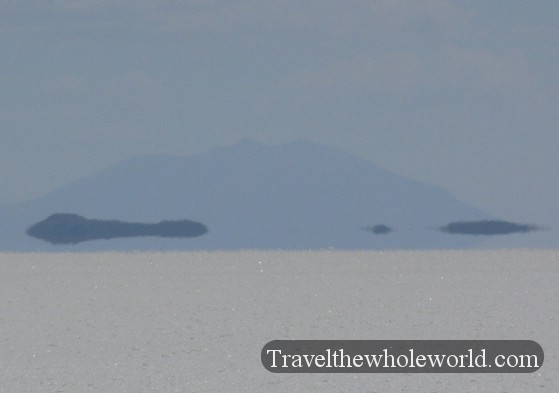
Some of the strangest effects were the mirages. From far away, parts of the mountains appeared to float above the surface like islands hovering in the air.
As we drove closer, the illusion gradually disappeared and the mountains returned to their normal shape.
Mining Salt
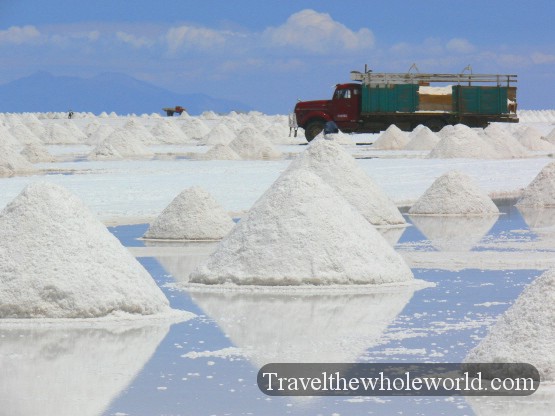
The salt flat wasn’t just scenery. People were actively working on it.
Workers shoveled salt into piles so moisture could drain and the material could dry before being collected. If I stomped through the upper crust with my heel, the salt underneath was noticeably wet.
The piles helped dry it before workers loaded the salt into trucks and transported it for processing.
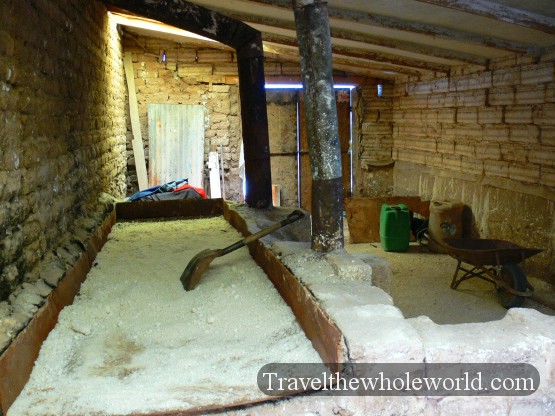
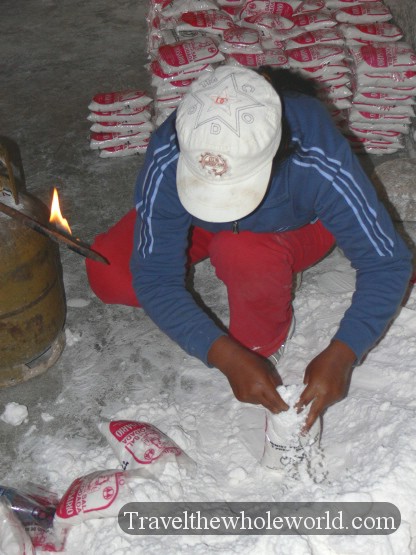
At the small facility I visited, the salt was dried, iodized, and packed into bags. The operation looked incredibly manual compared with the industrial-scale production I might have expected from such an enormous resource.
A Hotel Made of Salt
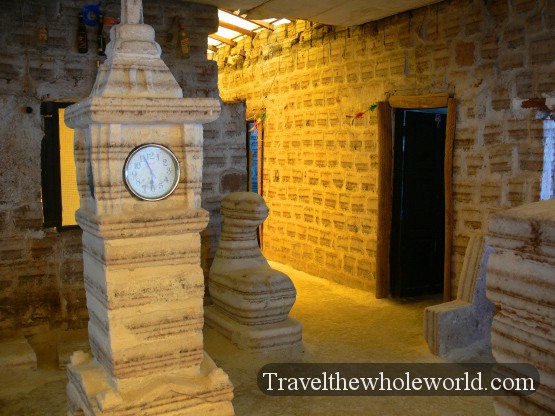
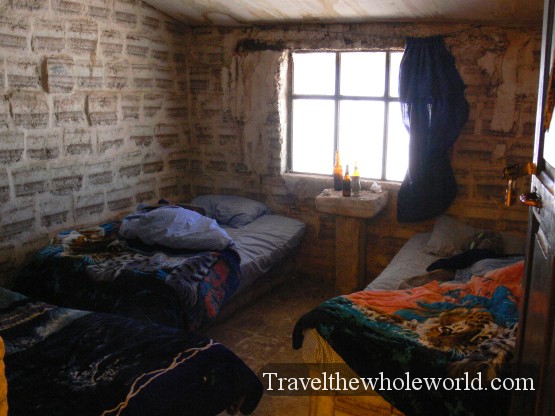
Salt from the region has also been used as a construction material.
I visited a hotel where much of the building was made from blocks of salt. Walls, floors, furniture, and even decorative objects used the same material covering the landscape outside.
After spending hours driving across an endless field of salt, apparently the logical next step was sleeping inside it.
Crossing the Salt Flat by 4×4
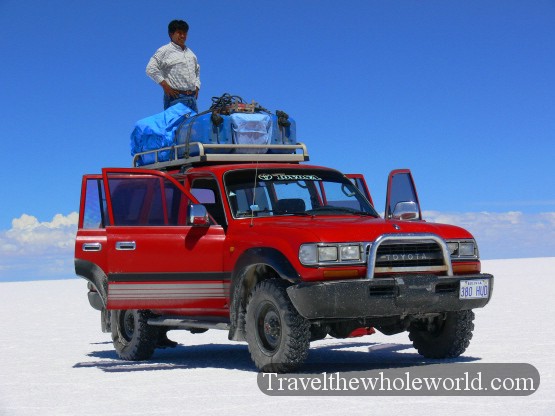
My tour continued across the salt flat in a 4×4. There aren’t exactly roads in the normal sense once you’re out there, so the driver simply crossed the open surface toward distant landmarks.
The lack of trees, buildings, or road markings made the landscape feel much more remote than the actual distance from Uyuni might suggest.
Incahuasi Island
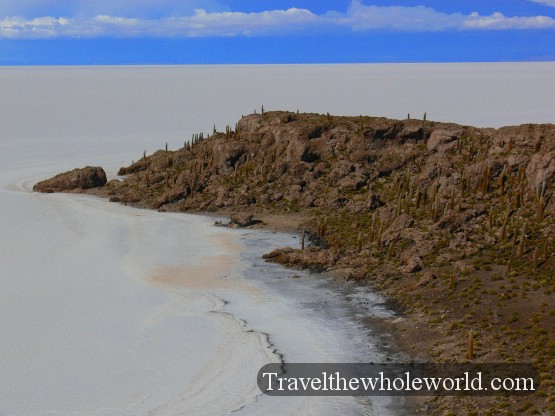
One of the strangest stops was Incahuasi, a rocky island rising from the middle of the salt flat.
After hours surrounded by perfectly flat white terrain, suddenly having a rocky hill covered in cactus appear in front of us seemed almost unnatural.
I was told stories connecting the island with Inca travelers and people hiding from the Spanish conquest. I wasn’t able to verify the more dramatic version I heard about everyone taking refuge there and later being captured, so I wouldn’t treat that part as established history.
Giant Cactus in the Middle of the Salt
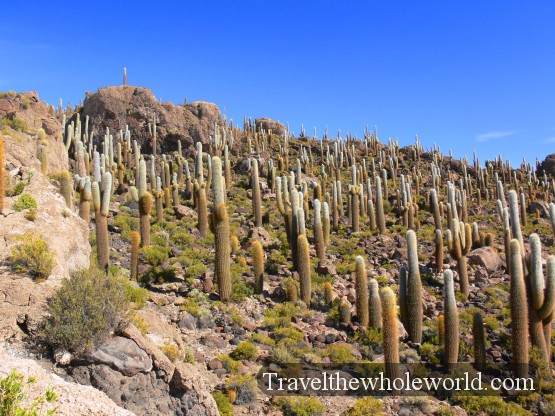
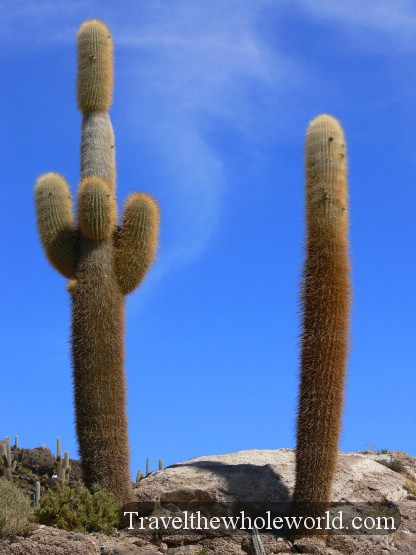
The island was dry and covered with huge cactus, giving it the appearance of a desert island surrounded by a white ocean.
I was told at the time that some of the cactus could be distinguished as male or female by their appearance. Whether the individual plants in my photos could actually be identified that way, I can’t say with confidence.
An Unexpected Nighttime Detour
Outside the salt flats, in another part of southern Bolivia, I ended up on one of the strangest tours of my entire trip.
It happened at night, and I wasn’t completely sure what I had agreed to see.
That usually makes for an interesting travel story.
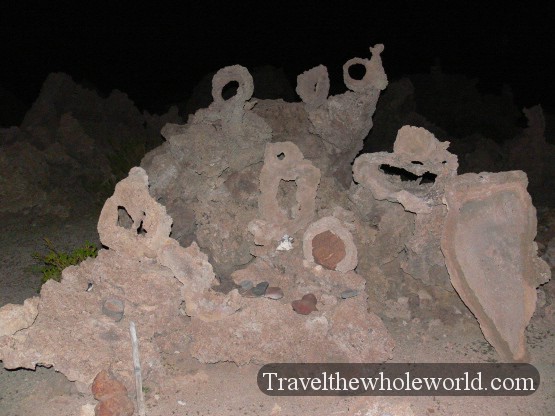
The first things we came across were unusual hollow formations rising from the desert.
My guide told me the area had once been underwater and described the structures as coral formations. I wasn’t able to independently confirm exactly what they were geologically, but they were definitely unlike anything else I had seen in Bolivia.
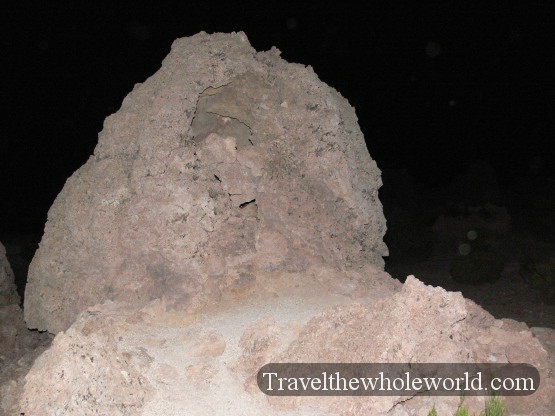
One of the structures had a small opening.
My guide told me to look inside.
So I did.
The Tombs
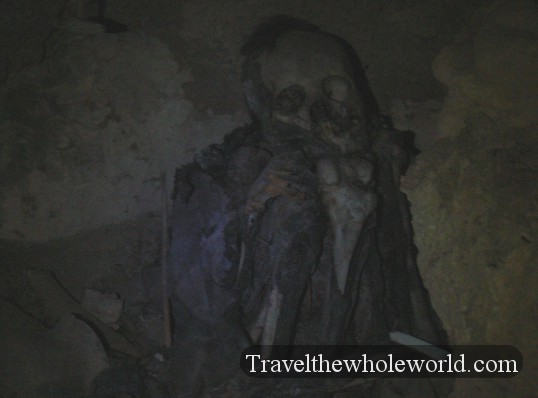
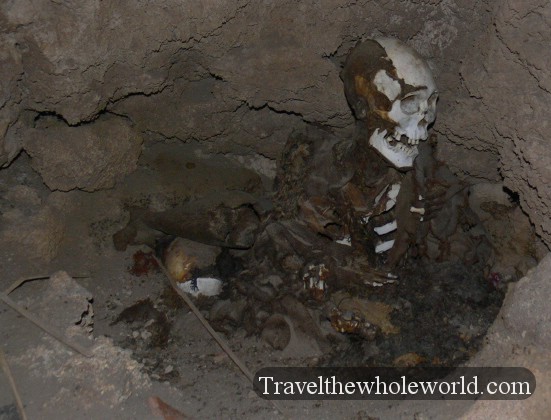
Inside were human skeletons.
Then I realized that many of the surrounding formations contained them.
Some appeared to hold a single individual, while others contained more than one. I was told the burials dated to a period after Tiwanaku but before the Inca and that the openings had originally been sealed with clay before erosion eventually exposed them.
I was also told the site had been looted after being rediscovered, with people breaking into tombs looking for valuables. I couldn’t find enough reliable information afterward to verify those details, so I can only repeat them as the explanation I was given during the visit.
The Skeleton That Made Me Wonder
One burial especially caught my attention.
The skeleton appeared to be sitting with its back against the wall, knees pulled toward the chest, and an arm positioned around the legs.
At the time, I couldn’t understand how a body could simply have been dropped into the chamber and ended up in such an organized position.
My imagination immediately went to a much darker possibility: had this person been placed inside alive?
But that’s only speculation. Deliberate seated or flexed burials are known from many cultures, and without archaeological information about this specific site I had no way of knowing how the body had originally been positioned or prepared.
It was still one of the creepiest and most fascinating things I encountered in Bolivia.
My Time Around Salar de Uyuni
I had originally come to Uyuni to see the famous salt flat, and that alone would have made the trip worthwhile.
I drove across a white landscape that seemed to continue forever, watched mountains turn into floating mirages, saw people mining salt by hand, walked through a hotel made from the same material beneath my feet, and climbed an island covered in enormous cactus.
Then somehow the trip ended with me wandering around a desert at night looking into ancient tombs full of skeletons.
Southwestern Bolivia was much stranger than I expected.
That’s probably why I remember it so well.