Long before I visited Salzburg, I had already heard plenty of good things about the city. Then I found myself in Munich for work and realized Salzburg was right across the Austrian border, only about 90 minutes away. That made the decision pretty easy.
My first impression came while driving along the Salzach River, where I caught glimpses of the old city with mountains rising behind it. Salzburg turned out to be exactly the kind of city I enjoy exploring on foot: compact, historic, surrounded by mountains, and filled with interesting places that I kept stumbling across without really knowing what I was going to find next.
Exploring Mönchsberg
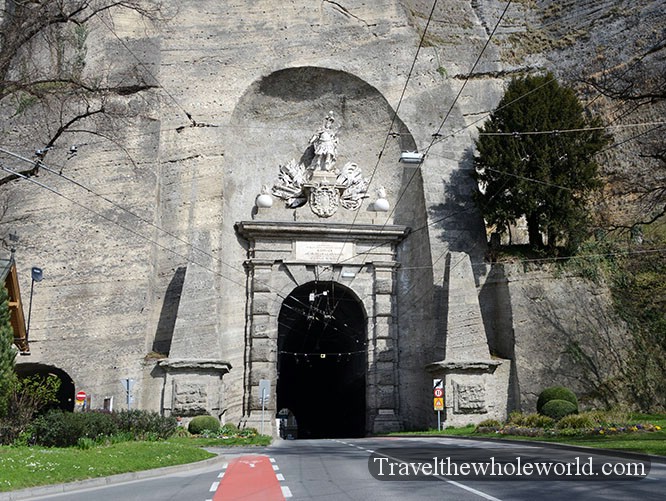
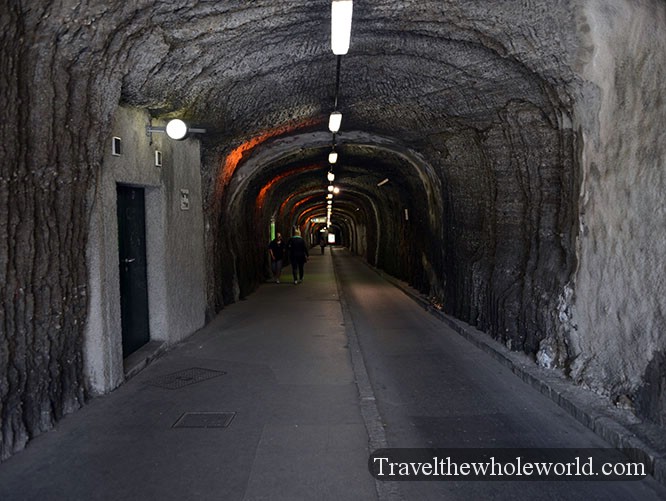
While looking for somewhere to park, I drove directly through Mönchsberg, one of the mountains rising beside the old city. The road passes through a tunnel known as Sigmundstor, or Sigmund’s Gate. After finding parking on the other side, I later returned through an adjacent pedestrian tunnel.
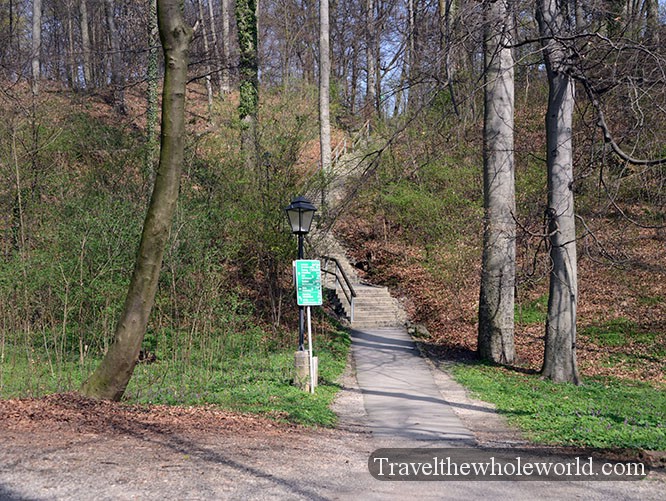
Before going back through the tunnel, I decided to climb Mönchsberg instead. Trails wind through the wooded slopes and eventually reach houses, viewpoints, a museum, and a cafe on top of the mountain. I intended to visit the museum later but never made it back.
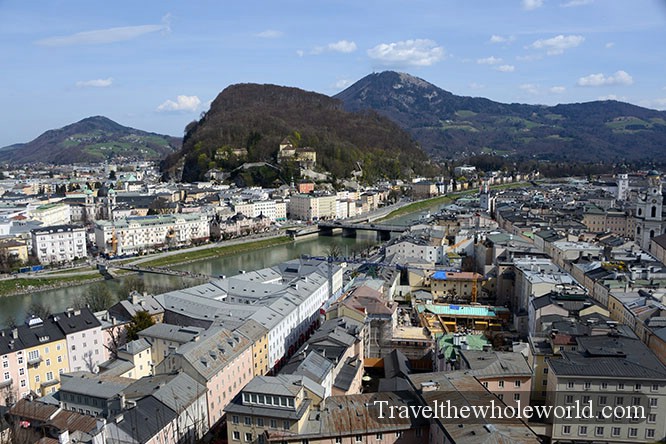
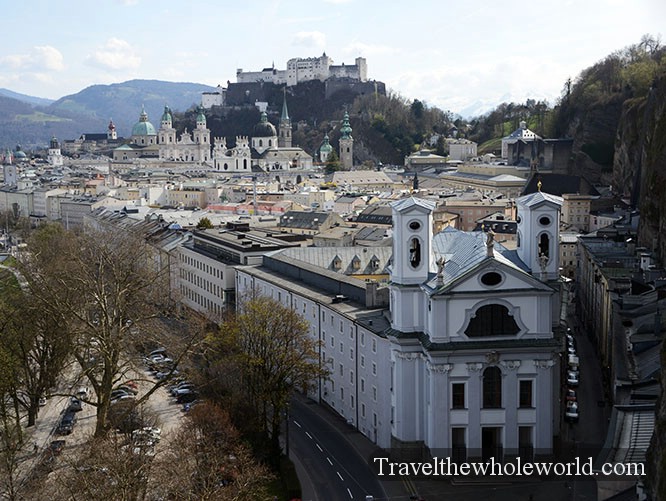
The climb was worth it just for the views. From Mönchsberg I could look across the old city, down toward the Salzach River, and out toward the mountains surrounding Salzburg.
History Everywhere
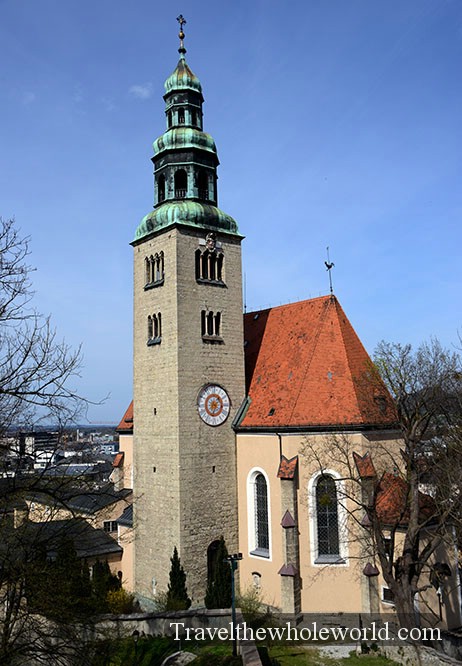
One of the problems with wandering Salzburg without a guide is that there is so much history that it’s easy to walk straight past something important without realizing it. I randomly came across Mülln Parish Church while climbing Mönchsberg, and historic churches, walls, monuments, and buildings seemed to appear everywhere I went.
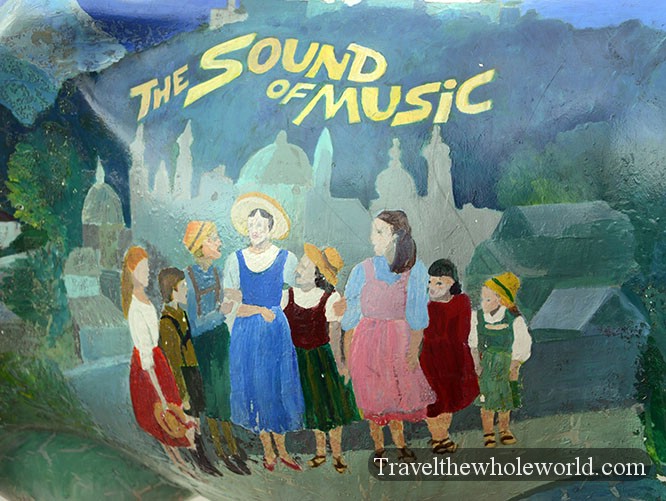
Looking back, this is one city where I probably should have taken a tour. Salzburg has everything from traditional historical tours to tours devoted entirely to The Sound of Music. Instead, I wandered around on my own and researched what I’d seen afterward, which means I’m sure I missed plenty along the way.
The Old Fortifications
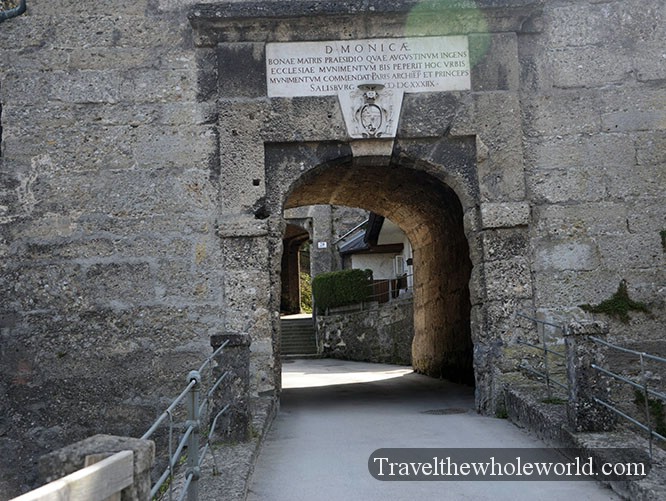
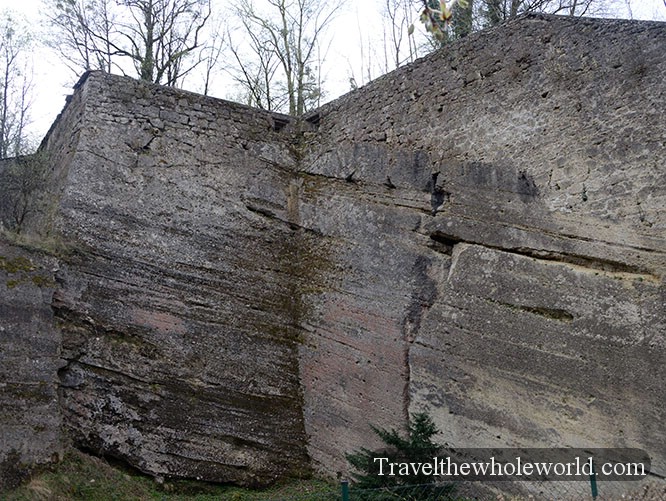
One of the first historic sites I encountered on top of Mönchsberg was Müllner Schanze. Salzburg had defensive walls dating back to medieval times, and its fortifications were expanded over the centuries as the city grew.
Some of those defenses still survive on the mountain today. From the trails I could also see fortifications and castles on other hills in the distance, another reminder of how much of Salzburg’s history is built directly into the landscape.
Views, Houses, and a Very Important Trail Sign
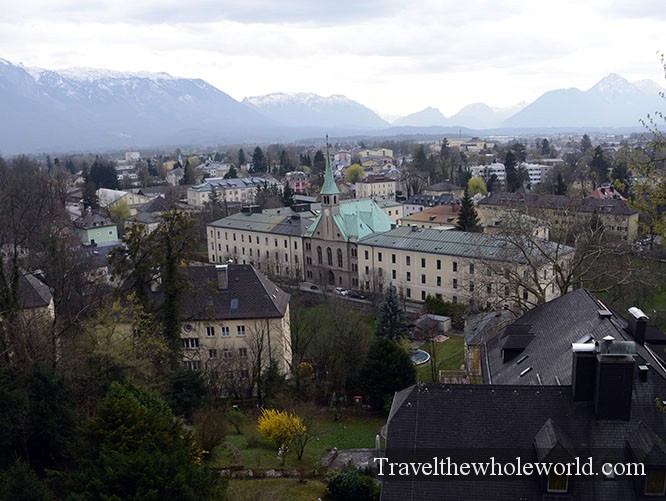
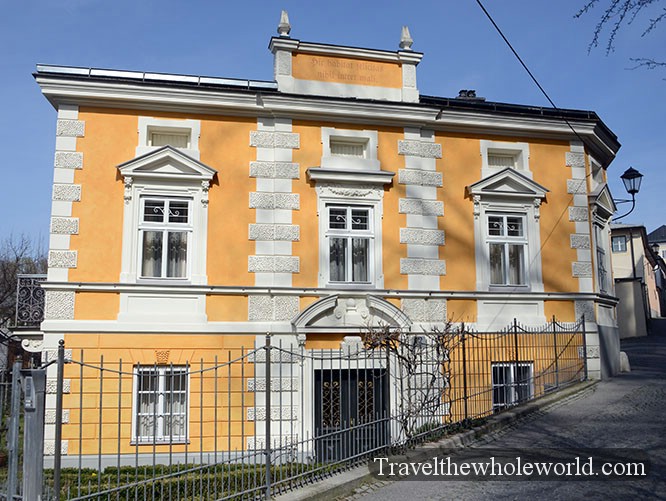
Mönchsberg gave me excellent views not only of the historic center but also of Salzburg’s quieter residential neighborhoods. I eventually wandered through some of those areas and found small houses that felt surprisingly peaceful considering how close they were to the center of the city.
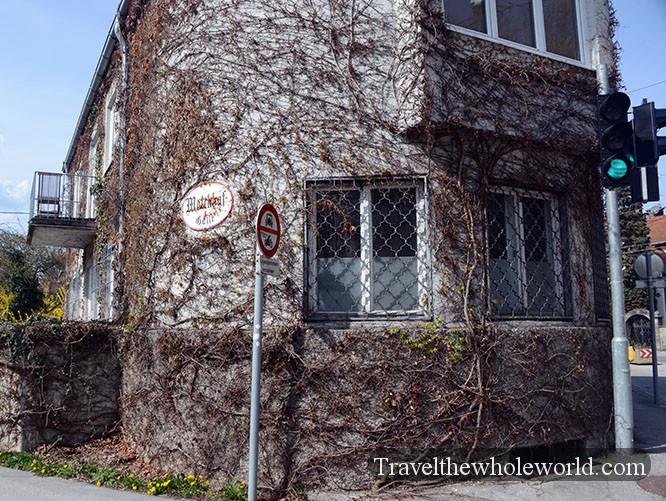
I visited just as winter was ending, so most of the vegetation hadn’t come back yet. One house was almost completely covered in dormant ivy, and I could only imagine how different it must look once everything turns green.
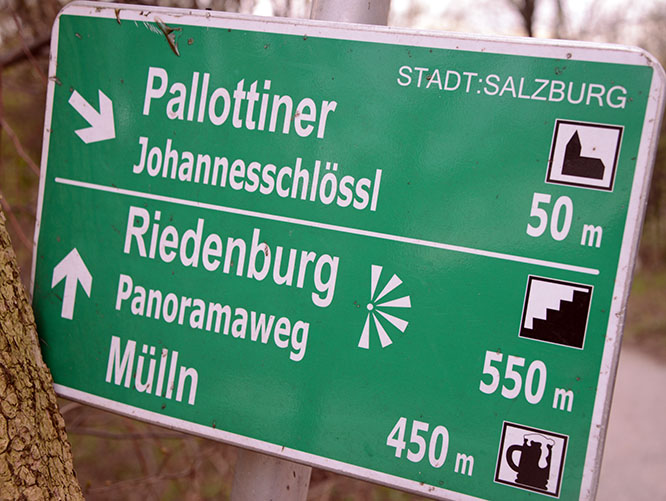
My favorite trail sign, however, was considerably more practical. Along with directions and distances to various places, one of the signs showed that beer was only 450 meters away.
A hiking system designed with its priorities in order.
Back Down in the Old City
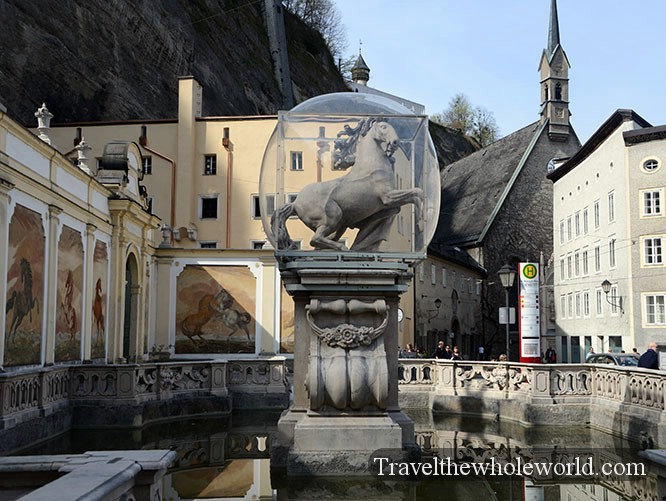
After coming back down from Mönchsberg, I continued exploring the old city on the other side of Sigmund’s Gate. One of the first things I came across was the Pferdeschwemme, an elaborate historic horse well decorated with a large horse statue.
I didn’t know its history when I saw it. After looking it up later, I learned that horses were once brought here to be washed and watered. The location also appeared in The Sound of Music, making this another place where I’d unknowingly wandered through one of the movie’s filming locations.
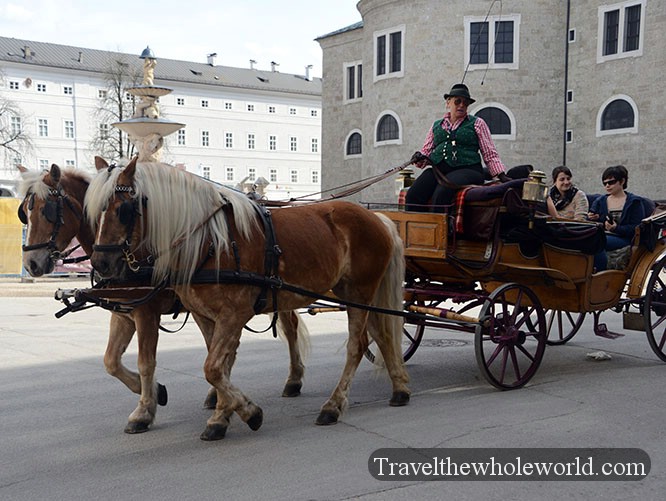
The horses haven’t completely disappeared from central Salzburg. Horse-drawn carriages still travel through the old streets, although today their passengers are tourists rather than people going about their daily business.
Markets and Shops
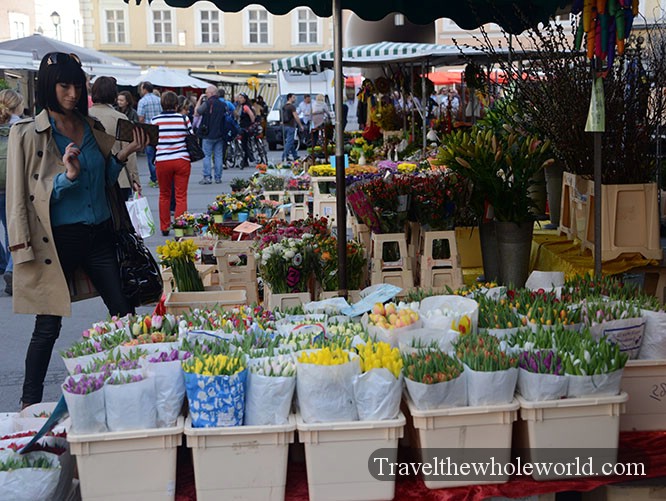
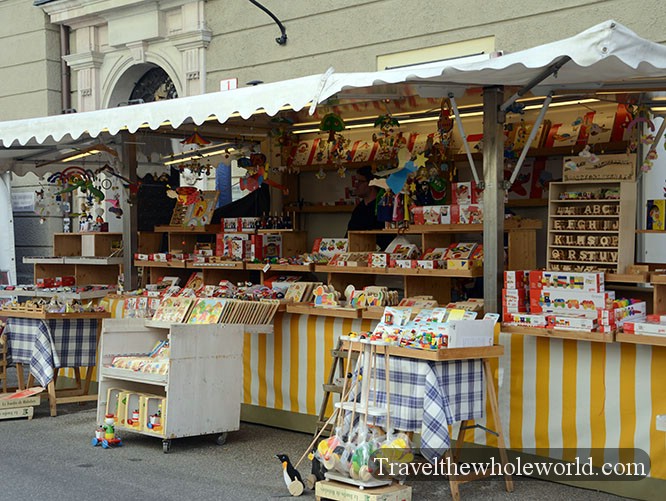
In the center of the old city I came across a small street market. It wasn’t particularly large, but the stands sold flowers, toys, baskets, meats, and other food. I happened to be visiting on a Saturday, so I’m not sure whether the market was a permanent fixture or something that appeared only on certain days.
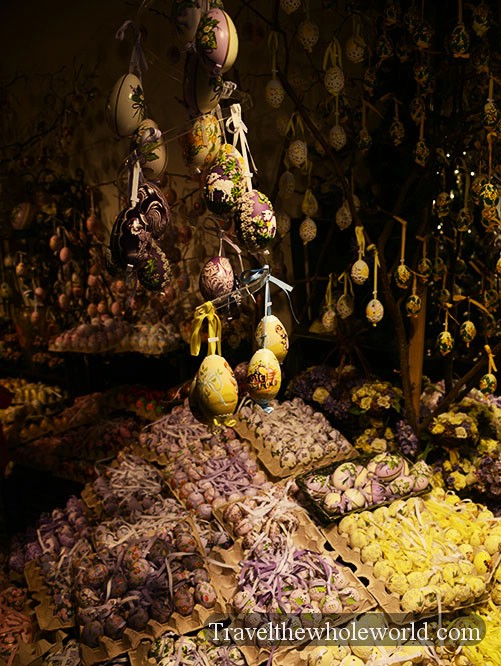
I was also in Salzburg shortly before Easter, so holiday decorations were everywhere. One store seemed to have dedicated practically its entire existence to Easter.
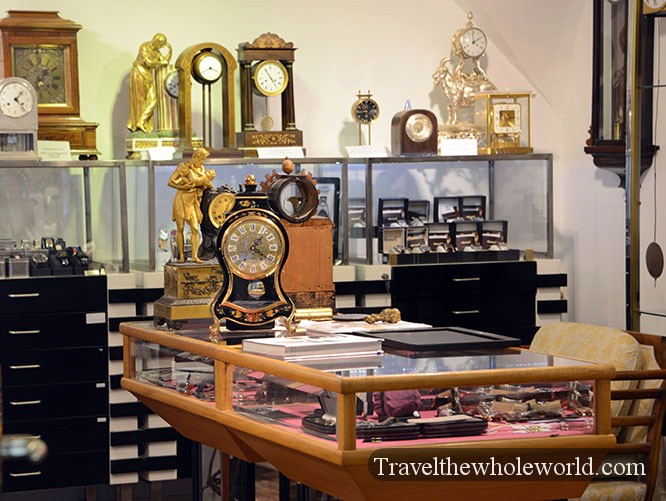
The old city was filled with shops selling everything from souvenirs to more unusual items. One that caught my attention specialized in elaborate traditional clocks, the sort of place that looked like it had been there for generations.
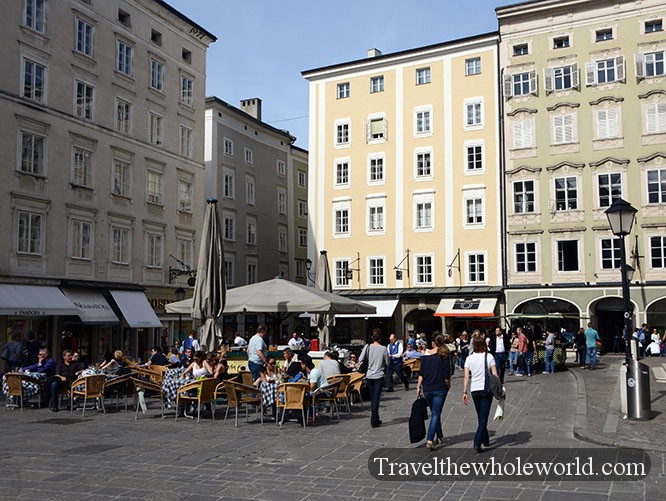
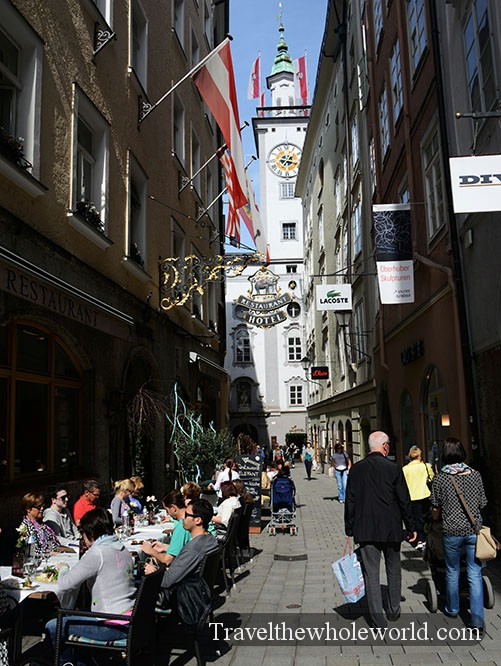
Between the shops were open plazas, narrow streets, restaurants, and outdoor cafes. This was one of the things I liked most about Salzburg. There was plenty to see, but I never felt like I needed a strict itinerary. Simply walking around kept leading me somewhere interesting.
A Less Beautiful Side of Salzburg
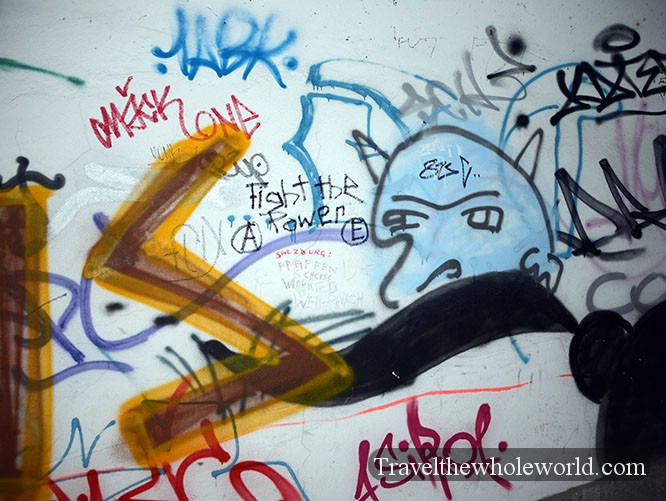
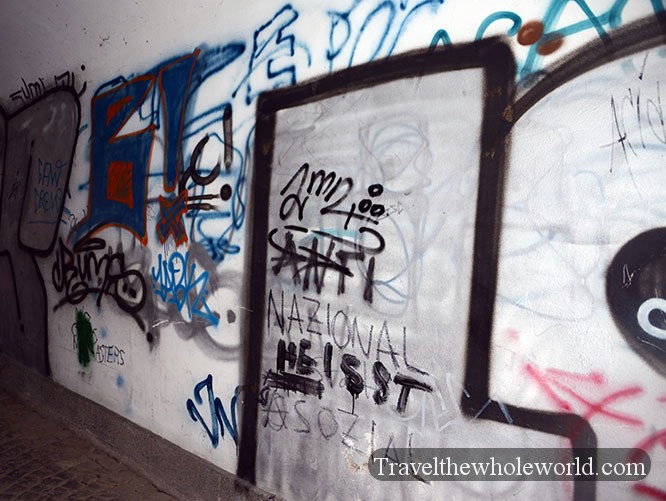
One thing that surprised me was how much graffiti I saw. Salzburg has an almost ridiculously beautiful historic center, yet even parts of the old city had been covered in spray paint.
Most areas weren’t too bad, but tunnels and quiet alleys seemed almost guaranteed to have graffiti somewhere. It was an odd contrast with the carefully preserved churches and Baroque buildings only a short distance away.
Salzburg During the Nazi Era
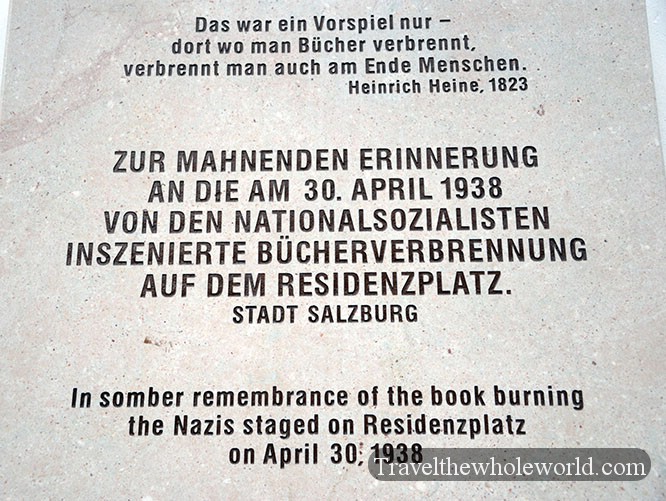
While wandering through the city, I came across a historical marker connected with one of Salzburg’s darkest periods.
Austria was annexed by Nazi Germany in March 1938. Only weeks later, books considered Jewish, Marxist, or otherwise unacceptable to the Nazi regime were publicly burned in Salzburg. The city would later suffer bombing during World War II, damaging and destroying buildings even though much of Salzburg’s historic Baroque center survived.
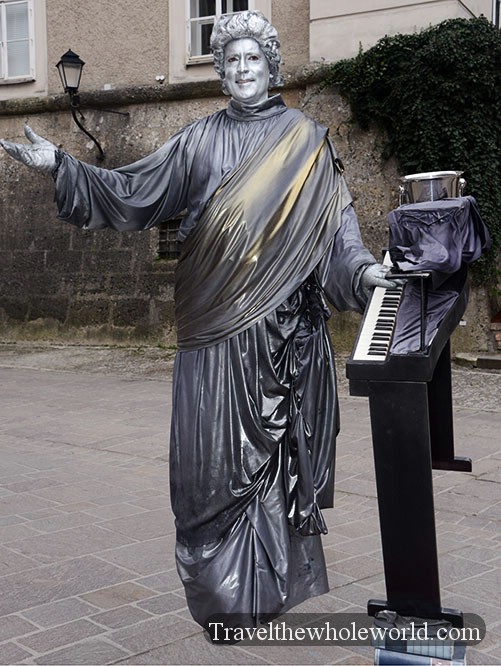
What struck me was the contrast with the Salzburg I was walking through. The same city center that had once witnessed Nazi rallies and book burnings was now crowded with visitors from around the world, cafes, markets, musicians, and even a guy pretending to be a statue.
Across the Salzach River
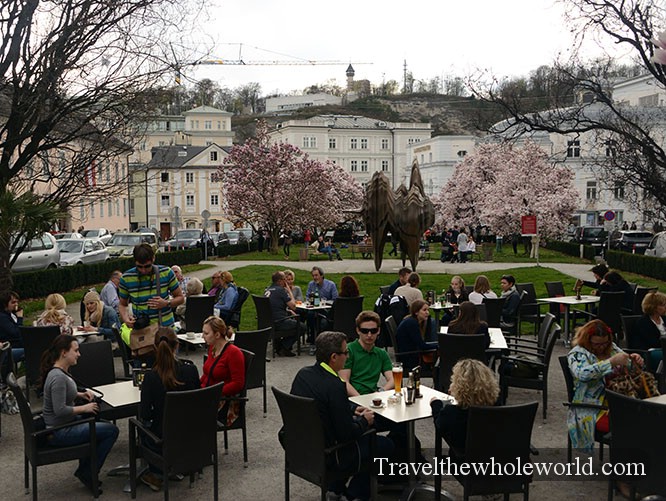
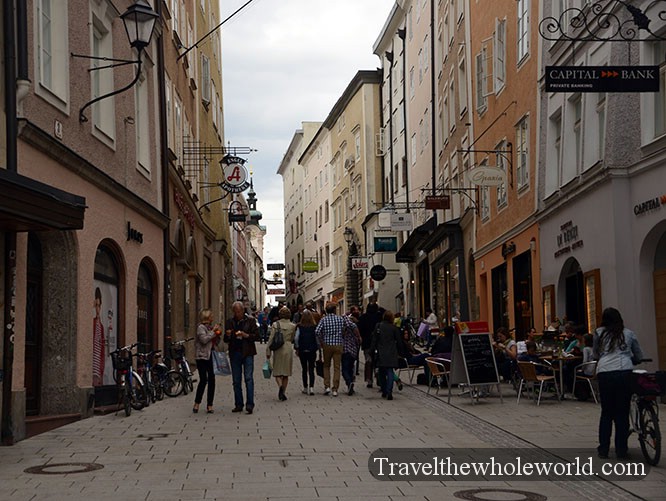
After exploring the old city, I crossed the Salzach River and continued walking. At first the atmosphere was similar, with attractive buildings, shops, and plenty of outdoor cafes. The farther I went, the more Salzburg gradually changed into an ordinary modern city, with commercial areas and eventually residential neighborhoods.
I actually walked several miles in search of an English-language bookstore.
When I finally reached it, it was closed.
At least the walk gave me an excuse to see parts of Salzburg I probably never would have visited otherwise.
St. Andrew’s Church
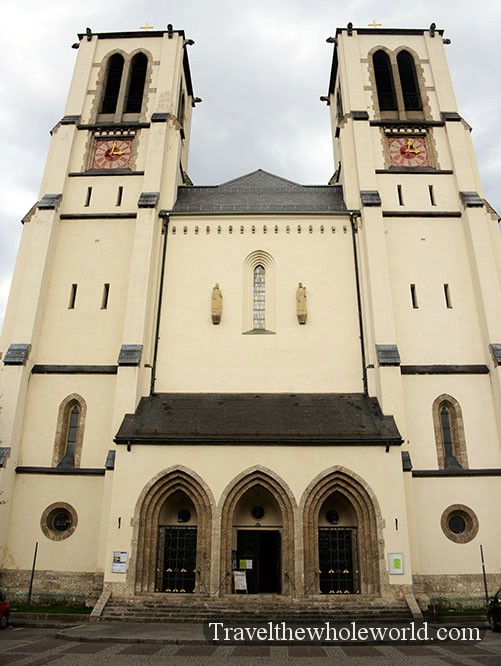
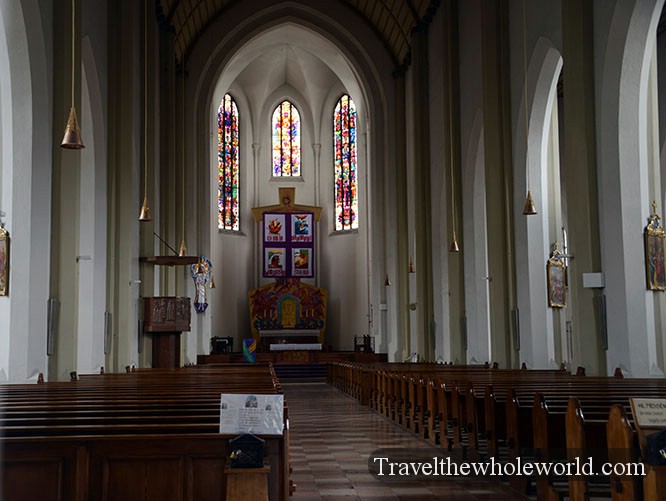
Along that walk I passed St. Andrew’s Church, another example of how Salzburg’s history continued well beyond the main tourist center. The church dates to the late 19th century but was badly damaged during Allied bombing in World War II and later rebuilt.
My Day in Salzburg
I only had a day to explore Salzburg, and looking back there was far more I could have seen. I never made it to the museum on Mönchsberg, didn’t take a historical tour, and undoubtedly walked straight past important places without realizing what they were.
But wandering without much of a plan was also part of what made Salzburg enjoyable. In a single day I climbed a mountain above the city, explored medieval fortifications, walked through historic neighborhoods, stumbled across The Sound of Music locations, found markets and churches, learned about some of the city’s darkest history, and walked several miles for a bookstore that wasn’t even open.
Salzburg lived up to what I’d heard about it before arriving. It’s beautiful without feeling like there’s only one monument you’re supposed to see, and the mountains surrounding the city make it feel very different from most of Europe’s other historic destinations.
I would definitely return—and next time I’d probably take the tour.
“`